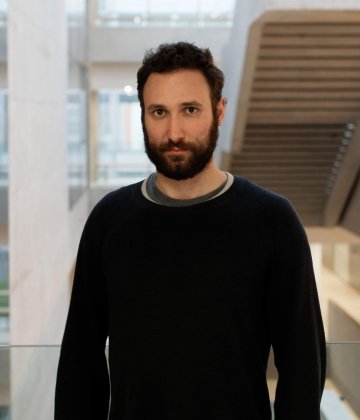
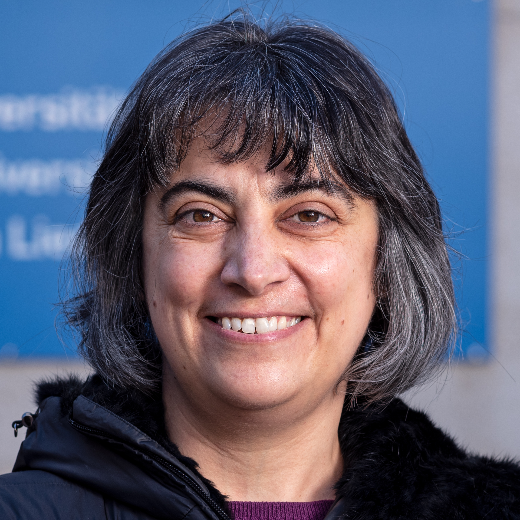
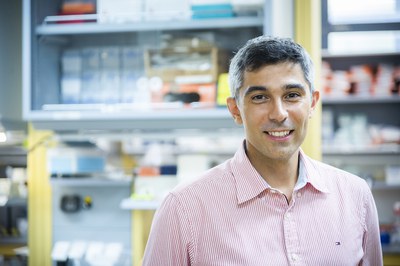
Carlo Lucibello is an Assistant Professor of Computer Science at Bocconi University since 2018. He holds a PhD in Physics from Sapienza University (2015), supervised by Giorgio Parisi and Federico Ricci-Tersenghi. His research bridges statistical physics and machine learning, focusing on analytical methods for neural networks and optimization problems. Roles: Faculty member in Computing Sciences Department Affiliations: Bocconi University Education: PhD in Physics from Sapienza University (2015) Research interests include neural networks, statistical inference, disordered systems, and combinatorial optimization. He contributes to open-source projects like GraphNeuralNetworks.jl, Flux.jl, and Zygote.jl for Julia. Teaching includes courses on machine learning, programming, and complex systems. He actively develops physics-inspired algorithms for learning and optimization. Publications span topics in statistical physics and machine learning, with recent work on associative memory capacity and neural network theory. His collaborative projects include contributions to Julia's ecosystem and theoretical advancements in message-passing algorithms.
Michele Fioretti is an Assistant Professor at Bocconi University, Department of Economics, with affiliations as an Affiliate Fellow at the University of Chicago Stigler Center and a Fellow at IGIER. His research bridges industrial organization, international trade, and social responsibility, focusing on market power dynamics, corporate prosocial behavior, and policy impacts on economic systems. Bocconi University - Assistant Professor, Department of Economics University of Chicago Stigler Center - Affiliate Fellow IGIER - Fellow Education PhD in Economics, University of Chicago (2019) MSc in Economics, Bocconi University (2014) BSc in Economics and Social Sciences, Bocconi University (2012) Michele's research explores how firms balance profit and social responsibility. His work on market power in international trade reveals how concentration affects markups, while his studies on NGOs and shareholder dynamics examine the trade-offs between media exposure and actual corporate change. Recent projects analyze renewable energy markets, gender gaps in venture capital, and the economic consequences of prosocial shareholder preferences. His publications span top journals in economics and finance, with notable contributions to understanding Medicare Advantage insurance markets and the neuroscience of regret-driven decision-making. Current working papers focus on firm-to-firm trade, capacity reallocation in renewable energy, and NGO activism strategies. Scientific Awards Prix Malinvaud (2023) Best Paper Award at EEA-ESEM (2018) Policy Research Award at INFER (2020)
Robert René Maria Birke is a tenured assistant professor in the Department of Computer Science at the University of Turin, leading research in the Parallel Computing group. His expertise spans virtual resource management, network design, workload characterization, and optimization of AI/big-data applications. Previously, he served as a visiting researcher at IBM Research Zurich and Principal Scientist at ABB Corporate Research, combining industry experience with academic rigor since earning his Ph.D. from Politecnico di Torino in 2009. His educational background includes: Ph.D. in Electronics and Communications Engineering, Politecnico di Torino (2009) Dr. Birke's research centers on systems-level challenges in distributed AI, with current projects investigating federated learning architectures, confidential computing via Trusted Execution Environments, and RISC-V processor optimizations for decentralized machine learning. His work bridges theoretical foundations with practical deployments, particularly in edge computing scenarios and high-performance data synthesis applications. Recent publications reveal growing emphasis on securing generative models against forgery attacks and optimizing tabular data synthesis techniques. Analysis of his 15 most recent publications (2024-2026) shows dominant themes in confidential federated learning (33% of works), RISC-V system optimizations (27%), and generative model security/synthesis (40%). This output spans premier venues including IEEE Transactions, ACM Computing Surveys, and SIGCOMM-affiliated conferences, demonstrating consistent contributions to systems-AI intersection research. Professional recognition includes: IEEE Senior Member While the text confirms extensive collaboration through co-authorships (notably with Marco Aldinucci, Lydia Chen, and Giulio Malenza), no specific student advisees or grant details are provided. His work appears embedded within European initiatives like ICS and EUPilot projects, focusing on compute continuum challenges. Dr. Birke actively contributes to the Parallel Computing group's mission through projects including HPC4AI@UNITO (datacenter digital twins) and Cross-Facility Federated Learning frameworks. His research ecosystem involves multi-institutional teams across Italy, Switzerland, and the EU, with recent talks addressing FLaaS implementations and generative model impacts on system design.
Paola Lecca is an Assistant Professor at the Free University of Bozen-Bolzano's Faculty of Engineering, specializing in theoretical and applied research on graph theory, dynamical networks, control theory, and causal inference. She is a Senior Professional Member of the Association for Computing Machinery and leads projects at the Smart Data Factory laboratory, focusing on technology transfer to industry. Her research integrates mathematical methods for complex systems in biological contexts, including systems biology, biophysics, and biochemistry. She develops computational approaches for network dynamics, simulation, and analysis, aiming to understand emergent properties in multi-agent systems. Courses taught include Mathematics and Statistics for Data Science and Preparatory Mathematics. She actively contributes to conferences and editorial boards, including Frontiers in Bioinformatics and Big Data Analysis for Medical Sciences.
Giovanna Maria Dimitri is a tenure-track Assistant Professor in Artificial Intelligence at the Università degli Studi di Milano (Statale), with strong affiliations at the University of Siena (DIISM) and the University of Cambridge. She conducts research in deep learning, machine learning, and AI applications across domains such as computer vision, bioinformatics, climate modeling, and healthcare. She also lectures in Business Intelligence at the University of Siena and serves as a Guest Lecturer in Data Science at the University of Cambridge's Institute of Continuing Education. PhD in Artificial Intelligence, University of Cambridge MPhil in Advanced Computer Science (Distinction), University of Cambridge Master's and Bachelor's in Computer and Automation Engineering (110/110 cum laude), University of Siena Her research spans foundational AI models and their applications in diverse fields including neuroscience, environmental science, and medical diagnostics. She develops methodologies in deep learning, graph neural networks, and multimodal data analysis, with a growing interest in sustainable AI and ethical implications of machine learning systems. Her recent publications reflect a strong trend in applying AI to real-world challenges: from detecting synthetic images and analyzing brain signals to modeling climate impacts and assessing sustainable development goals. Her work bridges theoretical innovation with practical implementation across healthcare, environmental monitoring, and digital humanities. Scientific Awards and Editorial Roles: Ai-Net Fellows Scholarship (DAAD, 2023) Associate Editor, Neurocomputing (Elsevier) Associate Editor, IEEE Transactions on Technology and Society (since May 2024) Giovanna has extensive experience in teaching, supervising, and science communication. She has delivered seminars at top institutions like the University of Cambridge and has been featured in Italian media for her AI expertise. She mentors students and collaborates internationally, including with Prof. Gemma Roig at the DAAD-sponsored Ai-Net program. She is actively involved in academic service, conference organizing, and public engagement, contributing to both technical and societal aspects of AI advancement. She is a life member of Clare Hall College, University of Cambridge, and maintains active research collaborations across Europe. Her lab and research group focus on developing robust, interpretable, and sustainable AI systems, with ongoing projects in medical AI, climate informatics, and ethical machine learning.
Anna Paola Muntoni is a Fixed-term Assistant Professor at the Department of Applied Science and Technology (DISAT) within Politecnico di Torino. She is affiliated with the Institute of Condensed Matter Physics and Complex Systems (DISAT) and contributes to the College of Electronic, Telecommunications, and Physics Engineering. Her research bridges theoretical physics, computational biology, and machine learning. Her research focuses on applying statistical mechanics and computational methods to biological sequences, epidemic modeling, metabolic strategies, and complex systems. Key projects include epidemic contact tracing, co-evolutionary sequence alignment, and Boltzmann machine applications in bioinformatics. Selected publications highlight her interdisciplinary work across 2024: Probabilistic contact tracing in epidemic containment 2023: Biological sequence alignment and metabolic optimization 2021: Boltzmann machine modeling of protein sequences 2019: Statistical mechanics in optimization problems
Pierre Barrat-Charlaix serves as a Fixed-term Assistant Professor in the Department of Applied Science and Technology (DISAT) at the Polytechnic University of Turin, where he is affiliated with the Institute of Condensed Matter Physics and Complex Systems. He holds invited committee positions in Chemical and Materials Engineering and Mechanical, Aerospace, and Automotive Engineering programs, and collaborates on Physics I instruction for Automotive Engineering across multiple academic years (2023/24–2025/26). His research integrates Theoretical Physics, Statistical Physics, and Computational Biology to address complex biological systems. Key interests include viral evolution modeling, protein-sequence analysis using machine learning, and statistical inference methods for multiscale biological data, with strong emphasis on interdisciplinary approaches bridging physics and life sciences. Recent publications reveal a cohesive trajectory in computational biophysics: developing TreeKnit for influenza reassortment graph inference, analyzing predictability limits in viral mutations, and advancing sparse Boltzmann machine applications for protein families. This work consistently applies statistical physics frameworks to biological sequence data, demonstrating methodological innovation in evolutionary modeling and generative AI for biomedicine. He actively contributes to the SIMBAD project (2023–2027), funded by Horizon Europe's Marie Skłodowska-Curie Actions, which focuses on statistical inference from multiscale biological data. Teaching responsibilities include Physics I course collaboration within Automotive Engineering, reflecting his commitment to interdisciplinary technical education. Research operations are centered within DISAT's Institute of Condensed Matter Physics and Complex Systems, where his work leverages institutional strengths in theoretical modeling and data science for biological applications.
Pietro Rotondo is an Assistant Professor (Ricercatore a tempo determinato) at the University of Parma , Italy, within the Department of Mathematical, Physical and Computer Sciences . He is actively involved in lecturing the course Principles of Physics to first-year students of the Earth Sciences bachelor programme for the academic years 2023/2024 and 2024/2025. Education & Academic Background: While explicit educational history is not detailed in the text, his faculty rank and research output indicate advanced training in theoretical physics and statistical mechanics, likely culminating in a PhD. Research Interests: Statistical mechanics of deep learning and artificial neural networks Bayesian inference in high-dimensional, disordered systems Phase transitions and replica methods in complex systems Quantum many-body physics and cavity quantum electrodynamics Renormalization group approaches to finite-width neural networks His interdisciplinary work bridges rigorous physics techniques with modern machine-learning challenges, aiming to uncover universal laws governing learning and generalization in artificial systems. Recent Publication Trends: Over the past five years, Rotondo has concentrated on developing analytical frameworks that describe how deep neural networks learn and generalize, particularly beyond the infinite-width limit. Recurring themes include Bayesian effective actions, kernel renormalization, and the statistical mechanics of structured data. Scientific Awards & Honors: No specific awards are mentioned in the provided text. Supervision & Funding: The text does not list current PhD or Master’s students, nor does it detail specific grants or funded projects. Laboratories & Teams: No named laboratories, centers, or research groups are explicitly cited in the scraped material.
Maksim Kitsak is an Associate Professor (tenured) at the Faculty of Electrical Engineering, Mathematics and Computer Science at Delft University of Technology. He serves as the M.Sc. Program Coordinator for the Wireless Communication and Sensing track and is an Editorial Board Member for Nature Scientific Reports and IEEE Transactions on Network Science and Engineering. He also co-chairs the Dutch Network Science Society. Dr. Kitsak earned his Ph.D. in Physics from Boston University in 2009, advised by Prof. H.E. Stanley and Prof. S. Havlin. His academic career includes positions at Northeastern University, Dana-Farber Cancer Institute, and University of California San Diego before joining Delft University of Technology in March 2020 as a tenure-track Assistant Professor, achieving tenure in May 2022. His research spans network science with expertise in complex networks, hyperbolic geometry, epidemic spreading, and network resilience. He has pioneered work on using latent geometric spaces to understand network structure and function, with applications in communication networks, pandemic forecasting, and molecular biology. His influential 2010 Nature Physics paper on identifying influential spreaders in networks challenged conventional wisdom and spurred significant follow-up research. His publication record shows a strong trajectory with recent work focusing on hyperbolic geometry applications across multiple dimensions, network resilience in transportation systems, and epidemic modeling. His research has appeared in high-impact journals including Nature Communications, Nature Scientific Reports, and Physical Review journals, demonstrating both theoretical depth and practical applications. NWO VICI research grant for studying shortest paths in large incomplete networks Dutch Research Council (NWO) funding for "Mathematical Description and Inference of Complementarity Mechanisms in Complex Networks" Seed funding from TU Delft Safety and Security Institute for privacy and security theory Dr. Kitsak actively mentors students including Ph.D. candidates Roberto Gheda (Federated Learning, AI, and Privacy), Yongdin Tian (decentralized Machine Learning), and Elizaveta Evmenova (complementarity principles in networks), as well as M.Sc. students. His research group at Delft University of Technology focuses on advancing network science theory while applying insights to real-world problems in communication networks, network medicine, and pandemic response, with two current postdoctoral openings funded by the NWO VICI grant.
Paolo Pasini is a Fixed-term Assistant Professor at the Department of Electronics and Telecommunications (DET) within Politecnico di Torino. His academic roles span teaching and research, with a focus on algorithms, formal verification, and hardware optimization. Scientific Branch: IINF-01/A - Electronics (Area 0009 - Industrial and Information Engineering) ERC Sectors: Algorithms, Software Engineering, Theoretical Computer Science, Web Systems Research interests center on hardware model-checking algorithms, portfolio-based verification engines, pre-simplification steps, circuit manipulation, and interpolation-based techniques. His recent publications highlight applications in FPGA optimization, edge computing, and machine learning classification. 2025: Low-Power Subgraph Isomorphism at the Edge Using FPGAs 2025: NN2FPGA: Optimizing CNN Inference on FPGAs 2024: Bounded Model Checking with Interpolation Teaching roles include: PhD: Data Structures in Python (2022/23) Master’s: Edge Computing Systems for AI and ML (2023/24-2025/26), Modeling and Optimization of Embedded Systems (2023/24-2024/25) Bachelor’s: Digital Electronic Design (2024/25-2025/26), Algorithms and Data Structures (2019/20-2022/23)
Davide Cacchiarelli is an Associate Investigator at TIGEM (Telethon Institute of Genetics and Medicine) and holds the position of "Rita-Levi Montalcini" Associate Professor of Molecular Biology in the Department of Translational Medicine at the University of Naples "Federico II". He is also the "Armenise-Harvard" Principal Investigator of the Laboratory of Integrative Genomics at TIGEM. His research focuses on genomic medicine and integrative genomics, particularly on understanding the dynamics of cell fate decisions and reprogramming. Cacchiarelli obtained both his Master's Degree and Doctorate Degree in Genetics and Molecular Biology from the University of Rome "La Sapienza", where he worked on mechanisms of RNA regulation. In 2011, he moved to The Broad Institute of MIT and Harvard and The Department of Stem Cell and Regenerative Biology at Harvard University to focus on cell fate transitions and reprogramming using genomic approaches. He returned to Italy in 2017 through the Armenise Harvard Foundation Career Development Award. His research leverages an interdisciplinary approach that brings together pluripotency and stem cell biology with cellular engineering, molecular diagnostics, genomic approaches, and mathematical modeling. Cacchiarelli's work aims to understand the regulatory logic driving cell fate during human reprogramming, with the ultimate goal of improving the quality and fidelity of reprogramming strategies for regenerative medicine therapies. His lab carries out multifaceted approaches combining genomic strategies to advance our understanding of cell fate decisions in development and genetic diseases. Recent publications highlight his contributions to understanding cellular population dynamics in pluripotency, transcription factor networks in metabolism and development, and applications of single-cell genomics to disease modeling. Rita Levi-Montalcini Assistant Professorship Grant (2017-Present) Armenise Harvard Foundation Career Development Award European Research Council Starting Grant (ERC-StG) for the CellKarma project Cacchiarelli coordinates a research group at TIGEM that is funded by an ERC-StG grant. His laboratory includes postdoctoral fellows, PhD students, technicians, and bioinformaticians working collaboratively on various aspects of genomic medicine. The lab has received significant funding from multiple sources, supporting research on cell fate reprogramming and the molecular basis of rare genetic diseases. His work on the regulatory logic of cell fate decisions has important implications for regenerative medicine and understanding developmental disorders. The Laboratory of Integrative Genomics at TIGEM, led by Cacchiarelli, brings together experts in stem cell biology, genomics, bioinformatics, and molecular biology to study cell fate decisions. The team includes Antonio Grimaldi, Lorenzo Vaccaro, and Nina Tirozzi as postdoctoral fellows; Gennaro Gandolfo, Rosa De Santis, and Vanessa Rainone as PhD students; and specialized technicians and bioinformaticians. The lab utilizes cutting-edge genomic technologies and computational approaches to unravel the complex regulatory networks governing cell identity and differentiation.
Edoardo Fadda is a Fixed-term tenure-track Assistant Professor at the Department of Mathematical Sciences (DISMA), Politecnico di Torino . He serves as a member of the College of Mathematical Engineering and College of Electronic, Telecommunications and Physics Engineering . Specializes in Operations Research and Mathematical Programming Active in stochastic optimization , reinforcement learning , and control applications Teaching roles include Optimization Methods for Control Applications and Stochastic Programming courses His research spans supply chain optimization , logistics , and AI-integrated decision systems , focusing on uncertainty modeling and multi-stage stochastic programming. He leads the Development of Decision Support Systems and the SUPERSONIC project for ecological logistics, alongside commercial consulting for RIDIX SPA through Fondimpresa contracts. Notable collaborations include Paolo Brandimarte and Francesca Maggioni . Edoardo supervises PhD candidates Alessia De Crescenzo (39th cycle) and Lorenzo Mazza (40th cycle). His publications emphasize stochastic customer behavior , perishable product policies , and kernel-based system identification , with applications in aerospace, smart cities, and industrial manufacturing.
Matteo Scandella is an Assistant Professor at the University of Bergamo , Italy, since February 2024. Previously, he served as a post-doctoral researcher at Imperial College London (2020–2024). He holds a PhD in Control Systems (2019) and advanced degrees in Computer Science Engineering from the University of Bergamo (Bachelor 2014, Master 2016). His research focuses on kernel-based machine learning techniques applied to system identification , nonlinear dynamics , and control systems , with emphasis on aerospace applications and mechatronics. He has developed methods for stable nonlinear system modeling, continuous-time system identification, and data-driven control strategies like SelfMPC. Education: Bachelor Degree in Computer Science Engineering (2014) – University of Bergamo Master Degree in Computer Science Engineering (2016) – University of Bergamo PhD in Control Systems (2019) – University of Bergamo Research interests span kernel methods (e.g., manifold regularization, RKHS), stability analysis of nonlinear systems, and data-driven control . His work bridges theoretical advancements with engineering applications such as health monitoring of aerospace actuators and urban traffic optimization. Recent publications highlight innovations in automated MPC tuning and graph-based system identification techniques. Teaching includes courses like Automatica (6 CFU) and laboratory modules in sustainable industrial systems. His research has been published in top journals like Automatica and conferences such as L4DC and SYSID.
Enrico Toffalini is an Assistant Professor at the University of Padova's Department of Psychology. His research focuses on intelligence development across the lifespan, neuropsychological assessment, and methodological advancements in psychological research. He emphasizes statistical rigor, particularly in design analysis and power calculations, and has contributed to frameworks like the PECANS statement for cognitive studies. Key research areas include cognitive profiles in neurodevelopmental disorders (e.g., autism, ADHD), learning disabilities, and aging populations. He investigates topics such as emotional false memory, spatial cognition, and the impact of music interventions on cognition. Toffalini has published extensively on methodological challenges like pseudoclustering in statistical analyses and has developed tools like the PRDA R package for design analysis. His work bridges theoretical and applied psychology, with contributions to educational assessment (INVALSI data analysis) and clinical practice (oral language interventions for neurodevelopmental disorders). He advocates for evidence-based practices through systematic reviews and meta-analyses, addressing issues like math anxiety and sleep quality in aging.
Simone Pezzuto is an Assistant Professor in the Department of Mathematics at the University of Trento, specializing in computational cardiac electrophysiology and mathematical biology. His research integrates mathematical modeling, numerical analysis, and biomedical applications. Research focuses on inverse problems in electrocardiography, arrhythmia mechanisms, and cardiac digital twins. Recent work (2024-2025) develops novel methods for Purkinje network reconstruction, atrial fibrillation source localization, and fibrosis-based inducibility prediction. Computational approaches include physics-informed neural networks, multirate schemes, and eikonal modeling for efficient simulations. Key innovations address cardiac conduction system identification from surface ECGs, ablation strategy optimization, and anatomically-accurate atrial modeling. Methodological contributions span regularization techniques for ill-posed problems and parallel-in-time algorithms for large-scale electrophysiology simulations.