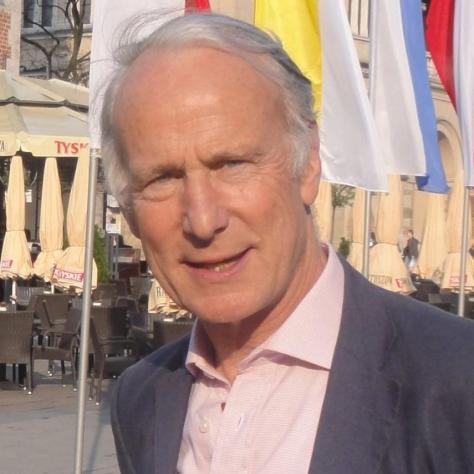
Paul O'Toole is a Professor of Microbial Genomics and Principal Investigator at the APC Microbiome Ireland, University College Cork. His research focuses on the gut microbiome's role in health, aging, and disease, particularly in the context of diet and probiotics. He leads projects like the ELDERMET study on elderly nutrition and the NU-AGE project exploring Mediterranean diets' anti-aging effects. He holds a BA (Mod.) from Trinity College Dublin and a PhD from Lund University, with postdoctoral training in Canada and New Zealand. Key grants include studies on dairy-derived microbiota, probiotic strain improvement, and microbiome analysis in aging populations. He has published extensively on Lactobacillus genomics, gut-brain interactions, and microbiome-driven health outcomes. His work bridges fundamental microbiology with clinical applications, emphasizing translational research. Scientific highlights include discovering microbiome links to cognitive decline, demonstrating dietary modulation of gut microbes to combat obesity, and identifying keystone species in healthy aging. He advocates for sustainability in conservation and food systems, reflecting his interdisciplinary approach to global health challenges.
Matthew Payne is an Associate Professor in the Department of Film, Television, and Theatre at the University of Notre Dame. His affiliations include roles as Director of Graduate Studies and regional director for the Learning Games Initiative, a multi-institute research collective focused on game archiving and education. His research spans video game studies, media literacy, military entertainment, and the cultural history of video games. He explores play theory, media and war, and the intersection of media production with new technologies. The 15 most recent articles highlight his focus on video game studies, transmedia narratives, and the cultural implications of gaming. These works cover topics from Nintendo Amiibo to slow game time mechanics in Red Dead Redemption 2, with recurring themes of military representation and ludic storytelling. Matthew Payne has co-edited notable works including How to Play Video Games and Joystick Soldiers , emphasizing collaborative approaches to game studies and critical analysis of military gaming.
Anne E. White is the School of Engineering Distinguished Professor of Engineering and associate vice president for research administration at the Massachusetts Institute of Technology (MIT). She serves in the Department of Nuclear Science and Engineering within MIT's School of Engineering and is a key researcher at the Plasma Science and Fusion Center (PSFC). White has held significant leadership roles including NSE department head from 2019 to 2023 and co-chair of the MIT Climate Nucleus from 2021 to 2024. She currently chairs the Fusion Energy Sciences Advisory Committee (FESAC), providing federal advisory input to the U.S. Department of Energy Office of Science. White received her PhD in physics from UCLA, where she conducted research at the Electric Tokamak. Her early career included research positions at the National Spherical Torus Experiment at Princeton Plasma Physics Laboratory and the DIII-D National Fusion Facility at General Atomics before joining MIT as a faculty member. Her educational background laid the foundation for her expertise in plasma physics and fusion energy research. Professor White's research focuses on magnetic fusion energy, specifically on understanding turbulent transport in magnetically confined fusion plasmas. Her work spans diagnostic development, novel experimentation, and validation of nonlinear gyrokinetic codes. She aims to demonstrate nuclear fusion as a practical part of the world's sustainable energy future. Her group develops and uses radiometers, reflectometers, and interferometers to measure fluctuations in plasma density, temperature, and flows in tokamaks. This research is critical for improving predictive capabilities of turbulent transport models, which is essential for developing viable fusion reactors. Analysis of Professor White's recent publications reveals a strong focus on plasma diagnostics and turbulence measurements across multiple tokamak facilities. Her work spans experimental measurements on ASDEX Upgrade, Alcator C-Mod, NSTX, and DIII-D tokamaks, with particular emphasis on electron temperature fluctuations, turbulence characterization, and transport model validation. A significant theme is the development and application of novel diagnostic techniques for simultaneous measurements of multiple plasma parameters. Her research increasingly incorporates computational approaches, including gyrokinetic simulations and machine learning methods, to interpret experimental data and advance predictive capabilities in fusion plasma physics. Professor White has received numerous prestigious awards throughout her career: Fellow, American Physical Society Division of Plasma Physics (2019) Cecil and Ida Green Career Development Professor, MIT (2014) American Physical Society Katherine E. Weimer Award (2014) Fusion Power Associates Excellence in Fusion Engineering Award (2014) Junior Bose Award for Excellence in Teaching, MIT (2014) PAI Outstanding Faculty Award from MIT student chapter of the American Nuclear Society (2013) Norman C. Rosenbluth Career Development Professor, MIT (2012-2014) Department of Energy Early Career Award (2011-2016) Marshall N. Rosenbluth Outstanding Doctoral Thesis Award (2009) As an educator and mentor, Professor White has advised numerous students through MIT's Department of Nuclear Science and Engineering. She has taught courses including Principles of Plasma Diagnostics, Seminar in Fusion & Plasma Physics, and Introduction to Plasma Physics. Her leadership extends to developing educational resources, notably leading a team in 2018 to create a free MITx MOOC focused on nuclear science and engineering for global high school learners. Professor White has secured significant research funding through Department of Energy awards, including the Early Career Award (2011-2016) and various fusion energy fellowships throughout her career. Her research group at MIT's Plasma Science and Fusion Center has contributed to multiple major fusion facilities and has been instrumental in advancing understanding of plasma turbulence and transport. Professor White leads the Fusion and Plasmas Lab at MIT, which focuses on diagnostic development and turbulence measurements in fusion plasmas. Her team has made significant contributions to research on four major tokamaks: Alcator C-Mod, ASDEX Upgrade, DIII-D, and National Spherical Torus Experiment Upgrade. At MIT's Plasma Science and Fusion Center, she previously served as assistant division head for magnetic fusion energy collaborations and ran the Gyrokinetic Simulation Working Group and the Alcator C-Mod Transport Group. Her lab maintains close collaboration between experimental work, theoretical modeling, and computational simulation to advance the understanding of plasma turbulence and transport phenomena critical for fusion energy development.
Haruzo HIDA is a Distinguished Research Professor of Mathematics at the University of California, Los Angeles (UCLA). His work spans advanced topics in Number Theory, Modular Forms, Galois Representations, and Arithmetic Geometry. HIDA has held significant positions globally, including lectures and research visits at institutions in India, China, Japan, and Europe. University: University of California, Los Angeles Department: Mathematics Academic Rank: Research Professor Research Interests: HIDA’s research focuses on complex and p-adic Number Theory, Modular Forms, and their connections to Galois Representations, Iwasawa Theory, L-functions, and Automorphic Forms. His recent work addresses adjoint L-values, Selmer groups, and the interplay between arithmetic invariants and geometric structures. Publications: HIDA’s recent articles (2014-2025) explore themes like Hecke algebras, anticyclotomic Iwasawa theory, Tate-Shafarevich groups, and p-adic rigidity. His work often bridges modular forms with arithmetic geometry and automorphic representations. Students: He has supervised numerous PhD students, including Koji Kitagawa, Chandrashekhar Khare, Eknath Ghate, Ashay Burungale, and Jaclyn Lang, contributing to their research in topics like modular forms and arithmetic geometry. Grants: His research has been partially supported by NSF grants, documented across multiple publications and lecture notes.
Vlatko Vedral is a Professor of Quantum Information Science at the University of Oxford and a Professor of Physics at the National University of Singapore. He is a Governing Body Fellow at Wolfson College, Oxford, and a Principal Investigator at the Centre for Quantum Technologies (CQT), Singapore. His research spans quantum physics, quantum information, quantum computation, and many-body physics, with foundational work on quantum entang *ul> for education and leadership roles. PhD in physics at Imperial College of Science, Technology and Medicine (1995-1998), supervised by Prof. Sir Peter L. Knight, FRS. Thesis: 'Quantum Information Theory of Entanglement', summarized in a review article in Rev. Mod. Phys. (2002). BSc in physics (first class) at Imperial College, specializing in Theoretical Physics (1992-1995). Vedral has organized major international conferences such as Foundations of Physics (Leeds 2007), Theoretical Quantum Computation (Singapore 2009), and Quantum Discord (2011). He has led international collaborations, including a group of 15 Oxford academics at the James Martin School on 'Bio-inspired quantum technologies' and served on editorial boards for Annalen der Physik and JPhysA . With over 300 publications, including 44 in Physical Review Letters , 13 in Nature , and six invited reviews on quantum information, Vedral's work has been cited over 25,000 times, with an h-index of 62. He has delivered around 300 invited lectures globally, including plenary talks at major conferences and public lectures for Café Scientifique (2007) and New Scientist (2016). Scientific Awards and Honors Fellowship at the UK Institute of Physics (2017) Chair Professorship at Tsinghua University, Beijing (2015) Award 'Srpski Krivak', Belgrade (2015) Marko Jaric Award, Serbian Institute of Physics (2010) World Scientific Medal and Prize, Singapore IOP (2009) Royal Society Wolfson Research Merit Award (2007-2009) Finalist, John Archibald Wheeler competition, Princeton (2002) Abdus Salam Award, Imperial College (1997) Overseas Research Student Award, Imperial College (1995-1998) University of London Knight Trust Scholarship (1996-1998) He has supervised 40 PhD students and numerous undergraduates across the UK, US, and Singapore through programs like SURF Caltech exchange and Stanford University collaborations. His leadership roles in academia highlight his influence in advancing quantum information theory and fostering global research initiatives.
Mark Kisin is the Perkins Professor of Mathematics at Harvard University. His research focuses on Galois representations, p-adic Hodge theory, and Shimura varieties. He has made significant contributions to number theory and algebraic geometry. Research Interests Kisin's work bridges deep questions in number theory with algebraic geometry. His primary areas include Galois representations, p-adic Hodge theory, and Shimura varieties, with applications to modular forms and arithmetic geometry. Recent Publications His recent articles explore topics such as prismatic cohomology, essential dimension, Honda-Tate theory, and Hecke orbits. These works highlight his expertise in Shimura varieties and Galois representations, often involving collaborations with leading mathematicians like B. Farb and J. Wolfson. Editorial Involvement Kisin has served on the editorial boards of prestigious journals including Inventiones (2007–present), Cambridge Journal of Mathematics (2013–present), and Algebra and Number Theory (2013–2015).
Hilary Biehler is a Professor of Public Law at the Law School, Trinity College Dublin. She holds a B.A.(Mod.), M.Litt., Ph.D., and LL.D. from Trinity College Dublin. Her career includes roles as Head of the Law School (2003-2005, 2008-2010, 2011-2014), Vice Dean of the Schools of Law and Education (2005-2006), and Pro-Dean of the Faculty of Social and Human Sciences (2007) and Arts, Humanities, and Social Sciences (2010-2011). She was a Commissioner with the Law Reform Commission (1997-2005) and Editor of the Irish Law Reports Monthly (1993-2008). Her research focuses on Equity and Trust Law, Administrative Law (particularly judicial review), and Civil Procedure. She has authored seminal texts like Equity and the Law of Trusts in Ireland and Judicial Review of Administrative Action , and co-edited Delany & McGrath on Civil Procedure . Over 120 peer-reviewed publications reflect her expertise in procedural fairness, legal remedies, and administrative decision-making standards. Recognition includes Fellowship of Trinity College Dublin (1998). Her work bridges academic scholarship, legal practice, and institutional leadership, shaping Irish legal education and jurisprudence.
Olli Sotamaa is a Professor of Game Culture Studies at Tampere University's Faculty of Information Technology and Communication Sciences, Department of Communication Sciences. He leads the Tampere University Game Research Lab alongside Professor Frans Mäyrä and serves as team leader in the Centre of Excellence in Game Culture Studies. Specializes in game cultural phenomena: online communities, fandom, modding, data-driven game development Co-edited Game Production Studies (Amsterdam University Press, 2021) His research focuses on game industry practices, data analytics impact, and player production cultures. Recent work examines game data labor, industry ethics, and digital preservation challenges. Key trends in his 15 most recent articles include: Game data work and algorithmic culture (2023-2025) Game modding and user-generated content (2021-2022) Game development practices (2019-2021) Game preservation and heritage (2020) Industry sustainability and ethics (2021-2025) Scientific awards: ERC-Advanced-Grant project 'Making Sense of Games (MSG)' Labs/teams: Tampere University Game Research Lab Centre of Excellence in Game Culture Studies
Prof Raphaël Phan is a Professor and Deputy Head of the School of IT at Monash University Malaysia. His expertise spans security, cryptography, malicious AI, emotion recognition, motion analysis, and generative AI. He has published over 220 papers and led significant projects including privacy-preserving data mining funded by UK MoD and Malaysian government grants exceeding RM4 million. He co-designed the BLAKE hash function (SHA-3 finalist) and has an h-index of 50. Education: PhD in Cryptography (Multimedia University, 2005), MEngSci (2001), BEng (Hons) Computer Engineering (1999). Research focuses on adversarial AI, brain networks, and secure systems. Current projects include Æmbience: emotion-aware virtual assistants using motion magnification. Supervised 15 PhD graduates and 19 current students. Professional affiliations: Chartered Engineer (IET, UK), HEA Fellow, Board of Engineers Malaysia. Recent work emphasizes causal bias detection in micro-expressions, brain tumor detection via advanced YOLOv8, and generative adversarial networks for medical imaging. His work bridges cybersecurity with neuroscience applications.
Florian Herzig is a Professor in the Department of Mathematics at the University of Toronto. His research focuses on Number Theory and Representation Theory, particularly mod p and p-adic representations of reductive groups. Education: Ph.D., Harvard University Certificate of Advanced Study in Mathematics (Part III), University of Cambridge B.A., University of Cambridge Research Interests: Herzig works on modular and p-adic representations, with applications to the Langlands program. His work explores Serre-type conjectures, local-global compatibility, and cohomology of Shimura varieties. Scientific Awards: He was named a Fellow of the American Mathematical Society in 2025. Publications & Collaborations: Herzig has co-authored major works with Christophe Breuil, Yongquan Hu, and Benjamin Schraen. His research appears in leading journals like Inventiones Mathematicae and Duke Mathematical Journal. Teaching & Seminars: He has taught graduate courses on linear algebraic groups and p-modular representations. He participates in the Arizona Winter School and international workshops on representation theory.
Dori Kimel is a Senior Lecturer in Legal Philosophy at New College, University of Oxford. He previously held a lectureship at University College London before returning to Oxford in 2001 to join New College as a Fellow and Senior Law Tutor. His expertise spans legal, moral, and political philosophy, with a focus on criminal law and contract law theory. Kimel’s research emphasizes the philosophical foundations of contract law, particularly exploring autonomy, moral culpability, and the relationship between promise and contractual obligations. His notable work includes From Promise to Contract: Towards a Liberal Theory of Contract (2003) and contributions to Cambridge Law Journal and Oxford Journal of Legal Studies . His publications analyze contractual paradigms, remedial rights, and the ethical dimensions of contractual breach. He teaches Jurisprudence, Criminal Law (Mods), and Philosophical Foundations of the Common Law.
Adam J. Aviv is an Associate Professor of Computer Science at The George Washington University, leading the George Washington University Usable Security and Privacy Lab (gwusec) . His work focuses on computer security, privacy, and usable security , with a particular emphasis on user behavior, authentication systems, and mobile/web security. University: The George Washington University Academic Rank: Associate Professor Email: aaviv@gwu.edu Research Interests: His research investigates how users interact with security and privacy systems, including studies on: Biometric and mobile authentication Password manager usability Generative AI risk perception Online proctoring and institutional decisions Data breach responses Privacy labels and user trust Recent Publications (2024–2025) span venues like USENIX Security, IEEE S&P, ACM CHI, and PoPETs, covering topics such as: Wearable-based contact tracing in low-resource settings WhatsApp mod security perceptions Password manager issues Privacy label accuracy Grants & Awards: Recipient of the OVPR Research Mentorship Award for his work with students. Currently holds NSF grants for collaborative cybersecurity research and travel funding for Privacy Enhancing Technology Symposium. Teaching: Offers Intro to Usable Security and Privacy (CSCI 4533/6533) in Fall 2025, with students engaging in: Secure messaging studies Interview and survey methodology Full research projects with ethics reports Laboratory: The gwusec lab focuses on user-centered security and privacy research , collaborating with institutions like Tel Aviv University and University of Haifa.
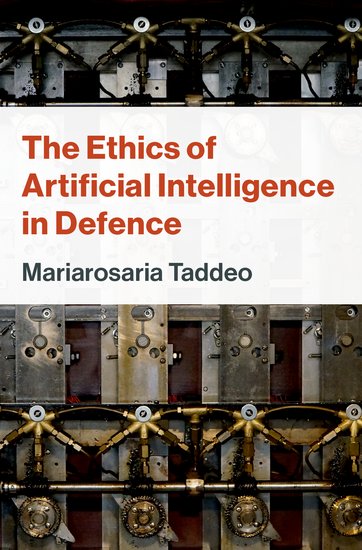
Mariarosaria Taddeo is Professor of Digital Ethics and Defence Technologies at the Oxford Internet Institute (University of Oxford) , where she also serves as DPhil Programme Director for Information, Communication and the Social Sciences. She is a Senior Research Fellow at the Alan Turing Institute and holds advisory roles at institutions including the Ministry of Defence (UK) Ethics Advisory Panel , the BRAID Programme , and the Leonardo Foundation . Education PhD (Doctor Europeus) in Philosophy from University of Padua Mariarosaria Taddeo’s research spans Digital Ethics, Philosophy of Technology, Cybersecurity Ethics, and AI Governance , with a focus on national defence applications. Her work addresses trust in AI , cyber conflict regulation , and ethical frameworks for autonomous weapons . She has published extensively in journals like Nature , Science , and Minds and Machines , including studies on data philanthropy , digital well-being , and quantum technology ethics . Scientific Awards 2010 Simon Award for Outstanding Research in Computing and Philosophy 2016 World Technology Award for Ethics 2018 InspiringFifty: Top 50 Italian women in technology ORBIT listings (2018, 2020) of top 100 women in AI Ethics 2020 Women’s Forum for Economy and Society: Outstanding Rising Talents ComputerWeekly Top 100 Influential Women in UK Technology (2020, 2023) Her projects include the UK MOD-funded AI Ethics Principles initiative, the NATO Cooperative Cyber Defence Centre of Excellence ethical guidance project, and contributions to the PETRAS IoT Research Hub . She advocates for ethical AI implementation in defence and digital governance, influencing EU policy through the CEPS Task Force on AI and Cybersecurity .
Kevin Moberly is an Associate Professor in the Department of English at Old Dominion University (ODU), affiliated with the College of Arts & Letters. He holds a Ph.D. in English from the University of Louisiana at Lafayette (2005), an M.A. in Creative Writing (2000), and a B.A. in English from Berry College (1995). His research focuses on medievalism, digital humanities, and computer game studies, with notable grants including a 2011 College of Arts & Letters Summer Research Fellowship ($6,000) and a 2015 Center for Learning and Teaching Faculty Innovator Grant ($3,000). Moberly’s work bridges medieval scholarship and modern digital media, addressing themes like fan culture, corporate revisionism, and virtual economies. His publications span journals such as Studies in Medievalism , Computers and Composition , and Eludamos , alongside book chapters on game studies and technical communication. He has received numerous teaching awards, including the 2010 Shining Star Teaching Award and recognition for co-organizing the 2007 Computers and Writing Online Conference. His research interests include the intersection of medieval narratives with contemporary cultural phenomena, digital pedagogies, and the rhetoric of free speech in online spaces. Moberly has contributed to initiatives like the Examining the Evolution of Gaming anthology and co-authored studies on modding in technical classrooms. His work often critiques societal structures through interdisciplinary lenses, blending literary analysis with digital media theory.
Professor Gerard Kilroy is a leading scholar in Early Modern English Literature and Religious Studies, currently serving as Professor of English Literature at Ignatianum University in Krakow. He holds Senior Research Fellowships at Campion Hall, University of Oxford and is an Honorary Research Fellow at University College London . Kilroy’s research focuses on manuscript transmission, the survival of Catholic ideas in Shakespeare’s works, and oral culture in early modern England. Classical Mods and English Literature, Magdalen College, Oxford Ph.D., Lancaster University His recent publications explore subversive publishing in the English and Polish-Lithuanian Counter-Reformation, Shakespeare’s theological contexts, and Joseph Conrad’s modernist fiction. Kilroy has held fellowships at the Folger Shakespeare Library , St Catherine’s College, Oxford, and Marsh’s Library, Dublin. Scientific Awards and Fellowships: Folger Shakespeare Library Fellowship St Catherine’s College, Oxford Fellowship Marsh’s Library, Dublin Fellowship St John’s College, Oxford Scholarship Grocers’ Company Scholar (2001–2014) ELR Prize (2011) Kilroy founded the Bath Royal Literary and Scientific Institution's Café Philo in 1997, fostering philosophical dialogue. His collaborative projects include studies on Jesuit school theaters in the Polish-Lithuanian Commonwealth and Catholic intellectual networks in England and Poland.