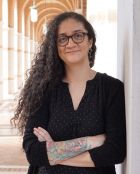
Claire Bowern is Professor of Linguistics at Yale University specializing in historical linguistics, language documentation, and Australian Indigenous languages. Her research employs computational phylogenetics to study language evolution and supports language revitalization through digital archives and fieldwork methodologies. Recent publications address: Phylogenetic signal in lexical evolution across language families Digital infrastructure for endangered language documentation (FLEx software analysis) Decolonizing linguistics pedagogy and research practices Her work consistently integrates linguistic, anthropological, and computational approaches to analyze language diversity and change. She contributes to global databases including Grambank and D-PLACE, examining links between linguistic, cultural, and environmental patterns.
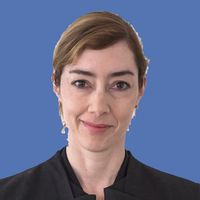
Paola Cascante-Bonilla is an Assistant Professor in the Department of Computer Science at Stony Brook University, with expertise in computer vision, natural language processing, and embodied AI. Her research focuses on developing systems for compositional reasoning, common-sense inference, and trustworthy AI using vision-language models, while addressing cultural bias and explainability challenges.
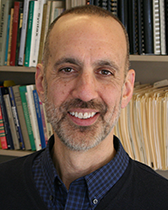
Gregory Ward is Professor of Linguistics, Gender & Sexuality Studies, and Philosophy at Northwestern University. His work bridges pragmatic theory, information structure, and intonational meaning, with a focus on reference/anaphora. He has taught courses like Pragmatics (LING 372) and Language & Gender (GSS 234), receiving the E. LeRoy Hall Award for Excellence in Teaching (2012). BA in Comparative Literature and Linguistics (1978, UC Berkeley) PhD in Linguistics (1985, University of Pennsylvania) His research explores how contextual meaning shapes linguistic structures, including demonstratives, implicatures, and noncanonical word order. He has contributed to experimental pragmatics, syntax-discourse interactions, and the semantics-pragmatics boundary, co-authoring key works like Information Status and Noncanonical Word Order in English (1998). Recent publications analyze deferred reference, event anaphora, and functional compositionality. These works span subfields such as pragmatic theory, syntactic variation, and discourse processing, reflecting his interdisciplinary approach. Scientific awards include: E. LeRoy Hall Award for Excellence in Teaching (2012) He served as Secretary-Treasurer of the Linguistic Society of America (2004-2007), co-PI on NIH and NSF grants, and Fellow at the Center for Advanced Study in the Behavioral Sciences (2004-05).
Prof. Dr. Pia Knoeferle is a leading academic at Humboldt-Universität zu Berlin , where she serves as a Professor in the Department of German Language and Linguistics . She is a principal investigator in the Collaborative Research Center (CRC 1412) focused on register phenomena and leads the Reaction Time, Eye-tracking, and EEG Laboratories . Her research spans psycholinguistics , cognitive neuroscience , and computational modeling of language , with a central interest in how real-time language comprehension interacts with social context , formality-register congruence , and morphosyntactic processing . Appointments: Professor at Humboldt-Universität (2024), CRC 1412 member Methodologies: Eye-tracking, EEG, Visual World Paradigm, ERP Her work investigates lifespan language processing (children, adults, older adults) through contextual cue integration , including emotional , spatial , and social context such as gender cues , eye gaze , and facial expressions . Key questions include: How do pragmatic and contextual factors modulate lexical and grammatical processing ? What representations underlie register sensitivity in spoken and written comprehension ? Recent articles (2022-2024) focus on register congruence effects in German sentence processing, age-related differences in formality-register anticipation , and interactions between register and morphosyntactic knowledge . Using eye-tracking and visual world paradigms , her team examines incremental integration of socially-situated context with verb-argument relations and grammatical constraints . Findings suggest subtle late-stage register effects and interference between pragmatic and syntactic processing . Her lab collaborates with researchers like Katja Maquate , Valentina Nicole Pescuma , and Camilo Ronderos , contributing to the Frame text of the Second Phase Proposal for CRC 1412 (2020) and subsequent reviews in Frontiers in Psychology (2023). The work emphasizes complementary methods to model register variability across languages , modalities , and cultural contexts .
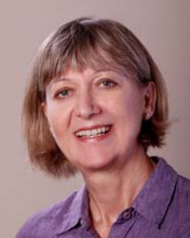
Christiane Fellbaum serves as Lecturer with Rank of Professor in Princeton University's Program in Linguistics and Department of Computer Science, where she has been a senior research scholar since returning in 1987 after postdoctoral work at the University of Paris. Her foundational contributions to computational linguistics include co-developing WordNet and co-founding the Global WordNet Association. Her educational background features: Ph.D. in Linguistics, Princeton University (1980) Postdoctoral Fellowship, University of Paris Fellbaum's research integrates theoretical linguistics with computational applications, specializing in lexical semantics, corpus analysis, and semantic network construction. Her work bridges computational linguistics and lexicography through projects like WordNet and Medical WordNet, with recent emphasis on multilingual resources, bias analysis in embeddings, and African language technology development. She examines semantic phenomena including idioms, verb alternations, and emotion scales through both corpus linguistics and formal ontological frameworks. Analysis of her publication trajectory reveals sustained innovation in lexical resource development since the 2000s, evolving from foundational WordNet studies to contemporary work on large language model adaptation and social bias mitigation. Current research demonstrates increasing interdisciplinary collaboration across NLP, cognitive science, and social justice applications. Her scientific recognition includes: Wolfgang Paul Prize from the German Humboldt Foundation (2001) Antonio Zampolli Prize (2006) Fellbaum has secured continuous research funding from the U.S. National Science Foundation, European Union Seventh Framework, Frank Moss Foundation, and Tim Gill Foundation. She actively mentors junior researchers through Princeton's Independent Work seminars and hosts the North American Computational Linguistics Olympiad (NACLO), while leading major international collaborations including the KYOTO and SIERA European projects. As director of the WordNet project and permanent fellow at the Berlin-Brandenburg Academy of Sciences, she maintains leadership in global lexical resource initiatives through the Princeton Language and Intelligence initiative and Natural and Artificial Minds research group.
Prof. Dr. Thorsten Sander is an adjunct professor in philosophy at the University of Duisburg-Essen's Institute of Philosophy, within the Faculty of Humanities. His research focuses on philosophy of language, pragmatics, and Gottlob Frege's contributions to semantics. He holds a PhD from Universität Gesamthochschule Essen (2001) and has authored influential works such as Frege's Pragmatics (2025) and Bedeutung als Gebrauch (2018). His work bridges historical analysis of Frege's theories with contemporary issues in semantics and psycholinguistics. Research Interests: Non-at-issue contents (e.g., implicatures) Fregean pragmatics (coloring, side-thoughts) Register differences and use-conditional meaning Meta-ethics and moral semantics Publications highlight his engagement with Frege's legacy, including analyses of modality, presupposition, and pragmatic vs. semantic meaning distinctions. He critiques traditional categorizations like 'epistemic implicature' and advocates for precise semantic profiles tailored to theoretical goals. Prof. Sander's contributions span books, peer-reviewed articles, and reviews. His current projects include exploring pejoratives and Frege's influence on modern psycholinguistics. Office hours are Fridays at 12 noon (email预约).
Carita Paradis is a Professor Emerita at Lund University's Centre for Languages and Literature, specializing in English Linguistics. She holds a PhD from Lund University (1997) and has held leadership roles including Chair of the Swedish Research Council's Linguistics panel (2010–2015). She coordinates the Language, Cognition and Discourse@Lund (LCD@L) research group, focusing on discourse meaning, language acquisition, and sociocultural variation. Her research spans cognitive linguistics, discourse analysis, semantics, and sensory language. She has authored/co-authored over 100 refereed publications, 5 books, and edited 10 journal volumes. Awards include membership in Academia Europaea (2016) and leadership roles in Scandinavian linguistic associations. She has supervised 14 PhD students and 8 postdocs, taught at all academic levels, and participated in numerous national/international research projects. Her editorial roles include serving on Cognitive Semantics, Languages, and Human Cognitive Processing series.
James Essegbey is a Professor of African Languages and Linguistics in the Department of Languages, Literatures & Cultures at the University of Florida (Gainesville), affiliated with the Center for African Studies, Center for Latin American Studies, and African American Studies. His research focuses on language endangerment documentation, syntax-semantics interfaces, and West African languages like Ewe, Akan, and Nyangbo. He holds a PhD from Leiden University (1999) and has held postdoctoral fellowships in the Netherlands and Germany. Key research areas include: Documentation of endangered languages (e.g., Nyangbo, Tutrugbu) Syntax of Kwa languages and Atlantic creoles Cultural influences on linguistic structures (e.g., left-hand taboos in Ghana) Creole genesis and trans-Atlantic language contacts Award-winning scholar with over 20 years of grant-funded projects, including: NSF grants for CoLang and documentary linguistics training programs NSEP funding for African languages summer institutes Leadership in language revitalization initiatives Teaching includes courses on Akan language, African elements in the Americas, and methods of language documentation. Active in professional organizations like the African Studies Association and Society for Pidgin and Creole Languages.
Anna Theakston is a Professor of Developmental Psychology at the University of Manchester where she holds the position of Head of Division for the Division of Psychology Communication and Human Neuroscience. She is also Co-director of the ESRC International Centre for Language and Communicative Development (LuCiD), a major research initiative focused on language development in children. Dr. Theakston completed her undergraduate degree in Psychology at the University of Nottingham and earned her PhD through research at the University of Manchester on early language development in children aged 2-3 years. She subsequently coordinated the Manchester-based Max Planck Child Study Centre before being appointed to her current professorship. Her research focuses on children's early language and communicative development during preschool and early school years, situated within a usage-based framework that emphasizes child-environment interactions and caregiver input. Her work spans multiple areas including early gestural communication, caregiver-child interactions, grammatical construction acquisition, grammatical error origins, inflectional morphology, and syntax-semantics-pragmatics interfaces in complex language development. She frequently conducts crosslinguistic comparisons and employs diverse methodologies from corpus analysis to behavioral experiments, often collaborating with computational modelers. Analysis of her recent publications reveals strong emphasis on children's comprehension and production of complex sentence structures, particularly adverbial and complement clauses, with investigations into how information structure, iconicity, and pragmatic factors influence language development. Her work increasingly examines applications in real-world contexts including schools, nurseries, and cultural institutions, with growing attention to supporting deaf children's communication development and multilingual education. Co-Director, ESRC International Centre for Language and Communicative Development (LuCiD) Active researcher with 111 research outputs including articles, datasets, and book chapters Recipient of research funding from ESRC and Max Planck Institute Professor Theakston supervises numerous PhD students investigating various aspects of language development, with recent projects examining tag questions, cultural institutions' role in language learning for minority populations, science interventions for deaf children, and Modern Foreign Language teaching in multilingual classrooms. Her research has practical impact through tools like the Teacher Toolkit for Teaching Primary MFL in Multilingual Key Stage 2 Classrooms and initiatives supporting deaf children's social communication skills. She maintains active collaborations with researchers across multiple disciplines and institutions, as evidenced by her extensive co-authorship network. Her work contributes to UN Sustainable Development Goals related to quality education and reduced inequalities.
Dr. Anna Rogos-Hebda is an Assistant Professor at the Faculty of English, Adam Mickiewicz University in Poznań, Poland. She is actively involved in research and teaching in the fields of cognitive and historical linguistics, with a strong emphasis on diachronic semantics, emotion terminology, and corpus-based analysis. Faculty of English, Adam Mickiewicz University Researcher in Cognitive and Historical Linguistics Active contributor to international academic conferences Her research interests center on the language of emotions , conceptual metaphor theory , and the diachronic development of abstract categories in English and Polish. She employs corpus linguistics and cognitive semantics to investigate semantic change, particularly in Middle and Late Modern English. Her work explores how emotions such as hope, belief, and hate are linguistically encoded and evolve over time. The recent articles reflect a consistent focus on diachronic cognitive linguistics , with themes including semantic change in emotion terms , conceptualization of social categories (e.g., beggars, refugees, immigrants), and political and ideological discourse . Her methodology is predominantly corpus-based, often involving quantitative and multivariate analysis of lexical usage across time and cultures. She has not been awarded any formal scientific prizes or fellowships mentioned in the text. Dr. Rogos-Hebda has served as an assistant editor for Studia Anglica Posnaniensia (2001–2010) and has been actively involved in organizing academic events such as the History of English Language in Poznań (HEL-P) and Figurative Thought and Language (FTL) conferences. She has received research support through scholarships from the University of Helsinki and Otto Friedrich Universität, Bamberg, as well as a conference grant from the Foundation for Polish Science. She is a member of several professional organizations, including Societas Linguistica Europea (SLE), Polish Association for the Study of English (PASE), International Society for the Linguistics of English (ISLE), and The Philological Society (TPS). She regularly presents her work at major international conferences and contributes to collaborative research projects, particularly with scholars like Małgorzata Fabiszak and Karolina Krawczak-Glynn.
PD Dr. Lutz Rzehak is an academic staff member at the Institute for Asian and African Studies (IAAW) within the Faculty of Humanities at Humboldt University of Berlin, serving as a Teacher for special tasks specializing in Modern Iranian languages and the ethnography and cultural history of Afghanistan and Central Asia. His educational background includes: Oriental Studies/History from the State University of Leningrad (1985) Doctorate in Iranian Studies, Humboldt University of Berlin (1991) Habilitation in Central Asian Studies / Iranian Studies, Humboldt University of Berlin (2001) Dr. Rzehak's research spans Central Asian Studies , Iranian Studies , Ethnography , and Linguistics , with fieldwork focusing on Baloch, Pashtun, and Tajik communities. His work examines language evolution, social structures, and cultural practices through historical and contemporary lenses, particularly regarding Soviet influence and post-Taliban Afghanistan. Key contributions include grammatical analyses of Iranian languages and ethnographic studies of religious rituals and tribal systems. His recent publications (2016-2021) reveal consistent focus on Iranian language dynamics (especially Dari and Pashto), ethnic identity politics in Afghanistan, and cultural history of Central Asia. These works address language change mechanisms, ethnic consolidation strategies, and the interplay between tradition and modernity, often utilizing comparative linguistic and ethnographic methodologies. His scientific awards include: Heisenberg Fellow of the German Research Foundation Dr. Rzehak has held significant research positions including Research Associate in the Crossroads Asia Competence Network (2011-2016) and Heisenberg Fellow (2002-2011). While his CV does not list formal PhD advisees, his language lecturing and research supervision have mentored numerous students in Central Asian and Iranian studies through course instruction and fieldwork guidance. He has been actively involved in the Crossroads Asia Competence Network, a major interdisciplinary research initiative examining transregional connections and historical trajectories across Central, South, and West Asia.
Prof. Sabine Schulte im Walde is an Associate Professor at the University of Stuttgart's Institute for Natural Language Processing. She holds affiliations with the International Max Planck Research School for Intelligent Systems (IMPRS-IS), ELLIS Society, and CLARIN-D. Her research focuses on computational modeling of lexical-semantic phenomena, including compositionality of noun compounds and particle verbs, abstract/concrete semantics, and diachronic language change. She has contributed to datasets on association norms for German compounds and led projects on multimodal semantic analysis. Research Interests: Her work bridges computational linguistics and cognitive science, emphasizing data-intensive methods. Key areas include semantic classification of verbs, metaphor detection, and evaluating semantic relations using distributional models. She explores how abstractness influences plausibility judgments and investigates semantic shifts in compounds over time. Awards: Nominated for AcademiaNet by the German Research Foundation (DFG). Active in professional societies including ACL, GSCL, and DGfS. Publications span over 50 peer-reviewed articles in venues like Computational Linguistics and ACL. Labs/Teams: Leads research on computational terminology and semantic change analysis at the Stuttgart Research Focus Language and Cognition (SRF). Collaborates internationally on projects like the DURel annotation tool for diachronic semantics.
Haiyang Ai is an Associate Professor in the Literacy and Second Language Studies program at the University of Cincinnati's School of Education. His research applies corpus linguistics and natural language processing to investigate second language acquisition, writing complexity, and bilingual language processing. His educational background includes a Ph.D. in Applied Linguistics from The Pennsylvania State University (2015), an M.A. in Linguistics & Applied Linguistics from the University of Chinese Academy of Sciences (2006), and a B.A. in English from Shaanxi Normal University (2003). Dr. Ai's research spans corpus linguistics, natural language processing, second language acquisition, and computer-assisted language learning. He specializes in compiling and analyzing native and learner corpora to develop intelligent language learning systems and investigate lexical/syntactic complexity in L2 writing. His methodological approach integrates computational tools with theoretical linguistics to address practical language teaching challenges. His recent publications (2019-2023) demonstrate consistent focus on lexical bundles in professional communication, automating complexity measurement in Chinese, speech perception mechanisms in bilinguals, and grammatical puzzles in English learning. These works bridge corpus-based analysis with psycholinguistic experimentation across diverse subfields including morphosyntax, pragmatic competence, and cognitive processing in L2 acquisition. Dr. Ai has secured multiple University of Cincinnati grants including three CECH Faculty Development Grants ($2500 in 2017-2018 for verb-noun collocation research, $2000 in 2016-2017 for corrective feedback tools) and the NCFDD Faculty Success Program ($3250 in 2017), all supporting his development of computational language learning resources.
Yasutada Sudo is a Professor of Linguistics at University College London (UCL), holding positions since 2024. Previously, he served as Associate Professor (2018–2024) and Lecturer in Semantics (2013–2018) at UCL. He earned his Ph.D. in Linguistics from MIT. His research focuses on formal semantics, pragmatics, and their intersections with cognitive psychology and computational models. Key areas include scalar implicatures, plural predication, anaphora resolution, and linguistic typology. His work spans multiple languages, including Japanese, Greek, and Italian. His research interests emphasize experimental semantics, cross-linguistic variation in quantificational structures, and the interaction between syntax and semantics. Recent work explores non-maximality effects, perspective sensitivity, and the cognitive underpinnings of pragmatic inferences. He has contributed to debates on Magri effects, blindess hypotheses, and the role of context in interpretation. Publications from 2025–2021 reveal a focus on scalar implicatures, plural inferences, and formal semantic frameworks. His 2025 articles address alternative-based analyses and experimental validation of pragmatic theories. Earlier work (2020–2014) covers gender in Greek, ordinal semantics, and perspective-shifting verbs like 'come' and 'go'. No scientific awards are explicitly listed, but his extensive publication record reflects scholarly impact. He leads UCL’s semantics research group, hosting seminars like PLIN0056, and contributes to academic discourse through peer-reviewed journals and conference presentations.
Alexis Housen is a Professor of Linguistics & Applied Linguistics at the LW Academic Unit Linguistics and Literary Studies within Vrije Universiteit Brussel . Their research focuses on second language acquisition, multilingualism, and psycholinguistics. Currently active in over 30 projects, including leadership roles in initiatives like the Eye-Catching project (2021-2024) and the International Francqui Professor program (2023-2025). Research Interests : Housen's work examines language acquisition processes, particularly in second language learning contexts. Key themes include lexis-grammar interfaces, salience effects in SLA, and the role of instruction in phonological acquisition. Their empirical studies integrate psycholinguistic methodologies with corpus-based analyses. Recent Contributions : Recent publications address salience's role in morphology acquisition, complexity metrics in L2 writing, and comparative proficiency analysis across oral/written modalities. Their work demonstrates interdisciplinary influence across linguistics, education, and cognitive science. Recognition : Awarded the European Second Language Association Fellowship (2000). Active in international collaborations, presenting at conferences like the European Second Language Association and Birkbeck College symposia. Grants & Leadership : Oversees €1.2M+ in active funding through projects like SRP-Groeifinanciering: Multilingual language control (2022-2027). Serves in leadership roles including Dean and Head of Research Groups.