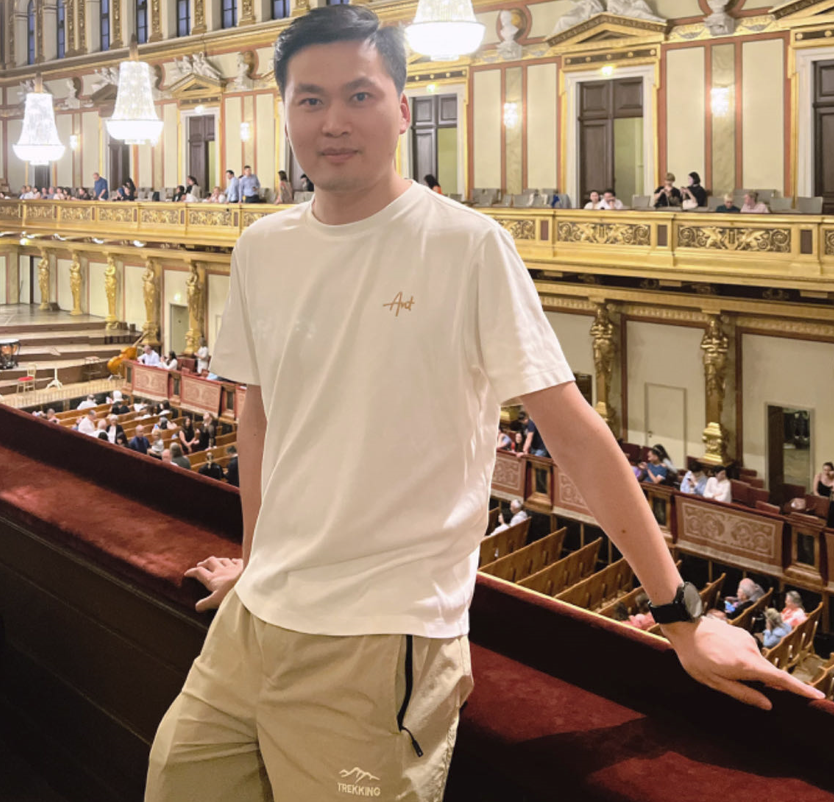
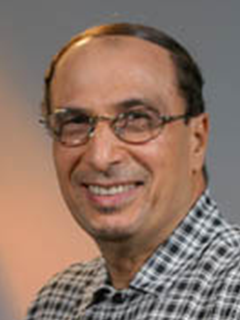
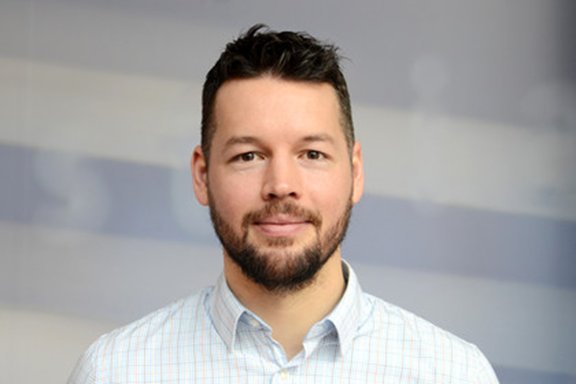
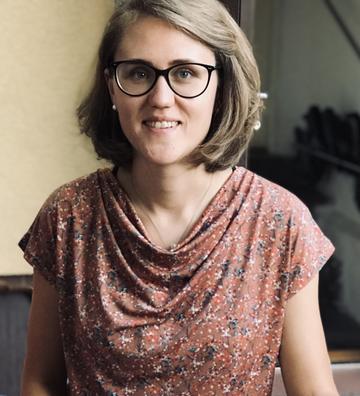
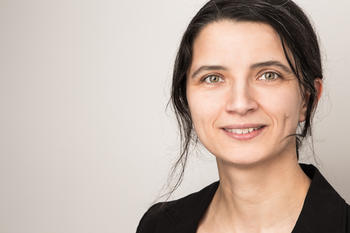
Srinivasa Raghavendra Bhuvan Gummidi is an Assistant Professor at the Department of Green Technology (IGT) within the University of Southern Denmark . His research focuses on Circular Economy , Building Stock Modeling , and Environmental Impact Assessment through advanced Geographical Information Systems (GIS) and Deep Learning techniques. Recent work includes high-precision building material identification and spatiotemporal tracking of urban material stocks. Research Keywords : Algorithms for Geographical Information Systems, Optimization Algorithms, Building Stock Modeling, Circular Economy, Deep Learning, Environmental Impact Assessment His peer-reviewed publications (2025–2015) span topics from urban material sustainability to spatial crowdsourcing systems . He teaches Geographic Information Systems for Engineering Sustainability (2024) and collaborates internationally on urban development and resource management projects.
Hu Cao is a postdoctoral research associate at the Chair of Robotics, Artificial Intelligence and Real-Time Systems (Prof. Alois Knoll) at the Technical University of Munich (TUM) . Holding a Ph.D. from TUM, his research bridges autonomous driving , robotic grasping , medical image analysis , and dense prediction (classification, detection, segmentation). Education : Ph.D. from TUM Hu's work explores: Autonomous Driving : Perception under adverse conditions, multi-sensor fusion, and risk-based safety models Robotic Grasping : Vision-language integration for 6D pose estimation Medical Imaging : Transformer-based segmentation techniques (e.g., Swin-Unet) His recent publications include 15+ works at top venues like CVPR , ICCV , IEEE TPAMI , and IEEE TIV , with 6052+ Google Scholar citations . Notably, Swin-Unet ranks among the top 3 most cited ECCV papers in 5 years, and his work on event-based autonomous driving perception was featured in IEEE Xplore Innovation Spotlight . Editorial roles include: Associate Editor for Visual Intelligence and Frontiers in Neurorobotics Editorial Board member of Artificial Intelligence and Autonomous Systems (AIAS) Topic Editor for Frontiers in Robotics and AI and Frontiers in Neuroscience He has reviewed for 20+ top journals (e.g., Nature Computational Science , IEEE TRO ) and served on program committees for NeurIPS , CVPR , ICCV , and MICCAI .
Nan Bai is an Assistant Professor in the Heritage & Architecture section at Delft University of Technology's Faculty of Architecture and the Built Environment. His research integrates computational social science, architecture, and artificial intelligence to analyze heritage values in urban contexts, focusing on social perceptions derived from social media data. PhD in Heritage and Values from TU Delft Marie Sklodowska-Curie Early Stage Researcher in the HERILAND Project Research Interests : Computational social science, cultural heritage analytics, spatiotemporal modeling, and social media-driven urban planning. His work bridges architecture, AI, and big data to address heritage preservation challenges. Scientific Awards : Best Paper Award from CIPA 2023 Young CAADRIA Award 2020 External Roles : Active in committees like ICOMOS Nederland, CIPA Emerging Professionals, and CIPA Heritage Documentation. He has presented at international conferences and workshops on heritage and AI topics.
Alexandra Stan serves as a Lecturer in the Department of Theoretical and Applied Linguistics at the Faculty of Letters, Transilvania University of Brasov, Romania. Holding a PhD, she actively contributes to linguistics education and research within this institution, focusing on theoretical and practical language analysis. Her research centers on semantics, lexicography, and contrastive linguistics between English and Romanian, with significant emphasis on idiomatic expressions, bilingual dictionaries, and English for Specific Purposes (ESP). Stan's work explores lexical semantics across cultural contexts, examining how concepts like natural phenomena, physical attributes, and digital communication manifest in language structures. She investigates terminology variation, semantic fields, and the impact of technology on language learning. Recent publications (2022-2024) reveal expanding research trajectories into digital discourse, including code-switching in gaming communities and specialized glossary development. Her scholarship consistently employs contrastive methodology to analyze linguistic phenomena across English and Romanian, with growing attention to cultural metaphors, literary language, and technology-enhanced language education. This trajectory demonstrates increasing interdisciplinary connections between computational linguistics, sociolinguistics, and educational technology.
Mansur R. Kabuka is a Professor in the Department of Electrical and Computer Engineering at the University of Miami College of Engineering . His research bridges computational methods with biomedical applications. University of Miami College of Engineering Electrical and Computer Engineering Department Research focuses on: Deep learning for network analysis Bioinformatics and protein classification Ontology-based data integration Biomedical data modeling His recent work involves: Motif-aware representation learning in multilayer networks Multi-modal approaches for protein interaction networks Metabolomics data integration frameworks Weather-traffic flow prediction models Distributed query processing over ontologies Publications demonstrate cross-disciplinary applications of machine learning in: Biological system modeling Cancer subtype prediction Protein family classification Intelligent transportation systems
Dr Stephan Dahm is a researcher at the Department of General Psychology I, Faculty of Psychology and Sport Science, University of Innsbruck, Austria. He currently leads two funded projects: an Austrian Academy of Sciences (ÖAW) project on Action representations and automatization after action imagery practice and an Austrian Science Fund (FWF) project on The measurement of action imagery ability . Research interests Mechanisms of motor control underlying imagined and executed movements Motor imagery and assessment of action imagery ability Mental practice and motor learning Intermanual transfer of learning Implicit sequence learning Bimanual coordination Experimental psychology His work explores how cognitive constraints shape motor imagery, how imagery practice can automatize stimulus-response associations, and how sequence knowledge transfers between hands. A central theme is the comparison between imagined and executed actions using behavioural paradigms and chronometric measures. Key publications Across more than 30 peer-reviewed articles (2015-2025), Dahm has advanced understanding of motor imagery timing, effector independence, and the role of internal forward models in detecting errors during imagery. His recent work in Psychological Research and Human Movement Science demonstrates that imagery practice can induce robust learning and transfer effects comparable to physical practice. Funding & projects FWF Project P 36142-B: The measurement of action imagery ability ÖAW Project: Action representations and automatization after action imagery practice Advising & collaboration Dr Dahm welcomes inquiries from master’s students interested in experimental sport psychology or his specific research themes. He maintains active collaboration networks evidenced by international co-authored papers and open-science resources such as OpenSesame implementations. Labs & affiliations He is based in Room 2S14 (2nd floor) at University of Innsbruck, Universitätsstraße 5–7, and can be reached at Stephan.Dahm@uibk.ac.at .
Vladimír Marko is an Associate Professor at the Department of Logic and Methodology of Sciences , Faculty of Arts, Comenius University (Bratislava), with a focus on temporal logics and history of logic . He has been affiliated with Comenius University since 1997 and holds a habilitation in systematic philosophy since 2020. Education: Master of Philosophy, University of Belgrade (1986); PhD, Comenius University (1997) Research Interests: Determinism, modal logic, ancient philosophical arguments, semantics of conditionals Projects: 2022–2026 APVV (Semantics of Conditionals), 2023–2025 VEGA (Idealization and Abstraction in Normative and Empirical Disciplines) Teaching: Courses on logic, methodology of research, and philosophy of time He has authored over 20 papers and 3 books, including Štyri antické argumenty o budúcich náhodnostiach (2017). His work intersects classical philosophy and formal logic, addressing issues like the Lazy Argument and Cicero's Fabius Argument.
Professor Panagiotis Demestichas serves as a faculty member in the Department of Digital Systems at the University of Piraeus, where he has been a Professor since April 2012. He heads the Laboratory of "Telecommunication Networks and Integrated Services" and has held significant leadership positions including Chair of the Department of Digital Systems from 2011 to 2015. His academic journey began with Bachelor's and Doctoral degrees in Electrical Engineering from the National Technical University of Athens. Professor Demestichas' educational background includes: Bachelor's Degree in Electrical Engineering, National Technical University of Athens Doctoral Degree in Electrical Engineering, National Technical University of Athens His research spans the forefront of telecommunications and network technologies, with particular expertise in 5G and emerging 6G systems. Professor Demestichas focuses on smart/cognitive/autonomic management and convergence of ICT infrastructures, SDN/NFV technologies, cognitive radio networks, and cloud and Internet of Things solutions. His work addresses critical challenges in spectrum management, network architecture design for beyond 5G systems, and the integration of artificial intelligence into network management frameworks. His research has significant implications for vertical industries including transportation, manufacturing, and smart cities, where reliable high-speed connectivity is essential. Professor Demestichas' publication record demonstrates a consistent focus on next-generation network technologies, with recent work emphasizing 6G architecture, sustainable network design, and industry-specific applications of advanced telecommunications. His research trajectory shows a clear evolution from 5G foundational work toward pioneering 6G concepts, with increasing emphasis on AI integration, sustainability, and cross-industry applications. The collaborative nature of his research is evident through participation in major European projects. Throughout his career, Professor Demestichas has held leadership positions in numerous significant research initiatives including: Project Coordinator of the OneFIT project (2010-2012) Technical Manager of the E3 project (2008-2009) Chairman of WWRF working groups, most notably the WGC "Communication Architectures and Technologies" (2004-2015) Technical Programme Committee Chair for the European Conference on Networks and Communications (EUCNC 2016) Active participation in European research programs including RACE II, ACTS, BRITE/EURAM, EURET, IST/FP5, IST/FP6, and ICT/FP7 As an educator, Professor Demestichas has made substantial contributions to academic development. He has supervised ten completed PhD theses and currently guides three additional doctoral candidates. He teaches Computer Networks I & II at the undergraduate level and has contributed to the development of research capacity through his leadership roles. His laboratory's research activities are partly funded by the European Union under Horizon 2020, reflecting the significance and impact of his work in the international research community. Professor Demestichas leads the Laboratory "Telecommunication Networks and Integrated Services" (http://tns.ds.unipi.gr), which serves as a hub for advanced research in telecommunications. The laboratory focuses on cutting-edge projects related to 5G/6G technologies, network virtualization, and intelligent network management. Through this laboratory, Professor Demestichas fosters collaboration between academia and industry, particularly in the areas of vertical industry applications of advanced networking technologies.
Prof. PhD Anastasia Nicheva Petrova is a distinguished Professor in the Department of General Linguistics and Old Bulgarian Studies at the Faculty of Modern Languages, University of Veliko Tarnovo ("St. Cyril and St. Methodius" University). With an extensive publication record spanning over three decades, she has established herself as a leading expert in Balkan linguistics, phraseology, and linguistic-cultural studies. Her academic career demonstrates deep engagement with the complex linguistic landscape of the Balkan region, examining both historical and contemporary aspects of language contact and convergence. Prof. Petrova's research interests span multiple dimensions of linguistic inquiry, with particular emphasis on the Balkan linguistic union, phraseology, and the intersection of language with culture and cognition. Her work explores how linguistic structures reflect cultural models, examining everything from semantic fields to the multimodal nature of perception and expression. She has made significant contributions to understanding how Slavic lexical elements have been incorporated into other Balkan languages, the phonetic motivation behind phraseological units, and the mythological programming of everyday language. Her research bridges theoretical linguistics with cultural anthropology, creating a comprehensive framework for understanding the Balkan linguistic space as both a historical phenomenon and a living, evolving system. The analysis of Prof. Petrova's 15 most recent publications (2019-2025) reveals a consistent focus on the intricate relationships between language, culture, and cognition in the Balkan context. Her work demonstrates a sophisticated methodological approach that combines comparative analysis with cultural interpretation. A notable trend is her increasing attention to multimodal aspects of language, examining how perception, emotion, and cultural concepts are linguistically encoded. Her research shows a clear evolution from traditional comparative linguistics toward more integrated approaches that incorporate cognitive science, anthropology, and cultural studies. Prof. Petrova has been actively involved in numerous research projects that strengthen international academic collaboration. She has participated in projects focused on Balkan linguistic and cultural symbiosis, digital humanities, and the development of academic networks across Southeastern Europe. Her work with international teams from universities in Nis, Warsaw, and Craiova demonstrates her commitment to building sustainable academic partnerships that transcend national boundaries. She has also contributed to projects aimed at enhancing doctoral education and research, helping to establish platforms for young researchers to showcase their work.
Boryana Emiliyanova Mihailova is a Senior Lecturer at the University of Veliko Tarnovo , affiliated with the Department of General Linguistics and Old Bulgarian Studies . Her research focuses on Romanian language, onomastics, and metaphorical expressions in Balkan folk geographical terminology. University of Veliko Tarnovo: Senior Lecturer (Department of General Linguistics and Old Bulgarian Studies) Research Interests : Comparative analysis of Bulgarian and Romanian linguistic elements Metaphorical models in folk geographical terms Toponymy and anthroponymy in the Danubian region Historical and cultural linguistic patterns in Balkan languages Language education and cross-border linguistic networks Project Participation : "Thematic Research Perspectives through International Academic Networks" (2025): Collaborative project with universities in Niš, Warsaw, and Craiova "International Academic Networks – Traditions and Innovations" (2024): Research and educational exchange initiatives
Maurice Fallon is a Professor of Engineering Science at the University of Oxford and a Royal Society University Research Fellow, leading the Dynamic Robot Systems Group (Perception) at the Oxford Robotics Institute. His research focuses on robust probabilistic methods for localization and mapping in challenging environments through advanced sensor fusion. Education: Electronic Engineering, University College Dublin PhD in Acoustic Source Tracking, University of Cambridge Research Interests: Dr. Fallon specializes in probabilistic state estimation , legged robot navigation , and dynamic motion planning for autonomous systems operating in vision-denied or complex natural environments. His work emphasizes robustness through multi-sensor integration , with applications spanning disaster response, forestry, and industrial inspection. Key innovations include terrain-aware locomotion and long-term autonomy frameworks. Publication Trends: Recent work (2024-2025) demonstrates a strategic shift toward forest robotics and long-term industrial inspection , leveraging legged and aerial platforms. There is strong emphasis on vision foundation models for place recognition, scalable 3D reconstruction using neural radiance fields, and open-vocabulary scene understanding . The research consistently addresses real-world challenges like lighting variations, sensor dropout, and environmental dynamics. Scientific Awards: Royal Society University Research Fellowship 4x Best Paper Awards at ICRA Nominations at Intelligent Vehicles, AAAI, and Humanoids conferences Advising and Grants: Dr. Fallon has secured major funding as PI/Co-I for EU/UK projects including ORCA, RAIN, THING, MEMMO, and the DARPA SubT-winning CERBERUS team. Current initiatives include the Horizon Europe DigiForest project and UKAEA collaborations. He mentors PhD students and postdocs in robotics systems development, though specific advisees aren't listed in source materials. Labs and Teams: He directs the Dynamic Robot Systems Group, which achieved global recognition through DARPA Robotics Challenge participation and SubT Challenge victory. The team operates specialized facilities for legged robot testing and maintains partnerships with nuclear energy and forestry sectors for field deployment.
Dorota Molin is a Lecturer in Classical Hebrew Language at the Faculty of Asian and Middle Eastern Studies , University of Oxford. She specializes in Biblical Hebrew, Neo-Aramaic, language contact, word order typology, and tense-aspect-modal systems. Research Focus : Biblical Hebrew pronunciation traditions, Neo-Aramaic dialects, and cross-linguistic interactions between Neo-Aramaic/Kurdish and Modern Hebrew/Palestinian Arabic. Current Projects : Linguistic history of Near Eastern minorities (ERC-funded), collaborative work on a Neo-Aramaic database, and comparative grammar studies. Courses Taught : Beginner Biblical Hebrew and introductory texts for beginners. Her publications emphasize typological analysis, Semitic language preservation, and interference phenomena in multilingual contexts. She contributes to open-access academic resources and folklore documentation.
Christine Paul serves as a Scientific Associate in the Department of German Didactics within the Department of Education and Psychology at Freie Universität Berlin, specializing in linguistic and cultural education. Currently on leave while fulfilling duties at Technische Universität Dresden, her expertise spans multilingual pedagogy, German as a second language, and conversation analysis, with significant contributions to corpus linguistics through the Wendekorpus project documenting German reunification narratives. Education: PhD in Linguistics (2016), Freie Universität Berlin First State Examination in German and Spanish (2006), Freie Universität Berlin Graduate Fellowship, Evangelisches Studienwerk Villigst (2009-2013) Study Abroad, Pontificia Universidad Católica del Peru, Lima (2001-2002) Research Focus: Dr. Paul investigates multilingual identity construction in educational settings, analyzing how students navigate spoken vs. academic language varieties through conversation analysis and cognitive linguistics frameworks. Her work bridges theoretical linguistics with classroom practice, particularly examining meaning negotiation in multilingual dialogues and historical language shifts in post-reunification Germany, often utilizing corpus-based methodologies to reveal subtle pragmatic patterns. Publication Evolution: Early career works (2010-2015) established her expertise in temporal inference and retrospective utterances within conversation analysis. Recent publications (2019-2023) demonstrate strategic expansion into digital education spaces and multilingual identity, culminating in 2023's examination of linguistic diversity on school websites. Her research consistently centers on language as a tool for identity construction within institutional contexts, with growing emphasis on intersectional factors like gender and migration background. Academic Engagement: As co-developer of the Wendekorpus audio archive and contributor to the Learning and Research Workshop for Literary Education, she actively shapes pedagogical resources. Her 2024 conference presentation on multilingual female students' self-identification continues her trajectory of connecting linguistic theory to real-world educational challenges through empirical discourse analysis.
Kai Alter is a Senior Lecturer in Auditory Cognitive Neuroscience at Newcastle University's Faculty of Medical Sciences, affiliated with the Biosciences Institute. They also serve as an Affiliated Lecturer at the University of Cambridge's Faculty of Modern and Medieval Languages and Linguistics and maintain collaborations with institutions including the University of Lisbon and Tuebingen University. Their educational background includes: Habilitation from University of Leipzig (2002) PhD in Linguistics from University of Leipzig (1994) Post-grade in Linguistics from University of Geneva (1993) Post-grade in Phonetics from University of Lausanne (1993) Master in Linguistics from University of Leipzig (1990) Master in Russian Language from University of Belgorod (1988) Dr. Alter's research focuses on auditory neuroscience, particularly speech and language processing using behavioral and neuro-imaging methods (EEG, MEG, fMRI) in both healthy volunteers and patients. Their work spans cognitive neuroscience, examining the comparison between language and music processing, neurocognition of prosody and intonation in children, turn taking in communication, tinnitus research, dyslexia and working memory, and laughter and brain interactions. They also investigate developmental aspects of speech & language processing, speech segmentation on phrase and discourse level, and processing of durational, tonal, and spectral properties related to voice. Dr. Alter's publications reveal a strong focus on tinnitus research, emotional processing in laughter, and speech processing in neurological conditions. Their work combines multiple neuroimaging techniques to understand auditory processing mechanisms, with recent publications showing increasing interest in tinnitus as a neurological condition and its relationship to brain responses, as well as the neural basis of emotional vocalizations like laughter. Notable scientific achievements include: Oxford Visiting Senior Research Fellowship (2015-2017) Honorary appointment as Research Associate in Neurology by the NHS Trust Associate Member of Laboratorio de Fonetica & Lisbon Baby Lab Research Associate at the Tuebingen University Hospital for Psychiatry Dr. Alter has co-supervised 22 PhD students and 8 PDRAs, and currently co-supervises 5 PhD students and 1 PDRA. They have secured international and national grants totaling £1.8 million over the past 12 years. As a reviewer, they have evaluated proposals for numerous national and international Research Foundations including Human Frontier Science Program, ERC, German Research Foundation, Netherlands Organisation of Scientific Research, Austrian Research Foundation, French Research Foundation, MRC, ASRC, ESRC, and Wellcome Trust. Dr. Alter co-convenes the cross-Faculty Research Group on Phonetics and Phonology at Newcastle University and maintains an active research program investigating the neural basis of speech and emotional vocalizations. Their work bridges cognitive neuroscience, linguistics, and clinical applications, particularly in understanding speech processing disorders and tinnitus.
Dr Zheyuan Liu is a Research Fellow at the Australian Institute for Machine Learning within the Faculty of Sciences, Engineering and Technology at The University of Adelaide. His research focuses on machine learning, computer vision, and multimodal learning, particularly in areas like federated learning, semantic segmentation, and vision-language models. His research interests include: Federated fine-tuning of large language models Text-to-video generation with diffusion models Weakly supervised semantic segmentation techniques Multimodal image retrieval systems Audio-visual source localization Recent publications demonstrate expertise in cross-domain adaptation, contrastive learning, and re-ranking methods. He is eligible to supervise Masters and PhD students.