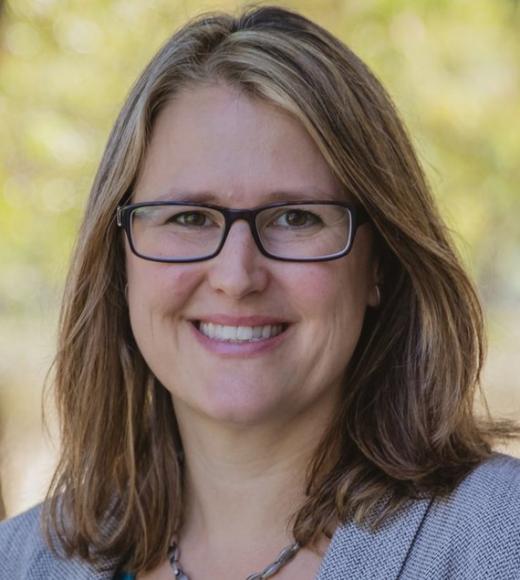
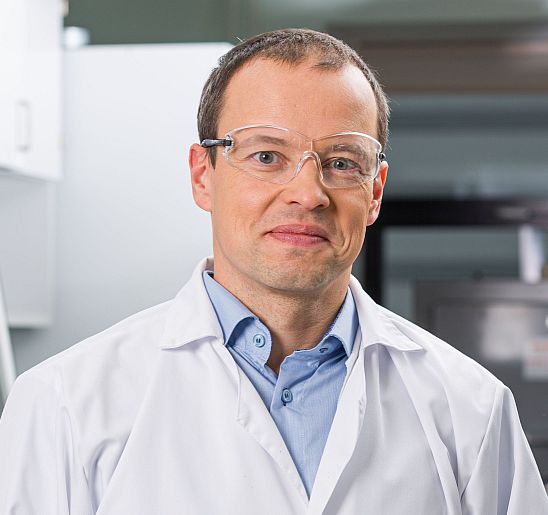
Nathan van de Wouw is a Full Professor at the Mechanical Engineering Department of Eindhoven University of Technology (TU/e), affiliated with ICMS, EAISI Mobility, EAISI High Tech Systems, EAISI Foundational, and EIRES. He also holds an adjunct Full Professor position at the University of Minnesota and a part-time Full Professorship at Delft University of Technology. His research focuses on dynamics and control of mechanical systems, including mechatronics, robotics, smart manufacturing, energy systems, and networked control. He has supervised over 150 students and led numerous projects funded by industry partners like ASML, Philips, and Shell. Education: M.Sc. (with Honors) in Mechanical Engineering, TU/e (1994) Ph.D. in Mechanical Engineering, TU/e (1999) Research Interests: Nonlinear systems and control Model reduction and complexity analysis Data-driven and networked control strategies Applications in high-tech systems, autonomous vehicles, and energy systems Awards: IEEE Control Systems Technology Award (2015) for variable-gain control in motion systems Grants & Projects: Lead projects on mechatronic design, lithography systems, and thermodynamic optimization Collaborations with TNO, ASML, and industrial partners Labs & Teams: Member of TU/e’s Dynamics and Control group Affiliated with EAISI (Eindhoven AI Systems Institute)
Federico Toschi is a Full Professor at Eindhoven University of Technology (TU/e), holding joint appointments in Applied Physics and Mathematics and Computer Science departments. His research focuses on multi-scale transport phenomena, combining statistical physics, fluid dynamics, and computational methods. He leads projects in the 4TU Centre for Multiscale Phenomena and EAISI. Education: PhD in Physics (University of Pisa, 1998) and academic background at Scuola Normale Superiore di Pisa. Interdisciplinary expertise in fluid dynamics turbulence, Lagrangian turbulence, crowd dynamics, and Lattice Boltzmann methods. Recipient of APS Fellow (2015), Euromech Fluid Mechanics Fellow (2012), and Ig Nobel Prize for Physics (2021). Research emphasizes turbulence modeling, pedestrian dynamics, and active matter, with applications in environmental flows and crowd management. His work bridges computational innovations with experimental validations. Recent articles explore kinetic data-driven turbulence modeling, pedestrian flow optimization, and turbulence effects in biological systems. Projects include digital twins for seismicity modeling and rarefied gas dynamics. Teaches fluid mechanics, computational physics, and chaos theory courses. Founded Flow Matters Holding BV, applying research to practical solutions.
Noura Limam is a Research Assistant Professor at the University of Waterloo's Cheriton School of Computer Science. Her research spans network operations, with emphases on software-defined networking (SDN), 5G/6G architectures, network security, and autonomous network management. Recent work focuses on AI-driven solutions for encrypted traffic analysis, network slicing security, and satellite communication systems. She develops frameworks like Monarch for network slice monitoring and 5Guard for secure slicing. Contributions include blockchain-assisted authentication protocols, meta-reinforcement learning for threat mitigation, and novel handover mechanisms for non-terrestrial networks. Her publications demonstrate consistent innovation in making networks more adaptive, secure, and efficient.
Alejandro Tirachini is an Associate Professor in Transport Planning at the University of Chile, specializing in transportation systems research with emphasis on public transport optimization, emerging technologies, and socio-economic impacts. His work bridges engineering, urban planning, and policy analysis to address global mobility challenges. His research spans public transport operations, road transportation systems, autonomous vehicle integration, and sustainable mobility solutions. Key methodologies include agent-based modeling, statistical analysis, and mathematical programming for optimization. Tirachini investigates environmental externalities, economic systems in transport, and behavioral responses to innovations like real-time information apps and teleworking. Analysis of his 2023-2025 publications reveals a strong focus on practical transport solutions: bus scheduling algorithms, electrification barriers, real-time information impacts, and railway barrier effects. His work consistently compares developed and developing country contexts, with significant Chilean case studies. Methodologically, he combines quantitative techniques with socio-technical analysis to evaluate policy interventions across environmental, economic, and behavioral dimensions.
Ina Fiterau Brostean is an Assistant Professor in the College of Information and Computer Sciences at the University of Massachusetts Amherst, where she leads the Information Fusion Lab. Previously, she was a Postdoctoral Fellow at Stanford University's Mobilize Center (2015–2018) and earned her PhD in Machine Learning from Carnegie Mellon University (2015). Her research focuses on hybrid systems for multimodal data integration, particularly in healthcare, aiming to develop predictive models for clinical outcomes using time series, text, and images. Key areas include disease trajectory modeling, weakly-supervised transfer learning, and adaptive representation learning. Education: PhD in Machine Learning (Carnegie Mellon, 2015), MSc in Machine Learning (Carnegie Mellon, 2012), BEng in Computer Engineering (Politehnica Timisoara, Romania, 2009). Professional roles include teaching COMPSCI 651 (Optimization in Computer Science) and organizing NeurIPS workshops on Machine Learning in Healthcare. Research interests span machine learning methodologies for healthcare applications, including interpretable models, time series analysis, and dimensionality reduction. Notable achievements include the Marr Prize (ICCV 2015) and Star Research Award (SCCM 2016). Her lab collaborates on projects like predicting Alzheimer's disease progression and surgical outcomes using Bayesian networks and deep learning. Awards and recognitions include Rising Stars Workshop (2016), Manning IALS Research Award (2019), and GE Foundation Scholar Leader Award (2007). She actively contributes to the ML4Health community through leadership roles and workshop organization.
Dr. Vahid Hosseini is an Associate Professor and Graduate Program Chair in the School of Sustainable Energy Engineering at Simon Fraser University (SFU). His research focuses on sustainable energy systems, urban air pollution, and clean mobility solutions. He holds a Ph.D. in Mechanical Engineering from the University of Alberta (2008), and M.A.Sc. and B.Eng. degrees from Sharif University of Technology (Iran). His academic roles include leadership in graduate academic programs and engineering education. Key research areas include thermo-fluid systems analysis, vehicle emissions reduction, and urban air quality modeling. He is actively involved in projects addressing real-world driving emissions, emission inventory development, and the impact of cold climates on transportation energy consumption and pollution. Notable contributions include studies on retrofit emission control devices for motorcycles, high-emitter vehicle identification, and policy recommendations for emission reduction. His work integrates experimental methods, computational fluid dynamics (CFD), and machine learning to tackle complex environmental challenges. Teaching interests span thermodynamics, fluid mechanics, and air pollution control engineering. Current courses include SEE 325 D100 Mechanical Design and Finite Element Analysis . Research highlights include collaborations on Tehran’s air quality management, particulate matter (PM2.5) source apportionment, and the development of high-resolution emission inventories. He contributes to international conferences and journals, with a focus on practical solutions for sustainable urban transportation systems.
Carolyn Sparrey is an Associate Professor and Graduate Student Supervisor in the School of Mechatronic Systems Engineering at Simon Fraser University (SFU). She leads the Neurospine Biomechanics Laboratory, focusing on injury prevention and management through biomechanical research. Her work bridges engineering principles with clinical applications, collaborating with Vancouver General Hospital and accident reconstruction experts. Dr. Sparrey holds a Ph.D. in Mechanical Engineering (UC Berkeley, 2008), M.A.Sc. (UBC, 2004), and B.A.Sc. (University of Waterloo, 2001). Her research emphasizes spinal cord injury mechanics, tissue material characterization, and patient-specific modeling. She teaches courses like MSE 420 (Biomechanical Engineering) and MSE 222 (Kinematics and Dynamics). Her lab’s current projects include mechanical characterization of neurological tissues, thermodynamic modeling of spinal cord injury treatments, and injury prevention device design. Funding opportunities are available for exceptional graduate students through NSERC and CIHR awards. Undergraduate and co-op students can engage in projects aimed at publishing or presenting results. Dr. Sparrey actively promotes interdisciplinary collaboration, with a focus on translating engineering solutions into clinical practice. Her teaching philosophy prioritizes preparing students for industry, research, and societal contributions through innovative curricula.
Taskin Padir is a Professor in the Department of Electrical and Computer Engineering at Northeastern University and concurrently serves as an Amazon Scholar. He holds a PhD and MS from Purdue University and a BS from Middle East Technical University. His research focuses on experiential robotics, human-robot teaming, and embodied AI, with leadership roles in the Robotics and Intelligent Vehicles Research Laboratory (RIVeR Lab) and the Institute for Experiential Robotics. Padir has led projects for DARPA, NASA, and industry partners, advancing autonomous systems for extreme environments and human-robot collaboration. Education: PhD, Electrical and Computer Engineering, Purdue University (2004) MS, Electrical and Computer Engineering, Purdue University (1997) BS, Electrical and Electronic Engineering, Middle East Technical University (1993) Research Interests: Shared autonomy and human-in-the-loop robotics Embodied artificial intelligence Human-robot teaming in extreme environments (e.g., space, disaster zones) Collaborative robotics for industrial applications His work bridges robotics, AI, and real-world challenges, with recent projects addressing seafood processing automation, robotic navigation in unstructured terrains, and spectroscopy-based environmental monitoring. Awards: Recipient of the 2024 Faculty Research Team Award, 2023 Impact Award, and 2022 Amazon Scholar distinction. His research has been funded by NSF, DARPA, NASA, and industry collaborators like Amazon Robotics and Intel. Labs: Director of the RIVeR Lab and Institute for Experiential Robotics, fostering interdisciplinary research in autonomous systems and intelligent vehicles. Current projects include CRISP (Co-worker Robots for Seafood Processing) and PROSPECT (robotic spectroscopy tools).
Professor Chin Hoong Chor is a Professor in the Department of Civil Engineering at the National University of Singapore (NUS), affiliated with the Faculty of Engineering. He specializes in transportation systems modeling, safety assessment, and congestion management. As a registered professional engineer and road safety auditor, he has contributed to numerous projects with Singapore’s land authorities and private companies. He holds leadership roles including Vice Chairman of the Chartered Institute of Logistics and Transport and Editorial Board membership for the International Journal of Transport Management. Qualifications include a BEng and MEng from NUS and a PhD in Transportation Engineering from the University of Southampton. His research interests span vehicle detection using image processing, traffic conflict analysis, and public transport optimization. Notable awards include the NUS Faculty Innovative Teaching (Gold) Award (2001/2002) and the UK Institution of Civil Engineers Webb Prize (2003). Education: BEng in Civil Engineering, National University of Singapore MEng in Civil Engineering, National University of Singapore PhD in Transportation Engineering, University of Southampton His research focuses on quantitative safety analysis, traffic flow modeling, and smart city initiatives. Recent work explores maritime collision risk modeling and sentiment analysis for transportation planning. He actively contributes to government committees and has authored over 40 peer-reviewed papers on traffic management and safety. Awards: Faculty Innovative Teaching (Gold) Award, 2001/2002 UK Institution of Civil Engineers Webb Prize 2003 Prof Chin has undertaken traffic impact studies and road safety reviews in Singapore, collaborating with public and private sectors. His work bridges academic research and practical policy implementation, emphasizing sustainable urban mobility solutions.
Pablo Durango-Cohen is an Associate Professor of Civil and Environmental Engineering at Northwestern University, located in Evanston, IL. He holds a Ph.D. in Industrial Engineering and Operations Research from UC Berkeley, following an M.S. from the same program and a B.S. in Industrial and Systems Engineering from the University of Southern California. His research focuses on developing and analyzing optimization and econometric models for transportation infrastructure systems, integrating environmental design, life-cycle assessment, and policy analysis to address decarbonization challenges in freight systems. He also explores dynamic segmentation models for nonprofit fundraising strategies. Education: Ph.D. Industrial Engineering and Operations Research, University of California, Berkeley (2006) M.S. Industrial Engineering and Operations Research, University of California, Berkeley B.S. Industrial and Systems Engineering, University of Southern California Research Interests: Prof. Durango-Cohen’s work bridges transportation engineering, environmental science, and operations research. He emphasizes infrastructure management through data-driven frameworks, including statistical process control for condition monitoring and predictive maintenance. His recent projects address decarbonization of freight rail systems, electric vehicle impacts on road infrastructure, and optimal auction designs for road concessions. He also applies mathematical models to analyze donor behavior and fundraising efficiency in universities, aiming to improve nonprofit resource allocation strategies. Awards: NSF Faculty Early CAREER Development Award (2006) Young Author Prize, 2007 World Congress on Transport Research Matthew G. Karlaftis Best Paper Awards (2020–2025) Advising & Grants: He advises current PhD candidates including Jing Yu, Adrian Hernandez, and Callahan Skiles, while mentoring former students across sustainability, infrastructure, and fundraising analytics. His research is supported by agencies like the National Science Foundation, Department of Energy (through ARPA-E), and Department of Transportation. He co-leads the LOCOMOTIVES project with ANL researchers, focusing on decarbonizing rail networks, and founded the Virtual Inter-university Symposium on Infrastructure Management (VISIM) to foster academic collaboration. Labs & Teams: As Principal Investigator (PI) on major initiatives like LOCOMOTIVES and VISIM, he collaborates with multidisciplinary teams at Northwestern and Argonne National Laboratory. His group develops tools such as the Locomotives interactive dashboard and a computational framework for input-output lifecycle assessments, accessible via repositories like CivEnv304 .
Professor James Scanlan is a Professor of Design within the Faculty of Engineering and Physical Sciences at the University of Southampton. He leads research in design, logistics, simulation, and optimization, focusing on aerospace systems and unmanned aerial vehicles (UAVs). His work is funded by BAE Systems, Airbus, Rolls-Royce, and the EPSRC. Previously, he held roles at BAe Systems and the University of the West of England, completing a PhD on aerospace design process modeling. He has launched a spin-off business commercializing design process research. Education: MSc in Aerospace Design (Salford University), PhD in Computer Modeling of Aerospace Design (University of the West of England). Research groups include the Computational Engineering and Design Group and the Centre for Defence and Security Research. External roles include membership in the US National Science Foundation and European Programme Committee for Value Driven Design. Teaching: Leads MSc courses in aerospace IGDS. Awards: 2008 Rolls-Royce R&T award for Creativity. Personal interests include squash, flying Piper Warrior aircraft, and BBC interviews on UAV civil applications.
Barbara Linke is a Professor in the Department of Mechanical and Aerospace Engineering at the University of California Davis, affiliated with the College of Engineering. She leads the Laboratory for Manufacturing and Sustainable Technologies Research (MASTeR) and serves as Principal Investigator at the Advanced Highway Maintenance and Construction Technology (AHMCT) Research Center. Her research focuses on sustainable manufacturing processes, abrasive machining, and smart manufacturing technologies, with applications in aerospace, biomedical, and automotive sectors. Dr. Linke holds a Dr.-Ing. habil. and has been recognized with the UC Davis Chancellor’s Fellow (2021-2022) and the Outstanding Junior Faculty Award from the College of Engineering. She advises the UC Davis Student Chapter of the Society of Manufacturing Engineers (SME) and the Women Machinists’ Club. She collaborates with the Fire Research Group at UC Berkeley and the Wildfires Research Working Group at UC Davis, integrating sustainability into wildfire-related infrastructure projects. Her research interests include energy-efficient manufacturing systems, lifecycle assessments, and the integration of Industry 4.0 technologies. Notable contributions include developing frameworks for sustainable additive and subtractive manufacturing, analyzing residual stresses in aluminum alloys, and advancing mobile 3D printing for disaster response. Her work bridges engineering education with cutting-edge research, emphasizing hands-on projects like the Shigley Hauler design competition. Dr. Linke’s labs and affiliations include the Materials Decarbonization and Sustainability Center and the UC Davis AI Center in Engineering, reflecting her commitment to interdisciplinary innovation. She has authored over 50 peer-reviewed articles, with recent focus on smart manufacturing systems, renewable energy integration in machining, and sustainable biomedical implant production.
Francisco Camara Pereira is a Professor and Head of Section at the Department of Technology, Management and Economics at the Technical University of Denmark (DTU). His research focuses on Intelligent Transportation Systems, Machine Learning, and Data-Driven Decision-Making in transportation contexts. He actively contributes to advancing transportation science through interdisciplinary approaches combining simulation, optimization, and AI techniques. His work addresses challenges in public transport analysis, charging infrastructure planning, and multimodal demand prediction. Recent projects include developing graph-based optimization methods for electric vehicle networks and causal discovery frameworks for transportation systems. He supervises multiple PhD students in areas like federated learning for cyclist safety, causal graph neural networks, and socially aware AI models. Key contributions include publications on smart card data analysis for travel surveys, stochastic infrastructure expansion models, and transfer learning for bike-share systems. His research aligns with UN Sustainable Development Goals related to sustainable cities and innovation. Dr. Pereira collaborates internationally on transportation policy and infrastructure projects. His lab focuses on translating theoretical advancements into practical solutions for urban mobility challenges.
Tarmo Tamm is a Researcher at the Intelligent Materials and Systems Lab, University of Tartu. His work focuses on conducting polymers, soft actuators, and biomaterials , with emphasis on applications in biomedical engineering, nanotechnology, and electrochemistry. He holds a primary affiliation with the University of Tartu and has authored/co-authored over 100 peer-reviewed articles since 2002. His research spans material characterization, actuator design, and polymer electrolyte systems. Key projects include development of biocompatible hydrogels (e.g., sea cucumber-derived materials), soft exoskeletons inspired by spider leg mechanics, and sustainable paper recycling processes . Tamm’s publications highlight interdisciplinary collaboration with institutions globally, addressing topics like ion mobility in PEDOT films, microbial interactions with silicone foams, and encapsulation techniques for biomedical actuators. His work often bridges fundamental material science with practical applications, such as energy storage systems and medical devices. Current research trends emphasize electrochemomechanical systems and bioinspired materials , with growing focus on sustainable materials engineering.
Rajamani Gounder is the R. Norris and Eleanor Shreve Professor of Chemical Engineering at Purdue University's Davidson School of Chemical Engineering. He leads the Gounder Research Group, focusing on heterogeneous catalysis, zeolite synthesis, and catalytic materials for energy and environmental applications. His work includes developing structure-function relationships in zeolites for reactions like NOx reduction, hydrocarbon conversion, and biomass processing. Education: B.S., University of Wisconsin (2006); Ph.D., UC Berkeley (2011); Postdoctoral Fellow, Caltech (2011-2013). Research Interests: The group studies catalyst design for renewable energy, petroleum processing, and pollution control. Key areas include zeolite-based catalysts for NOx abatement, propene oligomerization, and methane oxidation. They emphasize synthesizing materials with controlled active site environments to optimize reactivity and selectivity. Publications: Recent studies explore copper ion mobility in Cu-CHA zeolites, propene oligomerization in MFI voids, and NH3 oxidation kinetics. These highlight advancements in catalytic mechanisms and material design. Awards: Recognitions include the Royal Society of Chemistry Fellowship (2023), ISCRE Rutherford Aris Award (2023), and multiple teaching awards (e.g., R. Norris Shreve Award). His work has been funded by DOE, NSF, and industry partnerships. Advising & Grants: Supervises a team of ~30 students (PhD, master's, undergrad) and collaborates with the Purdue Catalysis Center. His research is supported by grants from agencies like DOE and NSF. Labs/Teams: The Gounder Group operates in Forney Hall, part of Purdue's chemical engineering facilities. They engage with CISTAR (Catalysis Center for Energy Innovation) and other interdisciplinary networks.