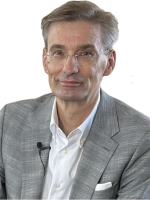
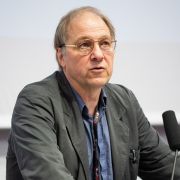
Professor Gernot Sieg holds the Chair of Industrial Organization with a focus on Infrastructure and Transport Economics at the University of Münster, leading the Institute of Transport Economics. He previously served as Director of the Institute of Economics at TU Braunschweig and has held visiting positions at institutions like the University of Southern California. His academic background includes a Dr. rer. pol. (1993–1999) and Habilitation (1993–1999). Prof. Sieg’s research focuses on transport markets, regulatory economics, and infrastructure policy. Notable projects include the CRC 1385 on Law and Literature, evaluating bicycle traffic optimization (Leezenflow), and analyzing aviation slot regulations. He advises the Federal Ministry for Digital and Transport’s Scientific Advisory Board. His research interests span transport infrastructure financing, traffic flow dynamics, and environmental policy. Recent work addresses vehicle value externalities, phantom jam costs, and the economic impact of speed limits. He teaches courses on competition regulation, transport economics, and industrial organization. Prof. Sieg frequently engages with public policy debates, contributing to media discussions on infrastructure rehabilitation, climate policy, and mobility transitions. His work bridges academic research with practical policy solutions, emphasizing sustainable and equitable transport systems.
Paul Almeida is a Professor of Sociology and Environmental Systems at the University of California, Merced, and currently serves as Graduate Program Chair. His research focuses on collective action efficacy, climate change responses, and social movements, particularly in Latin America and the U.S. Almeida holds a PhD and BA in Sociology from the University of California system. He leads initiatives like the Valley Plan on Climate Investments and sits on UC Merced’s Decarbonization Board. Key awards include the 2025 Distinguished Teaching Award and multiple ASA recognitions for his work on globalization and social movements. Research interests span climate justice, environmental sociology, and transnational activism. His recent work emphasizes participatory climate governance and community engagement in disinvested regions. Almeida’s 20+ books include Collective Resistance to Neoliberalism and Mobilizing Democracy . Grants and collaborations involve the UC Climate Justice Center, Brown University’s Climate Social Science Network, and the UC-Mexico Climate Research Program. He mentors initiatives like the Oxford Handbook of Climate Action and advises climate ambassador programs.
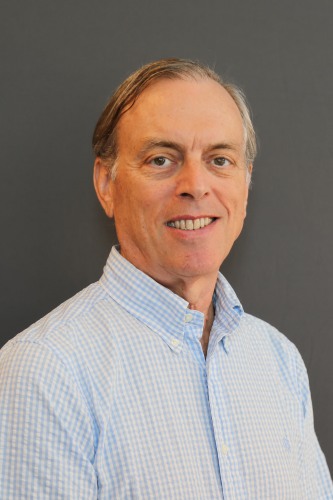
Rod Beresford is a Professor of Engineering at Brown University's School of Engineering, where he has held several leadership positions including Senior Associate Dean for Academic Programs and Associate Provost for Academic Space. He earned his B.S. (1979) and M.S. (1981) in electrical engineering from Yale University and his Ph.D. (1990) from Columbia University. In 2020/21, he served as an IEEE/AAAS Congressional Fellow working on the Senate Energy and Natural Resources Committee. His research focuses on semiconductor nanostructures, including synthesis, modeling, integration with microelectronics, and applications, with a particular emphasis on molecular beam epitaxy. Beresford has published over 80 scientific papers and has worked on molecular beam epitaxial growth of III-V semiconductors since 1987. His current research emphasizes engineering innovations for decarbonization and electrification of the economy. Professor Beresford's scholarly work spans semiconductor materials and devices, quantum structures, nanomaterials, microfluidics, and biosensing. His recent publications demonstrate a strong focus on quantum dot arrays, nanowire electrical properties, and biosensing applications. The research shows evolution from fundamental semiconductor physics toward practical applications in sensing and energy technologies. His honors and awards include: Tau Beta Pi (1978) Sheffield Fellowship (Yale University, 1980–81) Office of Naval Research Fellowship (Columbia University, 1987–90) Sigma Xi (1991) BBV Foundation Chair (Visiting Professor, Polytechnic University of Madrid, 1996) Institute of Electrical and Electronics Engineers, Senior Member (2002) Professor Beresford has been instrumental in Brown's academic infrastructure development, including facilitating the successful development of the Engineering Research Center, an 80,000-sf lab building completed in October 2017. He has served as Academic Director for the Master of Science in Technology Leadership program and has introduced new courses in VLSI Design and Nanoelectronics. His research has been supported by significant grants including: Nanoelectronics Research Initiative / National Science Foundation: "Direct-Write Synthesis of Graphene Devices" (PI, $400,000) National Science Foundation Materials Research Science and Engineering Center: "Micro- and Nano-Mechanics of Electronic and Structural Materials" (co-PI, $9,360,000) Air Force Office of Scientific Research Multidisciplinary University Research Initiative: "Direct Nanoscale Conversion of Biomolecular Signals into Electronic Information" (co-PI, $5,609,969) Professor Beresford leads a research group focused on semiconductor nanostructures and collaborates extensively with colleagues including Jingming Xu, Eric Chason, Brian Sheldon, Alexander Zaslavsky, and David Paine. His laboratory includes molecular-beam epitaxy systems for advanced materials research.
Daniel Beat Müller serves as Professor at the Industrial Ecology Programme within the Department of Energy and Process Engineering at the Norwegian University of Science and Technology (NTNU), Trondheim. His office is located at Realfagbygget Gløshaugen (E4-120) with contact details daniel.mueller@ntnu.no and +4791897755. His research centers on analyzing human needs in relation to material/energy flows and environmental impacts, with two primary focus areas: (i) urban evolution and associated material flows for managing building/infrastructure stocks, and (ii) national/global metal cycles to identify supply constraint reduction strategies. His methodology integrates design, modeling, and decision-making through transdisciplinary stakeholder engagement. Müller teaches Material Flow Analysis and Systems Analysis of the Built Environment for Industrial Ecology and Civil Engineering Master's students. His research outputs demonstrate strong trends in circular cities, critical mineral management, and urban metabolism, with recent publications emphasizing building information modeling, electric vehicle battery systems, and phosphorus cycling. His work consistently addresses resource criticality within energy transition contexts. As (ad interim) chair of the International Society of Industrial Ecology’s MFA-ConAccount section, he contributes to methodological standardization. He previously served on the U.S. National Research Council’s Committee on Defense Stockpiles and remains active in Switzerland's National Research Programme 65 "New Urban Quality". Müller supervises numerous Master's and doctoral students, with thesis topics spanning lithium-ion battery recycling, building stock dynamics, and urban resource flows. His projects frequently involve industry collaboration for practical implementation of material stewardship strategies.
Prof. Alan Kin-tak Lau is an Adjunct Professor in the Department of Mechanical Engineering & Product Design at Swinburne University of Technology. He previously served as Pro Vice-Chancellor (International and Digital Research), overseeing global research collaborations and digital innovation. His expertise spans advanced materials, manufacturing, and product design, with a focus on aerospace applications, energy storage, and sustainable technologies. Lau holds adjunct roles at Chonbuk National University and is a Fellow of multiple prestigious institutions, including the European Academy of Sciences and the Royal Aeronautical Society. Affiliations: Swinburne University of Technology Roles: Adjunct Professor, Former Pro Vice-Chancellor Research interests include nanomaterials for energy storage (e.g., supercapacitors, hydrogen systems), composite materials for aerospace, and eco-friendly manufacturing. He leads interdisciplinary projects like the Aerostructures Innovation Research Hub and the Research Centre for New Energy Transition. Lau has secured over AUD 100M in grants and supervised numerous PhD projects on topics like graphene composites and additive manufacturing. Notable awards include the VEBLEO Best Scientist Award (2020), UGC Teaching Excellence Award (2013), and the Young Engineer of the Year Award (2004). He chairs international conferences and serves on boards of companies like King’s Flair International. His work bridges academia and industry, with patents and commercial applications in sustainable materials and EV technologies.
Arianne Teherani, PhD, is Professor in Residence in the Department of Medicine at the University of California, San Francisco (UCSF) School of Medicine. She serves as Founding Co-Director of the UC Center for Climate, Health and Equity and Director for Program Evaluation and Education Continuous Quality Improvement at the UCSF School of Medicine. She earned her undergraduate degree in Social Ecology from the University of California, Irvine, her master's and doctorate in Education from the University of Southern California, and completed a fellowship in Higher Education at the University of British Columbia. Dr. Teherani’s research advances equity, social justice, and climate solutions in health professions education. Her work identifies and dismantles practices that perpetuate educational disparities. She leads initiatives in equitable clinical assessment, climate-health education, and sustainable healthcare training. Her scholarship focuses on educational reform, faculty development, and community-engaged learning. She has published extensively on topics including clerkship equity, professionalism, longitudinal integrated clerkships, and the integration of climate change into medical education. Her recent publications demonstrate a strong trend toward climate-health education, healthcare decarbonization, and equity in assessment. She frequently collaborates with national and UC-system-wide teams on sustainability and educational innovation. Her work emphasizes systems-level change and the translation of research into policy and practice. UCSF Faculty Sustainability Award UC Sustainability Champion Award Faculty Climate Action Champion (University of California system) Dr. Teherani mentors students, residents, fellows, and faculty in health professions education. She has led numerous educational initiatives, including the Aspiring Physicians Program and the Academic Leadership Academy, aimed at supporting underrepresented students. She has also driven continuous quality improvement in medical education through rigorous evaluation of innovative programs. Her leadership extends to national organizations including the Association of American Medical Colleges, the American Educational Research Association, and the National Academies of Science, Engineering, and Medicine. She leads the Equity and Justice in Education initiative and is deeply involved in antiracism and DEI efforts. She co-leads faculty development programs focused on sustainable healthcare and climate education across the UC system.
Professor Jon Gibbins is a faculty member at the University of Sheffield within the School of Mechanical, Aerospace and Civil Engineering . He serves as the Centre Director of the UK Carbon Capture and Storage Research Centre and is a Research Area Champion for Solvent Post-Combustion . With over 30 years of experience in coal/biomass gasification and CCS since 2002, his work spans academic, industrial, and policy domains. He contributes to global CCS initiatives, including the SaskPower CCS Global Consortium Advisory Committee , and advises on energy system balancing, economics, and regulation. Research Interests: Carbon Capture and Storage (CCS) Power Plant Engineering Coal and Biomass Combustion Hydrogen Production with CCS Techno-economic Analysis Flexible Power Plant Operation Recent Article Trends focus on CCS integration, solvent optimization, hydrogen decarbonization, and combustion dynamics. His work emphasizes partnerships with industry and governments, particularly in China and the UK, addressing climate policy, energy security, and technology deployment.
Prof. Şule Itır Satoğlu is a faculty member in the Department of Industrial Engineering at Istanbul Technical University, holding the rank of Professor since 2019. She has held multiple administrative roles, including Head of Department (2025–present), Vice Rector (2020–2024), and Vice Dean (2018–2020). Her research focuses on supply chain management, optimization, sustainable operations, and disaster response systems. She has a PhD in Industrial Engineering from Istanbul Technical University (2008), an MSc in Engineering Management (2002), and a BSc in Mechanical Engineering (2000). Her work emphasizes practical applications of optimization techniques in logistics, healthcare, and disaster management. Notable contributions include developing models for blood supply chains under uncertainty, UAV-based waste detection, and sustainable urban transport fleet electrification. She has collaborated on projects funded by public and private sectors, addressing issues like lean manufacturing integration with Industry 4.0 and RFID-enabled maintenance systems. Her publications span over two decades, with recent focus on multi-objective optimization in humanitarian logistics, smart waste collection systems, and energy-efficient drone surveillance. She is a member of the TMMOB Chamber of Mechanical Engineers and actively contributes to national technology initiatives through academic leadership roles.
Ravi Seshadri is an Associate Professor in the Transport Division at the Department of Technology, Management and Economics, Technical University of Denmark (DTU). His research focuses on designing equitable, efficient, and sustainable mobility solutions with a focus on fiscal instruments like congestion pricing and tradable permits, as well as emerging mobility modes such as shared and demand-responsive transit. He employs methods from transportation network equilibria, dynamic traffic assignment, and agent-based simulation. His research interests span transportation economics, urban planning, and intelligent transportation systems. Key areas include evaluating the impacts of automated mobility-on-demand systems, optimizing tolling strategies using predictive control and reinforcement learning, and integrating multi-modal transportation networks through game-theoretical frameworks. His work emphasizes real-world applications in urban freight systems, e-commerce logistics, and sustainable urban mobility policies. Recent projects include studying congestion pricing schemes via agent-based microsimulation, analyzing behavioral responses to decarbonization policies, and developing frameworks for tradable credit systems with peer-to-peer trading. He has contributed to both theoretical advancements (e.g., robust traffic assignment models) and applied tools like the SimMobility simulation platform. Ravi's research demonstrates a strong focus on bridging transportation engineering with policy analysis, using cutting-edge computational methods to address complex urban mobility challenges. His work spans academic publications, industry collaborations, and policy consultations to advance sustainable transportation systems.
Pascal Da Costa is a Professor of Economics at CentraleSupélec, part of the University of Paris-Saclay. He is affiliated with the Industrial Engineering Laboratory and focuses on Environmental and Energy Economics for Sustainable Development. His research integrates planetary boundaries into economic analysis, emphasizing policy design for climate resilience and decarbonization. Key research areas include climate policy evaluation, nuclear energy economics, sustainable mobility solutions, and ecosystem valuation. He has contributed to projects such as the French Climate Roadmap and evaluates strategies for renewable energy integration alongside nuclear flexibility. Recent work addresses corporate climate ratings, CDR (Carbon Dioxide Removal) research trends, and equitable mobility solutions in urban/rural contexts. Da Costa has authored over 47 publications, including analyses of CO2 mitigation pathways, nuclear reactor investment scenarios, and ecosystem service valuation at Corsican rivers. His work bridges academic research with policy implementation through collaborative frameworks and interdisciplinary approaches. He teaches introductory economics courses at CentraleSupélec and participates in national initiatives like the 2030 Commission of the National Contributive Conference. His lab focuses on energy systems analysis, sustainable development metrics, and decision-support tools for sustainable strategy selection.
Max Schleser is Associate Professor in Film and Television at Swinburne University of Technology, where he also conducts research with the Centre for Transformative Media Technologies (CTMT). He is an Adobe Creative Educator Innovator, Founder of the Mobile Innovation Network & Association (MINA), and Screening Director of the International Mobile Innovation Screening & Festival. His work spans academic, artistic, and community domains, with a focus on innovative screen practices. Max holds a PhD in Creative Arts from the University of Westminster, an MA in Art and Media Practice with Distinction, and a BA Hons. His research centers on immersive media, documentary film, and creative arts 4.0, particularly cinematic VR and interactive filmmaking. He investigates screen production, emerging media, and smartphone filmmaking as tools for community engagement, creative transformation, and transmedia storytelling. His recent publications reveal a strong trend toward integrating Generative AI into documentary and city film genres, exploring the 'AI eye' and computational non-fiction. He also investigates novel immersive production methods in VR, HyFlex pedagogies in film education, and collaborative mobile storytelling through workshops. His work consistently bridges creative practice with theoretical inquiry. Best Cinematography, International Cell Phone Cinema - Cannes (2025) Best Mobile Film, Nitiin International Film Festival (2024) Dean's Award for Teaching and Research, Swinburne University (2023) International Visiting Research Scholar, Auckland University of Technology (2024) Early Career Award - Research, Massey University (2012) Max leads multiple research grants focused on health storytelling, intergenerational connection, AI in screen industries, and sustainability education. He supervises creative projects and has conducted digital storytelling workshops for cultural institutes and government bodies worldwide. As founder of MINA and director of major festivals, he leads international networks in mobile media innovation. He also serves on the editorial board of the Media Practice and Education journal and has co-edited several key volumes on mobile media and storytelling.
Enda Hayes serves as Professor of Air Quality & Carbon Management and Director of Research and Enterprise at the School of Architecture and Environment, University of the West of England (UWE Bristol). With over a decade of professional experience in environmental science, he specializes in atmospheric emissions management including odour, bioaerosols, traditional air pollutants, and greenhouse gases. His work spans technical modeling, policy development, and community engagement across multiple international projects. Dr. Hayes holds a PhD, MSc, and BSc (Hons), along with professional memberships MIEnvSc and MIAQM. His educational foundation has enabled extensive collaboration with governmental bodies including Defra, Devolved Administrations, South African government, Irish EPA, European Environment Agency, and European Commission. His research focuses on Air Quality Management, carbon management, emission inventories, dispersion modeling, bioaerosols, water-energy-food nexus, Water Security, and ammonia emissions. Recent work demonstrates interdisciplinary approaches combining environmental science with social dimensions of pollution management. He has particular expertise in urban air quality, agricultural emissions, and health impacts of traffic-related pollution. Analysis of Dr. Hayes' 136 publications reveals evolving research trajectories from technical emission modeling toward integrated socio-technical approaches. His recent work (2023-2025) shows strong emphasis on citizen science applications, health impacts (especially on children), advanced air quality forecasting techniques, and the psychological dimensions of climate decision-making. A consistent theme across his publications is bridging technical environmental solutions with social equity considerations. Dr. Hayes leads significant research initiatives including the Horizon 2020 ClariCity Project as Technical Director, the AmmoniaN2K Project with University College Dublin and Irish EPA, multiple NERC-funded bioaerosol studies, and European Commission support on Ambient Air Quality Directive review. His projects consistently integrate scientific rigor with practical policy applications and community engagement.
Dr. Souran Chatterjee is a Lecturer in Energy Transitions - Environmental Management & Sustainability at the School of Geography, Earth and Environmental Sciences, University of Plymouth. His work contributes to UN Sustainable Development Goals (SDGs) 7 (Affordable and Clean Energy), 11 (Sustainable Cities), and 13 (Climate Action). He focuses on energy transitions, climate policy modeling, and socio-technical systems analysis. Research interests include energy demand modeling, renewable energy integration, climate emergency responses, and SDG-climate synergies. He has advised undergraduate and postgraduate dissertations in energy economics, air pollution assessment, and health-environmental impact analysis. His recent work emphasizes net-zero building sectors, decarbonization pathways, and demand-side solutions for energy efficiency. He collaborates on projects like the Sustainable Energy Transitions Laboratory (SENTINEL) and EU initiatives like the Solar Rooftop Program. Teaching focuses on energy sustainability, social science research methods, and health economics. Key geographic interests include Europe (especially Italy's urban policies), South Asia (India's air quality challenges), and global south development dynamics. His toolkit expertise includes geospatial modeling, building energy simulation, and socio-technical transition analysis.
Associate Professor Amela Ajanovic holds a position at TU Wien's Department of Energy Economics and Energy Efficiency. Her research focuses on green hydrogen, sustainable mobility systems, and energy economics, with a particular emphasis on decarbonization strategies for transportation and renewable energy integration. She is affiliated with TU Wien's Network Lab and has collaborated extensively on projects related to hydrogen production, electric vehicle sustainability, and energy storage solutions. Her work bridges technical, economic, and policy dimensions of energy transition, addressing challenges such as hydrogen's role in transport decarbonization, battery lifecycle impacts, and renewable energy system design. Recent contributions include analyzing green hydrogen's EU prospects, evaluating electric vehicle sustainability, and assessing techno-economic viability of power-to-methanol plants. Key research themes include: Green hydrogen production and infrastructure Electric vehicle lifecycle analysis Renewable energy system optimization Policy frameworks for energy transition Her publications reflect a commitment to interdisciplinary solutions for climate goals, often collaborating with institutions like the Austrian energy sector. While no formal awards are listed, her active publication record and conference participation highlight her impactful research contributions.
Dr. Daming Zhang serves as a Senior Lecturer in the School of Electrical Engineering and Telecommunications at the University of New South Wales (UNSW), Faculty of Engineering. His academic career spans over two decades with continuous scholarly contributions to power systems engineering. Dr. Zhang's research focuses on power systems, microgrids, and renewable energy integration , with particular expertise in constant-frequency microgrid operation, DC-AC conversion technologies, and energy storage applications. His work addresses critical challenges in grid stability, power system protection, and the integration of high-penetration renewable energy sources. He has developed innovative approaches for microgrid regionalization, load flow analysis in islanded systems, and fault detection in photovoltaic systems. His publication record shows a clear evolution from fundamental electromagnetic studies to applied power systems research, with recent work emphasizing practical solutions for decarbonized power systems. The majority of his recent publications appear in high-impact IEEE journals and conferences, demonstrating the significance of his contributions to the field. His research increasingly incorporates advanced computational methods including machine learning for fault detection and optimization techniques for energy system planning. While no specific awards are listed in the available information, Dr. Zhang's extensive publication record in top-tier journals indicates recognition within the academic community. His collaborative work with researchers across multiple institutions demonstrates his active engagement in the international power engineering community. Dr. Zhang's research has practical implications for modern power systems transitioning toward renewable energy integration. His work on constant-frequency microgrids, energy storage applications, and grid-forming converters addresses critical challenges in maintaining stability as power systems incorporate higher levels of inverter-based resources. His recent focus on long-duration energy storage and zero-carbon electricity systems reflects the evolving priorities of the power industry toward decarbonization.