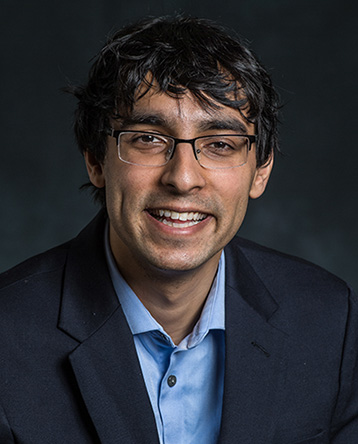
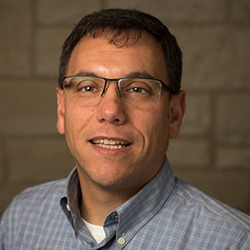
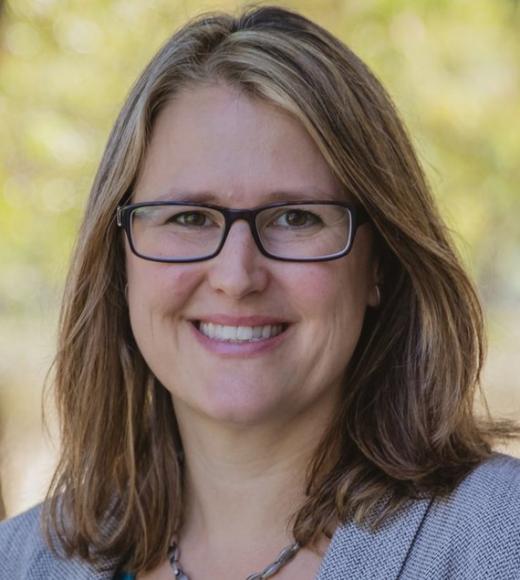
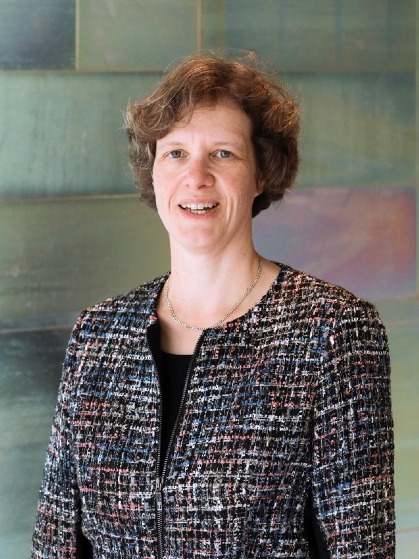
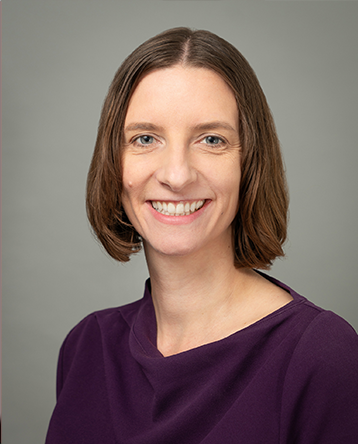
Akshaya Jha is an Associate Professor of Economics and Public Policy at Carnegie Mellon University’s Heinz College of Information Systems and Public Policy , as well as a Faculty Research Fellow at the National Bureau of Economic Research (NBER) . His work combines economic modeling with causal inference to analyze energy and environmental policy impacts on electricity markets. Education: Ph.D. in Economics, Stanford University B.S. in Economics and Statistics, Carnegie Mellon University Research Interests span energy economics , environmental economics , industrial organization , and public policy , focusing on quantifying economic and environmental trade-offs in electricity supply policies. Recent work includes financial trading in California’s electricity market, Germany’s nuclear phase-out, rooftop solar growth in Western Australia, and electricity blackout determinants in India. Scientific Contributions appear in American Economic Review , Management Science , and PNAS . Article trends reveal expertise in regulatory distortions , market design , environmental externalities , and policy communication . Scientific Awards: Hicks-Tinbergen Award (best paper in Journal of the European Economic Association ) Heinz College Martcia Wade Teaching Award (2023) USAEE Young Professional Research Award (2021)
Ben Amor is a Full Professor in the Department of Civil Engineering at the Faculty of Engineering, Université de Sherbrooke, where he serves as Director and Founder of the CIRMIB (Integrated Research Center on Sustainable Materials, Infrastructure and Buildings) and Director of Sustainable Development for the Faculty of Engineering. Previously, he held associate professor positions at Université Laval and Université de Sherbrooke. His research focuses on Life Cycle Assessment (LCA) methodologies applied to sustainable construction, circular economy implementation in building sectors, and building decarbonization strategies. He has pioneered regionalized LCA approaches for Arctic regions and developed frameworks for carbon budgeting in building sectors. His work bridges environmental science with practical engineering solutions for sustainable infrastructure. His recent publications reveal strong trends in building decarbonization pathways, material circularity in construction, and the integration of biogenic carbon accounting. He emphasizes both technological solutions and behavioral change strategies for achieving net-zero emissions in the built environment. ACLCA 2018 Life Cycle Assessment Leadership Award Life Cycle Academy Awards 2019 (two awards) Quebec Public Administration Excellence Prize 2023 for Scientific Collaboration Multiple university teaching awards including the Jacques-Bazinet Merit Award Professor Amor leads significant research grants totaling over $20 million, including NSERC Alliance grants for sustainable building materials and a $2 million Research Chair on Net Zero Strategies and Life Cycle Assessment. He directs the CIRMIB research center and the LIRIDE (Interdisciplinary Research Laboratory in Sustainable Engineering and Eco-design), supervising multiple doctoral candidates. His work includes developing LCA tools for Quebec's construction industry and advising government bodies on sustainable procurement policies.
Dr. Paul G. O'Brien is an Associate Professor in the Department of Mechanical Engineering at York University, Canada, affiliated with the Lassonde School of Engineering. His research focuses on interdisciplinary clean energy solutions, including energy storage, thermophotovoltaic systems, decarbonization of buildings, and life cycle assessments. He leads the Advanced Materials for Sustainable Energy Technologies (AM-SET-Lab) and has authored over 50 journal articles. His work spans materials science, photonic crystal engineering, and radiative cooling technologies. Research interests include optimizing thermal energy storage systems, photonic crystal-based filters for solar applications, and CO2 capture via direct air capture systems. His lab develops materials for passive cooling, solar-thermal integration, and advanced photocatalytic CO2 reduction. Dr. O’Brien collaborates across engineering disciplines to address global energy challenges. Recent publications highlight innovations in ellipsoidal optical cavities for thermophotovoltaics, radiative cooling materials, and techno-economic assessments of carbon capture technologies. His work bridges fundamental material science with applied engineering solutions for sustainable energy systems.
Philippe Thalmann is an Associate Professor at the École Polytechnique Fédérale de Lausanne (EPFL), leading the Laboratoire d'Économie Urbaine et de l'Environnement (LEURE). His research focuses on environmental economics, climate policy, energy systems, and sustainable urban development. He holds academic affiliations within the School of Architecture, Civil and Environmental Engineering (ENAC) and teaches courses on energy economics, environmental policy, and real estate. Thalmann serves on numerous national committees, including the Federal Housing Commission, the Climate Change Advisory Committee (OcCC), and the Swiss Competence Centers for Energy Research (SCCER). He has directed the INTER Institute for Urban Studies (2009–2014) and currently chairs ProClim, the Forum for Climate and Global Change. His work emphasizes interdisciplinary approaches to climate mitigation, housing affordability, and environmental policy design. Education: PhD in Economics (implied via academic rank and research output) Research interests include carbon pricing mechanisms, renewable energy systems, urban sustainability, and the economic implications of climate policy. He has advised over 30 doctoral and master’s students on topics ranging from energy efficiency valuation to housing market dynamics. Thalmann’s recent publications analyze Switzerland’s climate policy frameworks, renewable energy transitions, and the environmental impact of housing and mobility systems. He actively advises policymakers on decarbonization strategies, tax reforms, and carbon removal technologies. Notable contributions include the Renewable Energy Outlook II for Switzerland and studies on fiscal incentives for climate action. Advising & Grants: Supervised 28 students (listed above). Engaged in research projects funded by EPFL and Swiss federal initiatives. Collaborates with the Swiss National Research Program (PNR66) and energy policy think tanks. Labs/Teams: Director of LEURE Lab, part of the Urban Institute (INTER), and member of ProClim leadership.
McKenzie F. Johnson is an Assistant Professor at the University of Illinois Urbana-Champaign's Department of Natural Resources and Environmental Sciences (NRES), part of the College of Agricultural, Consumer and Environmental Sciences. She is also affiliated with the Institute for Sustainability, Energy, and Environment (ISEE). Her research focuses on global environmental politics, environmental justice, and human security, with a particular interest in how environmental governance initiatives impact marginalized communities. Education: Began with fisheries governance studies, earned a Master of Arts in Conservation Biology from Columbia University (2007), and a PhD in Environmental Policy from Duke University. Her Fulbright scholarship in West Africa (2010s) focused on extractive industries and social justice linkages. Research Interests: Explores intersections between environment, institutions, and justice through projects in South Asia, Africa, and South America. Current U.S.-focused work examines environmental impact assessments and pipeline development's effects on communities. The (in)Secure Landscapes Lab she leads investigates environmental governance's role in creating human security and justice. Key Themes in Publications: Energy infrastructure conflicts (e.g., Dakota Access Pipeline), environmental peacebuilding in post-conflict regions (Colombia, Afghanistan), carbon market equity, and invasive species governance. Her work critiques neoliberal environmental governance models and advocates for inclusive decision-making processes. Lab Activities: The IL Lab analyzes environmental governance's societal impacts, emphasizing participatory approaches. Current projects include studying soil carbon markets' equity implications and climate change adaptation strategies in conflict zones.
John Peters serves as Associate Professor at Memorial University of Newfoundland within the Faculty of Business Administration and Department of Sociology, with additional appointments as Research Fellow at Montreal's CRIMT and Associated Professor at both Montreal's School of Industrial Relations and York University's Department of Politics. His educational background includes a Master's in History from the University of Michigan and PhD in Political Science from York University, building foundational expertise for his interdisciplinary work. Peters' research critically examines labor movements within financialized economies and climate crisis responses, focusing on decarbonization's impact on workers through frameworks of just transition and political economy. His scholarship bridges theoretical analysis of inequality with practical policy solutions for sustainable labor markets. Recent publications (2019-2022) reveal consistent thematic focus: financialization's erosion of labor power, climate-labor intersections, and policy pathways for equitable economic transformation, with significant emphasis on Canadian contexts and comparative frameworks. His research awards demonstrate sustained funding success: SSHRC Engage Grant (2023) analyzing unions' climate crisis strategies SSHRC Connection Grant (2022) exploring climate-work futures Multi-year SSHRC Partnership Grant (2017-2024) for institutional labor innovation Peters actively collaborates through CRIMT on sector-specific policy studies (auto, steel, aluminum) while developing union training programs for zero-carbon transitions, emphasizing worker capacity building for equitable clean energy economies.
Professor John Muellbauer is a Senior Research Fellow at Nuffield College and Professor of Economics at the University of Oxford. He co-directs the Macroeconomics and Finance Programme at the Institute for New Economic Thinking (INET) Oxford Martin School. His work bridges household economics, housing markets, and finance-real economy interactions, with a focus on credit channels and monetary transmission mechanisms. Education: B.A. from Cambridge University, Ph.D. from UC Berkeley Former roles: Professor at Birkbeck College (London), Lecturer at Warwick University His research emphasizes systems approaches to consumption, house prices, and debt, critiquing conventional central bank models. Recent work includes international house price cycles (Journal of Economic Literature, 2021) and ECB policy model critiques (2022). He collaborates with central banks globally and contributes to macroprudential policy frameworks. Scientific awards include the 2014 Kendrick Prize for his work on credit and housing markets. He is a Fellow of the British Academy, Econometric Society, and European Economic Association, and a CEPR Research Fellow. Policy engagement spans HM Treasury, OECD, Swedish Prudential Authority, and the Resolution Foundation. He advocates for a Green Land Value Tax to address UK housing challenges and frequently contributes to VoxEU debates.
Jonas Eliasson is a Visiting Professor at Linköping University's Department of Science and Technology (ITN), focusing on Communications and Transport Systems. He concurrently serves as Director of Transport Access at the Swedish National Transport Administration and chairs the Planning & Construction committee of the Royal Academy of Engineering Sciences. Previously, he was Director of the Stockholm City Transportation Administration (2016–2019) and a professor at the Royal Institute of Technology (KTH) from 2007 to 2016. His research emphasizes transport policy design and evaluation, including cost-benefit analysis, transport pricing, railway capacity allocation, and public acceptability of policies. He advises governments on sustainable transport planning, congestion pricing, and socio-economic appraisals. His work bridges theoretical frameworks and practical implementation, with a focus on accessibility, equity, and climate targets. Key research themes include infrastructure cost overruns, traffic demand reduction strategies, and the integration of passenger and freight transport systems. Recent publications analyze policy impacts, forecasting methods, and carbon-neutral transportation systems. His interdisciplinary approach addresses both technical and socio-political dimensions of transport challenges. Eliasson collaborates with research groups like Railway and Public Transport and contributes to initiatives like the 'Next Generation Smart Transportation Systems' project. Despite extensive professional roles, no formal student advisees are listed. His work is disseminated through journals like Transportation Research Part A and policy reports for national and regional governments.
Pablo Durango-Cohen is an Associate Professor of Civil and Environmental Engineering at Northwestern University, located in Evanston, IL. He holds a Ph.D. in Industrial Engineering and Operations Research from UC Berkeley, following an M.S. from the same program and a B.S. in Industrial and Systems Engineering from the University of Southern California. His research focuses on developing and analyzing optimization and econometric models for transportation infrastructure systems, integrating environmental design, life-cycle assessment, and policy analysis to address decarbonization challenges in freight systems. He also explores dynamic segmentation models for nonprofit fundraising strategies. Education: Ph.D. Industrial Engineering and Operations Research, University of California, Berkeley (2006) M.S. Industrial Engineering and Operations Research, University of California, Berkeley B.S. Industrial and Systems Engineering, University of Southern California Research Interests: Prof. Durango-Cohen’s work bridges transportation engineering, environmental science, and operations research. He emphasizes infrastructure management through data-driven frameworks, including statistical process control for condition monitoring and predictive maintenance. His recent projects address decarbonization of freight rail systems, electric vehicle impacts on road infrastructure, and optimal auction designs for road concessions. He also applies mathematical models to analyze donor behavior and fundraising efficiency in universities, aiming to improve nonprofit resource allocation strategies. Awards: NSF Faculty Early CAREER Development Award (2006) Young Author Prize, 2007 World Congress on Transport Research Matthew G. Karlaftis Best Paper Awards (2020–2025) Advising & Grants: He advises current PhD candidates including Jing Yu, Adrian Hernandez, and Callahan Skiles, while mentoring former students across sustainability, infrastructure, and fundraising analytics. His research is supported by agencies like the National Science Foundation, Department of Energy (through ARPA-E), and Department of Transportation. He co-leads the LOCOMOTIVES project with ANL researchers, focusing on decarbonizing rail networks, and founded the Virtual Inter-university Symposium on Infrastructure Management (VISIM) to foster academic collaboration. Labs & Teams: As Principal Investigator (PI) on major initiatives like LOCOMOTIVES and VISIM, he collaborates with multidisciplinary teams at Northwestern and Argonne National Laboratory. His group develops tools such as the Locomotives interactive dashboard and a computational framework for input-output lifecycle assessments, accessible via repositories like CivEnv304 .
Barbara Linke is a Professor in the Department of Mechanical and Aerospace Engineering at the University of California Davis, affiliated with the College of Engineering. She leads the Laboratory for Manufacturing and Sustainable Technologies Research (MASTeR) and serves as Principal Investigator at the Advanced Highway Maintenance and Construction Technology (AHMCT) Research Center. Her research focuses on sustainable manufacturing processes, abrasive machining, and smart manufacturing technologies, with applications in aerospace, biomedical, and automotive sectors. Dr. Linke holds a Dr.-Ing. habil. and has been recognized with the UC Davis Chancellor’s Fellow (2021-2022) and the Outstanding Junior Faculty Award from the College of Engineering. She advises the UC Davis Student Chapter of the Society of Manufacturing Engineers (SME) and the Women Machinists’ Club. She collaborates with the Fire Research Group at UC Berkeley and the Wildfires Research Working Group at UC Davis, integrating sustainability into wildfire-related infrastructure projects. Her research interests include energy-efficient manufacturing systems, lifecycle assessments, and the integration of Industry 4.0 technologies. Notable contributions include developing frameworks for sustainable additive and subtractive manufacturing, analyzing residual stresses in aluminum alloys, and advancing mobile 3D printing for disaster response. Her work bridges engineering education with cutting-edge research, emphasizing hands-on projects like the Shigley Hauler design competition. Dr. Linke’s labs and affiliations include the Materials Decarbonization and Sustainability Center and the UC Davis AI Center in Engineering, reflecting her commitment to interdisciplinary innovation. She has authored over 50 peer-reviewed articles, with recent focus on smart manufacturing systems, renewable energy integration in machining, and sustainable biomedical implant production.
Jonn Axsen is a Professor in the School of Resource & Environmental Management at Simon Fraser University (SFU), where he directs the Sustainable Transportation Research Team (START). With an academic career focused on mitigating transportation emissions, he bridges individual decision-making, social systems, technology, and public policy to advance sustainable mobility solutions. BBA, Business Administration (First Class Honours), Simon Fraser University MRM, Resource Management, Simon Fraser University PhD, Transportation Technology and Policy, University of California, Davis His research identifies solutions for decarbonizing road transportation, examining electric vehicles, alternative mobility systems, and policy frameworks. He emphasizes interdisciplinary approaches to understand consumer behavior, organizational transitions, and policy effectiveness in achieving zero-emissions vehicle adoption. Recent publications focus on policy mixes for ZEV adoption, automobility reduction, and consumer perceptions of emerging mobility technologies. Key trends include analyzing subsidy effectiveness, automaker responses to regulation, and cross-cultural differences in mobility preferences. His work appears in top venues like Nature Climate Change and Transportation Research Part D . Royal Society of Canada Fellow (2021) International Transport Forum Award (2012) Securing $2M+ in grants from SSHRC, Translink, Tesla, and PICS, Axsen collaborates with organizations including the UN, Transport Canada, and environmental NGOs. He serves as Senior Associate Editor for Energy Research & Social Science and sits on the US National Academies’ Transportation Research Board. The START team at SFU conducts applied research on sustainable transportation, integrating stakeholder insights with academic rigor. Axsen's lab focuses on bridging technical and social dimensions of mobility transitions through mixed-method studies.
Prof. Iris F.A. Vis is a Professor of Industrial Engineering at the University of Groningen's Faculty of Economics and Business. She specializes in logistics and operations management, focusing on optimizing processes through quantitative and qualitative methods. Her work intersects logistics with sectors like healthcare, education, and energy. She leads major projects such as SMiLES (sustainable mobility-logistics integration) and designs logistics solutions for personalized learning systems in schools. She has advised over a dozen PhD students and collaborates with industry partners globally. Awards include Fellowship in the Netherlands Academy of Engineering. Education: M.Sc. Mathematics (Leiden University), PhD in Operations Management (Erasmus University Rotterdam) Roles: Captain of Science for Topsector Logistics, Member of multiple national advisory boards Research interests span sustainable transportation networks, port optimization, healthcare logistics, and educational logistics. Key projects include LNG supply chain design, offshore wind farm maintenance planning, and synchromodal transport networks. Over 45 peer-reviewed publications and 18 media engagements highlight her impactful contributions. Teaching includes courses on supply chain network design, technology-enabled innovation, and operations management at all academic levels. She advises on industrial partnerships and digital transformation initiatives in the Northern Netherlands region.
Professor Washington Yotto Ochieng serves as Head of the Department of Civil and Environmental Engineering and Chair Professor in Positioning and Navigation Systems at Imperial College London. He directs the Centre for Active Resilience and Security (CARS) and maintains key affiliations with the Centre for Systems Engineering and Innovation, Centre for Transport Engineering and Modelling, Institute for Molecular Science and Engineering, and Space Lab. His extensive advisory roles include the Science Museum Group Board of Trustees, Royal Institute of Navigation Presidency, and Royal Academy of Engineering Africa Steering Committee. His educational background includes a BSc (First Class) in Engineering from the University of Nairobi and MSc (Distinction) and PhD in Civil Engineering from the University of Nottingham. He received an honorary DSc from Technical University of Kenya in 2023. Ochieng's research pioneers critical infrastructure resilience, user-centric mobility, and positioning/navigation/timing (PNT) systems. He has designed satellite navigation systems (including Europe's EGNOS and GALILEO) for multi-domain applications and advanced Air Traffic Management and Intelligent Transport Systems. His work integrates geomatics, transportation engineering, and sustainable mobility to solve global urban infrastructure challenges, with recent emphasis on decarbonization and AI-driven solutions. His 2024-2025 publications reveal strong trends in sustainable transportation decarbonization, AI-optimized traffic management, and resilient urban positioning systems. Research focuses on hydrogen fuel cell trains, carbon-efficient aviation, and deep reinforcement learning applications for emission reduction, demonstrating interdisciplinary integration of engineering, environmental science, and artificial intelligence to address climate challenges. Fellow of the Royal Academy of Engineering (2013) Harold Spencer-Jones Gold Medal from Royal Institute of Navigation (2019) Doctor of Science (honoris causa) from Technical University of Kenya (2023) Elder of the Order of the Burning Spear (EBS) from Kenya (2023) Commander of the Order of the British Empire (CBE) (2024) Ochieng provides strategic guidance to UK Government bodies (Government Office for Science, Department for Transport, FCDO), European Parliament, and European Court of Auditors. His advisory work shaped the Blackett Review on Satellite-derived Time/Position, UK Space Strategy, and Future of Mobility report. He chairs the Science Museum London Advisory Board and leads FCDO's Sustainable Urban Economic Development program in Africa, with significant grant influence through UK National Physical Laboratory and Department for International Development. He directs the Centre for Active Resilience and Security (CARS) and leads Space Lab initiatives, focusing on mission-critical PNT systems and infrastructure resilience. His teams collaborate with international consortia including RTCM Special Committee 134 and US Institute of Navigation, developing next-generation navigation solutions for safety-critical applications across transport, aviation, and urban environments.
Jiehong Lou is an Assistant Research Professor and Assistant Research Director at the Center for Global Sustainability (CGS) within the University of Maryland School of Public Policy. Her expertise spans climate finance, energy economics, environmental policy, and transportation equity. She holds a PhD in policy sciences from the University of Maryland, with additional degrees in public policy and applied economics from the same institution, and a BA in public policy from Tongji University in China. Her research focuses on mobilizing private climate finance, corporate motivations for carbon investments, evaluating co-benefits of climate projects, and analyzing disparities in transportation and energy accessibility. She previously served as a postdoctoral fellow with the Maryland Transportation Institute. Her work often integrates interdisciplinary approaches, combining economic modeling with policy analysis to address global sustainability challenges. Lou has contributed to high-ambition climate pathways for countries like Indonesia, South Korea, and China, emphasizing equitable transitions and policy reforms. She co-authored studies on EV infrastructure equity, coal phaseout strategies, and the socioeconomic impacts of energy policies. Her recent projects include analyzing renewable energy investment needs in China and Indonesia’s decarbonization pathways. Lou collaborates with international organizations and policymakers, bridging academic research with practical climate solutions. Her work is published in journals like npj Climate Action and peer-reviewed energy policy outlets, with a focus on actionable insights for policymakers and stakeholders.
Kate Whitefoot is an Associate Professor in Mechanical Engineering and Engineering and Public Policy at Carnegie Mellon University, with a courtesy appointment in the Heinz College. She leads the Whitefoot Research Group, focusing on sustainable technology development, adoption, and policy. Her roles include Associate Director of the Critical Technology Initiative and Fellow of the Wilton E. Scott Institute for Energy Innovation. She holds joint appointments in two departments and has affiliations with the NextManufacturing Center and the Manufacturing Futures Institute. Education: Ph.D., Design Science (Mechanical Engineering & Economics), University of Michigan (2011) M.S., Mechanical Engineering, University of Michigan (2008) B.S., Mechanical Engineering, University of Michigan (2006) Research Focus: Her work bridges engineering design and economics to address challenges in sustainable transportation, energy systems, and advanced manufacturing. Key areas include product design optimization, policy analysis for decarbonization, and the labor impacts of technological change. She collaborates with industry leaders in automotive, energy storage, and aerospace sectors. Awards & Recognition: Fellow of the Wilton E. Scott Institute for Energy Innovation National Academy of Engineering Frontiers of Engineering Program awardee Advising & Grants: Supervises a team of doctoral researchers and has advised numerous students now in academia and industry. Her grants include seed funding for clean hydrogen production and AI hardware efficiency. She leads initiatives on decarbonizing transportation and advises federal agencies like the Department of Energy. Labs & Partnerships: Director of the Whitefoot Research Group and a thrust leader at the NextManufacturing Center. Partners with AVL AST for advanced simulation technologies, enhancing research in automotive design and manufacturing systems.