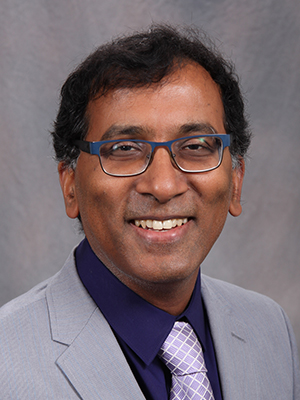
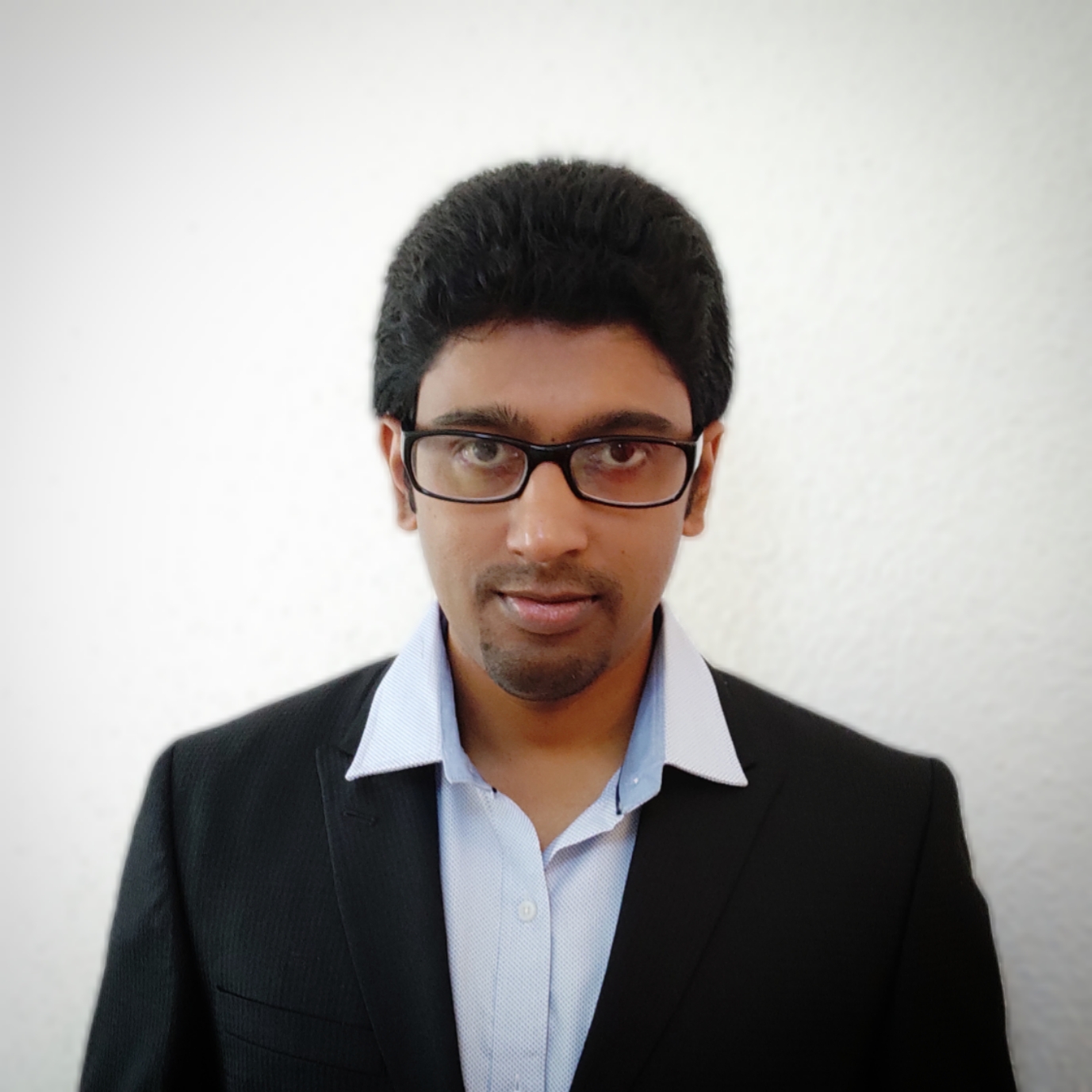
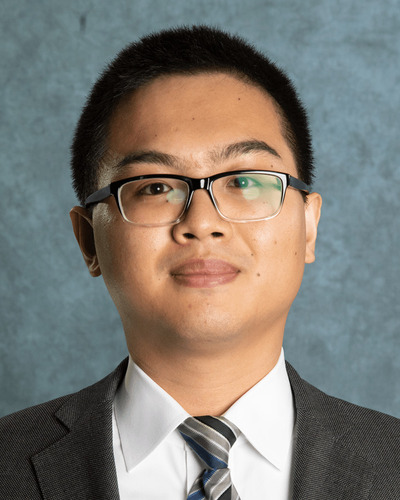
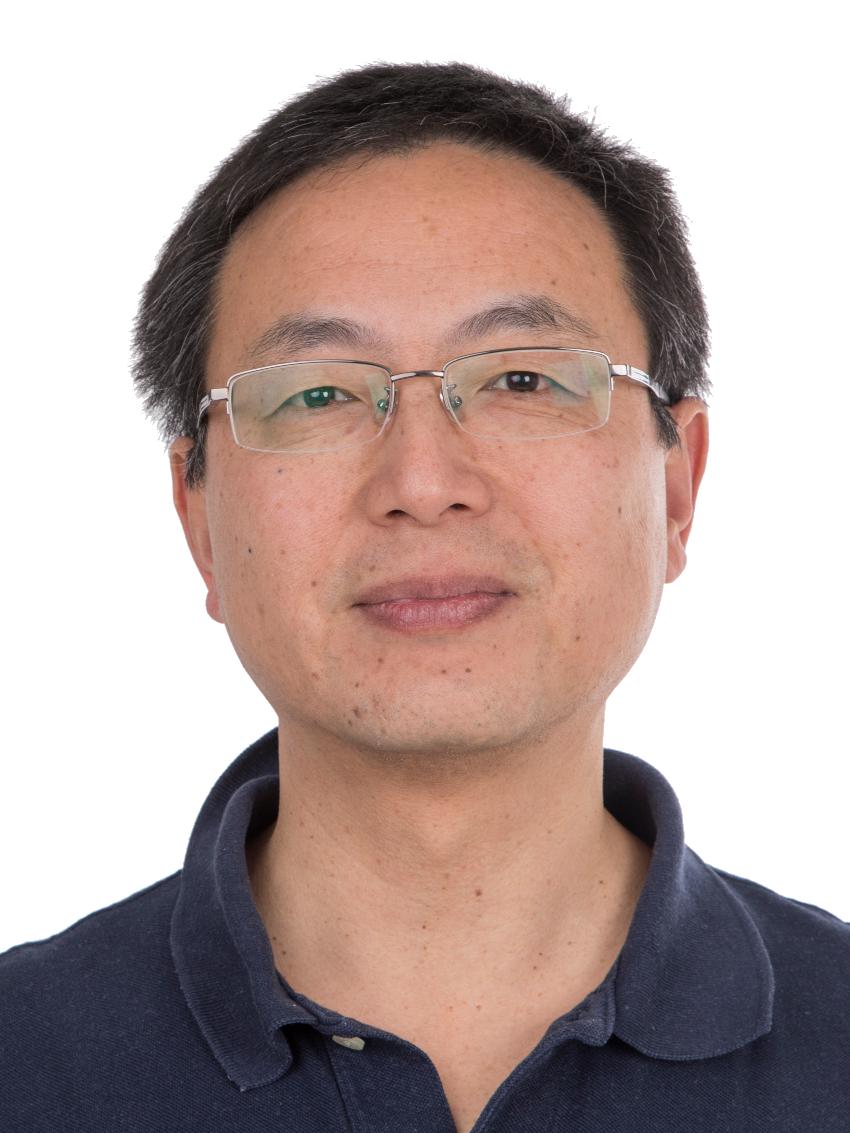
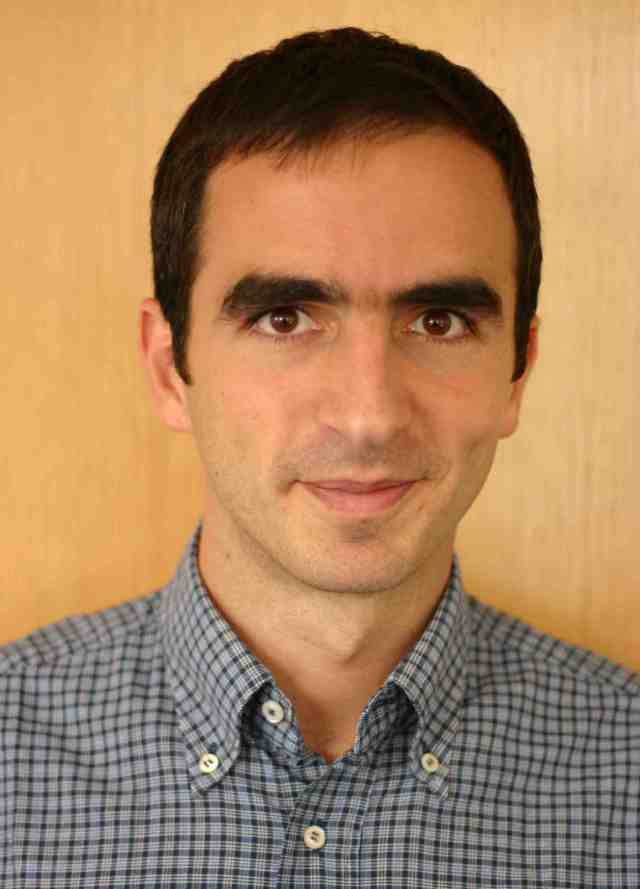
Yu Zhang is a Lecturer in Computing (IoT/Networking) at the School of Computing, Macquarie University, Australia. He holds a PhD in Computer Science from RMIT University, an M.Eng in Distributed Computing from the University of Melbourne, and a B.Eng in Software Engineering from Southwest University for Nationalities. His research focuses on mobile computing, wireless sensor networks, embedded systems, on-device machine learning, and IoT, with emphasis on security, edge computing, and privacy preservation. He is affiliated with the Future Communications Research Centre and Smart Green Cities Research Centre. Dr. Zhang’s work integrates theoretical advancements with practical applications in IoT and edge computing. His research outputs span secure device communication, energy-efficient networking protocols, and anomaly detection frameworks. Collaborations include projects like the CSIRO Data61 PhD Scholarship. He actively contributes to IEEE and ACM, addressing challenges in privacy-aware systems and federated learning.
Dr. Gokop Goteng is a Senior Lecturer at the School of Electronic Engineering and Computer Science, Queen Mary University of London. His contact information includes the email g.l.goteng@qmul.ac.uk and office location Engineering, Eng E105. He contributes to teaching modules under the BUPT joint programme, focusing on advanced computing topics. Research Interests: His academic work revolves around Cloud Computing infrastructure , Middleware architectures , IoT-enabled distributed systems , and cybersecurity for mobile and embedded devices . He emphasizes practical implementation in domains like Android-based smart home systems and secure messaging protocols. Teaching: Leads three core modules: - Cloud Computing : Covers cloud infrastructure, service-oriented architectures, and security challenges - Middleware : Focuses on IoT middleware, message-oriented systems, and mobile device programming - Software Engineering : Addresses team-based development, quality assurance, and project management methodologies Advising & Grants: Maintains a dedicated PhD student portal at https://sites.google.com/site/gotengphdstudents/home , though specific grant details are not disclosed in available materials.
Thomas Erich Zinner is a Professor at the Department of Information Security and Communication Technology (IIK) at the Norwegian University of Science and Technology (NTNU). He leads the Networking Group@IIK and has held roles including Head of the FG INET at TU Berlin and Head of the Next Generation Networks group at the University of Würzburg. He earned his diploma (2006) and PhD (2012) from the University of Würzburg. His research focuses on network eco-systems, performance evaluation of SDN/NFV architectures, QoE-centric management, and 5G/6G innovations. Key projects include TeraFlow, aiming to revolutionize SDN traffic management in beyond 5G networks. His work bridges network technologies, applications, and protocols, emphasizing optimization for emerging paradigms like software-based networking and adaptive video streaming. Recent publications address AI integration in 6G, 5G NR performance, and QoE-aware network slicing. He collaborates internationally, publishing in venues like IEEE Transactions and CNSM. His research addresses challenges in network determinism, inter-domain connectivity, and geo-distributed analytics.
Narasimha Reddy is a Professor and Department Head in the Department of Electrical and Computer Engineering at Texas A&M University, holding the Truchard Foundation Chair Professorship. He earned his B.Tech. from the Indian Institute of Technology, Kharagpur (1985), and M.S./Ph.D. in Computer Engineering from the University of Illinois at Urbana-Champaign (1987/1990). His research focuses on Computer Networks Storage Systems Multimedia Systems Computer Architecture Cybersecurity with notable contributions to hybrid storage systems, cybersecurity frameworks, and network protocols. Reddy has held roles such as Associate Dean for Research (2016-21) and received accolades including IEEE Fellow (2003), NSF Career Award (1996-2000), and multiple teaching excellence awards. His work spans 5 patents and includes leadership in projects like IoTAegis (IoT security), CATS (Twitter spam detection), and SCMFS (storage class memory filesystem). His awards reflect industry and academic recognition: Fellow, IEEE Computer Society Outstanding Professor Awards (1997-98, 2003-04) IBM Technical Achievement Award (1995) Reddy’s research integrates hardware-software co-design, cybersecurity resilience, and scalable storage solutions. He leads initiatives in cyber-physical systems and digital manufacturing assurance, bridging theoretical advancements with practical applications in industry.
Armir Bujari is an Associate Professor at the Department of Computer Science within the Faculty of Science and Engineering at the University of Bologna. His research focuses on advanced networking, edge computing, digital twins, and blockchain applications. He holds a scientific disciplinary sector specialization in Information Processing Systems (IINF-05/A). Key research areas include: Edge and cloud computing architectures IoT and smart systems integration Blockchain-enabled data ecosystems Urban and industrial digital twins Disaster communication protocols Recent publications emphasize innovative solutions in federated learning, QUIC protocol optimization for satellite networks, and digital twin applications in logistics and smart cities. His work bridges theoretical advancements with practical implementations in 5G/6G networks, disaster response systems, and sustainable energy grids. Office location: 1st floor, Palazzina ex-scuderie, Viale Risorgimento 2, Bologna. Reception hours are typically Mondays 3-5 PM, with flexible scheduling via email.
Debopam Bhattacherjee is a Senior Researcher at Microsoft Research, Bangalore, focusing on AI Systems, Networked Systems, and Low-Earth Orbit (LEO) Satellite Networks. He holds a PhD in Computer Science from ETH Zürich (2021) and a dual Erasmus Mundus Master's in Security and Mobile Computing. His work has been recognized with the IRTF Applied Networking Research Prize (2020) and multiple Best Paper/Dataset Awards. Research interests include LEO satellite networks, sustainable AI systems, network topology design at hypersonic speeds (27,000 km/hour), and green computing via modular data centers. His publications span ACM SIGCOMM, USENIX ATC, IEEE COMSNETS, and arXiv, with recent patents on AI-driven LLM training and inference systems. Key awards: IRTF Applied Networking Research Prize (2020) Best Paper Award at ACM IMC 2020 Best Dataset Award at ACM IMC 2020 He has supervised numerous PhD/Master's students at ETH Zürich and Microsoft Research, including Tella Rajashekhar Reddy, Shubham Tiwari, and Saksham Bhushan. His educational background includes a B.E. in Computer Science & Engineering from Jadavpur University (2009) and a research fellowship at the Max Planck Institute (2019).
Sokol Kosta is an Associate Professor in the Department of Electronic Systems at the Technical Faculty of IT and Design, Aalborg University, Copenhagen, Denmark. His research focuses on edge computing, mobile cloud computing, cybersecurity, privacy, and the societal impact of digital technologies, particularly in public service media and data protection regulation. He is affiliated with the Cyber Security Group and contributes to initiatives such as 'AI for the People'. His research interests include edge and fog computing, computation offloading, Internet of Things (IoT), Internet of Floating Things, GPGPU acceleration, blockchain-based systems, privacy-preserving technologies, GDPR compliance, and public service media digital transformation. His work bridges technical innovation with policy and societal implications. His publications span from 2010 to 2025, with a strong presence in high-impact venues such as IEEE INFOCOM, IEEE Transactions on Mobile Computing, and The Web Conference. The articles reflect a consistent focus on mobile and edge computing systems, performance modeling, security, and privacy, increasingly incorporating societal and policy dimensions, especially post-GDPR. Trends include computation offloading optimization, decentralized systems, and empirical studies on web tracking and data governance. He has received 14 prizes and recognitions for his research contributions, though specific awards are not detailed in the provided text. He has supervised PhD students, including Jannick Kirk Sørensen, and has been involved in significant research projects such as the 'European Open Web Privacy Measurement' project (2017–2020), which examined GDPR's impact on third-party web services. He has presented his work internationally, including at The Web Conference 2019 in San Francisco, and has been featured in media coverage discussing data privacy compliance of Danish public websites. His lab and team activities are centered around the Cyber Security Group and collaborative projects involving distributed computing, edge AI, and privacy measurement.
Enes Bajrovic is a researcher affiliated with the Faculty of Computer Science, focusing on high-performance computing (HPC), big data processing, and performance portability. His work spans task-based parallelism, runtime systems, and optimization frameworks for heterogeneous architectures. He has contributed to major European projects like PEPPHER and AutoTune, which aim to advance HPC software tools and autotuning methodologies. His research emphasizes practical applications of parallel computing in domains such as mobile networks and scientific simulations. Education: Dipl.-Ing. Dr.techn., BSc in Computer Science His research interests include developing frameworks for compute- and data-intensive applications, leveraging technologies like Kubernetes, OpenCL, and Intel Xeon Phi coprocessors. He has authored numerous peer-reviewed publications on topics such as pipeline patterns, autotuning algorithms, and hybrid execution models. His work bridges theoretical advancements in parallel computing with real-world software engineering challenges. Bajrovic has collaborated on projects funded by the European Commission’s FP7 program, contributing to deliverables like runtime systems, tuning frameworks, and benchmarking tools. His research also addresses the integration of big data processing with HPC, particularly in telecommunications and distributed computing environments.
Associate Professor Mark Gregory is affiliated with the School of Engineering at RMIT University. His academic role involves research in network engineering, telecommunications, software development, project management, cybersecurity, and distributed computing. He has held multiple leadership roles in his field and is actively involved in supervising PhD and MEng students. Reflecting his dedication to teaching, he received the 2015 Outstanding Good Teaching Scale award for EEET1152 Network Services and Internet Applications. His research focuses on next-generation mobile cellular networks, 6G technologies, edge computing security, and network optimization. Gregory has been recognized with numerous accolades, including multiple RMIT Media Star of the Year awards and the Australian Defence Medal. He has led significant research projects funded by organizations like NEC, the Australian Research Council, and auDA, contributing to advancements in software-defined networking (SDN), multi-access edge computing (MEC), and telecommunications infrastructure. His work emphasizes practical applications of technology to enhance security, efficiency, and accessibility in urban and rural networks.
Dr. Shuo Li is a Lecturer in the School of Engineering at RMIT University, Australia. She holds a B.Eng. (2009) and Ph.D. (2014) from City University of Hong Kong. Her research focuses on telecommunications, underwater optical networks, network design, and edge computing. She has held academic roles at RMIT since 2011 and Tianjin University (2014–2017). Education: Ph.D. and B.Eng. in Engineering from City University of Hong Kong. Research Interests: 6G cellular networks, underwater optical communication, network security, and edge computing architectures. Dr. Li leads projects on 6G mobile cellular design, underwater optical networks, and edge computing resource management. She has received awards including the Research Tuition Scholarship (2013) and CityU Mainland Scholarship (2005–2009). Her work emphasizes practical applications, such as developing web-based network design tools and security frameworks for edge computing. Recent Projects: 6G architecture development, underwater optical wireless systems, and zero-trust security in multi-access edge computing. Supervision: Active in guiding PhD/MEng students on topics like optical interconnects for data centers and edge computing security. She collaborates on industry-focused research and is available for consulting in Australia and internationally. Her work bridges theoretical advancements with real-world network challenges.
Dr. Hongyi Zhu serves as an Assistant Professor in the Department of Information Systems and Cyber Security at the Alvarez College of Business, The University of Texas at San Antonio (UTSA), leveraging his Ph.D. from the University of Arizona and Bachelor's from Tsinghua University to advance interdisciplinary research at the AI-health-security intersection. Education: Ph.D. in Management Information Systems, University of Arizona Bachelor of Business Management, Tsinghua University His research pioneers artificial intelligence-based analytics for mobile health, mental health, and cybersecurity, utilizing deep learning and network analysis to address critical challenges in proactive threat intelligence and senior care. Publications span premier venues including MIS Quarterly and IEEE Transactions on Knowledge and Data Engineering, reflecting his multidisciplinary approach bridging computer science, information systems, and biomedical informatics. Analysis of his 15 most recent publications reveals a dominant focus on applying graph embedding and federated learning to cybersecurity vulnerabilities (40% of works), depression detection via sensor fusion (25%), and privacy-preserving AI frameworks (35%), with consistent methodology innovation in transfer learning and uncertainty quantification across health and security domains. Dr. Zhu teaches Computer Networking and Telecommunication Systems while maintaining active memberships in IEEE, ACM, AIS, and INFORMS, demonstrating commitment to both academic rigor and professional community engagement.
Weihai Yu is an Associate Professor at the Department of Computer Science, UiT The Arctic University of Norway. His research focuses on distributed systems, collaborative editing, conflict-free replicated data types (CRDTs), edge computing, and decentralized service orchestration. He leads the Open Distributed Systems (ODS) research group and contributes to projects like the Conflict-free Replicated Relation (CRR) and Nudge Project. Yu has authored over 50 publications since 2009, with recent work emphasizing replicated data streams, undo mechanisms in collaborative systems, and edge-cloud integration. Key research interests include: distributed database replication, real-time collaborative editing with CRDTs, fault-tolerant service orchestration, and asynchronous systems design. His work bridges theory and practice, addressing challenges in consistency, scalability, and user experience in distributed applications. Publications trends show a strong focus on CRDT advancements (e.g., low-cost set CRDTs, generic undo support) and edge computing applications. He collaborates extensively with industry partners on projects like the Nudge Project, exploring IoT-driven transportation systems. Yu's contributions are published in top venues such as Springer Nature, ACM, and IEEE journals/conferences. Maintains the Open Distributed Systems (ODS) group at UiT, focusing on collaborative systems and distributed computing innovations. Current research includes local-first software architectures and conflict-free replicated relations for multi-synchronous database management.
Giovanni Neglia is a Research Director (DR2) at Inria, affiliated with the NEO team and the 3IA Côte d'Azur Chair, focusing on performance evaluation of distributed systems, cache networks, and large-scale machine learning. He is based in Sophia Antipolis, France. Inria, Sophia Antipolis NEO Team 3IA Côte d'Azur Chair His research interests center on distributed systems, leveraging mathematical tools such as Markov processes, control theory, fluid models, and game theory. Key areas include caching policies, distributed optimization for machine learning, and performance modeling of networks. He has previously worked on P2P networks, delay tolerant networks, smart grids, and complex networks. Recent publications demonstrate a strong focus on similarity caching, federated learning, and distributed optimization. Trends include developing online learning algorithms for caching, improving privacy and efficiency in federated systems, and optimizing content delivery in 5G and small cell networks. Best paper award at ITC-33 IEEE Infocom Distinguished TPC member (2017, 2018, 2022) Best paper award at ITC28 2016 Best paper award at IEEE Online Greencomm 2014 Best paper award at IEEE Infocom NetSciCom 2014 Best paper award at IEEE VTC2013-Spring Best student paper award at VALUETOOLS 2012 Best paper award at BIONETICS 2007 Giovanni Neglia leads the Fed-Malin Inria challenge on federated machine learning and has secured grants including a 3IA Côte d'Azur chair for PERUSALS (Pervasive Sustainable Learning Systems). He advises PhD students such as Othmane Marfoq and Chuan Xu, and collaborates with Accenture Labs, SAP, and Nokia Bell Labs. He has organized winter schools and tutorials on complex networks and similarity caching. He leads the NEO team and previously led the Maestro team. He is involved in the joint Brazilian-French research team Thanes on network science and has served on numerous technical program committees for major conferences including IEEE Infocom, INFOCOM, and SIGMETRICS.
Abbas Mehrabidavoodabadi is an Assistant Professor in the Department of Computer and Information Sciences at Northumbria University, UK, and a member of the CyberNets research group. He previously served as a Lecturer at Nottingham Trent University (2019–2020) and a Postdoctoral Researcher at Aalto University, Finland (2017–2019). He holds a PhD in Computer Science from Gwangju Institute of Science and Technology (GIST), South Korea, awarded in 2017. His educational background includes: PhD in Computer Science, Gwangju Institute of Science and Technology (GIST), South Korea (2013–2017) His research focuses on optimization and resource allocation in mobile edge computing (MEC), Internet of Things (IoT), smart grids/microgrids, and vehicular edge/fog networking. He explores energy-efficient mobile computing, Quality of Experience (QoE) optimization, and adaptive mobile video streaming. His work integrates algorithmic design with real-world applications in sustainable energy and intelligent transportation systems. His recent publications reveal a strong trend in intelligent energy management for electric vehicles, edge-assisted autonomous driving, federated learning for privacy-preserving AI, and green computing in mobile networks. His research bridges computer science with energy systems and transportation, emphasizing sustainability, efficiency, and user-centric design. His scientific awards and honors include: Fellow of the UK Higher Education Academy (FHEA) Member of IEEE Associate Member of the British Computer Society (BCS) He has been involved in research projects funded by Innovate UK, Horizon Europe, and the Marie Skodowska-Curie programme. He serves as a reviewer for top journals such as IEEE Transactions on Mobile Computing, IEEE Transactions on Vehicular Technology, and ACM Transactions on Multimedia Computing. He is currently supervising PhD students, including Amin Mansour Saatloo, whose work focuses on sustainable energy systems with electric vehicles. He is affiliated with the CyberNets research group at Northumbria University, which focuses on cybersecurity, edge computing, and networked systems. His teaching includes courses on Computer Networks, Security, and Operating Systems.
Dr. Muhammad Usman Ilyas is an Assistant Professor in the School of Computer Science at the University of Birmingham, Dubai, UAE. He previously held academic positions at the University of Jeddah and the National University of Sciences and Technology (NUST), Islamabad. His expertise lies in computer science, networking, and artificial intelligence, with a focus on practical and societal applications. Education: Ph.D. in Electrical Engineering, Michigan State University, USA (2009) M.S. in Electrical Engineering, Michigan State University, USA (2007) M.S. in Computer Engineering (Dean’s List), Lahore University of Management Sciences (LUMS), Pakistan (2005) B.E. (Honors) in Electrical Engineering, National University of Sciences & Technology (NUST), Pakistan (1999) His research interests span Machine Learning, Artificial Intelligence, Internet of Things (IoT), Network Security, Wireless Networks, Data Science, and Smart Cities . He integrates these areas into applications in healthcare, urban systems, and education. His recent publications demonstrate a strong trend in applying deep learning to medical diagnostics and enhancing cybersecurity in modern networks. His work also explores educational robotics and data-driven public health analysis. Scientific Awards: No awards explicitly mentioned. Dr. Ilyas has served as a Postgraduate Program Director and has advised students through research publications, though formal student names are not listed. He has contributed to research grants and projects, particularly in IoT infrastructure and network modeling, as reflected in his publications. He has also taught modules in AI, data science, security, and mathematical foundations of computing. Labs and Teams: While specific lab names are not mentioned, his research collaborations and publication topics suggest involvement in teams focused on AI, networking, and IoT systems, likely within the School of Computer Science at the University of Birmingham Dubai.