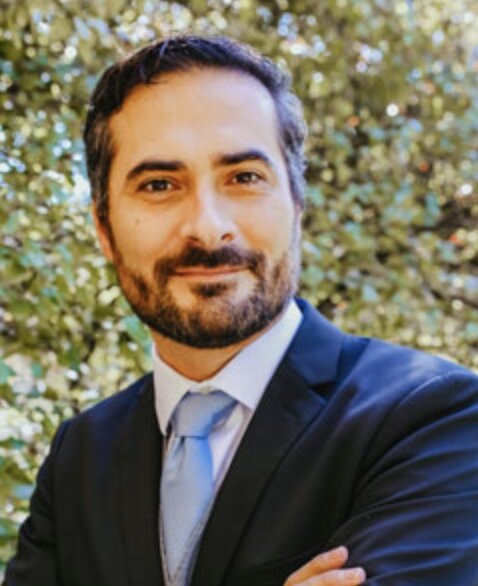
Sandy Dall'Erba is a Professor in the Department of Agricultural and Consumer Economics at the University of Illinois at Urbana-Champaign. He holds additional affiliations with the European Union Center, Center for Latin American and Caribbean Studies, Lemann Center for Brazilian Studies, and the Center for Digital Agriculture at NCSA. His research spans regional economic analysis, spatial econometrics, and climate change impacts on agriculture. PhD in Economics, University of Pau (2004) MSc in Economics, University of Pau (2000) Postdoctoral, Spatial Economics at Free University of Amsterdam (2005-2006) Postdoctoral, REAL at UIUC (2004-2005) Dall'Erba specializes in spatial econometric modeling to analyze regional growth, innovation systems, and climate change effects. His work integrates interregional input-output frameworks and structural gravity models to quantify economic spillovers. Recent studies address agricultural vulnerability to climate shocks, plastic waste embedded in trade, and tax revenue disruptions from natural disasters. His publications focus on regional economics, environmental accounts, and climate resilience, with applications in the U.S., Latin America, and China. Key trends include spatial heterogeneity in climate impacts, supply chain vulnerabilities, and policy design for disaster mitigation. RSPP Best Paper Award Regional Studies Association Best Paper Award Tiebout Prize Epainos Prize Dall'Erba has co-authored works with graduate students and secured grants from NSF, NASA, and USDA. He directs the Regional Economics Applications Laboratory (REAL) and co-founded the Center for Climate, Regional, Environmental and Trade Economics (CREATE) , advancing system-wide approaches to climate and trade challenges.
Valeriy Vyatkin is a Professor at the Department of Electrical Engineering and Automation, Aalto University. His research focuses on advancing industrial automation, control systems, and their integration with emerging technologies like machine learning and digital twins. He specializes in standards such as IEC 61499, addressing interoperability, formal verification, and performance optimization in distributed automation systems. Key research interests include: Physics-informed machine learning for industrial processes (e.g., steel rolling, reservoir engineering) Formal methods for control system validation and safety-critical applications Development of adaptive automation frameworks for Industry 5.0 challenges, including human-robot collaboration and energy systems Interoperability between legacy and modern industrial standards (OPAS, OPC UA) Recent work emphasizes real-time simulation, FPGA-based control prototyping, and AI-driven solutions for energy efficiency and sustainability in manufacturing, horticulture, and process industries. Publications span topics like robotic walker design, probabilistic model checking, and decentralized learning management systems. He collaborates on EU and industry-funded projects, focusing on digital twin implementation, edge computing, and virtual commissioning. His team develops tools for automated code generation, system migration, and anomaly detection in complex industrial settings.
Philip Loldrup Fosbøl is an Associate Professor in the Department of Chemical and Biochemical Engineering at the Technical University of Denmark (DTU), College of Engineering. He is actively affiliated with CERE – Center for Energy Resources Engineering, where he conducts research on CO 2 capture, storage, transport, and utilization. His work integrates thermodynamic modeling, process simulation, and pilot-scale experimentation to address challenges in carbon management and sustainable energy systems. His research interests include: Carbon Dioxide Capture and Storage (CCS) Thermodynamics and Phase Equilibrium of Electrolyte Solutions Process Design, Simulation, and Optimization CO 2 Corrosion in Energy Systems Biogas Upgrading and Cleaning CO 2 Utilization and Conversion Development of Predictive Thermodynamic Models Mobile and Large-Scale Pilot Facilities for CO 2 Capture His recent publications (2025) highlight a strong focus on biogas upgrading, solvent degradation in industrial CO 2 capture, thermophysical property measurements, and novel electrochemical separation methods. These works reflect a consistent trend toward energy-efficient, scalable, and industrially applicable solutions for decarbonization, particularly in flue gas and biogas treatment. Scientific awards received: Top PhD Thesis of the Year (2008) He actively supervises multiple PhD students and leads research projects funded by industrial partners such as Ørsted, Shell, Equinor, and Novozymes, as well as EU initiatives including CASTOR, iCap, and OCTAVIUS. His work contributes to UN Sustainable Development Goals related to climate action and affordable, clean energy. He is involved in laboratory research on thermodynamic equilibrium (VLE, SLE), heat capacity, corrosion mechanisms, and core flooding for CO 2 storage. His team develops experimental methods and operates pilot facilities for CO 2 capture and biogas cleaning, often in collaboration with key researchers like Kaj Thomsen, Nicolas von Solms, and Georgios Kontogeorgis.
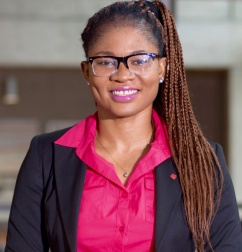
Rita Orji is a Full Professor at the Faculty of Computer Science, Dalhousie University, where she holds the Canada Research Chair in Persuasive Technology and is an NSERC Arthur B. McDonald Fellow. She leads the Persuasive Computing Lab and is actively involved in the Human-Computer Interaction (HCI), Visualization and Graphics research cluster. Her research focuses on Human-Computer Interaction, Persuasive Technology, Games for Change, and Digital Health, with an emphasis on designing user-centered interactive systems for behavior change, particularly in health and wellness domains. Her work targets underserved populations through HCI for Development (HCI4D) and applies AI, machine learning, and gamification to promote healthy eating, physical activity, mental health, and smoking cessation. Dr. Orji has received numerous scientific awards and recognitions, including being appointed to the Royal Society of Canada, named among the Top 100 Leading Nigerian Women, and recognized as one of the Top 100 Black Women to Watch in Canada. She is a Vanier Scholar and Banting Postdoctoral Fellow, reflecting her academic excellence. Canada Research Chair in Persuasive Technology NSERC Arthur B. McDonald Fellow Appointed to the Royal Society of Canada (2020) Top 100 Leading Nigerian Women (2021) LinkedIn Top Influencer - Africa Top Voice (2020) Research Excellence Award, Dalhousie University (2019) She has supervised a vast number of students at all levels, including PhD, Master’s, and undergraduate researchers, many of whom have worked on persuasive apps for mental health, AI-driven coaching, gamified interventions, and health equity. Her lab is well-funded, notably by an NSERC Discovery Grant, and she has delivered keynotes at major international conferences such as ISRII and AfriCHI. Dr. Orji directs the Persuasive Computing Lab, a vibrant research group that includes postdoctoral fellows, PhD and Master’s students, and research interns, all working on interdisciplinary projects at the intersection of computing, psychology, and public health.
Wolfram Sopha serves as Professor for International Management in the Automotive Faculty at Nürtingen-Geislingen University of Applied Sciences (HfWU), with 15 years of institutional affiliation. He concurrently holds visiting professorships at Universitat Central de Catalunya (Barcelona, Spain), Jilin University Lambton College (Changchun, China), University of International Business and Economics (Beijing, China), ICO Nida University (Bangkok, Thailand), Walailak University (Thailand), Babes Bolyai University (Romania), and Vietnamese German University (Ho Chi Minh City, Vietnam). His academic foundation includes a Dr. rer. pol. doctorate from the European Business School (EBS) focused on business process analysis with standard software implementation, and a Diplom-Ingenieur degree in Business Administration and Engineering from Technological University Berlin with specialization in Material Flow & Logistics. Research centers on automotive-sector international management, integrating Automotive Management, Mobility Management, and Business Process Management with practical industry applications. This expertise stems from 15 years at General Motors Europe managing Logistics, IT, Aftersales, Sales, and International Business Development, reflected in frequent speaking engagements at major conferences including Thai Sino Conference (Chongqing), CADA Conference (Suzhou), and ENG Automotive Finance/Sales events across Berlin, Amsterdam, and Barcelona.
Dr. Silvana Deilen is a Researcher at the Institute for Translation Studies & Technical Communication within the Faculty of Language and Information Sciences at the University of Hildesheim. She joined the university in 2023 after working as a Research Associate at Johannes Gutenberg University Mainz from 2018-2024. Her primary research focus centers on accessible communication, particularly in the areas of Easy Language and Plain Language translation, with special emphasis on cognitive aspects of translation processes and AI-assisted translation technologies. Dr. Deilen earned her B.A. in Multilingual Communication from Cologne University of Applied Sciences (2012-2015), followed by an M.A. in Specialized Translation from the same institution (2015-2018). She completed her doctoral studies (Dr. phil.) in Translation Studies at Johannes Gutenberg University Mainz (2018-2021) with summa cum laude distinction, supervised by Prof. Dr. Silvia Hansen-Schirra and Prof. Dr. Arne Nagels. Her research interests span multiple interconnected domains within translation and communication accessibility. A significant portion of her work examines the cognitive processing of compound words in Easy Language, utilizing eye-tracking methodologies to investigate how visual segmentation affects reading behavior and cognitive load. She has pioneered research on AI-assisted translation for health communication, particularly focusing on how large language models can support the creation of accessible health information. Her work bridges theoretical translation studies with practical applications in healthcare, government communication, and digital accessibility. Dr. Deilen's publication record reveals a clear trajectory toward increasingly sophisticated integration of technology and accessibility. Her recent work shows strong emphasis on evaluating AI systems like ChatGPT for translation tasks, developing editorial workflows for AI-assisted translation of health information, and investigating cognitive aspects of compound translation. The interdisciplinary nature of her research connects linguistics, cognitive science, health communication, and artificial intelligence, demonstrating how translation studies can address real-world accessibility challenges. 2014 & 2016: PROMOS Scholarships 2018-2021: Doctoral Scholarship from Gutenberg Young Researchers College 2020: Best Student Paper Award at Swiss Conference on Barrier-free Communication 2023: Award for Outstanding Dissertation from Johannes Gutenberg University Mainz 2023: Multiple research grants from University of Hildesheim, Wort & Bild Verlag, and Niedersachsen Zukunftsdiskurse 2025: DAAD Postdoctoral Research Grant Dr. Deilen actively collaborates on significant research projects including the KI-GesKom project (AI-Supported Health Communication in Plain Language), which receives funding from the state of Niedersachsen. She works closely with Prof. Dr. Ekaterina Lapshinova-Koltunski, Prof. Dr. Christiane Maaß, and Sergio Hernández Garrido as part of the Research Center for Easy Language. Her work with the Apotheken Umschau demonstrates practical application of research, translating health information into accessible formats for people with communication limitations. Dr. Deilen also contributes to the academic community as a program chair and scientific committee member for international conferences including UCCTS 2025 and Translation in Transition 2024.
Lisa Ollinger is a Professor of Production Automation at Ulm University of Applied Sciences (Technische Hochschule Ulm), where she has been serving since October 2019. She teaches courses in Automation Technology 1 and 2 for the Business Engineering program, Industrial Automation for the Digital Production program, and Flexible Automation for the Systems Engineering and Management Master's program. Her educational and professional background includes: Technology Leader for Engineering Projects in Automation and Digitalization at Procter & Gamble GmbH (2014-2019) Researcher at the German Research Center for Artificial Intelligence (DFKI) in the Innovative Factory Systems research area (2012-2014) Research Assistant at TU Kaiserslautern in the Production Automation department (2009-2011) Professor Ollinger's research focuses on the intersection of industrial automation and digital transformation. Her work explores how emerging technologies like Industrial Internet of Things, cyber-physical systems, and digital twins can revolutionize manufacturing and logistics processes. She investigates flexible production systems that can adapt to changing requirements through skill-based engineering approaches and novel communication architectures using OPC UA standards. Her research also extends to robotics applications, particularly industrial robotics and autonomous mobile robots, often leveraging ROS (Robot Operating System) frameworks. Her recent publications demonstrate a strong focus on practical implementations of Industry 4.0 concepts, particularly in warehouse management and production systems. She examines how digital twin technology can enhance logistics operations and how agent-based systems can improve manufacturing resilience. A common thread in her work is the application of OPC UA communication standards to create more flexible, interoperable industrial systems. Professor Ollinger holds significant administrative roles at THU: Dean of the Master's program in Systems Engineering and Management Member of the University Council Member of the Institute for Manufacturing Technology and Materials Testing (IFW) Founding Ambassador for Startup South She maintains active professional connections through ResearchGate, LinkedIn, and ORCID, reflecting her commitment to academic collaboration and knowledge sharing in the field of industrial automation and digital manufacturing.
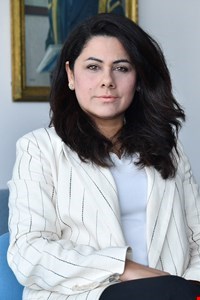
Dr. Asieh Hosseini Tabaghdehi is a Senior Lecturer in Strategy & Business Economy at Brunel Business School, Brunel University of London. She serves as Programme Lead for the BSc International Business Programme and Trade2Grow Executive Education Programme. Additionally, she is Impact Lead at the Brunel Centre for AI: Social and Digital Innovation, where she leads the capability area in the Future of Work. Dr. Tabaghdehi is also an economist and social impact advisor for the independent NGO, Social Innovation Movement. Dr. Tabaghdehi earned her PhD in Economics and Finance (2008) and MSc in International Money, Finance, and Investment (2015), both from Brunel University London. She also holds a BA in Theoretical Economics from University of Mazandaran. She completed the Postgraduate Certificate in Academic Practice and is a Fellow of the Higher Education Academy. Dr. Tabaghdehi is internationally recognized for her research on digital transformation, with particular expertise in the ethical integration of artificial intelligence and digital technologies. Her work focuses on how emerging technologies shape industries, labor markets, and society, with emphasis on enhancing SME growth through technological innovation. She explores applications across critical sectors including social care, supply chain management, and environmental sustainability. A central theme in her research is smart data governance, ensuring ethical, transparent, and responsible use of data in decision-making processes. Her research portfolio demonstrates a consistent focus on the intersection of technology, ethics, and business strategy. She has developed frameworks like the Digital Business Auditing Framework, which has been adopted internationally for smart city initiatives. Her work connects academic research with practical policy applications, as evidenced by her presentations as oral and written evidence to the House of Commons Select Committee. Her publications span AI ethics, digital footprint implications, fertility economics, and healthcare cost analysis, showing interdisciplinary breadth while maintaining thematic coherence around digital transformation's societal impact. Scientific Awards and Recognition Semi-finalist: Research Impact Award at Brunel University London, 2023 Staff Award: Exceptional in Collegiality and Supportive to Colleagues at Brunel University London, 2022 Exceptional Performance at Regents University London, 2018-19 Staff Award in Teaching, Learning and Assessment at Regents University London, 2016 Best Lecturer Award at London Brunel International College, 2014 Best Lecturer Award at London Brunel International College, 2013 Dr. Tabaghdehi actively supervises PhD students researching areas including Smart Data Governance, Ethical AI Governance, Digital Innovation Impact, Responsible AI Adoption Strategies, Sustainability, and Future of Labour Market. She has secured research funding from multiple sources including the Economic & Social Research Council (ESRC), Brunel University London, and Brunel Business School. Her current projects include research on AI Adoption and Governance, Youth digital addiction, Algorithm Reliability Framework, and SMEs digital footprints. She has also co-designed the "Digital Adoption" module for the UK Government's Help to Grow Management program, demonstrating the practical application of her research. As a member of multiple professional organizations, Dr. Tabaghdehi serves as an associate practitioner at Social Value International, associate member of the Big Innovation Centre, and member of the All-Party Parliamentary Group on AI. She is also a member of the ESRC Review College, British Academy of Management Review College, and Energy Institute UK, contributing to the broader academic and policy communities through these roles.
Guido Perboli is a Full Professor in the Department of Management and Production Engineering (DIGEP) at the Polytechnic University of Turin, where he also serves as Logistics Coordinator and Project Coordinator for activities supporting relationships with government bodies. He is a member of the Interdepartmental Center CARS@PoliTO (Center for Automotive Research and Sustainable Mobility) and serves as Director of the ICT for City Logistics and Enterprises (ICElab@Polito) research center, which he founded in 2016. His research interests span a broad range of topics including Operations Research, Logistics, Last-mile Delivery, Sustainable Logistics, Combinatorial Optimization, Stochastic Programming, Business Development, and Lean Business methodologies. His work particularly focuses on City Logistics, Green Logistics, and the application of emerging technologies like Blockchain and AI in supply chain management. He has developed GUEST, a Lean Business methodology for innovation processes from early idea definition to implementation. Professor Perboli's recent publications demonstrate a strong focus on urban logistics, last-mile delivery optimization, blockchain applications in supply chains, and the integration of AI techniques in transportation systems. His work shows an increasing trend toward interdisciplinary research that combines optimization methods with emerging technologies to address sustainable urban mobility challenges. Professional Recognition: CASE Best Paper award from IEEE Conference on Automation Science and Engineering (2011) Effective member of INFORMS (2019-present) Effective member of EURO (1995-present) Effective member of AIRO (1995-present) Associate Editor for Journal of Applied Research and Technology (2020-present) Associate Editor for Sustainability (2018-present) Professor Perboli actively advises PhD students and has supervised numerous research projects, including EU-funded initiatives like SINFONICA, HESTER, and 5G-LOGINNOV. He serves as Scientific Director for multiple commercial research projects focused on blockchain, IoT, and AI applications in logistics. Beyond academia, he is Chief Scientific Officer of Arisk S.p.A., a fintech company specializing in business crisis prediction using AI and machine learning. His research group, ICElab@Polito, focuses on two main areas supporting urban growth: logistics and enterprises. The center collaborates with numerous companies including Amazon, DHL, and FCA, addressing real-world challenges in urban logistics and supply chain management through innovative research approaches.
Evita Papazikou serves as a Lecturer in Transport Engineering at the School of Engineering, University of the West of England (UWE Bristol), where she contributes to the Centre for Transport and Society and collaborates with the Bristol Robotics Laboratory's Connected & Autonomous Vehicles Centre. Her academic qualifications include: Civil Engineering (BEng and MEng) from Aristotle University of Thessaloniki MSc in Planning, Organisation, and Management of Transport Systems, Aristotle University of Thessaloniki PhD in Automated Systems and Driver Behaviour (Road Safety) from Loughborough University, sponsored by the Insurance Institute for Highway Safety with access to SHRP2 NDS data Dr. Papazikou's research focuses on road safety, connected and automated vehicles, driver behaviour analysis, and smart infrastructure. She investigates accident causation through statistical modeling, develops driver monitoring systems, and explores human factors in transportation. Her work integrates traffic simulation with mobility data fusion from vehicles, sensors, and infrastructure to enhance safety in future mobility systems, particularly in cooperative, connected, and automated environments. Her recent publications (2023-2025) reveal a concentrated research trajectory examining safety impacts of dedicated lanes for autonomous vehicles, parking policy implications in automated eras, and driver fatigue management. She consistently employs naturalistic driving data and traffic microsimulation to analyze driver-vehicle-environment interactions, with increasing emphasis on real-world intervention effectiveness and environmental sustainability in mobility systems. Scientific Awards: No specific awards were mentioned in the provided information. Dr. Papazikou has secured significant research funding through competitive programs including Horizon 2020, Innovate UK, and the Department for Transport. Her project portfolio demonstrates substantial industry collaboration, particularly with Ford, and includes: LEVITATE: Assessing societal impacts of Connected and Automated Vehicles SafetyCube: Developing an innovative road safety decision support tool i-DREAMS: Creating a smart driver and road environment assessment system DDRST: Building a data-driven road safety tool for hotspot identification TRIP: Developing a driver culpability assignment tool for road injury prevention She actively contributes to interdisciplinary research through her affiliations with the Centre for Transport and Society and the Bristol Robotics Laboratory's Connected & Autonomous Vehicles Centre, where she bridges engineering, human factors, and policy development for next-generation transportation systems.
Nathaniel Nucci is an Associate Professor at Rowan University's College of Science & Mathematics, jointly appointed in the Department of Biological & Biomedical Sciences and Physics & Astronomy. His research bridges biophysics, structural biology, and nanotechnology to understand protein behavior in confined environments. Education Ph.D., Biochemistry and Molecular Biophysics, University of Pennsylvania M.S., Biochemistry and Molecular Biology, University of New Hampshire B.S., Biochemistry and Molecular Biology, University of New Hampshire Research Interests Dr. Nucci's lab focuses on: Protein biophysics in crowded/confining environments Reverse micelle technology for biomolecular studies Hydration dynamics of proteins (NMR-based methods) Structural biology of disease-related proteins (PHDs, p53) Drug delivery systems for protein therapeutics Nanoparticle synthesis with protein conjugation Research Trends His recent publications demonstrate expertise in using reverse micelles to study: Protein structural stability under confinement Hydration dynamics of therapeutic proteins Microenvironmental effects on phase-separating proteins Conformational changes in GPCRs Interfacial interactions in biomolecular systems Scientific Awards Gary J. Hunter Excellence in Mentoring Award (2024) College of Science and Mathematics Excellence in Academic Student Support (2022) Teaching Philosophy Emphasizes applied and experiential learning, integrating recent scientific discoveries into classroom practice and promoting hands-on scientific investigation.
Alexis Lussier Desbiens is an Associate Professor at the Université de Sherbrooke in the Department of Mechanical Engineering , Faculty of Engineering. He co-founded several research labs and initiatives including NSERC CREATE CoRoM (Collaborative Robotics in Manufacturing) and NSERC CREATE UTILI (Uninhabited Aircraft Systems Training). His work bridges robotics, mechanical design, and sports equipment innovation. PhD in Mechanical Engineering (Stanford University, 2012) BEng in Mechanical Engineering (Université de Sherbrooke, 2005) Postdoctoral Research (Harvard University, 2013) His research focuses on robotics and automation , particularly unmanned aerial vehicles (UAVs) with bioinspired design principles for mechanical intelligence. Key areas include: Autonomous UAV perching and climbing Hybrid locomotion systems Sports equipment dynamics (skis, hockey sticks) Magnetorheological actuator applications Conservation biology tools via aerial sampling Recent publications highlight interdisciplinary work in robotics , sports engineering , and ecological monitoring . His projects often integrate mechanical design with environmental or human-centric applications. Scientific recognition includes: Best Student Paper (IEEE SMC, 2021) Best Poster (ISEA, 2020) National Geographic Explorer (2020) CSME Gold Medal (2005) Current grants (2020-2023) include: $339,000 - High-performance UAV for power line interactions $1.65M - NSERC CREATE UTILI training program $120,000 - Intelligent hockey stick development He also leads the CREATEK Research Lab and maintains global collaborations with institutions like Harvard University, Stanford University, MIT, and EPFL.
Robert Pettersson serves as an Associate Professor and Researcher at Mid Sweden University, affiliated with the Department of Economics, Geography, Law and Tourism (EJT) and the European Tourism Research Institute (ETOUR) in Östersund. His academic career spans over two decades with significant contributions to tourism studies, particularly in indigenous tourism, event management, and outdoor recreation. Pettersson's work bridges theoretical research with practical policy applications, focusing on sustainable development in northern contexts. His research centers on indigenous cultural tourism , where he has pioneered studies on Sami festivals and heritage in northern Sweden; event management , with expertise in hallmark events, social impact assessment, and evaluation frameworks; and outdoor recreation , examining environmental sustainability and social integration through sports and nature-based activities. Pettersson employs innovative spatial analysis techniques including GPS tracking to study tourist mobility and behavior, contributing methodological advancements to the field. His work consistently addresses the tension between cultural preservation and tourism development. Analysis of Pettersson's publication trajectory reveals an evolution from foundational research on Sami tourism (early 2000s) to contemporary studies on event portfolios, non-use value, and immigrant integration through outdoor activities. Recent work emphasizes holistic evaluation tools addressing social, environmental, and economic dimensions of events. This progression demonstrates his responsiveness to emerging challenges in sustainable tourism while maintaining focus on marginalized communities and northern regional development. No specific scientific awards are documented in the provided information. However, Pettersson's leadership in major research projects and extensive publication record in high-impact journals like Journal of Policy Research in Tourism, Leisure and Events and Scandinavian Journal of Hospitality and Tourism underscores his scholarly impact. His co-authored review on event evaluation (2015) remains a seminal reference in the field. Pettersson actively contributes to applied research through projects including Mistra Sport and Outdoors and Östersund CCI (Place development through cultural and creative industries). He has produced practical guides on event evaluation covering social effects (2024), environmental impacts (2023), and tourism economics (2023), translating academic insights into tools for event organizers and policymakers. His collaborative work with organizations like the Nordic Symposium in Hospitality and Tourism demonstrates commitment to knowledge exchange. As a core member of ETOUR, Pettersson participates in a multidisciplinary research environment focused on tourism's role in northern societies. The institute facilitates collaboration between tourism, geography, economics, and law scholars to address complex regional challenges including sustainable resource management and community well-being. Pettersson's ongoing projects continue to explore how events and outdoor activities can drive inclusive regional development.
Elisa Maarit Lähde serves as an Assistant Professor in the Department of Architecture at Aalto University, where she advances sustainable urban design through interdisciplinary research at the intersection of landscape architecture, ecology, and planning. Her work focuses on transforming urban environments through biodiversity integration and socio-ecological innovation. Dr. Lähde's research centers on urban biodiversity mainstreaming, regenerative design frameworks, and landscape architectural storytelling. She pioneers approaches for integrating ecosystem services into urban planning, with particular emphasis on climate adaptation, green-blue infrastructure, and human-nature connection building. Her methodologies frequently employ co-creative processes with stakeholders to develop context-specific socio-ecological solutions. Recent publications (2024-2025) demonstrate a cohesive research trajectory examining practical applications of biodiversity principles across diverse urban contexts. Key thematic clusters include: (1) ecological assessment frameworks for built environments; (2) regenerative design strategies for Anthropocene challenges; (3) maritime spatial planning innovations; and (4) narrative techniques for enhancing ecological literacy. Her work bridges theoretical rigor with Finnish and international case studies, reflecting strong commitment to both scholarly contribution and real-world implementation. Dr. Lähde's scholarly contributions have been recognized through significant professional accolades: First prize in the Elielinaukio architectural competition (December 2021) for Helsinki Central Railway Station surroundings renewal Finalist in Ericsson Innovation Awards for FoodGrid project (June 2017) addressing Future of Food challenges First prize in International Stormwater Innovation Competition (November 2014) for urban furniture with water detention Honorary mention in Hiedanranta ideas competition (January 2017) for "There’s a New Town in the City" proposal While specific advising relationships and grant funding details aren't documented in available materials, her research portfolio demonstrates substantial collaborative engagement through multi-institutional publications and competition participations that likely involve student mentorship and research team leadership.
Dr. Zhi Chen is a Lecturer in Computing at the School of Mathematics, Physics and Computing, University of Southern Queensland, specializing in Artificial Intelligence and Machine Learning with applications spanning digital agriculture and healthcare systems. Education: Master of Information Technology (MIT), University of Queensland, 2018 PhD, University of Queensland, 2023 Research Focus: His work centers on zero-shot learning, domain adaptation, and multimodal systems, addressing core challenges in computer vision and deep learning. Current projects integrate AI with agricultural risk modeling and medical diagnostics, emphasizing real-world deployment of robust algorithms under data-scarce conditions. Publication Trends: Recent output (2022-2025) shows concentrated expertise in source-free domain adaptation and generalized zero-shot learning, with significant contributions to plant disease recognition (via mobile multimodal systems) and diabetes subgroup analysis. His work consistently appears in premier venues including AAAI, CVPR, and ACM MM, demonstrating methodological innovation applied to critical domains like climate-resilient agriculture and precision medicine. Supervision: Currently serves as Associate Supervisor for a doctoral candidate developing parametric insurance models for oyster farms to mitigate climate-related risks from king tides and extreme weather events. Awards: No scientific awards were documented in the provided materials.