
Michel Mandjes is a Professor at the University of Amsterdam's Faculty of Science and holds a Visiting Professor position at the Faculty of Economics and Business (FEB). His research focuses on stochastic processes, queueing theory, and probability theory, with applications in risk modeling, network analysis, and operations research. Recent publications highlight his contributions to multivariate Hawkes processes , Lévy-driven systems , and dynamic random graphs , emphasizing large deviations, rare event simulation, and statistical inference. His work bridges theoretical probability with practical challenges in traffic flow, financial risk, and social network modeling. The trends in his research include the development of stochastic models for network stability, appointment scheduling optimization, and inference techniques for non-stationary processes. His methodological innovations often leverage advanced probability theory and queueing frameworks to address real-world problems in transportation, healthcare, and finance.
جستوجوی استاد و پژوهشگر
استاد راهنما، استاد دانشگاه یا پژوهشگر مناسب برای مسیر پژوهشیتان را پیدا کنید و با او ارتباط بگیرید.
نمایش ۷۲۱-۷۳۵ از ۲۱٬۹۳۶ استاد راهنما
اطلاعات این پروفایلها از صفحات عمومی دانشگاهها جمعآوری شده و ممکن است بهروز نباشد.

Istvan David is an Assistant Professor in the Department of Computing and Software at McMaster University , with research expertise spanning Digital Twins , Model-Driven Engineering , and Sustainability . His work bridges theoretical and applied domains, focusing on smart ecosystems , collaborative modeling , and AI-driven simulation . Key contributions include frameworks for digital twin evolution and interoperability in sustainable systems. Education : BSc, MSc, and PhD in Computer Engineering and Computer Science from Budapest University of Technology and Economics, and University of Antwerp. Research Areas : Digital Twins, Model-Driven Engineering, Reinforcement Learning, Smart Ecosystems, Sustainability, Collaborative Modeling, Cyber-Biophysical Systems, and Software Architecture. Recent Article Trends emphasize AI integration with digital twins, collaborative modeling in industrial contexts, and sustainable systems engineering . His work often combines machine learning with formal modeling to address challenges in technical sustainability and smart agriculture .
Benedikt Aumeierمشاهده پروفایل
پژوهشگر ارشد
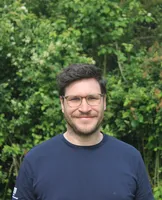
Dr. Benedikt Aumeier is a Research Fellow and head of the working group "Advanced Water Treatment" at the Chair of Urban Water Management, Department of Civil, Geo and Environmental Engineering, TUM School of Engineering and Design at the Technical University of Munich since 2023. Previously, he served as a Post-Doc and Working Group Leader at the Institute of Urban Water Management, RWTH Aachen University from 2020-2023. Dr. Aumeier holds a Dr.-Ing. from the Chair of Chemical Process Engineering at RWTH Aachen University (2020), an M.Sc. in Management and Technology of Water and Wastewater from the University of Duisburg-Essen (2011-2013), and a B.Sc. in Chemical Engineering from the Technical University of Munich (2007-2011). His research focuses on advanced water treatment processes for direct and indirect water reuse, drinking water treatment, and wastewater treatment. Key areas include adsorption/sorption, membrane filtration, advanced oxidation processes, and disinfection. He investigates competitive adsorption in aqueous media, novel sorbent regeneration methods, membrane fouling countermeasures, and process modeling. His work addresses removal of persistent and mobile organic contaminants including PFAS, as well as microorganism elimination. Dr. Aumeier's publications demonstrate a strong trend toward addressing emerging water quality challenges, particularly concerning persistent organic pollutants and advanced treatment technologies. His research spans fundamental studies on adsorption mechanisms to practical applications for water reuse and decentralized treatment systems, with increasing focus on PFAS removal and compliance with regulatory frameworks. Mitglied im Fachausschuss "Persistente-Mobile-Toxische (PMT) Stoffe" der Wasserchemischen Gesellschaft, Gesellschaft Deutscher Chemiker (GDCh) Mitarbeit an DWA M1200 Teil 2 "Wasserwiederverwendung für landwirtschaftliche und urbane Zwecke in Deutschland" At TUM, Dr. Aumeier teaches courses including "Natural processing methods," "Advanced Water Treatment Engineering and Reuse," and "Industrial wastewater treatment and reuse," demonstrating his commitment to educating the next generation of water professionals. He leads the "Advanced Water Treatment" working group, which focuses on developing and applying innovative water treatment technologies to address contemporary water quality challenges under changing climate conditions.

Dr. Zhi Chen is a Lecturer in Computing at the School of Mathematics, Physics and Computing, University of Southern Queensland, specializing in Artificial Intelligence and Machine Learning with applications spanning digital agriculture and healthcare systems. Education: Master of Information Technology (MIT), University of Queensland, 2018 PhD, University of Queensland, 2023 Research Focus: His work centers on zero-shot learning, domain adaptation, and multimodal systems, addressing core challenges in computer vision and deep learning. Current projects integrate AI with agricultural risk modeling and medical diagnostics, emphasizing real-world deployment of robust algorithms under data-scarce conditions. Publication Trends: Recent output (2022-2025) shows concentrated expertise in source-free domain adaptation and generalized zero-shot learning, with significant contributions to plant disease recognition (via mobile multimodal systems) and diabetes subgroup analysis. His work consistently appears in premier venues including AAAI, CVPR, and ACM MM, demonstrating methodological innovation applied to critical domains like climate-resilient agriculture and precision medicine. Supervision: Currently serves as Associate Supervisor for a doctoral candidate developing parametric insurance models for oyster farms to mitigate climate-related risks from king tides and extreme weather events. Awards: No scientific awards were documented in the provided materials.
Evita Papazikou serves as a Lecturer in Transport Engineering at the School of Engineering, University of the West of England (UWE Bristol), where she contributes to the Centre for Transport and Society and collaborates with the Bristol Robotics Laboratory's Connected & Autonomous Vehicles Centre. Her academic qualifications include: Civil Engineering (BEng and MEng) from Aristotle University of Thessaloniki MSc in Planning, Organisation, and Management of Transport Systems, Aristotle University of Thessaloniki PhD in Automated Systems and Driver Behaviour (Road Safety) from Loughborough University, sponsored by the Insurance Institute for Highway Safety with access to SHRP2 NDS data Dr. Papazikou's research focuses on road safety, connected and automated vehicles, driver behaviour analysis, and smart infrastructure. She investigates accident causation through statistical modeling, develops driver monitoring systems, and explores human factors in transportation. Her work integrates traffic simulation with mobility data fusion from vehicles, sensors, and infrastructure to enhance safety in future mobility systems, particularly in cooperative, connected, and automated environments. Her recent publications (2023-2025) reveal a concentrated research trajectory examining safety impacts of dedicated lanes for autonomous vehicles, parking policy implications in automated eras, and driver fatigue management. She consistently employs naturalistic driving data and traffic microsimulation to analyze driver-vehicle-environment interactions, with increasing emphasis on real-world intervention effectiveness and environmental sustainability in mobility systems. Scientific Awards: No specific awards were mentioned in the provided information. Dr. Papazikou has secured significant research funding through competitive programs including Horizon 2020, Innovate UK, and the Department for Transport. Her project portfolio demonstrates substantial industry collaboration, particularly with Ford, and includes: LEVITATE: Assessing societal impacts of Connected and Automated Vehicles SafetyCube: Developing an innovative road safety decision support tool i-DREAMS: Creating a smart driver and road environment assessment system DDRST: Building a data-driven road safety tool for hotspot identification TRIP: Developing a driver culpability assignment tool for road injury prevention She actively contributes to interdisciplinary research through her affiliations with the Centre for Transport and Society and the Bristol Robotics Laboratory's Connected & Autonomous Vehicles Centre, where she bridges engineering, human factors, and policy development for next-generation transportation systems.
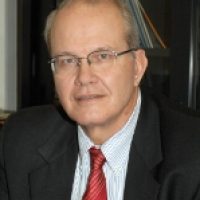
George Vasilakopoulos is a Professor in the Department of Digital Systems at the University of Piraeus , where he also serves as Vice-Chancellor for Academic Affairs and Personnel. By law, he is President of the Quality Assurance Unit (MODIP) and the Employment and Career Structure (DASTA) of the university, overseeing the development of modern information systems. He earned his PhD from the University of London and has held leadership roles including Department President, Director of Postgraduate Programs, and Scientific Director of the Digital Health Services Laboratory. PhD: University of London Current Roles: Vice-Chancellor, Department of Digital Systems Professor Labs: Digital Health Services Laboratory His research focuses on Health Informatics , Cloud Computing , and Medical Data Security , with key contributions to: Emergency healthcare process automation Privacy-preserving personal health record systems Context-aware authorization models Cloud-based medical service frameworks Machine learning in clinical data analysis Interoperable health information systems The trends in his 15 most recent articles (2010-2015) reveal a consistent emphasis on integrating cloud infrastructure , semantic technologies , and mobile platforms to enhance emergency care, chronic disease management, and patient data security. His work bridges biomedical engineering , software architecture , and public health policy . He has held advisory roles for the Minister of Health on IT issues, served on hospital boards, and contributed to national committees for healthcare technology standards. His professional activities include project evaluation for Greek and European research programs and authoring three books on health informatics.
- Protein Biophysics
- Spectroscopy
- Drug Development
- +۱۱ مورد دیگر
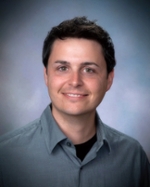
Nathaniel Nucci is an Associate Professor at Rowan University's College of Science & Mathematics, jointly appointed in the Department of Biological & Biomedical Sciences and Physics & Astronomy. His research bridges biophysics, structural biology, and nanotechnology to understand protein behavior in confined environments. Education Ph.D., Biochemistry and Molecular Biophysics, University of Pennsylvania M.S., Biochemistry and Molecular Biology, University of New Hampshire B.S., Biochemistry and Molecular Biology, University of New Hampshire Research Interests Dr. Nucci's lab focuses on: Protein biophysics in crowded/confining environments Reverse micelle technology for biomolecular studies Hydration dynamics of proteins (NMR-based methods) Structural biology of disease-related proteins (PHDs, p53) Drug delivery systems for protein therapeutics Nanoparticle synthesis with protein conjugation Research Trends His recent publications demonstrate expertise in using reverse micelles to study: Protein structural stability under confinement Hydration dynamics of therapeutic proteins Microenvironmental effects on phase-separating proteins Conformational changes in GPCRs Interfacial interactions in biomolecular systems Scientific Awards Gary J. Hunter Excellence in Mentoring Award (2024) College of Science and Mathematics Excellence in Academic Student Support (2022) Teaching Philosophy Emphasizes applied and experiential learning, integrating recent scientific discoveries into classroom practice and promoting hands-on scientific investigation.
- Immunology
- Molecular Immunology
- T-Cell Biology
- +۷ مورد دیگر
Michael Dustin is the Kennedy Trust Professor of Molecular Immunology and Director of Research at the Kennedy Institute of Rheumatology , University of Oxford. His career spans leadership roles at Washington University School of Medicine (1993–2000) and Skirball Institute of Biomolecular Medicine at NYU School of Medicine (2001–2013). Education : B.A. in Biology, Boston University (1984) Ph.D. in Cell and Developmental Biology, Harvard University (1990) Prof. Dustin's research focuses on the immunological synapse , a specialized interface between T cells and antigen-presenting cells. His work has revealed supramolecular attack particles as autonomous killing entities, synaptic ectosomes for TCR cargo transfer, and mechanistic insights into T cell signaling pathways. His recent publications highlight advancements in vaccine adjuvant response , T cell receptor dynamics , and glycosphingolipid synthesis in immune cells. Collaborations span neuroscience, cancer immunology, and rheumatology. Scientific Awards : Wellcome Trust Principal Research Fellowship European Research Council Advanced Grant (SYNECT) As Director of the NIH-funded Nanomedicine Center for Mechanobiology (2009–2014), he pioneered mechanobiology applications in immunology. Current projects integrate intravital microscopy and clinical translation for human diseases. His laboratory at Oxford investigates T cell regulation in autoimmune and inflammatory diseases, supported by an international network of collaborators including Wenbiao Gan, Dan Littman, and Dorian McGavern.
Benjamin Leeمشاهده پروفایل
مدرس ارشد
Benjamin Lee is a Senior Lecturer of Accounting and Director of Student Matters at the School of Accountancy, Singapore Management University. He serves as an SMU-X Academic Champion, driving experiential learning initiatives and promoting AI integration in accounting education and practice across multiple institutional roles. His academic background includes: Doctor of Philosophy in Management (Strategy and Technology Management), University of Glasgow, 2025 Master of Science in Business Analytics with Distinction, University of Surrey, 2017 Bachelor of Accountancy, Singapore Management University He is a Chartered Accountant of Singapore with prior industry experience as a consulting data analyst at Singapore's Accountant-General’s Department. Dr. Lee's research centers on AI-driven analytics (AIDA) applications for accounting problem-solving, including fraud detection, financial forecasting, and credit risk analysis. His work explores organizational dynamic capabilities in digital transformation and AI governance frameworks within professional service firms. His publication portfolio (2017-2025) reveals consistent focus on digital transformation across accounting and SME contexts, with recent emphasis on machine learning applications in fraud detection and public transport optimization. The research bridges academic theory with practical industry implementation through numerous case studies. His teaching excellence has been recognized through multiple awards including: Dean’s List for Teaching Excellence (2023-2025) SMU-X Excellent Teacher Award (2023) Howard Teall Award for Innovation in Accounting Education (2023) Wharton-QS Reimagine Education Digital Readiness Award (2022) While specific doctoral advising isn't documented, Dr. Lee actively mentors students through SMU-X experiential projects and industry collaborations. His industry partnerships with ISCA and media contributions to The Business Times demonstrate practical knowledge transfer beyond academia. He holds leadership positions including Director of Student Matters, SMU-X Academic Champion, and member of ISCA's AI Taskforce Sub-Committee on Policy and Regulation, where he shapes professional standards for AI implementation in Singapore's accounting sector.
Elliot Hawkesمشاهده پروفایل
دانشیار
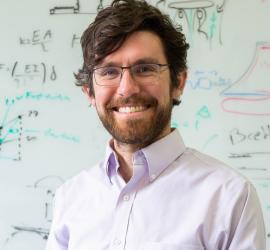
Elliot Hawkes is an Associate Professor in the Department of Mechanical Engineering at the University of California, Santa Barbara (UCSB). His research bridges design, mechanics, and non-traditional materials to develop robust, adaptable, human-safe robots for uncertain environments. He leads the Hawkes Lab, focusing on bio-inspired microstructured adhesives, nonlinear compliant mechanisms, soft actuators, exoskeletons, and growing robots. PhD from Stanford University, 2015 Postdoctoral Scholar at Stanford's CHARM Lab, 2015-2016 Assistant Professor at UCSB since 2016 Current projects include: Material-like robotic collectives with spatiotemporal control Variable friction shoe for locomotor therapy High-force soft actuators for industrial applications Vine-inspired robots for search and rescue Growing robots for biomedical and environmental use Recent publications in Science and Nature highlight breakthroughs in soft robotics and human-safe actuation. His team has received multiple NSF GRFP awards and a UCSB Regents Fellowship. The lab holds patents in adhesive gripping, soft actuation, and reconfigurable robotics.
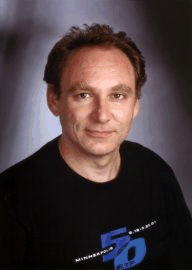
Jon Crowcroft is the Marconi Professor of Communications Systems in the Department of Computer Science and Technology at the University of Cambridge, and serves as the Chair of the Programme Committee at the Alan Turing Institute. He is also a Fellow of Wolfson College, Cambridge, and a visiting professor at the Department of Computing at Imperial College London. With a career spanning over three decades in computer networking research, Professor Crowcroft has made seminal contributions to the development of the Internet and continues to be highly active in cutting-edge research areas. His educational background includes: BA in Physics from Trinity College, University of Cambridge (1979) MSc in Computing from University College London (1981) PhD from University College London (1993) Professor Crowcroft's research spans multiple domains in computer networking and distributed systems. He has worked in Internet support for multimedia communications for over 30 years, with three main focus areas: scalable multicast routing, practical approaches to traffic management, and the design of deployable end-to-end protocols. His current research focuses on opportunistic communications, social networks, and techniques to scale infrastructure-free mobile systems. He is particularly known for his 'build and learn' paradigm for research and has recently been exploring decentralized digital identification systems, smart cities, and edge computing. His work often bridges theoretical foundations with practical implementations, emphasizing privacy-preserving approaches and sustainable network architectures. Professor Crowcroft has received numerous prestigious awards recognizing his contributions to the field, including: Election as Fellow of the Royal Society (2013) ACM SIGCOMM Award (2009) ACM Fellow (2002) Fellow of the Royal Academy of Engineering IEEE Fellow (2004) Chartered Fellow of the British Computer Society Throughout his career, Professor Crowcroft has advised numerous PhD students, including Mark Handley and Pan Hui, who have themselves become influential researchers in the networking community. He has authored several influential books that have been adopted internationally in academic courses, such as 'TCP/IP & Linux Protocol Implementation,' 'Internetworking Multimedia,' and 'Open Distributed Systems.' His research has been supported by various grants and collaborations with both academic institutions and industry partners, contributing to successful startup projects and influencing Internet standards. Professor Crowcroft is actively involved in several research initiatives, including serving on the Scientific Council of IMDEA Networks Institute since 2007 and the advisory board of the Max Planck Institute for Software Systems. He is also a director of the Matrix Foundation, which develops open network protocols. His current research group focuses on privacy-preserving analytics, decentralized systems, and the future of Internet architecture.
Elsa Arcaute is a Professor of Complexity Science at the Centre for Advanced Spatial Analysis (CASA) at University College London. She is a physicist with expertise spanning mathematical physics, urban systems, and complexity science. Her work bridges theoretical physics with practical applications in urban planning and policy. Her educational background includes a PhD in Theoretical Physics from the University of Cambridge (2006) and a Masters in Mathematics (part III of the Mathematical Tripos). She began her career in theoretical physics with research on Clifford algebras applied to Penrose's twistors before transitioning to complex systems during a visit to Prof. Henrik Jensen at Imperial College London. Arcaute's research focuses on modeling urban systems through the lens of complexity science, with particular emphasis on urban scaling laws, hierarchical structures in cities, and the definition of city boundaries. She applies network theory, percolation theory, and multifractal methodologies to analyze urban infrastructure, socio-economic patterns, and spatial inequality. Her work often involves interdisciplinary collaboration with economists, geographers, and data scientists. Analysis of her recent publications reveals a strong focus on urban complexity, with significant contributions to understanding city hierarchies, commuting networks, knowledge spillovers, and the impact of digital platforms on urban systems. Her research demonstrates how complex systems theory can provide novel insights into urban dynamics, scaling phenomena, and spatial organization. Arcaute has been involved in several major research projects, including an EPSRC grant on Digital Economies, an ERC-funded project MECHANICITY (led by Prof. Michael Batty) focusing on morphology, energy, and climate change in cities, and a MacArthur-funded project on smart cities and policy. She serves as a Review Editor for Frontiers in Energy Systems and Policy and has contributed to numerous publications that have garnered significant attention across academic and policy circles. Her work has been referenced in policy sources, news outlets, and social media, demonstrating the real-world impact of her research.
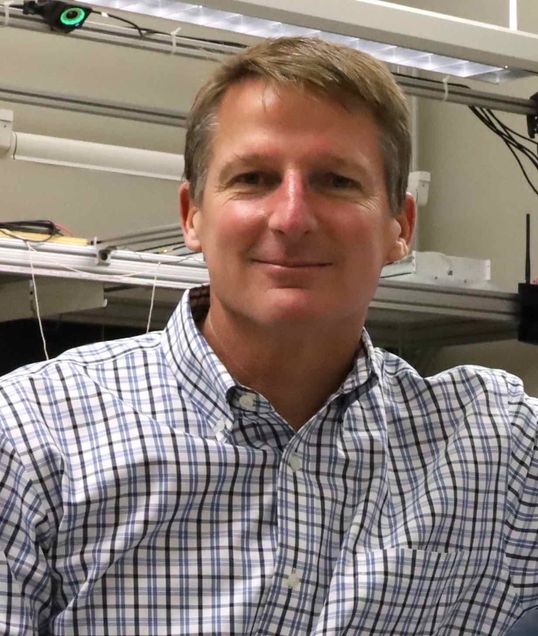
Thomas DC Little is a Professor of Electrical and Computer Engineering in the College of Engineering at Boston University. He serves as the Associate Dean for Educational Initiatives, driving the growth of the engineering master’s program and enhancing pedagogy through mobile and cloud technologies. Additionally, he is the Associate Director and Principal Investigator of the National Science Foundation Smart Lighting Engineering Research Center (LESA), a multi-institutional effort advancing visible light communication and smart lighting systems. Professor Little's research centers on ubiquitous computing and communications, with a focus on using optical cells to expand wireless data capacity for mobile devices. He pioneers ambient intelligence that enables environments to anticipate human needs. His key areas include Visible Light Communications (VLC), Optical Wireless Communications, Indoor Positioning Systems, and Smart Lighting. By integrating lighting infrastructure with communication networks, his work addresses the growing demand for wireless data and enables energy-efficient, responsive smart buildings and urban environments. Analysis of his recent publications (2019-2024) shows a strong trend toward occupancy sensing, indoor positioning, and hybrid RF/VLC networks. His team develops innovative solutions for people counting, zone-based positioning, and interference mitigation in dense optical wireless environments. There is increasing integration of machine learning for security and optimization, with applications in energy-efficient buildings and user-centric smart spaces. Scientific awards received by Professor Little include: Janetos Award for Continuous Indoor Air Quality Assessment for BU Buildings (2025) Professor Little actively mentors graduate students and postdocs, with notable advisees including Iman Abdalla (awarded Best Computer Engineering Dissertation, 2020-2021) and the MenuNav team (Societal Impact Award for a navigation app for the blind). He has secured significant research funding, including a $1M Department of Energy/ARPA-E project for occupancy sensing to reduce energy costs in commercial buildings and grants for indoor air quality sensor development. He leads the NSF Smart Lighting ERC (LESA), which develops COSSY people counting technology, sensory lighting systems, and dynamic light control applications. His team collaborates with industry and has spun off Helux Technologies, Inc. to commercialize dynamic lighting control. Current projects focus on creating safe, energy-efficient buildings through advanced sensor integration and wireless communication.
Shwetak N. Patel serves as Professor and Associate Director for Development & Entrepreneurship at the University of Washington's Paul G. Allen School of Computer Science & Engineering, with a joint appointment in the Department of Electrical & Computer Engineering. He holds the Washington Research Foundation Entrepreneurship Endowed Professorship and directs the Ubicomp Lab. His research spans Human-Computer Interaction, Ubiquitous Computing, and Sensor-Enabled Embedded Systems with applications in health and sustainability. Key focus areas include mobile health technologies, energy/water sensing systems, and low-power wireless platforms. His work bridges computing with real-world sustainability challenges through practical sensor applications. Patel has received numerous prestigious awards including the MacArthur Fellowship, ACM Prize in Computing, and Presidential PECASE Award. His scientific recognition spans foundational computing contributions and impactful commercialization. MacArthur Fellowship (2011) ACM Prize in Computing (2018) Presidential PECASE Award (2016) Sloan Fellowship (2012) NSF Career Award (2013) He actively advises students through the Ubicomp Lab and has secured significant research funding supporting health and sustainability projects. His commercial ventures include three successful startups acquired by major corporations. Patel maintains strong community engagement through K-12 STEM outreach and government advisory roles. His laboratory work focuses on practical sensor systems for home environments, with ongoing projects in mobile health monitoring and resource conservation technologies.
Rasheed Hussain is an Associate Professor of Intelligent Network Security at the Smart Internet Lab and Bristol Digital Futures Institute (BDFI), School of Electrical, Electronic and Mechanical Engineering at the University of Bristol, UK. Previously, he served as a Senior Lecturer at the same institution from December 2021 to July 2025. He has held academic positions at Innopolis University, Russia, where he served as Associate Professor and Director of the Institute of Information Security and Cyber-Physical Systems, and as a guest researcher at the University of Amsterdam, Netherlands. His educational background includes a PhD in Computer Engineering from Hanyang University, South Korea (2011-2015), an MS in Computer Engineering from the same institution (2008-2010), and a B.Sc in Computer Software Engineering from the University of Engineering and Technology, Peshawar, Pakistan (2003-2007). Hussain's research focuses on network and cybersecurity, particularly future network security including 6G, the role of Digital Twins in future networks and systems security, and Responsible AI including fairness, trustworthiness, and explainability. His work spans information security, privacy, applied cryptography, vehicular networks, Internet of Things, Content-Centric Networking, cloud computing, API security, and blockchain applications. Senior member of IEEE Member of ACM ACM Distinguished Speaker Editorial board member for IEEE Communications Surveys & Tutorials, IEEE Access, and other journals His recent publications demonstrate a strong focus on the intersection of AI, networking, and security, with particular emphasis on Digital Twins, blockchain applications, federated learning, and 6G security. His research shows a clear trajectory toward addressing security challenges in emerging network architectures while incorporating responsible AI principles. Scientific Recognition: ACM Distinguished Speaker Netherlands University Teaching Qualification (Basis Kwalificatie Onderwijs, BKO) Hussain serves as a reviewer for major IEEE transactions, Springer and Elsevier journals, and participates in technical program committees for conferences including IEEE VTC, IEEE VNC, IEEE Globecom, and IEEE ICC. He is also certified as a trainer for the Instructional Skills Workshop (ISW) and contributes to the ESRC Centre for Sociodigital Futures (CenSoF) at the University of Bristol. His laboratory work centers around the Networks and Blockchain Lab, which focuses on security solutions for next-generation networks, with particular emphasis on Digital Twins security, blockchain applications, and AI-driven network security solutions. His current projects involve developing secure frameworks for future networks, trustworthy AI models, and privacy-preserving federated learning approaches.