Dr. Sotirios Kontogiannis is a Researcher and Director of the Distributed MicroComputer Systems Laboratory (MCSL) at the Department of Mathematics, University of Ioannina. He holds a PhD in Software Engineering from Democritus University of Thrace (2012), with a focus on load balancing algorithms for distributed systems. His career spans academic and private sector roles, including software development, research in FP7 projects, and technical leadership at TEKMON Geomatics. He currently teaches courses on Database Systems, Parallel Algorithms, and Educational Technologies at the University of Ioannina. Education: 5-year Engineering Diploma (DUTH, 2003), MSc in Microelectronics and Information Systems (DUTH, 2006), PhD in Load Balancing Algorithms (DUTH, 2012). Research Focus: Distributed systems, IoT protocols, sensor networks, big data, and smart agriculture technologies (e.g., beekeeping monitoring systems, wine fermentation frameworks). His work integrates IoT, AI, and edge computing to address challenges in agriculture, accessibility, and environmental monitoring. Notable inventions include patented smart beehive systems and tactile navigation tools for visually impaired individuals.
Letizia Jaccheri is a Professor at the Department of Computer Science , part of the Faculty of Information Technology and Electrical Engineering at the Norwegian University of Science and Technology (NTNU). Her work focuses on Software Engineering for Society with a strong emphasis on inclusion, gender equality, and social impact through technology. She leads the research group Software for a Better Society and serves as Action Chair for the COST Action EUGAIN CA19122. Her research spans multiple domains including: Inclusive software solutions for people with intellectual disabilities Gender stereotype detection in digital storytelling Blockchain sustainability applications Exergaming frameworks for outdoor activities Recent publications highlight trends in: AI's role in gender equality Digital tools for cybersecurity education Startup innovation in public organizations Child-centered software design methodologies Key scientific recognitions include: ACM Distinguished Speaker (2018–) Dame of the Order of Merit of the Italian Republic Active in: Project leadership (Horizon, Erasmus+, NFR initiatives) Academic conference organization (ICSE, womENcourage) STEM gender diversity advocacy (founding Trondheim ACM Women in Computing Chapter) She maintains an active blog and participates in public outreach through podcasts and industry collaborations.
Thomas Berker is a Professor at the Department of Interdisciplinary Cultural Studies, Faculty of Humanities, Norwegian University of Science and Technology (NTNU). His work bridges sociology, science and technology studies (STS), and sustainability, with a strong focus on how technologies are used and shaped in everyday life. He is deeply involved in interdisciplinary research on sustainable buildings, zero-emission neighborhoods, and digital sustainability transitions. PhD in Sociology, Frankfurt University Master in Sociology (major), Political Science and German Language and Literature (minors), Frankfurt University His research interests revolve around the sociotechnical aspects of sustainable innovation, particularly in the built environment. Drawing on practice theory, infrastructure studies, and symbolic interactionism, he investigates how users engage with energy-efficient technologies, smart systems, and circular economy models. He emphasizes participatory methods and civic living labs as tools for co-creating sustainable futures. His recent publications show a consistent focus on sustainable transitions, user participation, and the sociomaterial dimensions of infrastructure. Themes include zero-emission campuses, household energy practices, circular economy enactments, and media representation of sustainability expertise. His work often involves collaboration across disciplines and institutions, reflecting the complexity of sustainability challenges. He has supervised numerous Master’s and PhD students on topics related to sustainable technology, welfare innovation, and user engagement. His projects include FME ZEN (Zero Emission Neighbourhoods), SustainDiT (Sustainable Digital Transformations), and various EU and nationally funded initiatives. Thomas Berker is actively contributing to the academic community through publications, supervision, and project leadership. He is a central figure in Norway’s research on sustainable technology and societal transformation.
Niklas Beuter is a Professor of Artificial Intelligence and Data Science at TH Lübeck, Germany, within the Department of Electrical Engineering and Computer Science. He has been in this position since 2023, contributing to both research and education in AI and computer vision. His educational background includes a Diplom in Computer Science with a focus on robotics from Universität Bielefeld, completed with distinction, followed by a Ph.D. from the same institution in 2011. His doctoral research centered on 3D human detection and tracking for mobile robotic platforms, supporting situation awareness in dynamic environments. Beuter's research is deeply rooted in artificial intelligence, computer vision, and robotics , with a focus on dynamic 3D scene analysis, human-robot interaction, and autonomous systems . His work bridges theoretical models with real-world applications, particularly in autonomous driving and intelligent robotic perception. He has led research teams in industry, demonstrating strong leadership in applied AI. The trend in his publications reflects a consistent focus on perception systems for robots and vehicles , evolving from foundational work in 3D reconstruction and gesture-based interaction to advanced topics like pedestrian intent forecasting using deep learning. His contributions span top conferences such as IEEE ICRA, CVPR, and Intelligent Vehicles, indicating sustained engagement with the core AI and robotics communities. While no formal scientific awards are listed in the provided text, his leadership roles and publication record reflect significant professional recognition. He actively supervises student theses and invites students to register for thesis topics via email, indicating an ongoing commitment to mentoring. Although no specific grants are mentioned, his industrial and academic research leadership suggests involvement in funded projects. He is a member of research groups including CoSA and serves as Deputy Head of ISy, showing active participation in institutional research organization. His research has been conducted in collaboration with teams at Universität Bielefeld, Daimler Research Center, and Robert Bosch GmbH, reflecting a strong interdisciplinary and industry-academia network. His work continues to influence both academic research and industrial applications in AI and autonomous systems.
Professor Harald Kosch serves as Vice President for Academic Infrastructure and IT at the University of Passau. Since 2006, he holds the Chair of Distributed Information Systems within the Faculty of Computer Science and Mathematics. He co-leads the tri-national IRIXYS research center (University of Passau, INSA Lyon, Università di Milano) and directs the German-French DFH/UFA Doctoral College. Current academic leadership roles Specialization in distributed systems and big data International research networks in digital innovation Recipient of French academic distinction His team develops tools for distributed information processing in multimedia and data-intensive applications, with applications in eHumanities and emergency logistics. Research emphasizes cross-border collaboration and technology transfer between academia and industry. Scientific distinctions include: Chevalier de l'Ordre des Palmes Académiques 2022 DFH Dissertation Prize (for Dr. Benjamin Planche) Active in EU digital strategy, Bavarian sustainability initiatives, and Franco-Bavarian AI competitions.
Natalie Parde is an Associate Professor and Co-Director of Undergraduate Studies in the Department of Computer Science at the University of Illinois Chicago (UIC). She co-directs the UIC Natural Language Processing Laboratory and holds affiliations with the AI.Health4All Center for Health Equity using Machine Learning and Artificial Intelligence as well as the UIC Honors College. Her research focuses on natural language processing with applications in healthcare, multimodal communication, and creative language analysis. Ph.D., Computer Science and Engineering, University of North Texas M.S., Computer Science, University of North Texas B.S., Computer Science, University of North Texas Parde's research spans three primary strands: NLP interfaces for educational technology, health-oriented summarization, and multimodal communication systems. Recent publications highlight advancements in dementia detection through spoken language analysis, empathy prediction in conversational systems, and multimodal emotion classification. Her work frequently addresses healthcare applications of NLP, including mental health assessment and medical self-disclosure detection. Scientific awards include the Dr. Hermann Zemlicka Award for Most Visionary Paper at Gmunden Retreat on NeuroIS 2024. She has advised numerous doctoral students, including Gyeongeun Lee working on empathy detection via figurative language, Shahla Farzana researching dementia detection methods, and Mohammad Arvan investigating reproducibility in NLP evaluations. The UIC NLP Lab under her direction focuses on developing NLP systems that positively impact society through educational technology interfaces and healthcare applications.
Karin Wagner is a Professor in Art History and Visual Studies at the University of Gothenburg . Her research focuses on the intersections of visual culture, digital media, and material aesthetics, with particular expertise in packaging design, photographic history, and digital museum practices. Professor at University of Gothenburg since 2003 Specializes in digital visual culture and material studies Recipient of multiple research grants including Bank of Sweden Tercentenary Foundation Research Focus Wagner's scholarship examines visual communication across digital and physical domains. Current projects include Packaging Design: Sustainability, Aesthetics and Social issues (2025-2026) and ongoing work on herbarium digitization. Her research bridges art history with contemporary design practices. Key Publications Her most recent book From ASCII Art to Comic Sans (MIT Press, 2023) explores typography's cultural impact. Earlier work includes studies on digital museum curation and the visual rhetoric of organic food packaging. Academic Collaborations Wagner has collaborated with institutions including: Riksantikvarieämbetet (National Heritage Board) Bank of Sweden Tercentenary Foundation (RJ Sabbatical) Chalmers University of Technology Valand Academy Teaching & Mentorship She teaches across all academic levels, with developed courses in image analysis, digital filmmaking, and interaction design. Wagner supervises doctoral students in art and visual culture while mentoring cross-disciplinary researchers in digital representation.
Prof. DİDEM ÇATAL serves as Professor and Head of the Graphic Design Department at Canakkale Onsekiz Mart University's Faculty of Fine Arts since 2011, while holding additional roles including University Executive Board Member (2021-present) and Faculty Council Member. Her academic journey began with Competence in Art from Hacettepe University (2003-2008) where she completed her dissertation on children's e-books. Education: Competence in Art, Hacettepe University (2003-2008) Postgraduate: Hacettepe University (1992) Her research spans Social Sciences, Communication, Art, and Design Studies with specialized focus on digital design media. ÇATAL's work examines responsive web design, experimental typography, social media's impact on visual communication, and interactive e-catalog applications for educational institutions. She actively investigates how digital technologies transform traditional design practices and educational methodologies in fine arts. Analysis of her publication trends reveals consistent exploration of digital transformation in design fields, particularly focusing on interactive media applications (2023), pandemic-driven virtual exhibition adaptations (2021), and foundational typography research (2015-2020). Her work bridges theoretical design principles with practical implementations in educational and promotional contexts. YÖK Araştırma Bursu scholarship recipient (2011-present) ÇATAL has supervised three graduate theses including research on digitalization's impact on painting (2021), Turkish creation myth visualizations (2019), and motion graphics in new media design (2016). She coordinates multiple international projects including the 'Birlikte Sanatla' initiative (2024) and previously managed the university's Erasmus Program (2008-2021). Her leadership extends to international exhibitions and conferences, notably organizing the 7th Çanakkale Biennial 'Constellation' poster exhibition (2021) and participating in over 50 international design events including Dubai's International Fine Arts Conference (2023) and Poland's 'Plant - Perceptions II' exhibition (2022). She maintains active roles in professional organizations including the Communication Designers Professional Association and Istanbul Exlibris Society.
Prof. Dr. Carsten Lucke is a faculty member at the Technische Hochschule Mittelhessen within the Department of Mathematics, Natural Sciences and Data Processing (MND), specifically affiliated with the Department of Business Informatics . He serves as Head of the M.Sc. Business Informatics program, Chair of the Master's program committee, and Chair of the admissions committee. His primary research focuses on software engineering , enterprise architecture (with emphasis on TOGAF, NAF, ADMBw), and IT security . Research Interests: Software Architecture, Architectural Modeling, Knowledge Management in Software Projects, Enterprise Architecture Frameworks Expertise: Stakeholder-Oriented Enterprise Modeling, ERP System Integration, PHP-based Software Development His publications reflect systematic approaches to integrating security management with enterprise architecture and addressing architectural complexity in large-scale systems. While no scientific awards are documented in the provided texts, his contributions span multiple empirical studies, conceptual frameworks, and practical implementations in software engineering.
Dr. Juan Manuel Sáez Martínez is a full professor in the Department of Computer Science and Artificial Intelligence at the University of Alicante's Higher Polytechnic School II. With a PhD in Computer Engineering and over two decades of academic experience since 2000, he specializes in Computer Vision and Mobile Device Applications for accessibility, particularly for the blind and visually impaired. His groundbreaking NaviLens project—a digital signage system patented internationally by the University of Alicante and licensed to Neosistec SL—represents a significant contribution to assistive technology. Teaching experience across 15+ years in programming fundamentals, computer systems, and internships for telecommunications and multimedia engineering Supervised one PhD thesis on structural similarity in object recognition Active in public research projects including airport navigation systems and airborne obstacle detection for the visually impaired His research interests focus on computer vision algorithms , stereo-based wearable devices , and ultra-efficient artificial vision systems for mobile platforms . Recent work includes biomedical informatics applications like 3D obstacle detection and accessibility-oriented UI design. He has participated in 10+ competitive public research projects (2016-2021) while contributing to technology transfer initiatives. Teaching contributions include 4 quinquennials (five-year terms) and 14+ years of instruction in Programming Fundamentals I for Telecommunication Sound and Image Engineering. Notable collaborations include co-authorship with Dr. F. Escolano on entropy-based SLAM algorithms and Gaussian mixture models for image processing. Current research emphasizes practical applications through the Mobile Vision Research Laboratory (MVRLab) .
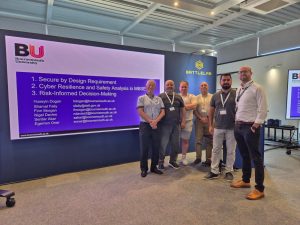
Professor Huseyin Dogan is a leading academic at Bournemouth University's Faculty of Science & Technology, specializing in Human-Computer Interaction and Digital Health . As Director of the Computing and Informatics Research Centre, he spearheads initiatives in Explainable AI , Assistive Technologies , and Systems Engineering . His work addresses critical challenges in healthcare equity through the NIHR Maternity Disparities Consortium and Maternal and Infant Health Equity Research Centre (MIHERC) , aiming to reduce inequalities via digital solutions. Engineering Doctorate (Loughborough University) MSc Human Computer Interaction with Ergonomics (University College London) BSc Computer Science (Queen Mary University of London) His research integrates AI , Cybersecurity , and Implementation Science to develop secure, equitable digital systems. Recent projects include: Digital tools for maternity health equity AI for police worker wellbeing Cyber resilience in defense systems Accessible authentication for disabled users Scientific recognitions include: 2025 IEEE Best Service Award 2025 IEEE Best Paper Award Google Research Funding (2025) As co-founder of the UK's first MSc Digital Health program, he shapes academic curricula while maintaining industry partnerships with organizations like Dstl, Google, and NHS Dorset.
Professor Clemens H. Cap is a Full Professor with tenure and Chair for Information and Communication Services at the University of Rostock, Germany, where he has held his position since 1997. He maintains leadership of the Information and Communication Services research group and has previously held academic appointments at the University of Zurich (including an adjunct professorship until June 2023) and the University of Mannheim. University of Rostock: Full Professor (1997-present) University of Zurich: Adjunct Professor (2004-2023) University of Zurich: Assistant Professor (1992-1995) University of Mannheim: Associate Professor (1994) Professor Cap's research focuses on distributed systems, system security, Internet applications, and social problems in computer science. His work demonstrates an evolution from early research on workstation clusters to contemporary investigations of blockchain technology, classroom response systems, and the social implications of digital technologies. His research interests encompass system architecture for distributed and ubiquitous applications, Internet services, system security, and applications of formal specification techniques. His work has been supported by the German Research Foundation (DFG), the Federal Ministry of Education and Research (BMBF), and the European Union, including participation in the European Fifth Framework Research Program. His recent publications (2014-2022) reveal a strong focus on blockchain applications, security management, and educational technologies, particularly classroom response systems. His research shows consistent thematic development with security, distributed systems, and the social impact of technology as throughlines. Professor Cap regularly gives guest lectures in the Baltic States and Switzerland, demonstrating international engagement. Honorary doctoral degree 'sub auspiciis praesidentis' by Austrian president (1989) Professor Cap is active in academic self-administration as a member of the board of the interdisciplinary research department 'Knowledge - Culture - Transformation' and as Head of the ICT Science Confederation. His teaching portfolio includes Computer Networking, Data Security, Architecture of network services, Methodology of Scientific Research, Software Development Project Distributed Systems, Research Topics in Internet Technology, Computer Science and Society, and Social Impact of IT. He has developed numerous modules that are part of summer schools and international cooperations (BaSoTI). His teaching languages are German and English, and his courses are available for continuous education programs and in-house seminars for companies.
HeeSun Choi, Ph.D. is an Assistant Professor in the Department of Psychological Sciences at Texas Tech University. She directs the Applied Cognition and Safety Lab , focusing on human augmentation technologies and their cognitive/behavioral impacts, particularly among older adults and industry workers. Academic Affiliation: Texas Tech University Department: Psychological Sciences Academic Rank: Assistant Professor Lab: Applied Cognition and Safety Lab Contact: heesun.choi@ttu.edu Research Focus : Dr. Choi investigates attentional and cognitive processes during interaction with advanced technologies including extended reality (VR/AR), industrial exoskeletons, and robotic systems. Her work addresses: Cognitive changes during prolonged technology use Technology safety assessment User perception metrics XR-based cognitive training Workplace ageism mitigation Neural correlates of attention Article Trends : Recent publications examine exoskeleton cognitive tradeoffs (2025), XR safety metrics (2025), wearable robot perception (2024), and technology validation frameworks (2023). Common subfields include human-robot interaction, ergonomics, cognitive assessment, and safety outcomes. Lab Affiliation : The Applied Cognition and Safety Lab is part of the Human Factors program at Texas Tech University, conducting research on technology-enhanced human performance and safety outcomes.
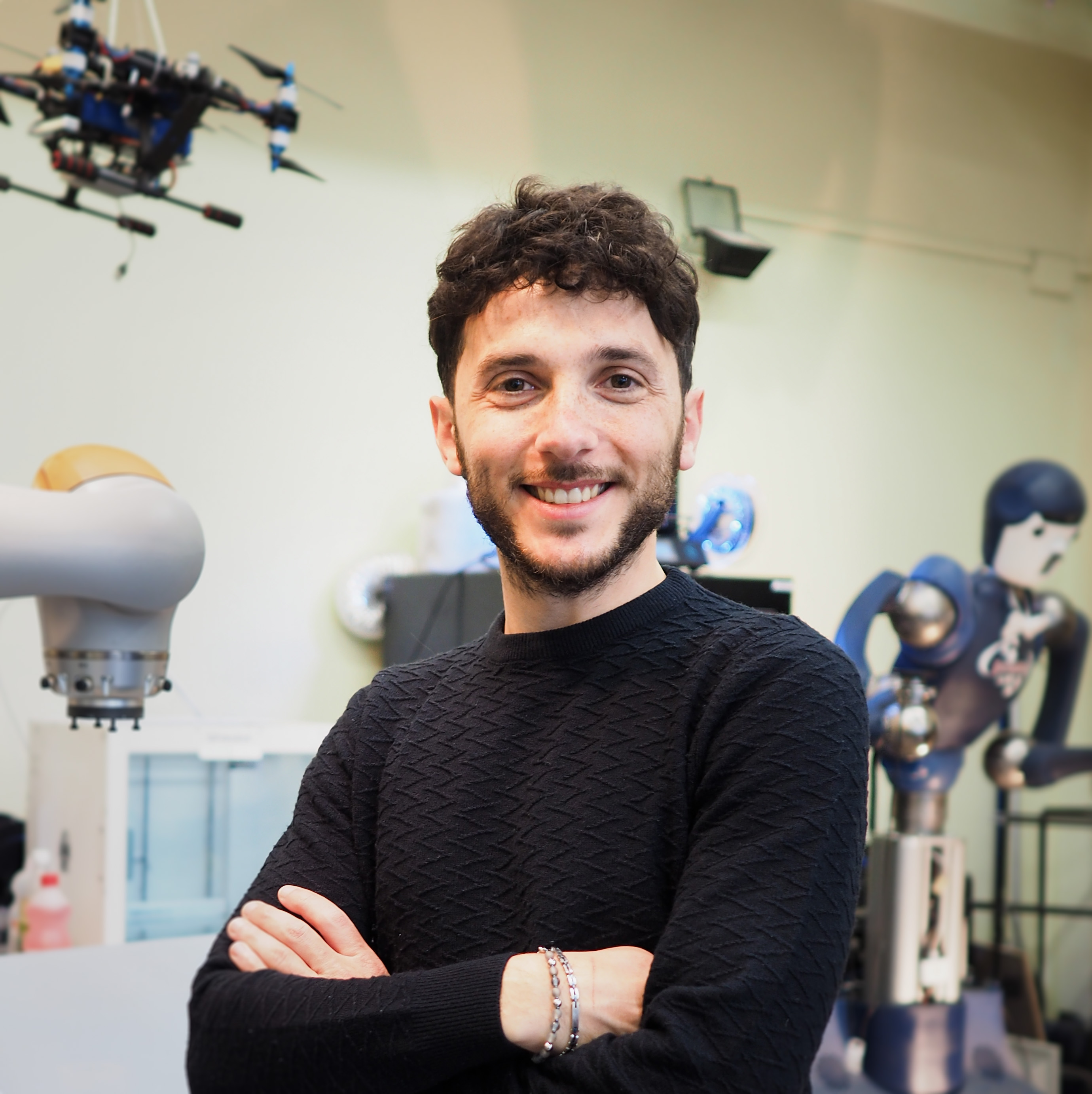
Mario Selvaggio is an Assistant Professor at the Department of Electrical Engineering and Information Technology, University of Naples Federico II. He actively contributes to robotics research through his involvement with PRISMA Lab and ICAROS , while co-founding spinoff companies BeyondShape and Herobots . His academic background includes a Ph.D. in Information Technology and Electrical Engineering (2020) under Prof. Bruno Siciliano, with previous degrees in Mechanical Engineering (2013, 2015). Ph.D. in Information Technology and Electrical Engineering (2020) Bachelor's and Master's in Mechanical Engineering (2013, 2015) His research interests focus on shared control/autonomy, robot teleoperation, passivity-based control, soft robotics, and robotic surgery. He has developed innovative solutions including: Shared-control teleoperation for soft growing robots Non-prehensile object transportation frameworks Advanced modeling of cable-suspended dual-arm systems Medical robotics with force-sensor equipped tools Virtual reality-based teleoperation architectures Recent publications (2021-2025) span topics from semi-autonomous aerial manipulation to cyber-physical measurement systems, with emphasis on human-robot interaction and industrial applications. He serves as Associate Editor for several IEEE conferences and journals. Scientific Awards IEEE RAS Technical Committee on Haptics grant ($2500, 2018) Second prize at Bioengineering Congress (2018) Finalist for 'Fabrizio Flacco' Best Paper Award (2020) Prof. Selvaggio teaches the Master's Course in Automation Engineering and Robotics (2024/2025) using Robot Operating System (ROS) curriculum. He actively collaborates with international research groups at IRISA/INRIA Rennes , Rainbow team , and University of California Santa Barbara (mechanical engineering department). His research combines theoretical advancements with practical implementations, demonstrated through extensive validation in simulated environments and real robotic platforms including KUKA LWR IIWA manipulators, dVRK systems, and humanoid platforms.
Prof. Dr. Yaşar Güneri ŞAHİN serves as the Dean of the Faculty of Engineering and Computer Sciences at Izmir University of Economics, where he also holds a professorship in the Department of Software Engineering. With over two decades of experience in both academia and industry, he has established himself as a prominent figure in software engineering, real-time systems, and educational technologies. His academic journey began with a Bachelor's degree in Computer Engineering from Middle East Technical University in 1994, followed by a Master's in Computer Education from Gazi University in 1999, and culminated with a Ph.D. in Industrial Technology from Gazi University in 2005. Prior to joining Izmir University of Economics in 2008, he served as a faculty member at Yaşar University starting in 2005, and before that, he gained nearly a decade of industry experience in high-level management roles overseeing numerous software projects for both public and private sectors. Prof. ŞAHİN's research spans several interconnected domains with a strong emphasis on practical applications. His work in software engineering focuses on project management methodologies, team building models for educational contexts, and database systems. In real-time systems, he has made significant contributions to forest fire detection technologies using innovative approaches like animal-based biological sensors and radio-acoustic sounding systems. His educational technology research addresses challenges in nursing education, special education for individuals with autism, and internet resource utilization by university students. Notably, his interdisciplinary approach bridges computer science with healthcare applications, particularly in medical informatics where he has developed public health information systems and tools for medical data entry. His scholarly output demonstrates a consistent trajectory of innovation across multiple domains, with particular concentration in the period from 2007-2013. While his early work focused on foundational software engineering concepts and database systems, his research evolved to address pressing societal challenges including forest fire detection, healthcare information systems, and educational technologies. This evolution reflects his ability to identify emerging technological needs and apply software engineering principles to diverse real-world problems. His contributions have been recognized through multiple prestigious awards: TÜBİTAK Scientific Publication Awards (2008-2012) İzmir University of Economics Scientific Publication Awards (2008-2011) As an academic advisor, Prof. ŞAHİN has supervised doctoral and master's theses on diverse topics including heart failure management, triage algorithms for multiple injuries, and software project selection metrics for small and medium enterprises. His administrative leadership extends beyond his deanship to include serving on juries for national art, design, and architecture competitions, as well as evaluating research projects for TEYDEB and TÜBİTAK. His grant activities include serving as a project reviewer and monitor for various technology development initiatives including "Bulut," "ARAGES," "SADE," and "SWH-ATLANTIS." Prof. ŞAHİN maintains an active research laboratory environment focused on real-time systems and software engineering applications. His work often involves interdisciplinary collaboration, particularly with medical professionals on health informatics projects and with education specialists on technology-enhanced learning initiatives. Current research directions appear to focus on the intersection of software engineering principles with healthcare applications and environmental monitoring systems.