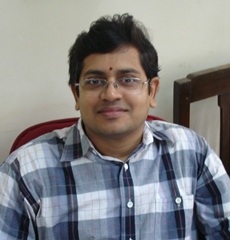
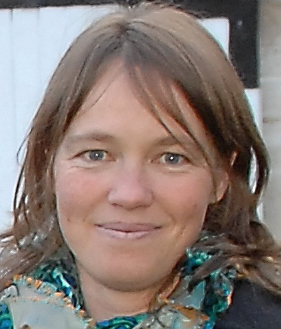
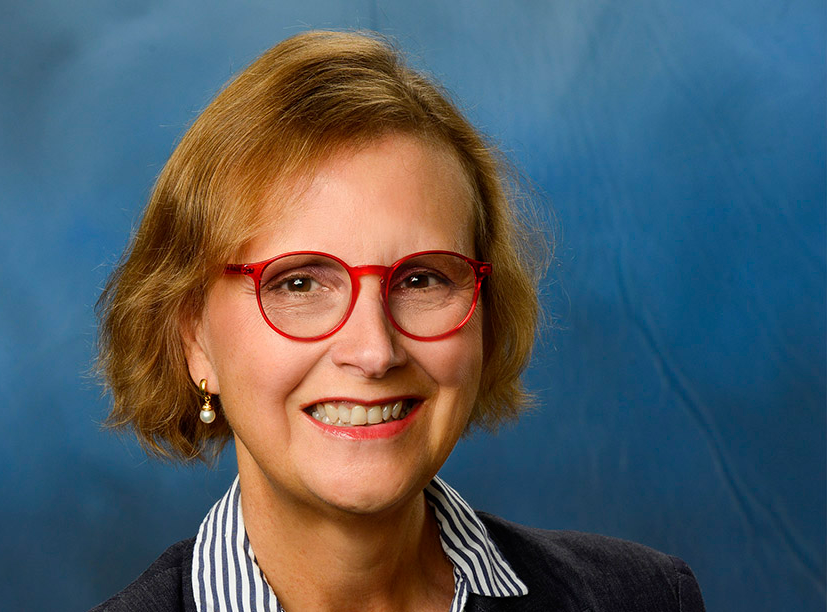
Nikolaos Tsiogkas is an Assistant Professor in the Declarative Languages and Artificial Intelligence (DTAI) group at KU Leuven's Faculty of Engineering Technology, Department of Computer Science. His research focuses on robotics, artificial intelligence, and autonomous systems, with particular emphasis on cognitive reasoning, knowledge representation, and sensor fusion for robotic navigation. Projects: Promotor of initiatives like 'Harnessing Robotics for Safe Agriculture' (2024-2028) and 'ROSANA: Robust Semantic Navigation in Orchards' (2022-2027); co-promotor in demining robotics and multi-arm manipulation research. Research: Combines symbolic AI with robotics, exploring knowledge graphs for explainable navigation, reinforcement learning frameworks, and computationally efficient free-space detection algorithms.
MP Gururajan is a Professor in the Department of Metallurgical Engineering and Materials Science at the Indian Institute of Technology Bombay (IIT Bombay), where he has been serving since May 2021. He previously held the positions of Associate Professor (2016–2021) and Assistant Professor (2009–2016), indicating a long-standing and active academic career at IIT Bombay. B.Sc (Physics), Madras University, 1994 M.Sc (Materials Science), Anna University, Madras, 1996 M.Sc. (by research), Indian Institute of Science, Bangalore, 1999 Ph.D., Indian Institute of Science, Bangalore, 2006 His research focuses on computational modeling of microstructural evolution, employing both atomistic (Monte Carlo, molecular dynamics) and continuum (phase field modeling) approaches. Key areas include phase transformations, deformation mechanisms, materials mechanics, and thermodynamics. His work bridges theoretical modeling with experimental validation in metallic systems. The selected publications reflect a consistent focus on phase field modeling, interfacial phenomena, and microstructure evolution under various thermomechanical conditions. Topics such as precipitate growth, grain boundary grooving, strain effects, and anisotropy are recurrent, demonstrating deep expertise in multiscale materials simulation. No scientific awards or fellowships are mentioned in the provided text. Prof. Gururajan leads an active research group (CMEGAT IITB) and has secured funding from national agencies including the Department of Science and Technology (DST), Defence Research and Development Organisation (DRDO-SASE), and industrial partners like Tata Steel and GE. Collaborative IMPRINT projects with TCS and GE Global Research highlight his engagement in indigenous software development and life prediction methodologies for advanced alloys. He maintains a research group website and is involved in both teaching and research supervision at IIT Bombay. His lab focuses on computational materials engineering, with emphasis on predictive modeling of microstructure and mechanical behavior.
Yanja Dajsuren is an Assistant Professor and Program Director of the PDEng Software Technology program at Eindhoven University of Technology's Department of Mathematics and Computer Science. Her work bridges academic research and industry applications in software engineering and mobility systems. Education: PhD in Computer Science (2015), TU/e PDEng in Software Technology (2005), TU/e MBA (2002), Maastricht School of Management Research Focus: Yanja specializes in software architecture for autonomous and cooperative driving systems, with a focus on model-driven development, functional safety, and system modularity. Her work contributes to Cooperative Intelligent Transport Systems (C-ITS) and aligns with UN Sustainable Development Goals related to smart cities and innovation. Projects: Current projects include i-CAVE (Project #6) and Horizon 2020 C-MobILE, addressing challenges in automotive software integration and cooperative driving systems. Past projects at Philips Research, NXP Semiconductors, and CWI demonstrate her long-term expertise in industrial software development. Academic Contributions: She co-founded the International Workshop on Automotive Software Architectures (WASA) and launched the Journal of Automotive Software Engineering (JASE). Her collaborations span academia and industry, including partnerships with ASML, Philips Hue, and international research teams.
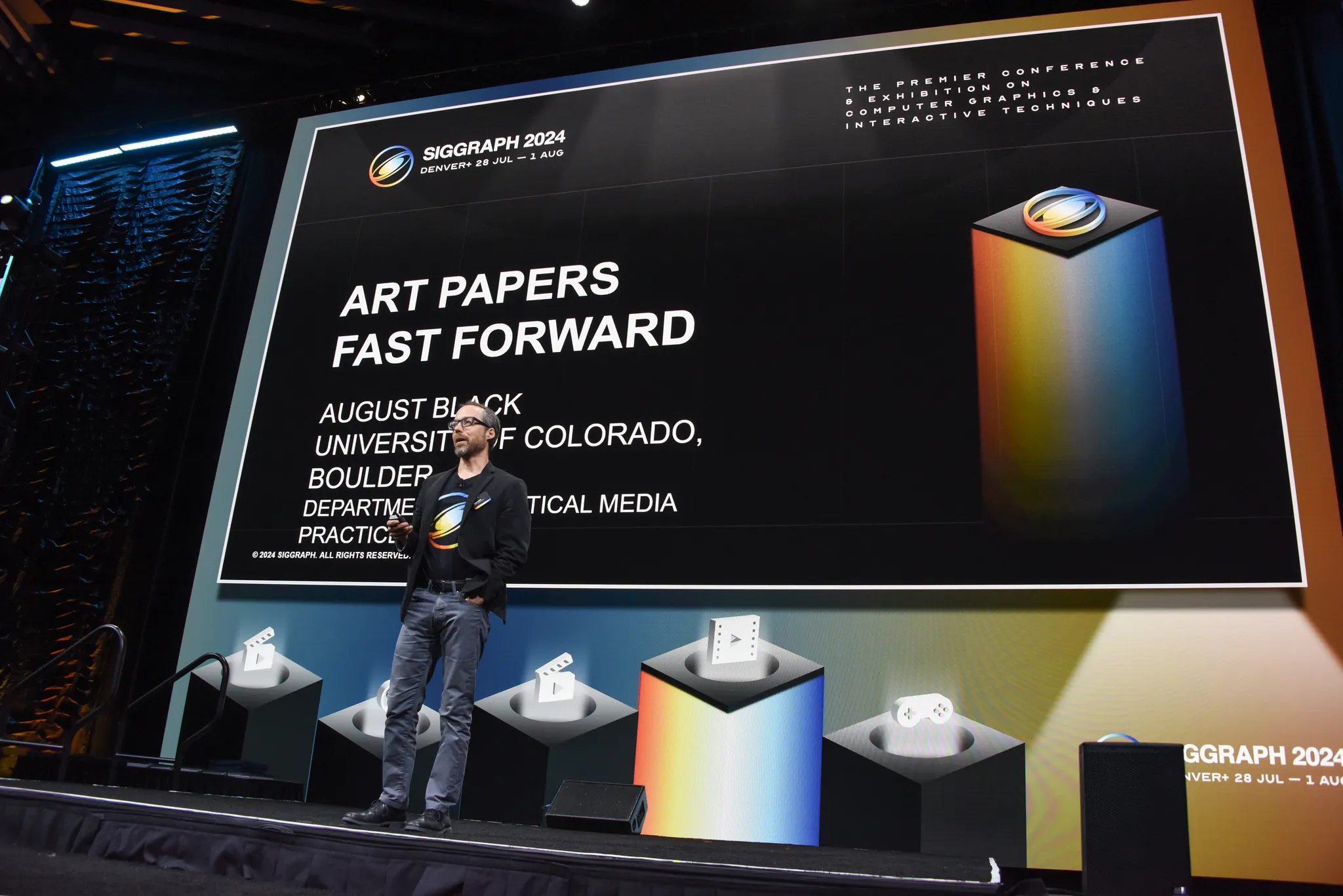
August Black is an Assistant Professor in the Department of Critical Media Practices at the University of Colorado Boulder. As a hybrid practitioner of art, design, and engineering, he creates experimental spatial and acoustic systems by building custom technological artifacts. His work critically engages techno-social systems through live networked audio, user-generated content, and immersive installations. BFA, Syracuse University MS & PhD, UC Santa Barbara (NSF IGERT Fellow) His research explores the intersection of philosophy of technology, software studies, and AI ethics. Current projects investigate global networking for hyper-local communication, while past work includes networked radio systems and generative audio-visual platforms. He has taught at UC Santa Barbara, University of San Francisco, and CU Boulder. Recent projects include Pulse Memorial (2024), a mobile multichannel memorial system, and Audio Compost (2022), a virtual frippertronic loop project. His work often incorporates WebRTC, FM radio integration, and participatory frameworks across digital and physical environments. NSF IGERT Fellow Black has advised PhD candidate Nima Bahrehmand and collaborated with institutions like ORF Kunstradio, Ars Electronica Futurelab, and Cycling '74. His practice includes software development (janode library for Janus WebRTC), hardware engineering, and exhibitions at festivals including Ars Electronica and SIGGRAPH.
Koen Van Dam is a Research Fellow at Imperial College London's Department of Chemical Engineering, part of the Urban Energy Systems group within the Faculty of Engineering. His work focuses on agent-based modelling of socio-technical systems to support decision-making in urban energy and transport infrastructure design. He leads the SEF05 Urban Energy Systems module in the Sustainable Energy Futures MSc program and co-organizes computational social science summer schools. Koen has held visiting researcher positions at the National University of Singapore and TU Delft, and previously served as president of Eurodoc (European council for doctoral candidates). Education: MSc in Artificial Intelligence (Vrije Universiteit Amsterdam), PhD from TU Delft (2009) with thesis on agent-based modelling of socio-technical systems. Research interests emphasize integrating spatial/temporal data across energy and transport sectors to model urban systems at multiple scales. Projects include: FCDO Climate Compatible Growth (CCG) project COP26 Rapid Response Facility technical lead EPSRC-funded Digital City Exchange (DCE) and IDLES projects resilience.io (DFID project) Key contributions include decision support tools for: Electric vehicle infrastructure planning Low-carbon energy systems Smart district design Post-pandemic urban resilience Awards: None explicitly listed, though his extensive project leadership indicates recognition in sustainability research. Advising: Supervised over 40 MSc/MEng projects on smart cities, energy demand, EVs, bioenergy, and resilient infrastructure. Active in education through master's course leadership and international summer schools. Labs/Teams: Affiliated with Energy Futures Lab, Network of Excellence in Air Quality, and the Artificial Intelligence Climate Compatible Growth initiative.
Giovanna Di Marzo Serugendo is a researcher affiliated with the University of Geneva (Faculty of Social Sciences, Centre for Informatics) and the Institute of Information Service Science (ISS) . Her work spans semantic technologies, agent-based modeling, and sustainable systems. Research interests focus on Semantic knowledge graphs for regulatory compliance Ontology-driven resource management Self-organizing systems inspired by biological models AI applications in smart grids and urban mobility Digital agriculture platforms for smallholder farmers Recent publications highlight trends in ontology automation using LLMs, agent-based simulations for urban planning, and KG-enhanced compliance frameworks . She leads projects integrating digital twins with smart energy systems and develops bio-inspired coordination paradigms. Supervised works include 17 research projects in these domains. Current technical reports and conference papers explore cybersecurity-safety interdependencies in autonomous vehicles and decentralized event source detection in sensor networks.
Sylvie Putot is a Professor of Computer Science at École Polytechnique, where she focuses on formal verification of numerical programs and cyber-physical systems. She leads the Cosynus team at LIX laboratory and organizes the LIX Seminar series. Current affiliation: École Polytechnique (Computer Science Department) Prior affiliation: CEA LIST (developer of FLUCTUAT static analyzer) Her research spans formal methods for cyber-physical systems , emphasizing reachability analysis , invariant synthesis , and probabilistic verification . She combines abstract interpretation with zonotopic domains and constraint programming to address numerical stability and safety in AI-driven control systems. Recent publications highlight work on Safe AI through Formal methods (SAIF project) , including probabilistic guarantees for neural networks and applications in mobile robotics. Her team’s best paper award at EMSOFT 2015 recognized scalable quadratic invariant computation for embedded systems. Scientific awards: Best paper award, ACM SIGBED International Conference on Embedded Software (EMSOFT 2015) She has supervised numerous PhD students in topics like mobile robotics , neural network verification , and numerical error analysis . Active in ANR projects (COVERIF, MALTHY, DEFIS) and currently leads the PEPR IA initiative on AI validation.
Xiaofei Xie is an Assistant Professor at the School of Computing and Information Systems (SCIS), Singapore Management University (SMU). He received his PhD from Tianjin University in 2018 and was a postdoctoral researcher at Nanyang Technological University (2018-2021) before joining SMU in 2022. His research focuses on software engineering, AI systems, and cybersecurity. Dr. Xie's primary research areas include program analysis, software testing, vulnerability detection, and quality assurance of AI systems. His work spans: Testing methodologies for autonomous systems and games AI security including backdoor detection and model robustness Automated program repair and code generation Formal methods and semantic code analysis His recent publications demonstrate strong emphasis on AI/ML system testing, cybersecurity applications, and program analysis techniques. Research trends show increasing focus on LLM-based program repair, autonomous system validation, and federated learning security. Major Awards: ACM SIGSOFT Distinguished Paper Awards (ASE'23, ISSTA'22, ASE'19, FSE'16) CCF Outstanding Doctoral Dissertation Award (2019) 3rd place in AI Singapore's Trusted Media Challenge (2022) Wallenberg-NTU Presidential Postdoctoral Fellowship (2019) APSEC Best Paper Award (2020) He currently advises 7 PhD/Master's students including CHENG Mingfei, KONG Jiaolong, and YU Jiongchi. Dr. Xie leads research in software reliability and AI security at SMU's SCIS.
Pedro Orvalho is a Research Associate in the Department of Computer Science at the University of Oxford, working with Professor Marta Kwiatkowska on the FUN2MODEL ERC project. His research bridges theoretical computer science with practical applications in software engineering and programming education. His educational background includes: PhD in Computer Science and Engineering (2025) from Instituto Superior Técnico, Universidade de Lisboa MSc in Information Systems and Computer Engineering (2019) from Instituto Superior Técnico BSc in Information Systems and Computer Engineering (2017) from Instituto Superior Técnico Orvalho's research spans Artificial Intelligence, Automated Reasoning, Formal Methods, and Program Repair, with significant contributions to programming education tools. His work integrates formal methods with machine learning techniques to develop novel approaches for program verification and repair, particularly focused on introductory programming assignments. His scientific achievements have been recognized with prestigious awards: Vencer o Adamastor (VoA) - 3rd Edition (2025) ELISE Mobility Grant (2024) COST Travel Grant (2022) Excellence in Teaching IST Awards (2021 and 2024) ACM SIGSOFT Distinguished Paper Award (ESEC/FSE 2021) FCT PhD Scholarship (2020-2024) With five years of teaching experience at Instituto Superior Técnico, Orvalho has developed educational tools like GitSEED and MENTOR that bridge his research with practical classroom applications. His research has been supported by multiple grants including the ERC FUN2MODEL project and FCT PhD Scholarship, demonstrating both academic and practical impact. He maintains active collaborations with researchers from Czech Technical University in Prague, Carnegie Mellon University, and industry partners like OutSystems, contributing to an international research network focused on software reliability and educational technology.
Dr. Rosario Giustolisi is an Associate Professor in the Department of Computer Science at the IT University of Copenhagen . His research centers on computer security with a focus on cryptographic protocols for decision systems (e.g., voting and exams), automated security analysis, accountability frameworks, and sociotechnical security aspects. Before joining ITU, he held postdoctoral roles at SICS RISE and Lund University, Sweden, and earned his PhD from the University of Luxembourg with work on secure exam protocols, culminating in his book Modelling and Verification of Secure Exams (Springer, 2018). Research Trends: His 15 most recent articles (2016–2025) span cryptographic protocol design, coercion-resistant voting/exams, zk-SNARK applications, differential privacy, automated security analysis, and sociotechnical threat modeling. Key subfields include secure decision systems, privacy-preserving mechanisms, and formal verification. Scientific Awards: Best Paper Award, NordSec 2017 Best Paper Award, SECRYPT 2014 Villum Experiment Grant (Sole PI) 2020 ICT TNG Postdoc Grant (Sole PI) 2016 CSC Best PhD Thesis Award 2016 Acknowledgments from Apple for Security Advisory Professional Service: Organized cybersecurity breakfast talks at ITU and served on conference committees for ACM SAC (Security track), STAST, E-VOTE ID, and NordSec. He also contributed as a journal referee and sub-reviewer for multiple conferences.
Georgios Bardis is a permanent Assistant Professor at the Department of Informatics and Computer Engineering , School of Engineering , University of West Attica . He holds a PhD in Informatics from University of Limoges (2006), an MSc in Software Systems from University of California, Santa Barbara (1994), and a Diploma in Computer Engineering & Informatics from University of Patras (1992). His career spans multiple academic roles, including Lecturer at University of West Attica (2018-2021) and Professor of Applications at TEI of Athens (2010-2018). Research Interests : Focus on Intelligent Computer Graphics , Declarative Modeling , and Multicriteria Decision Analysis . His work integrates AI into 3D scene synthesis, urban planning, and semantic decision systems. Awards : Master Microsoft Office Specialist (MOS), 2003 NAT Scholarships for Academic Excellence (1989-1992) 1984 Monetary Prize from Hellenic Mathematical Society Leadership : Member of AKIIS Research Lab (University of West Attica), Editorial Board of International Journal of Systems Biology and Biomedical Technologies , and Reviewer for International Journal of Digital Earth . Publications : 5 peer-reviewed journals, 2 books, 8 book chapters, and 22 conference papers. Key areas include WebGL avatars, urban data analysis, and 3D modeling with AI.
Johannes Schöning is a Professor of Human-Computer Interaction (HCI) at the University of St. Gallen, Switzerland. He leads a research group focused on developing novel user interfaces to empower individuals and communities in data-driven decision-making. His work spans interdisciplinary domains including geographic information science, public health, medical contexts, and space exploration. His research interests include Human-Computer Interaction, Virtual and Augmented Reality, Ubiquitous Computing, Accessibility, AI in HCI, and Sustainable HCI. He employs user-centered design and mixed methods, combining AI, computer graphics, and cognitive psychology to create disruptive, theory-grounded research. His lab publishes in top venues such as ACM CHI, MobileHCI, DIS, and journals like Nature and PLOS ONE . His recent publications reveal a strong focus on VR/AR for emotional regulation, accessibility, navigation systems, privacy, and citizen participation. Trends include the use of generative AI, eco-feedback, assistive wearables, and ethical implications of large-scale navigation technologies. Best Paper Award & Accessibility Award, Interact 2019 Best Paper Award, MobileHCI 2015 (StripeMaps) Best Presentation Award, IEEE VR 2023 Honorable Mention Awards at MobileHCI, CHI, MUM, and others Vodafone Research Advancement Award, 2012 McKinsey Business Technology Award Nominee, 2011 10 Year Impact Award 2021, MobileHCI 2011 paper He actively advises students and recruits for bachelor’s, master’s, PhD, and postdoctoral positions at the intersection of HCI, geoinformatics, and ubiquitous computing. He emphasizes creating a detox-free academic environment to focus on teaching and research excellence. His lab collaborates on interdisciplinary projects involving space missions, public health, and urban technology, often involving international teams and real-world deployments. He has contributed to discussions on research culture, academic ethics, and the future of HCI conferences.
Pedro Faria Lopes is an Associate Professor at the Department of Information Science and Technology (ISTA), School of Technologies and Architecture, ISCTE – Instituto Universitário de Lisboa. He is also an Associate Researcher at ISTAR-Iscte, contributing to the Digital Living Spaces research group. His academic roles involve teaching and supervising students in digital multimedia, human-computer interaction, and game design. His educational background includes: PhD in Electrical and Computer Engineering, Higher Technical Institute - UTL (1996) Master's degree in Electrical and Computer Engineering, Higher Technical Institute - UTL (1989) Bachelor's degree in Electrical Engineering, Higher Technical Institute - UTL (1985) Pedro Faria Lopes's research interests focus on digital multimedia, human-computer interaction, computer games, sound and video for multimedia, computer animation, and digital content creation for lifelong and e-learning contexts. His work bridges technology and education, emphasizing interactive and engaging digital experiences. He has contributed extensively to the development of serious games, multimedia applications, and educational technologies. His recent publications highlight trends in educational video games, procedural content generation, interactive storytelling, and digital inclusion through mobile applications. These works reflect a strong commitment to applying computing technologies in educational, social, and cultural domains, particularly through game-based learning and accessible design. He has supervised numerous graduate students, with 15 completed and 3 ongoing Master’s dissertations, as well as 1 completed and 1 ongoing doctoral theses, primarily at ISCTE. His teaching activities include courses such as: Human-Computer Interaction Digital Game Design and Production Sound, Video and Digital Content Authoring Visualization and Human-Computer Interaction Multimedia Management Although no specific scientific awards are listed in the provided text, his sustained research output and academic leadership suggest recognition within his fields. His work in digital living spaces and educational technologies indicates active engagement in interdisciplinary research projects.
Alice E. Smith is the Joe W. Forehand, Jr. Distinguished Professor in the Department of Industrial and Systems Engineering at Auburn University’s Samuel Ginn College of Engineering. She holds a joint appointment with the Department of Computer Science and Software Engineering and previously served as Department Chair from 1999 to 2011, during which the department experienced exponential growth in enrollment, research funding, and national ranking. She is a member of the National Academy of Engineering (elected 2025) and holds fellowships in IEEE, INFORMS, and IISE. Her educational background includes a BSCE from Rice University, an MBA from Saint Louis University, a PhD from Missouri University of Science and Technology, and a BA in Spanish from Auburn University (2022). She is a Registered Professional Engineer and has received numerous honors, including the INFORMS WORMS Award, IIE Holzman Educator Award, and multiple best paper awards. Dr. Smith’s research centers on computational intelligence, focusing on optimization, modeling of complex systems, and bio-inspired algorithms. Her work integrates artificial intelligence with traditional operations research and has applications in defense, logistics, and industrial systems. She has published extensively, with over 18,000 citations and two influential books on women in engineering. Her recent publications reflect a trend toward interdisciplinary, globally collaborative research with strong societal impact, particularly in sustainable systems and intelligent optimization. Her scientific awards include: Election to the National Academy of Engineering (2025) Joe W. Forehand, Jr. Distinguished Professor (2023) INFORMS WORMS Award (2009) Four-time Fulbright Scholar (2013, 2016, 2017, 2020) IEEE Distinguished Lecturer and INFORMS Official Speaker Multiple best paper awards from INFORMS and IIE She has been principal investigator on over $12 million in sponsored research from NSF, NASA, DoD, DHS, and industry partners like Lockheed Martin and Toyota. She mentors doctoral students and has led international research exchanges, particularly with Norway, Turkey, and Colombia. She currently serves as Editor-in-Chief of the INFORMS Journal on Computing and Area Editor for Computers & Operations Research . Dr. Smith leads research groups and collaborates with visiting scholars, focusing on intelligent optimization and sustainable logistics. Her lab has produced highly cited work in journals like Reliability Engineering & System Safety and IEEE Transactions on Reliability . She continues to expand Auburn’s global research footprint through partnerships with institutions like NTNU in Norway.
Dr. George Dafoulas is a Professor & Director of Programmes in Computer Science at Middlesex University. His research focuses on IoT applications in healthcare, sustainable engineering, learning analytics, and global software development. He has authored over 180 publications and contributed to projects on smart technologies, virtual learning environments, and digital inclusion. His research explores IoT wearables for child health monitoring , sustainable building systems , and AI-driven educational tools . Recent work includes studies on digital poverty in the UK and mobile government services in Egypt. He actively collaborates across disciplines, addressing challenges in distributed software teams and virtual collaboration. Dr. Dafoulas has directed projects like the Skills and Education Planning Tool and contributed to frameworks for assessing electronic government readiness. His work bridges technology and pedagogy, emphasizing ethical AI, sustainable design, and inclusive digital practices.