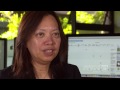
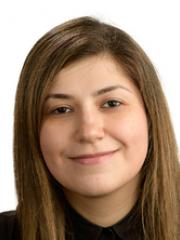
Professor Khin Than Win is a leading academic in health informatics and digital health at the University of Wollongong (UOW), holding appointments as Professor in the School of Computing and Information Technology, Head of Postgraduate Studies, and Deputy Head (Research). She also serves as Academic Program Director for UOW's Master of Health Informatics and Graduate Certificate in Health Analytics programs. Her research focuses on applying information technology to healthcare, particularly in behavior change support systems, persuasive technology, and ethical AI applications. She has supervised over 20 PhD students and holds leadership roles including Deputy Chair of UOW's Health and Medical Research Ethics Committee, and membership in international committees like the Persuasive Technology Steering Committee. Education: MBBS from Rangoon University, Master's and PhD in IT from Assumption University (Bangkok) and UOW (Australia) Research Interests: Health data analytics, AI in healthcare, privacy/security of health systems Leadership: Program/General Chair roles at ACIS and Persuasive Technology conferences Awards: Best Paper Awards (2023, 2018) Her extensive funding portfolio includes ARC grants and NHMRC projects, totaling over 24 funded initiatives. Current research explores blockchain in medical passports, AI ethics, and culturally tailored health interventions.
Professor Luke Prendergast is the Deputy Dean of the School of Computing, Engineering & Mathematical Sciences (SCEMS) at La Trobe University (LTU) and holds a Professorship in the Department of Mathematics and Statistics. He previously served as Head of Department (2014–2020) and led LTU's Statistics Consulting Platform. His research focuses on robust statistics, meta-analysis, dimension reduction, and applied statistics, leading the DRAMA research group. Collaborations span fields like endocrinology, disability studies, and respiratory health. He actively contributes to research grants, including projects on Prader-Willi syndrome and exercise for disability populations. Professor Prendergast's recent work emphasizes statistical software development (e.g., the rquest package) and applications in biostatistics, such as metabolomics analysis and health intervention fidelity. His articles address topics like quantile-based hypothesis testing, geospatial accessibility for disability care, and motivational interviewing efficacy. Professional roles include NHMRC grant review panels, editorial boards for Nutrients and Respirology , and leadership in the Statistical Society of Australia (SSA Vic). His teaching includes courses in meta-analysis, linear models, and data-based critical thinking. Grants funded projects on exercise programs for cerebral palsy populations and community-university partnerships for disability inclusion. Luke's work bridges statistical theory with real-world health challenges, emphasizing robust methodologies and interdisciplinary collaboration.
Dr. Azadeh Ghari-Neiat is a Senior Lecturer in Software Engineering at the University of Queensland's School of Electrical Engineering and Computer Science. She completed her PhD in Computer Science from RMIT University in 2018. Prior to joining UQ, she held academic positions at Deakin University as a Senior Lecturer and at the University of Sydney as a postdoctoral research fellow. Her research focuses on the intersection of Internet of Things (IoT), Mobile Computing, Crowdsourcing, and Cybersecurity. She develops innovative solutions for enhancing connectivity and security in modern computing environments through crowdsourced approaches. Key areas include service composition in sensor clouds, trust management frameworks, and optimization of drone-as-a-service systems. Her publications demonstrate consistent focus on IoT service ecosystems, with recent work exploring blockchain applications and machine learning techniques for dynamic systems. The research trends show evolution from fundamental service composition to AI-driven optimization in distributed environments. Dr. Ghari-Neiat leads projects involving energy service crowdsourcing and secure architectures for cyber-physical systems. Her work maintains strong emphasis on practical applications in delivery systems, UAV networks, and IoT marketplaces.
Dr. Thilina Halloluwa is a Teaching Focused Lecturer in the Department of Human-Centred Computing at The University of Queensland (UQ). He holds a PhD in Human-Computer Interaction from Queensland University of Technology (2019) and a Computer Science undergraduate degree from the Sri Lanka Institute of Information Technology. With over 15 years of academic and industry experience, his research emphasizes real-world impact in education technology, financial inclusion, smart agriculture, and HCI. Educational Background: PhD in Human-Computer Interaction, Queensland University of Technology (2019) Bachelor of Computer Science, Sri Lanka Institute of Information Technology Research Interests: Education for All: Leveraging technology to enhance collaborative learning and social experiences in education. Human Money Interaction: Designing ethical AI solutions for financial services, particularly for underserved communities. Smart Agro: Developing AI-driven tools for crop disease detection, yield optimization, and precision agriculture. Software Project Estimation: Improving effort estimation accuracy through explainable AI (Metrix project). Key Contributions: Developed UrbanAgro (tomato disease detection) and BellCrop (bell pepper disease datasets). Pioneered Dhana Labha , a financial management tool for rural Sri Lankan communities. Advanced online exam proctoring systems for low-resource settings. Previous Roles: Lecturer at University of Sydney (2023) Senior Lecturer at University of Colombo (2013–2023) Lab/Team Affiliations: Smart Agro Project: AI-driven agricultural solutions Metrix Initiative: Software project estimation frameworks
Dr. Ben Swift is a Senior Lecturer at the School of Cybernetics, ANU, specializing in AI, computational art, and cybernetics. He leads the Cybernetic Studio, an interdisciplinary collective exploring cybernetic systems through hardware/software/people collaborations. As a livecoding artist, he performs globally and co-founded the ANU Laptop Ensemble. His research spans generative AI, open-source tools like Extempore, and UX design. Education: PhD in Computer Science (ANU) Projects: Australia's Digital Economy (2022), The Augmented Web (2019) Research focuses on AI creativity, biofeedback interfaces, and computational music. His work bridges technical innovation with artistic expression, evident in projects like TSPNet and adversarial camera systems. Key contributions include Extempore’s development and studies in live coding disruption. Awards unspecified but recognized internationally for interdisciplinary impact.
Dr. Siqi Ma is a Senior Lecturer at the UNSW Institute for Cyber Security (IFCYBER) within the School of Systems & Computing at the University of New South Wales (UNSW). He previously served as a Lecturer at the University of Queensland's School of Information Technology and Electrical Engineering (ITEE). He holds a Ph.D. in Information Systems from Singapore Management University (2018) and was a Postdoctoral Research Fellow at Data61, CSIRO. He also visited Carnegie Mellon University (CMU) in 2015. Current Role: Senior Lecturer, UNSW Institute for Cyber Security Former Role: Lecturer, University of Queensland Education: Ph.D. (Singapore Management University), Postdoc (Data61, CSIRO) His research spans automated vulnerability detection, mobile security, IoT security, network authentication, and graph-based adversarial robustness. Recent work focuses on drone configuration bugs, Android malware analysis via GNNs, federated learning privacy, and credential leakage in open-source projects. Key trends in his 2024-2025 publications include automated security analysis for embedded systems, deepfake detection in multimedia, and privacy-preserving mechanisms for distributed networks. He collaborates with institutions like Purdue University, Singapore Management University, and CSIRO Data61.
Dr. Jue (Grace) Xie is a Lecturer in the Department of Human Centred Computing at Monash University's Faculty of Information Technology. She is also a Senior Software Engineer and Research Fellow at Action Lab, with over 15 years of experience in applied research spanning software architectures, web systems, consumer health informatics, and conversational AI. Grace holds a PhD from Monash Faculty of Information Technology (2012) and has contributed to diverse interdisciplinary projects, including collaborations with Microsoft Research Asia and Monash research centers. Her teaching roles include Chief Examiner for units like FIT5183 Mobile and Distributed Computing Systems and Lecturer for Programming for Distributed Systems and Service-Oriented Computing . Research Interests Applied Conversational AI Human-Computer Interaction (HCI) Web Systems & Social Networks Knowledge Engineering Recent publications focus on AI-driven healthcare interventions, mental health support via chatbots, and stakeholder-inclusive design in aged care. Her work aligns with UN Sustainable Development Goals 3 (Good Health) and 9 (Innovation). Awards include the Future Women Leaders Conference 2019 . She is a Fellow of the Computer Society (IEEE) and the Association for Information Systems .
Rasheed Hussain is an Associate Professor of Intelligent Network Security at the Smart Internet Lab and Bristol Digital Futures Institute (BDFI), School of Electrical, Electronic and Mechanical Engineering at the University of Bristol, UK. Previously, he served as a Senior Lecturer at the same institution from December 2021 to July 2025. He has held academic positions at Innopolis University, Russia, where he served as Associate Professor and Director of the Institute of Information Security and Cyber-Physical Systems, and as a guest researcher at the University of Amsterdam, Netherlands. His educational background includes a PhD in Computer Engineering from Hanyang University, South Korea (2011-2015), an MS in Computer Engineering from the same institution (2008-2010), and a B.Sc in Computer Software Engineering from the University of Engineering and Technology, Peshawar, Pakistan (2003-2007). Hussain's research focuses on network and cybersecurity, particularly future network security including 6G, the role of Digital Twins in future networks and systems security, and Responsible AI including fairness, trustworthiness, and explainability. His work spans information security, privacy, applied cryptography, vehicular networks, Internet of Things, Content-Centric Networking, cloud computing, API security, and blockchain applications. Senior member of IEEE Member of ACM ACM Distinguished Speaker Editorial board member for IEEE Communications Surveys & Tutorials, IEEE Access, and other journals His recent publications demonstrate a strong focus on the intersection of AI, networking, and security, with particular emphasis on Digital Twins, blockchain applications, federated learning, and 6G security. His research shows a clear trajectory toward addressing security challenges in emerging network architectures while incorporating responsible AI principles. Scientific Recognition: ACM Distinguished Speaker Netherlands University Teaching Qualification (Basis Kwalificatie Onderwijs, BKO) Hussain serves as a reviewer for major IEEE transactions, Springer and Elsevier journals, and participates in technical program committees for conferences including IEEE VTC, IEEE VNC, IEEE Globecom, and IEEE ICC. He is also certified as a trainer for the Instructional Skills Workshop (ISW) and contributes to the ESRC Centre for Sociodigital Futures (CenSoF) at the University of Bristol. His laboratory work centers around the Networks and Blockchain Lab, which focuses on security solutions for next-generation networks, with particular emphasis on Digital Twins security, blockchain applications, and AI-driven network security solutions. His current projects involve developing secure frameworks for future networks, trustworthy AI models, and privacy-preserving federated learning approaches.
Dr. Wibowo Hardjawana is a Senior Lecturer in Telecommunications Engineering at the School of Electrical & Computer Engineering , University of Sydney. He holds a PhD from the University of Sydney and serves as an ARC DECRA Research Fellow. His research focuses on wireless network softwarisation, enabling programmable radio interfaces to address traffic elasticity in 5G/6G systems. Education : PhD (University of Sydney) Grants : ARC DP210100744 (2021), ARC DECRA DE140101114 (2014) His work spans 5G/6G network architectures , machine learning for wireless systems , and open radio interfaces . Key contributions include graph representation learning for interference management, Bayesian neural network detectors for OTFS modulation, and NOMA decoding techniques . Recent publications analyze ultra-reliable low-latency communications , UAV-enabled networks , and stochastic geometry in wireless systems . He has collaborated with institutions in China, Indonesia, and UAE, and engaged with industry partners like Telstra and Ausgrid.
Professor Raja Jurdak is a leading academic in distributed systems and applied data sciences at Queensland University of Technology (QUT), where he directs the Trusted Networks Lab. He holds dual roles as Professor of Distributed Systems and Chair in Applied Data Sciences, alongside leadership in the Centre for Data Science. His research focuses on dynamic network modeling, blockchain-based trust frameworks, and IoT applications, with particular emphasis on cybersecurity, energy efficiency, and mobility-driven diffusion processes. Jurdak formerly led CSIRO's Distributed Sensing Systems Group and maintains a visiting scientist role there. Education: PhD in Information and Computer Science, University of California, Irvine MS in Computer Networks and Distributed Computing, University of California, Irvine BE in Computer and Communications Engineering, American University of Beirut Research Interests: Network science, blockchain technology, IoT security, sustainable energy systems, and data-driven decision-making. His work bridges theoretical advancements with practical applications in smart grids, health surveillance, and urban mobility. Awards: Finalist for the 2019 Eureka Prize, multiple CSIRO accolades, and IEEE Senior Member status. His research has received industry recognition for interdisciplinary innovation, including the DiNeMo project's real-time disease surveillance system. Advisory & Grants: Leads high-impact projects funded by government and industry partnerships. Supervises PhD candidates in areas like decentralized data processing and privacy-preserving AI. Holds editorial roles at journals such as Ad Hoc Networks and PLoS ONE . Labs & Teams: Directs the Trusted Networks Lab at QUT, fostering collaborations with institutions like Oxford University and MIT. His work emphasizes cross-disciplinary teams to address global challenges in cybersecurity and sustainable systems.
Dr Moe Mojtahedi is a Senior Lecturer at the School of Built Environment, University of New South Wales (UNSW). He earned his PhD in 2014 from the School of Civil Engineering at the University of Sydney. As a certified Project Management Professional (PMP) and Professional Engineer (PEng) accredited by Engineers Australia, Dr Mojtahedi bridges academic research with practical application in construction management and disaster risk reduction. PhD (University of Sydney, 2014) MEngSc (University of New South Wales) B.E. (Industrial), Professional Engineer (Australia) His research focuses on the intersection of construction management , urban resilience , and disaster risk reduction , particularly examining: Climate change adaptation in infrastructure Post-disaster recovery frameworks Lean construction methodologies Decision support systems for risk management Evacuation planning optimization Resilient hospital infrastructure Recent publications analyze trends in disaster science using computational modeling, prefabricated construction for industrial buildings, and AI/ML applications in aged care facility evacuation. His 2025 ChemistryOpen article explores sustainable reaction media for chemoselective processes, demonstrating interdisciplinary reach. Scientific recognition includes: Research Excellence Awards (Engineers Australia, 2012 & 2013) Best Conference Paper (ICES, Salford, 2017) Elsevier Outstanding Contribution Award (International Journal of Project Management, 2017) Learning and Teaching Excellence (UNSW, 2017) As a supervisor, he guides 7 PhD candidates and has mentored 4 graduates, including Mahmoud Ershadi (project management office effectiveness) and Kamyar Kabirifar (construction waste management). He contributes to policy discussions on aligning National Construction Code with UN Sendai Framework and advocates for disaster science integration in built environment practices. His media contributions examine hospital flood risks and climate change adaptation in Australia.
Dr. Milan Simic is a Senior Lecturer in the School of Engineering at RMIT University, serving as Program Manager for the Master of Engineering (Management) degree. He holds editorial roles for the Knowledge Engineering Systems and Intelligent Decision Technologies journals and is Associate Director of the Australia–India Research Centre for Automation Software Engineering. With a PhD in Electronic Engineering from the University of Niš and a Graduate Diploma in Education from RMIT, Dr. Simic has extensive industry and academic experience in Australia and internationally. His research focuses on mechatronics, autonomous systems, biomedical engineering, robotics, intelligent transportation systems, and green energy. Notable projects include AI-driven railway system strategies, gait analysis for biomedical applications, and smart traffic control systems. He actively supervises PhD and master’s students in areas like autonomous vehicles and energy recovery systems. Dr. Simic’s work bridges engineering innovation with societal impact, emphasizing sustainable transportation solutions and smart city technologies. His contributions span journal editing, international collaborations, and curriculum development in engineering management.
Dr. Rahat Masood is a Lecturer at the School of Computer Science & Engineering (CSE), UNSW Sydney. Her research focuses on cybersecurity, including privacy-preserving technologies, authentication mechanisms, critical infrastructure protection, and network security analysis. She holds a PhD in Information Security and Privacy from UNSW (Data61-CSIRO, Australia), an MS in Computer and Communication Security from NUST, Pakistan, and a B.Sc. in Software Engineering from the University of Engineering & Technology, Pakistan. Her academic contributions span theoretical and applied cybersecurity domains. Dr. Masood’s educational background includes: PhD: Information Security and Privacy (UNSW, Data61-CSIRO, Australia) MS: Computer and Communication Security (NUST, Pakistan) B.Sc.: Software Engineering (University of Engineering & Technology, Pakistan) Her research interests emphasize privacy technologies, authentication systems, and securing distributed energy resources. Recent work includes developing frameworks for quantifying privacy risks and analyzing social media manipulations. She employs data-driven methodologies and machine learning to address challenges such as WiFi device tracking and federated learning security. In her publications, she highlights trends in privacy controls usability, satirical news detection using multilingual models, and threat modeling for critical infrastructure. These studies underscore her commitment to bridging cybersecurity theory with real-world applications. No scientific awards are mentioned in the provided texts. Her teaching and supervision roles at UNSW are active, though specific student advisees or grant details are not listed. She is affiliated with Data61-CSIRO through her PhD and contributes to interdisciplinary cybersecurity efforts within CSE.
Dr. Cheng-Chew Lim is a Professor in the School of Electrical and Mechanical Engineering at the University of Adelaide. He specializes in control theory, autonomous systems, and multi-agent reinforcement learning. His research focuses on trusted autonomous systems, secure cyber-physical networks, and decentralized decision-making models. He has published over 300 articles and supervised 50+ PhD and master’s students. Dr. Lim teaches courses in control systems, autonomous systems, and engineering project management. He has held editorial roles, including Associate Editor for IEEE Transactions on Systems, Man, and Cybernetics, and is actively involved in professional associations like the IEEE Control and Aerospace Electronic Systems Joint Chapter. His current projects include physics-informed neural networks for medical imaging, secure distributed autonomous systems, and resilient formation control under cyberattacks. Dr. Lim has secured research grants from ARC and industry partnerships, emphasizing practical applications in robotics, cybersecurity, and smart systems.
Associate Professor Erica Southgate is a leading researcher at the University of Newcastle , specializing in emerging educational technologies with a focus on virtual reality and AI ethics . Her work bridges digital learning and sociology of education , emphasizing equity in education and technology accessibility for all learners. PhD and BEd from University of Newcastle 2016 Equity Fellow for national research 2017 ASCILITE Innovation Award Southgate's research explores how immersive technologies can transform education through student content creation , ethical frameworks , and curriculum redesign . Recent studies focus on generative AI policy , VR learning environments , and digital footprint management . Her VR School Study demonstrates practical implementation strategies. Key publications include the first VR education book and AI ethics guidelines for Australian Government. She leads the Digital Identity, Curation and Education (DICE) research network and advocates for human rights in educational technology .