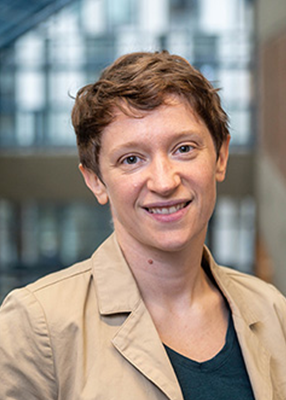
Xiaoze Pei is a Professor in the Department of Electronic & Electrical Engineering at the University of Bath, affiliated with the Institute for Advanced Automotive Propulsion Systems (IAAPS) and the Electronics Materials, Circuits & Systems Research Unit (EMaCS). His research focuses on superconductivity applications in electric systems, cryogenic power electronics, and DC network technologies for aerospace and renewable energy integration. Key projects include leading initiatives such as Towards Zero Emissions Electric Aircraft through Superconducting DC Distribution Network and HSTEA - Aerospace R&I , addressing challenges in electric propulsion, fault current limiters, and cryogenic power converters. His work contributes to UN Sustainable Development Goals related to clean energy and sustainable transport. Expertise: Superconducting fault current limiters (SFCL), DC circuit breakers, cryogenic power systems. Current roles: Principal Investigator (PI) on multiple UK and EU-funded projects. Collaborations: Extensive work with industry partners and academic institutions on electric aircraft, hydrogen control systems, and e-mobility technologies. Recent research emphasizes high-current cryogenic DC circuit breakers, superconducting air-core motors for aircraft, and topology optimization for power electronics. He actively supervises doctoral students in these areas and has published over 90 peer-reviewed articles. Labs/Teams: Leads research within EMaCS and collaborates with teams specializing in power electronics, cryogenics, and aerospace propulsion.
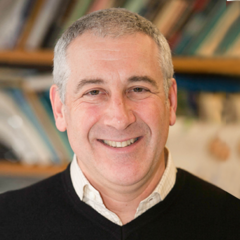
Sandra González-Bailón is the Carolyn Marvin Professor of Communication at the University of Pennsylvania's Annenberg School for Communication and holds a secondary appointment in Sociology. As Director of the Center for Information Networks and Democracy (CIND), her research examines how communication networks shape information exposure, with implications for political engagement, mobilization dynamics, and news consumption patterns. Her methodological work bridges computational social science and political communication. Education M.S. from University of Oxford (2004) Ph.D. from University of Oxford (2007) Research Focus González-Bailón's research program investigates the intersection of technology and society, with emphasis on how digital networks transform political communication. Key areas include: Information diffusion : Studies how content spreads through social platforms during elections and crises Algorithmic curation : Examines how platform algorithms shape ideological segregation and exposure diversity Network dynamics : Maps communication patterns in online collective action and protest movements Her empirical work employs computational methods to analyze digital trace data at scale. Publication Trends Recent publications demonstrate sustained focus on social media's impact during democratic processes, particularly the 2020 U.S. election. Key thematic threads include: misinformation diffusion patterns, asymmetric polarization in news exposure, experimental analysis of platform deactivation effects, and methodological innovations in computational social science. Notable contributions appear in Science , Nature , and PNAS . Center Leadership As founding director of CIND, González-Bailón oversees research examining how digital technologies impact democratic resilience, with projects spanning misinformation analysis, network mapping of political discourse, and policy interventions for platform governance.
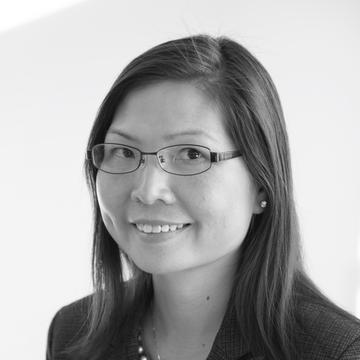
Francis Y. Yan is an Assistant Professor of Computer Science at the University of Illinois Urbana-Champaign (UIUC), holding an affiliate appointment in Electrical & Computer Engineering within the Grainger College of Engineering. He leads the Illinois Networked Systems and AI (NSAI) research group, focusing on building intelligent networked systems that are safe, robust, and performance-optimized through practical machine learning integration. Prior to joining UIUC in January 2025, he served as a Senior Researcher at Microsoft Research Redmond under Victor Bahl. His educational background includes: Ph.D. in Computer Science from Stanford University (2020), advised by Keith Winstein and Philip Levis B.S. in Computer Science (Yao Class) and B.A. in Economics from Tsinghua University (2015) Additional undergraduate studies at MIT Yan's research adopts a holistic approach to practical machine learning for networked systems, emphasizing judicious application rather than indiscriminate use. He builds real-world systems and research platforms to lay ML foundations, devises deployable algorithms using domain insights, and validates performance through extensive empirical evidence. His work consistently addresses operator concerns regarding ML deployment—focusing on safety, robustness, generalization, and efficiency—while strategically combining ML with classical networking and systems techniques. Analysis of his 15 most recent publications (2023-2025) reveals dominant themes in resource allocation for microservices (DeDe, Autothrottle), real-time video optimization (Mowgli, GRACE), and LLM-driven network algorithm design. His work bridges theoretical advances with industrial deployment, evidenced by platforms like Puffer (400,000+ users) and OpenNetLab that have become community standards for validating congestion control algorithms. His research has been recognized with top honors: USENIX NSDI Outstanding Paper Award (2024) for Autothrottle APNet Best Paper Award (2022) IRTF Applied Networking Research Prize (2021) USENIX NSDI Community Award (2020) USENIX ATC Best Paper Award (2018) for Pantheon Yan actively recruits master's and undergraduate researchers for his NSAI group, prioritizing self-motivated students for projects in networked systems and AI. His research is supported by industry collaborations (notably Microsoft) and manifests in deployable platforms like Puffer—which has enabled award-winning research at NSDI and SIGCOMM—and OpenNetLab for real-time communications. His work directly impacts production systems including Microsoft Teams and Bing. He founded and directs the Illinois Networked Systems and AI (NSAI) research group, which operates critical infrastructure including Puffer (a live TV service and research platform) and OpenNetLab. These platforms facilitate community-wide validation of novel algorithms, with Puffer alone supporting multiple best-paper awards at top conferences. Current workstreams span cloud resource management (Teal, Autothrottle, DeDe), low-latency video (Puffer, Tambur, Mowgli), and LLM-augmented systems (Nada, Designing Network Algorithms via LLMs).
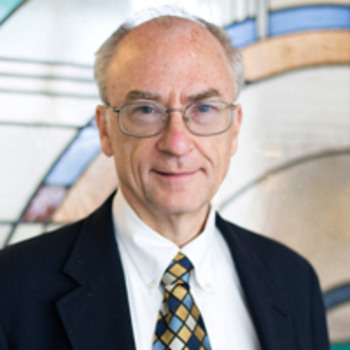
Kristin Laurin is a Professor of Psychology at the University of British Columbia (UBC), holding a PhD from the University of Waterloo (2012). Previously, she was a faculty member at Stanford Graduate School of Business and studied at McGill University. She is affiliated with the Department of Psychology within UBC’s Faculty of Arts, specializing in Social & Personality research streams. Her research explores how people’s goals and motivations interact with their beliefs and ideologies, addressing questions such as democratic support despite conflicting interests, moral rationalization after wrongdoing, and systemic social stratification. She has taught courses like PSYC 101/102 (Introduction to Psychology) and contributed to experimental studies on topics like system justification, religion’s role in societal structures, and corporate personhood perceptions. Key research areas include social inequality dynamics, moral psychology, and the psychological underpinnings of belief systems. Her work bridges experimental and theoretical frameworks to analyze how motivations drive ideological adherence and societal structures. Notable findings include the role of structure in promoting motivated action and the cultural evolutionary functions of religious beliefs. Dr. Laurin has received prestigious awards, including the Killam Faculty Research Fellowship (2019), SAGE Young Scholars Award (2018), and APS Rising Star Award (2017). She leads a lab focusing on social cognition, inequality, and moral psychology, with publications in top journals like Psychological Science and Journal of Personality and Social Psychology . Her research emphasizes the interplay between individual goals and societal systems, contributing to debates on social change and justice.
Yang Kaidi is an Assistant Professor in the Department of Civil and Environmental Engineering at the National University of Singapore (NUS), affiliated with the Institute of Operations Research and Analytics (IORA) within NUS’s Smart Nation Research Cluster. Their research focuses on intelligent transportation systems, traffic control, shared mobility, and machine learning applications in mobility. Key interests include connected and automated vehicles, privacy-preserving data sharing, and reinforcement learning for traffic optimization. Research highlights include developing parameter privacy-preserving strategies for mixed-autonomy platoons, enhancing safety in autonomous driving via transformer-based trajectory prediction, and optimizing traffic signal timing using connected vehicle data. Their work bridges theoretical control systems with practical urban mobility challenges, addressing issues like ridesourcing-public transit integration, modular transit service operations, and weaving section management in mixed traffic environments. Recent publications emphasize real-time control frameworks, cooperative safety mechanisms, and data-driven solutions for urban and highway systems. Yang’s interdisciplinary approach integrates robotics, optimization, and cybersecurity to advance smart transportation infrastructure. Their contributions are particularly notable in privacy-preserving techniques for traffic state estimation and federated learning applications. While no specific awards or grants are listed, their research aligns with Singapore’s Smart Nation initiatives through IORA’s strategic focus areas. Yang’s work has implications for future traffic management systems, autonomous vehicle coordination, and sustainable urban mobility solutions.
Keller Easterling is a Professor at the Yale School of Architecture and director of its Master of Environmental Design program. An architect, writer, and theorist, her work interrogates infrastructure space as a medium of political and social innovation. Key themes include global development , spatial justice , and climate resilience , with projects like ATTTNT (2023–2024), a reparations-focused land trust network, and Switch (2015), a mobility framework addressing urban sprawl. Books : Extrastatecraft (2014), Subtraction (2014), Medium Design (2021). Exhibitions : Featured in the Venice Biennale (2014), Architectural League (New York), and the Rotterdam Biennale . Research : Explores spatial products of capitalism , decolonial landholding , and non-extractive design . Engages with HBCUs and land activists to operationalize community economies and mutualist infrastructures . Select Articles : Contributions to Harvard Design Magazine , Domus , and e-flux , analyzing infrastructure as design and spatial counter-logics . Teaching & Collaborations : Leads design studios on medium design and infrastructural reprogramming . Collaborated with institutions like MIT , Guggenheim , and Prada , with recent talks at the European Graduate School (2025) and MoMA (2025).
Charles Fine is the Chrysler Leaders for Global Operations Professor of Management at MIT Sloan School of Management and concurrently serves as CEO, President, and Dean of the Asia School of Business (ASB) in Kuala Lumpur since 2015. He holds an AB in Mathematics and Management Science from Duke University, MS in Operations Research, and PhD in Business Administration from Stanford University. His research focuses on supply chain strategy, value chain roadmapping, and operations management in fast-clockspeed industries such as automotive and aerospace. He has pioneered frameworks for strategic innovation, entrepreneurial operations, and urban mobility systems. Key contributions include the concept of 'clockspeed' in industry dynamics and co-authoring Clockspeed (1998) and Faster, Smarter, Greener (2017). Fine co-directs MIT Sloan’s Driving Strategic Innovation executive program with IMD, Switzerland. He previously served on the board of Greenfuel Technologies, a biotech startup he co-founded. His work has been published in top journals like Management Science , Production and Operations Management , and Interfaces . Recent research highlights include analyzing unintended consequences of automated vehicles and exploring supply chain strategies for market expansion through O2S (Online-to-Store) models. He advises global corporations on supply chain resilience, value chain design, and innovation scaling.
Man-Yee Kan is a Professor of Sociology at the University of Oxford's Department of Sociology and a Fellow of Linacre College. Her research focuses on gender inequalities, time use, family dynamics, and migration, particularly in East Asian, European, and Anglophone contexts. She leads the GenTime project, funded by an ERC Consolidator Grant (2018-2026), examining gender inequality in time use across societies. Recent work analyzes Hong Kong migration to the UK, including pandemic impacts on migration decisions. She has held prestigious fellowships, including the British Academy Postdoctoral Fellowship (2008-2011) and Research Councils UK Academic Fellowship (2008-2013). Her research interests span gender roles in families, welfare policies, and migration studies. Key projects include studying intergenerational support in East Asian families and the sociological impacts of caregiving labor. Teaching includes a gender sociology option course, and she supervises doctoral/master students on gender, family, and social inequality topics. Publications span migration patterns, time-use dynamics, and gender disparities. She contributes to the Oxford Migration and Mobility Network and maintains an active research agenda on Hong Kong-UK migration and pandemic-related mobility changes.
Ronald G. Larson serves as the George Granger Brown Professor of Chemical Engineering and A. H. White Distinguished University Professor at the University of Michigan's College of Engineering, with additional appointments in Mechanical Engineering and Macromolecular Science & Engineering. His research leadership spans multiple departments within the Chemical Engineering Division, where he directs the Larson Lab focused on fundamental and applied soft matter physics. His research program investigates complex fluids through computational and theoretical frameworks, emphasizing polymer physics, rheology, and molecular simulations. Key thrusts include polymer melt processing, biomembrane dynamics, colloidal systems, and polyelectrolyte coacervation. The group employs advanced techniques like Brownian dynamics, coarse-grained modeling, and multiscale simulation to address challenges ranging from industrial polymer processing to biomedical applications. Recent publications (2023-2025) reveal strong momentum in rheological modeling of complex fluids, with particular emphasis on self-healing materials, wax deposition in pipelines, and crystallization mechanisms. The work bridges fundamental molecular insights with industrial applications, demonstrating consistent high-impact output across polymer science, soft matter physics, and chemical engineering domains. The Larson Lab operates as a collaborative hub within the Chemical Engineering Department, leveraging computational resources to advance understanding of fluid mechanics and material properties. Current projects integrate machine learning with traditional modeling approaches, reflecting the group's commitment to methodological innovation while maintaining strong connections to experimental validation and real-world engineering problems.
Carolina Osorio is a Professor at HEC Montréal, holding the Scale AI Research Chair in Artificial Intelligence for Urban Mobility and Logistics. She is affiliated with the Department of Decision Sciences and is a member of the Group for Research in Decision Analysis (GERAD) and the Interuniversity Research Centre on Enterprise Networks, Logistics and Transportation (CIRRELT). Her research focuses on transportation optimization, urban mobility, and data-driven simulation-based methods. She has been recognized among the world’s most influential researchers in 2023 and 2024. Education: Ph.D. in Mathematics, École Polytechnique Fédérale de Lausanne (EPFL) M.Sc. in Statistics, University College London (UCL) Bachelor’s in Engineering, École nationale supérieure d'informatique et de mathématiques appliquées de Grenoble (ENSIMAG) Research Interests: Her work emphasizes scalable transportation modeling, simulation-based optimization, and AI applications for urban logistics. She develops methods for large-scale network analysis, traffic demand estimation, and sustainable urban mobility solutions. Key areas include traffic signal optimization, car-sharing service design, and high-dimensional stochastic systems. Publications: Recent articles highlight advancements in scalable traffic demand estimation, Bayesian optimization for transportation systems, and simulation-based toll optimization. Her work addresses challenges in global highway networks, urban congestion dynamics, and multi-city calibration. Awards: Scale AI Research Chair (Artificial Intelligence for Urban Mobility and Logistics) Recognition as a world-leading researcher in transportation science Advising & Grants: Osorio collaborates on projects funded by Scale AI and leads research initiatives through GERAD and CIRRELT. Her supervision activities include teaching courses such as Decision Analysis and Sample Efficient Optimization at HEC Montréal. Labs & Teams: She contributes to interdisciplinary teams at GERAD and CIRRELT, focusing on integrating advanced analytics into urban transportation systems.
Anders Karlström is a Professor at KTH Royal Institute of Technology, specializing in Transport Modelling and Economics. His research focuses on sustainable transportation systems, emissions reduction, and energy efficiency. Key interests include activity-based modelling, dynamic discrete choice frameworks, and policy analysis for urban mobility. He has contributed to studies on travel behavior, infrastructure planning, and environmental impacts of transport systems across multiple international cities. His work integrates advanced methodologies such as recursive logit models, spatial regression, and machine learning for predictive analytics. Notable research areas involve evaluating weather variability effects on travel patterns, optimizing traffic state estimation with sensor data, and developing scenario-based models for future employment growth. Karlström collaborates with industries to enhance the competitiveness of sustainable transport solutions globally.
Inès Lamunière is an Honorary Professor at École Polytechnique Fédérale de Lausanne (EPFL), where she previously held roles including Full Professor and Chair of the Department of Architecture (2008–2011). She is also a renowned architect, leading the firm dl-a, designlab-architecture SA in Geneva. Her academic career includes positions as Adjunct Professor at ETH Zurich (1991) and Visiting Professor at Harvard University’s Graduate School of Design (1996, 1999, 2008). She directed the LAMU-EPFL Laboratory (2001–2018), focusing on urban architecture and mobility. Education: Architect degree from EPF Lausanne (1980), followed by studies at the Swiss Institute in Rome and assistant lectureship under Werner Oechslin at ETH Zurich. Research Interests: Urban planning, sustainability, architectural history, and the integration of infrastructure into urban environments. Notable projects include the revitalization of Bellerive-Plage and the LAMU Laboratory’s studies on risky urban objects. Awards: 2011 Meret Oppenheim Prize (Swiss Art Award) and 2017 Chevalier des Arts et Lettres (France). Her work emphasizes context-sensitive design and sustainable urban development. She has supervised numerous theses and contributed to publications on architectural pedagogy, urban theory, and historical analyses of Le Corbusier’s work. Active in academic governance, she served as Vice President of the EPFL WISH Foundation (2006–2016) and on the Fondation pour le Développement des Arts et de la Culture board since 2016.
Dr. Olga Vysotska is a Researcher affiliated with the Professorship for Robotic Systems at ETH Zurich's Department of Mechanical and Process Engineering. Her work focuses on advancing robotic systems through research in sensor-based navigation, SLAM (Simultaneous Localization and Mapping), and autonomous systems. She holds a doctoral degree and is based in Zurich, Switzerland. Her email is olga.vysotska@inf.ethz.ch. Research Interests: Olga's research spans robotics, computer vision, and autonomous navigation. She specializes in LiDAR-based place recognition, SLAM algorithms, and cross-modal localization using 3D scene graphs. Her work addresses challenges such as environmental changes, sensor fusion, and data association in dynamic environments like agriculture and underground exploration. Key themes include robust localization, loop closure detection, and adaptive algorithms for real-world robotic applications. Publications Overview: Olga's recent work emphasizes diffusion-based LiDAR place recognition (2025), 4D spatial-temporal mapping for agricultural robots (2023), and SceneGraphLoc for cross-modal localization (2024). Her research trends highlight innovation in sensor integration, algorithmic robustness, and practical applications in challenging environments. Earlier contributions include exploration of catacombs with mobile robots (2013) and SLAM enhancements using public map data (2017). Grants & Advising: While specific grants or student advisement details are not listed, her active publication record suggests involvement in funded research projects. Her work often collaborates with industry and academic partners to advance robotic autonomy in complex scenarios. Labs/Teams: As part of the Robotic Systems Professorship, she likely contributes to ETH Zurich's robotics labs focused on SLAM, sensor systems, and autonomous navigation. Her projects may intersect with the Department's broader initiatives in mechanical and process engineering.
Yuanzhu Chen is a Professor in the School of Computing at Queen’s University, affiliated with the Faculty of Arts and Science. He previously served as Professor and Department Head at Memorial University of Newfoundland (2005–2021). His research focuses on computer networking, mobile computing, complex networks, and applied machine learning, emphasizing wireless innovation beyond traditional wired systems. He holds a PhD from Simon Fraser University (2004) and a B.Sc. from Peking University (1999). Education: PhD in Computing Science (Simon Fraser University, 2004); B.Sc. in Computer Science (Peking University, 1999). Earlier roles include Post-doctoral Researcher at Simon Fraser University (2004–2005) and leadership positions at Memorial University, including Department Head (2019–2021). Research Interests: Network Coding and Opportunistic Routing Mobile and Wireless Network Protocols Complex Network Analysis Machine Learning Applications Indoor Positioning Systems Social Network Dynamics Selected Awards: Recipient of Queen’s University President's Award for Distinguished Teaching. Lab Affiliation: Director of the Wireless Networking and Mobile Computing Lab (WineMocol). Active in collaborative projects involving smartphone sensors, community-based environmental monitoring, and stock market prediction using web data.
Dr. Dijiang Huang is an Associate Professor in the School of Computing and Augmented Intelligence at Arizona State University (ASU). He joined ASU in 2005 after completing his Ph.D. in Telecommunications and Computer Networking from the University of Missouri-Kansas City (2004). His research focuses on cybersecurity, mobile computing, and cloud computing, supported by grants from the National Science Foundation (NSF), Office of Naval Research (ONR), and industry partners like HP. He has received prestigious awards, including the ONR Young Investigator Award and HP Innovative Research Award. Education: B.E. in Telecommunications, Beijing University of Posts and Telecommunications (1995) M.S. in Computer Science, University of Missouri-Kansas City (2001) Ph.D. in Telecommunications and Computer Networking, University of Missouri-Kansas City (2004) Research Interests: Huang’s work emphasizes secure communication protocols, privacy-preserving techniques, and resilient network architectures. He has pioneered frameworks like Secure Group Communication (SeGCom) and Attribute-Based Cryptography , addressing challenges in VANETs, SDN, and edge computing. His recent projects include developing Waterfall for SDN security and SmartDefense for DDoS mitigation. Grants & Awards: ONR Young Investigator Award (2008) HP Innovative Research Award (2008) NSF grants for secure mobile cloud frameworks and cyber-physical systems Professional Contributions: Huang has served as a reviewer for journals like IEEE Transactions on Wireless Communications and conferences such as ACM MobiArch. He co-developed the Open Human-Robotic Mobile Networking and Security Testbed (OHReST) and the Virtual Laboratory (VLab) for cybersecurity education.