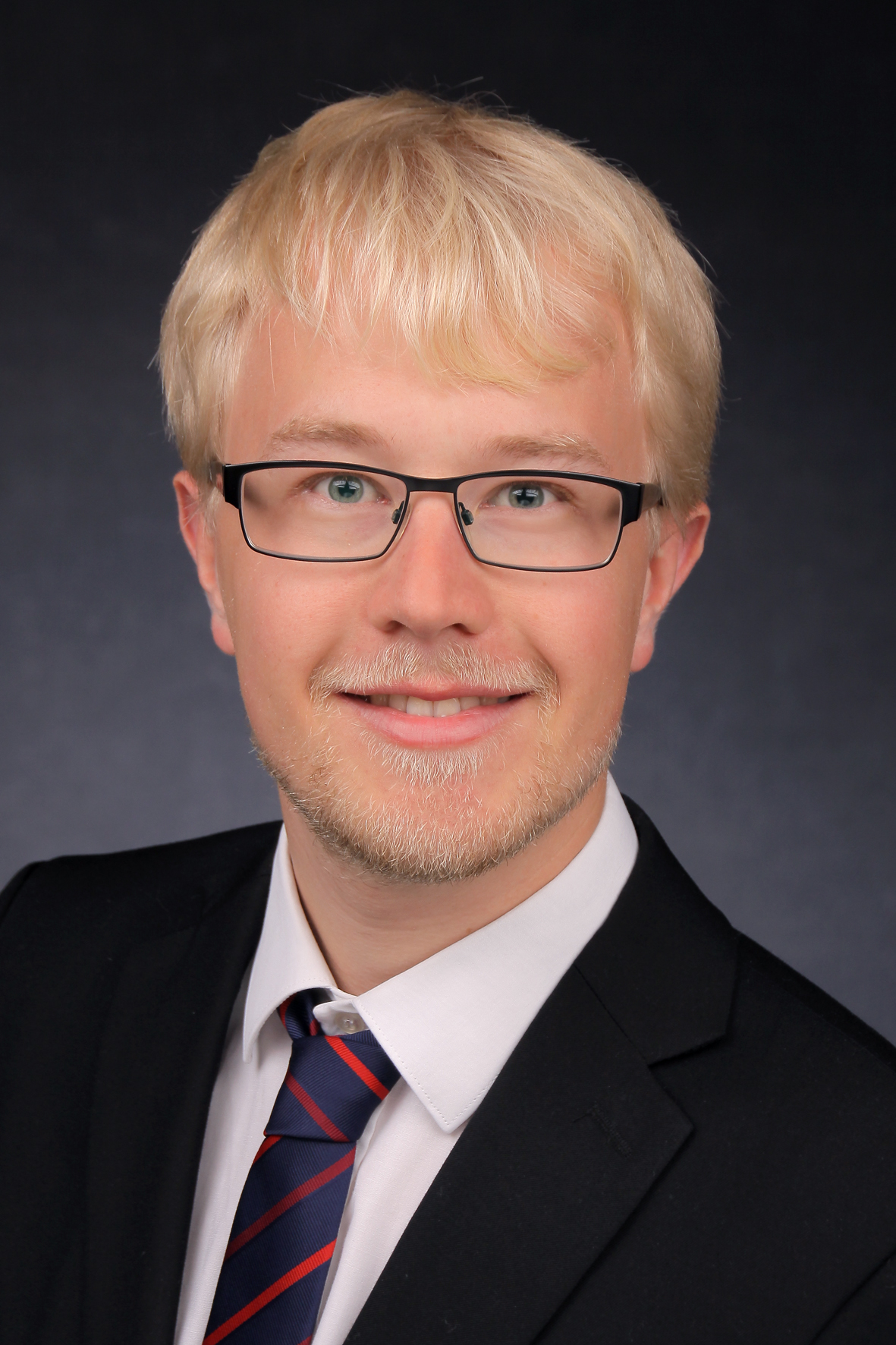
FH-Prof. Dr. Kerstin Blumenstein is a Professor in the Department of Media and Digital Technologies at the University of Applied Sciences St. Pölten. She has been with the institution since 2019, leading research in Interaction Design, User Experience, and Information Visualization. Her work focuses on multi-device ecologies, mobile computing, and digital media integration in cultural and educational contexts. Education includes a Bachelor's in Media Technology (2010) and a Master's in Digital Media Technologies (2012), both from St. Pölten University of Applied Sciences. Prior roles include student assistant at the Institute of Media Informatics and work as a Media Designer in Germany. Research projects like MEETeUX and Seekoi explore user-centered design for multi-device systems and context-aware mobile applications. Key interests span Human-Computer Interaction, second-screen applications, and visualization frameworks for real-time data. Publications emphasize cross-platform visualization tools, mobile interface design, and empirical evaluations of information displays. Current work addresses challenges in BYOD environments and cultural heritage digitalization through projects like KuKoNö . No scientific awards explicitly listed. Active in teaching across multiple programs including Media Technology (BA), Digital Healthcare (MA), and Interactive Technologies (MA).
Dr. Jim Pope is a Principal Academic in English and Communication at Bournemouth University, Faculty of Media and Communication. He is based at Talbot Campus and has been a key figure in advancing interactive digital storytelling in both academic and public spheres. His work bridges creative writing, media education, and digital technology, with a strong focus on reader engagement and narrative design. His research interests include: Interactive Digital Storytelling Children's Literature and Reader Response Media Education and Digital Literacy Narrative Design in New Media Arts-based Research Hyper-narrative and Non-linear Texts Jim Pope's recent publications reflect a consistent focus on digital narrative tools like Genarrator and the New Media Writing Prize, exploring how interface design, user experience, and interactivity shape reading and writing practices. His work spans journals in digital humanities, media studies, and creative writing education, demonstrating interdisciplinary reach and practical impact in both pedagogy and public engagement. He is actively involved in outreach, including co-chairing the digital art exhibition at the International Conference for Interactive Digital Storytelling (2019–2020) and contributing to the British Library’s Emerging Formats archive. He founded and maintains the Genarrator platform and the New Media Writing Prize, key resources in the digital storytelling community. Jim Pope supervises undergraduate dissertations and teaches courses in Children's Literature, Interactive Digital Storytelling, and Creative Writing. He holds a PhD from Bournemouth University (2007) on readers' responses to interactive fiction and is a member of NAWE and MeCCSA.
Dr. Simon Bultmann is currently a Postdoctoral Researcher at the Robot Learning Lab, Albert-Ludwigs-Universität Freiburg. Previously, he completed his Ph.D. in the Autonomous Intelligent Systems Group at the University of Bonn (2019–2024) and earned his M.Sc. and B.Sc. in Electrical Engineering and Information Technology from Karlsruhe Institute of Technology (KIT, 2012–2018). His research focuses on collaborative perception, sensor fusion, and machine learning for embedded systems ("Smart Edge Sensors"). Key applications include real-time multi-modal semantic fusion, 3D scene perception, and autonomous UAVs. Awards: Best Paper Award at IEEE SSRR 2020 Finalist for Best Paper Award at RoboCup 2021 His work spans robotics, computer vision, and distributed systems, with contributions to international conferences like ICRA, RSS, and IAS. He has also been involved in competitions such as MBZIRC, demonstrating autonomous UAV capabilities in disaster response scenarios.
Georgios Styliaras serves as an Associate Professor in the Department of Computer Engineering and Informatics at the University of Patras, where he teaches Informatics I and II courses. His office is located in the Old Building on the 1st floor at G. Seferi 2, with regular office hours Tuesday-Wednesday from 12:00-14:00. His research focuses on Multimedia Systems , Cultural Technology , and Spatial Hypermedia , with particular emphasis on applications in cultural heritage environments. His work bridges computer science with cultural preservation, creating innovative solutions for museums and educational contexts. Analysis of his publication record from 2009-2013 reveals a strong trajectory toward mobile applications for cultural heritage sites, with increasing focus on smartphone-based multimedia services. His research consistently addresses security, trustworthiness, and user experience in digital cultural environments, demonstrating both technical expertise and cultural sensitivity. His scientific contributions include collaborations with researchers like Dimitrios Koukopoulos across multiple publications in journals such as Journal of Educational Multimedia and Hypermedia, Journal of Cultural Heritage, and Electronic Commerce Research.
Professor John T. Koch (PhD, Harvard 1985) is a Senior Fellow and Project Leader at the Centre for Advanced Welsh and Celtic Studies (CAWCS), University of Wales. An interdisciplinary expert in Celtic studies, historical linguistics, and archaeogenetics, he has led major AHRC-funded projects like Culture and Celtic Speech and Atlantic Europe in the Metal Ages . His work spans linguistic reconstruction, Bronze Age Europe, Celtic mythology, and ancient DNA analysis. Education : PhD in Celtic Languages and Literature, Harvard University (1985) Affiliation : CAWCS, University of Wales Role : Senior Fellow and Project Leader His research bridges linguistics, archaeology, and genetics, focusing on Celtic origins, Tartessian inscriptions, and Celto-Germanic vocabulary. Recent publications reflect collaborations with geneticists and archaeologists, emphasizing the archaeogenetic revolution's impact on Celtic studies. Koch is a leading voice in the Celtic from the West theory, challenging traditional models of Celtic expansion. Koch's articles reveal a strong interdisciplinary focus. These works analyze Bronze Age maritime networks, linguistic contact zones, and genetic dispersals, with recurring themes such as Celtic mythology, ancient DNA data interpretation, and epigraphic evidence from Iberia and Britain. Scientific Awards and Honors : Member of the Order of Australia (AM) Fellow of the Learned Society of Wales (FLSW) Grants and Leadership : Koch directed two AHRC-funded projects on Celtic languages and Atlantic Europe's prehistory. He co-founded and organized international forums on Celtic origins, archaeogenetics, and linguistics, including events at Oxford, Aberystwyth, and Uppsala. His supervision includes PhD research on Pictish inscriptions, Classical Celtic references, and Welsh phonology.
Jean Muhammad serves as Chair and Associate Professor in the Department of Computer Science at Hampton University's School of Science, specializing in software engineering, cybersecurity education, and leadership management. Her academic journey spans Florida State University (Ph.D., 2005), Illinois Institute of Technology (M.S., 1991), and Chicago State University (B.S., 1984), complemented by industry roles at AT&T Bell Labs and Nokia. Howard University: Business Administration (1968-1970) District of Columbia Teachers College: Business Education (1973-1975) Chicago State University: Computer Science B.S. (1984) Illinois Institute of Technology: Computer Science M.S. (1991) Florida State University: Computer Science M.S. (1999) Florida State University: Computer Science Ph.D. (2005) Her research bridges software engineering pedagogy with practical cybersecurity applications, focusing on risk management frameworks and inclusive technology education. Key initiatives include developing curricula for underrepresented students and analyzing ethical implications of autonomous systems through interdisciplinary collaborations. Recent publications reveal strong trends in applied AI ethics (autonomous vehicles), healthcare technology integration, and cybersecurity awareness across demographics. Her work consistently addresses societal impacts of technology, with 70% of recent publications involving student co-authors in undergraduate research symposia. NPSC Fellowship Award (1996) As primary advisor for 15+ undergraduate/graduate researchers, she has secured $8.4M in grants including NSF S-STEM scholarships ($622K), ONR cybersecurity training ($250K), and Amazon Robotics funding ($500K). Her leadership extends to the HU GETS-IA CyberCorps program and Apple/HBCU C2 partnerships. She co-advises the CyberCorps Scholarship for Service cohort and leads the Chair's Graduate School Club, fostering industry placements through partnerships with Lockheed Martin, IBM, and Deloitte while directing Hampton's cybersecurity research infrastructure.
Prof. Dr.-Ing. Stefan Lechner has been full Professor of Energy Economics and Energy Systems at the Technical University of Central Hesse (THM) , Giessen, since March 2015. He is affiliated with the Department of Mechanical Engineering and Energy Technology and the Institute THESA – Institute of Thermodynamics, Energy Process Engineering and Systems Analysis . Additionally, he leads the Laboratory for Energy Economics and is a core member of the Competence Center for Energy Technology and Energy Management (etem.THM) . Education & Career Dr.-Ing., Brandenburg University of Technology (BTU) Cottbus, 2012 – Dissertation on steam-fluidized-bed drying of lignite. Dipl.-Ing. (FH) Mechanical Engineering, Georg Agricola University of Applied Sciences Bochum, 2002 – specialising in Future Energies. Supplementary doctoral studies & economics coursework at BTU Cottbus and FernUniversität Hagen. Professional experience at Vattenfall (plant management, power-plant planning & R&D) and Kreisel Umwelttechnik (Head of Development) before entering academia. Research Interests Prof. Lechner’s work centres on the techno-economic analysis and optimisation of energy systems in transition . Core themes include renewable energy integration , thermal energy storage (particularly Carnot batteries using ceramic high-temperature stores), sector coupling between electricity, heat and mobility, and 5th-generation cold district-heating networks (5GDHC). Methodologically, he combines experimental thermal engineering with open-source simulation frameworks , agent-based demand modelling , and electricity-market modelling . Recent activities expand into waste-heat recovery from data centres and transcritical CO₂ heat-pump systems for low-temperature district heating, always targeting cost-effective, grid-friendly and sustainable solutions . Publication Trends Between 2017 and 2024 his output highlights a clear evolution from fundamental studies on pressurized steam fluidized-bed drying and lignite heat-transfer toward system-level analyses of storage-based sector coupling . A dominant cluster addresses Carnot batteries , covering high-temperature storage materials, gas-turbine re-conversion concepts, and demonstration results. Parallel streams examine GIS-based rooftop PV potential , agent-based settlement energy-demand modelling , and regulatory frameworks for cross-sector energy markets. Scientific Awards & Honours No specific awards are mentioned in the provided material. Research Funding & Teams Prof. Lechner has secured and coordinates projects worth > €10 million (THM share ≈ €6.5 million) funded by BMBF, BMWK/BMWi, Hessian ministries (HMWK, HMWEVW), WI-Bank and ERDF : LOEWE 3 DUWä (2025-2027) – transcritical CO₂ dual-use heat pumps for cold district heating. EnEff:Stadt FlexQuartier2 (2023-2027) – hybrid storage optimisation in Giessen’s Philosophenhöhe district. KNW-Plus (2022-2023) – design & online tool for cold local heating networks. Innovative waste-heat use from data centres (2022-2023). FlexQuartier Gießen (2018-2023) – integrated hybrid storage & sector coupling in a new-build district. Kommun:E (2018-2022) – municipal energy-supply transformation under Germany’s Energiewende. High-T-Stor (2017-2019) – cross-sector high-temperature storage for renewable balancing. FES (2019-2021) – Research Center for Energy Storage and Sector Coupling. These projects involve interdisciplinary consortia including municipalities, grid operators, SMEs, and research partners across Germany. Teaching & Academic Leadership He lectures in Energy Economics and Sector Coupling, Energy Markets, Heat Transfer, Renewable Energy Technology and Energy System Analysis . He also serves as Programme Manager for the part-time continuing-education M.Sc. Energy Efficiency Management (StudiumPlus, Wetzlar) and contributes to advanced master’s courses on energy law and thermodynamics.
Sophie Demonceaux is a Lecturer at University of Burgundy , affiliated with IUT Le Creusot and research group CIMEOS . Her work bridges Digital Communication with interdisciplinary foci on family/relationship dynamics, educational technology, and media representation of scientific topics. Key Research Themes: ICT's impact on marital relationships, digital education strategies, school dropout prevention via communication, and media coverage of controversial subjects like homeopathy. Projects: Leading COM'PAS (2020-2023), a regionally-funded initiative analyzing school retention through digital communication. Publications span journals like Tic&société , book chapters on social media expertise, and conference presentations at events hosted by INSPE de Bourgogne and Université Catholique de l'Ouest . Her 2014 thesis on ICT and intimacy remains a foundational work. Career Progression: From Professor-documentaliste (2003-2006) to PRCE Expression-Communication (2011-2016), she transitioned to Lecturer in 2016. Holds a 2014 Doctorate in Information and Communication Sciences .
Prof. Dr. Raif Bayır is a Turkish academic at Karabük University's College of Engineering, Department of Mechatronics Engineering. With a career spanning 2000-2024, he has held continuous full-time faculty positions from Assistant Professor to Professor. His research focuses on Robotics, Hybrid/Electric Vehicles, and Artificial Intelligence. Doctorate: Gazi University (2005) - Electronics & Computer Education Postgraduate: Gazi University (1998) - Electronics & Computer Education Undergraduate: Gazi University (1995) - Electronics & Computer Education His work integrates Artificial Intelligence techniques into Electric Vehicle systems, Robotics, and Agricultural Engineering applications. Recent publications emphasize Deep Learning for Mask Detection, Real-Time Battery Monitoring, and Autonomous Navigation Systems. Scientific awards include: 2017 METU Line-Following Robot 1st Prize 2016 TÜBİTAK Domestic Product Award 2015 TÜBİTAK Electromobil Best Design Prize He has advised over 20 graduate theses on topics spanning Electric Vehicle Components, Beehive Monitoring Systems, and Intelligent Control Applications. His research teams have developed multiple TÜBİTAK-supported projects including Automotive Test Stands and Battery Management Systems.
Zahabul Islam is an Assistant Professor and Program Coordinator in Mechanical and Manufacturing Engineering at Bowling Green State University, School of Engineering. His research focuses on additive manufacturing (3D printing) and material characterization, particularly for energy and biomedical applications. Ph.D., M.S., and B.S. in Mechanical Engineering from Penn State University His expertise spans Laser Powder Bed Fusion (LPBF), Selective Laser Melting (SLM), Direct Energy Deposition (DED), and Stereolithography. Current research includes process map optimization for polymer/metal additive manufacturing, radiation damage studies, and multiscale modeling of fused filament fabricated composites. Recent publications highlight work on tungsten lattice structures, MoSiB alloys, and Haynes 282 superalloys. He actively collaborates on projects involving supercritical CO2 heat-to-power systems and ultrahigh-temperature refractory metal alloys for aerospace applications.
Diego Borin Nobrega is an Assistant Professor (Teaching & Research) at the University of Calgary's Faculty of Veterinary Medicine. His office is located in the Cal Wenzel Precision Health Building. As a microbiologist and veterinary epidemiologist, he holds a PhD in Infectious Diseases of Dairy Cattle from the University of Calgary and completed a postdoctoral fellowship at the Ontario Veterinary College. He previously served as a veterinary epidemiologist for the Public Health Agency of Canada. Nobrega's research employs a One Health framework to investigate antimicrobial resistance (AMR) transmission between animals and humans. His team focuses on developing evidence-based interventions to reduce AMR in veterinary medicine, emphasizing transdisciplinary approaches to address ecological and social complexities. Key research areas include interspecies pathogen transmission, antimicrobial stewardship programs, and genomic surveillance of resistant organisms. His recent publications (2024-2025) predominantly explore AMR dynamics in dairy systems, mastitis pathogenesis, genomic epidemiology of resistant pathogens (e.g., E. coli, Klebsiella), and innovative diagnostic tools like AI-based plate reading and wastewater surveillance. The work consistently integrates veterinary science, public health, and molecular biology. Nobrega leads a research team focused on One Health interventions and maintains active collaborations through the University of Calgary's One Health strategic initiative (2020-2025).
Dr. Jun Liu serves as an Associate Professor in the Department of Civil, Construction and Environmental Engineering within the College of Engineering at the University of Alabama. He directs the NextGen Transportation Lab and holds editorial positions including Managing Editor for the Journal of Intelligent Transportation Systems. His affiliations include the Center for Sustainable Infrastructure and Center for Transportation Operations, Planning and Safety. Ph.D. in Civil Engineering, University of Tennessee (2015) M.S. in Statistics, University of Tennessee (2015) M.S. in Transportation Planning & Management, Huazhong University of Science & Technology (2011) B.S. in Transportation Engineering, Huazhong University of Science & Technology (2008) Dr. Liu's research spans transportation safety, connected/automated vehicles, and sustainable mobility systems. His work integrates machine learning with geospatial analysis to address responder safety, travel behavior, and urban planning challenges. Current projects focus on generative AI applications, EV infrastructure, and rural transportation equity. His methodology combines agent-based simulation, spatial modeling, and behavioral pathway analysis to develop practical transportation solutions. Publication trends reveal strong emphasis on machine learning applications in transportation safety (32% of recent works), with significant contributions to connected vehicle systems (24%) and sustainable mobility solutions (18%). His research demonstrates consistent integration of spatial analysis techniques across 78% of publications, with increasing focus on generative AI applications since 2023. Recent work shows growing international collaboration, particularly with Chinese institutions on robotaxi deployment. Inaugural Editorial Board Member, Transportation Research Record 2018 Small Grants Program Award, University of Alabama Distinguished Scientific Paper Award, ITS World Congress Best Reviewer, Journal of Traffic and Transportation Engineering Dr. Liu has secured over $21 million in research funding since 2018, including an NIH/CDC R01 award as lead PI. His 30 projects include 17 as Principal Investigator from NSF, NIH/CDC, US DOT, and state agencies. He mentors numerous graduate students, with recent publications featuring trainees as first authors. Current initiatives include a $2 million CDC/NIOSH project on first responder safety and $16.8 million smart transportation network development in West Alabama. His NextGen Transportation Lab focuses on integrating AI with transportation systems while exploring creative applications through dance and choreography.
Ramy H. Gohary is an Assistant Professor in the Department of Systems and Computer Engineering at Carleton University. His research focuses on advanced wireless communication systems, including machine-to-machine communications, Internet-of-Things (IoT), MIMO systems, convex optimization, differential geometry applications in signal processing, and information-theoretic aspects of multiuser systems. Principal Investigator for Ericsson-Carleton Strategic Partnership projects on 5G+ wireless networks Research emphasizes fairness, cross-layer design, cooperative communications, and jamming-resistant detection techniques His recent work explores direction-of-arrival estimation, non-coherent communication in jamming environments, and distributed MIMO architectures. Publications highlight applications of differential geometry, optimization techniques, and sparse signal recovery in modern wireless systems. He actively contributes to advancements in channel modeling, beamforming, and energy-efficient network design.
Dr. Yomna Abdelrahman is a Professor of Usable Security and Privacy at the Bundeswehr University Munich . Her research focuses on thermal imaging for security and privacy , virtual reality usability, eye tracking , and biometric authentication . She collaborates with researchers like Florian Alt and Albrecht Schmidt on projects exploring how thermal sensing can enhance user identification and privacy awareness . Key Research Areas : Thermal Imaging, Human-Computer Interaction, Virtual Reality, Password Security, Biometric Authentication, Eye Tracking, Privacy Her recent publications address VR emotion detection , password usability , and privacy implications of thermal imaging . She has contributed to conferences like CHI, MUM, and INTERACT, often examining security-privacy trade-offs and non-invasive biometric systems . Notably, her work on thermal attacks reveals vulnerabilities in mobile authentication through thermal residue. She holds a PhD in Computer Science from the University of Stuttgart (2018), where her thesis, "Thermal Imaging for Amplifying Human Perception," laid the foundation for her later work on thermal-based interaction and cognitive load estimation . Her collaborations span diverse domains, from smart home notifications to industrial worker assistance , reflecting her interdisciplinary approach to usable security and interactive systems .
Pascal Morin serves as a University Professor at Sorbonne University within the Faculty of Science and Engineering. He is an active member of the ASIMOV research team at the Intelligent and Robotic Systems Institute (ISIR), located at 4 Place Jussieu in Paris. His office H17 serves as the base for his research activities in advanced robotics and control systems. Professor Morin's research focuses on cutting-edge robotics applications, particularly in unmanned aerial vehicle navigation and control systems. His work spans nonlinear control theory, visual servoing techniques, and micro air vehicle development. Key interests include homography estimation for image stabilization, thermal anemometry for airflow sensing, and obstacle avoidance algorithms for precision robotics. His publications demonstrate consistent innovation in combining theoretical control frameworks with practical robotic implementations. Analysis of his 15 most recent publications reveals strong thematic continuity in UAV navigation systems, with increasing integration of deep learning techniques since 2020. His work consistently addresses GPS-denied environments and sensor fusion challenges, with notable contributions to thermal-based odometry and visual-inertial navigation systems. The research trajectory shows progression from theoretical control frameworks toward increasingly complex real-world applications including power line inspection and microscopy manipulation. Professor Morin actively collaborates with major aerospace institutions including ONERA and DLR, as evidenced by his participation in the EuRoC challenge. His editorial work on MAV navigation special collections demonstrates leadership in the micro air vehicle research community. While specific grant details aren't provided in the source material, his sustained publication output across multiple high-impact journals indicates successful funding acquisition. As a core member of the ASIMOV team at ISIR, Professor Morin contributes to Sorbonne University's leadership in robotics research. The team maintains strong industry connections through publications in Aerospace Lab and collaborations with organizations like AIAA. Current research directions appear focused on thermal sensor integration for MAVs and nonlinear control solutions for challenging operational environments.