Javier Alonso-Mora is a Professor in the Department of Mechanical Engineering at Delft University of Technology, specializing in Learning & Autonomous Control. His research focuses on autonomous systems, robotics, motion planning, and transportation logistics, with applications in mobile manipulation, dynamic environments, and urban mobility. He leads key projects such as INTERACT (Intuitive Interaction for Robots among Humans) and ACT (Perceptive Acting Under Uncertainty), exploring human-robot interaction, autonomous vehicles, and healthcare robotics. Notable achievements include an ERC Starting Grant (2022) and a Veni Grant (2017). His work addresses challenges in robot navigation, control systems, and fleet optimization, with contributions to both theoretical advancements and practical implementations. Projects like TRiLOGy focus on sustainable water transportation, while HARMONY advances assistive robotics in healthcare. Alonso-Mora’s research leverages geometric fabrics for motion planning, probabilistic modeling for dynamic environments, and multi-agent coordination. He collaborates internationally and contributes to open-source frameworks for robotics. His recent publications emphasize safety-aware control, instance-aware semantic mapping, and adaptive systems for cluttered environments.
Dr. Ly Fie Sugianto is an Associate Professor in the Department of Accounting at Monash Business School, Monash University. Her research focuses on the integration of data analytics, artificial intelligence, and machine learning in accounting and business systems, with applications in the energy sector and organizational behavior. Monash Business School, Monash University Department of Accounting Specialization: Accounting Information Systems, Data Analytics, AI Her research interests span Accounting Information Systems , Agent-Based Simulation , Decision Support Systems , and Technology Adoption . She applies computational methods to study competitive dynamics in deregulated electricity markets and the impact of digital tools on employee well-being and organizational resilience. The recent publications reflect a strong trend in using AI and simulation to analyze complex socio-technical systems, particularly in energy markets and leadership dynamics. Keywords across her work include agent-based modeling , data analytics , servant leadership , and enterprise social media , indicating interdisciplinary research at the intersection of information systems, management, and public policy. Her scientific awards include competitive grants from the ARC (SPIRT/Linkage) , the Australia Indonesia Governance Research Partnership (AIGRP) , and the Sumitomo Foundation . ARC Grant: Dispatch Optimisation in the Australian National Electricity Market Sumitomo Foundation: Technology Use and Employee Well-Being AIGRP: Governance and MSME Resilience during Pandemic Dr. Sugianto has advised research projects and collaborated with industry partners such as Western Power , Ecogen Energy , and AEMO . She is currently accepting PhD students and leads externally funded research initiatives. Her work contributes to UN Sustainable Development Goals related to industry innovation and responsible consumption. She is affiliated with research teams focusing on intelligent decision support systems and digital transformation in business , with active collaborations in Australia and Indonesia.
Dr. Nanpeng Yu is a Full Professor at the University of California, Riverside , serving as Vice Chair and Graduate Advisor in the Department of Electrical and Computer Engineering . He maintains cooperative faculty affiliations with the Department of Computer Science and Department of Statistics , and directs the Energy, Economics, and Environment Research Center at UCR. Education : B.S. in Electrical Engineering from Tsinghua University (2006), M.S. in Electrical Engineering and Economics, and Ph.D. from Iowa State University (2010) Prior Industry Experience : Senior Power System Planner and Project Manager at Southern California Edison (2011-2014) Dr. Yu’s research bridges smart grid technologies , data-driven optimization , and machine learning for energy systems. Key areas include voltage control , renewable energy integration , transportation electrification , and grid resilience . His recent work focuses on physics-informed graph learning for unit commitment problems and adversarial purification in power system classifiers. The AI-Energy Nexus Laboratory under Dr. Yu has produced impactful publications in Applied Energy , IEEE Transactions on Power Systems , and Transportation Research series, covering topics like heavy-duty EV charging infrastructure and dynamic distribution network reconfiguration . Lab members have won the American-Made Digitizing Utilities Grand Prize ($300,000) from the U.S. DOE. Leadership Roles : Chair, IEEE Power and Energy Society Distribution System Operation and Planning Subcommittee Chair, IEEE Power and Energy Society Working Group on Data-Driven Modeling for Power Distribution Networks Associate Editor, IEEE Transactions on Smart Grid and IEEE Power Engineering Letters Scientific Awards : Regents Faculty Fellowship Regents Faculty Development Award Multiple IEEE Best Paper Awards
Dr. Jérôme Verny is an Associate Professor specializing in transport, logistics, and supply chain management. He is the founder and director of the research institute in innovative transport and logistics, as well as the co-founder of the DISC Master's program (Digital & Innovative Supply Chain) in Paris and the Mobility Accelerator. His expertise spans digitalization in logistics, blockchain applications, and sustainable development. Educated at the University of Lille Nord de France (PhD in Economics and Management) and engineering schools like École Nationale des Ponts et Chaussées, he advises both public institutions (OECD, EU) and private enterprises on transportation strategies. Research Interests: Dr. Verny focuses on supply chain innovation, digital transformation, and strategic logistics. His work integrates blockchain technology for supply chain transparency, optimizes last-mile delivery in urban environments, and analyzes the impact of geopolitical actors like China on global trade networks. He also explores sustainable practices in transportation, including CO2 reduction strategies and pandemic response logistics. Awards: Recipient of the 2009 OECD-FIT Young Researcher Prize in Transport. His contributions bridge academic research with practical applications in industry, policy, and international trade. Key Activities: Co-founded the DISC Master’s program and leads research initiatives on blockchain adoption, Arctic shipping routes, and Mediterranean trade dynamics. He actively contributes to conferences such as the International Association of Maritime Economists (IAME) and publishes in journals like Structural Change and Economic Dynamics and International Journal of Shipping and Transport Logistics . Labs/Teams: Directs the Institut de Recherche en Transport et Logistique Innovante and collaborates with institutions like the OECD and European Commission on transport policy. His interdisciplinary approach involves engineering, economics, and data science to address global supply chain challenges.
Joydeep Biswas is an Associate Professor in the Computer Science Department at the University of Texas at Austin, where he serves as the Director of the Autonomous Mobile Robotics Laboratory (AMRL). He is also affiliated with Texas Robotics, the UT Machine Learning Laboratory, and UT Good Systems. Previously, he was an Assistant Professor in the College of Information and Computer Sciences at the University of Massachusetts Amherst. Dr. Biswas earned his PhD in Robotics from Carnegie Mellon University in 2014 and his B.Tech in Engineering Physics from the Indian Institute of Technology Bombay in 2008. His educational background has provided him with a strong foundation in both theoretical and applied aspects of robotics and artificial intelligence. Dr. Biswas's research focuses on enabling long-term autonomy for mobile robots operating in human environments. His work spans robot perception, motion planning, control systems, and AI, with the ultimate goal of creating self-sufficient autonomous mobile robots that can perform tasks accurately and robustly in real-world settings. He is particularly interested in perception, planning, and failure recovery for autonomous mobile robots, which supports his vision of having autonomous service mobile robots deployed at campus-to-city scale, both indoors and outdoors, performing assistive tasks over deployments spanning years. His IJCAI 2019 Early Career Spotlight talk summarizes much of his research to date and ongoing interests. His recent research has shown a strong trend toward social navigation, human-robot interaction, and the application of machine learning techniques to robotics problems. There's a clear progression from fundamental robotics research toward more complex, real-world applications that require robots to understand and navigate human social spaces effectively. His work increasingly integrates large language models and other advanced AI techniques with traditional robotics approaches, as evidenced by his recent publications on topics like preference-conditioned navigation, social navigation benchmarks, and instruction-following navigation systems. Dr. Biswas has received numerous prestigious awards including the NSF CAREER Award (2021), J.P. Morgan Faculty Research Award (2019), Amazon Research Award (2019), and a grant from Northrop Grumman Mission Systems (2018). These awards recognize his innovative contributions to the field of robotics and autonomous systems. As a dedicated educator and mentor, Dr. Biswas actively supervises PhD and master's students, with his PhD student Sadegh Rabiee winning the student poster award at the Northrop Grumman University Symposium 2019. He has secured significant grant funding from the National Science Foundation for projects including 'Introspective Perception and Planning for Long-Term Autonomy' and 'Interactive Synthesis and Repair For Robot Programs,' demonstrating his ability to secure competitive research funding and his commitment to advancing the field. Dr. Biswas leads the Autonomous Mobile Robotics Laboratory (AMRL), which serves as a hub for interdisciplinary research in mobile robotics. The lab has developed notable resources such as the UT Campus Object Dataset (CODA) for 3D perception research and SOCIALGYM, a framework for benchmarking social robot navigation. His team regularly deploys robots on the UT Austin campus and in urban environments to test and refine their approaches in realistic settings, bridging the gap between simulation and real-world application.
Giulio Jacucci is a Professor in the Department of Computer Science at the University of Helsinki, affiliated with the Helsinki Information Technology Research Institute. He serves as a Supervisor in the Doctoral Programme in Computer Science, mentoring PhD candidates in human-computer interaction and related fields. His academic career spans over two decades with continuous research productivity from 2006 through 2025. Professor Jacucci's research interests center on Human-Computer Interaction , particularly focusing on Virtual Reality , Brain-Computer Interfaces , and Neuroadaptive Systems . His work explores how technology can adapt to users' cognitive and physiological states, with significant contributions to social virtual reality environments, embodied agents, and information retrieval systems. He investigates how virtual representations affect social behavior, time perception, and communication in digital spaces. His publication record shows a clear evolution from foundational work in information retrieval toward increasingly sophisticated neuroadaptive systems. Recent publications (2024-2025) demonstrate his leadership in examining social dynamics within virtual reality platforms, including votekicking mechanisms, mirror watching behaviors, and communication tools like mutes. His work bridges technical innovation with deep understanding of human social behavior in digital environments. Professor Jacucci currently leads multiple research projects funded by the Academy of Finland, including DataLit: Datalukutaito ja vastuullinen päätöksenteko (2023-2026) and MyModel: Selitettävyys suositusten hallinnassa (2023-2027). These projects focus on data literacy, responsible decision-making, and explainability in recommendation systems, reflecting his commitment to ethical and user-centered technology development. His research has received media attention, particularly around brain-computer interfaces and virtual reality applications, with coverage in outlets discussing how deep learning transforms mobile applications and sensor landscapes. He has presented his work at major conferences including CHI 2017 and continues to be an active contributor to the international research community.
Yvonne Rogers is a Professor of Interaction Design and Director of the UCL Interaction Centre (UCLIC), with a joint appointment as Deputy Head of the Department of Computer Science at University College London. She joined UCL in 2011 after holding professorships at the Open University (2006-2011) and Indiana University (2003-2006). Her pioneering work spans ubiquitous computing, interaction design, and human-computer interaction, with a current focus on human-centered AI. She co-authored the definitive 'Interaction Design' textbook (6 editions, 300,000+ copies) and serves as CTO of LetThink.com. Research interests center on designing technologies that enhance human cognition and daily activities: Ubiquitous Computing: Augmenting learning/work activities through pervasive technologies Human-AI Interaction: Developing AI systems that enhance human decision-making Health Technologies: Creating VR therapies and ADHD support systems Community Resilience: Designing tools for environmental monitoring and sustainable practices Publication analysis reveals three dominant trends: (1) VR applications for mental health (emotion regulation, ADHD support), (2) AI systems for cognitive augmentation, and (3) community-centered tools for healthcare/environmental challenges. Recent work demonstrates strong emphasis on vulnerable populations including children with ADHD, older adults, and postoperative patients. Major scientific recognition includes: International Member, National Academy of Engineering (2024) ACM SIGCHI Lifetime Research Award (2022) Royal Society Robin Milner Medal (2022) Royal Society Fellowship (2022) Microsoft Outstanding Collaborator Award MRC Suffrage and Science Award (2020) Triple Fellow status (ACM, BCS, CHI Academy) Advises PhD students including Leon Reicherts, Sheena Visram, and Tu Duong. Secured major grants including EPSRC Dream Fellowship on ageing/computing and led the Intel Collaborative Research Institute on Sustainable Connected Cities (2012-2018). Directs UCLIC research center and previously established the Pervasive Interaction Lab at Open University.
Huamin Qu is a Chair Professor in the Department of Computer Science and Engineering at the Hong Kong University of Science and Technology (HKUST). He serves as the Founding Dean of the Academy of Interdisciplinary Studies (AIS), Founding Head of the Division of Emerging Interdisciplinary Areas (EMIA), and was the Founding Acting Head of Computational Media and Arts (CMA) at HKUST(GZ). Qu directs the VisLab and coordinates the Human-Computer Interaction (HCI) group. He obtained his BS in Mathematics from Xi'an Jiaotong University and MS/PhD in Computer Science from Stony Brook University. Qu's research integrates Data Visualization , Human-Computer Interaction , and Human-Centered AI , with applications in urban informatics, social networks, and explainable AI. His work focuses on developing interactive systems for big data analytics, visual storytelling, and AI-driven decision support. Research extends to multimodal communication, fintech, and augmented reality applications. His publications emphasize visual analytics for complex datasets (mobility, social media, financial), interaction techniques for immersive environments, and AI-enhanced visualization tools. Recent works explore explainable AI interfaces and large-scale data communication frameworks. IEEE Visualization Academy (2020) IEEE VGTC Technical Achievement Award AI 2000 Most Influential Scholar (2019, 2023, 2024) 21 Best Paper/Honorable Mention awards IBM Faculty Award (2009) APICTA Merit Award (2015) Yelp Dataset Grand Prize (2018) Qu has advised 48 PhD graduates (21 now faculty at institutions like UC Davis, University of Minnesota, Texas A&M) and 30 MPhil students. He secured major grants including RGC theme-based projects (digital citizenship, air pollution), UGC AoE (slope safety), and China's 973 Program. As VisLab director, he leads 20+ researchers in visualization/HCI projects adopted by Microsoft, IBM, Huawei, and Tencent.
Kåre Synnes is a Professor in Pervasive and Mobile Computing at Luleå University of Technology, where he is affiliated with the Department of Computer Science, Electrical and Space Engineering. He is an active researcher and educator, recognized as an "Excellent lärare" (Excellent Teacher) and maintains his office in Luleå at location A3305a. Professor Synnes conducts research in pervasive computing and multimedia communication, with significant applications in eHealth. His work bridges theoretical computer science with practical implementations in distributed systems. He is also an affiliated researcher at the Centre for Distance-spanning Technology (CDT), focusing on technologies that enable communication across geographical boundaries. His recent publications demonstrate a clear trajectory toward sustainable computing solutions, with emphasis on circular economy applications, supply chain management, and environmental impact assessment. His research integrates computer science with economic and sustainability principles, showing how digital technologies can address contemporary environmental challenges through innovative auction systems, behavior analytics, and resource management frameworks. IST Prize winner as co-founder of Marratech AB Synnes has been deeply involved in European research projects since 1995, including multiple Framework Programme projects (FP4 through FP7). His work as an expert/reviewer for European projects since 2009 demonstrates his standing in the research community. His entrepreneurial success with Marratech AB, which was acquired by Google to form the basis for Google+ Hangouts, shows his ability to translate research into impactful commercial applications. Professor Synnes maintains strong connections with industry through his European project work and his entrepreneurial experience. His research group likely focuses on pervasive computing applications with real-world implementations, particularly in eHealth contexts, though specific lab details aren't provided in the available information.
Carol Smith is an Associate Professor in the Department of Soil & Physical Sciences at Lincoln University, New Zealand, where she serves as Head of Department since 2017. She has been an elected academic staff member of the Lincoln University Council from 2018-2022. Dr. Smith holds a PhD from the University of Aberdeen, an MSc from the University of Reading, and a BSc(Hons) from the University of Portsmouth, forming the foundation of her expertise in soil science and physical geography. Her research spans both fundamental and applied aspects of pedology. On the fundamental side, she investigates Quaternary pedology and paleoenvironmental reconstruction using loess stratigraphy, geomorphology, and micromorphology, which provides critical data for verifying future climate change predictive models. Applied research focuses on sustainable use of recycled organic matter and rehabilitation of degraded soils. She collaborates internationally on multidisciplinary projects involving paleoclimate reconstruction, paleoliquefaction, Antarctic soils, and viticulture. Dr. Smith is passionate about teaching and science communication, employing experiential learning methods to develop practical field skills in soil science through 'soil judging competitions' in New Zealand and Australia. Her research addresses UN Sustainable Development Goals including Life on Land (15), Climate Action (13), and Quality Education (4). Among her notable recognitions are the Norman H Taylor Memorial award 2020 from the New Zealand Society of Soil Science for outstanding contributions to soil science in New Zealand and Fellowship in the Royal Geographical Society, London. She serves as Associate Editor of Natural Sciences Education and was previously editor of Quaternary Australasia. Dr. Smith has supervised numerous graduate students through research-based supervision, with completed projects covering diverse topics from soil patterns in Southland to Antarctic soil ecology. She teaches advanced courses in field research, soil science, and physical landscapes, and has developed innovative approaches to teaching during the pandemic, including virtual field trips.
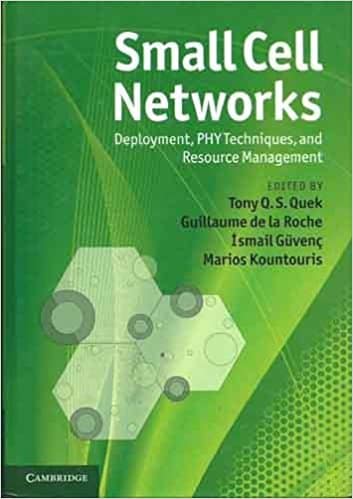
Dr. Ismail Guvenc is a Full Professor in the Department of Electrical and Computer Engineering at North Carolina State University. He holds an IEEE Fellowship and is a Senior Member of the U.S. National Academy of Inventors. His research focuses on 5G/6G wireless systems, UAV communications, heterogeneous networks, and spectrum management. He leads the NSF AERPAW project and serves as the NC State Site Director for the NSF BWAC I/UCRC center. Dr. Guvenc has authored/co-edited four books and holds over 30 U.S. patents. Education: Ph.D. in Electrical Engineering, University of South Florida (2006) Master's in Electrical and Computer Engineering, University of New Mexico (2003) Bachelor's in Electrical Engineering, Bilkent University, Turkey (2001) Research Interests: Dr. Guvenc’s work spans UAV communication systems, 5G/6G networks, spectrum sensing, and machine learning for network optimization. He emphasizes experimental validation through platforms like AERPAW, focusing on drone-based networks, radio dynamic zones, and testbed-driven innovation. His contributions address challenges in UAV localization, interference management, and energy-efficient networks. Grants & Leadership: PI and Director of NSF AERPAW (2019–Present) NC State Site Director for NSF BWAC I/UCRC (2019–Present) Recipient of NSF CAREER Award (2015) and NC State Faculty Scholar Award (2021) Publications & Awards: He has authored over 130 peer-reviewed papers and contributed to standardization efforts. His awards include the R. Ray Bennett Faculty Fellow Award (2019) and the USF Outstanding Dissertation Award (2006). Labs & Teams: Dr. Guvenc directs research in the ECE’s wireless communications group, leveraging AERPAW’s experimental capabilities to advance UAV networks and 6G technologies. His team collaborates with industry and government on spectrum policy and autonomous systems.
Dhruv Jain is an Assistant Professor in the Computer Science and Engineering Department at the University of Michigan , with affiliations in the School of Information and Michigan Medicine . He leads the Soundability Lab , focusing on transforming hearing into a programmable interface through human-centered AI systems. PhD from University of Washington MS from MIT Media Lab Formerly worked at Microsoft Research, Google, and Apple Research Interests intersect Human-Computer Interaction (HCI) , Audio AI , Accessibility , and Hearing Health . His work develops systems like SoundWatch (smartwatch-based sound awareness) and HomeSound (IoT sound visualization) to expand auditory access for DHH individuals and other domains. Recent Publications (2023–2025) span top venues like CHI , ASSETS , and ICMI , with trends including generative AI for real-time captioning , adaptive soundscapes , and clinical communication tools . SIGCHI Outstanding Dissertation Award (2023) William Chan Memorial Dissertation Award (2023) Best Poster Award at ASSETS 2024 Google Academic Research Award (2024) NIH Grant ($450k, 2023) William Demant Foundation Grant ($740k, 2025) Teaching includes Accessible Computing (undergraduate) and Advanced Accessibility (graduate), alongside global DIY workshops in five countries. The Soundability Lab collaborates with neuroscientists, clinicians, and Deaf scholars to create deployable systems like clinical communication tools now at Michigan Medicine and features integrated into Apple devices.
Hossam Hassanein is a Professor and Director of the School of Computing at Queen's University. He received his B.Sc. in Electrical Engineering from Kuwait University in 1984, M.Sc. in Computer Engineering from the University of Toronto in 1986, and Ph.D. in Computing Science from the University of Alberta in 1990. He joined Queen's University School of Computing in 1999 and has established himself as a leading researcher in telecommunications and networking. Dr. Hassanein's research interests span wireless sensor networks, mobile ad hoc networks, edge computing, Internet of Things (IoT), radio resource management, and data-centric networks. His seminal contributions include pioneering work on WSN planning, load-balanced routing protocols, and energy-efficient network designs. He has championed research in IoT, developing frameworks for smart spaces that use contextual information to enhance IoT applications in healthcare, transportation, and infrastructure. His recent publications (2023-2025) demonstrate a strong focus on cutting-edge areas including extreme edge computing, vehicular networks, and AI/ML integration in networking. Research trends show increasing emphasis on practical applications in telesurgery, digital twins, and industrial IoT, addressing challenges in resource allocation, task offloading, and real-time processing in constrained environments. Dr. Hassanein has received numerous recognitions for his work: Fellow of the IEEE Queen's University School of Graduate Studies Award for Excellence in Graduate Student Supervision (2015) Multiple best paper awards from top international conferences As founder and director of the Telecommunications Research Lab (TRL), Dr. Hassanein has supervised over 75 students who have made substantial contributions in academia and industry. The TRL is one of Queen's largest research groups with extensive international collaborations. Dr. Hassanein has successfully attracted significant research funding from government and industry sources in the competitive telecommunications field. The Telecommunications Research Lab has developed innovative platforms including SPROUTS, a rugged sensor platform used in mining, steel manufacturing, and smart-grid monitoring. TRL's work has had significant impact in WSN planning, data dissemination, and resource reuse in wireless networks, with contributions featured in IEEE Wireless Communications Magazine.
Marta Kwiatkowska is a Professor of Computing Systems at the University of Oxford and a Fellow of Trinity College. Her research focuses on probabilistic verification , quantitative model checking , and formal methods for complex systems including autonomous robots, medical devices, and biological systems. She leads the development of the PRISM and PRISM-games probabilistic model checkers. Key research areas: Probabilistic systems, formal verification, autonomous robotics, medical device analysis, systems biology Grants: ERC Advanced Grant VERIWARE, EPSRC Programme Grant Mobile Autonomy Awards: 2024 ETAPS Test-of-Time Tool Award for PRISM Students: Current and former advisees in topics spanning formal methods, robotics, and quantitative verification The PRISM-games extension enables verification of stochastic multi-player games with applications in network protocols, autonomous systems, and game theory. Her work bridges theory, algorithms, and practical implementation, with real-world applications in ubiquitous computing and nanotechnology.
Amy R. Wu serves as Associate Professor in Mechanical and Materials Engineering at Queen's University and holds the Mitchell Professorship in Bio-inspired Robotics. She leads the Biomechanics x Robotics Laboratory (BxRL) and contributes to the Ingenuity Labs Research Institute. Her academic credentials include: Ph.D. in Mechanical Engineering, University of Michigan Postdoctoral Research, Biorobotics Laboratory, EPFL, Switzerland Dr. Wu's research bridges biomechanics and robotics to enhance legged mobility through innovations in human-robot interaction , exoskeleton design , and gait assistance . Her work focuses on developing robotic systems that adapt to human movement patterns, particularly for spinal cord injury rehabilitation and stability augmentation during walking. Analysis of her 2019-2023 publications reveals consistent advancement in exoskeleton control algorithms, gait stability metrics, and human adaptation studies. Key trends include modular exoskeleton systems (Symbitron), neuromuscular controllers for ankle assistance, and haptic feedback integration for motor learning enhancement. No scientific awards are documented in the provided materials. Dr. Wu mentors graduate students through BxRL, where her team conducts human subject testing and robotic development. Research is supported by institutional resources at Ingenuity Labs, though specific grant details remain unspecified. The Biomechanics x Robotics Laboratory operates within Queen's Ingenuity Labs Research Institute, facilitating interdisciplinary collaboration on projects like outdoor stability assessment, winter walking adaptations, and teleoperation interfaces for drone control.