Aamir Anwar is a researcher affiliated with the University of West London , focusing on interdisciplinary applications of artificial intelligence, machine learning, and human-computer interaction. His work bridges technology with education, healthcare, and cybersecurity, as evidenced by his publications on topics like emotion-aware online learning , malware detection in IoT devices , and smart systems for people with disabilities . Research Interests : Machine Learning, Sentiment Analysis, Online Learning, EEG Signal Processing, Smart Systems, Healthcare Informatics. Key Collaborations : Co-authored studies with researchers in cybersecurity, nursing education, and neuromarketing. Publication Trends : Recent articles span 2021–2024, emphasizing AI in education (emotion detection), deep learning for cybersecurity , and health-focused technologies (frailty assessment, seizure prediction).
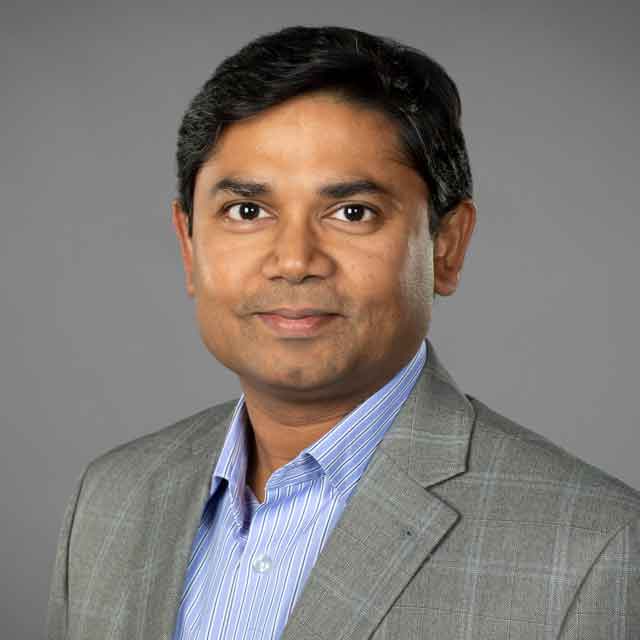
Shamik Sengupta is the Ralph E. and Rose A. Hoeper Professor at the University of Nevada, Reno (UNR) , where he serves as Professor in the Department of Computer Science & Engineering and Executive Director of the Cybersecurity Center . He holds a PhD in Computer Science from the University of Central Florida (2007) and a BE in Computer Science from Jadavpur University (2002). IEEE Senior Member Director, UNR Cybersecurity Center NSF CAREER Award Recipient
Katarzyna Wac is a researcher at the University of Geneva affiliated with the Faculty of Economics and Management and the Information Science Institute . Her work bridges Digital Health , Mobile Computing , and Human-Computer Interaction , focusing on leveraging wearable devices, smartphones, and AI for health and quality of life (QoL) quantification. Research Themes: Digital biomarkers for Alzheimer's and migraines, QoL assessment via ubiquitous computing, peer- and self-reported behavioral data, and QoE of mobile applications. Labs: Leads the mQoL Lab , a platform for interactive, mobile, and wearable-based studies. Her recent publications explore Transformer models for health data analysis, social robots in homecare, and ethical frameworks for digital mental health. She has contributed to standards for proxy-reported QoL measures and personalized drug delivery systems in digital health. The multimodal integration of emotional signals and context-aware QoS/QoE provisioning for m-health services are recurring technical themes. Key collaborations include the MobiHealth project and COPD24 , translating future internet technologies into telemonitoring solutions. Her work spans from foundational studies on mobile cognition to applied ambulatory assessment of affect and health risks.
Evy Rombaut serves as a postdoctoral researcher at the MOBI Electromobility Research Centre, Vrije Universiteit Brussel, specializing in Business Technology and Operations Management. Her research focuses on autonomous vehicle systems, sustainable transportation, and urban mobility optimization within the Flemish Institute for Technological Research ecosystem. Her primary research interests include autonomous vehicles (100% fingerprint match), logistics systems (24-28% focus), electric vehicle integration (22-31% emphasis), and vehicle-to-grid technology (28% focus). Her work bridges engineering and social sciences, particularly examining user acceptance (21% focus), traffic simulation modeling (22% focus), and job creation metrics (21% focus) in electromobility transitions. Rombaut actively supervises graduate research, with notable contributions to master's theses on autonomous vehicle environmental impacts and EU regulatory frameworks. Her current projects include AccelerationMOBI (2025-2029), DESTINY carbon reduction initiatives (2024-2029), and AUGMENTED CCAM infrastructure development (2022-2025), reflecting her leadership in European sustainable transport research consortia. She maintains active roles in PhD committees and conference organization, including the ACCAM Project Review Meeting (2024) and doctoral defenses on shared autonomous vehicle implementation. Her research output demonstrates consistent productivity with 43 publications since 2015, including 17 journal articles and 10 conference papers, achieving an h-index of 8 with 341 Scopus citations. Rombaut's work is centered at the MOBI Electromobility Research Centre, where she contributes to the Autonomous Mobility & Logistics research focus area. Her current projects involve multi-institutional collaborations across 8 active research initiatives examining vehicle-to-grid integration, urban mobility transitions, and carbon-neutral transport solutions through both fundamental and applied research frameworks.
Ceren Saran Doğan is an Assistant Professor at the Faculty of Communication , Uskudar University , specializing in Radio, Television and Cinema . Her academic background includes a PhD (2022), MA (2015), and BA (2009) in Media and Communication Studies from Galatasaray University and Journalism from Istanbul University. Education: BSc in Journalism (Istanbul University, 2009) MSc in Media and Communication Studies (Galatasaray University, 2015) PhD in Media and Communication Studies (Galatasaray University, 2022) Her research focuses on the political economy of media , critical digital media studies , algorithms in journalism , and digital platform dynamics . She has published extensively on topics like algorithmic bias, media ownership, and digital inequalities, with notable works including the 2024 book chapter Reasons for News Avoidance on Mobile News Consumption and the 2022 book chapter Algorithms and Audience Monitoring in Newsrooms . Her recent 2023-2025 publications analyze digital platform trust , AI integration in newsrooms , and platform capitalism , reflecting her expertise in algorithmic systems and media sociology. She also serves as Vice Dean and chairs multiple committees at Uskudar University, including Social Media Commission and Curriculum Development Commission . She teaches courses like Digital Content Production and Graduation Project II .
Prof. Thomas H. Kolbe serves as Chair of Geoinformatics at the Technical University of Munich (TUM), where he leads research in spatial, temporal, and semantic modeling of urban environments. His work focuses on developing foundational frameworks for 3D/4D city models, digital twins, and smart city applications through international standardization efforts including CityGML and IndoorGML. His research spans virtual city modeling, urban system simulation, and GIS integration with emerging technologies. Current projects emphasize AI-driven urban scenario generation, semantic streetspace modeling, and IoT integration in digital twin ecosystems. Recent publications demonstrate strong interdisciplinary connections between computer vision, urban planning, and geospatial data science, with particular emphasis on practical implementations of 3D city models for sustainability challenges. Prof. Kolbe actively contributes to professional organizations including the Round Table GIS eV (as Chairman since 2013) and the Munich Data Science Institute (as core member since 2021). His leadership extends to the Leonhard Obermeyer Center for digital methods in the built environment and the Hans Eisenmann Forum for agricultural sciences. His work bridges theoretical geoinformatics with practical urban applications through numerous collaborative projects with municipal governments and industry partners.
Katy E. Pearce is an Associate Professor in the Department of Communication at the University of Washington's College of Arts & Sciences. She specializes in the social and political implications of technology in non-democratic contexts, particularly focusing on former Soviet Union states. Her research explores digital divides, social media affordances for resistance, and online impression management in authoritarian regimes. Ph.D. in Communication, University of California, Santa Barbara (2011) M.A. in International Studies, University of London School for Oriental and African Studies (2006) B.A. in Armenian, Arabic, Persian, Turkish & Islamic Studies; American Culture, University of Michigan (2001) Her work examines how digital technologies shape: Information control in semi-authoritarian states Gender and cultural norms in online spaces Misinformation dynamics across platforms ICT's role in opposition movements Face negotiation in digital honor cultures Recent publications demonstrate increasing focus on: Digital health communities in Azerbaijan Misinformation correction strategies Cross-platform affordance analysis State-sponsored online harassment ICT4D in post-Soviet contexts Contact: Office CMU 340-E, kepearce@uw.edu.
Jun Shen is a Professor at the School of Computing and Information Technology, University of Wollongong. He specializes in computational intelligence, cloud computing, and big data applications, with a focus on AI-driven solutions for real-world challenges in transport systems, healthcare, education, and environmental management. He has secured over 40 research grants totaling AU$4.5 million and supervised 26 completed PhD projects. His work spans interdisciplinary areas including bioinformatics, smart manufacturing, and digital health. Research interests include bio-inspired algorithmic optimization, AI in arts/media, and edge computing for IoT systems. He has pioneered research centers in applied computing since 2014 and holds editorial roles in top journals like IEEE Transactions. As an IEEE Distinguished Lecturer, he actively promotes AI ethics and interdisciplinary collaboration. Recent publications emphasize adversarial machine learning defenses, UAV systems, and multimodal data fusion. His supervision includes projects in intelligent transport systems, cloud computing, and e-learning. Grants include projects on resilient energy systems and UAV geolocation verification. Leadership roles include leading over 20 researchers and chairing conferences. He advocates for digital transformation in public services and has conducted fieldwork at MIT, UCI, and Georgia Tech.
Iwijn De Vlaminck is an Associate Professor in the Meinig School of Biomedical Engineering at Cornell University. His research focuses on developing precision medicine technologies, including liquid biopsies for diagnosing infectious and immune-related diseases, and spatial profiling of microbiomes and host-microbiome interactions. He leads the De Vlaminck Lab, which integrates engineering, biophysics, and computational biology to advance diagnostics and therapeutics. Key affiliations include the College of Engineering and interdisciplinary graduate fields such as Biomedical and Biological Sciences and Computational Biology. Education: B.S., Electronic Engineering, Katholieke Universiteit Leuven (2000) M.S., Electronic Engineering, K.U. Leuven (2003) Ph.D., Science and Engineering, K.U. Leuven (2008) Research Interests: His lab develops high-throughput technologies for studying diseases like organ transplant rejection, urinary tract infections, and viral myocarditis. Innovations include spatial transcriptomics and methods to map microbial communities in tissues. Recent work addresses biomarkers for MIS-C in children and applications of cell-free DNA in spaceflight studies. Awards: NIH New Innovator Award (2017) Elected Fellow of the American Institute for Medical and Biological Engineering (2025) Rainin Foundation Synergy Award (2019) Teaching Excellence Awards (2017, 2022) Grants & Collaborations: Recipient of a $3M NSF grant for bio-inspired architecture and a $9.5M NIH grant for chronic fatigue syndrome research. Collaborates with institutions like Weill Cornell Medicine and NASA on spaceflight biology and clinical diagnostics. Labs & Teams: Directs the De Vlaminck Lab, which includes interdisciplinary researchers working on spatial omics, liquid biopsies, and microbiome technologies. Engaged in industry partnerships, including co-founding Kanvas Biosciences.
Andrew Robb is an Assistant Professor in the School of Computing at Clemson University. His research focuses on the societal impact of consumer virtual reality (VR), including user behavior adaptation, avatar embodiment effects, presence in VR, and perception studies. Prior to Clemson, he earned his PhD in the Virtual Experience Research Group at the University of Florida. He is funded by the NSF CHS Small grant #1717937 and collaborates with researchers like Sabarish Babu and Chris Pagano. His work explores topics such as cybersickness mitigation, pedestrian-AV interactions, and VR's therapeutic applications for social anxiety disorders. Education: PhD in Virtual Experience Research, University of Florida Research Interests: Longitudinal effects of VR exposure on user behavior Avatar embodiment and its real-world behavioral implications Measuring and enhancing presence in VR environments Perception of space and motion in virtual vs. real-world contexts Human-VR interaction design for accessibility and safety Social and ethical considerations of emerging VR technologies Key Research Trends: His recent work emphasizes VR's impact on spatial cognition, cybersickness reduction through interaction design, and leveraging VR for mental health interventions. Over 2023-2024, he has published extensively on avatarization effects, near-field interactions, and pedestrian-AV dynamics in immersive environments. Grants & Lab: Hosts the McAdams Hall 120 lab and has NSF-funded research on longitudinal VR exposure effects. Collaborates with automotive engineering teams on VR-based autonomous vehicle interaction studies.
Dr. Chao Fan is an Assistant Professor in Civil Engineering and Environmental Engineering and Earth Sciences at Clemson University, affiliated with the Glenn Department of Civil Engineering. His research focuses on climate change adaptation, socio-environmental systems dynamics, and urban resilience, leveraging AI and data science. He holds a Ph.D. from Texas A&M University (2020), an M.S. from UC Davis (2017), and a B.S. from China University of Mining and Technology (2016). Dr. Fan's work integrates interdisciplinary approaches to address challenges in disaster management, smart cities, and environmental justice. Key interests include social sensing for infrastructure disruptions, equity in urban mobility networks, and leveraging digital twins for resilience planning. His recent publications explore topics like wildfire impacts, PM2.5 exposure inequity, and carbon market mechanisms for infrastructure adaptation. Professional memberships include ASCE, ACM SIGKDD, AGU, and AAAS. His lab (fanchaolab.com) develops innovative solutions for climate adaptation and equitable urban systems, emphasizing fairness in AI-driven models and network analysis.
Gunho Sohn is an Associate Professor and Department Chair in the Earth and Space Science and Engineering (ESSE) Department at York University's Lassonde School of Engineering. His research focuses on advanced geomatics engineering applications, including 3D urban modeling, photogrammetric computer vision, and geospatial data integration. He specializes in developing innovative solutions for navigation systems, energy optimization, and autonomous robotics through interdisciplinary approaches. Dr. Sohn's work emphasizes practical implementations of remote sensing technologies, with notable contributions to LiDAR data processing, SLAM systems, and BIM-GIS integration. His research has addressed real-world challenges such as improving air quality models using industrial plume observations and creating inclusive pedestrian navigation tools using open geospatial datasets. Recent trends in his publications highlight advancements in deep learning for geospatial tasks, including semantic segmentation of aerial LiDAR data, noise reduction in sensor networks, and UAV positioning systems. His work also explores digital twin applications for simulating urban environments and optimizing building energy consumption through BIM data analysis. While no specific awards or grants are listed, his extensive publication record reflects significant contributions to the fields of geomatics and computer vision. His research group collaborates on large-scale datasets like YUTO MMS and Yuto Semantic, advancing mobile mapping and semantic understanding of urban infrastructure.
Dr. Xialing Lin is an Assistant Professor of Strategic Communication at the Nicholson School of Communication and Media, University of Central Florida. Her research focuses on risk and crisis communication, communication technology, and the effective use of media for community resilience. She has authored/co-authored over 30 peer-reviewed articles and book chapters, earning multiple Top Paper awards from prominent communication associations. Dr. Lin teaches courses such as Crisis Communication (PUR 4400), Honors Public Relations (PUR 4000H), and Theories of Public Relations (PUR 6005). She is a faculty fellow at Western Michigan University’s Communication & Social Robotics Laboratory and serves on editorial boards for Communication Studies and the Journal of International Crisis and Risk Communication Research . She holds leadership roles in professional organizations, including the Communication and Technology Interest Group at the Central States Communication Association. Her research explores intersections of AI in education, crisis communication strategies, and the impact of social media on public discourse. Recent work examines AI’s role in classroom discussions and the ethical implications of AI grading systems. She has consistently published on topics like risk behavior intentions, source credibility, and the mediating effects of communication technologies. Key awards include the Five-Year Service Award (2021), Dr. Richard J. & Sally Matthews Award for Scholarly Activity (2020), and the Faculty Endowed Research Award (2017). Her interdisciplinary approach bridges strategic communication theory with practical applications in technology and education. Dr. Lin’s academic service includes editorial contributions and conference leadership, reflecting her commitment to advancing communication research and pedagogy. She actively contributes to both theoretical and applied studies in crisis communication, social media dynamics, and human-AI interaction.
Denghui Zhang is an Assistant Professor in the School of Business at Stevens Institute of Technology. His research focuses on data science, large language models (LLMs), and business analytics, with particular emphasis on applications in financial systems, knowledge graphs, and spatio-temporal prediction. He is a member of the Stevens Institute for Artificial Intelligence and has held academic roles including reviewer positions for prestigious journals like Nature Communications and conferences such as AAAI and SIGKDD. Dr. Zhang holds a PhD in Information Systems from Rutgers University (2023) and an MS in Computer Science from the University of Chinese Academy of Sciences (2018). His educational background bridges computer science and business analytics, enabling his cross-disciplinary research. His research explores cutting-edge topics like federated learning optimization for LLMs, theory-of-mind reasoning mechanisms, and ethical AI governance. Notable contributions include turbulence forecasting models, traffic prediction frameworks, and venture capital investment strategies leveraging reinforcement learning. Dr. Zhang has received prestigious recognitions including the ICIS 2023 Best Student Paper Award and AAAI-23 Student Scholar distinction. His work frequently addresses practical challenges in AI ethics, financial decision-making systems, and scalable machine learning architectures. He actively contributes to academic communities through program committee roles for top conferences and has pioneered novel methodologies in multi-agent financial systems and graph neural network design.
Rhiannon Kallis is an Assistant Professor at the School of Communication, University of Akron, where she has been affiliated since Fall 2019. Her research focuses on the qualitative analysis of social media's influence on interpersonal relationships, particularly in the context of dating apps, romantic dynamics, and workplace cyberbullying. Ph.D., Indiana University of Pennsylvania (2017) M.A., University of Delaware (2011) B.A., California University of Pennsylvania (2008) Her research explores dating app motivation , romantic relationship escalation via digital platforms , social media-induced jealousy , and organizational impacts of cyberbullying . Recent publications include studies on the Ovia Pregnancy App's role in social support and analyses of Disney princess narratives' cultural evolution. Dr. Kallis's peer-reviewed articles span topics such as technology-mediated relationships , digital emotional regulation , and online harassment frameworks . Her work has been featured in journals like the Atlantic Journal of Communication and the Journal of Communication Technology . She teaches undergraduate courses on Principles of Social Media , Advanced Strategic Social Media , and PR Writing , alongside graduate-level Strategic Social Media and Applied Communication Theory classes. Her responsibilities center on public relations and social media pedagogy.