Sherice Gearhart is an Associate Professor in the Department of Public Relations & Strategic Communication Management at Texas Tech University's College of Media & Communication. She holds a Ph.D. from Texas Tech University (2013) and an M.A. from the University of Texas San Antonio (2009). Her research focuses on media effects, public opinion formation, and digital technology impacts. Key interests include spiral of silence theory in online contexts, health communication (e.g., Native American health news framing), environmental issues (e.g., fracking, wind energy), and political communication. She has conducted grant-funded studies with the Native Health News Alliance and led survey experiments on topics like data quality in web-based surveys and journalist practices. Research Methodologies: Survey experiments, content analysis, and mixed-methods approaches. Leadership: Research Chair for AEJMC’s Political Communication Interest Group and committee member for the Inez Kaiser Graduate Students of Color Award. Teaching: Courses include mass communication research methods, public opinion, and quantitative research. Her work bridges theory-driven analysis with real-world applications, emphasizing digital media’s role in shaping public discourse and behavior.
Shan Xu is an Associate Professor at Texas Tech University's College of Media and Communication. She holds a Ph.D. from The Ohio State University's School of Communication (2019), an M.A. from Washington State University, and a B.A. from Beijing Foreign Studies University. Her research focuses on human-technology interactions, particularly in artificial intelligence (AI), social media, and media multitasking, aiming to enhance health, well-being, and productivity through dynamic longitudinal studies. She directs the Human-Tech Dynamics Lab and utilizes methodologies like ecological momentary assessment and machine learning. Her research examines reciprocal causality in media use and effects, emphasizing time series analysis and machine learning. Key areas include AI adoption dynamics, social media engagement, and vaccine hesitancy. Her work is supported by the National Science Foundation and Texas Tech University grants. She teaches courses in PR Strategies, Research Methods, Health Communication, and Human-AI Interaction. Educations: Ph.D., Communication, The Ohio State University (2019) M.A., Communication, Washington State University B.A., Beijing Foreign Studies University Her lab explores socio-technical systems and organizational readiness for cyberinfrastructure. Awards include the 2023 Texas Tech Outstanding Research Award and a 2023-2024 Fellowship for Community-Engaged Scholarship. Grants & Support: NSF, Waterhouse Foundation, Texas Tech University Lab Affiliation: Human-Tech Dynamics Lab
Dr. Haesung Annie Jung is an Assistant Professor in the Department of Psychological Sciences at Texas Tech University. Her research focuses on social-psychological factors influencing cooperation and prosocial behavior, with emphasis on health outcomes, collective action, digital technology impacts, and social hierarchy effects. She holds a Ph.D. in Social-Personality Psychology from the University of Texas at Austin, and has postdoctoral training at the University of Illinois and the Annenberg Public Policy Center. Her lab explores how social contexts shape prosocial and health behaviors, including AI-human interaction effects. Education: Ph.D., UT Austin; M.A. and B.A. from Yonsei University Postdoctoral: UIUC (Psychology), UPenn (Annenberg Public Policy Center) Research interests include prosocial behavior spread, cooperation's role in community resilience, and behavioral impacts of AI. She teaches graduate courses on Social Psychology and Emotion, and undergraduate courses in Social Psychology. Current projects examine civic participation influenced by social media algorithms, vaccination policy effectiveness, and digital methods to combat drug epidemics. The Social Context & Behavior Lab emphasizes applied social psychology to address real-world challenges.
Farhan Ahmad is a Research Fellow affiliated with the College of Science and Engineering. His research focuses on cybersecurity challenges in vehicular networks, IoT systems, and blockchain integration in transportation infrastructure. He has developed innovative trust management frameworks and protocols to enhance security in connected vehicles and smart city applications. Key research interests include trust evaluation models for vehicular ad-hoc networks (VANET), blockchain applications in vehicular communication, and privacy-preserving techniques for IoT devices. His work addresses critical issues such as man-in-the-middle attacks, data integrity, and secure authentication in dynamic network environments. His publications span journals like IEEE Transactions on Vehicular Technology and IEEE Internet of Things Journal, demonstrating expertise in both theoretical and applied aspects of network security. Collaborations with institutions globally have produced frameworks such as NOTRINO, MARINE, and CRT-BIoV, which tackle real-world challenges in connected vehicle ecosystems and critical infrastructure protection.
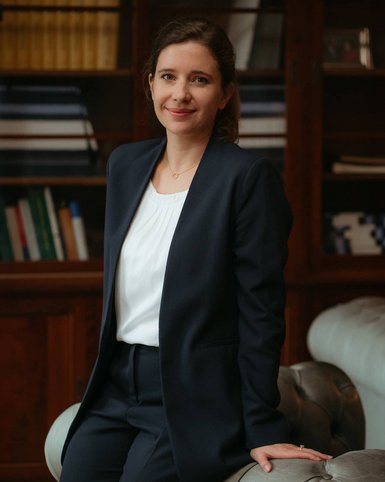
Professor Katja Chandna-Hoppe holds the Chair of Civil Law, German and European Labour Law, Social Security Law, and Comparative Law at EBS Universität für Wirtschaft und Recht in Oestrich-Winkel. Her research focuses on civil law obligations, digitalization in legal frameworks, and employment/social security law challenges. She earned her LL.B. from University College London (2010) and completed her legal clerkship in Frankfurt and Washington D.C. After a PhD (summa cum laude, 2018) and habilitation (2024) at the University of Bonn, she became a leading scholar in contractual obligations and digital labour law. Her academic work includes monographs like Die Gegenleistung im Vertrag (2024) and contributions to Sozialrecht (2022). Key research areas span platform work regulations, remote work legal challenges, and EU labour directives. She actively participates in legal education reforms, advocating for practical training methods like simulated court proceedings. Awards include the German Academic Scholarship Foundation PhD grant and habilitation at the University of Bonn. Her recent articles address platform work legal frameworks (ZEuP 2025), digital contract performance risks, and mobile work compliance. She frequently lectures on topics like contractual obligations and retirement age policies. Prof. Chandna-Hoppe serves as co-editor of Mobile Work: Handbuch – Rechtsfragen zu Homeoffice und Mobiler Arbeit (2024) and contributes to major legal commentaries like Knickrehm/Roßbach/Waltermann Kommentar . Her work bridges traditional civil law principles with modern digital and demographic challenges in employment.
Demetrio Panarello is an Associate Professor of Political Economy at the Department of Human Sciences, Link Campus University in Rome. His academic career includes roles at Prometeia as Senior Economist, and research positions at the University of Bologna, University of Udine, and Université du Luxembourg. He holds a Ph.D. Europaeus in Economics, Statistics and Sustainability from Parthenope University of Naples, with earlier degrees from the University of Messina. His research focuses on climate transition policies, economic resilience, pandemic impacts (particularly on university students), and energy sustainability. Notable areas include the socio-economic consequences of the pandemic, energy performance of buildings, and circular economy innovation. He has published extensively in journals like Physica A, Environmental Science & Policy, and Energy Policy. Panarello serves on editorial boards for Springer Nature and Wiley's International Social Science Journal, and has edited special collections on energy sustainability topics. He actively participates in research groups addressing economic inequality and environmental policy, balancing academic contributions with practical policy analysis. His work demonstrates a commitment to bridging theoretical research with real-world socio-economic challenges, particularly in energy transition and pandemic recovery. Outside academia, he engages in travel, technology, and cinema.
Ali Arab is an Associate Professor and Director of Graduate Studies in the Department of Mathematics and Statistics at Georgetown University's College. His academic focus integrates statistical methodologies with ecological and public health challenges. He holds a Ph.D. from the University of Missouri-Columbia and an M.S. from Southern Illinois University. Ph.D. in [Discipline], University of Missouri-Columbia M.S. in [Discipline], Southern Illinois University Research interests span statistical ecology, spatial statistics, and epidemiological modeling. He develops innovative statistical tools to address environmental and public health issues, such as Lyme disease surveillance and migration misinformation analysis. His work also explores climate impacts on avian migration patterns and vector-borne disease dynamics. Recent publications emphasize spatial-temporal modeling, Bayesian approaches, and digital health data applications. His articles highlight trends in using statistical methods to tackle real-world problems like pandemic communication and environmental health risks. While specific grants and awards are listed in his profile, detailed information is not provided here. His advising and grant activities are central to his role in fostering graduate research.
Stefanie Lahmer is a Researcher at the University of Augsburg, affiliated with the FIM Research Institute for Information Management and the Business Informatics branch of Fraunhofer FIT. Her work focuses on the healthy and efficient use of digital technologies in work and private life, addressing technostress, hybrid work creativity, collective intelligence, and technology design. She holds a Master's degree in Business Informatics (2021) and a Bachelor's degree (2018) from the University of Augsburg. Her research includes projects funded by ForDigitHealth and practical experience at McKinsey's management consultancy. She coordinates the Digital Leadership Academy supplementary program for master's students. Key contributions include studies on group work facilitation, behavior change systems for interruption management, and mobile health applications for stress coping. Education: BSc (2018), MSc (2021) in Business Informatics from University of Augsburg Her publications span behavioral science, healthcare technology, and organizational design, reflecting her interdisciplinary approach to digital challenges in work and health contexts.
Emanuela Marasco is an Assistant Professor at George Mason University within the College of Engineering and Computing , affiliated with the Information Sciences and Technology (IST) Department , Center for Secure Information Systems (CSIS) , and Institute for Digital Innovation (IDIA) . She leads the CySBeR Lab and holds a tenure-track position. PhD: Computer and Automation Engineering, University of Naples Federico II (Italy), 2010 BSc/MSc: Computer Engineering, University of Naples Federico II (Italy), 2006 Her research focuses on Artificial Intelligence (AI) with applications in Computer Vision , Hyperspectral Imaging , Biometrics , and Cybersecurity . Key themes include: Designing AI algorithms for identity verification using pattern recognition and deep learning . Developing multi-factor authentication systems, including a patented biometric-based MFA technology . Advancing hyperspectral imaging for biochemical analysis in security contexts. Her recent publications explore fingerprint anti-spoofing , demographic bias mitigation , and AI integration in virtual reality and military decision-making . She has received the Mason Innovation Award (2023, 2025) and IDIA P3 Faculty Fellowship (2023) . NSF-funded projects: "Sweaty Digits" ($200,000, 2023-2025) and "Hyperspectral Sweat Metabolite Detection" (2020). She has previously held postdoctoral positions at the University of North Carolina at Charlotte and West Virginia University , contributing to pattern recognition and biometric interoperability research.
Professor Marian-Gabriel Hâncean holds a faculty position at the University of Bucharest's Faculty of Sociology and Social Work. His research focuses on network science, particularly social networks analysis, organizational sociology, and the interplay between societal structures and health outcomes. He leads the GraphNets research team, which explores applications ranging from migration corridors to climate impact on disease spread (e.g., the COSMOS project). Research Interests: Social Network Analysis, Sociology of Organizations, Organizational Behavior, Public Health, Complex Systems Key Projects: COSMOS Project (climate & mobility's role in pandemic spread), migration corridor analysis, and global health policy studies His work bridges mathematical modeling with sociological theory, addressing contemporary challenges like pandemic dynamics and organizational efficiency. Recent collaborations include transnational social field sampling and multinational pandemic response strategies.
Marja Alastalo is a Deputy Head of Department and University Lecturer at the Department of Social Sciences within the Faculty of Social Sciences and Business Studies at the University of Eastern Finland. Her work focuses on migration, welfare state policies, digitalization in public services, and administrative practices. Her research explores how Nordic welfare states produce knowledge about migrant populations through registration systems and statistics, emphasizing the interplay between bureaucratic practices, family relationships, and social rights. Key topics include population registration, migration governance, and the sociotechnical dimensions of digital social welfare systems. Alastalo’s recent publications examine the sociopolitical implications of digitalization in public services, the strategic use of indicators in policy-making, and the role of documentation and DNA testing in migrant family recognition. Her work highlights systemic inequalities in bureaucratic processes affecting marginalized groups. Her research is part of projects like the Kone Foundation-funded Mobile People – Challenging the Population Statistics and Projections (2012–2016). She contributes to research groups such as the Data Literacy for Responsible Decision-Making and House of Effectiveness .
Elizabeth C. Connors is an Assistant Professor of Political Science at the University of South Carolina, affiliated with the McCausland College of Arts and Sciences. She holds a PhD from Stony Brook University (2019). Her research focuses on how social environments shape political values, opinions, and behaviors, employing experimental and observational methods. Key areas include political behavior, communication, and psychology in American politics, with emphasis on partisanship, polarization, and interpersonal political interactions. Education: PhD in Political Science, Stony Brook University, 2019 Research Interests: Elizabeth examines the interplay between social dynamics and political processes. Her work explores how social motivations influence political expression (e.g., affective polarization, partisan attachment), how interpersonal interactions shape political attitudes (e.g., gender effects, tone in discussions), and the societal impacts of political anger. She also investigates how indirect policies (e.g., abortion restrictions) affect political engagement and how social trust influences media reliance. Grant & Awards: Funded by grants from TESS, Institute for Humane Studies, and University of South Carolina. Recognized with multiple American Political Science Association awards, including the 2021 Political Psychology Best Paper Award and the 2018 John Sullivan Award. Teaching & Mentorship: Teaches graduate courses on American Politics, Experiments in Political Science, and undergraduate courses on Political Psychology. Previously taught at Stony Brook University, covering research design and special topics like The Politics of Trump. Collaborative Work: Active in interdisciplinary projects, including AI/misinformation studies (funded by McCausland Innovation Fund) and feminist identity research (TESS-funded). Co-authored work on election outcomes and turnout predictions.
Yao Sun is an Assistant Professor in the Department of Humanities and Social Sciences at New Jersey Institute of Technology (NJIT). His research focuses on open innovation, crowdsourcing, and social media analysis, with notable contributions to understanding psychosocial rehabilitation for COVID-19 survivors and sustainability frameworks in citizen science. Sun has collaborated internationally on projects addressing dementia caregiving technology, vaccine attitude analysis, and misinformation networks on platforms like Twitter. His work bridges organizational behavior, information systems, and public health, exemplified by studies on collective reflection in crowdsourcing and semantic network approaches to innovation. Sun’s research has been featured in media outlets discussing energy justice initiatives, dementia surveillance technology, and pandemic communication networks. Key areas of exploration include knowledge integration mechanisms, socio-technical affordances in innovation ecosystems, and the application of AI methods to public health discourse. His interdisciplinary approach spans computer-mediated communication, health informatics, and environmental sustainability.
Stephenie C. Lemon, PhD, MS, is Professor and Chief of the Division of Preventive and Behavioral Medicine in the Department of Population and Quantitative Health Sciences at UMass Chan Medical School. She holds the Barbara Helen Smith Endowed Chair in Preventive & Behavioral Medicine and serves as Co-Director of the Prevention Research Center at UMass Chan, Co-Director of the Physical Activity Policy Research and Evaluation Network, and Director of the Community Engagement Core of the UMass Center for Clinical and Translational Science. Her academic affiliations span multiple departments across the T.H. Chan School of Medicine and the Morningside Graduate School of Biomedical Sciences. Dr. Lemon earned her BS in Psychology from the University of Massachusetts Amherst, MS in Epidemiology from the University of Massachusetts Amherst School of Public Health, and PhD in Epidemiology from Brown University. Her educational background laid the foundation for her career as a behavioral epidemiologist focused on chronic disease prevention and control. As a behavioral epidemiologist, Dr. Lemon's research program focuses on chronic disease prevention and implementation science across community and clinical settings, with emphasis on contextual factors in behavior change. Her work addresses community and public health capacity building related to the built environment, physical activity, and chronic disease prevention and management. She has developed expertise in intervention research, implementation science, and systems approaches to health promotion. Analysis of Dr. Lemon's recent publications reveals a strong focus on health equity, with research spanning perinatal mental health, pediatric hypertension, cancer screening among vulnerable populations, and physical activity policy. Her work demonstrates interdisciplinary collaboration across public health, clinical medicine, and policy domains, with increasing attention to climate change impacts on health and digital health interventions. Among her notable professional achievements is the Barbara Helen Smith Endowed Chair in Preventive & Behavioral Medicine, recognizing her contributions to the field. Her leadership extends to directing multiple research centers and networks focused on prevention research and policy implementation. Dr. Lemon actively participates in grant-funded research and advising, with numerous collaborative projects addressing health disparities and implementing evidence-based interventions in real-world settings. Her work often involves community-engaged research methods and cross-sector partnerships to translate research into practice. She leads the Division of Preventive and Behavioral Medicine and co-directs the Prevention Research Center at UMass Chan, which serves as a hub for interdisciplinary research, training, and community partnerships focused on chronic disease prevention and health promotion.
Ying Chen is an Associate Professor of Economics at The New School within the Schools of Public Engagement. She holds a Ph.D. in Economics from the University of Massachusetts Amherst, an M.A. in Social Sciences from the University of Chicago, and a B.A. in Economics from Shanghai International Studies University. Her research focuses on contradictions within capitalism, economic development, political economy, and the Chinese economy, with a particular emphasis on the global South and climate change. She has contributed to UNCTAD’s Trade and Development Report 2021. Recent courses include Comparative Economic Systems, Economic Development, and Environment & Development. Her work spans topics like degrowth, ecological imperialism, labor struggles, and renewable energy investment in China. She is on leave from Fall 2024 to Spring 2025. Research Interests: Economic Development, Political Economy, Chinese Economy, Climate Change, Global South, Labor Studies. Her work critically examines systemic contradictions in capitalism and their global impacts, particularly in developing nations. Advising & Grants: Advises doctoral and master’s students through courses like Directed Dissertation Study and Mentored Research. Her teaching spans independent studies and senior projects focused on contemporary economic systems and development challenges. Labs/Teams: Engaged in interdisciplinary research collaborations, including contributions to UNCTAD’s policy reports and academic partnerships exploring sustainable development in China and beyond.