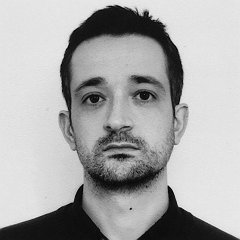
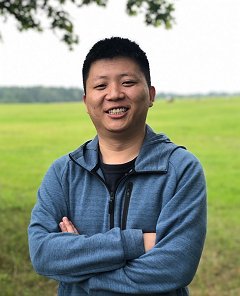
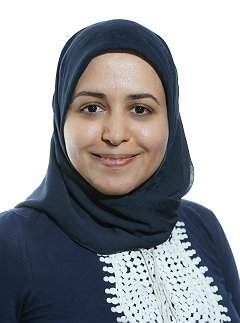
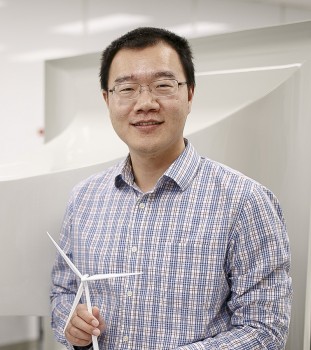
Mathias FINK is a Professor at ESPCI Paris on the Georges Charpak chair. His research focuses on fundamental wave physics in complex media with major applications in medical imaging, telecommunications, and geophysics. He pioneered time-reversal mirrors for wave focusing and co-founded 6 technology companies. Key Institutions: ESPCI Paris, Collège de France Research Themes: Wave physics, time-reversal techniques, matrix imaging, metasurface design His work spans multi-echo wave systems , ultrasonic therapeutic devices , and adaptive electromagnetic communication systems . Recent publications emphasize 3D matrix imaging in biological tissues and space-time interface dynamics . Scientific recognition includes: First academic elected at Collège de France (2008) Over 400 peer-reviewed publications 70+ patents and 6 start-ups Collaborations extend to Institut des Hautes Études Scientifiques , Langevin Institute , and Hong Kong University of Science and Technology . His team's volcanic imaging work with seismic noise has revolutionized subterranean mapping.
Karl T. Ulrich is the CIBC Endowed Professor at the Wharton School of the University of Pennsylvania, with dual appointments in the Department of Operations, Information and Decisions and the Department of Mechanical Engineering. A renowned scholar and practitioner in product design, innovation, and entrepreneurship, he has co-founded key institutions like Venture Lab, the Weiss Tech House, and the Integrated Product Design Program. His work bridges academic rigor with real-world impact, evidenced by 24 patents and ventures such as Terrapass Inc. and the Xootr scooter. Education : MIT (BS, MS, ScD in Mechanical Engineering) His research focuses on product design , innovation , and entrepreneurship , with recent articles exploring animal ethics in food supply chains and evidence-based housing standards . Earlier work investigates machine learning in idea generation and innovation tournaments . Awards include the Anvil Award, Miller-Sherrerd Award, and multiple Excellence in Teaching Awards at Wharton. He has taught courses like Product Design , Product Management , and Innovation , often incorporating studio and project-based learning. His executive education programs emphasize strategic technology leadership and global business challenges.
Roy Sterritt is a Lecturer in Informatics at the School of Computing, Ulster University. His research focuses on autonomic computing, robotics, machine learning, and cybersecurity. He has contributed extensively to decentralized systems and fault management in autonomous environments. Research Interests: Roy’s work spans autonomic computing, robotics, and AI, with applications in cloud systems, space exploration, and drone fleets. He emphasizes self-adaptation, fault tolerance, and security protocols. Scientific Awards: Highly Ranked Scholar in Autonomic Computing (2024) Multiple Best Paper Awards (2016–2023) Recent Trends: His recent publications highlight autonomic solutions in cloud security, robot swarms, and space systems, leveraging machine learning and adaptive communication protocols. Projects & Collaborations: Roy has led projects like SPAAACE-Ware and DEL CAST AWARD, focusing on autonomic analytics and apoptotic computing. He organizes international conferences on autonomous systems and collaborates globally.
Prof. Hans Dieter Schotten is a leading academic in mobile and industrial communications, serving as Professor of Radio Communication and Navigation at Rheinland-Pfälzische Technische Universität Kaiserslautern-Landau and Scientific Director/Head of the Intelligent Networks department at the German Research Center for Artificial Intelligence (DFKI) since 2007. He coordinates Germany's 6G Platform and leads the Open6GHub research hub. Education: Electrical Engineering (RWTH Aachen University, 1984–1990) Doctorate: Doctor of Engineering (RWTH Aachen University, 1997) His research focuses on: Next-generation 5G/6G network design Security in Industry 4.0 systems Wireless automation for automotive/railway applications AI-driven network trustworthiness (e.g., IGEL-AI project) Real-time 6G healthcare solutions (e.g., 6G-Health project) Asset Administration Shells for industrial interoperability Recent publications emphasize cell-free massive MIMO optimization and impatient queuing strategies in 6G contexts. He advises international companies, courts, and organizations on technical standards and serves on advisory boards for institutions like IHP - Leibniz Institute for Innovative Microelectronics.
I.V. Ramakrishnan is a Professor in the Department of Computer Science at Stony Brook University. His research spans Artificial Intelligence, Computational Logic, Machine Learning, Information Retrieval, and Computer Accessibility. Ph.D. in Computer Science, University of Texas at Austin (1983) His work focuses on advancing AI and machine learning to solve accessibility challenges for visually impaired users, healthcare informatics, and robotic manipulation. Key contributions include leveraging large language models for multimodal text correction, developing gesture recognition systems for blind users, and applying reinforcement learning to medical data analysis. Recent publications highlight the integration of LLMs in accessibility tools, AI-driven healthcare solutions (e.g., mortality risk prediction, physician attribution), and robotics innovations (e.g., manipulation planning, vertical farming automation). Faculty Service Award (2014) He teaches courses CSE 352 (Artificial Intelligence) and CSE 537 (AI). His research bridges theoretical and applied domains, emphasizing inclusive technology and clinical decision support systems.
Prof. Dr. Natalia Kliewer is a Professor of Business Informatics at the Free University of Berlin, where she leads the Professorship for Business Information Systems within the Department of Business Informatics in the Faculty of Economics and Business Administration. She has been serving in this position since 2009, following a Junior Professorship at the University of Paderborn from 2005-2009. Free University of Berlin (2009-present): Professor of Business Informatics University of Paderborn (2005-2009): Junior Professorship for Business Informatics and Operations Research Doctorate from University of Paderborn (2005) Studies in Information Systems at Kirgisischen Technischen Universität and Business Informatics at Münster and Paderborn (until 2000) Prof. Kliewer's research focuses on optimization in transport and traffic systems, with particular expertise in robust planning approaches, delay management, and airline revenue management. Her work bridges business informatics with practical transportation challenges, developing algorithms and decision support systems that enhance efficiency in public and air transportation networks. She has made significant contributions to integrated vehicle and crew scheduling, timetabling, and resource deployment planning that can withstand disruptions and uncertainties in real-world operations. Her recent publications demonstrate a strong trend toward addressing sustainability challenges in transportation, particularly through the integration of e-mobility solutions in public transport systems. Her research increasingly combines traditional operations research methods with data-driven approaches, including machine learning for travel time prediction and robust schedule generation. The work spans multiple transportation modes including buses, trains, and aircraft, with a consistent focus on developing integrated optimization approaches that consider multiple planning stages simultaneously. Member of the Advisory Board of the German Society for Operations Research (since 2013) Mentored students receiving prestigious awards including the GOR Bachelor Prize (Felix Becker) Prof. Kliewer has supervised numerous doctoral students including Dr. Lucas Mertens and Dr. Max Gerlach, and has advised multiple bachelor's and master's theses. Her research is supported by significant grants from the German Research Foundation (DFG), including multiple projects on robust efficiency in resource deployment plans for air transport and public transportation. She leads the BERLIN MOBILITY DATA HUB initiative and has secured funding for projects on e-mobility infrastructure planning and smart mobility solutions. She leads a research team that includes doctoral students, postdoctoral researchers, and student assistants working on various aspects of transportation optimization. Her group collaborates closely with transportation operators and industry partners to ensure practical relevance of their research. Current projects focus on AI-enhanced hybrid optimization for personnel scheduling, robust planning in public transport, and blockchain applications for secure documentation in aviation maintenance.
Leonardo Lanari is an Associate Professor at the Department of Computer, Control and Management Engineering (DIAG) of Sapienza University of Rome. His research focuses on robotics, particularly humanoid motion generation, model predictive control, and nonlinear control systems. He has contributed to advancements in gait stability, underactuated robotics, and remote robotic experiments through the REAL Lab. PhD in Systems Engineering from Sapienza University Visiting Scholar at Rensselaer Polytechnic Institute Research Interests Robotics (humanoid locomotion, flexible manipulators, underactuated systems), control theory (MPC, robust control), and large-scale system control. His work integrates geometric approaches with practical robotic implementations. Recent Article Trends Focus on model predictive control for humanoid stability, stair navigation, and cooperative transportation systems. 2025 studies emphasize feasibility-driven motion planning in complex environments. Scientific Awards 2020 IEEE Robotics and Automation Magazine Best Paper Award Teaching & Grants Teaches Control Systems and Multivariable Feedback Control at Sapienza. Has developed courses on underactuated robots and control problems in robotics. Involved in grants for healthcare AI platforms like CADUCEO and humanoid applications in aircraft manufacturing. Labs & Teams Membro del Robotics Lab at DIAG. Collaborates with international institutions including MIT, Rensselaer Polytechnic Institute, and Airbus on humanoid robotic projects.
Maria Sameiro Faria Brandão Soares Carvalho is an Associate Professor at the Department of Production and Systems of the School of Engineering, University of Minho, Portugal. She serves as a Senior Researcher with PhD at the Centro ALGORITMI and was Associate Director of the ALGORITMI Research Centre from 2018 to 2024. She is an active member of both the Industrial and Engineering (IEM) R&D Group and the SLOTS (Supply chain, Logistics and Transportation Systems) R&D Lab. Educational Background: Graduated in Computer and Systems Engineering at the University of Minho, Portugal MSc degree in Transportation Planning and Engineering PhD degree in Transportation Planning from the University of Leeds, UK Dr. Carvalho's primary research interests focus on Logistics and Supply Chain Management, with specific emphasis on techniques and applications of Operations Research in transportation, logistics, and supply chain contexts. Her work spans theoretical frameworks, empirical studies, and practical applications across various industries including automotive, construction, healthcare, and manufacturing. She has developed decision support systems for supply chain optimization, risk management, and transportation planning, with particular attention to the impacts of globalization and pandemic disruptions on supply chain performance. Her publication record shows a consistent research trajectory with 105 publications spanning from 2007 to 2025. Her recent work demonstrates an evolution from traditional operations research methods toward integrating artificial intelligence and machine learning approaches. Key research themes include supply chain quality management 4.0, explainable AI for business decision-making, service-oriented supply chains, risk propagation in global networks, and sustainable logistics solutions. Her publications appear in high-impact journals across operations research, supply chain management, and transportation fields. Scientific Contributions: h-index of 16 81 publications (according to profile, though the list shows 105) 23 publications in Q1/Q2 journals 1157 total citations Dr. Carvalho has supervised a large number of MSc dissertations and doctoral theses throughout her career, demonstrating her commitment to mentoring the next generation of researchers. She has served on the Director Board of the Doctoral Program in Industrial and Systems Engineering and contributed to the AESI (Advanced Engineering Systems for Industry) PhD program. Her professional service includes reviewing more than twenty papers for scientific journals and conference proceedings, reflecting her active engagement with the academic community. Her research is conducted within the ALGORITMI Research Centre, where she leads the SLoTS R&D Lab focused on Supply chain, Logistics and Transportation Systems. This lab serves as a hub for interdisciplinary research that bridges theoretical operations research with practical industry applications, particularly in the automotive, construction, and healthcare sectors.
Hongyi "Michael" Wu is the Department Head and Thomas R. Brown Leadership Chair in the Department of Electrical and Computer Engineering at the University of Arizona, part of the College of Engineering. He is a full-time Professor and a Fellow of IEEE, with a strong leadership presence in both academic administration and research. Education: PhD in Computer Science, State University of New York (SUNY) at Buffalo, 2002 MS in Electrical Engineering, State University of New York (SUNY) at Buffalo, 2000 BS in Scientific Instruments, Zhejiang University, China, 1996 His research is focused on security and privacy in intelligent computing and communication systems , with applications in cybersecurity, mobile and wireless networks, Internet of Things (IoT), and distributed computing. His work bridges theoretical foundations with real-world systems, emphasizing robustness and trust in next-generation networks. While specific article titles are not listed in the provided text, his publication record exceeds 160 technical papers in top-tier journals and conference proceedings, indicating sustained contributions in cybersecurity, mobile computing, and networked systems over two decades. His editorial roles in IEEE Transactions on Mobile Computing, IEEE Internet of Things Journal, and others reflect his influence in these domains. Scientific Awards and Honors: NSF CAREER Award (2004) UL Lafayette Distinguished Professor Award (2011) IEEE Percom Mark Weiser Best Paper Award (2018) IEEE Fellow Dr. Wu has served as Principal or Co-Principal Investigator on over 50 funded research projects totaling more than $23 million from NSF, NSA, DOD, DOE, NATO, state governments, and industry partners. He actively mentors graduate students, with recent advisees securing faculty positions at Old Dominion University, Chongqing University, and the University of Hawaii at Manoa. He currently has openings for postdoctoral researchers and research assistants in AI, security, and wireless networks. He has chaired major conferences including IEEE INFOCOM 2020 and WoWMoM 2021, and has served on the editorial boards of several leading journals such as IEEE Transactions on Computers, IEEE Transactions on Mobile Computing, IEEE Internet of Things Journal, and Elsevier Parallel Computing.
Dr. Ying Wang is an Associate Professor and doctoral supervisor at the Software College of Northeastern University (China), where she has been working since February 2019. She serves as Assistant Dean at the School of Software and is an active member of several CCF committees including the System Software Committee, Software Engineering Committee, Open Source Development Committee, and Women's Committee. Dr. Wang received her Ph.D. in Software Engineering from Northeastern University in January 2019 under the supervision of Professor Zhiliang Zhu. She completed postdoctoral research at the Hong Kong University of Science and Technology (HKUST) from 2022 to 2023 under Professor Shing-Chi Cheung and was a visiting scholar at Microsoft Research Asia through the StarTrack Program in 2021. Her research focuses on intelligent software development technologies, large AI models, open source software big data analysis, and software supply chain security. She has made significant contributions to the governance of open source software ecosystems across multiple programming languages including Java, C#, Python, Go, JavaScript, Android, and Rust. Her work has led to the development of practical tools like 'League of Legends' for monitoring dependency defects in open source ecosystems, with several technologies commercialized by Huawei and Microsoft. Dr. Wang's recent publications demonstrate her expertise in cross-language dependencies, software component analysis, software refactoring, and the application of large language models in software engineering. Her work spans both theoretical foundations and practical applications, with a strong emphasis on real-world impact through industry collaboration. Among her notable achievements are the ACM SIGSOFT Distinguished Paper Awards at ICSE 2021 and ESEC/FSE 2023, making her the first researcher from Northeastern University to receive this honor. She has also received multiple awards for her doctoral dissertation and prototype implementations. Dr. Wang actively contributes to the academic community as an Associate Editor for IEEE Transactions on Software Engineering and serves on program committees for top conferences including ASE, ICSE, and ESEC/FSE. She mentors a large group of doctoral and master's students, with many alumni securing positions at major technology companies including Huawei, Microsoft, Alibaba, and Tencent.
Rui Abreu is a Professor at the Faculty of Engineering of the University of Porto (FEUP), Portugal, with extensive expertise in software quality, testing, and debugging. Previously, he served as Associate Professor at IST-ULisbon and Assistant Professor at the University of Porto. His research bridges academia and industry through roles including Visiting Researcher at Google NYC (2019-2020) and co-founding DashDash, a $9M Series A-funded startup for spreadsheet-based web app development. His educational background includes a Ph.D. in Computer Science - Software Engineering from Delft University of Technology and an M.Sc. in Computer and Systems Engineering from the University of Minho. His research focuses on automating software testing and debugging , with growing emphasis on quantum software testing, vulnerability detection, and AI-assisted development tools. Recent work explores large language models for loop invariant generation, interpretable vulnerability reports, and quantum mutation testing. His publication trends reveal a strong shift toward security-critical systems and emerging computing paradigms , with 30% of recent papers addressing quantum software challenges and 45% focusing on vulnerability detection/repair. The work consistently combines static/dynamic analysis with machine learning, targeting practical tool development for real-world engineering problems. 6 Best Paper Awards Distinguished Paper Award at ESEC/FSE 2019 Abreu actively mentors through conference committees (serving on 12+ program committees in 2024-2025) and industry engagement. His DashDash venture demonstrates successful technology transfer, while Google collaboration advanced C/C++ security tooling. Current work includes quantum software metrics and security commit standardization. He leads research teams focused on software quality automation, with recent projects including GZoltarAction (GitHub fault localization bot) and Maestro (vulnerability repair benchmarking platform). Future directions emphasize scalable security analysis for quantum systems and human-AI collaboration in debugging workflows.
Xiaofei Xie is an Assistant Professor in the School of Computing and Information Systems at Singapore Management University (SMU), where he has been employed since 2022. Prior to this position, he was a postdoctoral researcher at Nanyang Technological University in Singapore from 2018 to 2021. His research primarily focuses on program analysis, software testing, vulnerability detection, and quality assurance of AI systems. SMU is ranked No. 9 (No. 5 in Asia) in the Software Engineering category according to CSRankings. Dr. Xie's research interests span multiple critical areas in software engineering and AI systems. His work on program analysis includes detecting non-termination bugs and developing practical methods like EndWatch for real-world software. In software testing, he has made significant contributions to deep learning systems testing, autonomous driving systems testing, and smart contract security. His research on vulnerability detection encompasses various aspects of AI security, including backdoor attacks, adversarial examples, and security testing for web-based deep learning frameworks. His quality assurance work for AI systems includes developing metrics for robustness evaluation and creating testing methodologies for diverse AI applications. Dr. Xie's publication record shows a strong trend toward integrating large language models with traditional software engineering techniques. His recent work demonstrates increasing focus on testing autonomous systems, securing AI models, and applying advanced machine learning techniques to traditional software engineering problems. The research spans multiple domains including deep learning frameworks, smart contracts, autonomous driving systems, and federated learning environments. Among his notable achievements are multiple ACM SIGSOFT Distinguished Paper Awards (ASE 2019, ASE 2023, ISSTA 2022), the ACM Tianjin Doctoral Dissertation Award 2019, and the Best Paper Award at APSEC 2020. His work has been accepted to top-tier conferences including ICSE, FSE, ASE, ISSTA, and security venues like USENIX Security. Dr. Xie actively serves the academic community as a PC co-chair for ICECCS 2025 and as a program committee member for numerous prestigious conferences including ICSE, FSE, ASE, ISSTA, and AAAI. He has also organized workshops such as the Workshop on AI and Software Testing/Analysis (AISTA) and served as Guest Editor for special issues on AI security. His service demonstrates leadership in bridging software engineering with AI and security research communities.
Alessio Gambi is a Researcher at the Austrian Institute of Technology (AIT) within the Security & Communication Technologies department, specializing in software engineering for autonomous systems. His current work focuses on testing methodologies for self-driving cars, self-adaptive systems, and cloud environments. His research interests center on Software Testing for Autonomous Vehicles , where he develops novel techniques for scenario generation, safety validation, and uncertainty management. Key areas include search-based procedural content generation, simulation-based testing, and the integration of large language models for test learning. His work bridges theoretical advances with practical tools like Flexcrash and TEASER for real-world validation. Analysis of his recent publications (2023-2025) reveals a strong trend toward autonomous vehicle testing with increasing incorporation of AI techniques. Approximately 60% of his work addresses self-driving car validation, 25% focuses on general software testing methodologies, and 15% explores AI/LLM applications in testing. His subfield specialization shows consistent emphasis on critical scenario generation, mixed-traffic simulation, and safety monitoring. Gambi actively contributes to the software engineering community through program committee roles at major conferences including ASE (2023-2025), ICSE (2024-2026), ISSTA (2021-2025), and ESEC/FSE. He has served as session chair, workshop organizer, and track committee member across these venues, demonstrating leadership in software testing research. His professional activities include developing open-source testing tools (visible on GitHub), teaching engagements like the Database Systems course at AIT (2024), and industry collaborations through AIT's research infrastructure. Current projects focus on predictive safety monitoring and uncertainty management for automated driving systems.
Reyhaneh Jabbarvand is an Assistant Professor in the Department of Computer Science at the University of Illinois at Urbana-Champaign, where she leads the Intelligent CAT Lab. Her research focuses on improving software quality, reliability, and maintenance through neuro-symbolic approaches that combine AI techniques with formal methods. Her research interests span Neural Program Analysis, Software Testing (with emphasis on mobile apps and autonomous software), Bug Localization, and Applied Optimization for Software Analysis. She has made significant contributions to the fields of energy testing for Android applications, neuro-symbolic approaches for code analysis, and large language models for software engineering tasks. Dr. Jabbarvand's recent publications reveal strong trends in applying machine learning to software engineering problems, particularly using neuro-symbolic methods to bridge the gap between deep learning and formal program analysis. Her work on code translation, test flakiness, and test oracle generation demonstrates her focus on practical applications of AI in software development workflows. Google PhD Fellowship in Programming Technology and Software Engineering Rising Star in EECS NSF CAREER Award Dr. Jabbarvand has received research funding from multiple sources including NSF, IBM Research, and C3.ai. She actively mentors students through her Intelligent CAT Lab and has served on numerous program committees for major software engineering conferences including ICSE, FSE, and ISSTA. She teaches courses on Advanced Topics in Software Engineering, ML for Code, and Software Engineering I. Her lab focuses on neuro-symbolic approaches to software engineering problems, bringing together PhD, undergraduate, and high school students to tackle challenges in AI-assisted software development and testing.
Dr. Jie Zhang is a Professor in the Department of Mechanical Engineering at the University of Texas at Dallas (UTD), affiliated with Electrical and Computer Engineering and the Center for Wind Energy. He holds a Ph.D. in Mechanical Engineering from Rensselaer Polytechnic Institute (2012), and M.S. and B.S. from Huazhong University of Science & Technology (2008, 2006). Before joining UTD in 2015, he was a Research Engineer and Postdoctoral Researcher at the National Renewable Energy Laboratory (2012–2015). His research focuses on sustainable energy systems, including renewable integration, grid resilience, and AI-driven optimization. Notable projects include using Navy ships for emergency power, hydrogen systems in Texas, and generative AI for EV cybersecurity. His lab, the Design and Optimization of Energy Systems (DOES), has secured grants from DOE, NSF, and industry partners. Dr. Zhang has authored over 100 peer-reviewed publications and received awards such as the ONR Young Investigator Award (2020), ASME Design Automation Young Investigator Award, and 16 best paper awards. He leads a team of ~15 graduate/undergraduate students and postdocs, with alumni in academia and industry. Recent achievements include a 2025 UTD Faculty Research Award, promotion to Full Professor (2025), and a $3.5M DOE grant for EV cybersecurity research. His work bridges engineering, AI, and policy to address energy challenges like decarbonization and grid resilience.