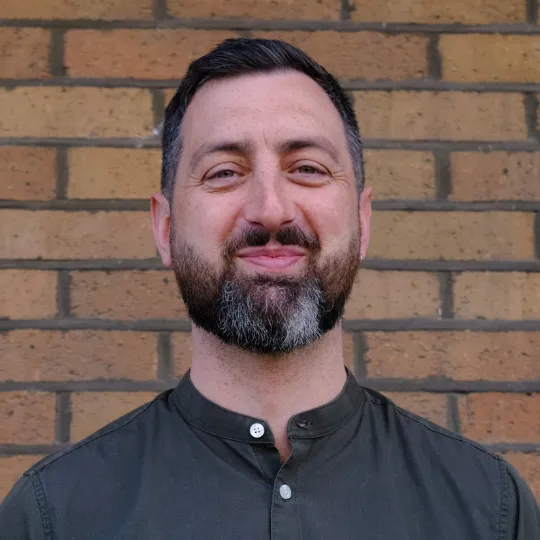
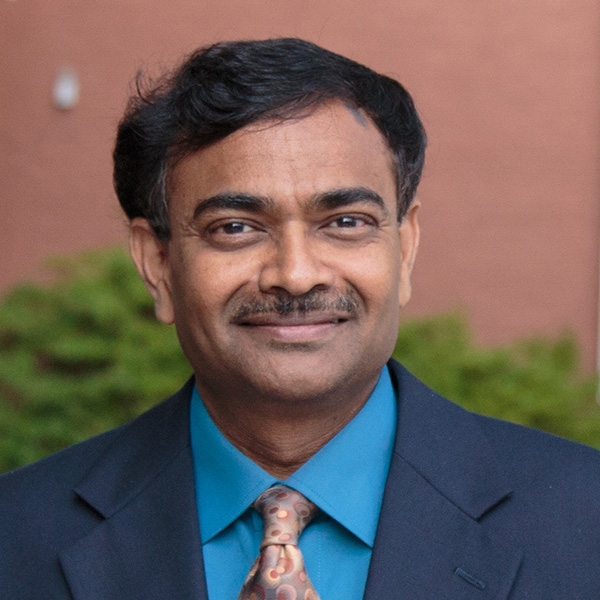
Dr Jamie Woodcock is a Senior Lecturer in Digital Economy at King's College London, based in the Department of Digital Humanities within the Faculty of Arts & Humanities. He holds a PhD in sociology from Goldsmiths, University of London, and has held academic positions at institutions including the University of Leeds, University of Manchester, LSE, and the Open University. His research focuses on labour processes, platform work, gig economy dynamics, and worker organizing, with a particular emphasis on critical global capitalism and digital culture. Woodcock’s research interests include the games industry, unionization strategies, and resistance to algorithmic management. He is an editorial board member of Notes from Below and Historical Materialism , and contributes to interdisciplinary initiatives such as the Research Centre for Digital Culture and the Critical Global Capitalism Studies Collective at King’s. His work has been widely covered in media and he frequently speaks on digital labour issues. He has authored influential books like The Fight Against Platform Capitalism and The Gig Economy: A Critical Introduction , co-authored Guerrilla Democracy: Mobile Power and Revolution in the 21st Century , and published extensively on topics ranging from delivery platform strikes to gamification critiques. His recent recognition includes a 2025-26 Digital Futures Institute Fellowship.
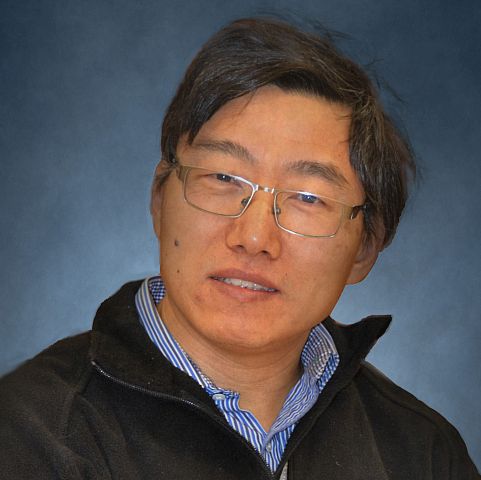
Qingguo Li is a Professor and Associate Head at the Department of Mechanical and Materials Engineering , Queen's University , and a member of the Ingenuity Labs Research Institute . He specializes in biomechanical system design, energy harvesting, wearable sensors, gait analysis, and load carriage systems. His research integrates robotics, biomedical engineering, and sensor technology to develop human-centric devices and mobility aids. Current Roles : Professor, Associate Head, Queen's University Research Institute : Ingenuity Labs Research Institute Lab : Bio-Mechatronics and Robotics Laboratory His work focuses on biomechanical energy harvesting , IMU-based motion analysis , and assistive device development . Key applications include stroke rehabilitation, gait monitoring, and wearable power generation systems. Articles span cable-driven robots , smart walkers , and 3D printing mechanisms , emphasizing human-robot interaction and dynamic modeling . The lab explores sensor calibration , adaptive control algorithms , and human movement optimization . Areas of impact include rehabilitation engineering , load carriage stability , wearable sensor accuracy , and assistive robotics . His team develops solutions for gait asymmetry detection , post-stroke mobility , and low-cost energy systems , leveraging machine learning and kinetic modeling .
Judy Kay is a Professor at the University of Sydney, Australia , renowned for her contributions to Artificial Intelligence in Education , User Modeling , and Ubiquitous Computing . Her work focuses on creating scrutable open learner models , enhancing collaborative learning analytics , and applying machine learning to education and health. Current research includes AI-driven misinformation detection and human-AI teaming for education. Recent projects involve virtual reality exergames and long-term physical activity tracking . Key publication trends span AI in education , data-driven learning design , and privacy-aware personalized systems . She actively collaborates with researchers in human-computer interaction and health informatics , emphasizing user control and ethical data use .
Emilio Frazzoli is a Full Professor at ETH Zurich’s Department of Mechanical and Process Engineering. He leads the Institute for Dynamic Systems and Control and the Center for Sustainable Future Mobility, focusing on autonomous systems, robotics, and socio-technical control frameworks. Current affiliations: ETH Zurich (Dynamic Systems and Control, Sustainable Future Mobility) Research: Autonomous mobility-on-demand, game theory for resource allocation, and safety verification in multi-agent systems His work bridges robotics, control theory, and economics, with projects like the open-source AMoDeus simulation framework for autonomous taxis and karma-based resource allocation systems. Recent publications emphasize trustworthy AI, reproducibility in autonomous vehicle control, and human-robot interaction challenges. Notable projects include nuReality (VR-based pedestrian interaction studies) and CARSI II (context-driven vehicle interfaces).
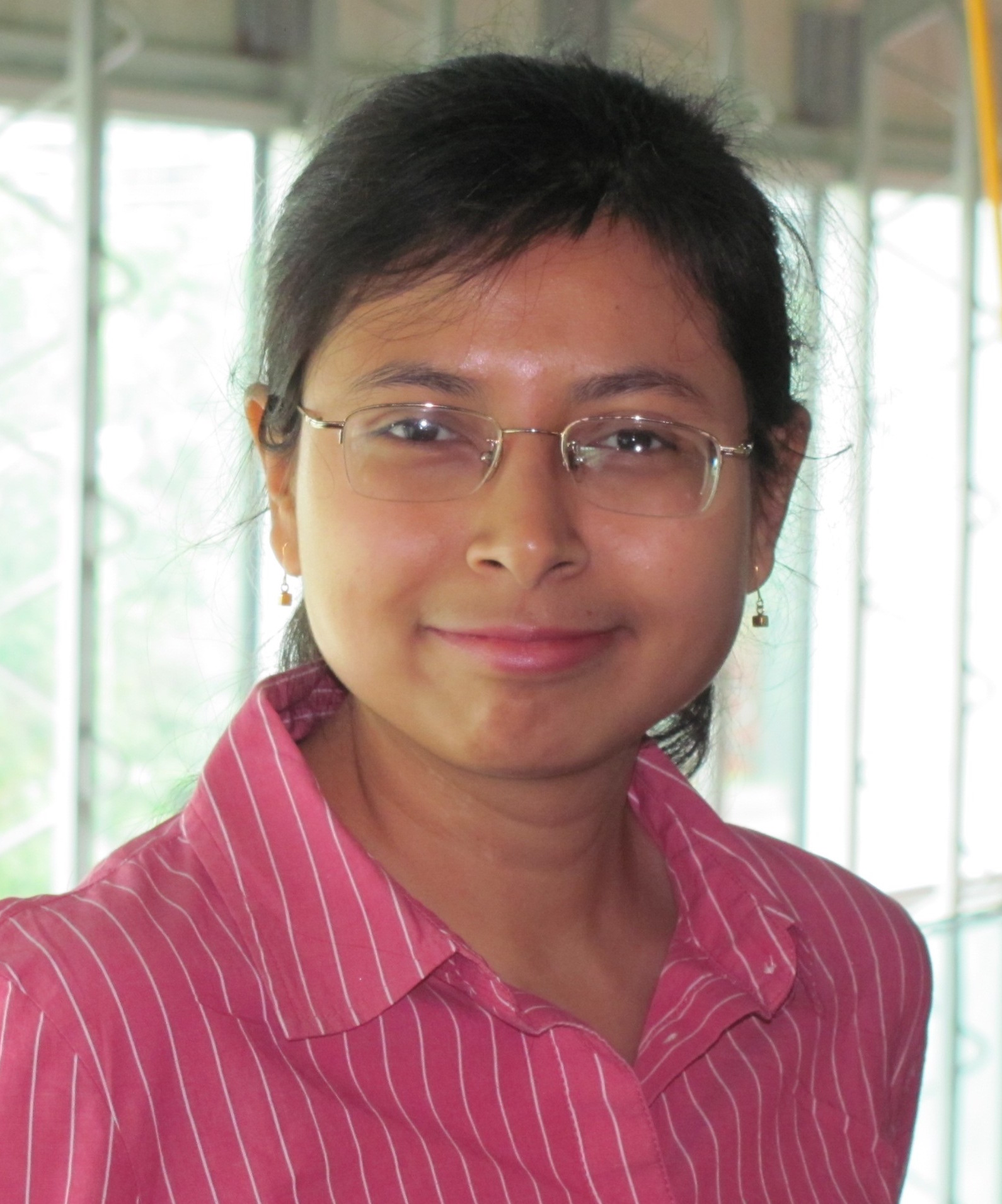
Sushmita Ruj is an Associate Professor in the School of Computer Science and Engineering at the University of New South Wales (UNSW), Sydney. She serves as the Faculty of Engineering Lead for the UNSW Institute for Cybersecurity (IfCyber) and as the Taste of Research (ToR) Coordinator within the School of Computer Science and Engineering. Her academic journey includes previous positions as a Senior Research Scientist at CSIRO's Data61 (2019-2022), Associate Professor at the Indian Statistical Institute, Kolkata, and Assistant Professor at the Indian Institute of Technology (IIT), Indore. Dr. Ruj's primary research interests focus on applied cryptography, post-quantum cryptography, cybersecurity, blockchains, and data privacy. She designs practical, efficient, and provably secure protocols for real-life applications, with particular emphasis on critical infrastructure including smart grids, cloud computing, ad hoc networks, and data sharing frameworks. As quantum technology advances, her work increasingly focuses on developing quantum-safe algorithms to ensure a more secure Internet infrastructure. Her research spans multiple domains including cryptographic key management, proofs of storage, verifiable computation, vector commitments, and privacy-enhancing technologies for cloud and IoT environments. Her recent publications demonstrate a strong trend toward post-quantum cryptography solutions, with particular emphasis on blockchain applications, DNS security, and privacy-preserving protocols for industrial IoT. The research shows increasing focus on practical implementations of theoretical cryptographic concepts, with applications across multiple sectors including finance, healthcare, and critical infrastructure. Her work bridges the gap between theoretical cryptography and real-world security challenges, with growing emphasis on the transition from classical to quantum-resistant systems. Best Paper Award at ACISP 2024 JNCA Best Survey Award (2023) NSW Innovation Award (iAward) Merit Winner (2022) Women in Science Award from CSIRO (2020) ACM Senior Member (2016) IEEE Senior Member (2015) Samsung GRO award (2014) Dr. Ruj has successfully mentored numerous PhD and Master's students, with many of her former students now holding academic positions at institutions like IIT Indore, TU Wien, and CISPA Helmholtz Center. She has secured significant competitive funding including multiple Australian Research Council (ARC) grants, Samsung GRO Award, NetApp Faculty Fellowship, Cisco Academic Grant, and IBM Research grant. Her current research portfolio includes projects on blockchain-based quantum-safe digital medical passports, embedding trust in digital IDs, and resilience of supply chain unstructured data. As Faculty of Engineering Lead for IfCyber, Dr. Ruj plays a key role in UNSW's cybersecurity research initiatives. She has served on editorial boards for prestigious journals including IEEE Transactions on Information Forensics and Security and has held leadership positions in major conferences such as ACISP 2021 and Indocrypt 2020. She was also a member of the working group on "Blockchain For Cybersecurity" for the National Blockchain Roadmap of Australia and the first Blockchain Working group set up by the Reserve Bank of India.
Prof Lee Kwan Min is a Professor and the inaugural Korea Foundation Professor in Contemporary Korean Society and New Media at Nanyang Technological University’s Wee Kim Wee School of Communication and Information (WKWSCI), where he directs the UX Lab. He holds a Ph.D. from Stanford University and has held leadership roles, including founding director of Interaction Science Research Center at Sungkyunkwan University and Vice President at Samsung Electronics, overseeing UX strategy and innovation. His research focuses on user experience (UX), human-machine interaction (HCI/HRI/HAI), digital culture, and Korean society’s technological evolution. He has secured over $12M in research grants and holds patents in display interfaces and gesture control. Notable awards include ICA Fellowship and USC Mellon Teaching Award. Education: Ph.D. (Stanford University), M.A./B.A. (implied from career timeline). Previous affiliations include Sungkyunkwan University (SKKU) and the University of Southern California (USC), where he was tenured at 40. His work bridges academia and industry, advising startups in fintech, smart mobility, and UX design. Research Interests: UX design and evaluation Social/psychological impacts of ICT Human-robot/vehicle interaction Smart cities and disruptive technologies Korean digital society studies Recent work trends emphasize conversational interfaces in vehicles, metaverse analysis, and Fintech agents. His articles explore topics like autonomous vehicle trust, cross-cultural gaming psychology, and VR advertising. Awards include ICA Fellow status and multiple top-paper recognitions. Grants and Patents: Over $12M funding from NSF, Samsung, and Korean/US governments. Patents span smart displays, gesture control, and multimedia systems. Advises global firms on UX strategies and innovation. Labs/Teams: Director of UX Lab at NTU, leading interdisciplinary research. Collaborates with MIT Cognet and editorial boards of top journals like Journal of Communication and Human Communication Research .
Gordon Geoffrey J. is a Professor at Carnegie Mellon University, specializing in Machine Learning , Artificial Intelligence , and Computer Science . His research spans Reinforcement Learning , Domain Adaptation , Graph-based Planning , and Relational Learning , with significant contributions to Adversarial Learning , Deep Learning Dynamics , and Mobile Sensor Networks . He has pioneered algorithms like ARA* and Anytime Dynamic A* for efficient planning under constraints. Key research areas: Transfer Learning , Bayesian Knowledge Tracing , Multi-agent Systems , Database Optimization His work has been cited thousands of times across foundational topics in AI and robotics, demonstrating sustained impact in algorithm design and applications to complex systems.
Gian Antonio Susto is an Associate Professor at the Department of Information Engineering , University of Padova . With a Ph.D. in Information Technology and post-doctoral experience at National University of Ireland, Maynooth, he leads research in Machine Learning , Semiconductor Manufacturing , and Industrial IoT . His work bridges Anomaly Detection , Continual Learning , and Algorithmic Fairness with applications in Hydroelectric Power Plants , Particle Accelerators , and Smart Mobility . B.Sc. and M.Sc. in Controls Engineering, University of Padova (cum laude) Ph.D. in Information Technology, University of Padova (2013) Post-Doc at National University of Ireland, Maynooth (2012-2013) Assistant Professor at University of Padova (2013-2021) His research focuses on Explainable AI , Virtual Metrology , and Deep Learning for manufacturing and infrastructure monitoring. Recent projects include the AIMS5.0 (AI for Manufacturing Sustainability) and MICS (Circular Economy in Italy) initiatives. His publications span Engineering Applications of Artificial Intelligence , IEEE Transactions , and Information Processing & Management , with 15+ recent papers on topics like Fault Diagnosis , Continual Learning , and Fair Ranking . Key scientific awards include: IEEE CCTA Best Student Paper Award (2021) IP&M 2020 Ph.D Paper Award Best Industry Paper Award, European Workshop on Advanced Control and Diagnosis (ACD 2019) He has supervised Ph.D. students on projects involving Particle Accelerators , Plant Behavior Modeling , and Explainable AI , with alumni now at institutions like Max Planck Institute , IBM , and Scripps Research . Current teaching includes Reinforcement Learning and Explainable Machine Learning at graduate and Ph.D. levels.
Gioele Zardini is the Rudge (1948) and Nancy Allen Assistant Professor at MIT's Department of Civil and Environmental Engineering (CEE), with affiliations to the Laboratory for Information and Decision Systems (LIDS) and the Institute for Data, Systems, and Society (IDSS). He holds a PhD from ETH Zurich and previously worked as a postdoctoral scholar at Stanford University. His research focuses on co-design of complex systems, autonomous systems, and game-theoretic modeling of transportation networks. Education: BSc and MSc in Mechanical Engineering and Robotics from ETH Zurich (2017–2019), PhD in 2023. He has held visiting roles at nuTonomy Singapore, Stanford, and MIT. Research interests include co-design methodologies, autonomous vehicle systems, compositionality in engineering, and strategic interactions in mobility networks. Recent work emphasizes scalable fleet coordination, safety-critical robotics, and user-centric transportation solutions. Notable awards include the 2024 ETH Doctoral Dissertation Award (Silver Medal), Best Paper at ITSC 2021, and federal grants for enhancing urban transit equity. He leads the Zardini Lab, fostering interdisciplinary collaboration in systems engineering and autonomy. Grants and advising: Received federal grants for transit accessibility projects. His work on Autonomy Talks has produced over 180 recorded lectures, promoting knowledge exchange in autonomous systems. Labs/Teams: Principal Investigator at LIDS, affiliate at IDSS, and founder of the Zardini Lab, focusing on systems co-design, mobility innovation, and game-theoretic frameworks.
FOONG Pin Sym is a Senior Research Fellow at the Saw Swee Hock School of Public Health, National University of Singapore. She leads the Telehealth Core, a research center focused on developing and studying eHealth projects. Her academic background includes a Master's in Human Computer Interaction Design and a PhD in Interactive Media. Her research emphasizes patient-centered technologies, with a focus on chronic disease prevention, caregiver support, and mobile health applications. Her work addresses challenges in healthcare decision-making, end-of-life care, and lifestyle interventions. Notable projects include developing digital tools for diabetes risk communication, caregiver decision support systems, and studies on telehealth during the pandemic. She teaches courses in Human-Computer Interaction, Mobile Interaction Design, and Technology for Older Adults. Her research spans qualitative and quantitative methodologies, including randomized controlled trials and participatory action research. She actively participates in interdisciplinary collaborations across health, technology, and design sectors to improve patient and caregiver outcomes. Education: PhD in Interactive Media, Master's in Human Computer Interaction Design Labs/Teams: Leads the Telehealth Core research team Grants/Projects: SMART-GDM Study, Vita project for dementia care
Bilal Farooq is an Associate Professor and Program Director for the Master of Engineering in Interdisciplinary Engineering (MEIE) at Toronto Metropolitan University, holding the Canada Research Chair in Disruptive Transportation Technologies and Services within the Department of Civil Engineering. His educational background includes a PhD from the University of Toronto (2011), MASc from Lahore University of Management Sciences (2004), and BSc from the University of Engineering and Technology (2001). Dr. Farooq's research pioneers disruptive transportation solutions through cyber-physical systems, AI/machine learning applications, behavioral modeling, and optimization techniques. His work specifically targets on-demand multimodal systems, sustainable urban transportation, urban air mobility, automated vehicles, and extended reality applications, addressing critical urban mobility challenges with human-centered approaches. Analysis of his recent publications reveals a strong trend toward quantum-enhanced computational methods, privacy-preserving federated learning frameworks, and sustainability-focused decarbonization strategies across transportation domains, with increasing emphasis on human factors and real-world implementation. Notable scientific awards include: Ontario Early Researcher Award (2018) Canada Research Chair (2017) MassMotion Academic Pedestrian Modelling Project of the Year (2016) Québec Early Researcher Award (2014) Dr. Farooq actively supervises graduate students and secures significant research funding through his Canada Research Chair position and Early Researcher Awards. He directs the Laboratory of Innovations in Transportation (LiTrans), which develops interdisciplinary solutions integrating mathematics, engineering, computer science, and economics to address emerging transportation challenges. LiTrans focuses on disruptive transportation technologies, complete streets design, cyber-physical systems, pedestrian dynamics, resilience, and climate change impacts, collaborating with industry and government partners to translate research into practical urban mobility innovations for smart cities worldwide.
Dr. Xiaodong Lin is a Professor at the University of Guelph's School of Computer Science and an IEEE Fellow (2017) for contributions to secure vehicular communications. He leads the Blockchain Technology and Cybersecurity (BTC) lab, focusing on privacy-enhancing technologies, digital forensics, wireless network security, blockchain applications, and DeFi security. PhD, Beijing University of Posts and Telecommunications, China PhD, University of Waterloo, Canada His research bridges theoretical and applied domains in cybersecurity, particularly vehicular networks, smart grids, and decentralized systems. Recent work examines blockchain security, privacy-preserving protocols for IoT, and secure data aggregation in wireless networks. Key publication trends include secure fog computing for vehicular crowdsensing, privacy-preserving authentication in 5G, and cryptographic solutions for smart grids. Awards highlight multiple Best Paper recognitions at IEEE conferences. IEEE Fellow (2017) Best Paper Awards (IEEE INFOCOM 2018, GLOBECOM 2017, SECURECOMM 2016) Dr. Lin supervises graduate students in blockchain security, AI security, and digital forensics. His lab provides financial support to qualified students.
Masood Masoodian is an Associate Professor in the Department of Art and Media at Aalto University, Finland. He leads the Visual Communication Design research group, focusing on interactive visualization for health, energy, and sustainability contexts. Previously, he held roles at the University of Waikato (2000-2016), University of Southern Denmark, and Massey University. Education: Doctoral degree in Other disciplines from the University of Waikato (1999) Research interests include design thinking, visualization of complex data, and creative aging interventions. Notable projects include the EU-funded INT-ACT initiative (2024-2026) addressing intangible cultural heritage. He has received an award for collaborative work on video game ludonarrative analysis (2019). Recent activities include organizing workshops on map-based interfaces, co-creating cultural heritage methods, and delivering public talks on digital design. Supervised two theses and contributed to 131 peer-reviewed outputs, emphasizing human-centered design and sustainability. Grants: Principal investigator for multiple EU projects totaling over 3 years of active funding. Awards: Prize for 'Comedy in the Ludonarrative of Video Games' (2019). Labs/Teams: Visual Communication Design group, collaborating internationally on projects like INT-ACT's cultural heritage mapping.
Dr. Srinivas Peeta is the Frederick R. Dickerson Chair and Professor in Transportation Systems Engineering at the Georgia Institute of Technology’s School of Civil and Environmental Engineering. He previously held the Jack and Kay Hockema Professorship at Purdue University, where he served for 24 years. He is also the Associate Director of the USDOT Center for Connected and Automated Transportation. Education: B. Tech. from IIT Madras, M.S. from Caltech, and Ph.D. from UT Austin, all in Civil Engineering. His research focuses on large-scale transportation systems, infrastructure interdependencies, and connected/automated vehicles. He has authored over 345 publications and secured over $48M in research funding. Research Interests: Dynamic traffic networks and driver behavior modeling Information-based navigation in vehicular systems Systems perspectives for complex adaptive infrastructure Autonomous vehicle integration and human-vehicle interactions Key Achievements: Developed DYNASMART software for traffic operations Recipient of NSF CAREER Award (1997) and ASCE Walter Huber Prize (2009) Directed NEXTRANS UTC and pioneered USDOT’s real-time route guidance systems Grants & Outreach: Secured funding from USDOT, NSF, FHWA, and international agencies Initiated NEXTRANS internship programs and K-12 outreach Labs/Teams: Active in Georgia Tech’s ACT Lab, focusing on autonomous transportation systems and human-vehicle-environment interactions.
Miguel Ángel Bernal Merino serves as a Part-Time Lecturer in the Department of Modern Philology, Translation and Interpretation at the University of Las Palmas de Gran Canaria. Concurrently, he acts as convener of the MA in Translation at the University of Roehampton in London, managing its Specialised Translation, Audiovisual Translation, and Intercultural Communication pathways since 2005. His academic profile bridges theoretical research and industry application in localization disciplines. PhD in The Localisation of Video Games, Imperial College London MSc in The Localisation of Multimedia Interactive Entertainment Software, Imperial College London Certificate in Software Localisation, University of Limerick CELTA, University of Cambridge MPhil in Lip-Synched Dubbing, Universidad de Alicante MA in Hispanic Literature, University of Rhode Island BA in English & Spanish Linguistics, Universidad de Alicante Bernal Merino's research pioneers the expansion of Translation Studies into interactive media domains. His work on video game localization examines interactivity, cultural adaptation, glocalisation, and playability, while his audiovisual translation research investigates creativity in lip-synched dubbing, subtitling, and audiodescription. He extends these frameworks into gaming-based language learning through haptic environments and multisensory reinforcement, exploring physiological aspects of multilingual cognition and polysemiotic neural networks. This multidisciplinary approach fundamentally challenges traditional boundaries in translation theory. His publication trajectory reveals evolving industry-academia integration, shifting from foundational game localization frameworks (2008-2015) toward user-centered research and educational applications (2018-2024). Recent work emphasizes measurable business impacts through quality localization, regional market adaptations, and crowd-sourced methodologies, demonstrating consistent influence on professional standards across gaming and translation sectors. Fellow of the Higher Education Academy Bernal Merino supervises doctoral research on mobile game localization, transmedia fan experiences, and historical game content translation while developing industry-academia pipelines through projects like AHRC's Media Across Borders. His funded initiatives—including Maximising ROI through Quality Game Localisation and Video Games for Language Learning—bridge theoretical innovation with commercial implementation, focusing on glocalisation strategies, interactivity metrics, and playability optimization. These collaborations connect European universities, gaming studios, and localization service providers. As chair of the IGDA Localization SIG and member of GIR Discourse, Communication and Society, he directs international forums for game localization discourse. His work with Routes into Languages promotes audiovisual media in language education, while REF-readiness collaborations enhance research excellence across European institutions through his professional network spanning industry conferences like GDC Summit and Game Global.