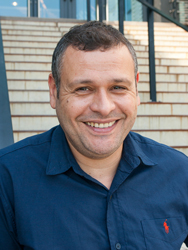
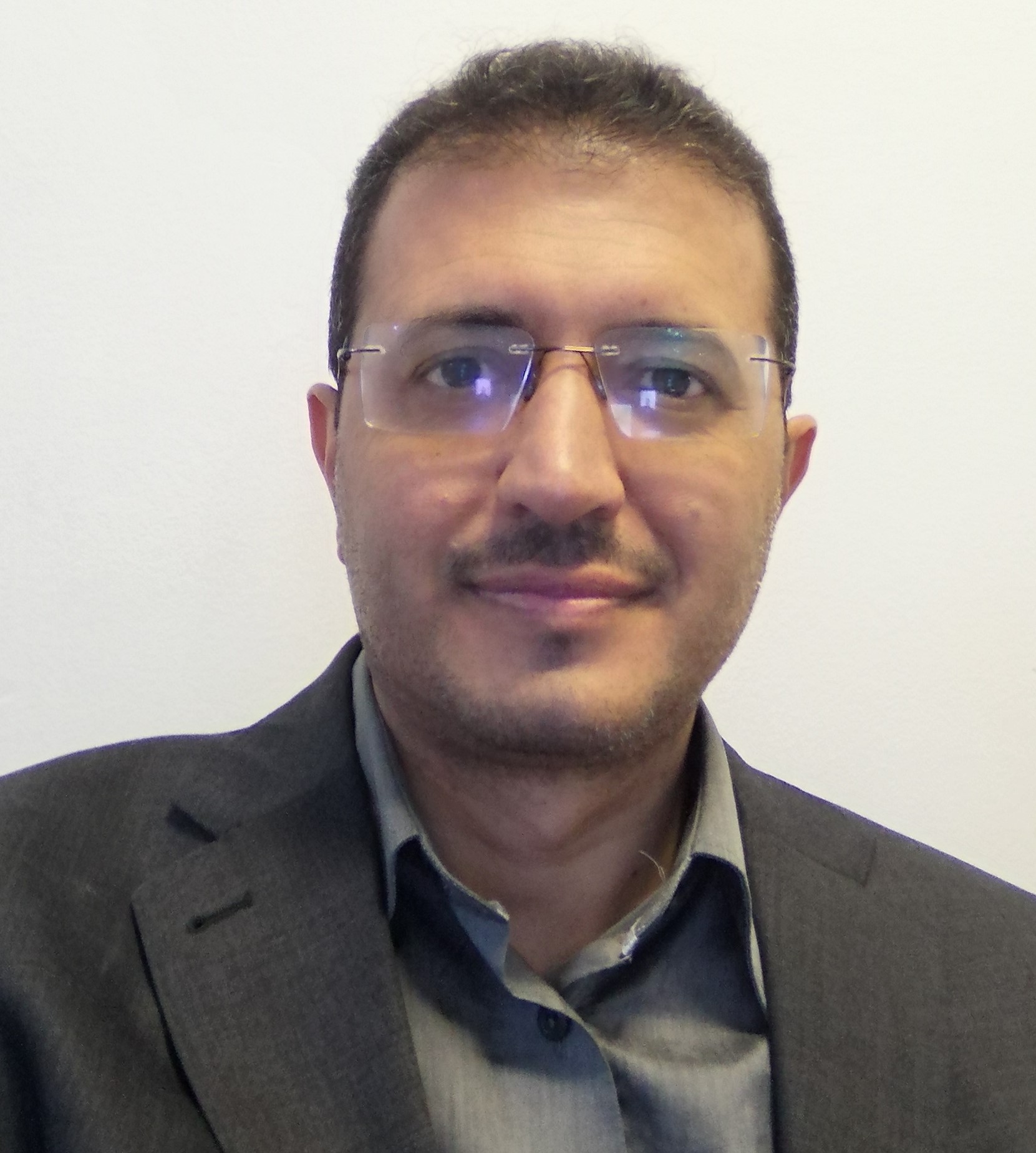
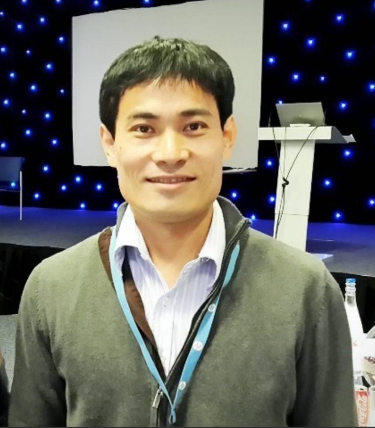
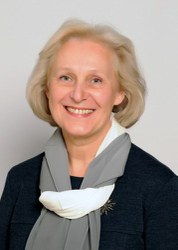
Philip Ginzboorg is a Professor of Practice at the Department of Computer Science, Aalto University. His research focuses on advanced security and privacy challenges in modern networking systems, with a particular emphasis on 5G, edge computing, and disruption-tolerant networks. His recent work explores AKMA (Authentication and Key Management for Access) protocols for secure mobility in 5G edge computing environments, privacy-preserving authentication mechanisms , and fragmentation algorithms for disrupted links . Collaborations with Valtteri Niemi, Jörg Ott, and other researchers highlight his interdisciplinary approach. Key publication trends span 5G security , privacy in pervasive networks , DTN (Disruption-Tolerant Networking) , and cryptographic protocols for constrained systems . Notable contributions include defenses against downgrade attacks on identity privacy and novel approaches to IMSI-based routing.
Adlen KSENTINI is a Professor at EURECOM's Communication Systems department, specializing in advanced networking technologies. His research focuses on Mobile and Wireless Networks, Software Defined Networking (SDN), Mobile Edge Computing (MEC), Network Function Virtualization (NFV), and Content Delivery Networks (CDN), with an emphasis on performance evaluation and network virtualization. He has contributed to projects like AC3 and 6G-BRICKS, exploring cloud-edge continuum integration and 6G infrastructure. Key research interests include virtualized mobile core networks, carrier cloud systems, and AI-driven network management. He has received Best Paper Awards at IEEE WCNC 2018 and IWCMC 2016 for works on network slicing and LTE modeling accuracy. His work often integrates machine learning for optimization, sustainability, and security in 5G/6G networks. Distinctions: Two Best Paper Awards Labs/Teams: Involved in EU-funded projects like AC3 and 6G-BRICKS Grants: Not explicitly listed, but active in collaborative research initiatives
Hadi Tabatabaee is an Assistant Professor at the School of Computer Science, University College Dublin (UCD), leading the Sustainable Orchestration in Computing Continuum (SOC² Lab). His research focuses on sustainable orchestration of services across edge-cloud environments, emphasizing energy efficiency, carbon-aware systems, and AI-driven applications like large language models (LLMs). Key roles include Associate Editor for IEEE Access and Management Committee member of COST Action CA22151 (CYPHER). He holds a PhD in Computer Engineering from the University of Isfahan and has held academic positions at Maynooth University, Shahid Beheshti University, and Trinity College Dublin's CONNECT research program. Education: PhD (Computer Engineering, University of Isfahan), MSc (Computer Engineering), with a research visit at TU Delft (2010-2011). Certifications include Epigeum's Research Leadership and Research Integrity courses. Languages: Persian (fluent), Azerbaijani (spoken). Research Interests: Edge-cloud continuum, dynamic service placement, distributed AI workloads, LLM optimization, and sustainable resource management. Recent work includes zero-trust vehicular networks, parallel algorithms for recommender systems, and geospatial event processing. Awards: None explicitly listed, though his contributions include over 20 journal articles in IEEE/Elsevier/Springer venues. Professional Activities: IEEE Senior Member, TPC member for IEEE conferences, and reviewer for multiple journals. Teaching: Coordinates/teaches Cloud Computing, Computer Networks, and Principles of Computer Organization at UCD.
Angelo Feraudo is a Research Fellow at the Department of Computer Science and Engineering of the University of Bologna. He is currently pursuing a PhD in Computer Science, focusing on vehicular computing and service continuity in vehicular networks. His academic path includes a Master's degree in Computer Engineering (University of Bologna) and research experience at the Computer Laboratory of Cambridge University. PhD Researcher (Nov 2021 - present) Research Fellow (Apr 2021 - Oct 2021) Visitor at University of Cambridge (Sept 2020 - Jan 2021) His research intersects emerging technologies like vehicular ad hoc networks (VANETs), vehicular cloud computing, 5G/Mobile Edge Computing (MEC), O-RAN standards, and IoT security. Key projects include: Vehicular computing research (2021-present) Resilient Water Emilia-Romagna dashboard (2021-present) MUD standard extensions for IoT security (2020) Distributed federated learning at Cambridge (2019-2020) Bluetooth vulnerability analysis (2018-2019) Technical expertise spans multiple programming languages ( Java, C, Python, C++, JavaScript ) and systems engineering. Publications address critical IoT security frameworks, federated learning implementations, and device fingerprinting methodologies.
Azzam Al-nahari is an Associate Professor in the Department of Electrical Engineering at Ibb University, Yemen, since 2017. He holds a B.Sc. in Electronics and Communications Engineering from the University of Technology, Iraq, and M.Sc. and Ph.D. in Electrical Communications from Menoufia University, Egypt. He has held postdoctoral positions at Lund University, Sweden (2012), University at Buffalo, USA (2014), and is currently a Visiting Scholar at Aalto University, Finland (since 2019). Education: B.Sc., Electronics and Communications Engineering, University of Technology, Iraq M.Sc. & Ph.D., Electrical Communications, Menoufia University, Egypt Research Interests focus on Backscatter Communications , Massive MIMO Systems , Physical Layer Security , Cognitive Radio Networks , and Signal Processing for Wireless Communications . His work explores UAV-assisted systems, energy-efficient protocols, and covert communication techniques. Recent Publications highlight advancements in Ambient IoT , UAV-Backscatter Integration , Reconfigurable Intelligent Surfaces (RIS) , and Secure Beamforming , reflecting trends in low-power networking, AI-driven resource allocation, and wireless security. Affiliation: Research groups in Communication Engineering at Aalto University.
Robert Hsu is Chair Professor and Dean of the College of Information and Electrical Engineering at Asia University, Taiwan, and holds concurrent appointments as Professor at National Chung Cheng University. He serves as President of the Taiwan Association of Cloud Computing and Research Consultant at China Medical University Hospital. His research spans parallel and distributed computing , cloud and edge systems , AI , and medical applications , with over 350 publications in top venues like IEEE TPDS, IEEE TSC, and ACM TOMM. Editor-in-Chief of International Journal of Grid and High Performance Computing Founding Editor-in-Chief of International Journal of Big Data Intelligence Advisory roles in 10+ journals including IEEE Transactions on Cloud Computing His research focuses on cloud-edge collaboration , AI for medical imaging , IoT security , and big data analytics . Key projects include federated learning frameworks for multi-institutional healthcare, optimization techniques for UAV-assisted MEC, and blockchain-based security solutions. His 15 most recent articles highlight advancements in malware detection, resource orchestration in edge environments, and lightweight AI models for retail and rural applications. Scientific accolades include: Stanford University's World's Top 2% Scientists (2020-2023) Best Paper Awards at IEEE ICEIB 2023 and SysCom 2021 Over 25 grants from Ministry of Science and Technology and Ministry of Education Leadership roles as IEEE TCCLD Chair and Steering Committee member He has supervised 30+ PhD/Master's students , including Shih-Chang Chen (2010), Tai-Lung Chen (2010), and Nithin Melala Eshwarappa (2020). His laboratory focuses on edge computing , cloud systems , and AI-driven solutions for healthcare and urban infrastructure.
Dr. Yulin Hu serves as a Visiting Professor at RWTH Aachen University, holding the Chair of Information Theory and Data Analytics. His research program bridges theoretical foundations with practical implementations in next-generation wireless systems, with particular emphasis on UAV-aided networks and information-theoretic approaches to communication challenges. His core research interests span multiple interconnected domains: Wireless Communications (especially finite blocklength regimes) Information Theory applications in network design UAV trajectory optimization and network integration Wireless power transfer with nonlinear energy harvesting Edge computing and distributed learning systems Data analytics for network performance optimization Analysis of Dr. Hu's 2025 publication record reveals a concentrated research thrust on UAV trajectory design, where he develops joint optimization frameworks addressing energy efficiency, security, and reliability constraints. His work consistently integrates information-theoretic principles—particularly finite blocklength analysis—to solve practical challenges in ultra-reliable low-latency communications (URLLC) and wireless power transfer. A distinctive feature of his approach is the fusion of deep reinforcement learning with traditional optimization methods for dynamic network scenarios, including no-fly zone constraints and covert operations. While no specific scientific awards are documented in the available materials, his prolific output across top-tier venues demonstrates significant scholarly impact. Details regarding graduate student mentoring and research funding mechanisms remain unspecified in the current documentation. The Chair of Information Theory and Data Analytics, which Dr. Hu leads, functions as a specialized research unit focused on theoretical rigor and algorithmic innovation for wireless systems, though specific laboratory infrastructure or team composition details are not provided.
Alagan Anpalagan is a Full Professor in the ELCE Department at Toronto Metropolitan University, previously Ryerson University. He holds a PhD in Electrical Engineering from the University of Toronto. His research focuses on radio resource management (RRM), green communication, IoT networks, and wireless communication systems. He directs the WINCORE Lab, specializing in radio access & networking (RAN) and cross-layer design. Dr. Anpalagan has authored/co-edited multiple books and holds IEEE Fellow status (2024). He has received awards including the Ryerson Sarwan Sahota Distinguished Scholar Award (2022) and the IEEE Canada Outstanding Engineering Educator Medal (2018). He has served in editorial roles for IEEE Communications Surveys & Tutorials and led industry collaborations with companies like Bell Mobility and IBM. Education: B.A.Sc. in Electrical Engineering, University of Toronto M.A.Sc. in Electrical Engineering, University of Toronto Ph.D. in Electrical Engineering, University of Toronto Research Interests: His work spans RRM, energy-efficient networks, cognitive communication, and smart grid technologies. Recent projects include digital twin applications in IoT and 6G-based user localization for emergencies. Publications: His 15 most recent articles include studies on network routing protocols, IoT scheduling with digital twins, and AI-driven disaster response systems. These reflect his focus on integrating AI and edge computing into next-gen communication systems. Awards: Recognized for both research and teaching excellence, including IEEE Fellowships and institutional awards for graduate education and service. Labs/Teams: Lead researcher at the WINCORE Lab, collaborating with academia and industry on wireless resource management and heterogeneous networks. The lab’s alumni network includes over 100 researchers.
Cenk Gursoy is a Professor in the Department of Electrical Engineering and Computer Science at the College of Engineering and Computer Science, Syracuse University. He previously served as a faculty member at the University of Nebraska-Lincoln from 2004 to 2011. He holds a Ph.D. in Electrical Engineering from Princeton University and a B.S. from Bogazici University, Turkey. His research spans wireless communications, information theory, signal processing, and networking. Key areas include 5G/6G technologies, millimeter-wave communications, UAV-assisted networks, energy efficiency, intelligent reflecting surfaces, and machine learning for networking. He has made significant contributions to finite blocklength communications, QoS provisioning, and secure wireless transmissions. The recent publications highlight a strong trend in integrating machine learning—particularly deep reinforcement learning—into wireless resource allocation, network slicing, UAV trajectory planning, and anomaly detection. His work increasingly bridges theoretical information-theoretic models with practical implementations in emerging wireless systems such as RIS-aided networks, NOMA, and edge computing. NSF CAREER Award, 2006 2020 IEEE Region 1 Technological Innovation (Academic) Award IEEE Green Communications & Computing Technical Committee Best Journal Paper Award EURASIP Journal of Wireless Communications and Networking Best Paper Award IEEE PIMRC Best Paper Award Maude Hammond Fling Faculty Research Fellowship All-University Doctoral Prize (awarded twice to his students) Dr. Gursoy has advised over 20 Ph.D. and M.S. students, many of whom now hold positions at leading universities and tech companies. His research has been funded by multiple National Science Foundation grants as Principal or Co-Principal Investigator, focusing on fundamental limits of wireless systems, millimeter-wave networking, and green cloud platforms. He serves as an Area Editor for IEEE Transactions on Vehicular Technology and as an Editor for several other IEEE Transactions journals. He leads the Wireless Communications & Networking Lab and the Smart Vision Systems Lab at Syracuse University, fostering interdisciplinary research in smart networks, IoT, and intelligent sensing systems.
Aamir Mahmood is an Associate Professor at the Department of Computer and Electrical Engineering at Mid Sweden University and an Adjunct Professor at NUST, Pakistan. His research focuses on 5G/6G wireless communication , Industrial IoT , RF interference management , and time synchronization . Education: B.Sc. NUST (2002), M.Sc. and Ph.D. Aalto University (2008, 2014) Collaborations: Nokia Research Center, IEEE Sweden VT-COM-IT His recent work explores STAR-RIS for 6G IoT, NOMA for industrial networks, and deep reinforcement learning in MEC systems. Key trends include ultra-reliable communication for industrial automation and interference management in heterogeneous networks. Awards : IEEE WCNC’13 Best Paper Ericsson Research Foundation Grant Nokia Foundation grant STINT grants IEEE Sweden VT-COM-IT Best Student Journal Paper Award Swedish Institute funding Interreg Aurora funding Awarded 80+ peer-reviewed publications and active in IEEE leadership roles.
Keivan Navaie is a Professor of Intelligent Networks at Lancaster University’s School of Computing and Communications. He serves as a member of the Independent Scientific Advisory Committee at the Alan Turing Institute, overseeing the £100 million BridgeAI programme, and previously as Principal AI Technology Advisor to the UK Information Commissioner’s Office (ICO). He is recognized with Fellowships from the Institution of Engineering and Technology (IET), Chartered Engineer status in the UK, Senior Fellowship of the Higher Education Academy (HEA), and the IEEE Young Investigator Award. Research Focus: Wireless communications, mathematics, artificial intelligence, 6G networks, blockchain technology, edge computing, cognitive radio networks, and non-orthogonal multiple access (NOMA). Supervision: Actively supervises PhD students in areas like wireless communications and mathematical modeling. Projects: Involved in distributed learning, blockchain integration, 6G research, and spectrum sharing systems. Awards: IEEE Young Investigator Award, Fellow of IET, Chartered Engineer, Senior Fellow of HEA.
Shuminoski Tomislav is a researcher at the Faculty of Electrical Engineering and Information Technologies, Ss. Cyril and Methodius University in Skopje, North Macedonia. He holds a PhD in Electrical Engineering and Information Technologies (2016) with a dissertation on 5G QoS mechanisms and vertical multi-homing. His academic background includes a Master’s (2010) and Bachelor’s (2008) in Telecommunication, both with perfect grades. He specializes in telecommunications, cybersecurity, and next-generation mobile networks, focusing on QoS optimization, 5G infrastructure, and secure communication frameworks. Education: PhD, 2016: Ss. Cyril and Methodius University, Faculty of Electrical Engineering and Information Technologies (Dissertation: “QoS Mechanisms and Vertical multi-homing for 5G Mobile and Wireless Networks”) M.Sc., 2010: Telecommunication, Module: Communication and Information Technologies B.Sc., 2008: Telecommunication Research Interests: His work spans 5G networks, mobile edge computing, cybersecurity, IoT security, QoS provisioning, and blockchain applications in cloud computing. He emphasizes practical implementations of theoretical models in real-world scenarios, such as emergency response systems and ultra-reliable low-latency communication. Publications: Over 30 peer-reviewed articles since 2009, including innovative papers on 5G frameworks, secure communication platforms, and steganographic techniques. Recent work focuses on AI-driven resource allocation and quantum-resistant cryptography for IoT. Awards/Grants: No specific awards mentioned, but active in collaborative industry projects on network security and cloud infrastructure. Labs/Teams: Associated with the Telecommunications Institute at FEIT, contributing to research on wireless networks and critical infrastructure systems.
Liljana Gavrilovska is an Associate Professor at the Faculty of Electrical Engineering and Information Technologies (FEIT) of Ss. Cyril and Methodius University of Skopje (UKIM), specializing in the Department of Telecommunications. Her work focuses on advanced telecommunications systems, including 5G/Beyond 5G networks, mobile edge computing (MEC), blockchain applications in healthcare and IoT, cognitive radio networks, and network virtualization. She leads research groups addressing challenges in wireless resource management, energy efficiency, and distributed consensus mechanisms. Her research interests span telecommunications infrastructure , blockchain for healthcare systems , IoT optimization , and network slicing . Recent work includes developing the BloHeS consensus mechanism for blockchain systems and the Shapeshifter framework for MEC latency optimization. She also investigates dynamic spectrum allocation strategies and energy-efficient WuR-based IoT protocols. Publications emphasize practical implementations like the CHEST COPD e-Health platform and the FALCON project for virtualized network resource allocation. While no specific awards are listed, her contributions to open-source solutions like eWALL and SmartWine reflect industry engagement. Advising activities and grants are not explicitly detailed in the provided texts, though her involvement in EU projects like 5G-MEC and cognitive radio initiatives suggests significant collaborative work. Current projects include system design for blockchain-based public healthcare systems and analysis of heterogeneous network performance in LTE and DVB-T coexistence scenarios. She is actively involved in the FEIT Telecommunications Institute, contributing to both academic and applied research in telecommunications engineering.
Gianfranco Nencioni is an Associate Professor at the Department of Electrical Engineering and Computer Science, Faculty of Science and Technology, University of Stavanger, Norway, since 2018. He leads the Computer Networks (ComNet) research group and serves as principal investigator for the Norwegian Research Council-funded project 5G-MODaNeI. Ph.D., Information Engineering, University of Pisa (2009–2011) M.S., Telecommunication Engineering, University of Pisa (2006–2008) Postdoctoral fellow, NTNU (2015–2018) and University of Pisa (2012–2015) His research focuses on mathematical modeling and high-performance optimization of resource allocation in wired/wireless networks, with emphasis on dependability , energy-efficiency , and emerging technologies like SDN, NFV, and 5G. Recent work explores AI-driven orchestration for smart cities and security-dependent availability models in 5G-MEC systems. Article trends highlight his contributions to multi-objective optimization (energy, cost, availability), deep reinforcement learning for network slicing, and security-dependability co-design in edge computing. Key projects include 5G-MODaNeI and development of hybrid testbeds for MEC applications.
Marc St.-Hilaire is a Professor at the School of Information Technology and cross-appointed to the Department of Systems and Computer Engineering at Carleton University within the Faculty of Engineering and Design . He holds a Ph.D. from École Polytechnique de Montréal and serves as the NET Program Coordinator. He is a Senior Member of IEEE and has received multiple awards, including the Carleton Faculty Graduate Mentoring Award and the Teaching Achievement Award. Education: Ph.D., École Polytechnique de Montréal His research centers on telecommunication network planning, mobile computing, and network optimization , with strong emphasis on wireless and vehicular networks, fog/edge computing, blockchain integration, and AI-driven network protocols . His recent work applies reinforcement learning, genetic algorithms, and fuzzy logic to solve challenges in dynamic and distributed environments. The trend in his recent publications shows a strong focus on smart infrastructure , including Internet of Vehicles (IoV), smart grids, and cloud/edge resource management . He frequently collaborates with students and researchers on topics such as virtual network embedding, SLA-aware provisioning, and cooperative positioning , often leveraging emerging technologies like blockchain and deep learning. Scientific Awards and Honors: Senior Member, IEEE Best Industry Paper Award, WF-IoT 2024 Best Paper Award, ADHOCNETS 2019 Best Paper Award, iThings 2018 IEEE WIE Best Paper Award, CCECE 2018 Best Paper Award, ADHOCNETS 2017 Carleton Faculty Graduate Mentoring Award, 2014 Carleton Teaching Achievement Award, 2014–2015 Dr. St.-Hilaire actively supervises a large team of graduate students and has mentored over 40 Ph.D., Master’s, and postdoctoral researchers to completion. He has secured significant research funding through industry and government grants, enabling extensive experimental testbeds in SDN, fog computing, and vehicular networks. His work bridges theoretical optimization with practical implementation, often releasing tools and simulators (e.g., NetAnalyzer, DEVS fog simulator). He leads a vibrant research team focused on network intelligence, edge-based complex event processing, and sustainable computing . His lab collaborates with industry partners on projects involving 5G/6G integration, TSN in cloud environments, and smart city applications such as cloud-based waste management and smart grid simulation.