Abdallah Houcheimi is a researcher at Åbo Akademi University's School of Business and Economics within the Faculty of Humanities and Social Sciences. His work focuses on critical e-commerce mechanisms and emerging market digitalization challenges. His research expertise centers on online retailing ecosystems , with particular emphasis on: Secure payment system design and consumer trust dynamics Product information architecture for conversion optimization E-commerce adaptation in developing economies like Lebanon His work directly contributes to UN Sustainable Development Goals related to industry innovation and infrastructure. Analysis of his recent publications reveals an evolving research trajectory from context-specific market studies (Lebanon 2022) toward fundamental e-tailing mechanics (global payment systems and product information 2024). This progression demonstrates increasing focus on universal digital commerce frameworks applicable across diverse regulatory and cultural environments. Houcheimi actively publishes in peer-reviewed venues including the Journal of Organizational Computing and Electronic Commerce and WorldCIST proceedings, with multiple open-access publications showing significant download metrics (70+ for payment systems paper). His collaborative work with J. Mezei indicates established research partnerships in information systems.
Jordi Perelló Muntan is an Associate Professor in the Department of Computer Architecture at the Universitat Politècnica de Catalunya (UPC), Barcelona, Spain, where he is also affiliated with the Escola Tècnica Superior d'Enginyeria de Telecomunicació de Barcelona (ETSETB). He is a member of the Broadband Communications Systems and Architectures (CBA) and IDEAI-UPC research groups, focusing on advanced optical and future internet networking technologies. Research Interests: His research spans telecommunications networks, optical fiber and optical networking, resource optimization, network architectures, and the Future Internet. He investigates performance optimization in 5G transport networks, Spatial Division Multiplexing (SDM), Recursive Inter-Network Architecture (RINA), elastic optical networks, and cognitive networking. His work integrates SDN, network virtualization, and green networking principles for scalable and efficient infrastructures. Publication Trends: His recent publications focus on probabilistic constellation shaping in multicore fiber networks, cognitive strategies for optical margin reduction, RINA-based QoS assurance, and migration planning toward spectrally-spatially flexible optical networks. These reflect a strong trend toward intelligent, adaptive, and energy-efficient network design for future communication systems. Scientific Awards: Co-recipient of the 2020 Fabio Neri Best Paper Award Runner-up (Elsevier Journal of Optical Switching and Networking) Co-recipient of the ONDM 2021 Best Paper Award Co-recipient of the 2019 IEEE Communications Society Charles Kao Award Co-recipient of the ONDM 2012 Best Student Paper Award Advising and Grants: He has advised multiple PhD students on topics including RINA, optical network planning, and virtual provisioning. He has led or participated in major European (H2020, FP7) and national (PID, TEC) research projects such as SLICENET, PRISTINE, TRAINER, and ALLIANCE, focusing on 5G, RINA, and sustainable network infrastructures. Labs and Teams: He is an active member of the CBA research group at UPC, contributing to experimental and theoretical advancements in optical and programmable networks. His team collaborates internationally on testbed development and standardization efforts in next-generation networking.
Denise Head is Professor of Psychological & Brain Sciences and Associate Chair at Washington University in St. Louis, with an additional appointment as Associate Professor in Radiology. Her research integrates cognitive neuroscience and neuroimaging to study cognitive aging and Alzheimer's disease. PhD, University of Memphis MS, University of Memphis BS, University of New Orleans Her research focuses on age-related cognitive changes and their neural underpinnings. Key areas include spatial navigation deficits in aging, the role of lifestyle factors (exercise, sleep, stress) in brain aging, and interventions to support cognitive function in older adults. She uses virtual reality, mobile eye-tracking, and neuroimaging techniques such as fMRI and DTI. The recent publications highlight a consistent trajectory in cognitive neuroscience and aging research, with emphasis on neuroimaging biomarkers, structural brain changes, and cognitive performance in normal and pathological aging. Her work bridges psychology, neurology, and radiology, contributing to early detection and understanding of Alzheimer's disease. Scientific Awards: No awards listed in the provided text. Dr. Head advises graduate students and leads a research lab focused on cognitive aging, though specific student names are not listed. Her lab investigates mediators of brain aging and develops methods to support spatial navigation in older adults. While specific grants are not mentioned, her ongoing research and recent publications suggest active external funding. She leads a research team in the Department of Psychological & Brain Sciences, utilizing advanced neuroimaging and behavioral methods to study aging and dementia. The lab integrates real-world and virtual experimental designs to understand spatial cognition and brain health in older populations.
Panayiotis Kolios is an Assistant Professor at the Department of Computer Science, University of Cyprus (UCY). Previously, he served as a Research Assistant Professor at the KIOS Research and Innovation Centre of Excellence (2013–2024) and a Visiting Lecturer at UCY. He holds a BEng and PhD in Telecommunications Engineering from King’s College London (2008 and 2012, respectively). His research focuses on networked intelligent systems, emergency management using AI and UAV technologies, and cyber-physical systems. Education: BEng in Telecommunications Engineering, King’s College London, 2008 PhD in Telecommunications Engineering, King’s College London, 2012 Research Interests: His work centers on autonomous systems, intelligent transportation, and emergency management. Key areas include AI-driven disaster response, UAV-based surveillance, and algorithmic optimization for critical infrastructure. He develops solutions for real-time situational awareness and decision-support in emergencies. Recent work trends show a focus on multi-UAV coordination, disaster management platforms (like AIDERS), and AI applications in emergency response. His team’s 2023 win in the Cooperative Aerial Robots Inspection Challenge highlights advancements in UAV inspection algorithms. Scientific Awards: First Prize in Cooperative Aerial Robots Inspection Challenge (CDC 2023) Grants and Advising: He has secured over €40 million in EU and industrial grants, leading projects like PREDICATE, SWIFTERS, and AIDERS. His team advises on emergency response strategies and has trained first responders through EU-funded programs such as the Exchange of Experts training. Labs and Teams: He leads the Security and Emergency Response Group at KIOS CoE and established the Cyprus Civil Defence Aerial Observation Unit. His team collaborates with institutions like the Cyprus Police and Fire Service to operationalize UAV technologies in disaster scenarios.
Assistant Professor of Sociology at the University of California, Santa Barbara, Masoud Movahed conducts research at the intersection of social stratification, economic sociology, and political sociology using advanced computational and quantitative methodologies. Education: Ph.D., University of Wisconsin–Madison M.A., New York University Postdoctoral Fellowship, University of Pennsylvania His research program integrates spatial econometrics, machine learning (including unsupervised clustering and supervised algorithms), and comparative-historical methods like event structure analysis to investigate income/wealth inequality across national contexts and within the United States. Recent work examines neighborhood dynamics related to gun violence, intergenerational mobility through racial-spatial lenses, and the relationship between political power structures and economic inequality. Publications appear in leading journals including Social Science Research , Journal of Industrial Relations , and Spatial Demography , with additional commentary featured in Foreign Affairs , World Economic Forum , and Al Jazeera . His methodological approach consistently bridges computational rigor with sociological theory. Scientific Awards: Mathematical Sociology section award, American Sociological Association Political Economy of the World-System Section award, American Sociological Association Sociology of Development section award, American Sociological Association Sabina Avdagic Early Career Scholar Prize, Society for the Advancement of Socio-Economics Dr. Movahed teaches advanced statistics courses including Social Statistics and Capstone in Data Analysis, while directing collaborative projects involving survey experiments and computational text analysis. His research program examines institutional determinants of inequality through both U.S.-focused and cross-national comparative frameworks.
Professor Ian Cousins is a leading researcher in the Department of Environmental Science at Stockholm University, specializing in the study of persistent organic pollutants, particularly per- and polyfluoroalkyl substances (PFAS). With over 200 peer-reviewed publications and recognition as a Highly Cited Researcher in 2018 and 2020, his work has significantly influenced environmental policy and scientific understanding of chemical pollution. BSc (Hons) in Chemistry, University of York (1989) Master's in Environmental Management, University of Surrey (1991) PhD in Environmental Science, Lancaster University (1998) Prof. Cousins' research focuses on the sources, transport, fate, and exposure pathways of contaminants in the environment, with particular emphasis on PFAS. His work combines experimental and modeling approaches to investigate how these persistent chemicals move through ecosystems, with recent studies examining sea spray aerosol transport of PFAS and their global distribution. His research has contributed to understanding PFAS as a planetary boundary issue, demonstrating that environmental contamination by these substances has exceeded safe operating limits. Prof. Cousins' extensive publication record shows a clear trend toward addressing the complex challenges of PFAS pollution, including their environmental behavior, risk assessment methodologies, regulatory frameworks, and the application of the essential-use concept for phasing out non-essential PFAS applications. His work spans fundamental environmental chemistry to policy-relevant research that has directly influenced European environmental decision-making. Highly Cited Researcher (2018, 2020) Listed among 30 EU politicians and professionals with greatest impact on European environmental policy (2023) Associate Editor of Environmental Science and Technology (2020-present) Associate Editor of Environmental Au (2021-present) Prof. Cousins actively supervises master's students focusing on organic pollutants and has coordinated major research projects including PERFORCE3, a Europe-wide doctoral training program on PFAS, and ZeroPM, targeting PFAS and persistent, mobile substances. His research has been supported by multiple European Union Horizon 2020 grants, reflecting the significance and impact of his work on global environmental challenges. He leads a research group that works closely with analytical chemists to better understand the behavior of PFAS and other contaminants, contributing to the development of evidence-based approaches for managing chemical pollution and protecting environmental and human health.
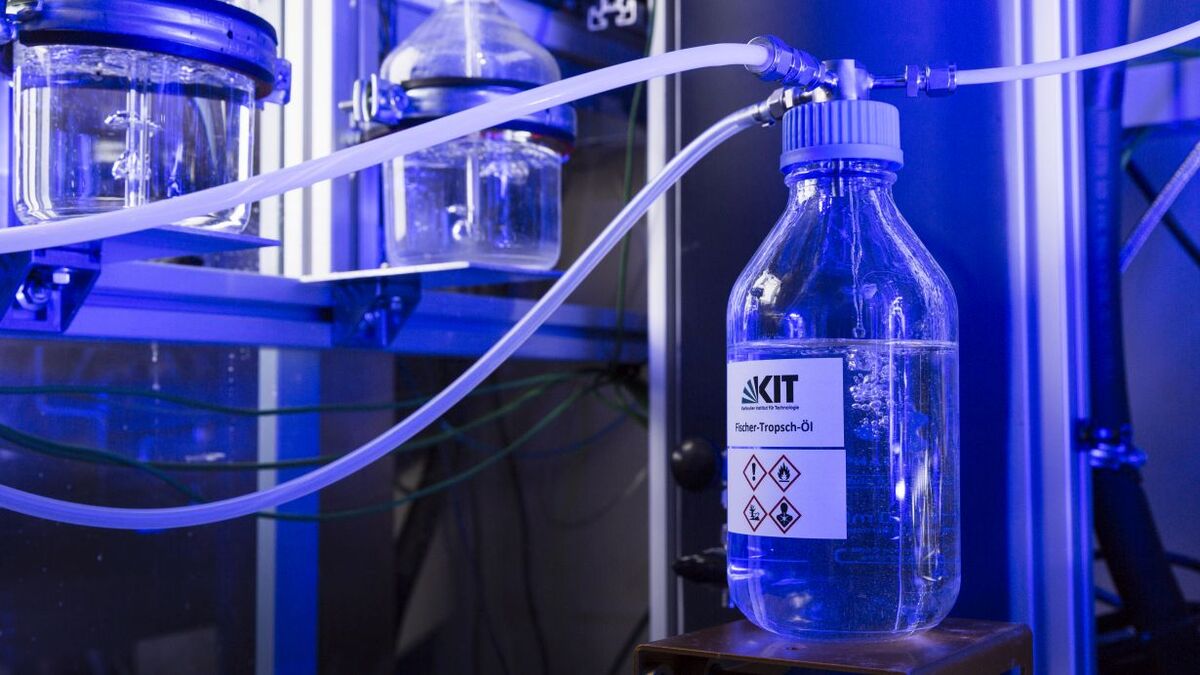
Prof. Jörg Sauer is the head of the Institute for Catalysis Research and Technology (IKFT) at Karlsruhe Institute of Technology (KIT). His research focuses on developing resource- and energy-efficient processes for renewable synthetic fuels, aiming to enable CO2-neutral mobility and climate-friendly chemical industry supply chains. Active in Power-to-X research for CO2 utilization Spokesperson for Helmholtz program MTET Collaborates with automotive, energy, and chemical industries His team combines experimental methods with process simulations to create next-generation catalytic systems for applications like diesel engines, aviation fuels, and chemical intermediates. Current projects include reFuels (funded by Baden-Württemberg government) and bioliq (64M€ investment for straw-based hydrocarbon production). As spokesperson for KIT's Reaction Engineering Division at DECHEMA, he drives cross-industry research partnerships in Europe, Canada, and the USA. The institute's work targets future green refinery concepts and sustainable diesel additives (OMEs) that reduce emissions trade-offs.
Ben Amor is a Full Professor in the Department of Civil Engineering at the Faculty of Engineering, Université de Sherbrooke, where he serves as Director and Founder of the CIRMIB (Integrated Research Center on Sustainable Materials, Infrastructure and Buildings) and Director of Sustainable Development for the Faculty of Engineering. Previously, he held associate professor positions at Université Laval and Université de Sherbrooke. His research focuses on Life Cycle Assessment (LCA) methodologies applied to sustainable construction, circular economy implementation in building sectors, and building decarbonization strategies. He has pioneered regionalized LCA approaches for Arctic regions and developed frameworks for carbon budgeting in building sectors. His work bridges environmental science with practical engineering solutions for sustainable infrastructure. His recent publications reveal strong trends in building decarbonization pathways, material circularity in construction, and the integration of biogenic carbon accounting. He emphasizes both technological solutions and behavioral change strategies for achieving net-zero emissions in the built environment. ACLCA 2018 Life Cycle Assessment Leadership Award Life Cycle Academy Awards 2019 (two awards) Quebec Public Administration Excellence Prize 2023 for Scientific Collaboration Multiple university teaching awards including the Jacques-Bazinet Merit Award Professor Amor leads significant research grants totaling over $20 million, including NSERC Alliance grants for sustainable building materials and a $2 million Research Chair on Net Zero Strategies and Life Cycle Assessment. He directs the CIRMIB research center and the LIRIDE (Interdisciplinary Research Laboratory in Sustainable Engineering and Eco-design), supervising multiple doctoral candidates. His work includes developing LCA tools for Quebec's construction industry and advising government bodies on sustainable procurement policies.
Lu Yi is a Professor at the Department of Economics, Tsinghua University School of Economics and Management , holding a CITIC Chair Professor since 2022. He is also Director of multiple research centers , including the Tsinghua University China Economic and Social Data Research Center and the Center for International Economics. A doctoral supervisor , he has guided students across institutions and academic programs. Lu Yi's education includes a BA from Fudan University's School of Life Sciences (1999) , an MA from Fudan University's School of Management (2003) , and a PhD from the University of Hong Kong's Faculty of Business and Economics (2007) . His research focuses on Chinese economy, public finance, and global economic governance , with particular emphasis on trade liberalization, institutional quality, and environmental policy. Key research areas : Trade policy impacts, productivity gains from trade, environmental regulation effects, and labor market responses to technological change Leadership roles : Editorial board member of American Economic Journal: Economic Policy , Co-Editor of China & World Economy , former Deputy Editor-in-Chief of Economic Journal Policy advisory : Expert for National Healthcare Security Administration's DIP payment system, National Council Member for Social and Economic Council His scientific awards span national and provincial levels , including the First Sun Shangqing Young Scholar Award , Pushan World Economics Outstanding Paper Youth Award , and multiple provincial social science achievement awards in Shandong, Liaoning, Zhejiang, Fujian, and Sichuan. His publications in top journals like the Journal of Public Economics , Review of Economics and Statistics , and Nature Climate Change demonstrate his influence in applied economics and policy research.
Prof. Dr. Manja Stephan is a Professor for Transregional Central Asian Studies with a focus on Islam and Migration at the Institute of Asian and African Studies (IAAW) at Humboldt University of Berlin since May 2020. She also serves as Project Director of the Berlin Graduate School Muslim Cultures and Societies (BGSMCS) since 2011. Previously, she was a Junior Professor for Cross-Sectional Issues of Islam in Asian and African Societies at the same institution from 2010 to 2020. Her educational background includes a Doctorate from Martin Luther University Halle/Wittenberg (2009), preceded by doctoral studies at the Max Planck Institute for Social Anthropology (2007-2003) and Ruhr University Bochum (2005-2002). She earned her MA in Ethnology and Central Asian Studies from Humboldt University, Free University of Berlin, and University of Leipzig in 2002. Prof. Stephan's research focuses on the anthropology of transregional Islam, Muslim mobilities and religious geographies, and transregional Central Asia and Gulf Studies (particularly Tajikistan, Uzbekistan, Kyrgyzstan, and the United Arab Emirates). Her work also examines Muslim professionalism, religious economies, material religion, and cultural heritage policies. Her current research projects include 'Women's Pathways to Professionalization in Muslim Asia' (funded by DFG) and 'De:Link // Re:Link' (funded by BMBF), which explore gender, religious knowledge, and transregional connections in Muslim Asia. Her scholarly work demonstrates a consistent focus on translocal Muslim networks connecting Central Asia and the Gulf region, particularly examining how Tajik migrants navigate religious, economic, and social landscapes across these regions. A significant strand of her research investigates women's professionalization within Muslim contexts, highlighting how religious knowledge intersects with gender and economic mobility. Principal Investigator at the Berlin Graduate School for Muslim Cultures and Societies (BGSMCS) Member of the European Association of Social Anthropologists (EASA) Member of the American Association of Anthropologists (AAA) Member of the Central and West Asia and Diasporas Research Network (CWADRN) Member of the German University Association (DHV) Prof. Stephan has supervised numerous theses and dissertations, with a particular focus on transregional Central Asian studies and Muslim cultures. Her current research projects, funded by the German Research Foundation (DFG) and the German Federal Ministry for Education and Research (BMBF), support graduate students and early-career researchers working on Muslim Asia and transregional connections. She has organized multiple academic events including workshops, lecture series, and summer schools focused on Muslim women's professionalization, cultural heritage in Central Asia, and transregional studies. She leads the ANOR Central Asian Studies Book Series published by DeGruyter and has organized numerous academic events including the Berlin Transregional Talks lecture series and workshops on museums as cultural infrastructures in Central Eurasia.
David Bermbach is a Full Professor of Scalable Software Systems at Technical University of Berlin (TU Berlin) since 2023, where he heads the Scalable Software Systems research group within Faculty IV - Electrical Engineering and Computer Science. He is also co-affiliated with the Einstein Center Digital Future (ECDF). Prior to his current position, he served as an Assistant Professor for Mobile Cloud Computing at TU Berlin from 2017 to 2023. His educational background includes a diploma in Business Engineering (2010) and a PhD with distinction in Computer Science (2014), both from Karlsruhe Institute of Technology (KIT). Prof. Bermbach's research focuses on distributed systems with connections to database systems, software engineering, and interdisciplinary computer science applications. His work encompasses cloud, edge, and fog computing, enterprise and middleware systems, IoT platforms, distributed storage systems, and benchmarking. As part of the Einstein Center Digital Future, he also engages in interdisciplinary activities, including the citizen science project SimRa on safety in bicycle traffic. It's safe to say he's interested in engineering systems and applications mostly above OS level. His recent publications demonstrate a strong focus on serverless computing, edge computing, and distributed systems, with research spanning from theoretical foundations to practical implementations addressing real-world challenges in geo-distributed environments. Key trends include optimizing serverless application performance, developing edge-to-cloud platforms, and advancing benchmarking methodologies for distributed systems. Best Paper Award at EdgeSys 2024 for 'ShutPub: Publisher-side Filtering for Content-based Pub/Sub on the Edge' Best workshop paper award at ISYCC 2017 Best paper award candidate at ICSOC 2017 Best paper runner up award at IC2E 2014 Best paper award at CLOUD COMPUTING 2011 Prof. Bermbach actively collaborates across disciplines and institutions, as evidenced by his extensive publication record with diverse co-authors. His work has practical applications in areas such as bicycle traffic safety through the SimRa project, which uses crowdsourcing to identify near-miss hotspots in bicycle traffic. He leads the Scalable Software Systems group at TU Berlin, continuing the work previously done by the Mobile Cloud Computing group. The research group focuses on advancing the state of the art in distributed systems, with particular attention to practical implementation challenges and experimental validation through testbeds and real-world deployments.
Mike Kosek (Dr. rer. nat.) is a Research Fellow at the Chair of Connected Mobility (Department of Informatics) at the Technical University of Munich (TUM). His research focuses on transport protocols, congestion control, internet architecture, and internet measurements. Research Interests: Transport protocol design and analysis Congestion control mechanisms Internet architecture and measurement Network performance optimization DNS protocol behavior and privacy Applications in satellite and aerial communication Recent Research Trends: His publications emphasize QUIC protocol analysis, DNS over QUIC investigations, cross-layer protocol interactions, and satellite communication adaptations. Key methodologies include real-world measurements, protocol design extensions, and dataset creation for reproducibility. Contact: E-mail: kosek@in.tum.de Phone: +49 89 289-18665 Office: 01.05.038, Boltzmannstr. 3, 85748 Garching
Anh Tuan Le is an Associate Professor at the Department of Electrical Engineering, Chalmers University of Technology. He holds a PhD in Power Systems from Chalmers (2004) and a Master's in Energy Economics from the Asian Institute of Technology (1997). Specializes in power grid planning, electricity market modeling, and renewable energy integration Active in electric vehicle-grid interaction and battery storage systems Develops voltage stability solutions and decentralized control strategies His recent research focuses on: Flexibility markets for congestion management Machine learning applications in load forecasting Real-time security margin control using AI Key projects include: DigiRES (2024-2027): Digital integration of multi-energy flexibility POTENT-X (2024-2027): Port energy transition hubs FLEXIGRID (2019-2023): Distribution grid flexibility solutions
Henrique Varajidás is a lecturer at Universidade Lusófona (Lusophone University), with a focus on political science and historical analysis of totalitarianism. He holds a Licenciatura in Political Science and International Relations, a PhD in the same field with specialization in security and defense, and a Master’s in Law focused on cross-cultural business practice. Licenciatura: Political Science and International Relations PhD: Political Science and International Relations (Security and Defense) Master: Law (Cross-Cultural Business Practice) His research primarily examines totalitarianism through comparative frameworks, analyzing regimes like Nazi Germany, Stalinist USSR, and Khmer Rouge Cambodia. Key themes include: Historiographical methodology in totalitarian studies Counterfactual analysis of political violence Racial sciences in early Nazi ideology Philosophical foundations of authoritarian power Foreign policy villainization techniques Ends vs means in totalitarian governance His publications reveal a strong focus on circular causality in regime analysis, Kantian moral philosophy, and technological implications in authoritarian systems. Awards and recognition are not explicitly mentioned in available sources. Varajidás has advised students on topics related to totalitarianism and regime analysis. His work appears in journals like Frontiers in Political Science and Práticas da História . He maintains contact via email at hen***@ulusofona.pt .
Magali (Maggie) Delmas is a Professor of Strategy at the UCLA Anderson School of Management and the UCLA Institute of the Environment & Sustainability. She serves as Faculty Director of the UCLA Anderson Center for Impact, leading the Open for Good Initiative, which aims to make corporate sustainability data more transparent and actionable. Additionally, she directs the UCLA Center for Corporate Environmental Performance and previously served as President of the Alliance for Research in Corporate Sustainability (ARCS). Professor Delmas received her Ph.D. in Strategic Management from HEC Paris and an M.A. in Political Science from the University of Paris. Her academic journey has positioned her at the intersection of business strategy and environmental sustainability, where she has built a distinguished career examining how corporations can effectively integrate sustainability into their core operations. Dr. Delmas's research focuses on corporate sustainability strategy, climate-related disclosure, and the design of effective information strategies to promote conservation behavior and build green markets. She has authored over 100 articles, book chapters, and case studies that explore energy conservation, eco-labeling, climate lobbying, and the detection and prevention of corporate greenwashing. Her work particularly examines how behavioral interventions can effectively motivate sustainable practices, as demonstrated in her large-scale UCLA Engage program that used real-time energy feedback to uncover conservation strategies. Her research spans multiple disciplines, connecting business strategy with environmental science, behavioral economics, and policy analysis. A notable trend in her recent work involves the examination of how transparency in corporate sustainability reporting affects business practices and environmental outcomes. She has made significant contributions to understanding the relationship between eco-certification and product quality, particularly in the wine industry, where her research has shown that organic wines often receive higher quality ratings. Distinguished Scholar Award, Academy of Management/ONE Division Best Book Award, Academy of Management/ONE Division (The Green Bundle) Research Impact on Practice Award, Academy of Management & Network for Business Sustainability (two-time recipient) 2019 Academy of Management/Organization and the Natural Environment Best Book Award 2016 Organization & Environment Journal Best Paper Award Multiple additional awards spanning environmental economics, wine economics, and sustainability research Professor Delmas actively mentors doctoral students interested in strategy, corporate sustainability, environmental policy, and climate-related disclosure. Her students gain hands-on experience with unique datasets from the Open for Good Initiative and engage in interdisciplinary work across UCLA's Institute of the Environment & Sustainability. Her PhD students have pursued successful careers in both academia and policy roles, continuing to advance scholarship and practice in sustainability and strategy. She has secured significant research funding for projects examining energy conservation behavior, corporate sustainability reporting, and the effectiveness of environmental labels. As Faculty Director of the UCLA Anderson Center for Impact, she oversees the Open for Good Initiative, which produces the annual State of Corporate Sustainability Disclosure report. This initiative has become a critical resource for policymakers, investors, and business leaders seeking to understand corporate climate and environmental reporting practices. Her leadership also extends to the UCLA Center for Corporate Environmental Performance, where she coordinates research examining the relationship between environmental management and business performance.