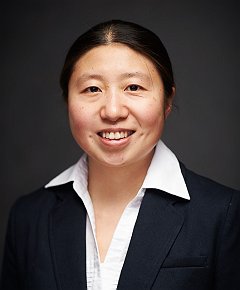
Tara Boroushaki is an incoming Assistant Professor in Electrical & Computer Engineering at Yale University. She completed her Ph.D. at MIT (expected May 2025), advised by Prof. Fadel Adib, with a focus on sensing and mobile technologies. Her research spans wireless networking, robotics, and human-computer interaction, emphasizing multi-modal sensing for environmental perception. Key achievements include the Microsoft Research PhD Fellowship (2022–2024) and the IEEE RFID '23 Best Paper Award. Her work on RF-based 'X-ray vision' has been featured in TEDxMIT and media outlets like the BBC and World Economic Forum. She co-founded Cartesian Systems, deploying sensing technologies in retail and supply chain. Research interests include non-line-of-sight perception, RFID localization, and robotic grasping. She has developed systems like FuseBot and RFusion, highlighted as transformative in MIT's '103 Ways to Make the World Better' initiative.
Professor Paul A. Raschky is affiliated with the Department of Economics at Monash University , where he also directs the SoDa Labs and co-founded the KASPR Datahaus PTY LTD and IP Observatory . His academic focus spans Political Economy , Environmental Economics , Insurance Economics , and Development Economics , with a specialization in natural hazards and data science applications. Education: PhD (University of Innsbruck, 2008), with a postdoctoral research visit at the Wharton School . Research: Explores intersections of disaster risk , governance , and economic development , leveraging machine learning and big data . Recent Publications: Focus on generative AI productivity , ethnic favoritism , disaster insurance , and conflict economics . Awards: Recipient of the ABDC Award for Innovation and Excellence in Research (2022) and Dean’s Excellence in Research Award (2016) . Projects: Leads initiatives on internet suppression in Myanmar , news media availability , and AI-driven policy insights in South-East Asia and the Pacific. Future Work: Will be on sabbatical in 2025 , likely expanding on AI applications and disaster resilience .
Maarten Kroesen is an Associate Professor in the Transport and Logistics group at Delft University of Technology's Faculty of Technology, Policy and Management. His research focuses on travel behavior analysis, sustainable transport, and quantitative methods. He earned his PhD cum laude in 2011 with work on aircraft noise annoyance and has since shifted to mobility patterns and policy analysis. Kroesen teaches courses on statistics, data analysis, and travel behavior research, and has received multiple awards including the Best Teacher of the Year (2016) and Henk Sol Award (2011). His work bridges behavioral theory with policy implications, emphasizing longitudinal panel data methods. Education: PhD (cum laude) in Transport Policy and Management (TU Delft, 2011), MSc in Systems Engineering (TU Delft) Research Interests: Travel behavior dynamics, sustainable mobility transitions, latent class models, accessibility disparities Awards: Over six major accolades, including best thesis and innovation awards Expertise: Policy advising on aviation, transport equity, and behavioral modeling Recent work explores emerging time-use patterns, zero-emission flight impacts, and bidirectional effects between accessibility and travel behavior. He actively contributes to Dutch policy discussions on aviation and transport infrastructure.
Luca Demetrio is an Assistant Professor at the University of Genoa, Italy, specializing in adversarial machine learning and cybersecurity. Previously, he was a Post-doctoral Researcher at the PRA Lab within the Department of Electrical and Electronic Engineering at the University of Cagliari. He holds bachelor's (2015), master's (2017), and Ph.D. (2021) degrees from the University of Genova, with his doctoral thesis focusing on formalizing evasion attacks against security detectors. His research emphasizes enhancing the robustness of machine learning models against adversarial attacks, particularly targeting malware detectors, SQL injection defenses, and Windows security systems. He leads the development of SecML Malware, a Python library for generating adversarial Windows malware, and contributes to the SecML framework. His work has been published in top-tier journals like ACM TOPS and IEEE TIFS. Key research interests include adversarial example generation, malware analysis, and cybersecurity defense mechanisms. He has explored query-efficient attacks on phishing detectors, certified adversarial robustness via randomized smoothing, and robust synthetic data-driven threat detection. His recent studies (2023–2025) address challenges in hardening machine learning models against evasion attacks, adversarial SQL injection countermeasures, and securing autonomous driving systems from adversarial reinforcement learning attacks.
Dr. Han Du is an Associate Professor in the Department of Psychology at the University of California, Los Angeles (UCLA). He holds a PhD from the University of Notre Dame and leads the Du Research Lab. His methodological expertise includes Bayesian statistics, longitudinal data analysis, structural equation modeling, meta-analysis techniques, and machine learning applications in psychological research. Dr. Du's substantive research applies quantitative methods to developmental, clinical, cognitive, educational, and health psychology. His recent publications focus on transgender adolescent stress assessment, LGBTQ+ mental health in military contexts, social network interventions for HIV prevention, and minority stress theory applications. He teaches advanced statistical methods and supervises graduate students in quantitative psychology.
Giovanna Gioli is a Senior Lecturer in Human Geography at Bath Spa University's School of Sciences. She is a co-investigator in the Leverhulme Trust-funded project Digital Climate Futures , exploring decolonial and justice perspectives in climate change adaptation. Her research focuses on political ecology, climate migration, gender equity, and socio-ecological resilience in mountain regions of the Global South, particularly South Asia. PhD in Political Philosophy (University of Parma) MA in Political Philosophy (University of Pisa) MSc in European Studies and Migration (London School of Economics) Her research interests intersect political ecology, climate change adaptation, and the socio-cultural dimensions of migration. She examines how gender, conflict, and environmental hazards shape livelihoods and vulnerability in regions like Pakistan, Nepal, and the Hindu Kush Himalaya. Her work challenges dominant narratives, advocating for justice-oriented approaches to digitalized climate adaptation and decolonizing environmental research frameworks. Gioli has contributed to major projects such as HI-AWARE, analyzing vulnerability in glacier-dependent river basins, and authored commissioned reports for UN Women on migrant workers' socio-economic impacts in Nepal. She also co-edited Water Security across the Gender Divide and Thinking as Anarchists , advancing interdisciplinary debates in environmental humanities and critical theory. Teaching: Directed BSc Global Development and Sustainability at Bath Spa University (2020–2025), module leader for Cities and Environment , and teaches interdisciplinary research methods in environmental humanities. Grants: Leverhulme Trust (Digital Climate Futures, 2023–2026), HI-AWARE (2014–2018), and others addressing environmental migration and vulnerability. She is affiliated with the Research Centre for Environmental Humanities and the Climate, Hazards and Environmental Change Research Cluster at Bath Spa University. Her work bridges philosophical inquiry (e.g., Deleuze, Sartre) with applied research on environmental displacement, emphasizing the need for equitable, community-centered solutions.
Stacey Garrett (she/her/hers) is an Associate Professor in the Counseling, Family Therapy, and Higher Education Department at Appalachian State University’s Reich College of Education. Her research focuses on diversifying higher education through qualitative exploration of faculty, staff, and students of color’s experiences. She advises graduate students across certificate, master’s, and doctoral programs delivered both online and in-person. Member of the Reich College of Education Mentoring Guild Advocate for faculty professional and personal growth Emphasizes institutional leadership strategies for recruitment/retention of diverse faculty Her work highlights challenges like pandemic-era community disruption and burnout prevention through mentorship. Key research themes include Black women faculty navigation, culturally responsive teaching, and systemic barriers faced by marginalized groups in academia.
Gergely Baics is an Associate Professor of History and Urban Studies at Barnard College, serving as Helman Endowed Faculty Chair of Urban Studies and Faculty Co-Director of the Barnard Empirical Reasoning Center. He holds a joint appointment between the History Department and Urban Studies Program, with collaborative ties to Columbia University's History Department and the Center for Spatial Research at GSAPP. His research focuses on spatial and urban history, digital public history, and 19th-century U.S. economic and social dynamics. Notable projects include the Envisioning Seneca Village 3D digital model and the Mapping Historical New York spatial atlas. Education: B.A. (2002) and M.A. (2003) from ELTE University and Central European University in Budapest; M.A. and Ph.D. (2009) in History from Northwestern University. His work has been supported by grants from the American Council of Learned Societies, the Andrew W. Mellon Foundation, and the Max Weber Fellowship. Research interests emphasize urban food systems, spatial analysis of historical patterns, and digital methods. His book Feeding Gotham (2016) was recognized as one of the Financial Times' Best History Books. Current projects explore 19th-century urban peripheries and Indigenous urban systems in colonial Spanish America. Awards include Barnard's Gladys Brooks Teaching Award and a CaGIS Map Design Competition win. Courses taught include transnational urban history, New York City history, and spatial history methodologies. Collaborative efforts involve multidisciplinary teams across institutions, focusing on public-facing digital history projects.
Dr. Sam Schreyer is a Professor of Economics at the Department of Economics, Finance & Accounting, Fort Hays State University. He holds a Ph.D. in Economics from Claremont Graduate University (2009), an M.A. in Economics (2004), and a B.M. in Music (2001), both from Wichita State University. His research focuses on applied macroeconomics, developing economies, financial crises, and inflation dynamics. Education: Ph.D. in Economics, Claremont Graduate University, 2009 M.A. in Economics, Wichita State University, 2004 B.M. in Music, Wichita State University, 2001 Research Interests: Dr. Schreyer examines macroeconomic policies in emerging markets, the impact of financial crises, and inflation dynamics. His work often integrates econometric models to analyze sudden stops, currency crises, and university contributions to local economies. Recent projects include annual economic impact reports for Fort Hays State University, emphasizing institutional roles in regional development. Collaborations & Grants: He frequently collaborates with Emily Breit and Tom Johansen on institutional impact studies and Docking Institute-funded projects. His research also explores educational policy through online vs. in-person learning outcomes, addressing retention strategies and selection bias. Labs/Teams: Affiliated with the Department of Economics, Finance & Accounting and the Docking Institute of Public Affairs. Office: McCartney Hall 203D.
Victoria J. Orphan is the James Irvine Professor of Environmental Science and Geobiology at Caltech, where she directs the Center for Environmental Microbial Interactions. Her research investigates microbial processes in anaerobic ecosystems including deep-sea methane seeps, hydrothermal vents, and coastal sediments using interdisciplinary approaches combining molecular biology, stable isotope techniques, and geochemistry. Her laboratory focuses on: Microbial partnerships in methane cycling Ecophysiology of uncultured archaea and bacteria Viral ecology in marine environments Biogeochemical impacts of microbial communities Blue carbon sequestration in seagrass ecosystems Professor Orphan has developed innovative methods including BONCAT-FISH and nanoSIMS for studying microbial activity in environmental samples. Her research group maintains active field programs in Monterey Canyon and hydrothermal vent systems, and develops high-pressure incubation systems for studying deep-sea microbes. She teaches courses on microbial ecology and evolution, and mentors graduate students through the Geobiology and Environmental Science programs.
Sheelagh Carpendale is a Professor and Canada Research Chair in Information Visualization at Simon Fraser University's School of Computing Science. Her research focuses on Information Visualization, Interaction Design, and Human-Computer Interaction, with a strong emphasis on large display interaction, visual analytics, and personal visualization. She leads the Innovations in Visualization Interactive Experiences (ixLab) and has contributed to over 200 publications. Education: PhD (Computing Science, Simon Fraser University, 1999); BSc (Computing Science, Simon Fraser University, 1992). Research Interests: Dr. Carpendale's work bridges theory and practice, emphasizing user-centered design and interdisciplinary collaboration. Key areas include data physicalization (e.g., Kirigami-inspired visualizations), interactive technologies for healthcare, and educational tools like TangiBooks for programming concepts. Her lab explores novel interaction paradigms for large displays and mobile devices. Recognition: Recipient of the 2018 IEEE Visualization Career Award, numerous best paper awards, and leadership roles in conferences like IEEE VIS. Her contributions span academic, industrial, and public engagement contexts, including projects on clinical decision support and public data literacy. Grants & Labs: Active in securing research grants for projects like the Arctic Movement visualization and Energy Data initiatives. The ixLab collaborates with artists, scientists, and healthcare professionals to create impactful visualizations.
Dr. Hongxing Jiang is a Professor at the Whitacre College of Engineering, Texas Tech University, affiliated with the Department of Electrical & Computer Engineering. He holds the Edward E. Whitacre Jr. Chair and co-directs the Center for Nanophotonics. PhD in Physics, Syracuse University (1986) MS in Physics, Syracuse University (1983) BS in Physics, Fudan University (1981) His research focuses on III-Nitride semiconductors (BN, AlN, GaN, InN) for optoelectronics , photonics , and radiation detection . Key areas include solid-state lighting , energy-conversion devices , MOCVD growth , and micro-emitter arrays . Recent publications highlight advancements in h-BN quasi-bulk crystals , fast neutron detectors , and wide bandgap materials . Themes span crystal growth optimization , doping techniques , and optical characterization . National Academy of Inventors Fellow (2018) American Association for the Advancement of Science Fellow (2016) International Society for Optics and Photonics Fellow (2015) Optica Fellow (2014) American Physical Society Fellow (2010) China-U.S. Physics Examination and Application Fellow (1981) As co-director of the Center for Nanophotonics, Jiang leads research in semiconductor materials for high-energy lasers and neutron detection , emphasizing scalable growth methods like hydride vapor-phase epitaxy .
Dr. Yanchao Liu is an Associate Professor at Wayne State University's College of Engineering, Department of Industrial and Systems Engineering. He has received research funding from the National Science Foundation and the State of Michigan, including the NSF Career Award. His academic career spans prior industry roles as a Data Scientist and Manager of Advanced Analytics at Sears Holdings Corporation (2016-2017) and Director of Brand Marketing Analytics at Catalina Marketing Corporation (2017). He teaches courses in data science, IoT, and stochastic processes. B.S. Industrial Engineering, Huazhong University of Science and Technology (2006) M.S. Industrial Engineering, University of Arkansas (2008) Ph.D. Industrial and Systems Engineering, University of Wisconsin-Madison (2014) Dr. Liu's research focuses on mathematical modeling for transportation systems, industrial AI, and data analytics. His work addresses drone traffic management, battery-constrained delivery routing, and optimization algorithms for urban mobility. He has developed novel methods for UAV safety diagnostics, random forest implementations, and fairness-aware path planning in urban air mobility. His publications span journals like Journal of Guidance, Control and Dynamics , Transportation Research Part C , and IEEE Transactions on Intelligent Transportation Systems , with conference contributions at IISE and FAIM. His research combines theoretical advancements with practical applications in smart cities and logistics. NSF Career Award (2020) Faculty Research Excellence Award (2021) IEEE PES Best Conference Paper (2015) IEEE Transactions on Smart Grid Best Reviewer (2015) Hubei Province Distinguished Bachelor’s Thesis Award (2006) Dr. Liu advises PhD students like Zhenyu Zhou and J. Chen. He has contributed to energy market modeling (with M.C. Ferris) and published extensively on drone operations, machine learning algorithms, and stochastic processes. His work includes U.S. patent pending applications for UAV safety systems.
Limin Jia is a Research Professor in the Electrical and Computer Engineering (ECE) department at Carnegie Mellon University, with a courtesy appointment in the Computer Science Department (CSD). Affiliated with CyLab, their work focuses on applying formal techniques to enhance software security through programming language design, formal verification, and information flow analysis. Research interests span Security Programming Languages Formal Verification Information Flow Control Intermittent Computing Rust Programming . Recent publications integrate formal methods with practical security challenges, including Node.js vulnerability detection Rust API testing Secure multi-execution Intermittent computing type systems IFTTT security analysis Browser security frameworks . Limin serves on program committees for conferences like POPL, PLDI, VMCAI, and is actively involved in teaching courses such as Browser Security (18-636) Introduction to Information Security (18-631) .
Dominic Thibault is an Assistant Professor at the Faculty of Music, Université de Montréal . His research-creation explores human-machine interaction in musical contexts, focusing on embodied cognition through electroacoustic compositions, audiovisual performances, and musical software development. Co-director, Laboratoire Formes·Ondes Active member, CIRMMT (Centre for Interdisciplinary Research in Music Media and Technology) Research axis leader, Expanded Musical Practice (CIRMMT) Member, Québecor Millénium entrepreneurship committee Scientific committee member, ACFAS