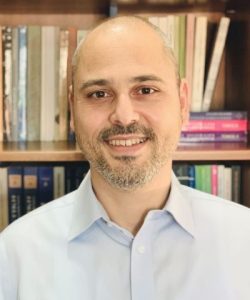
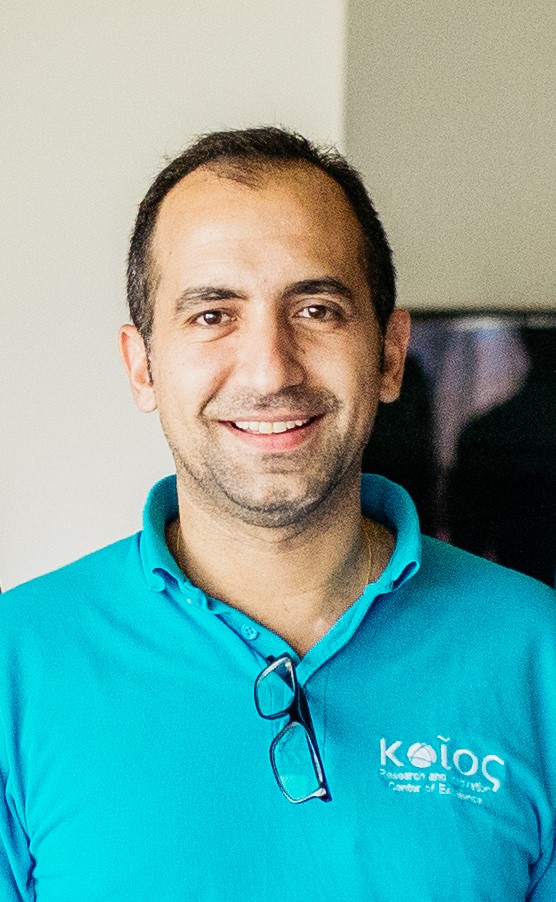
Stelios Timotheou is an Associate Professor at the Department of Electrical and Computer Engineering and faculty member at the KIOS Research and Innovation Center of Excellence, University of Cyprus. He holds a Dipl-Ing from National Technical University of Athens, and MSc/PhD from Imperial College London. His research focuses on developing real-time distributed methodologies using mathematical optimization, machine learning, and computational intelligence to enhance efficiency in critical infrastructure systems. Research interests center on data-driven decision making for urban mobility management, traffic control systems, and energy optimization. Key areas include: Intelligent UAV-based sensing for traffic monitoring Cooperative control algorithms for multi-agent systems Optimization of renewable energy integration Robust infrastructure protection strategies Recent publications demonstrate strong focus on traffic state estimation (76%), energy system optimization (16%), and UAV applications (8%). Awarded the Cyprus Research Award (2017) and ERC Consolidator Grant for URANUS project. Secured multiple research grants focusing on real-time control systems.
Panayiotis Kolios is an Assistant Professor at the Department of Computer Science, University of Cyprus (UCY). Previously, he served as a Research Assistant Professor at the KIOS Research and Innovation Centre of Excellence (2013–2024) and a Visiting Lecturer at UCY. He holds a BEng and PhD in Telecommunications Engineering from King’s College London (2008 and 2012, respectively). His research focuses on networked intelligent systems, emergency management using AI and UAV technologies, and cyber-physical systems. Education: BEng in Telecommunications Engineering, King’s College London, 2008 PhD in Telecommunications Engineering, King’s College London, 2012 Research Interests: His work centers on autonomous systems, intelligent transportation, and emergency management. Key areas include AI-driven disaster response, UAV-based surveillance, and algorithmic optimization for critical infrastructure. He develops solutions for real-time situational awareness and decision-support in emergencies. Recent work trends show a focus on multi-UAV coordination, disaster management platforms (like AIDERS), and AI applications in emergency response. His team’s 2023 win in the Cooperative Aerial Robots Inspection Challenge highlights advancements in UAV inspection algorithms. Scientific Awards: First Prize in Cooperative Aerial Robots Inspection Challenge (CDC 2023) Grants and Advising: He has secured over €40 million in EU and industrial grants, leading projects like PREDICATE, SWIFTERS, and AIDERS. His team advises on emergency response strategies and has trained first responders through EU-funded programs such as the Exchange of Experts training. Labs and Teams: He leads the Security and Emergency Response Group at KIOS CoE and established the Cyprus Civil Defence Aerial Observation Unit. His team collaborates with institutions like the Cyprus Police and Fire Service to operationalize UAV technologies in disaster scenarios.
Professor Ioannis Katakis is a Faculty Member at the University of Nicosia, where he is affiliated with the School of Sciences and Engineering and the Department of Computer Science. He has held various academic positions across multiple institutions including Aristotle University of Thessaloniki, University of Cyprus, Cyprus University of Technology, Open University of Cyprus, Hellenic Open University, Athens University of Economics and Business, and National and Kapodistrian University of Athens. His educational background includes a PhD in Machine Learning for Automated Text Classification (2005-2009), a Master's in Information Systems (2005-2007), and a Bachelor's in Computer Science (2000-2004), all from Aristotle University of Thessaloniki. Professor Katakis specializes in several cutting-edge areas of computer science and data analysis. His primary research interests include Mining Social, Web and Urban Data , Sentiment Analysis and Opinion Mining , Data Streams , and Multi-label Learning . His work bridges theoretical machine learning approaches with practical applications in social media analysis, healthcare informatics, privacy protection, and smart city technologies. He has published extensively in top venues including CIKM, ECML/PKDD, IEEE TKDE, and ECAI. His recent publications demonstrate a clear trend toward applying machine learning techniques to real-world problems with societal impact. He has focused on areas such as GDPR compliance in smart devices, sentiment analysis in crowd-sourced content, healthcare applications including drug reaction classification and brain disease monitoring, and privacy protection in wearable technologies. His work often involves multi-modal data analysis and addresses challenges in data streams and multi-label classification. Professor Katakis has made significant contributions to his field, with his research cited over 4,200 times. He serves as an Editor for the journal Information Systems and has edited four special issues in journals such as DAMI and InfSys. He regularly contributes to the academic community by serving on program committees for major conferences including ECML/PKDD, WSDM, DEBS, and IJCAI, and by reviewing for prestigious journals like TPAMI, DMKD, TKDE, TKDD, JMLR, TWEB, and ML. He has been actively involved in European research projects, notably serving as Quality Assurance Coordinator and Senior Researcher for projects such as VAVEL (www.vavel-project.eu) and INSIGHT (www.insight-ict.eu). His grant activities demonstrate a strong focus on collaborative, interdisciplinary research with practical applications in urban data management, social media analysis, and healthcare informatics. He has organized three workshops at major conferences (ICML, ECML/PKDD, EDBT/ICDT) and has extensive experience translating research into practical applications through his involvement in European projects.
Christos Nicolaides is an Assistant Professor at the Department of Business and Public Administration within the School of Economics and Management at the University of Cyprus (UCY), holding a secondary appointment as a Digital Fellow at MIT's Initiative on the Digital Economy. Previously, he spent three years as a James McDonnell Foundation-funded Postdoctoral Fellow at MIT Sloan School of Management. His educational background includes a PhD in Engineering from Massachusetts Institute of Technology (2014), SM from MIT (2011), MSc in Applied Mathematics from Imperial College London (2009), and BSc in Physics from University of Thessaloniki (2008). Nicolaides' research applies mathematical, statistical, and computational tools to large-scale empirical questions in social influence mediated by digital technologies. His work spans Data Science , Machine Learning , Social Networks , and Computational Social Science , with significant contributions to understanding human mobility patterns, disease transmission dynamics, and social contagion effects. His research has established novel methodologies for analyzing complex network structures in mobility data and social interactions. Analysis of his 15 most recent publications reveals a consistent focus on applying network science to real-world problems, particularly in pandemic response (12 publications), human mobility analytics (9 publications), and social contagion dynamics (7 publications). His work demonstrates increasing interdisciplinary integration, combining computer science, epidemiology, and organizational behavior since 2020. Marie S. Curie Fellow Two Highly Cited Papers by Web of Science (2017, 2020) Best Paper Award by Risk Analysis Society (2019) Professor of The Week by Poets & Quants (2020) As principal institutional investigator, Nicolaides has secured over €1 million in research funding from the European Commission, industry partners, Cyprus Innovation and Research Foundation, and Cyprus Ministry of Health. His current teaching includes Social Networks and Entrepreneurship, Introduction to Operations Management, and Quantitative Methods in Management. Media coverage of his work spans major outlets including The New York Times, CNN, Nature, and Science, with significant impact on public health policy discussions during the COVID-19 pandemic.
Professor Mohammed Salamah is a distinguished faculty member in the Computer Engineering Department at Eastern Mediterranean University's Faculty of Engineering. He maintains an office in room 114 and can be contacted at +90 392 630 1149/1334 or via email at muhammed.salamah@emu.edu.tr. His academic website provides additional resources for students and colleagues. Dr. Salamah earned his BS, MS, and PhD degrees in Electrical and Electronics Engineering from Middle East Technical University in 1988, 1990, and 1996 respectively, establishing a strong foundation for his career in network communications and wireless systems. His research interests span multiple critical areas in modern networking, with particular expertise in Wireless Sensor Networks, Internet of Things (IoT) security, Mobile Communications, and Energy Efficiency in network protocols. Professor Salamah has made significant contributions to the understanding of network security mechanisms, trust management systems, and optimization of wireless communication protocols. An analysis of his recent scholarly output reveals a strong focus on security challenges in IoT communication systems, controller placement optimization in software-defined wireless sensor networks, and trust-based malicious node detection schemes. His work demonstrates consistent attention to practical network performance issues while addressing emerging challenges in next-generation communication technologies. Throughout his academic career, Professor Salamah has demonstrated exceptional commitment to student mentorship, supervising numerous graduate students through their research journey. His administrative contributions include service as an associate editor, reviewer, and session chair for academic conferences. His laboratory work focuses on practical implementations of wireless communication protocols, with emphasis on energy efficiency, security mechanisms, and performance optimization for various network architectures including cellular networks, cognitive radio systems, and wireless sensor networks.
Assoc. Prof. Dr. Yıltan Bitirim is a faculty member at the Computer Engineering Department of Eastern Mediterranean University in North Cyprus. With over two decades of academic experience, he has served in various roles including Vice Chair (2014-2022), Academic Affairs Coordinator (2025-), and committee member for ABET assessment, curriculum development, and faculty recruitment. Current academic rank: Associate Professor Active administrative roles: Senate Member (2023-), Information Technology Commission Member (2023-) Professional memberships: ACM, IEEE Senior Member, Cyprus Turkish Chamber of Computer Engineers Research Interests focus on four primary areas: Information Retrieval Systems – evaluating search engine effectiveness and reverse image search performance Machine Learning – applied to emotion classification, gender recognition, and medical diagnosis Data Mining – used in Turkish word-stemming analysis and user behavior studies Biometrics – specializing in hand/wrist/palm vein recognition systems and voice-based identification Publications demonstrate consistent contributions across disciplines, with recent works (2023-2025) emphasizing: Deep learning applications in biometric authentication Advanced emotion recognition systems Medical AI for diabetes management and retinopathy diagnosis Biometric spoof detection mechanisms Turkish language processing challenges Recommendation system innovations Awards & Recognition : Research Incentive Awards (2020, 2021) Best Paper Award at ICIW 2007 IEEE Senior Member status As an educator, he has supervised numerous thesis committees and taught foundational courses in computer engineering, including CMPE 112 and CMPE 342. His certifications (MCTS, MCITP) reflect technical expertise in Microsoft technologies.
George N. Papageorgiou is a Professor of Management & Information Systems at the Gregoriou School of Business Administration, European University Cyprus. He serves in leadership roles including Deputy Dean (2012–2017) and PhD Programme Coordinator (2015–2017). He holds a PhD in Systems Modelling and Simulation from City University, London (1997), along with an MBA (1994) and First Class Honours in Engineering (1992). His research focuses on digital marketing competencies, smart urban mobility systems, entrepreneurship education, and system dynamics modeling for healthcare and sustainability. Notable projects include the SPN (Smart Pedestrian Network) system, funded by Horizon 2020, and the DIMAS project addressing digital marketing frameworks. Awarded the IEEE Best Paper Award (2017) and Innovation Distinction (SPARKS 2019), his work spans over 50 publications in journals like IEEE and Emerald. He actively reviews for IEEE, Emerald, and the System Dynamics Society. His consulting roles include EU research proposal evaluation and editorial work for Emerald. Key achievements include developing frameworks for sustainable urban mobility and green entrepreneurship education. He has led EU-funded projects totaling millions in grants, emphasizing interdisciplinary approaches to innovation and education.
Prof. Dr. Zeki Bayram is a full Professor and current Chairman of the Computer Engineering Department at Eastern Mediterranean University (EMU). He has served as the founding chairman of the Internet Technologies Research Center (2006) and chaired the departmental ABET committee from 2010 to 2023. His academic contributions span semantic web services, mobile payment systems, and XML-based technologies. Founded Cybersoft Bilişim Teknolojileri Limited, a dormant software company in North Cyprus Active in academic service, including thesis supervision and editorial roles Teaches courses on programming languages, automata theory, and software tools Research focuses on semantic web service composition, secure payment schemes, and declarative programming paradigms. His work integrates logic programming, constraint solving, and ontology engineering. Prof. Bayram has published extensively in journals and conferences since the 1990s, with notable contributions to formal methods in service-oriented architectures.
Prof. Dr. Fadi AL-TURJMAN serves as the founding Dean of the Faculty of AI and Informatics at Near East University (NEU), Cyprus. He holds multiple leadership roles including Head of the Software Engineering Department and Director of the AI and Robotics Institute and the International Research Center for AI and IoT. With a PhD in Computer Science from Queen’s University (2011), he specializes in AIoT systems, wireless networks, and blockchain integration. Affiliation: Near East University Leadership: Founding Dean for AI and Informatics, Director of AI & Robotics Institute Research Focus: His work bridges Artificial Intelligence of Things (AIoT) , Blockchain Applications , and Smart Networking . He explores cybersecurity frameworks for smart cities, quantum state optimization techniques, and novel AI-driven solutions for healthcare, agriculture, and energy systems. Key Article Trends: Recent publications emphasize Transformer models for environmental monitoring, blockchain-enabled security protocols , and evolutionary algorithms for resource optimization. His research spans interdisciplinary domains including medical diagnostics, vehicular networks, and sustainable infrastructure. Scientific Awards: Lifetime Golden Award of Dr. Suat Gunsel (2022) Multiple Best Research Awards at International Venues Labs & Teams: Directs the International Research Center for AI and IoT at NEU, leading multidisciplinary teams in developing advanced networking technologies and AI-driven solutions for global value chain applications.
Professor George Giaglis is a prominent academic in the School of Business at the University of Cyprus, serving as Director of the Institute for the Future. He holds a PhD in Information Systems from Brunel University and a BSc (Hons) in Information Systems from the Athens University of Economics and Business. His academic journey includes roles such as Professor, Vice Rector, and Associate Professor at the Athens University of Economics and Business (2002–2017) and prior positions at the University of the Aegean and Brunel University. His research focuses on blockchain technology, IoT, digital currencies, and pervasive information systems. He has contributed to over 200 publications, exploring topics like blockchain integration in marine systems, NFTs, CBDCs, and social network dynamics. His work bridges technology and business, addressing digital transformation challenges and ethical implications of emerging technologies. Giaglis has organized major conferences like Decentralized 2019 and contributed to EU blockchain policy discussions. His research emphasizes practical applications of technology in sectors like healthcare, finance, and urban logistics. Despite prolific output, no specific awards are noted, though his h-index of 25 reflects significant academic impact. His current roles involve advancing the Institute for the Future’s projects, advising on digital innovation strategies, and mentoring researchers in decentralized systems. Ongoing work includes exploring AI-blockchain synergies and regulatory frameworks for digital currencies.
Dr. Michael Georgiades is an Assistant Professor at Neapolis University of Pafos, specializing in computer networks. He holds a BEng (First Class Honours) from King’s College London, an MSc from University College London, and a PhD from the University of Surrey. His career includes roles as R&D Manager at Primetel PLC, Research Fellow at the Centre of Communication Systems Research (CCSR), and Systems Development Engineer at INSIG Ltd. He has contributed to EU-funded ICT projects, holds patents, and authored IETF standards. His research focuses on Tactile Internet, Mobile Edge Computing, Vehicular Networks, IoT, and Edge Intelligence. Research Interests: Tactile Internet Mobile Edge Computing Vehicular Networks IoT Edge Intelligence Awards: Nokia Prize for Research Excellence Primetel Awards for Excellence EPSRC and British Council Studentships Publications span cutting-edge topics like adversarial ML attacks on IoT networks, cryptocurrency market analysis, and satellite-backhauled 5G systems. His work bridges theoretical advancements with practical applications in healthcare, agriculture, and transportation systems.
Panos K. Chrysanthis is a Professor of Computer Science at the University of Pittsburgh and an adjunct Professor at Carnegie-Mellon University and the University of Cyprus. He holds a BS in Physics with a Computer Science concentration from the University of Athens, Greece, and MS and PhD degrees in Computer and Information Sciences from the University of Massachusetts Amherst. He has been affiliated with the University of Pittsburgh since 1991, serving as Director of the Advanced Data Management Technologies (ADMT) Lab. His research focuses on database systems, mobile and pervasive data management, distributed computing, and real-time systems, with recent emphasis on data streams and energy-efficient data management for IoT and sensor networks. Chrysanthis has authored over 100 peer-reviewed publications, including a book on transaction processing and consistency in distributed databases. He has received the NSF CAREER Award (1995) and the University of Pittsburgh's Provost Award for Excellence in Mentoring (2015). He has held editorial roles at the VLDB Journal, IEEE TKDE, and DAPD, and has organized major conferences like ICDE and MDM. His work bridges theoretical database research with practical applications in urban informatics, healthcare, and sustainability. Chrysanthis has advised numerous students, contributed to grants focused on big data and healthcare analytics, and co-developed tools like the ADMT Lab's experimental platforms for urban mobility and congestion. He is a Senior Member of IEEE and an ACM Distinguished Scientist.
Vasos Vassiliou is an Associate Professor in the Department of Computer Science at the University of Cyprus and Founding Academic Member & Research Group Leader at the Smart Networked Systems (SNS) Multidisciplinary Research Group within the CYENS Research Center. His work focuses on systems and protocols for improving network performance, reliability, and security in next-generation communication systems (5G/6G), with a strong emphasis on distributed AI/ML techniques, device-to-device (D2D) networking, IoT security, programmable metasurfaces, and intelligent network resource management. Department of Computer Science, University of Cyprus CYENS Research Center, Cyprus His research spans multiple subfields including D2D communication (interference management, device discovery), IoT security (blockchain solutions, intrusion detection), network optimization (traffic prediction, power management), and programmable metasurfaces for advanced beam steering. Recent projects like ERMIS (3D Indoor Positioning), ADROIT-6G (DAI-driven architecture), and METACITIES (digital twins/metaverse) demonstrate his leadership in cutting-edge research. His publications reveal a strong focus on distributed intelligence , machine learning applications , and security protocols across wireless systems. He has supervised multiple PhD students to completion and actively contributes to IEEE/ACM as Senior Member. IEEE Senior Member ACM Senior Member Teaching responsibilities include core courses like Computer Networks and specialized postgraduate modules on IoT Networks .
Prof. Nearchos Paspallis is the Head of the School of Sciences and Professor in Mobile and Distributed Systems at UCLan Cyprus. He holds a PhD in Computer Science from the University of Cyprus (2010) and has extensive academic leadership roles, including Deputy Head of School (2020–2022) and Chair of the Teaching and Learning Enhancement Committee (2018–2023). His teaching responsibilities include leading the BSc (Hons) Computing program and delivering modules on software development, mobile computing, and algorithms. Education: PhD Computer Science (University of Cyprus, 2010), MSc Computer Science (University of California, 2002), BEng/MEng Computer Engineering and Informatics (University of Patras, 2001). His research focuses on software engineering , distributed systems , and mobile computing , with recent work on machine learning applications, context-aware systems, and computer science education. He has pioneered initiatives like Code Cyprus to inspire youth in coding and co-led EU-funded projects such as WIDERa (€4.2M) and MentorME (€296K). Key Awards: Shortlisted for 2024 Outstanding Contribution award, Best Paper (2016), Fulbright Scholarship (2001). Prof. Paspallis has supervised multiple research projects, including a PhD on MMOG backend architectures. His outreach efforts extend to judging hackathons and robotics competitions, emphasizing STEM engagement.
Dr. Andria Procopiou is a Lecturer in Artificial Intelligence and Cybersecurity at the University of Central Lancashire Cyprus, serving as Course Leader for the MSc Computing program and Deputy Course Leader for the MSc Cybersecurity. She holds a PhD in Computer Science (City, University of London, 2022), an MSc in Human-Computer Interaction (University College London, 2014), and a BSc in Computer Science (University of Surrey, 2013). Her research spans AI applications in sports analytics, cybersecurity for smart cities/IoT, hate speech detection, and metaverse safety. She has led modules in User Experience Design, Penetration Testing, and Cybersecurity. Research interests include AI-driven solutions for sports injury prediction, real-time DDoS detection in IoT networks, and ethical challenges in the metaverse. Her work emphasizes explainable AI (XAI) for transparency in decision-making systems. She has published extensively in journals like Wireless Communications and Mobile Computing and conferences such as IEEE CYBER and the International Conference on Human-Computer Interaction. Education: PhD Computer Science (City University London), MSc HCI (UCL), BSc Computer Science (University of Surrey) Key Roles: Course Leader (MSc Computing), Deputy Course Leader (MSc Cybersecurity) Administrative Contributions: Module leadership in AI, Cybersecurity, and Digital Forensics Her recent publications address critical issues like privacy concerns in smart campuses, gender-based hate speech in virtual spaces, and injury patterns in professional football using data analytics. She collaborates with industry on IoT security solutions and metaverse governance frameworks.