Ron Steinfeld is an Associate Professor at the Cybersecurity Lab of the Faculty of Information Technology , Monash University . His research focuses on lattice-based cryptography , post-quantum cryptographic protocols , and privacy-preserving technologies . He has contributed to advancements in secure multiparty computation , digital signatures , and blockchain confidentiality . Key areas: Lattice-Based Cryptography, Zero-Knowledge Proofs, Blockchain Security Recent work trends: Quantum-safe protocols, Efficient sampling algorithms, Scalable blockchain solutions Scientific Awards : BEST PAPER AWARD (ASIACRYPT 2015) He has served on program committees for major conferences including CRYPTO , EUROCRYPT , and ASIACRYPT . Ron is a member of the Discrete Mathematics Research Group and has collaborated with institutions like Macquarie University in the past.
Marco Pirola is a Full Professor at the Department of Electronics and Telecommunications (DET) of the Polytechnic University of Turin, Italy. He is a member of the Interdepartmental Center 'CleanWaterCenter@PoliTo' and actively contributes to research in high-frequency electronics and microwave engineering. His work focuses on power amplifiers, device characterization, and advanced microwave circuit design. Research Interests: Microwave power devices, GaN technology, 5G/mm-Wave applications, space communications, and smart pipeline monitoring systems. Awards: IEEE Fellow (since 2019), IEEE Senior Member. Recent Publications address topics like Ka-band MMIC amplifiers for SAR systems, broadband Doherty amplifiers using GaN, and harmonic analysis of current-mode power stages. His projects include STARGATE (European GaAs power architectures) and Millimetre-Wave GaN Radar for UAV detection. Teaching: He leads courses on 'Radio Frequency Integrated Circuits' and 'Advanced Devices for High Frequency Applications' at the Polytechnic University of Turin. Supervised PhD students include Wenjun Zhang and Abbas Nasri, who worked on III-V HEMT circuits and GaN power amplifiers.
Shwetak N. Patel serves as Professor and Associate Director for Development & Entrepreneurship at the University of Washington's Paul G. Allen School of Computer Science & Engineering, with a joint appointment in the Department of Electrical & Computer Engineering. He holds the Washington Research Foundation Entrepreneurship Endowed Professorship and directs the Ubicomp Lab. His research spans Human-Computer Interaction, Ubiquitous Computing, and Sensor-Enabled Embedded Systems with applications in health and sustainability. Key focus areas include mobile health technologies, energy/water sensing systems, and low-power wireless platforms. His work bridges computing with real-world sustainability challenges through practical sensor applications. Patel has received numerous prestigious awards including the MacArthur Fellowship, ACM Prize in Computing, and Presidential PECASE Award. His scientific recognition spans foundational computing contributions and impactful commercialization. MacArthur Fellowship (2011) ACM Prize in Computing (2018) Presidential PECASE Award (2016) Sloan Fellowship (2012) NSF Career Award (2013) He actively advises students through the Ubicomp Lab and has secured significant research funding supporting health and sustainability projects. His commercial ventures include three successful startups acquired by major corporations. Patel maintains strong community engagement through K-12 STEM outreach and government advisory roles. His laboratory work focuses on practical sensor systems for home environments, with ongoing projects in mobile health monitoring and resource conservation technologies.
Rasheed Hussain is an Associate Professor of Intelligent Network Security at the Smart Internet Lab and Bristol Digital Futures Institute (BDFI), School of Electrical, Electronic and Mechanical Engineering at the University of Bristol, UK. Previously, he served as a Senior Lecturer at the same institution from December 2021 to July 2025. He has held academic positions at Innopolis University, Russia, where he served as Associate Professor and Director of the Institute of Information Security and Cyber-Physical Systems, and as a guest researcher at the University of Amsterdam, Netherlands. His educational background includes a PhD in Computer Engineering from Hanyang University, South Korea (2011-2015), an MS in Computer Engineering from the same institution (2008-2010), and a B.Sc in Computer Software Engineering from the University of Engineering and Technology, Peshawar, Pakistan (2003-2007). Hussain's research focuses on network and cybersecurity, particularly future network security including 6G, the role of Digital Twins in future networks and systems security, and Responsible AI including fairness, trustworthiness, and explainability. His work spans information security, privacy, applied cryptography, vehicular networks, Internet of Things, Content-Centric Networking, cloud computing, API security, and blockchain applications. Senior member of IEEE Member of ACM ACM Distinguished Speaker Editorial board member for IEEE Communications Surveys & Tutorials, IEEE Access, and other journals His recent publications demonstrate a strong focus on the intersection of AI, networking, and security, with particular emphasis on Digital Twins, blockchain applications, federated learning, and 6G security. His research shows a clear trajectory toward addressing security challenges in emerging network architectures while incorporating responsible AI principles. Scientific Recognition: ACM Distinguished Speaker Netherlands University Teaching Qualification (Basis Kwalificatie Onderwijs, BKO) Hussain serves as a reviewer for major IEEE transactions, Springer and Elsevier journals, and participates in technical program committees for conferences including IEEE VTC, IEEE VNC, IEEE Globecom, and IEEE ICC. He is also certified as a trainer for the Instructional Skills Workshop (ISW) and contributes to the ESRC Centre for Sociodigital Futures (CenSoF) at the University of Bristol. His laboratory work centers around the Networks and Blockchain Lab, which focuses on security solutions for next-generation networks, with particular emphasis on Digital Twins security, blockchain applications, and AI-driven network security solutions. His current projects involve developing secure frameworks for future networks, trustworthy AI models, and privacy-preserving federated learning approaches.
Lingxi Li is a Professor at the Elmore Family School of Electrical and Computer Engineering at Purdue University's Indianapolis campus. His research focuses on modeling complex systems, connected and automated vehicles, intelligent transportation systems, and parallel intelligence. He holds a Ph.D. from the University of Illinois at Urbana-Champaign (2008), and master's and bachelor's degrees from the Chinese Academy of Sciences (2003) and Tsinghua University (2000). Research Interests: Dr. Li's work bridges control systems, transportation engineering, and AI, with emphasis on human-machine interaction, autonomous vehicle systems, and scenario-based traffic modeling. His projects include developing frameworks for Industry 5.0 collaboration, enhancing traffic flow prediction through parallel learning, and advancing safety in micro-mobility systems like e-scooters. Recent Publications: Over 15+ articles (2023-2025) explore topics such as game-theoretic vehicle interaction modeling, vision-language systems for autonomous driving, and acoustic SLAM technologies. These studies reflect a focus on real-world validation and system integration in smart transportation. Labs & Initiatives: Leads research in autonomous mining systems and scenario engineering for intelligent vehicles, leveraging parallel intelligence concepts. Collaborates on projects like ParallelWorkforce (Industry 5.0 frameworks) and SceNDD++ (naturalistic driving datasets).
V.S. Subrahmanian is the Walter P. Murphy Professor of Computer Science at Northwestern University and a Faculty Fellow at the Northwestern Buffett Institute for Global Affairs. His research focuses on AI-driven solutions for security challenges, including forecasting terror attacks, preventing poaching, and analyzing social media threats. Education includes a PhD and MS in Computer Science from Syracuse University (NY) and an MSc (Tech.) from Birla Institute of Technology and Science (India). Research interests span AI applications in cybersecurity, predictive modeling for security policy, and machine learning for geospatial/social network analysis. Recent work addresses deepfakes, banking crisis forecasts, and airline profit optimization. Notable publications include works on Android malware detection, adversarial attack defenses, and geospatial conflict analysis. His research has influenced international security policies and industry practices. No scientific awards are listed in the provided text. Advising/grants information appears incomplete in the source material. Active involvement in multidisciplinary teams tackling global security challenges is implied through his institutional affiliations.
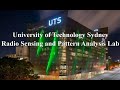
Prof. Andrew Zhang is a Professor at the School of Electrical and Data Engineering, University of Technology Sydney (UTS). He leads the UTS Radio Sensing and Pattern Analysis (RaSPA) Lab and serves as Technical Director of the UTS-TPG Network Sensing Lab. His research focuses on integrated sensing and communications (ISAC), wireless signal processing, and autonomous vehicular networks. He holds a PhD from the Australian National University and has over 15 years of industry experience, including roles at CSIRO and ZTE Corp. Education: B.S. (Xi’an Jiaotong University), M.Sc. (Nanjing University of Posts and Telecommunications), Ph.D. (Australian National University). Research Interests: ISAC, radio sensing, machine learning for communications, and 6G waveform design. Key projects include developing perceptive mobile networks and flood/storm sensing via ISAC. Publications: Over 290 papers, 5 patents, and notable works on ISAC frameworks, joint communication-sensing systems, and mmWave technologies. Recent trends emphasize ISAC, 6G waveforms, and IoT integration with federated learning. Awards: CSIRO Chairman’s Medal, Australian Engineering Innovation Award, and multiple best paper awards. Active in IEEE leadership roles, including Editor-in-Chief of ISAC-Focus. Grants: ~$8M in research funding. Advises on ISAC-ETI initiatives and collaborates with industry partners like TPG Telecom. Labs: RaSPA Lab (radio sensing analytics) and UTS-TPG Lab (ISAC industrial solutions).
Wooram Park is an Associate Professor in the Department of Mechanical Engineering at the University of Texas at Dallas (UT Dallas), affiliated with the Erik Jonsson School of Engineering and Computer Science. He leads the Robotics and Intelligent Systems Laboratory (ROBINS Lab) and holds a PhD from Johns Hopkins University (2008), along with MS and BS degrees from Seoul National University (2003 and 1999). His research focuses on robotics, biomedical robotics, computational structural biology, and image processing. Key projects include flexible needle steering for medical applications, haptic feedback systems, and advanced algorithms for motion planning and image reconstruction. He has received notable awards such as the Creel Fellowship (2007) and Critics’ Choice Award in ArtBot Design (2004). His work spans theoretical contributions in stochastic systems and practical innovations like vibratory magnetic robots (Vimbot) and wearable haptic devices. The ROBINS Lab emphasizes interdisciplinary research at the intersection of mechanical engineering, computer science, and biomedical applications.
Joshua French is an Associate Professor and Director of Data Science Programs at the University of Colorado Denver, housed within the Department of Mathematical and Statistical Sciences in the College of Liberal Arts and Sciences. His research focuses on spatial statistics, epidemiology, environmental health, and statistical methodology with applications to public health and climate science. He leads initiatives in data science education and collaborates on projects addressing disease surveillance, environmental risk assessment, and geospatial modeling. Key research areas include developing statistical methods for cluster detection, analyzing NTM infection risks linked to environmental factors like water quality and trace metals, and evaluating climate model projections. His work integrates spatial analysis with real-world applications in public health and environmental science. French’s contributions span algorithmic innovations (e.g., PreCoG scan method) and interdisciplinary projects such as the MORACS clinical trial and aerosol impact studies on Arctic climate change. He advises the Data Science Programs at UC Denver and maintains active collaborations with institutions like National Jewish Health Hospital. His research has been published in top-tier journals and methodological packages, including 'smerc' and 'smacpod', reflecting his commitment to advancing statistical tools for spatial and environmental data analysis.
Dr. Tao Shu is an Associate Professor in the Department of Computer Science and Software Engineering at Auburn University. His research focuses on cybersecurity, wireless communication systems, federated learning, and IoT applications. He holds a Ph.D. in Electrical and Computer Engineering from the University of Arizona, and M.S. and B.S. degrees in Electronic Engineering from South China University of Technology. Dr. Shu's work emphasizes secure communication and distributed learning systems, including projects funded by the NSF such as a novel method to prevent cyberattacks on Low Earth Orbit (LEO) satellites. He has been recognized for academic excellence, including being named to Auburn University’s 2020 promotion and tenure list. His research interests span cybersecurity mechanisms for autonomous vehicles, privacy-preserving federated learning, and resource allocation in metaverse environments. He explores innovative solutions for sensor spoofing detection, adversarial machine learning, and energy-efficient IoT systems. Dr. Shu is affiliated with Auburn’s Center for Artificial Intelligence and Cybersecurity Engineering and actively contributes to interdisciplinary projects. His publications reflect a strong focus on practical applications of theoretical advancements in wireless systems and secure data transmission.
Lijing Wang is an Assistant Professor of Data Science at the New Jersey Institute of Technology (NJIT). She specializes in interdisciplinary research at the intersection of artificial intelligence, epidemiology, and public health. Her work emphasizes data-driven approaches to forecasting infectious disease dynamics, integrating machine learning with theoretical epidemiological models. Education: Ph.D. in Computer Science, University of Virginia (2021) M.S. in Computer Science, Chinese Academy of Sciences (2013) B.S. in Software Engineering, Dalian University of Technology (2010) Research focuses on epidemic forecasting using ensemble modeling, graph neural networks, and causal inference. Key topics include: COVID-19 and influenza prediction using mobility data AI-driven disease surveillance systems Policy impact analysis of pharmaceutical/nonpharmaceutical interventions Cross-national epidemic modeling Publications consistently address forecasting challenges through innovative methodological combinations - e.g., Bayesian ensemble techniques, causal graph approaches, and multi-scale human mobility analysis. Recent work emphasizes real-time prediction accuracy improvements for public health decision-making. No scientific awards explicitly noted in text. Active in collaborative research involving public health agencies and international institutions.
Heather Lipford is a Professor at the University of North Carolina at Charlotte (UNC Charlotte), affiliated with the College of Computing and Informatics. Her research focuses on Usable Security and Privacy , bridging Human-Computer Interaction (HCI) and cybersecurity. She explores privacy challenges in smart homes, mobile apps, and community-driven security practices. Key research areas include: Smart home access control and cross-boundary sharing User perceptions of wearable and fitness data privacy Community oversight mechanisms for digital security SMiShing susceptibility and mobile security behaviors Her work emphasizes practical solutions for everyday security challenges, such as designing apps like Mi casa es su casa and CO-OPS to facilitate secure sharing and oversight. Recent studies analyze demographic factors in phishing susceptibility and the role of extended family in mobile security management. Notable grants include the NSF-funded REU Site: Smart and Secure Future Computing and the CyberCorps® Scholarship Program. She leads the UNC Charlotte HCI/InDe Lab , which focuses on interdisciplinary security and privacy research. Her contributions span over 50 publications since 2010, addressing topics like secure programming education, vulnerability detection, and privacy in social media platforms.
John J. Curtin is a Professor in the Department of Psychology at the University of Wisconsin-Madison, where he directs the Addiction Research Center. His work bridges clinical psychology, computer science, and engineering to develop innovative digital solutions for mental health and addiction treatment. Dr. Curtin's research focuses on digital therapeutics and personal sensing technologies for substance use disorders and mental illness. His laboratory develops software applications that provide evidence-based interventions, treatment management tools, and enhanced communication with care providers. He specializes in algorithm development for moment-to-moment psychiatric risk prediction and just-in-time personalized interventions that adapt to both patient characteristics and their current context. His research program is highly interdisciplinary, collaborating with the Center for Health Enhancement Systems Studies, computer science, geography, and electrical and computer engineering departments. Dr. Curtin's work combines machine learning approaches with novel data streams from geolocation, cellular communications, social media activity, and wearable biosensors to create more effective and personalized treatment approaches. Dr. Curtin has secured continuous funding from the National Institutes of Health (NIAAA, NIDA, NCI and NIMH) since 1998. His current research examines machine learning-assisted precision medicine for smoking cessation, contextualized daily prediction of lapse risk in opioid use disorder, and dynamic real-time prediction of alcohol use lapse using mobile health technologies. His laboratory has produced numerous publications advancing the field of digital mental health interventions, with a particular focus on using technology to deliver precisely tailored treatments at the right moment for individuals struggling with substance use disorders.
Prof. Juan Alonso is the Vance D. and Arlene C. Coffman Professor and James & Anna Marie Spilker Chair in the Department of Aeronautics & Astronautics at Stanford University. He directs the Aerospace Design Laboratory (ADL), focusing on high-fidelity computational methods for aerospace system design. His expertise spans transonic/supersonic/hypersonic aircraft, rotorcraft, and launch vehicles. Alumni include record-holding teams for human-powered watercraft and lightweight unmanned aerial vehicles. Education: PhD (1997) from Princeton University in Mechanical & Aerospace Engineering; M.A. (1993) Princeton; B.S. (1991) MIT Aeronautics/Astronautics. Research emphasizes multi-disciplinary optimization, numerical methods, and parallel computing applied to advanced aircraft design, sustainable aviation, and UAS systems. Notable contributions include computational design frameworks like SU2 and SUAVE, and initiatives in curriculum development for engineering education. Recent work focuses on: GPU-accelerated CFD solvers, multi-fidelity surrogate models (e.g., VortexNet), contrail simulation frameworks, and battery degradation modeling for electric aircraft. Active in urban air mobility and high-fidelity trajectory optimization for hypersonic systems. Labs/Teams: Aerospace Design Laboratory (ADL) leading open-source computational tools development. Involved in NASA-funded projects and industry partnerships for advanced propulsion systems.
Cara M. Nunez is an Assistant Professor in Mechanical and Aerospace Engineering at Cornell Engineering. Her research focuses on haptic interfaces, sensory perception, and human-robot interaction. Research Areas: Development of wearable haptic devices for sensory feedback Human perception of tactile stimuli under cognitive load Multimodal interaction combining haptic, audio, and visual cues Medical applications of haptic guidance systems Key publications explore smartphone-based sensory assessment, affective mediated touch, and haptic guidance for medical procedures. Her work appears in robotics and human-computer interaction venues.