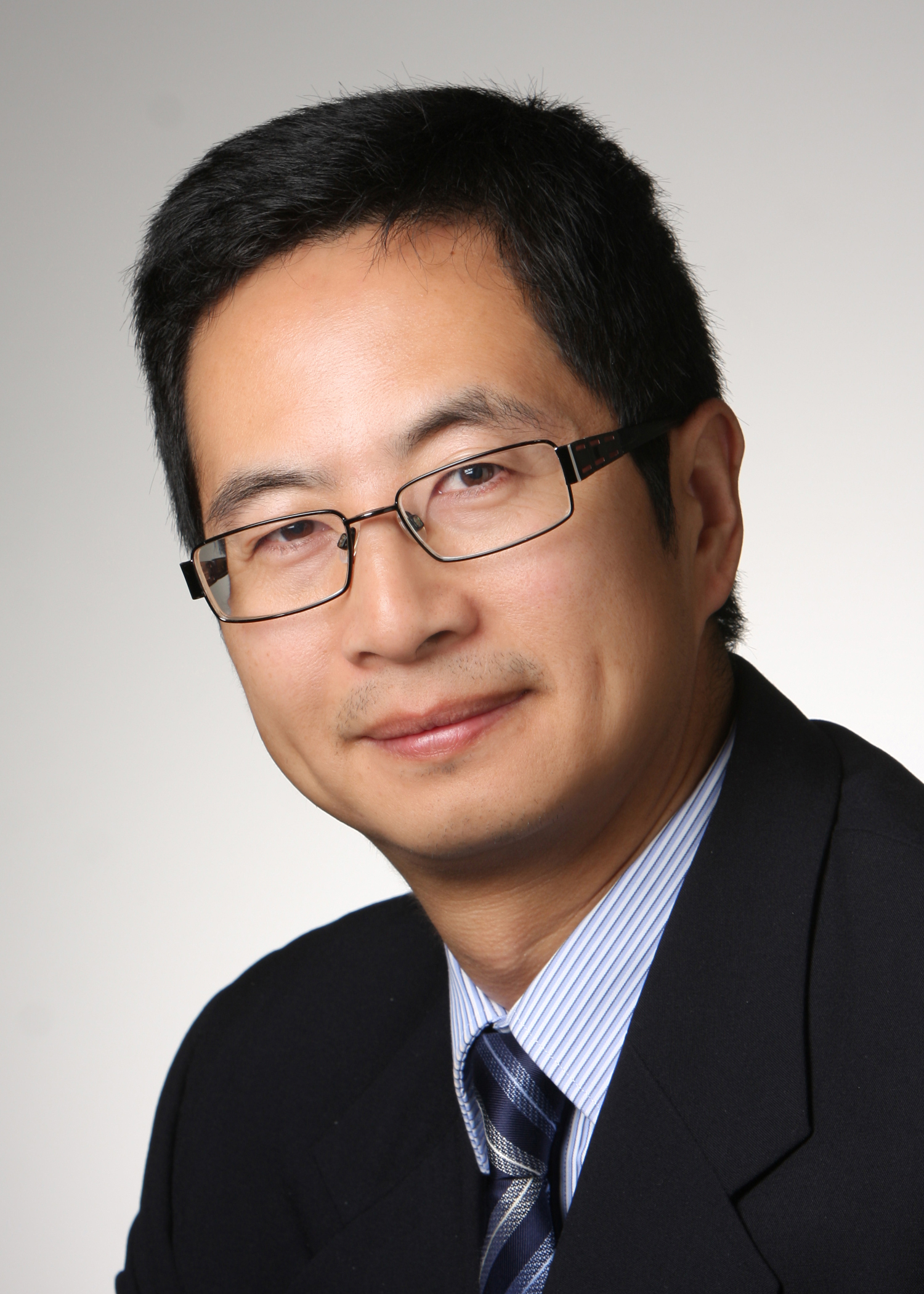
Professor Wei Shi is a faculty member at the School of Computer Science, Carleton University. His research focuses on distributed computing, cloud networks, algorithm design for sensor/actuator systems, big data analytics, and data privacy. Notable projects include federated learning optimizations, blockchain-enabled edge intelligence for IoT/vehicle networks, and AI-driven cybersecurity solutions. His work addresses challenges in dynamic resource allocation, anomaly detection, and privacy-preserving techniques. Research Interests: Distributed Computing: Optimizing federated learning and client selection algorithms for wireless networks. Blockchain & Edge Intelligence: Developing decentralized systems for IoT and vehicular networks using AI large models. Security & Privacy: Innovating methods to detect AI-generated content, combat cyber-physical attacks, and protect user data privacy. Publications: Recent works emphasize federated learning applications, blockchain integration with edge computing, and cybersecurity for vehicular/IoT ecosystems. Key themes include energy-efficient algorithms, dynamic resource allocation, and intrusion detection in constrained environments. Email: wei.shi@carleton.ca
Mohammad Kamrul Hasan is an Associate Professor and Head of the Network and Communication Technology Research Lab at the Center for Cyber Security, Faculty of Information Science and Technology, Universiti Kebangsaan Malaysia (UKM). He holds a Ph.D. in Electrical and Communication Engineering from the International Islamic University Malaysia (IIUM) and has over a decade of prior industry experience in communication systems and network design. He has held academic positions at Universiti Malaysia Sarawak and IIUM, and is currently active in research and leadership at UKM. Ph.D. in Engineering (Electrical and Computer Engineering), International Islamic University Malaysia, 2016 M.Sc. in Communication Engineering, International Islamic University Malaysia, 2012 His research focuses on cutting-edge areas in network and communication technologies. Key interests include Wireless Communication and Network Security , Industrial Internet of Things (IIoT) , Cyber-Physical Systems , 5G and Beyond (6G) Networks , Smart Grids , and AI-driven security . He explores machine learning, federated learning, blockchain, and optimization algorithms to enhance network resilience, privacy, and efficiency in critical infrastructure and consumer electronics. His recent publications (2023–2025) demonstrate a strong trend toward intelligent and secure next-generation networks. Topics include intrusion detection in IIoT, passwordless authentication, federated learning for healthcare IoT, 6G security, and digital twins for SCADA systems. His work is frequently published in high-impact IEEE and Springer journals, reflecting a consistent and influential research output. Gold Medal for research excellence Young Scientist Award Fulbright Scholarship (Ministry of Higher Education Malaysia) Senior Member, IEEE (since 2013) Member, Institution of Engineering and Technology (IET) Member, Internet Society Dr. Hasan has served as an editorial member for prestigious journals including IEEE, IET, and Elsevier. He has led funded research projects such as the design of a two-way wireless communication system for medium-voltage electrical networks at Universiti Malaysia Sarawak. He has mentored students and collaborated widely, with co-authors from Malaysia and international institutions. He has also contributed to professional service as Chairperson of the IEEE IIUM Student Branch and as a peer reviewer for over 13 journals including Computer Networks , Internet of Things , and Soft Computing . He leads the Network and Communication Technology Research Lab at UKM, focusing on secure, intelligent, and scalable communication systems for smart cities, industry, and healthcare. His team works on AI-powered intrusion detection, blockchain for critical infrastructure, and privacy-preserving data fusion in IoT environments.
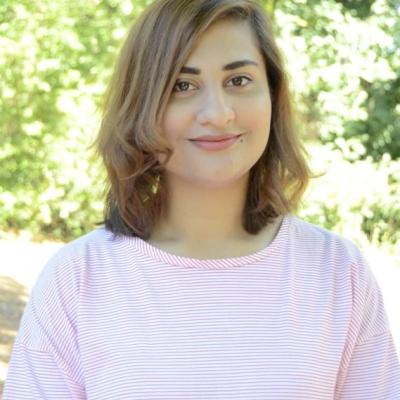
Nazish Tahir is a Lecturer at the School of Computing, University of Georgia. Her research focuses on collaborative control in multi-robot systems, edge computing applications, and intelligent algorithms for resource optimization in networked robotics. Education: PhD in Computer Science, University of Georgia Master of Science in Information Technology, Nadirshaw Edulji Dinshaw University of Engineering & Technology, Pakistan (2016) Her work bridges robotics, artificial intelligence, and distributed computing, with a particular emphasis on: Collaborative multi-robot task execution Edge computing frameworks for robotics Dynamic resource allocation and scheduling Human-AI supervisory control systems Recent publications highlight trends in simulation twins, communication-aware edge selection, and utility-driven task offloading. She has received awards such as the UGA Spark Award and NSF Student Travel Grant. Scientific Awards: UGA Spark Award NSF Student Travel Grant Outstanding Graduate Student Award (2023) Contact: nazish.tahir@uga.edu | Office: Boyd Research and Education Center, 200 D. W. Brooks Dr., Athens, GA
Dr. Gabriel Orsini is a researcher at the Department of Computer Science, Faculty of Mathematics and Natural Sciences, University of Hamburg. He works on context-adaptive systems for mobile cloud computing and has developed the CloudAware middleware framework. PhD (2017): Kontextadaptive Anwendungsarchitekturen für das mobile Cloud Computing Diploma Thesis (2008): Maschinelles Lernen zur Prognose von Erlösen im Luftverkehr His research focuses on mobile cloud computing , context-aware systems , and resource optimization through dynamic adaptation. Article trends show expertise in context adaptation , energy efficiency , and IoT integration . Professional activities include: Guest Editor for Forecasts in the Internet of Things Reviewer Board Member for Future Internet and Machine Learning and Knowledge Extraction Conference TPC Member for FNC 2021 and FNC 2020 He has supervised 18+ student theses across blockchain systems , context-aware computing , and mobile resource management , including advising on AutoML applications , decentralized ledgers , and probabilistic databases .
Andreas Johnsson is an Adjunct Senior Lecturer at the Department of Information Technology , Uppsala University, Sweden. His research spans Machine Learning , Network Performance , and IoT Security in the context of 5G/6G Networks and Edge Computing . Research interests include federated learning, transfer learning, and network optimization techniques. His recent work (2024-2021) focuses on self-regulated learning models for 6G, multi-objective neural architecture search, IoT intrusion detection generalizability, and delay prediction in heterogeneous networks. He has co-authored over 15 publications in high-impact venues like IEEE Transactions on Machine Learning in Communications and Networking and IEEE NOMS . Andreas actively collaborates with researchers such as Jalil Taghia, Farnaz Moradi, and Hannes Larsson. His contributions extend to change detection algorithms, policy adaptation frameworks, and feature selection methodologies in dynamic network environments. No formal scientific awards or student advisement details are currently documented.
Professor Ai-Chun Pang is affiliated with the National Taiwan University , serving in both the Department of Computer Science and Information Engineering and the Graduate Institute of Networking and Multimedia . He held leadership roles including Associate Dean (2018-2022) and Director (2013-2016) within the College of Electrical Engineering and Computer Science. His research spans Fog/Edge Computing , Wireless Networking , Mobile Computing , and AIoT Systems , with recent advancements in federated learning security, energy-efficient network design, and 5G/6G optimization. Collaborative work includes applications in vehicular networks, industrial control systems, and non-terrestrial connectivity. Key publication themes: Edge Intelligence and Privacy (2024) Federated Learning for Heterogeneous Devices (2023-2024) 5G Backhaul Optimization (2017-2021) Wireless Energy Transfer (2022) Awarded IEEE Fellow 2021 for contributions to mobile edge networks, he has received multiple IEEE Vehicular Technology Society awards, the CES 2019 Innovation Award , and teaching accolades including National Taiwan University Distinguished Teaching Award (2010) . His lab has produced 16 PhD students now in academia and industry. As Editor-in-Chief of IEEE Wireless Communications Letters and active in conference organization, he shapes global research directions. Current projects focus on GenAI for Networking and Non-Terrestrial Networks , with recent 2024 admissions for new students.
Tor Skeie is a Professor at the University of Oslo's Department of Informatics, specializing in networks and distributed systems. His research focuses on high-performance networking, InfiniBand technologies, and adaptive routing systems. Current investigations include automated parameter tuning for reservoir simulations, adaptive routing in InfiniBand hardware, and modeling WiFi quality attenuation. His work develops efficient solutions for virtualized HPC environments and cloud computing infrastructures. Recent publications demonstrate innovations in network modeling, adaptive routing algorithms, and performance analysis of distributed systems. Research collaborations span European projects on high-performance networking infrastructures. Leads the Networks and Distributed Systems (ND) research group investigating fault-tolerant routing, network virtualization, and congestion control mechanisms.
Prashant Shenoy is a Distinguished Professor and Associate Dean in the College of Information and Computer Sciences at the University of Massachusetts Amherst. He has been on the faculty since 1998 and heads the Laboratory for Advanced Systems Software while directing the Center for Smart and Connected Society. His research focuses on systems issues for distributed systems ranging from large server clusters to networks of small sensors. Shenoy received his PhD in Computer Science from the University of Texas at Austin in 1998, following an MS from the same institution in 1994. He earned his BTech in Computer Science and Engineering from the Indian Institute of Technology, Bombay in 1993. His academic progression at UMass Amherst has been from Assistant Professor (1998-2004) to Associate Professor (2004-2009) to Professor (2009-2020) to Distinguished Professor (2020-present). His primary research interests include distributed systems, networking, cloud and edge computing, mobile computing and Internet of Things, and energy and sustainability. Over the past decade, his work has increasingly focused on computational decarbonization, as evidenced by his recent $12 million NSF Expedition award in this area. His research group maintains several important resources including the UMass Trace Repository, UMass CS Weather Station, BenchLab, and Smart* Dataset. Shenoy's publications reflect a progression from foundational distributed systems work to increasingly sustainability-focused research. His recent work centers on carbon-aware computing, energy optimization, and computational decarbonization across various computing domains including cloud, edge, and IoT systems. ACM Fellow (2019) AAAS Fellow (2018) IEEE Fellow (2013) ACM Sigmetrics Test of Time Award (2016) NSF Career Award recipient Conti Research Fellowship recipient Lilly Foundation Teaching Fellow As an educator, Shenoy has consistently taught Distributed and Operating Systems (Compsci 677) and has mentored numerous PhD students who have received awards and gone on to successful careers. He serves as the founding Chair of the ACM Special Interest Group on Energy (SIGEnergy) and has organized numerous conferences including serving as PC chairs for the ACM Symposium on Edge Computing in 2025. His research has secured significant funding, including a recent $12 million NSF Expedition in Computational Decarbonization awarded in May 2024. Shenoy leads the Laboratory for Advanced Systems Software at UMass Amherst and directs the Center for Smart and Connected Society. He serves on editorial boards of several journals including ACM Transactions on IOT (TIOT), ACM Modeling and Performance Evaluation of Computing Systems (TOMPECS), and ACM Transactions on the Web (TWEB).
Shweta Jain is a Professor in the Department of Mathematics and Computer Science at John Jay College of Criminal Justice, part of the City University of New York (CUNY). She holds dual roles as Graduate Faculty in the Digital Forensics and Cyber Security program and Doctoral Faculty in Computer Science at CUNY's Graduate Center. With a Ph.D. in Computer Science from Stony Brook University (2007), her expertise spans Cybersecurity, Blockchain, Wireless Networks, and Software Development. Education Background: Ph.D. Computer Science, Stony Brook University, 2007 M.S. Computer Science, Stony Brook University, 2005 B.E. Electronics and Telecommunication Engineering, Indian Institute of Engineering Science and Technology (IIEST) Shibpur, 2005 Research Interests: Cybersecurity frameworks and digital forensics Blockchain applications in social systems Wireless network protocols and security Perceptual hashing for image authentication Network vulnerability analysis Notable Achievements: Recipient of 2014 IEEE Region-1 Award for Outstanding Teaching Senior Member of IEEE Over 30 peer-reviewed publications and patents in networks, forensics, and distributed systems Advising & Grants: Guided multiple student research projects in network security and forensics Developed innovative tools like E-Witness for digital evidence preservation Contributed to NSF-funded projects on wireless simulation realism Labs & Teams: Director of the Cybersecurity Research Lab at John Jay College Collaborates with WINLAB at Rutgers University on wireless protocols
F. Richard Yu is a Professor at the School of Information Technology , Carleton University , Canada, since 2016. He served as Assistant/Associate Professor at the same institution from 2006 to 2015. His academic work spans machine learning, blockchain, autonomous vehicles, and network security. Ph.D., Electrical Engineering, University of British Columbia (2003) M.A.Sc., Computer Engineering, Beijing University of Posts & Telecomm. (1998) B.A.Sc., Electrical Engineering, Dalian University of Technology (1995) His research focuses on machine learning , blockchain , autonomous vehicles , network security , and mobile wireless networks . Trends in his publications include deep reinforcement learning for computation offloading , blockchain applications in edge computing , and network optimization for IoT and 5G systems . Highly Cited Researcher (2019-2023), Clarivate Electronics and Electrical Engineering Leader in Canada (2023), Research.com Fellow of Canadian Academy of Engineering (CAE) (2021), Engineering Institute of Canada (EIC) (2019), IEEE (2017), and IET (2016) Best Paper Awards: IEEE ICC (2022), IEEE GLOBECOM (2020), IEEE VTC (2017), IEEE TAOS (2012), IEEE TrustCom (2009) Research Achievement Award, Carleton University (2021, 2012) Early Researcher Award (2011), Ontario; Leadership Opportunity Fund Award (2009), Canada Foundation for Innovation His work has resulted in 800+ papers , 30 patents , and 48,000+ citations (H-index 107), with grants including the 2009 Canada Foundation for Innovation award.
Prof. Dr. Fadi AL-TURJMAN serves as the founding Dean of the Faculty of AI and Informatics at Near East University (NEU), Cyprus. He holds multiple leadership roles including Head of the Software Engineering Department and Director of the AI and Robotics Institute and the International Research Center for AI and IoT. With a PhD in Computer Science from Queen’s University (2011), he specializes in AIoT systems, wireless networks, and blockchain integration. Affiliation: Near East University Leadership: Founding Dean for AI and Informatics, Director of AI & Robotics Institute Research Focus: His work bridges Artificial Intelligence of Things (AIoT) , Blockchain Applications , and Smart Networking . He explores cybersecurity frameworks for smart cities, quantum state optimization techniques, and novel AI-driven solutions for healthcare, agriculture, and energy systems. Key Article Trends: Recent publications emphasize Transformer models for environmental monitoring, blockchain-enabled security protocols , and evolutionary algorithms for resource optimization. His research spans interdisciplinary domains including medical diagnostics, vehicular networks, and sustainable infrastructure. Scientific Awards: Lifetime Golden Award of Dr. Suat Gunsel (2022) Multiple Best Research Awards at International Venues Labs & Teams: Directs the International Research Center for AI and IoT at NEU, leading multidisciplinary teams in developing advanced networking technologies and AI-driven solutions for global value chain applications.
Alberto Gottardi is a Professor at the University of Genoa's Department of Electrical, Electronic, Telecommunications Engineering, and Naval Architecture, with a distinguished research career spanning over two decades in satellite communications and next-generation networking technologies. His work bridges theoretical research with practical applications in telecommunications infrastructure. Dr. Gottardi's research interests focus on Satellite Communications , 5G/6G Networks , Non-Terrestrial Networks , UAV Communications , Federated Learning , and Internet of Things . His work demonstrates a consistent trajectory from traditional satellite communication protocols toward integrating AI techniques with next-generation wireless networks, particularly focusing on the convergence of terrestrial and non-terrestrial network architectures. Analysis of his recent publications (2022-2025) reveals a strong emphasis on AI-driven approaches for satellite-terrestrial network integration, with particular focus on federated learning applications, UAV communications, and 6G non-terrestrial network architectures. His research increasingly incorporates machine learning techniques to solve traditional telecommunications challenges, showing a clear evolution toward data-driven network optimization. Dr. Gottardi has maintained an exceptionally productive research output, with over 99 publications documented in the dblp database spanning from 2005 to projected 2025 publications. His work demonstrates consistent collaboration with key researchers including Pietro Cassarà (45 joint publications), Manlio Bacco (33), and Erina Ferro (23), indicating stable research partnerships and team leadership. His research has significant practical applications in maritime communications, intelligent transportation systems, and emergency response networks, with several publications addressing real-world implementation challenges in satellite-based IoT systems and vehicular communications.
Dr. Can Liu is an Assistant Professor at the School of Creative Media, City University of Hong Kong, where she leads the ERFI Lab (Laboratory of Empirical Research for Future Interfaces). Her research focuses on designing future interfaces for ubiquitous technologies through empirical understanding of human cognition and behavior, with emphasis on multimodal interaction combining physical and digital elements. Education: PhD in Human-Computer Interaction, Université Paris-Sud (France), INRIA labs ex)situ and ILDA MSc in Media Informatics, RWTH Aachen University (Germany) Dr. Liu's research spans three primary domains: AI-assisted Input (using LLMs/NLP to enhance text manipulation and speech interfaces), Spatial Computing (multimodal interfaces for AR/VR and large displays), and Hybrid/Remote Collaboration (supporting intuitive remote interaction through understanding collocated collaboration). Her work integrates empirical user studies with real-world system deployments in public spaces. Recent publications demonstrate strong trends toward LLM-integrated interfaces, wearable computing applications, and novel interaction techniques for foldable devices. Her team consistently publishes at top venues including CHI, UIST, and CSCW, with increasing focus on practical AI integration for everyday tasks. Awards and Recognition: Best Paper Award at ACM CHI 2014 (top 1%) Honourable Mention at ACM CHI 2012 (top 5%) Dr. Liu actively mentors PhD students and researchers while securing substantial research funding including Google Faculty Research Awards, National Natural Science Foundation grants, and RGC Early Career Schemes. She serves on numerous program committees including ACM CHI (Associate Chair 2024, 2022, 2021, 2020, 2019, 2017) and co-organizes research initiatives like the HCIX Summer Research Program. Her laboratory ecosystem includes the ERFI Lab, affiliation with the Augmented Materiality Lab and Kowloon Interaction Center, and active participation in the Greater Bay HCI community, supporting both fundamental research and industry collaboration with partners including Google, Huawei, and Lenovo.
Dr. Dongmei Zhao is a Professor in the Department of Electrical & Computer Engineering at McMaster University, part of the Faculty of Engineering. She specializes in wireless networking, network resource management, mobile edge computing, mobile computation offloading, and digital twins. Her research clusters focus on Digital & Smart Systems. Dr. Zhao holds a Ph.D. from the University of Waterloo. She teaches courses such as COMPENG 4DK4 (Computer Communication Networks), COMPENG 4DN4 (Advanced Internet Communications), and graduate-level courses like ECE 729 (Resource Management in Wireless Networks). Her research interests span cutting-edge topics including UAV-enabled edge computing, digital twin migration, vehicular networks, and reinforcement learning applications in resource allocation. She actively contributes to advancing 6G networks, security redundancy in autonomous systems, and decentralized manufacturing platforms. Dr. Zhao's recent publications emphasize optimization techniques for dynamic networks, platooning systems, and multi-agent learning frameworks. She has been recognized for her work in vehicular edge computing and digital twin integration, though explicit awards are not listed here. She advises on graduate studies in networking and edge computing, though no specific student names are provided in the text. Her work often intersects with practical challenges in smart infrastructure and autonomous vehicle systems.
Professor Javid Taheri is a leading academic at Karlstad University (2019–present), previously serving as Associate Professor (2015–2019) and Senior Lecturer (2015). His research focuses on cloud computing, edge computing, distributed systems, and AI-driven networking. He holds a Ph.D. in Information Technologies from The University of Sydney (2007) and an M.Sc./B.Sc. in Electrical Engineering from Sharif University of Technology (2000/1998). Research interests include cloud-edge continuum systems , resource optimization , 5G/6G networking , and AI for IoT . Notable contributions include frameworks like PerfSim (microservice performance simulation) and MultiScaler (auto-scaling for cloud applications). Publications highlight innovations in edge computing optimization, security for distributed systems, and machine learning for resource management. He has co-authored over 150 papers across top venues like IEEE Transactions and ACM conferences. Academic leadership includes roles as conference chair (IC2E 2023) and editorial work for journals on cloud and edge computing.