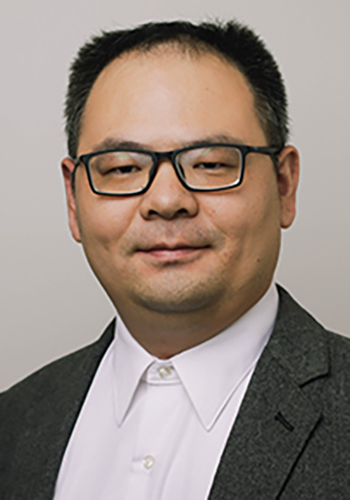
Dr. Lei Fan is an Assistant Professor in the Department of Engineering Technology at the University of Houston, with a joint appointment in the Electrical and Computer Engineering (ECE) Department. His research focuses on power system operations, optimization algorithms, quantum computing, and energy storage systems. He holds a Ph.D. from the University of Florida and a B.S. from Hefei University of Technology. Education: Ph.D., University of Florida B.S., Hefei University of Technology Research Interests: Dr. Fan’s work bridges theoretical optimization and practical energy systems, including quantum algorithms for power grid management, battery storage planning, and distributed quantum computing architectures. His LORE (Learning & Operations Research & Energy) lab explores cutting-edge applications in teleoperation, satellite networks, and environmental monitoring. Publications: Recent work emphasizes quantum computing’s role in solving complex optimization problems, such as entanglement routing in satellite networks and distributed hydrogen-power systems. His research also integrates machine learning for methane plume detection and hyperspectral imaging. Labs/Teams: He leads the LORE lab, advancing interdisciplinary research in energy systems and quantum technologies.
Changcheng Huang is a Professor at Carleton University's Department of Systems and Computer Engineering, part of the Faculty of Engineering and Design. He holds a Ph.D. from Carleton University and is licensed as P.Eng. His research focuses on Machine Learning, Network Architecture, and Optical Networks, emphasizing resource optimization and protocol design. Dr. Huang leads the Advanced Optical Network Laboratory (AONL), funded by CFI and OIT, which explores optical network technologies and interworking with electronic networks. His lab includes state-of-the-art equipment like Nortel switches and photonic switches. Recently, he advised PhD students Qiao Lu, Khoa Nguyen, and others, and completed postdoc Eslam G. AbdAllah. RA positions are available at both master's and PhD levels. His work spans publications in journals like IEEE Transactions and conferences such as Globecom and ICC. Research areas include intelligent network control mechanisms, wireless networks, and network protocol implementation. Education: Ph.D. (Carleton University). Research interests also include modeling/simulation techniques and reliability mechanisms for optical networks. He teaches courses like SYSC 5108 (Deep Learning) and SYSC 4602 (Computer Communications). Grants funded by CFI and OIT support his lab's optical networking projects. Over 150+ publications highlight his contributions to virtual network embedding, edge computing, and optical data center networks. Lab facilities include OMM photonic switches, Nortel routers, and Dell servers. Collaborative projects involve industry and academic partnerships, advancing interworking technologies between optical and electronic networks. His work bridges theoretical research with practical implementations, addressing challenges in network scalability, energy efficiency, and reliability.
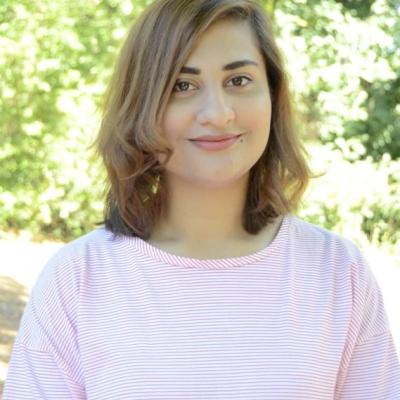
Dr. Erma Perenda serves as Professor and Chair of Distributed Signal Processing at RWTH Aachen University, Germany, leading research within the Department of Distributed Signal Processing. Her contact details include email perenda@dsp.rwth-aachen.de and phone +49 241 80-27879, with office location at Kopernikusstraße 16, 52074 Aachen in the ICT Cubes facility. Her research spans: Distributed Signal Processing Wireless Communications Machine Learning (Deep Reinforcement Learning, Federated Learning) Modulation Classification AI-driven Network Optimization She focuses on solving real-world challenges in wireless systems including hardware impairments, channel variations, and energy efficiency through advanced AI techniques. Analysis of her 2018-2024 publications reveals consistent innovation in applying multi-agent deep reinforcement learning to wireless power allocation, developing robust modulation classification methods resilient to channel impairments, and implementing federated learning for industrial edge computing. Her work bridges theoretical machine learning with practical wireless communication constraints. Scientific Awards: No awards documented in available sources Advising and Grants: No student advisees or grant information provided Labs and Teams: Leads Distributed Signal Processing research group at RWTH Aachen University Based in ICT Cubes building focusing on wireless AI systems
Dr. Aryan Kaushik is an Associate Professor at Manchester Metropolitan University (Manchester Met), UK, since 2024, affiliated with the Department of Computing and Mathematics. He also serves as Chief Advisor at RakFort, Ireland, since 2025. Previously, he was an Assistant Professor (senior grade) at the University of Sussex, UK, from 2021-24, and held roles as Recruitment and Admissions Tutor and Academic Advisor there. His academic journey includes a Research Fellow position at University College London (2020-21), and a PhD in Communications Engineering from the University of Edinburgh (2019). He holds an MSc in Telecommunications from the Hong Kong University of Science and Technology (2015). Education: PhD in Communications Engineering, University of Edinburgh (2019) MSc in Telecommunications, Hong Kong University of Science and Technology (2015) Professional Roles: Chair of IEEE ComSoc ETI on Electromagnetic Signal and Information Theory (since 2024) Core Member of IEEE P1955 Standard on 6G-Empowering Robotics Editorial roles across multiple IEEE journals and conferences His research focuses on 5G/6G wireless communications , integrated sensing and communications , reconfigurable holographic surfaces , non-terrestrial networks , and AI-driven network optimization . He has led UKRI-funded projects on topics like AI-assisted ISAC and Net Zero 6G, and collaborates globally with institutions like IIIT-Delhi, University of Bologna, and Imperial College London. Dr. Kaushik has received awards including the Top Editor Award 2025 (IEEE IoT Magazine), Best Editor Awards 2023-2024 (IEEE Open Journal), and was shortlisted for teaching excellence awards at Sussex. He actively contributes to standardization, serves on over 14 IEEE conference committees, and has delivered 110+ keynote/tutorial talks worldwide. His leadership extends to roles like TPC Co-Chair at IEEE ICC 2025 and Chair of Special Interest Groups on AI-driven Non-Terrestrial Networks and Fluid Antenna Systems.
Dr Zhiyuan (Thomas) Tan is an Associate Professor at Edinburgh Napier University’s School of Computing, Engineering and the Built Environment . He is internationally recognised for his cybersecurity research and has been listed among Stanford University’s Top 2% Scientists for 2021–2023. Education BEng (2005) with high distinction – North-eastern University, China MEng (2008) – Beijing University of Technology, China PhD in Computer Systems (2014) – University of Technology Sydney, Australia Research Interests Dr Tan’s research integrates cybersecurity with machine learning and data analytics. His core areas include: Intrusion detection and defence of critical service systems Adversarial machine learning for malware and anomaly detection Virtualisation security through non-parametric behaviour modelling IoT and vehicular network security—cloud/edge/cloudlet frameworks Privacy-preserving AI and federated machine unlearning Smart-city digital forensics and cyber-physical system resilience Research Output Trends His recent articles (2020–2025) reveal a strong focus on federated learning, edge & mobile computing, UAV coordination, and AI-driven security. Topics span advanced steganography, metamorphic malware, graph injection attacks, and trustworthiness in vehicular platoons, all anchored in real-world IoT and transportation applications. Awards & Distinctions Stanford University Top 2% Scientists List (2021, 2022, 2023) National Research Award 2017 – Research Council of the Sultanate of Oman Best Paper Awards (three instances) Kaspersky Lab Student Cyber Security Conference – Finalist Award SICSA Supervisor of the Year 2019 – Honourable Mention Grants & Leadership Dr Tan has attracted over £200k in external funding including: Carnegie Trust (£73,564) – Federated Machine Unlearning ENU Development Trust (£29,998) – Machine Unlearning Royal Society (£12,000) – VANET Security & Privacy SICSA & other awards for MemoryCrypt, AI Secrets, behaviour biometrics, and visiting-fellow schemes. Supervision & Mentoring Since 2013 he has supervised or co-supervised 16 doctoral candidates and several master’s students; six PhDs have successfully graduated. Roles range from Director of Studies to additional supervisor across diverse topics from malware evolution to VR olfactory interfaces. Research Groups & Collaboration He is affiliated with the Centre for Artificial Intelligence and Robotics , the Centre for Distributed Computing, Networking and Security , and the Centre for Cybersecurity, IoT and Cyber-physical Systems at ENU, fostering interdisciplinary collaboration with national and international partners.
Robson E. De Grande is an Associate Professor in the Department of Computer Science at Brock University, Canada. He holds a PhD from the University of Ottawa (2012) and BSc/MSc degrees from the Federal University of São Carlos, Brazil. His research focuses on vehicular networks, intelligent transportation systems, distributed systems, and cloud computing. He serves on program committees for conferences like DS-RT, MobiWac, and MSWiM, and has organized multiple workshops and special sessions. Education: PhD in Computer Science, University of Ottawa, Canada (2012) MSc and BSc in Computer Science, Federal University of São Carlos, Brazil (2006, 2004) Research Interests: Vehicular Networks (5G, Handover Management) Edge Computing and IoT Performance Modeling/Simulation High-Performance Distributed Systems Intelligent Transportation Systems Publications: Over 100 peer-reviewed articles across journals like IEEE Transactions on ITS, Elsevier Internet of Things, and conferences like IEEE ICC and ACM MobiWac. Recent work emphasizes ML-driven vehicular network optimization and distributed simulation frameworks. Teaching: Teaches Advanced Computer Networks (COSC 4P14), Parallel Computing (COSC 3P93), and graduate-level Mobile Cloud Computing courses. Research Team: Supervises PhD/MSc students and undergraduate researchers in topics like vehicular edge computing, traffic prediction, and simulation systems.
Anna Brunström is a Full Professor and Head of the Distributed Intelligent Systems and Communications Research Group (DISCO) at Karlstad University's Department of Computer Science. She holds a part-time role as a Researcher at the University of Malaga's Institute of Software Engineering and Technologies (ITIS). Her research focuses on computer networking, Internet architectures, low latency communication, and 5G/6G mobile systems. She leads the nationally funded DRIVE initiative and collaborates on European projects like 6G-PATH. She actively contributes to IETF standardization, notably as a former rmcat WG chair. Her work spans over 200 publications, emphasizing network measurement, latency optimization, and multipath protocols. Education: Ph.D. (1996) and M.Sc. (1993) from College of William & Mary, B.Sc. (1991) from Pepperdine University. Research Interests: Distributed systems, IoT networking (NB-IoT), satellite communication (Starlink), machine learning for positioning, and transport protocols (QUIC, MPTCP). Recent work includes latency-aware scheduling, 5G/6G performance analysis, and edge computing frameworks. Publications highlight trends in: 1) Satellite network throughput modeling, 2) 5G/6G architecture validation, 3) Machine learning applications for positioning and network analysis, 4) Cross-layer optimization of latency-critical services. Collaborations with industry and academia drive applied research in smart grids, healthcare, and automotive communication. Labs/Teams: DISCO group at Karlstad University, leading the DRIVE research profile and 6G-PATH consortium involvement.
Y. Charlie Hu is the Michael and Katherine Birck Professor of Electrical and Computer Engineering and Professor of Computer Science (by courtesy) at Purdue University, where he leads the PurNET Lab and contributes to the Systems and Networking Group. His research spans Mobile Systems, Distributed Systems, Operating Systems, and Computer Networks , with a focus on energy-efficient AI systems and edge computing. His groundbreaking work on smartphone energy management has been widely adopted by the mobile industry and recognized with multiple test-of-time awards , including from ACM SIGOPS and ACM SIGMOBILE . He has received prestigious honors like the NSF CAREER Award , Honda Initiation Grant , and industry accolades from Google Research and Qualcomm . Notable Funded Projects: NSF's NeTS: Black-box Optimization of White-box Networks (2023-2026) Intel -NSF's SPLICE initiative His research has produced 15+ PhD graduates now in academia (University of Arizona, Virginia Tech) and industry (Google, Apple, Qualcomm). The articles reflect a career-long focus on edge computing , 5G network optimization , and energy-aware systems , with recurring themes in mobile AR/VR , video analytics , and network protocol design . Scientific Awards Honda Initiation Grant NSF CAREER Award Purdue Early Career Research Award Google Research Award Qualcomm Faculty Award ACM SIGOPS EuroSys Best Student Paper Award ACM MobiCom Best Community Paper Award IEEE Fellow ACM Distinguished Scientist Purdue PRF Innovator Hall of Fame
Benoit Champagne is a Full Professor in the Department of Electrical and Computer Engineering at McGill University, Montreal. His research focuses on statistical signal processing, with applications in wireless communications, multi-antenna systems, and adaptive filtering. He has held academic positions since 1990, including roles at INRS-Telecom before joining McGill in 1999. He teaches graduate and undergraduate courses such as ECSE 305 (Probability and Random Signals), ECSE 512 (Digital Signal Processing), and ECSE 617 (Array Signal Processing). Education: B.Eng. (Electrical Engineering) and M.Sc. (Physics) from Université de Montréal (1983, 1985), Ph.D. in Electrical Engineering from University of Toronto (1990). His research spans signal detection/estimation, speech enhancement, MIMO systems, and physical layer security, with over 150+ publications in top journals and conferences. He has supervised numerous graduate students and holds grants from NSERC, CFI, and industry partners like Nortel and Bell Canada. His work emphasizes practical implementations, including hybrid analog/digital beamforming for mmWave systems and energy-efficient resource allocation in D2D communications. He has contributed to IEEE standards through editorial roles (e.g., IEEE Transactions on Signal Processing) and conference organization (e.g., IEEE VTC 2016). Current research explores machine learning integration with signal processing for next-generation wireless systems. Notable contributions include advancements in subspace tracking, cognitive radar systems, and distributed adaptive filtering. His lab collaborates internationally, addressing challenges in 5G/6G networks, massive MIMO, and secure communications.
Manos Athanassoulis is an Associate Professor in the Department of Computer Science at the College of Arts and Sciences, Boston University. He is the Founder and Director of the BU Data-intensive Systems and Computing (DiSC) lab and a member of the BU MiDAS group. His research focuses on data systems, particularly cloud data management, hybrid transactional/analytical workloads, and integration with emerging hardware such as non-volatile memory and heterogeneous computing. His educational background includes a PhD from EPFL (2014), an MSc in Computer Systems Technology, and a BSc in Informatics and Telecommunications from the University of Athens, Greece. Prior to BU, he was a Postdoctoral Researcher and Research Associate at Harvard University, supported by a SNSF Postdoc Mobility Fellowship. His research interests span data systems, database architectures, LSM trees, indexing, storage systems, and performance optimization. He explores how novel hardware can be leveraged to improve data management efficiency and scalability, especially in cloud environments. His recent publications (2021–2025) predominantly focus on LSM trees, covering topics such as compaction policies, Bloom filter tuning, DPU offloading, adversarial resilience, and sustainable caching. Earlier works include foundational contributions on access methods (RUM Conjecture) and optimal key-value stores (Monkey). The trend shows a consistent focus on data system efficiency, adaptability, and robustness under varying workloads and hardware constraints. Scientific Awards: NSF CAREER Award (2022) Facebook Faculty Research Award (2020) NSF CRII Award (2019) Best of VLDB 2017 and Best of SIGMOD 2017 SIGMOD Most Reproducible Paper Award (2017) Multiple ACM SIGMOD Distinguished PC Member recognitions (2018–2025) VLDB 2023 Best Demo Award RedHat Collaboratory Research Incubation Awards (multiple, 2021–2023) SNSF Postdoc Mobility Fellowship (2015–16) IBM PhD Fellowship (2011–12) Dr. Athanassoulis has advised numerous students and collaborators, evident from his co-authorship on works with researchers such as Niv Dayan, Stratos Idreos, and A. Ailamaki. His grants include major awards from NSF, Facebook, and RedHat, supporting research in robust data systems, hardware-software co-design, and learned cost models. He has also been recognized for teaching excellence at Harvard University. He leads the DiSC lab at Boston University, which focuses on data-intensive computing and systems research. The lab explores next-generation data architectures, particularly in cloud and hardware-aware environments. Collaborations with the BU MiDAS group enhance interdisciplinary research in data science and AI.
Hatem Abou-Zeid is an Assistant Professor at the Department of Electrical and Software Engineering in the Schulich School of Engineering , University of Calgary. He holds Adjunct Professor appointments at Queen’s University, Carleton University, and Ontario Tech University, Canada. With a Ph.D. in Electrical and Computer Engineering from Queen’s University (2014), his academic journey includes 7 years of industry research at Ericsson and Cisco , where he led R&D projects resulting in 15+ patents. Queen's University (Ph.D., Electrical and Computer Engineering) Arab Academy for Science, Technology and Maritime Transport (B.Sc. and M.Sc., Electronics and Communications Engineering) His research focuses on 5G/6G wireless networking , immersive communications , and robust machine learning for networks. Recent projects explore trustworthy AI , joint sensing and communication , and pediatric brain-computer interfaces (BCI) . He has published extensively in top venues like IEEE JSAC , GLOBECOM , and IEEE Transactions on Networking , with over 60 publications and 19 patent filings. His scientific awards include the Research Excellence Award 2023 (UCalgary), Early Research Excellence Award 2023 (Schulich), and Best Paper Awards at EMBC 2024 (as advisor) and IEEE ICC 2022 . He leads the WAVES Research Group , mentoring 10+ graduate students and postdocs. Collaborations span institutions like the Hotchkiss Brain Institute and industry partners such as Ericsson and European Space Agency .
Professor Wei Shi is a faculty member at the School of Computer Science, Carleton University. His research focuses on distributed computing, cloud networks, algorithm design for sensor/actuator systems, big data analytics, and data privacy. Notable projects include federated learning optimizations, blockchain-enabled edge intelligence for IoT/vehicle networks, and AI-driven cybersecurity solutions. His work addresses challenges in dynamic resource allocation, anomaly detection, and privacy-preserving techniques. Research Interests: Distributed Computing: Optimizing federated learning and client selection algorithms for wireless networks. Blockchain & Edge Intelligence: Developing decentralized systems for IoT and vehicular networks using AI large models. Security & Privacy: Innovating methods to detect AI-generated content, combat cyber-physical attacks, and protect user data privacy. Publications: Recent works emphasize federated learning applications, blockchain integration with edge computing, and cybersecurity for vehicular/IoT ecosystems. Key themes include energy-efficient algorithms, dynamic resource allocation, and intrusion detection in constrained environments. Email: wei.shi@carleton.ca
Mohammad Kamrul Hasan is an Associate Professor and Head of the Network and Communication Technology Research Lab at the Center for Cyber Security, Faculty of Information Science and Technology, Universiti Kebangsaan Malaysia (UKM). He holds a Ph.D. in Electrical and Communication Engineering from the International Islamic University Malaysia (IIUM) and has over a decade of prior industry experience in communication systems and network design. He has held academic positions at Universiti Malaysia Sarawak and IIUM, and is currently active in research and leadership at UKM. Ph.D. in Engineering (Electrical and Computer Engineering), International Islamic University Malaysia, 2016 M.Sc. in Communication Engineering, International Islamic University Malaysia, 2012 His research focuses on cutting-edge areas in network and communication technologies. Key interests include Wireless Communication and Network Security , Industrial Internet of Things (IIoT) , Cyber-Physical Systems , 5G and Beyond (6G) Networks , Smart Grids , and AI-driven security . He explores machine learning, federated learning, blockchain, and optimization algorithms to enhance network resilience, privacy, and efficiency in critical infrastructure and consumer electronics. His recent publications (2023–2025) demonstrate a strong trend toward intelligent and secure next-generation networks. Topics include intrusion detection in IIoT, passwordless authentication, federated learning for healthcare IoT, 6G security, and digital twins for SCADA systems. His work is frequently published in high-impact IEEE and Springer journals, reflecting a consistent and influential research output. Gold Medal for research excellence Young Scientist Award Fulbright Scholarship (Ministry of Higher Education Malaysia) Senior Member, IEEE (since 2013) Member, Institution of Engineering and Technology (IET) Member, Internet Society Dr. Hasan has served as an editorial member for prestigious journals including IEEE, IET, and Elsevier. He has led funded research projects such as the design of a two-way wireless communication system for medium-voltage electrical networks at Universiti Malaysia Sarawak. He has mentored students and collaborated widely, with co-authors from Malaysia and international institutions. He has also contributed to professional service as Chairperson of the IEEE IIUM Student Branch and as a peer reviewer for over 13 journals including Computer Networks , Internet of Things , and Soft Computing . He leads the Network and Communication Technology Research Lab at UKM, focusing on secure, intelligent, and scalable communication systems for smart cities, industry, and healthcare. His team works on AI-powered intrusion detection, blockchain for critical infrastructure, and privacy-preserving data fusion in IoT environments.
Nazish Tahir is a Lecturer at the School of Computing, University of Georgia. Her research focuses on collaborative control in multi-robot systems, edge computing applications, and intelligent algorithms for resource optimization in networked robotics. Education: PhD in Computer Science, University of Georgia Master of Science in Information Technology, Nadirshaw Edulji Dinshaw University of Engineering & Technology, Pakistan (2016) Her work bridges robotics, artificial intelligence, and distributed computing, with a particular emphasis on: Collaborative multi-robot task execution Edge computing frameworks for robotics Dynamic resource allocation and scheduling Human-AI supervisory control systems Recent publications highlight trends in simulation twins, communication-aware edge selection, and utility-driven task offloading. She has received awards such as the UGA Spark Award and NSF Student Travel Grant. Scientific Awards: UGA Spark Award NSF Student Travel Grant Outstanding Graduate Student Award (2023) Contact: nazish.tahir@uga.edu | Office: Boyd Research and Education Center, 200 D. W. Brooks Dr., Athens, GA
Dr. Gabriel Orsini is a researcher at the Department of Computer Science, Faculty of Mathematics and Natural Sciences, University of Hamburg. He works on context-adaptive systems for mobile cloud computing and has developed the CloudAware middleware framework. PhD (2017): Kontextadaptive Anwendungsarchitekturen für das mobile Cloud Computing Diploma Thesis (2008): Maschinelles Lernen zur Prognose von Erlösen im Luftverkehr His research focuses on mobile cloud computing , context-aware systems , and resource optimization through dynamic adaptation. Article trends show expertise in context adaptation , energy efficiency , and IoT integration . Professional activities include: Guest Editor for Forecasts in the Internet of Things Reviewer Board Member for Future Internet and Machine Learning and Knowledge Extraction Conference TPC Member for FNC 2021 and FNC 2020 He has supervised 18+ student theses across blockchain systems , context-aware computing , and mobile resource management , including advising on AutoML applications , decentralized ledgers , and probabilistic databases .