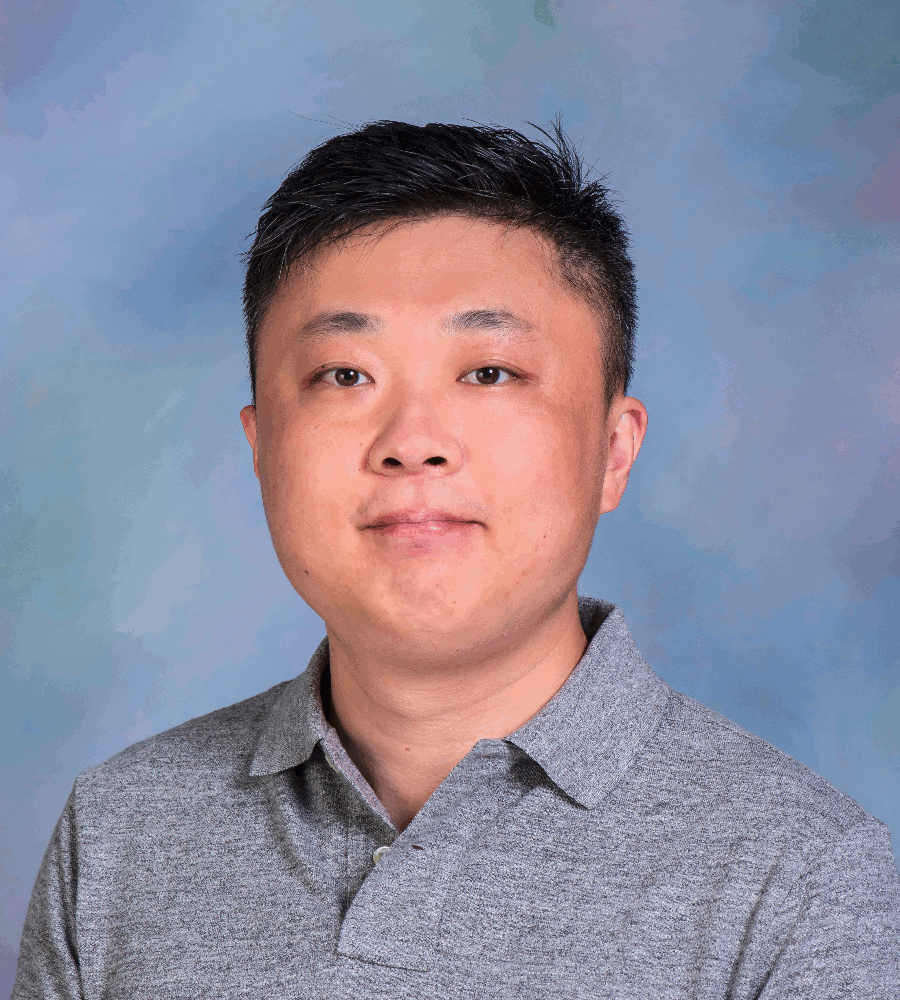
Yin Tat Lee is an Associate Professor at the Paul G. Allen School of Computer Science & Engineering , University of Washington, and a Senior Principal Researcher in Microsoft AI. His research spans convex optimization , convex geometry , graph algorithms , online algorithms , and differential privacy , with applications in machine learning and theoretical computer science.
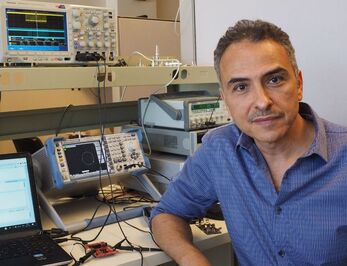
Antony Franklin is an Associate Professor and Head of the Department of Computer Science and Engineering at the Indian Institute of Technology Hyderabad (IITH), India. He leads the Networked Wireless Systems (NeWS) Lab and is actively involved in 5G research, wireless networks, and cybersecurity. He earned his Ph.D. from IIT Madras in 2010. Education: Ph.D. in Computer Science and Engineering, IIT Madras, 2010 Research Interests: His research spans wireless networks , 5G systems , mobile edge computing , low-latency transport protocols , and cybersecurity . He focuses on next-generation mobile systems, especially 5G, aiming to meet the demands of ultra-low latency, high data rates, and quality of experience for services like IoT, autonomous driving, and VR. He has been involved in developing testbeds and prototypes to validate real-world performance of 5G technologies, including network slicing, LTE-WiFi integration, and edge computing. Scientific Awards: Best Academic Demo Award, IEEE COMSNETS 2018 Second Best Paper Award, IEEE ANTS 2017 Grants & Projects: Network Slice Life-cycle Management for 5G Mobile Networks – SPARC, MHRD (2019–2021) DNS/IPv6 for IoT Security – NASSCOM (2018–2019) CCRAN: Energy Efficiency in Cloud RAN – Intel India (2018–2021) End-to-End 5G Test-Bed – DoT, GoI (2018–2021) M2SMART Smart Cities – SATREPS (2018–2023) Ultra-Reliable Low Latency Protocols – STINT, Sweden (2017–2018) Low Latency 5G Protocols – SERB ECR (2016–2019) Lab & Team: He leads the NeWS Lab (Networked Wireless Systems) at IITH, which focuses on 5G, wireless networks, and IoT systems. The lab is actively involved in developing real-world testbeds and publishing in top-tier conferences and journals.
Kåre Synnes is a Professor in Pervasive and Mobile Computing at Luleå University of Technology, where he is affiliated with the Department of Computer Science, Electrical and Space Engineering. He is an active researcher and educator, recognized as an "Excellent lärare" (Excellent Teacher) and maintains his office in Luleå at location A3305a. Professor Synnes conducts research in pervasive computing and multimedia communication, with significant applications in eHealth. His work bridges theoretical computer science with practical implementations in distributed systems. He is also an affiliated researcher at the Centre for Distance-spanning Technology (CDT), focusing on technologies that enable communication across geographical boundaries. His recent publications demonstrate a clear trajectory toward sustainable computing solutions, with emphasis on circular economy applications, supply chain management, and environmental impact assessment. His research integrates computer science with economic and sustainability principles, showing how digital technologies can address contemporary environmental challenges through innovative auction systems, behavior analytics, and resource management frameworks. IST Prize winner as co-founder of Marratech AB Synnes has been deeply involved in European research projects since 1995, including multiple Framework Programme projects (FP4 through FP7). His work as an expert/reviewer for European projects since 2009 demonstrates his standing in the research community. His entrepreneurial success with Marratech AB, which was acquired by Google to form the basis for Google+ Hangouts, shows his ability to translate research into impactful commercial applications. Professor Synnes maintains strong connections with industry through his European project work and his entrepreneurial experience. His research group likely focuses on pervasive computing applications with real-world implementations, particularly in eHealth contexts, though specific lab details aren't provided in the available information.
Giulio Jacucci is a Professor in the Department of Computer Science at the University of Helsinki, affiliated with the Helsinki Information Technology Research Institute. He serves as a Supervisor in the Doctoral Programme in Computer Science, mentoring PhD candidates in human-computer interaction and related fields. His academic career spans over two decades with continuous research productivity from 2006 through 2025. Professor Jacucci's research interests center on Human-Computer Interaction , particularly focusing on Virtual Reality , Brain-Computer Interfaces , and Neuroadaptive Systems . His work explores how technology can adapt to users' cognitive and physiological states, with significant contributions to social virtual reality environments, embodied agents, and information retrieval systems. He investigates how virtual representations affect social behavior, time perception, and communication in digital spaces. His publication record shows a clear evolution from foundational work in information retrieval toward increasingly sophisticated neuroadaptive systems. Recent publications (2024-2025) demonstrate his leadership in examining social dynamics within virtual reality platforms, including votekicking mechanisms, mirror watching behaviors, and communication tools like mutes. His work bridges technical innovation with deep understanding of human social behavior in digital environments. Professor Jacucci currently leads multiple research projects funded by the Academy of Finland, including DataLit: Datalukutaito ja vastuullinen päätöksenteko (2023-2026) and MyModel: Selitettävyys suositusten hallinnassa (2023-2027). These projects focus on data literacy, responsible decision-making, and explainability in recommendation systems, reflecting his commitment to ethical and user-centered technology development. His research has received media attention, particularly around brain-computer interfaces and virtual reality applications, with coverage in outlets discussing how deep learning transforms mobile applications and sensor landscapes. He has presented his work at major conferences including CHI 2017 and continues to be an active contributor to the international research community.
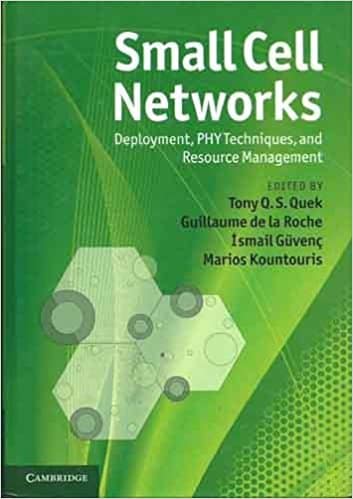
Dr. Ismail Guvenc is a Full Professor in the Department of Electrical and Computer Engineering at North Carolina State University. He holds an IEEE Fellowship and is a Senior Member of the U.S. National Academy of Inventors. His research focuses on 5G/6G wireless systems, UAV communications, heterogeneous networks, and spectrum management. He leads the NSF AERPAW project and serves as the NC State Site Director for the NSF BWAC I/UCRC center. Dr. Guvenc has authored/co-edited four books and holds over 30 U.S. patents. Education: Ph.D. in Electrical Engineering, University of South Florida (2006) Master's in Electrical and Computer Engineering, University of New Mexico (2003) Bachelor's in Electrical Engineering, Bilkent University, Turkey (2001) Research Interests: Dr. Guvenc’s work spans UAV communication systems, 5G/6G networks, spectrum sensing, and machine learning for network optimization. He emphasizes experimental validation through platforms like AERPAW, focusing on drone-based networks, radio dynamic zones, and testbed-driven innovation. His contributions address challenges in UAV localization, interference management, and energy-efficient networks. Grants & Leadership: PI and Director of NSF AERPAW (2019–Present) NC State Site Director for NSF BWAC I/UCRC (2019–Present) Recipient of NSF CAREER Award (2015) and NC State Faculty Scholar Award (2021) Publications & Awards: He has authored over 130 peer-reviewed papers and contributed to standardization efforts. His awards include the R. Ray Bennett Faculty Fellow Award (2019) and the USF Outstanding Dissertation Award (2006). Labs & Teams: Dr. Guvenc directs research in the ECE’s wireless communications group, leveraging AERPAW’s experimental capabilities to advance UAV networks and 6G technologies. His team collaborates with industry and government on spectrum policy and autonomous systems.
Dhruv Jain is an Assistant Professor in the Computer Science and Engineering Department at the University of Michigan , with affiliations in the School of Information and Michigan Medicine . He leads the Soundability Lab , focusing on transforming hearing into a programmable interface through human-centered AI systems. PhD from University of Washington MS from MIT Media Lab Formerly worked at Microsoft Research, Google, and Apple Research Interests intersect Human-Computer Interaction (HCI) , Audio AI , Accessibility , and Hearing Health . His work develops systems like SoundWatch (smartwatch-based sound awareness) and HomeSound (IoT sound visualization) to expand auditory access for DHH individuals and other domains. Recent Publications (2023–2025) span top venues like CHI , ASSETS , and ICMI , with trends including generative AI for real-time captioning , adaptive soundscapes , and clinical communication tools . SIGCHI Outstanding Dissertation Award (2023) William Chan Memorial Dissertation Award (2023) Best Poster Award at ASSETS 2024 Google Academic Research Award (2024) NIH Grant ($450k, 2023) William Demant Foundation Grant ($740k, 2025) Teaching includes Accessible Computing (undergraduate) and Advanced Accessibility (graduate), alongside global DIY workshops in five countries. The Soundability Lab collaborates with neuroscientists, clinicians, and Deaf scholars to create deployable systems like clinical communication tools now at Michigan Medicine and features integrated into Apple devices.
Hossam Hassanein is a Professor and Director of the School of Computing at Queen's University. He received his B.Sc. in Electrical Engineering from Kuwait University in 1984, M.Sc. in Computer Engineering from the University of Toronto in 1986, and Ph.D. in Computing Science from the University of Alberta in 1990. He joined Queen's University School of Computing in 1999 and has established himself as a leading researcher in telecommunications and networking. Dr. Hassanein's research interests span wireless sensor networks, mobile ad hoc networks, edge computing, Internet of Things (IoT), radio resource management, and data-centric networks. His seminal contributions include pioneering work on WSN planning, load-balanced routing protocols, and energy-efficient network designs. He has championed research in IoT, developing frameworks for smart spaces that use contextual information to enhance IoT applications in healthcare, transportation, and infrastructure. His recent publications (2023-2025) demonstrate a strong focus on cutting-edge areas including extreme edge computing, vehicular networks, and AI/ML integration in networking. Research trends show increasing emphasis on practical applications in telesurgery, digital twins, and industrial IoT, addressing challenges in resource allocation, task offloading, and real-time processing in constrained environments. Dr. Hassanein has received numerous recognitions for his work: Fellow of the IEEE Queen's University School of Graduate Studies Award for Excellence in Graduate Student Supervision (2015) Multiple best paper awards from top international conferences As founder and director of the Telecommunications Research Lab (TRL), Dr. Hassanein has supervised over 75 students who have made substantial contributions in academia and industry. The TRL is one of Queen's largest research groups with extensive international collaborations. Dr. Hassanein has successfully attracted significant research funding from government and industry sources in the competitive telecommunications field. The Telecommunications Research Lab has developed innovative platforms including SPROUTS, a rugged sensor platform used in mining, steel manufacturing, and smart-grid monitoring. TRL's work has had significant impact in WSN planning, data dissemination, and resource reuse in wireless networks, with contributions featured in IEEE Wireless Communications Magazine.
Marta Kwiatkowska is a Professor of Computing Systems at the University of Oxford and a Fellow of Trinity College. Her research focuses on probabilistic verification , quantitative model checking , and formal methods for complex systems including autonomous robots, medical devices, and biological systems. She leads the development of the PRISM and PRISM-games probabilistic model checkers. Key research areas: Probabilistic systems, formal verification, autonomous robotics, medical device analysis, systems biology Grants: ERC Advanced Grant VERIWARE, EPSRC Programme Grant Mobile Autonomy Awards: 2024 ETAPS Test-of-Time Tool Award for PRISM Students: Current and former advisees in topics spanning formal methods, robotics, and quantitative verification The PRISM-games extension enables verification of stochastic multi-player games with applications in network protocols, autonomous systems, and game theory. Her work bridges theory, algorithms, and practical implementation, with real-world applications in ubiquitous computing and nanotechnology.
Marianna Patrick is a Research Fellow at the School of Education, Learning and Communication Sciences (SELCS), University of Warwick. She holds a PhD in Intercultural Communication (2025), MA in Global Communication from the Chinese University of Hong Kong (2013), and BA (Hons) in Politics and International Studies from Warwick University (2012). Her research focuses on generative AI in academic writing, migration narratives, and intercultural communication. She leads a Leverhulme Trust-funded project on AI chatbots' impact on academic writing practices, collaborating with the University of Edinburgh and Sophia University Tokyo. Research & Education: Her doctoral work explored language and place construction in serial migration narratives, supervised by Prof. Stephanie Schnurr and Prof. Steve Mann. She also contributed to Monash-Warwick Alliance projects on multicultural cricket team inclusivity. She teaches professional skills and research methods across Computer Science and Applied Linguistics departments, supervising MSc dissertations in intercultural communication. Awards & Engagement: Received the People's Choice Prize at the Warwick Research Festival. Actively promotes interdisciplinary collaboration through initiatives like the Social Sciences Research Exchange Group (co-founder) and chairs the Applied Linguistics PGR Student-Staff Liaison Committee. She also contributed to EDI efforts as part of the Athena Swan team and served as Assistant Director of Student Experience and Progression for the Faculty of Arts.
Xing Gao is an Assistant Professor at the University of Delaware, affiliated with the Department of Computer and Information Sciences and jointly with the Department of Electrical and Computer Engineering. His office is located at 316B FinTech Innovation Hub on the STAR Campus. He holds a PhD from the College of William and Mary (2018) and a BS from Beijing Institute of Technology (2011). Research Interests: Cybersecurity in Software Supply Chain, Web 3, High-Performance Computing, Large Language Models, with a focus on Security, Cloud Computing, and Mobile Computing. Education: PhD | 2018 | College of William and Mary BS | 2011 | Beijing Institute of Technology His recent work explores cybersecurity vulnerabilities in cloud gaming services (CCS'22), container registries (USENIX-SEC'22), and software supply chains, with specialized attention to GPU cache attacks (USENIX-SEC'24) and Ethereum smart contracts (WWW'24). His research spans theoretical and applied aspects of system security, including CI/CD pipelines (CCS'24), SDN backdoors (INFOCOM'23), and hardware-level threats (ACSAC'21). Scientific Awards NSF CAREER Award (2024) NSF CRII Award (2020) NDSS Distinguished Poster Award (2016) He serves as Registration Chair for ACM/IEEE Symposium on Edge Computing (2023) and Publicity Co-Chair for IEEE Conference on Communications and Network Security (2022). He is actively involved as TPC Member in multiple top-tier conferences including USENIX Security (2026,2025), CCS (2026,2025,2024), and IEEE DSN (2024). He has also reviewed for journals like IEEE Transactions on Dependable and Secure Computing. Labs & Teams X-Lab at the University of Delaware, a research group focused on cybersecurity in emerging technologies.
Josiah Hester is Associate Professor of Interactive Computing and Computer Science at Georgia Tech's College of Computing, where he also directs the Center for Advancing Responsible Computing and the Ka Moamoa – Ubiquitous and Mobile Computing Lab . His research focuses on sustainable, battery-free computing systems for health, conservation, and education, informed by his Native Hawaiian heritage. Education: Ph.D. in Computer Science, Clemson University, 2017 B.S. in Computer Science, Clemson University Honors College, 2011 Research Interests: Hester’s group pioneers intermittent computing —devices that harvest ambient energy (solar, radio, thermal, microbial) and operate reliably despite frequent power loss. Applications span: Large-scale conservation sensing with Indigenous communities Battery-free health wearables (smart masks, implantables) Educational tools for sustainable design Carbon-aware IoT and recyclable robotics Recent Work & Trends: His 2024–2025 publications unveil soil-powered sensors, recyclable electronics, and culturally-grounded CS education tools. A consistent theme is co-design with underserved communities and embedding sustainability metrics at every layer—from hardware to curriculum. Scientific Awards: Presidential Early Career Award for Scientists and Engineers (PECASE) – 2025 Alfred P. Sloan Fellowship – 2022 NSF CAREER Award – 2022 Popular Science “Brilliant 10” – 2021 3M Non-Tenured Faculty Award – 2021 Multiple best-paper & best-presentation awards Grants & Teams: Hester’s lab is supported by >$50 million in active funding from NSF, NIH (ARPA-H), DARPA, DoD, Sloan, VMware, and 3M. He leads interdisciplinary teams on projects such as: $35 million ARPA-H bioelectronics initiative for diabetes and cancer $5 million NSF “Coastlines and People” Hub for Manoomin conservation $2 million NSF-DELPHI sustainable edge device design Laboratory & Mentorship: The Ka Moamoa Lab (named with Hawaiian meaning “lamp of the moamoa fish”) hosts graduate, undergraduate, and post-doctoral researchers. Hester actively recruits Native and Indigenous students and has mentored award-winning advisees such as Nivedita Arora (ACM Doctoral Dissertation Award 2024).
Matthew Kay is an Associate Professor in the Department of Communication Studies at Northwestern University's School of Communication, with a secondary appointment in Computer Science. He serves as Co-Director of Graduate Studies for the PhD in Technology and Social Behavior program. His research focuses on human-computer interaction and information visualization, specializing in uncertainty communication, usable statistics, and personal informatics. He employs mixed-method approaches including behavioral analysis, interactive system development, and visualization technique evaluation to address real-world data interpretation challenges. Analysis of his recent publications reveals dominant themes in visualization literacy development, uncertainty representation for decision-making, and health informatics applications. His work consistently bridges theoretical frameworks with practical implementations, particularly in educational assessment tools and election forecast visualizations. Professor Kay co-directs the Midwest Uncertainty Collective (MU collective), a research group advancing uncertainty communication methodologies. Previously faculty at the University of Michigan School of Information, he maintains active contributions to visualization tool development including the ggdist R package for uncertainty visualization.
Prof. dr. Nico Van de Weghe is a full Professor of GIScience at the University of Ghent (UGent), affiliated with the CartoGIS research unit. His work bridges computer science, social science, and natural science through geospatial information studies, focusing on enabling machines to reason spatially (GeoAI). Since 2004, he has specialized in knowledge-based AI, particularly spatiotemporal reasoning and moving object analysis, with applications in animal behavior, criminology, healthcare, mobility, and sports. Van de Weghe's research emphasizes hybrid GeoAI systems combining knowledge-driven and data-driven approaches. Keywords include GeoAI, GIScience, Spatiotemporal Analysis, Moving Objects, and Data Mining. Recent publications highlight urban road network analysis, hybrid trajectory modeling, BIM semantic enrichment, and cycling safety studies using virtual reality.
Elahe Soltanaghai is an Assistant Professor in the Department of Computer Science and a Faculty Affiliate in Electrical and Computer Engineering at the University of Illinois Urbana-Champaign. She is also a 2022 NCSA Fellow and received her PhD in Computer Science from the University of Virginia (2019), MS in Computer Engineering from Sharif University of Technology (2014), and dual BS degrees in Computer and Information Technology Engineering from Amirkabir University of Technology (2011, 2013). PhD: University of Virginia, Computer Science, 2019 MS: Sharif University of Technology, Computer Engineering, 2014 BS (Computer Engineering): Amirkabir University of Technology, 2011 BS (Information Technology Engineering): Amirkabir University of Technology, 2013 Her research spans wireless sensing and communication, focusing on Millimeter-wave Radar Sensing (for automotive, mixed reality, structural monitoring), Machine Learning for Wireless Systems (adaptive sensing/communication), Forest IoT (through-canopy biomass and soil sensing), Metaverse Technologies (gaze-based VR/AR), and Low-Power Backscatter Communication (WiFi/power-line tags). She directs the Wireless, Sensing & Embedded Networked Systems (iSENS) Lab and co-directs the Illinois Center for IoT. Her work bridges wireless networking with cyber-physical sensing , emphasizing environmental monitoring (e.g., wildfire fuel detection via radar tags) and human-computer interaction (e.g., gaze-tracking in VR). Recent articles include innovations in passive radar profiling , through-canopy biomass characterization , and integrated communication-sensing protocols . Scientific Awards: Google Research Scholar Award (2022) N2Women Rising Star (2021) ACM SIGMOBILE Dissertation Award (2020) EECS Rising Stars (2019) NCSA Faculty Fellowship (2023) Best Demo Runner-up, IPSN (2023) Teaching Excellence Award (2023) Grants: NASA FireTech Program Grant (2025) NSF Grant for Radar-based Perception (2024) Insper-Illinois Grant for VR Research (2024) Keysight Research Gifts (2022, 2023) T-Mobile Research Gift (2022)
Kaiyu Hang is an Assistant Professor in the Department of Computer Science at Rice University, where he directs the Robotics and Physical Interactions Lab (RobotΠ Lab). His research spans multiple domains of robotics with a focus on physical interaction systems. Before joining Rice, he completed his postdoc at Yale University, earned his Ph.D./M.Sc. at KTH Royal Institute of Technology, and received his B.Eng. from Xi'an Jiaotong University. His research interests include robotic manipulation, grasping, in-hand manipulation, optimization, planning, learning, estimation, and control systems. He develops algorithms that enable robots to physically interact with other robots, people, and the world across scales from small grasping tasks to large-scale dual-arm and multi-robot manipulation systems. His work has practical applications in factories, kitchens, hospitals, warehouses, and construction sites. His recent publications demonstrate strong trends in in-hand manipulation techniques, energy-efficient drone operations, and benchmarking frameworks for robotic grasping. The 2025 IROS papers accepted highlight his leadership in developing standardized competition frameworks for evaluating robotic manipulation capabilities across diverse hardware platforms. ASME Rising Star of Mechanical Engineering (2024) NSF CAREER Award (2023) Multiple finalist awards at IEEE-RAS Humanoids and ICRA conferences Junior Fellowship Award from Institute for Advanced Study, HKUST (2017-2018) As an educator, he has taught multiple robotics courses including COMP 462/562: Introduction to Modern Robotics and COMP 461: Senior Design in A Robotized World. He serves as Faculty Advisor for the Rice Robotics Club and participates in graduate admissions. His lab actively recruits Ph.D. students and offers research opportunities for undergraduate and master's students who have completed core robotics courses.