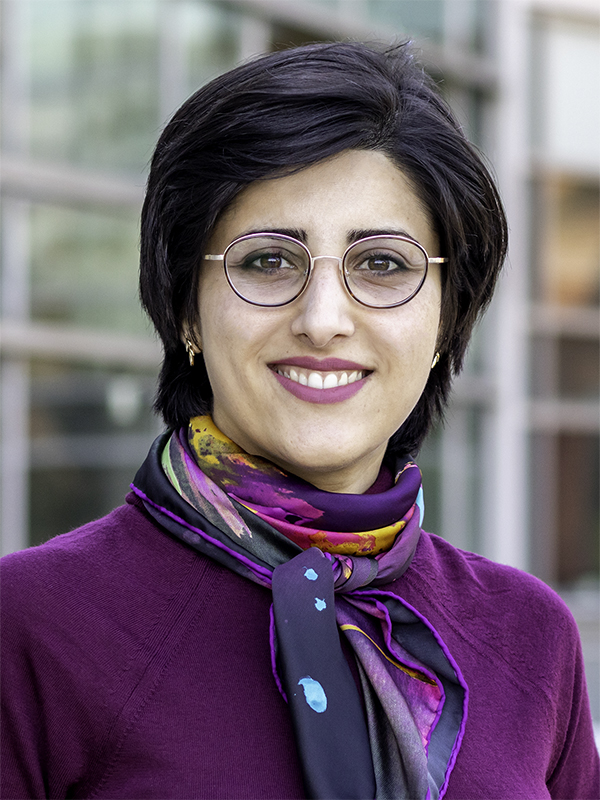
Rui Zhang is an Associate Professor in the Department of Computer and Information Sciences at the University of Delaware. He holds a PhD in Electrical Engineering from Arizona State University (2013) and has held academic positions at the University of Hawaii and industry roles at UTStarcom. His research focuses on cybersecurity, wireless networks, and privacy-preserving technologies, with notable work on secure edge computing and mobile authentication systems. Education: PhD, Electrical Engineering, Arizona State University, 2013 M.E., Communication and Information Systems, Huazhong University of Science & Technology, 2005 B.E., Communication Engineering, Huazhong University of Science & Technology, 2001 Research Interests: Rui’s work spans secure wireless systems, mobile crowdsourcing, accessibility technologies for visually impaired users, edge computing, and social network privacy. He has led NSF-funded projects on trustworthy hierarchical edge computing and secure mobile cloud sensing. Grants & Awards: Recipient of the NSF CAREER Award (2017) and multiple NSF grants totaling over $1M. Current focus includes NSF-funded research on edge computing security and privacy-preserving data aggregation. Teaching: Has taught courses in algorithms, network security, and computer networks at both University of Delaware and University of Hawaii. Labs & Teams: Leads research projects in secure edge computing and collaborates with Arizona State University on federally funded initiatives. Active in organizing academic conferences like ISC 2016 and serving on editorial boards of IEEE journals.
Prof. Srdjan Capkun is a Full Professor in the Department of Computer Science at ETH Zurich and Director of the Zurich Information Security and Privacy Center (ZISC). He holds a Dipl.Ing. from the University of Split (1998) and a Ph.D. from EPFL (2004). His research focuses on system and network security, including wireless security (e.g., secure positioning), trusted computing, blockchain technologies, and privacy-preserving systems. He co-founded 3db Access (acquired by Infineon) and Sound-Proof, addressing secure distance measurement and authentication. Notable achievements include an ERC Consolidator Grant (2016), ACM Fellowship, and IEEE Fellowship. Education: Dipl.Ing., Electrical Engineering / Computer Science, University of Split, 1998 Ph.D., Communication Systems, EPFL, 2004 Research Interests: Wireless security (e.g., UWB, GNSS, cellular) Trusted execution environments (TEEs) Blockchain and cryptocurrency systems Privacy-preserving technologies Awards & Grants: ERC Consolidator Grant (2016) ACM Fellow and IEEE Fellow Leadership of ZISC Advising & Labs: Leads the System Security Group at ETH Zurich Guided postdoctoral researchers and graduate students in security and privacy Companies: 3db Access (secure distance measurement) Futurae (online authentication)
Frank Li is an Assistant Professor at Georgia Tech, affiliated with the School of Cybersecurity and Privacy and School of Electrical & Computer Engineering . His research focuses on computer security and privacy , particularly internet, network, and web security, with a data-driven approach. Education : PhD in Computer Science from UC Berkeley, BS in Computer Science from MIT (Course 6-3) Experience : Previously a visiting researcher at Facebook, with internships at Google and Microsoft Research Research interests include empirical computer security , internet measurement, password policies, IoT security, browser extensions, and DeFi vulnerabilities. His work combines large-scale data analysis, network traffic studies, and user behavior experiments. His publications highlight trends in IPv6 adoption , security notifications, password masking, third-party web content, and PLC security evaluation. Teaching awards include the Student Recognition of Excellence in Teaching (Annual CIOS Award and Semester Honor Roll) at Georgia Tech. He leads the BEES Lab (Better Empirically Established Security), which investigates security and privacy issues through internet-wide measurements, network traffic analysis, and data mining. Lab members include PhD and MS students in computer science.
Patrick McDaniel is a Professor in the School of Computer, Data & Information Sciences at the University of Wisconsin-Madison. He is a Fellow of IEEE, ACM, and AAAS, and leads the MadS&P (UW-Madison Security and Privacy) group. His research spans computer and network security, adversarial machine learning, and technical public policy. Academic Affiliation : Tsun-Ming Shih Professor of Computer Sciences Key Research Areas : Mobile/IoT security, election systems security, AI policy Research Trends : His recent publications and funded projects focus on adversarial machine learning, SDN security, and robustness of AI systems. Keywords include cybersecurity, machine learning, network security, and privacy. Grants and Leadership : He has secured over $5M in NSF funding for end-to-end trustworthiness of ML systems and leads collaborative projects with Army Research and UW-Madison. Awards : Multiple best/most influential paper awards (ICSE 2015, PLDI 2014, ACSAC 2024, EthiCS 2023) Advising : Mentored 13+ PhD students and postdocs now at top institutions like Google, Purdue, and University of Toronto
Verena Zimmermann serves as Assistant Professor (Tenure Track) for Security, Privacy and Society at ETH Zurich within the Department of Humanities, Social and Political Sciences. She leads the Security, Privacy and Society research group, focusing on human-centered approaches to safety, IT security, and privacy challenges in emerging technologies. Her academic foundation includes a PhD in Usable Security from TU Darmstadt, where her dissertation From the Quest to Replace Passwords towards Supporting Secure and Usable Password Creation earned dual awards from the German Association for Data Protection and Data Security (GDD) and the Ernst-Ludwigs-Hochschulgesellschaft. Zimmermann's research pioneers the shift from viewing humans as security vulnerabilities to recognizing them as integral solutions. Her work spans password security, phishing interventions, smart home privacy, and cybersecurity education, consistently applying human factors principles to design systems that align with natural user behavior. Current projects explore emotional dimensions of security engagement, quantum governance frameworks, and LLM-related privacy concerns through interdisciplinary lenses combining computer science, psychology, and safety science. Recent publications reveal strong thematic trends toward understanding user motivations in security behavior, developing personalized training through augmented reality and adaptive systems, and translating safety science principles to cybersecurity incident management. Her work increasingly addresses societal implications of emerging technologies like quantum computing and generative AI. Her distinguished recognitions include: GDD Dissertation Award for Usable Security research Ernst-Ludwigs-Hochschulgesellschaft Dissertation Award IANUS Award (2nd place) for Moving from a 'Human-as-Problem' to a 'Human-as-Solution' Cybersecurity Mindset Zimmermann actively mentors through ETH's Human-Centered Security and Privacy Lab while collaborating internationally with institutions including ATHENE (German National Center for Applied Cybersecurity), Abertay University's Cybersecurity Division, and the Safety Science Innovation Lab. Her research receives support from Swiss and European funding bodies focused on privacy-preserving technologies and organizational security behavior. At ETH Zurich, she directs the Security, Privacy and Society group which employs design thinking, LEGO Serious Play, and mixed-methods research to tackle real-world security challenges. The team partners with industry stakeholders to develop practical solutions for phishing resistance, smart home privacy, and cybersecurity education while maintaining strong ties to the Research Training Group 2050 Privacy and Trust for Mobile Users.
Amr Youssef is a Professor at the Concordia Institute for Information Systems Engineering, Concordia University. His research focuses on applied cryptography, network security, cyber-physical systems security, blockchain, and privacy. He has contributed extensively to securing smart grids, IoT devices, and web applications through cryptographic protocols and machine learning-driven solutions. His work addresses critical challenges in cybersecurity, including e-voting systems, fault-tolerant differential protection, and privacy-preserving communication protocols. He explores vulnerabilities in modern systems such as SSO permissions, JavaScript exploits, and stalkerware tools, while developing frameworks like MEGR-APT for APT detection and TEE-Receipt for non-repudiation. Youssef’s research integrates interdisciplinary approaches, combining cryptography with AI (e.g., vision transformers for power quality analysis) and leveraging trusted execution environments (TEE) for secure computing. His projects often involve collaboration with industrial standards (e.g., IEC 61850), emphasizing practical implementations in real-world systems.
Grant Ho is an Assistant Professor in the Computer Science Department at the University of Chicago. His research focuses on computer security, particularly at the intersection of data and security. Prior roles include a CSE Postdoctoral Fellowship at UC San Diego, a Visiting Researcher position at Corelight Labs, and a PhD in Computer Science from UC Berkeley (advised by Vern Paxson and David Wagner). He holds a B.S. in Computer Science from Stanford University. **Research Interests**: Enterprise security, AI/ML applications in security, large-scale threat analysis, and data-driven cybersecurity practices. His work spans detecting attacks (e.g., phishing, ransomware), improving security measures, and evaluating the efficacy of security policies. **Awards**: 2023 IEEE Euro S&P Best Paper Award, 2019 and 2017 USENIX Security Distinguished Papers, 2017 Internet Defense Prize, NSF and Facebook Fellowships, and the 2015 IEEE S&P Distinguished Practical Paper Award. **Advising & Teaching**: Current advisees include Aniket Anand (PhD), Christiana Marchese (PhD), and Robert Liu (B.S.). Taught courses include Introduction to Computer Security (CMSC 23200) and seminars on AI/ML and NLP in cybersecurity. Collaborates with industry partners like Barracuda Networks and Dropbox. **Labs & Teams**: Leads a research group focused on enterprise security challenges, emphasizing practical impact and interdisciplinary approaches.
Professor Andrew Chadwick is a leading scholar in political communication and digital media studies at Loughborough University, where he directs the Online Civic Culture Centre (O3C). He holds a BSocSc from Birmingham, MSc and PhD from the London School of Economics. His research focuses on hybrid media systems, disinformation dynamics, and digital politics. Key contributions include conceptualizing hybrid media events and analyzing misinformation in personal messaging platforms. His work has been recognized with prestigious awards, including the APSA Best Book Award. He supervises numerous PhD students exploring topics like social media influence, public opinion, and digital disinformation. Current projects include the Leverhulme-funded Everyday Misinformation Project examining numerical disinformation on messaging apps. His media engagements span BBC Radio 4 to The Washington Post. Research highlights include studies on misinformation warnings' ineffectiveness, vaccine hesitancy, and the role of celebrities in political representation. O3C serves as a hub for interdisciplinary research on digital civic culture. Chadwick’s academic leadership includes roles in editorial boards for top journals and international conference keynotes.
Nirupam Roy is an Assistant Professor at the Department of Computer Science, University of Maryland, College Park, and Director of the iCoSMoS research lab. His work bridges wireless networking, mobile computing, and acoustic sensing with applications in IoT, localization, healthcare, security, and wearables. Research Focus: Wireless Networking & Mobile Sensing Awards: Best paper award, MobiSys 2022 Best demo award, MobiSys 2021 CSL Ph.D. Thesis Award, UIUC 2019 Students: Nakul Garg, Yang Bai, Irtaza Shahid, Harshvardhan Takawale, Aritrik Ghosh, Ayushi Mishra, Sumbul Zehra, Justin Goodman Grants: NSF CAREER award (2023), Meta Research Award (2023)
Elizabeth Bernstein is a Professor of Women's, Gender & Sexuality Studies and Professor of Sociology at Barnard College, Columbia University, where she has been a faculty member since September 2002. Her work bridges sociological theory with feminist analysis, focusing on the intersections of gender, sexuality, and political economy. Bernstein directs significant research initiatives including the Gender Justice and Neoliberal Transformations Working Group, a transnational collaboration among thirteen scholars examining gender justice in contemporary global contexts. She is currently developing a new book project titled "Imagining Immunity: Precarious Bodies and the Governance of Gendered Dis-ease," which explores immunological metaphors in understanding bodily risk and suffering. B.A., University of California, Berkeley M.A., University of California, Berkeley Ph.D., University of California, Berkeley Professor Bernstein's research focuses on the political economy of the body, gender, and sexuality, with particular attention to sexual commerce, sex trafficking, and neoliberal governance. Her work employs ethnographic methods to examine how intimate relations become sites of economic exchange and political regulation. She investigates how concepts of authenticity, freedom, and rights are mobilized in debates about sexual commerce and trafficking. Bernstein's scholarship critically engages with feminist theory, carceral politics, and transnational governance frameworks, challenging conventional approaches to sex work and trafficking that often reinforce punitive systems rather than advancing gender justice. Analysis of Bernstein's scholarly output reveals a consistent trajectory examining the intersections of gender, sexuality, and political economy within neoliberal frameworks. Her work demonstrates increasing attention to transnational governance mechanisms and their impact on intimate relations and bodily autonomy. A notable trend is her critical examination of how anti-trafficking campaigns often employ carceral logic that undermines feminist goals of gender justice. Her scholarship consistently challenges binary frameworks that position sex work solely as exploitation or liberation, instead analyzing the complex economic, political, and social dynamics that shape sexual commerce globally. Bernstein's research has received significant recognition through prestigious awards including: Distinguished Book Award, American Sociological Association, Sociology of Sexualities Section (2020) for "Brokered Subjects" Honorable Mention, Society for the Study of Social Problems Global Division Book Award (2019) Norbert Elias Prize, Norbert Elias Foundation (2009) Distinguished Book Award, American Sociological Association, Sex and Gender Section (2009) Her work has also been supported by major funding organizations including the Institute for Advanced Study, National Science Foundation, Social Science Research Council, AAUW, and Mellon Foundation. As a principal investigator along with Janet Jakobsen for the Gender Justice and Neoliberal Transformations Working Group, Bernstein leads a significant collaborative research initiative sponsored by the Barnard Center for Research on Women. Her grant portfolio demonstrates sustained support from major research institutions, reflecting the significance of her work in gender studies and sociology. While specific student advisees aren't listed in the available materials, her role as a full professor at Barnard College indicates extensive mentorship of undergraduate and likely graduate students in Women's, Gender & Sexuality Studies and Sociology. Bernstein co-leads the Gender Justice and Neoliberal Transformations Working Group, a collaboration among thirteen scholars working transnationally on questions of gender justice. This initiative represents a significant research collective examining how neoliberal policies reshape gender relations globally. Her work with the Barnard Center for Research on Women provides institutional support for this transnational feminist research network, facilitating scholarly exchange and collaborative publication projects that advance critical perspectives on gender, sexuality, and political economy.
Janne Lindqvist is an Associate Professor at the Department of Computer Science, Aalto University. His research bridges security engineering, human-computer interaction (HCI), and privacy, with a focus on making security systems usable and user-centric. University: Aalto University Department: Department of Computer Science Rank: Associate Professor Email: janne.lindqvist@aalto.fi Lindqvist’s work spans security engineering , privacy systems , and user research , emphasizing practical authentication methods, password management, and human behavior in security contexts. He explores how users interact with systems like TPM APIs, gesture passwords, and mobile authentication mechanisms. Recent publications highlight trends in authentication systems , ubiquitous computing security , and mobile user behavior . Key themes include biometric authentication, gesture-based security, and balancing usability with cryptographic robustness. CHI'25 Honorable Mention Award CHI'24 Best Paper Award His research integrates empirical studies with technical implementations, such as analyzing password forgetting patterns and developing acoustic sensing for vehicle detection (e.g., Auto++, BO-Ear). Collaborative efforts span machine learning, psychology, and embedded systems.
Xing Gao is an Assistant Professor at the University of Delaware, affiliated with the Department of Computer and Information Sciences and jointly with the Department of Electrical and Computer Engineering. His office is located at 316B FinTech Innovation Hub on the STAR Campus. He holds a PhD from the College of William and Mary (2018) and a BS from Beijing Institute of Technology (2011). Research Interests: Cybersecurity in Software Supply Chain, Web 3, High-Performance Computing, Large Language Models, with a focus on Security, Cloud Computing, and Mobile Computing. Education: PhD | 2018 | College of William and Mary BS | 2011 | Beijing Institute of Technology His recent work explores cybersecurity vulnerabilities in cloud gaming services (CCS'22), container registries (USENIX-SEC'22), and software supply chains, with specialized attention to GPU cache attacks (USENIX-SEC'24) and Ethereum smart contracts (WWW'24). His research spans theoretical and applied aspects of system security, including CI/CD pipelines (CCS'24), SDN backdoors (INFOCOM'23), and hardware-level threats (ACSAC'21). Scientific Awards NSF CAREER Award (2024) NSF CRII Award (2020) NDSS Distinguished Poster Award (2016) He serves as Registration Chair for ACM/IEEE Symposium on Edge Computing (2023) and Publicity Co-Chair for IEEE Conference on Communications and Network Security (2022). He is actively involved as TPC Member in multiple top-tier conferences including USENIX Security (2026,2025), CCS (2026,2025,2024), and IEEE DSN (2024). He has also reviewed for journals like IEEE Transactions on Dependable and Secure Computing. Labs & Teams X-Lab at the University of Delaware, a research group focused on cybersecurity in emerging technologies.
Elahe Soltanaghai is an Assistant Professor in the Department of Computer Science and a Faculty Affiliate in Electrical and Computer Engineering at the University of Illinois Urbana-Champaign. She is also a 2022 NCSA Fellow and received her PhD in Computer Science from the University of Virginia (2019), MS in Computer Engineering from Sharif University of Technology (2014), and dual BS degrees in Computer and Information Technology Engineering from Amirkabir University of Technology (2011, 2013). PhD: University of Virginia, Computer Science, 2019 MS: Sharif University of Technology, Computer Engineering, 2014 BS (Computer Engineering): Amirkabir University of Technology, 2011 BS (Information Technology Engineering): Amirkabir University of Technology, 2013 Her research spans wireless sensing and communication, focusing on Millimeter-wave Radar Sensing (for automotive, mixed reality, structural monitoring), Machine Learning for Wireless Systems (adaptive sensing/communication), Forest IoT (through-canopy biomass and soil sensing), Metaverse Technologies (gaze-based VR/AR), and Low-Power Backscatter Communication (WiFi/power-line tags). She directs the Wireless, Sensing & Embedded Networked Systems (iSENS) Lab and co-directs the Illinois Center for IoT. Her work bridges wireless networking with cyber-physical sensing , emphasizing environmental monitoring (e.g., wildfire fuel detection via radar tags) and human-computer interaction (e.g., gaze-tracking in VR). Recent articles include innovations in passive radar profiling , through-canopy biomass characterization , and integrated communication-sensing protocols . Scientific Awards: Google Research Scholar Award (2022) N2Women Rising Star (2021) ACM SIGMOBILE Dissertation Award (2020) EECS Rising Stars (2019) NCSA Faculty Fellowship (2023) Best Demo Runner-up, IPSN (2023) Teaching Excellence Award (2023) Grants: NASA FireTech Program Grant (2025) NSF Grant for Radar-based Perception (2024) Insper-Illinois Grant for VR Research (2024) Keysight Research Gifts (2022, 2023) T-Mobile Research Gift (2022)
Dr. Euijin (Alley) Choo is an Assistant Professor in the Department of Computer Science at the University of Alberta, specializing in data-driven cybersecurity and big data analytics. Her research focuses on AI-based cybersecurity solutions, anomaly detection in network traffic, and adversarial attacks on federated learning systems. She holds a Ph.D. from North Carolina State University and has held roles at Qatar Computing Research Institute, Korea University, and the University of Missouri-Rolla. Education: Ph.D., Computer Science, North Carolina State University (2015) M.S., Computer Science & Engineering, Korea University (2008) B.S. Dual Degree in Computer Science & Mathematics, Korea University (2006) Research Interests: Security and big data analysis intersections Federated learning security and privacy Anomaly detection in network logs and enterprise systems Malware/phishing detection using graph inference AI-driven threat intelligence aggregation Recent Grants: Mitacs Accelerate Program Grant: Fraud Detection in Financial Graphs ($60,000, 2025) National CyberSecurity Consortium Grant: IntruderInsight ($2M, 2025-2027) NSERC Discovery Grant: Threat Detection Framework ($180,000, 2025-2031) Awards: Best Paper Award at DBSEC 2015 NSERC Early Career Researcher Award (2025) Provost Fellowship (NC State, 2009-2010) Labs/Teams: Leads the Data-driven Network and Cyber Security (DANS) Lab, focusing on federated learning defenses, compromised entity detection, and malicious domain analysis.
Huining Li is an Assistant Professor in the Department of Computer Science at North Carolina State University . Her research focuses on Internet of Things (IoT) , cybersecurity , and mobile computing , with a specialized emphasis on mobile health (mHealth) technologies. Education: Ph.D. in Computer Science and Engineering from University at Buffalo (2024). Her work addresses privacy-preserving sensing mechanisms , biomarker measurement , and fairness in dynamic mobile environments , developing systems for chronic wound care, Parkinson’s disease management, and mental health therapy. Recent publications highlight innovations in mmWave biometrics , machine learning for health diagnostics , and non-contact monitoring . Scientific Awards: Best Paper Awards (SenSys 2019, BodyNet 2021, ICHI 2022) Best Paper Candidate (SenSys 2022) Harold O. Wolf Achievement Award (2024) EECS Rising Star (2023) NIH mHealth Training Institute Scholar (2025) She teaches courses in Mobile Health Systems and Applications and Computer Networks , and actively serves on NSF panels , TPC committees (ACM MobiSys, IEEE-EMBS BSN), and as Associate Editor for journals like Elsevier Smart Health.