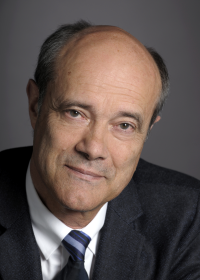
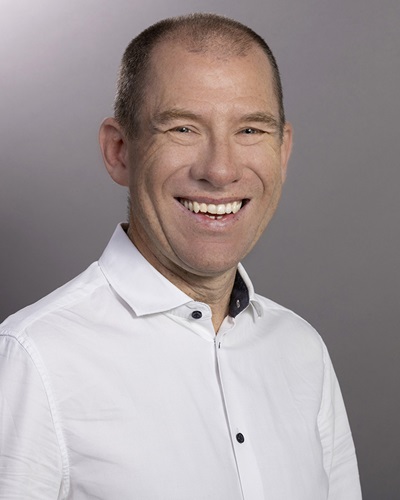
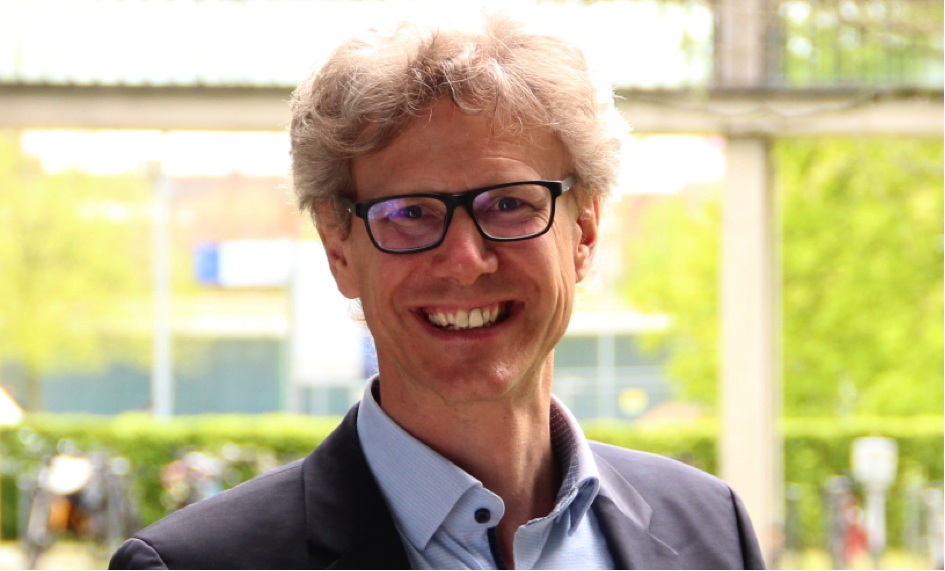
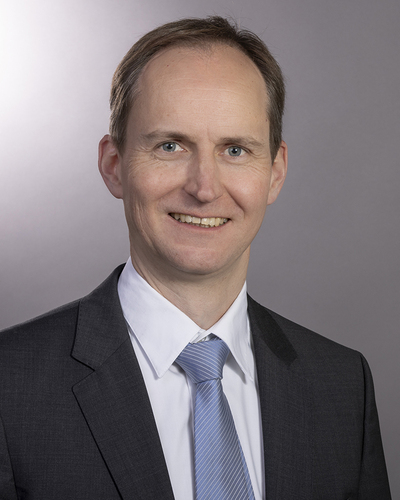
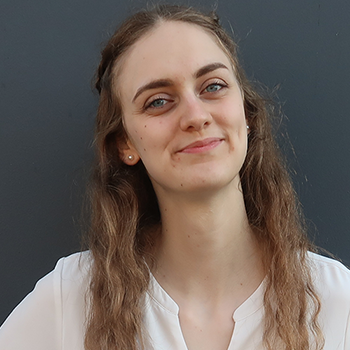
Prof. Dr. Günter Leugering holds the Chair of Applied Mathematics 2 at Friedrich-Alexander University Erlangen-Nuremberg (FAU). His academic work focuses on mathematical optimization and control theory with applications to complex systems. His research interests span Optimization with Partial Differential Equations , Optimal Control , and Mathematical Modeling of physical systems. Specific focus areas include traffic flow modeling, gas network optimization, and multiscale simulation approaches. His work bridges theoretical mathematics with practical engineering applications, particularly in infrastructure systems. Prof. Leugering has been actively involved in numerous coordinated research programs including SFB-TRR 154 (Modeling, Simulation and Optimization Using Gas Networks), DFG-SPP 1253 (Optimization with Partial Differential Equations), and the DFG Cluster of Excellence Engineering of Advanced Materials (EAM). His public lectures at venues like the Planetarium Nuremberg demonstrate his commitment to science communication, with topics ranging from traffic jam mathematics to optimization for new materials. His research team participates in several major initiatives: SFB-TRR 154 subprojects on mixed integer-continuous dynamic systems and decomposition methods EAM Research Area A3 on Multiscale Modeling and Simulation DFG-SFB 603 subproject on mathematical optimization for registration problems EU Frame program STRAP: PLATO-N
Sasanka Potluri serves as Professor of General Computer Science and Medical Informatics at Karlshochschule (Karlsruhe University of Education) since September 2025. He is actively engaged in teaching and research within the Department of Computer Science and Medical Informatics, focusing on the intersection of artificial intelligence and healthcare applications. His academic leadership spans multiple research projects aimed at transforming healthcare delivery through technological innovation. His educational background includes: Dr.-Ing. in Electrical Engineering and Information Technology from Otto-von-Guericke University Magdeburg (Germany) Dipl.-Ing. in Information Technology from Alpen-Adria University Klagenfurt (Austria) B. Tech in Electronics and Communication Engineering from Jawaharlal Nehru Technological University, Kakinada (India) Professor Potluri's research spans the cutting edge of artificial intelligence applications in healthcare, with particular expertise in machine learning, deep learning, and generative AI. His work bridges technical innovation with practical healthcare solutions, focusing on clinical decision support systems, biomedical statistics, and digital signal processing. He has developed novel approaches for healthcare logistics optimization, synthetic health data generation, and addressing digital health equity issues. His research methodology combines theoretical rigor with practical implementation, often working at the intersection of computer science, medical informatics, and systems engineering. His publication record reveals a consistent trajectory from industrial control systems security toward healthcare applications of AI. Early work focused on intrusion detection in industrial control systems using deep learning techniques, while recent publications demonstrate a strategic shift toward healthcare logistics, patient transportation optimization, and blood product management. This evolution reflects both his technical expertise in AI and his commitment to addressing critical challenges in healthcare delivery systems. His research increasingly incorporates generative AI approaches to solve complex healthcare resource allocation problems. Professional service includes: Member and Reviewer at GMDS (German Society for Medical Informatics, Biometry and Epidemiology) since 2024 Reviewer for European Federation for Medical Informatics since 2024 Reviewer for IEEE Transactions on Network and Service Management since 2020 Reviewer for Elsevier Journals including Engineering Applications of Artificial Intelligence since 2017 Professor Potluri actively supervises B.Sc, M.Sc, and PhD students in medical informatics, AI applications, generative AI, clinical decision support systems, and healthcare logistics. His current research projects focus on hospital resource and process optimization, synthetic health data generation, digital health equity studies, and generative AI in healthcare. He previously held research positions as Junior Research Group Leader at University Hospital Jena, Project Leader at Otto von Guericke University Magdeburg, and Research Assistant for EU Projects, building a strong foundation for his current interdisciplinary work.
Ambros Gleixner is a Professor at HTW Berlin since 2020 and an affiliated researcher at the Zuse Institute Berlin (ZIB) since 2008. His research focuses on computational aspects of mixed-integer linear and nonlinear programming, with emphasis on exact rational arithmetic and algorithm verification. PhD in Mathematics (2015), Technische Universität Berlin Diplom (MSc) in Mathematics (2008), Technische Universität Berlin Vordiplom (BSc) in Mathematics (2004), Universität Bayreuth His work spans mathematical optimization, operations research, and computational mathematics. At ZIB, he leads projects like developing the MINLP solver SCIP , the LP solver SoPlex , and verifying integer programming results through VIPR . Recent publications highlight advancements in exact rational MIP, GPU-parallel algorithms, and energy system optimization. Scientific Awards : MERIT Visiting Scholar at University of Melbourne (2013) Teaching : Offers bachelor's theses in optimization and computational mathematics. Requires students to have attended relevant seminars and possess programming skills. Office hours by email appointment through Ambros.Gleixner@HTW-Berlin.de . Labs & Teams : Principal investigator at ZIB's Mathematical Algorithmic Intelligence division, Research Campus MODAL , and Linear, Integer, and Constraint Programming project.
Christian Kirches is a full professor at the Institute for Mathematical Optimization within the Carl-Friedrich-Gauß-Fakultät (Faculty of Mathematics, Technische Universität Braunschweig). His research focuses on nonlinear optimization , mixed-integer optimal control , and robust optimization for dynamic systems. He was awarded the Klaus-Tschira prize (2011) for public science communication and the Hengstberger prize (2014) for junior researchers, and received an ERC Consolidator Grant (2022) for his work on optimization under uncertainty. Alumni of Heidelberg University (Diploma, Doctorate, Habilitation) Former resident associate at Argonne National Laboratory and postdoctoral appointee at the University of Chicago Leader of a junior research group (2013–2017) at Heidelberg University His recent publications highlight advancements in mixed-integer nonlinear programming , real-time control systems , and optimization for sustainable energy and transportation . He collaborates with researchers on projects like wind farm control, hydrogen aviation networks, and chromatography process optimization. His methodological work on sum-up rounding , trust-region algorithms , and combinatorial integral approximation has been published in journals such as SIAM Journal on Optimization, Mathematical Programming, and IEEE Control Systems Letters. Kirches also serves as area coordinator for Optimization Online and was associate editor for OR Spectrum (2022–2024). Scientific Awards: Klaus-Tschira Prize (2011) Hengstberger Prize (2014) ERC Consolidator Grant (2022) He is an elected member of the COIN-OR initiative and contributes to open-source optimization software. His lab at TU Braunschweig develops algorithms for dynamic systems under uncertainty, with applications in energy management, autonomous traffic, and industrial processes.
Prof. Dr. Maximilian Merkert is a Junior Professor for Optimization and Uncertainty in Mobility at the Institute for Mathematical Optimization, Technische Universität Braunschweig, since October 2021. Previously, he was a Postdoc at Otto von Guericke University Magdeburg (2017-2021) and a PhD student/research assistant at Friedrich-Alexander-Universität Erlangen-Nürnberg (2012-2017). His research focuses on mixed-integer nonlinear programming, network optimization, polyhedral combinatorics, and bilevel optimization with applications in mobility, logistics, and medicine. Research Interests: Mixed-Integer Nonlinear Programming Network Optimization Polyhedral Combinatorics Bilevel Optimization Game Theory Mobility Systems Teaching: Lectures and seminars on discrete optimization, multi-level optimization, and mathematical optimization Supervised computer labs and advanced optimization courses Publications: Contributions to mathematical programming journals and conferences (e.g., ICLR, Operations Research Proceedings) Focus on control languages, neural networks, wind farm optimization, and medical applications
Bodo Rosenhahn is a Full Professor at Leibniz University Hannover, heading the Institute for Information Processing since September 2008. His research focuses on automated image interpretation with profound expertise in Computer Vision, Machine Learning, and Big Data Analysis. He has established himself as a leading researcher through extensive contributions to the field and successful industry transfer of his work. Rosenhahn received his Computer Science education at the University of Kiel, earning his Dipl.-Inf. in 1999 and Dr.-Ing. in 2003. His academic journey included a postdoctoral position at the University of Auckland (2003-2005), funded by the German Research Foundation, followed by senior researcher work at the Max-Planck Institute for Informatics in Saarbruecken (2005-2008). His research interests span multiple cutting-edge areas including Computer Vision, Machine Learning, 3D Human Pose Estimation, Motion Capture, Object Tracking, Anomaly Detection, and Reinforcement Learning. His work bridges theoretical foundations with practical applications, particularly in medical imaging, autonomous systems, and industrial quality control. The group he leads has developed innovative approaches for video-based motion capture, semantic scene analysis, and multi-object tracking that have achieved state-of-the-art results in numerous challenges. His most recent publications demonstrate strong trends toward explainable AI systems, uncertainty quantification in vision models, robust multi-model fitting techniques, and the integration of quantum principles with machine learning. These works reflect his commitment to developing both theoretically sound and practically applicable computer vision solutions that address real-world challenges in industry and medicine. DAGM-Prize 2002 Dr.-Ing. Siegfried Werth Prize 2003 DAGM-Main Prize 2005 ERC-Starting Grant 2011 (EUR 1.43 million) CVPR 2017 Multi-Object Tracking Challenge PhysRev-A Editors Suggestion 2023 TÜV-Süd Innovation award 2018 As head coach of the LUH AI competition team, Rosenhahn has mentored numerous students who have achieved success in international competitions. His research has been supported by prestigious grants including the ERC Starting Grant and POC Grant. He has also received the Erskine Fellowship for research at the University of Canterbury. Since 2023, he serves as associate editor for IEEE TPAMI, the highest-ranked journal in computer science. Rosenhahn leads a vibrant research group focused on automated image interpretation with multiple ongoing projects including Multiple People Tracking, Relational Object Tracking, Physics-based modeling, Video-based Motion Capture, and Quantum Learning. His group has developed significant datasets such as the Multimodal Motion Capture Indoor Dataset (MPI08) and Multimodal Motion Capture Dataset (TNT15) that have become valuable resources for the computer vision community. The group maintains strong industry connections, successfully transferring research into practical applications while continuing to push the boundaries of fundamental research in computer vision and machine learning.
Prof. Dr. Christian Almeder serves as Professor and Head of the Chair of Supply Chain Management within the Faculty of Business Administration and Economics at Viadrina European University (Frankfurt (Oder), Germany). His research focuses on operations research applications in production planning, logistics, and supply chain optimization, with particular expertise in lot sizing, scheduling, and perishable goods management. He maintains active research output with publications spanning from 1997 to 2023. Almeder's research centers on mathematical modeling of complex production and logistics systems. His primary contributions involve developing heuristic and metaheuristic solutions for capacitated lot sizing problems, multi-level scheduling, and integrated production-distribution planning. Key specialties include handling perishability constraints, lead time uncertainties, and batch processing requirements using genetic programming, simulation-based optimization, and clearing function approaches. His work bridges theoretical operations research with industrial applications in supply chain management. Analysis of his 15 most recent publications (2013-2023) reveals a consistent focus on lot sizing and scheduling, with increasing emphasis on integrated supply chain problems and perishable goods logistics. Methodologically, he combines metaheuristics (genetic programming, simulated annealing) with simulation techniques to address real-world complexities like stochastic processing times and limited buffers. His work demonstrates strong application in production planning parameter tuning, vehicle routing integration, and robust operational planning under uncertainty.
Prof. Moritz Diehl is a Professor at the University of Freiburg, leading the Systems Control and Optimization Laboratory within the Department of Microsystems Engineering (IMTEK) and affiliated with the Department of Mathematics. Born in Hamburg, Germany, he holds a Ph.D. from Heidelberg University (2001) and previously served as a professor at KU Leuven (2006–2013), where he directed the Optimization in Engineering Center (OPTEC). His research focuses on optimization and control, emphasizing numerical methods for engineering applications, particularly embedded systems and renewable energy. Key areas include model predictive control (MPC), nonlinear optimization, and real-time control systems. Education: He studied physics and mathematics at Heidelberg University and the University of Cambridge (1993–1999), culminating in a Ph.D. in Scientific Computing. His academic journey includes roles at KU Leuven and Freiburg, where he has developed influential tools like the AWEbox framework for airborne wind energy systems and the acados optimization library. Research Interests: His work spans numerical optimal control, MPC algorithms, and their applications in robotics, energy systems, and automotive engineering. Recent advancements include collision-free motion planning, real-time NMPC with convex-concave constraints, and stochastic control methods for mobile robots. He also explores optimization for hybrid systems, leveraging finite elements and switch detection for nonsmooth dynamics. Publications: His 2023–2025 work highlights contributions to MPC stability, energy-efficient control systems, and software tools like LCQPow for quadratic programming. His research bridges theory and practice, addressing challenges in industrial processes, renewable energy integration, and autonomous systems. Labs & Teams: He leads the Systems Control and Optimization Lab, fostering interdisciplinary projects in optimal control, robotics, and sustainable energy. His group collaborates on tools like acados, emphasizing real-time feasibility and scalability for complex systems.
Achim Koberstein is a Professor of Business Administration with a focus on Business Informatics and Operations Research at the Faculty of Economics and Business Administration (Wiwi) , European University Viadrina Frankfurt (Oder). His academic career spans multiple institutions, including Goethe-University Frankfurt and the University of Hamburg. Education: Doctorate in Business Informatics (Dr. rer. pol.) at the University of Paderborn (2005) Diploma in Computer Science (Minor: Business Administration) at the University of Paderborn (2002) His research centers on decision support systems , stochastic and deterministic optimization models , and applications in supply chain and automotive production planning . Recent work explores drug shortages, drone logistics, and hybrid electric vehicle routing. His publications highlight a focus on stochastic programming , MILP modeling , and real-world logistics challenges across healthcare, automotive, and maritime domains. Current affiliations include leadership roles in the Faculty of Economics and Business Administration's Dean's team. Contact: Email: koberstein@europa-uni.de Office: Main Building (HG) 043, Große Scharrnstraße 59, 15230 Frankfurt (Oder)
Sriram Sankaranarayanan is a Professor in the Department of Computer Science at the University of Colorado Boulder and also serves as Associate Dean for Digital Education in the College of Engineering and Applied Science. Since joining the faculty in 2009, he has built an internationally recognized research program that blends programming languages, formal methods, and control theory to reason about cyber-physical systems. Education: Ph.D. in Computer Science, Stanford University, 2005 (advisers Zohar Manna & Henny Sipma) B.Tech., Indian Institute of Technology Kharagpur (President’s Gold Medal, 2000) Research Interests: Prof. Sankaranarayanan’s work centers on hybrid dynamical systems —models that capture discrete software interacting with continuous physical environments—and on developing formal-methods techniques for their verification, control, and synthesis. Specific themes include control-barrier & Lyapunov function synthesis, neural-network verification, stochastic-game models for human-autonomy interaction, and physics-informed machine learning. Application domains range from autonomous robotics and surgical-task planning to safety-critical medical devices such as the artificial pancreas. Recent Publication Trends (2024-2025): His latest papers advance safe control synthesis (successive control barrier functions, piecewise-affine Lyapunov functions) and trustworthy AI (Taylor-model enhanced physics-informed neural networks), while also exploring game-theoretic anticipation for robotic systems interacting with uncertain human operators. Honors & Awards: NSF CAREER Award (2009) Siebel Scholar (2005) President’s Gold Medal, IIT Kharagpur (2000) CU Boulder Dean’s Award for Outstanding Junior Faculty (2012) CU Boulder Outstanding Teaching Award (2014) CU Boulder Provost’s Faculty Achievement Award (2014) Coursera Outstanding Innovation Award (2022) Student Advising & Grants: He has mentored numerous PhD students; recent graduates include Dr. Emily Jensen, Dr. Monal Narasimhamurthy, and Dr. Kandai Watanabe (2024). His group regularly publishes at top venues such as HSCC, POPL, PLDI, CAV, and WAFR, supported by NSF, NIH, and industry grants. Group & Teaching: Prof. Sankaranarayanan leads activities within the Programming Languages & Verification group and teaches graduate and undergraduate courses on programming languages, algorithms, optimization, and formal methods. He is active in conference organization (e.g., PC Chair VMCAI 2025) and maintains open-source courseware and research notebooks on GitHub.
Ariane Fazeny is a Doctoral Researcher at SFB Transregio 154 since 2022, focusing on mathematical modeling, simulation, and optimization using Wasserstein metrics for gas networks. She also works as a Software Engineer for Siemens Mobility in Erlangen, contributing to powertrain technology and brake control systems validation. Educational Background Bachelor of Science (2017-2020) : Mathematics and Economics at Friedrich-Alexander-Universität Erlangen-Nürnberg (FAU), with a thesis on mixed integer programs for air traffic fleet and crew assignment. Master of Science (2020-2022) : Mathematics and Economics at FAU, introducing generalized definitions for gradient, adjoint, and p-Laplacian operators on hypergraphs. Research Interests Mixed Integer Optimization Game Theory Cryptography Space Travel Fusion Power Mathematical Modeling Gas Network Optimization Hypergraph Theory Contact Email: ariane.fazeny@desy.de Affiliations Helmholtz Imaging at DESY (Notkestrasse 85, D-22607 Hamburg) SFB Transregio 154 subproject C06 LinkedIn profile
Prof. Floris Ernst serves as Professor of Medical Robotics at the Institute for Robotics and Cognitive Systems, University of Lübeck, where he has been faculty since 2017 after joining as a research associate in 2013. He holds significant leadership roles including membership on the Steering Committee of the Graduate School 'Computing in Medicine and Life Sciences' and editorial positions with IEEE Robotics and Automation Letters and Frontiers in Robotics and AI. His research spans medical robotics , signal processing for biomedical applications , sensors for robotics , and augmented reality in surgery . Key projects include SonoBox (robotic ultrasound for pediatric fracture diagnosis), TWIN-WIN (digital supertwin technology), and robotics applications in rescue medicine. His work consistently bridges theoretical algorithm development with clinical implementation, focusing on real-world medical challenges. Prof. Ernst's recent publications (2023-2025) demonstrate strong activity across medical imaging, rescue robotics, and navigation systems. Trends show increasing focus on deep learning applications in medical imaging, real-time motion tracking for radiosurgery, and autonomous systems for emergency response. His work frequently appears in top robotics and medical imaging venues including IEEE conferences and journals. IEEE Senior Member Associate Editor, IEEE Robotics and Automation Letters (Medical Robotics) Associate Editor, Frontiers in Robotics and AI (Biomedical Robotics) As an active supervisor, Prof. Ernst guides students through courses like Medical Robotics (CS4270) and Bachelor/Master projects, with numerous publications co-authored with students. His lab maintains strong industry and clinical collaborations, particularly in medical device development and clinical robotics applications. The Robotics Laboratory (RobLab) serves as the primary research environment for his team's work on medical and rescue robotics systems.