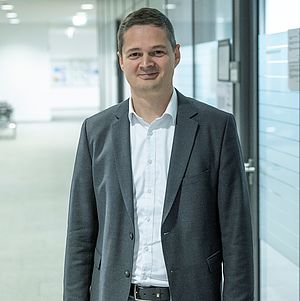
Christoph Heinzl is a Professor of Cognitive Sensor Systems at the University of Passau since September 2022. He leads the Knowledge-based Image Processing research group at the Fraunhofer Development Center X-ray Technology (EZRT) . His academic background includes a PhD in Informatics and a Habilitation in 2022 , both from TU Wien . Research Focus: Scientific visualization, visual analytics, immersive analytics, virtual/augmented reality, machine learning, and X-ray computed tomography (XCT). Key Trends: Development of novel visualization techniques for complex volumetric data (e.g., dynamic volume lines, visual coherence frameworks), parameter space analysis, and cross-virtuality collaboration tools. Applications: Aerospace component inspection, defect analysis in composites (CFRP, GFRP), porosity quantification, and 4DCT time-series exploration.
Kjetil Nordby is a Professor at the Oslo School of Architecture and Design (AHO), specializing in interaction design for maritime environments. He leads the Ocean Industries Concept Lab (OICL) and manages the OpenBridge Design System, an open-source framework for standardized ship bridge interfaces. Research focus: Augmented/Virtual Reality in maritime operations Key projects: OpenRemote (remote operation center UI), OpenAR (AR integration) Collaborations with institutions like Royal Institution of Naval Architects His work addresses cross-vendor interface consistency, safety-critical UX, and open innovation in maritime design. Recent publications explore AR/VR applications for navigation, collaborative workstations, and energy-conscious maritime systems. Scientific contributions include: 15+ peer-reviewed articles in journals like Journal of Marine Science and Engineering and Applied Ergonomics Book chapters on sensemaking in safety-critical maritime environments
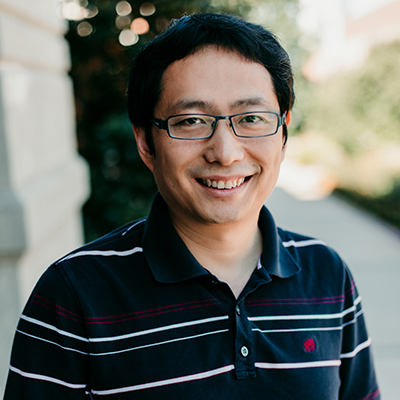
Xinhao Xu is an Associate Professor at the School of Information Science & Learning Technologies within the College of Education & Human Development at the University of Missouri. He specializes in technology-enhanced learning environments, with a focus on mixed reality, embodied interactions, and game-based learning for STEM education. His research explores how immersive technologies like VR and AR can improve educational outcomes and engagement. Dr. Xu holds a Ph.D. in Instructional Systems and Learning Technologies from Florida State University, alongside a B.Sc. in Electronic Instrumentation and Measurement and an M.Sc. in Digital Communication Systems and Technology from institutions in China and Sweden. His work integrates quantitative and qualitative methods to study learning processes in technology-rich settings. His research interests include the design of immersive virtual learning environments, the role of embodied interactions in cognition, and the application of novel technologies (e.g., generative AI, CAVE systems) in education. He is affiliated with the Technology to Enhance Learning Lab (TELL) and has received funding from the Mizzou Alumni Association Faculty Incentive Grants. Xinhao Xu’s publications emphasize trends in VR/AR adoption, collaborative learning in immersive spaces, and the psychological impacts of technology on learners. His work highlights the potential of mixed reality to bridge theoretical and practical learning gaps, particularly in STEM disciplines.
Teo (Danielle) Keifert (they/them) is an Assistant Professor in the Department of Educational Psychology within the College of Education at the University of North Texas. Their work bridges learning sciences, science education, and equity-focused pedagogy, with a strong emphasis on young children's inquiry practices and sensemaking in science classrooms. Teo's research centers on expansive, culturally responsive approaches to science learning, particularly through imaginative embodiment, drawing, storytelling, and play. They investigate how family culture shapes children's ways of knowing and use design-based research and co-observation methodologies to develop ethically grounded, ecologically valid research practices. Their projects, funded by the National Science Foundation and the Spencer Foundation, explore mixed-reality technologies, teacher professional development, and pre-service teacher education through sociocultural lenses. Their recent publications reveal a consistent focus on broadening participation in science by redefining what counts as scientific practice. Themes include embodied cognition, hybrid argumentation across disciplines, equity in elementary science, and humanizing pedagogy during crises like the pandemic. Their work emphasizes relationships, curiosity, narrative, and disruption of normative assumptions in teaching and learning. Scientific Awards and Grants: Spencer Foundational Small Grant (Principal Investigator) National Science Foundation grant (Co-PI, Science through Technology Enhanced Play) McDonnell Foundation grant (Co-PI, Representations for Teachers as Learners) National Science Foundation grant (Co-PI, Equitable Science Sensemaking) Teo advises on teacher education reform and supports elementary educators in designing transformational learning experiences, particularly for multilingual learners. Their grants focus on co-designing equitable learning environments, professional learning communities, and innovative uses of technology. They are also engaged in research on faculty well-being and support during the pandemic. Teo is affiliated with research teams focused on learning in families, mixed-reality science environments, and equitable sensemaking. Their labs and collaborative projects include the Learning, Being and Doing in Families Study and partnerships with researchers like Enyedy, Danish, Pierson, and Marin.
Aysegul Liman-Kaban serves as an Assistant Professor in ICT/Digital Learning STEM Education at Maynooth University. Her work focuses on integrating immersive technologies like augmented reality, gamification, and AI into educational practices. She actively supervises PhD students and leads international research projects such as MIXAP-EU and From AI Anxiety to Empowerment. Education: Not explicitly stated in provided text Her research interests span: Immersive learning technologies (AR/XR, digital escape games) AI in education and generative AI applications Teacher digital competencies and professional development Flipped learning and multimedia pedagogy Ethical challenges in AI research Blended learning practices Recent publications demonstrate a focus on gamification, mixed reality, and AI applications in education, with methodological expertise in structural equation modeling, mixed methods research, and task-based learning analysis. She contributes to journals like Smart Learning Environments and Higher Education Quarterly . Key activities include: Organizing international conferences on STEAM education Leading EU-funded research on immersive learning tools Developing open-source educational technologies Pioneering generative AI integration frameworks
Max Schleser is Associate Professor in Film and Television at Swinburne University of Technology, where he also conducts research with the Centre for Transformative Media Technologies (CTMT). He is an Adobe Creative Educator Innovator, Founder of the Mobile Innovation Network & Association (MINA), and Screening Director of the International Mobile Innovation Screening & Festival. His work spans academic, artistic, and community domains, with a focus on innovative screen practices. Max holds a PhD in Creative Arts from the University of Westminster, an MA in Art and Media Practice with Distinction, and a BA Hons. His research centers on immersive media, documentary film, and creative arts 4.0, particularly cinematic VR and interactive filmmaking. He investigates screen production, emerging media, and smartphone filmmaking as tools for community engagement, creative transformation, and transmedia storytelling. His recent publications reveal a strong trend toward integrating Generative AI into documentary and city film genres, exploring the 'AI eye' and computational non-fiction. He also investigates novel immersive production methods in VR, HyFlex pedagogies in film education, and collaborative mobile storytelling through workshops. His work consistently bridges creative practice with theoretical inquiry. Best Cinematography, International Cell Phone Cinema - Cannes (2025) Best Mobile Film, Nitiin International Film Festival (2024) Dean's Award for Teaching and Research, Swinburne University (2023) International Visiting Research Scholar, Auckland University of Technology (2024) Early Career Award - Research, Massey University (2012) Max leads multiple research grants focused on health storytelling, intergenerational connection, AI in screen industries, and sustainability education. He supervises creative projects and has conducted digital storytelling workshops for cultural institutes and government bodies worldwide. As founder of MINA and director of major festivals, he leads international networks in mobile media innovation. He also serves on the editorial board of the Media Practice and Education journal and has co-edited several key volumes on mobile media and storytelling.
Christian Timmerer is a Professor at the Institute of Information Technology, Alpen-Adria-Universität Klagenfurt. His research focuses on adaptive video streaming , energy efficiency , MPEG standardization , and quality of experience (QoE) , with significant contributions to HTTP Adaptive Streaming (HAS), multi-codec optimization, and immersive media systems. Email: christian.timmerer@aau.at Office Hours: Monday 3:00-4:00 PM (by appointment) Projects: CD-Labor ATHENA, GAIA, SPIRIT His research integrates machine learning and generative AI to enhance video encoding, super-resolution, and voice dubbing, while prioritizing sustainability through energy-aware algorithms and open-source tools like GREEM and VEED. Current work emphasizes latency reduction and dynamic bitrate adaptation in live streaming environments. Recent publications address VVC optimization , multi-resolution encoding , and perceptual quality modeling , reflecting interdisciplinary efforts in networking , computer vision , and human-computer interaction . Awards include leading funded projects on adaptive streaming and green video systems.
Craig Shultz is an Assistant Professor in the Department of Electrical and Computer Engineering at the University of Illinois Urbana-Champaign and co-founder of Fluid Reality . His research focuses on interactive embedded systems and haptic actuation , particularly tactile interfaces for VR/AR, IoT, and wearable devices. He employs an interdisciplinary approach blending psychophysics, electrical and mechanical engineering, and human-computer interaction (HCI) to advance haptic rendering. Specializes in surface haptics , non-contact haptics , and electroosmotic pump arrays . Develops technologies for scalable shape displays , mid-air haptic interactions , and haptic-augmented spatial computing . Teaches Interactive Haptic Systems (since 2025). His research has led to 6 best paper awards and nominations at ACM and IEEE venues, including the IEEE Transactions on Haptics Best Application Paper of the Year (2018). He received the Sony Faculty Innovation Award (2025) and the IEEE Technical Committee on Haptics Early Career Award (2025) . His publications emphasize haptic rendering , low-latency touchscreens , and non-contact tactile actuation . He actively collaborates with institutions like Northwestern University and KAIST HCI . Key research areas: tactile interfaces, scientific engineering, VR/AR haptics, and haptic design practices. Technologies developed: Fluid Reality haptic gloves, DynaButtons, LRAir synthetic jets, and TriboTouch micro-patterned surfaces.
Michele Gattullo serves as an Assistant Professor within the Department of Mechanics, Mathematics & Management at the Polytechnic University of Bari, Italy, specializing in design methods for industrial engineering (ING-IND/15). His research bridges cutting-edge extended reality technologies with practical industrial applications, focusing on human-centered solutions for manufacturing, maintenance, and workplace design. Dr. Gattullo's research portfolio centers on Augmented Reality, Virtual Reality, and Biophilic Design, with significant contributions to Human-Computer Interaction in industrial contexts. He investigates how nature-inspired elements in virtual workspaces enhance employee well-being and productivity, while simultaneously developing practical AR tools for assembly guidance, technical documentation, and maintenance support. His work uniquely integrates ergonomics, cognitive psychology, and industrial engineering to optimize human-technology interaction in complex production environments. Analysis of his 15 most recent publications reveals two dominant research trajectories: biophilic design frameworks for virtual/metaverse workspaces (2023-2025) and industrial AR authoring methodologies. The biophilic stream establishes evidence-based guidelines for digital nature integration, while the AR stream delivers validated tools like ADAM and minimal AR approaches that streamline technical documentation creation. Both trajectories emphasize user experience validation through rigorous industrial studies, demonstrating strong interdisciplinary impact across computer science, industrial engineering, and environmental psychology. Scientific Awards: No awards or honors were documented in the available sources. Advising and Grants: The provided materials contain no information regarding graduate student supervision, research grants, or funding sources. His academic profile emphasizes publication output over mentoring activities or project financing details. Laboratories and Teams: While Dr. Gattullo's research involves advanced XR technologies, the source text does not specify laboratory facilities, research groups, or collaborative teams associated with his work at Politecnico di Bari.
Thomas Bjørner is an Associate Professor at Aalborg University's Department of Architecture, Design and Media Technology within The Technical Faculty of IT and Design. He serves as Head of the Media Innovation & Game Research (Me-Ga) unit and co-founded the research network for qualitative methods (since 2007) with 40+ company collaborations. Specializes in qualitative/mixed methods for technology evaluation Teaches PhD courses in advanced qualitative methods EU expert evaluator for research grants His research focuses on gamified learning , VR for social communication , and technology acceptance studies , often addressing UN Sustainable Development Goals. Recent projects include: Audio-only VR for blind gamers Generative AI integration in education Plastic crisis awareness games Smart city implementation barriers Scientific Awards: Serious Game Competition Award (2022) International conference prizes (2020, 2018) With over 121 publications including two textbooks, his work emphasizes applied qualitative methods with improved validity in technology contexts, particularly for youth education and media research.
Sandy Claes is an Assistant Professor in the Department of Communication Science at KU Leuven, affiliated with the Faculty of Social Sciences. She serves as a researcher in the Media Culture & Policy Lab and is a member of the DigiSoc – KU Leuven Digital Society Institute. Her roles include Co-Promotor and Promotor in various research projects, and she is an invited member of the Council of the Faculty of Social Sciences. Claes’ work focuses on public displays, Human-Computer Interaction, interactive storytelling, participatory design, and media design. Her research projects span topics like environmental data visualization, participatory design for science engagement, and the role of mixed reality in fostering community. Notable projects include 'Designing Interactive Data Stories to Uncover Uncertainty' and 'Aerial and Airing: Mapping Environmental Data'. Claes’ publications highlight themes such as uncertainty communication in science, immersive dome experiences, and co-creating public spectacles. She actively contributes to conferences like the EGU General Assembly and Design Research Society events. Her advising and grants involve leading multiple projects with roles as Promotor or Co-Promotor, emphasizing interdisciplinary collaboration. She is part of the Media Culture & Policy Lab and the Digital Society Institute, exploring intersections between technology, culture, and policy.
Dr. Laura Maye is a Lecturer at the School of Computer Science and Information Technology, University College Cork. Her research specializes in Interactive Media and Human-Computer Interaction (HCI), focusing on participatory design methods and immersive technologies. Key research interests include virtual reality applications, co-design methodologies for cultural heritage, community-centered technology development, and sensory interaction studies. Her work emphasizes inclusive design and socio-ecological relationships in technology. Recent publications (2020-2025) demonstrate strong trends in VR-based sensory studies, community radio innovations, and rehabilitation technology. Articles frequently employ mixed-methods approaches and highlight cross-modal perception, participatory frameworks, and rural HCI challenges.
Daniel Livingstone is a researcher at The Glasgow School of Art (GSA) specializing in the application of games and 3D technologies to enhance learning and public engagement. His work spans medical visualization, heritage interpretation, and broader educational technology domains. Current PGR supervisee: Shaojie Ni (AR & Gamification in Museums) Email: D.Livingstone@gsa.ac.uk Research Themes : Serious games, virtual reality, 3D anatomical modeling, disease education, digital heritage preservation, and AI-driven simulations. Highlights include AR tools for rheumatology engagement, VR applications in diabetes management, and digital reconstructions of historical surgical instruments. Article Trends : Focus on merging immersive technologies with healthcare education, heritage storytelling, and interdisciplinary applications of game engines. Recurring keywords: Augmented Reality , 3D Visualization , Medical Education , Public Health , Virtual Environments .
Agnieszka Roginska is a Professor of Music Technology at the Steinhardt School, New York University, specializing in immersive audio, spatial sound, and auditory displays. Her work integrates acoustic science with virtual reality and medical applications, including postural stability studies for vestibular rehabilitation. She holds leadership roles as AES President-Elect and co-edited the authoritative book 'Immersive Sound'. Education: B.A. in Piano Performance and Computer Applications in Music (McGill University, 1996); M.M. in Music Technology (NYU, 1998); Ph.D. in Music Technology (Northwestern University, 2004). Research focuses on 3D audio technologies, auditory displays for virtual environments, and sensory integration studies. She leads NYU's Music and Audio Research Lab (MARL) and advises the Society for Women in TeCHnology (SWiTCH) at NYU. Awards include AES Fellowship and leadership in international audio engineering societies. Recent publications emphasize audio's role in postural control, distributed music performance frameworks (Holodeck), and VR sound design. Her work bridges technical innovation with artistic applications, including collaborative music systems in mixed reality.
Bernhard Jenny is an Associate Professor at Monash University's Faculty of Information Technology, specializing in immersive visualization and geospatial data. He holds a PhD in Cartography from ETH Zurich and has held previous roles at Oregon State University and RMIT University. His research focuses on virtual reality (VR), augmented reality (AR), and cartographic innovations for geospatial data representation. Education: Doctor of Sciences in Cartography, ETH Zurich (2010) Postgraduate Certificate in Computer Science, ETH Zurich (2005) Master of Science in Surveying, EPFL (2000) Research Interests: Combines cartography, computer graphics, and human-computer interaction to explore VR/AR applications for geospatial data. Current work includes immersive analytics, terrain visualization, adaptive map projections, and storytelling with geospatial data. Recent Articles: Focus on ambient occlusion for terrain shading, grammars for immersive visualization transitions, and AR/VR interfaces for spatial data. Awards: Henry Johns Award (2007, 2011, 2012) ETH Medal (2010) Best Paper Honorable Mentions (ACM CHI, DIS) Grants & Projects: Leads initiatives like the 'Immersive Analytics' extension and 'National Geographic Relief Shading' project. Collaborates on neural networks for cartographic relief shading and sustainable development goals (SDGs). Labs & Teams: Heads the Embodied Visualisation Lab at Monash, focusing on immersive analytics and geovisualization tools.