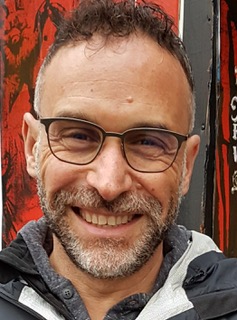
Kevin John Grimm is a Professor in the Department of Psychology at Arizona State University (ASU), serving as Director of Operations and Research within the College of Health Solutions. He holds a B.A. in Mathematics and Psychology from Gettysburg College (2000), and M.A. (2003) and Ph.D. (2006) in Psychology from the University of Virginia. Previously, he served as faculty at UC Davis before joining ASU in 2014. His research focuses on multivariate methods for analyzing developmental change, including nonlinear growth modeling, latent class analysis, and integrating machine learning with psychological data. Notable contributions include co-authoring the textbook *Growth Modeling: Structural Equation and Multilevel Modeling Approaches* (Guilford Press, 2017). Teaches courses like Structural Equation Modeling, Longitudinal Growth Modeling, and Machine Learning in Psychology at ASU. Active in professional service: Associate Editor of *Structural Equation Modeling: A Multidisciplinary Journal* since 2012. Recipient of NIH/NIDA grants for drug abuse/HIV prevention research and NICHD-funded studies on sleep health in children. His methodological work bridges quantitative innovation with substantive developmental research, emphasizing rigorous model specification and cross-disciplinary applications.
Jennifer Ludrosky is an Assistant Professor in the Department of Behavioral Medicine & Psychiatry at the West Virginia University School of Medicine, specializing in Child and Adolescent Psychiatry through the HRSA-funded Graduate Psychology Education (GPE) program. Her educational credentials include: PhD from Miami University (2005) Child and Adolescent Psychology Internship at University of Rochester School of Medicine (2005) HRSA-funded GPE Fellowship at University of Rochester School of Medicine (2006) Dr. Ludrosky's research centers on critical gaps in behavioral healthcare delivery, with emphasis on rural mental health access for children, palliative care integration in pediatric oncology, and telehealth service optimization. Her work addresses systemic barriers like insurance authorization processes, geographic isolation, and pandemic-related service disruptions, while developing interventions for caregiver education and provider wellness. This portfolio reflects a commitment to equity-focused solutions in underserved communities. Her 2022-2023 publications reveal consistent methodological rigor across diverse settings—from rural Appalachia to school systems—using mixed-methods approaches to evaluate distance metrics, telehealth adoption, and mindfulness interventions. Key trends include intersectional analysis of socioeconomic barriers, real-world implementation challenges, and patient-family centered care models. No scientific awards were documented in source materials. Regarding academic mentorship and funding, the provided texts contained no information about supervisees, grant awards, or research teams.
Michael Molloy is a Professor in the Department of Computer Science at the University of Toronto, with a cross-appointment to the Department of Computer and Mathematical Sciences at the University of Toronto Scarborough (UTSC). He teaches courses in Discrete Mathematics and the Probabilistic Method, including CSC/MAT A67 and CSC2427/MAT1500 . Research Focus: Graph Theory, Probabilistic Methods, Random Graphs, Constraint Satisfaction Problems, and Markov Chain analysis. His work includes foundational contributions to graph coloring, such as adaptable/conflict coloring and correspondence coloring, and exploring phase transitions in random graphs. He has supervised numerous graduate students, including Lora Hrisch, Jurgen Aliaj, and Hamed Hatami, advancing combinatorial and algorithmic research. Recent publications analyze random graph processes, the freezing threshold for k-colorings, and the resolution complexity of constraint satisfaction problems. These studies intersect theoretical computer science, combinatorics, and probabilistic modeling, often revealing deep structural insights through rigorous mathematical proofs.
Dr. Jessica C. Fisher is a Research Fellow at the Durrell Institute of Conservation and Ecology (DICE), University of Kent. Her work focuses on the intersection of human health, environmental change, and social inequalities, particularly exploring how biodiversity influences well-being through nature-based interventions. She holds a BSc in Zoology from Newcastle University, an MRes in Biodiversity, Evolution, and Conservation from University College London, and a PhD from DICE, where she examined human-nature interactions in urban Guyana. Her research employs mixed-methods approaches, including participatory visual methods, structural equation modeling, and data visualization. Key areas include the design of nature-based health programs, the socio-cultural dimensions of biodiversity conservation, and the impacts of environmental changes on marginalized communities. She has contributed to projects funded by the Woodland Trust and European Research Council (ERC), such as the 'RELATE' initiative analyzing biodiversity's role in human well-being across socio-economic gradients. Dr. Fisher is a Professional Associate Fellow of the Higher Education Academy and chairs the Women’s Researcher Network. Her publications span high-impact journals like Nature Ecology and Evolution and Environmental Research , with a focus on topics including robotic biodiversity monitoring, participatory video in conservation, and equitable access to nature. She actively engages in policy advocacy, emphasizing the integration of social and ecological sciences to address planetary health challenges. Education: BSc Zoology, Newcastle University MRes Biodiversity, Evolution, and Conservation, University College London PhD in Human-Nature Interactions (Urban Guyana), DICE, University of Kent Affiliations: Member, Durrell Institute of Conservation and Ecology (DICE) Co-chair, Women’s Researcher Network Member, IUCN Commission on Ecosystem Management Grants & Projects: ERC-funded 'RELATE' project (2020–present) Woodland Trust-funded 'Woodland Biodiversity for Human Health and Wellbeing' (2020)
Dr. Arnab Samanta is an Associate Professor at the Department of Aerospace Engineering , Indian Institute of Technology Kanpur. His research focuses on fundamental and applied aspects of fluid mechanics and aeroacoustics. PhD in Theoretical & Applied Mechanics (2009), University of Illinois at Urbana-Champaign ME in Aerospace Engineering (2004), Indian Institute of Science BE in Mechanical Engineering (2001), Jadavpur University His research interests include: Fluid mechanics of complex flows Aeroacoustics and noise prediction Hydrodynamic stability analysis Wave mechanics in compressible flows Active flow control strategies Recent publications highlight work on vortex ring stability, swirling jet dynamics, supersonic flow acoustics, and jet instability modeling. His laboratory (Low Speed Aerodynamics Lab - A02) serves as a hub for aerospace research and student training.
Elizabeth A. Koebele serves as Associate Professor of Political Science and Director of Graduate Studies at the University of Nevada, Reno, where her research centers on environmental policy with emphasis on collaborative governance, western U.S. water management, and disaster policy. Her methodological expertise combines qualitative and mixed approaches to analyze policy processes and outcomes. Her educational background includes: Ph.D. in Environmental Studies, University of Colorado Boulder (2017) M.S. in Environmental Studies, University of Colorado Boulder (2014) B.A. in English Literature, Arizona State University (2010) B.A. in Secondary Education, Arizona State University (2010) Dr. Koebele's research investigates how collaborative policymaking shapes environmental governance, particularly in water resources and disaster contexts. She examines coalition dynamics, narrative power in policy frameworks, and institutional arrangements enabling adaptive responses to climate challenges. Her work bridges political science with environmental studies through rigorous mixed-methods analysis. Analysis of her recent publications reveals consistent focus on polycentric governance systems, especially in western U.S. water basins. Key trends include studying collaborative forums in the Colorado River Basin, urban water management transitions in cities like Miami and Las Vegas, and the interplay between narrative strategies and policy change. Her scholarship increasingly integrates climate adaptation with equity considerations in resource governance. Her notable recognitions include: 2021 NSF CAREER award for Colorado River water governance research 2022 NSHE Board of Regents Rising Researcher award Dr. Koebele has secured significant external funding from the U.S. National Science Foundation and U.S. Department of Agriculture. As Director of Graduate Studies, she oversees the Political Science department's graduate program while maintaining an active research group focused on environmental governance. Her editorial role as co-editor of Policy & Politics further demonstrates her leadership in the field.
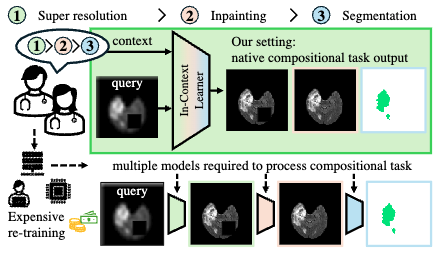
Prof. Dr. Erik Rodner is a faculty member at the University of Applied Sciences Berlin (HTW Berlin), where he serves as a Professor for Machine Learning and Data Science. He also contributes to the School of Engineering Sciences - Technology and Life. His research spans computer vision, machine learning, and biomedical applications, with a focus on learning with limited data, robust visual recognition models, and medical image analysis. He has developed innovative methods for medical diagnostics, industrial classification, and anomaly detection. Recent publications (2025-2016) highlight his expertise in visual in-context learning, semi-weakly segmentation, and active learning frameworks. He has collaborated with institutions such as ZEISS Group, Friedrich Schiller University Jena, and UC Berkeley. Scientific Awards: Award for Excellent Teaching (2023)
Prof. Ady Arie is a Professor of Electrical Engineering at Tel Aviv University, where he serves as the Head of the Tel Aviv University Center for Light-Matter Interaction and holds the Marko and Lucie Chaoul Chair in Nano-Photonics. He has been a faculty member at the Iby and Aladar Fleischman Faculty of Engineering since 1993, previously serving as Head of the School of Electrical Engineering (2013-2017) and Vice Dean of Research (2011-2013). His educational background includes: B.Sc. in Mathematics and Physics from Hebrew University of Jerusalem (1983) M.Sc. in Physics from Tel-Aviv University (1986) Ph.D. in Engineering from Tel-Aviv University (1992) Prof. Arie's research spans multiple frontiers of optics and photonics. His work in nonlinear optics focuses on advanced frequency conversion techniques and shaping of light parameters using nonlinear photonic crystals. In quantum optics , he develops quantum light sources based on spontaneous parametric down conversion and explores applications in quantum sensing and communication. His plasmonics research investigates manipulation of surface plasmon polaritons on metal surfaces. In electron optics , he studies electron-matter-light interactions and techniques for sculpting electron wave functions. His lab also explores hydrodynamics through quantum simulations with water waves, creating analogies to quantum mechanical phenomena. Analysis of Prof. Arie's recent publications (2023-2025) reveals a strong focus on quantum technologies, particularly in quantum light generation, quantum sensing, and quantum information processing. His work increasingly integrates concepts from nonlinear optics, electron microscopy, and quantum physics, with growing emphasis on practical applications in quantum communication and computation. The research shows sophisticated manipulation of light-matter interactions across multiple platforms including nonlinear photonic crystals, plasmonic structures, and electron beams. Prof. Arie has received significant recognition for his work: Kadar Foundation Award for Excellence in Research (2016) Fellow of the Optical Society of America Editorial roles including Topical Editor of Optics Letters (2008-2014) and Associate Editor of Optica (since 2018) Prof. Arie leads the Nonlinear Optics and Wave Propagation Laboratory at Tel Aviv University, where his team investigates diverse wave phenomena from light frequency conversion to electron beam manipulation. He has served as chair of the national steering committee of the Israeli Planning and Budgeting Committee on Quantum Science and Technology. His research has been supported by various grants enabling the development of novel optical technologies and quantum systems. While specific grant details aren't provided in the text, his extensive publication record and leadership positions suggest substantial research funding. Prof. Arie's laboratory focuses on the intersection of classical and quantum wave phenomena. The lab investigates light manipulation through nonlinear optical processes, plasmonic structures, and electron microscopy techniques. Current research directions include quantum light generation, electron-photon interactions, and hydrodynamic analogs to quantum systems. The lab appears well-equipped for advanced optical experimentation with capabilities spanning visible to infrared wavelengths, nonlinear crystal engineering, and electron beam characterization.
Panagiotis Papapetrou is a Professor of Data Science and Deputy Head of Department at the Department of Computer and Systems Science , Stockholm University (since 2017). He also serves as Head of the Data Science Research Group and holds an Adjunct Professor position at Aalto University (Finland). As a Board Member of the Swedish Association for Artificial Intelligence (SAIS) , he contributes to shaping AI research directions in Sweden. Research Pillars: Algorithmic data mining, interpretable machine learning, time series classification, and health informatics Key Projects: AI for societal fairness, digital twins for smart buildings, EXTREMUM for explainable medical AI, and e-learning personalization Teaching Legacy: Developed courses in Data Mining (HT2013-2022), Machine Learning (VT2022-2024), and Health Informatics (VT2018-2021) His work focuses on interpretable AI for healthcare applications, particularly through counterfactual explanations for time series classification and forecasting. This includes developing methods like Glacier for constrained counterfactuals and Ijuice for k-justified explanations. His research also explores multimodal clustering of sepsis patient records and federated learning approaches for ICU mortality prediction. Recent scientific contributions include: CounterFair (2024): Group fairness analysis via counterfactual burden metrics M-ClustEHR (2024): Multimodal clustering for electronic health records COMET (2024): Constraint-based glucose forecasting explanations Temporal pattern mining (2024-2025): Enhanced forecasting models through decomposition Z-Time (2024): Interpretable multivariate time series classification His editorial leadership includes: Action Editor at Machine Learning Journal (since 2024) Action Editor at Data Mining and Knowledge Discovery (since 2018) Guest Editorial Board for ECML/PKDD Journal Track (2014-2019)
Peter X. K. Song is a Professor in the Department of Biostatistics at the University of Michigan School of Public Health. With expertise spanning statistical methodology development and interdisciplinary applications, Dr. Song maintains active collaborations across Nutritional Sciences, Environmental Health Sciences, Chronic Disease research, and Nephrology. His work bridges theoretical statistics with practical healthcare solutions, focusing on innovative approaches to complex data challenges in public health and medicine. Based at the M4140 SPH II building in Ann Arbor, he leads the Song Lab and contributes significantly to the academic community through teaching, research mentorship, and scholarly publications. PhD, University of British Columbia, Vancouver, 1996 BS, Jilin University, Changchun, 1985 Dr. Song's research focuses on the statistical foundation of big data analytics, with particular emphasis on data integration, distributed inference, high-dimensional data analysis, longitudinal data analysis, mediation analysis, and spatiotemporal modeling. His methodological innovations address critical challenges in smart health applications, including organ exchange programs, children's health, chronic disease management, environmental health assessment, and nutritional sciences. His approach combines statistical theory, integer optimization, and algorithm development to create practical tools that help researchers understand complex relationships between environmental exposures and health outcomes. Dr. Song's publication record demonstrates a consistent trajectory of methodological innovation applied to pressing health challenges. His recent work shows increasing focus on sleep classification using AI techniques, personalized treatment effect analysis, distributed statistical methods for high-dimensional data, and epigenetic applications in adolescent health. The interdisciplinary nature of his research is evident in publications spanning biostatistics journals, computer science venues, and domain-specific medical publications. His work increasingly addresses the challenges of integrating diverse data sources while maintaining statistical rigor in the era of big data. IMS Fellow ASA Fellow Elected Member of the International Statistical Institute 2017 ENAR John Van Ryzin Award Dr. Song has mentored an impressive 22 PhD students and 6 postdoctoral trainees throughout his career, with many now holding faculty positions at prestigious institutions or working as data scientists in leading technology companies. His lab, the Song Lab, currently supports two postdoctoral research fellows and eight doctoral students working on cutting-edge statistical methodology development. His collaborative research extends across numerous grants that support interdisciplinary projects in kidney paired donation programs, environmental health studies, nutritional sciences, and chronic disease research, demonstrating his commitment to translating statistical innovation into practical health solutions. The Song Lab serves as a hub for interdisciplinary statistical research at the University of Michigan, bringing together experts from statistics, operations research, and machine learning to address complex challenges in medical and public health sciences. Current lab members include eight doctoral students and three postdoctoral fellows working on projects related to optimal organ matching strategies, causal mediation pathways of omics biomarkers, and statistical methods for big data integration. The lab maintains strong connections with clinical researchers across nephrology, pediatrics, environmental health sciences, and nutritional sciences, ensuring that methodological developments remain grounded in real-world applications.
Brooke Foucault Welles is a Professor in the College of Arts, Media and Design at Northeastern University, where she also serves as Interim Dean and Director of the Network Science PhD program. Her research focuses on how social networks and communication technologies shape power dynamics, particularly in contexts of marginalization and social justice. PhD in Media, Technology and Society from Northwestern University MS and BS in Communication from Cornell University Her research spans multiple domains including: Network science of AI and social systems Digital activism and social movement dynamics Health information and (mis)information flows Open source community structures Race/ethnicity in digital contexts Computational social science methodologies Recent publications focus on attention dynamics in social networks, hate speech protection mechanisms, and open-source software sustainability. Her work has been supported by grants from the NSF, NULab, and Chan Zuckerberg Initiative. Awards include: McGannon Book Award (2021) for #HashtagActivism Best Paper Honorable Mention at CSCW 2019 She leads the Communication Media and Marginalization Lab (CoMM Lab) which includes PhD students and postdocs from diverse disciplines. Her advising approach emphasizes interdisciplinary collaboration and methodological training in both quantitative and qualitative approaches.
Howard Bondell is a Professor of Statistical Data Science at the School of Mathematics and Statistics, University of Melbourne, since 2018. He serves as Head of School since 2021, Co-Director of the Melbourne Centre for Data Science, and holds an ARC Future Fellowship (2020-2024). Ph.D. in Statistics, Rutgers University (2005) Academic Career: North Carolina State University (2005-2018) His research focuses on model selection , robust estimation , regularisation , Bayesian methods , and uncertainty quantification in statistical and machine learning. His publications emphasize applications in regression analysis, quantile modeling, variable selection for high-dimensional data, and genetic data analysis. Scientific awards include: Fellow of the American Statistical Association (2017) ARC Future Fellow (2020-2024)
Prof. Dr. Patrick Cichy is an affiliated professor at the Institute for Technology and Innovation Management (TIM) of RWTH Aachen University and also associated with Bern University of Applied Sciences. His research agenda lies at the intersection of information systems, innovation management, and data science, with a core focus on privacy & cybersecurity, service and business-model innovation, IoT ecosystems, and text mining/visual analytics. Research Interests: Privacy & Cybersecurity: Investigating how individuals and organizations balance privacy concerns with data sharing incentives, especially in emerging technology contexts. Service & Business Model Innovation: Examining how firms create and capture value from digitally enabled services and personal data. IoT Ecosystems: Studying the dynamics of value creation, legitimacy, and privacy within interconnected Internet-of-Things environments. Text Mining & Visual Analytics: Leveraging advanced computational techniques to map and analyze large-scale discourse and innovation patterns. Across his latest publications (2014–2024), a clear thematic trajectory emerges: an evolving exploration of privacy calculus and data-sharing behavior, methodological advances in text mining for innovation studies, and longitudinal analyses of privacy discourse spanning three decades. These works collectively contribute to both theoretical development and practical guidance for policymakers and managers navigating digital transformation. Contact: Email: cichy@time.rwth-aachen.de Office hours: By appointment
Lionel Truquet is a Lecturer-Researcher in Statistics at ENSAI (École Nationale de la Statistique et de l'Administration Économique), where he focuses on Statistics for dependent data and Time series analysis . He serves as a Director of Research and has contributed significantly to fields like Markov chains and nonlinear dynamics . Research Interests: Time series models for ecological and economic data Statistical inference for categorical and discrete-valued processes Ergodic properties of Markov chains in random environments Mixing conditions for nonstationary processes Perturbation techniques in stochastic modeling Recent Publications: His work spans nearest neighbor sampling , multivariate autoregressive models , and mixing properties of count processes , with applications in ecology and econometrics. Key trends include nonparametric methods for high-dimensional data and stationarity analysis in time-varying systems. Scientific Awards: TJALLING C. KOOPMANS ECONOMETRIC THEORY PRIZE (2021–2023) for groundbreaking work on multivariate count autoregressions.
Jeremy Quastel is a University Professor in the Department of Mathematics at the University of Toronto, within the Faculty of Arts and Science. He has been a prominent figure in the department since returning to Canada in 1998, serving as Chair of the Department of Mathematics from 2017 to 2021. Under his leadership, the mathematics department has become a world center for research in random interface growth and the KPZ universality class. His educational background includes: Undergraduate studies at McGill University PhD from the Courant Institute (NYU) in 1990 under S.R.S. Varadhan Professor Quastel is a specialist in probability theory, stochastic processes, and partial differential equations . His research focuses on the large scale behavior of interacting particle systems and stochastic partial differential equations, with particular emphasis on the Kardar-Parisi-Zhang (KPZ) universality class. He made groundbreaking contributions by discovering the first exact distributional solutions of the KPZ equation in 2010 and the KPZ fixed point in 2017 - the scaling invariant, integrable Markov process at the center of the KPZ universality class. His work bridges probability theory, mathematical physics, and statistical mechanics, with applications to interface growth models and directed polymers. Analysis of his recent publications reveals a consistent focus on KPZ-related phenomena, with increasing sophistication in understanding the KPZ fixed point and its properties. His work has evolved from discovering exact solutions to establishing convergence results and exploring connections to other integrable systems like the Toda lattice. The research spans theoretical developments in stochastic PDEs, connections to random matrix theory, and applications to physical growth models. His scientific achievements have been recognized with numerous prestigious awards: Sloan Fellow (1996-98) Invited session speaker at the International Congress of Mathematicians (2010) Current Developments in Mathematics lectures (2011) St. Flour lectures (2012) Plenary speaker at the International Congress of Mathematical Physics (2012) Fellow of the Royal Society of Canada (2016) Fellow of the Royal Society (2021) CRM-Fields-PIMS prize (2018) Jeffery-Williams Prize of the Canadian Mathematical Society (2019) Professor Quastel has supervised numerous PhD students who have gone on to successful careers in academia and industry, including Xuicai Ding at UC Davis, Hanna Jankowski at York University, and Konstantin Matetski at Columbia University. His research group has attracted many postdoctoral fellows who have become leading researchers in probability theory. While specific grant information isn't detailed in the provided text, his sustained research output and leadership position suggest significant grant funding supporting his work in probability theory and stochastic processes. Though not explicitly mentioned in the provided text, Professor Quastel's work has established the University of Toronto as a global hub for research on the KPZ universality class. His collaborations span institutions worldwide, and his research group likely includes graduate students, postdocs, and visiting scholars working on various aspects of stochastic processes, interface growth models, and integrable probability. His recent work on the KPZ fixed point represents the culmination of decades of research in this field.