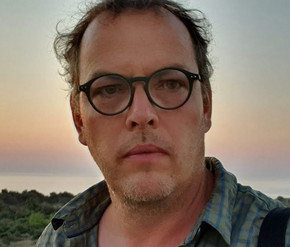
Julian Jauk is a Researcher at the Institute for Architecture and Media, TU Graz. His work focuses on innovative material systems, digital fabrication, and sustainable architectural design. He explores the integration of clay composites, mycelium-based materials, and knitted structures with advanced manufacturing techniques like 3D printing. Key research themes include lightweight ceramic structures, biocomposite materials, and computational design methodologies. His research emphasizes material-driven innovation, structural optimization, and environmental sustainability. Notable projects include MyCera (clay-mycelium composites) and ClayKnit (3D-printed clay-knitted hybrids). He also investigates mixed reality tools for architectural sketching and kinetic architectural prototypes. Publications from 2021–2024 highlight trends in bio-based materials, additive manufacturing, and material-property analysis. His work bridges traditional craftsmanship with cutting-edge digital fabrication, aiming to redefine sustainable building practices.
Ulrich Berger is a Professor of Economics at the Department of Economics of WU Vienna University of Economics and Business (WU Vienna). He serves as Editor-in-Chief of the journal Games and is actively involved in promoting science through the Vienna Skeptics Society. His research focuses on game theory, including non-cooperative, evolutionary, behavioral, and experimental variants. He has been recognized with multiple awards, including the WU Best Paper Award and an Outstanding Reviewer Award. His work explores dynamics of cooperation, reputation systems, and strategic behavior in economic contexts. Key research areas include evolutionary stability in reputation games, indirect reciprocity, and cognitive hierarchies in strategic interactions. His publications span peer-reviewed journals like PLoS ONE and Scientific Reports , as well as popular science articles in outlets like derStandard.at . Berger has led research projects on topics such as cognitive hierarchies in minimizer games and has contributed to policy discussions on access pricing in telecommunications. His academic contributions reflect a blend of theoretical rigor and practical engagement, with recent work emphasizing evolutionary mechanisms of deterrence and experimental validation of equilibrium concepts.
Johanna Pirker serves as an Associate Professor at the Institute of Human-Centred Computing, Graz University of Technology, where she holds teaching authorization in Applied Computer Science. Her work bridges academic research with practical applications in interactive technologies, maintaining active consultation hours for students every Monday morning. Her research centers on human-centered computing with emphases on virtual/augmented reality systems, serious game design, and AI-driven interactive experiences. She investigates player behavior, user experience optimization, and therapeutic/educational applications of immersive technologies across diverse contexts including rehabilitation, engineering education, and social platforms. Recent 2025 publications reveal strong trends in AI integration for gaming ecosystems (toxicity detection, dialogue systems), VR-based educational tools across disciplines, and cross-cultural analyses of gaming communities. Her work consistently combines experimental user studies with novel system development to address real-world challenges. While specific grant details and student advising records aren't documented in source materials, her extensive publication output across venues like FDG and iLRN indicates active leadership in interdisciplinary collaborations focused on advancing immersive technologies for societal benefit.
Roman Obermaisser is a Professor at the Vienna University of Technology (TU Wien), affiliated with the Cyber-Physical Systems department. His research focuses on real-time systems, system architectures, communication protocols, safety-critical systems, distributed algorithms, and fault-tolerance. He holds a PhD in Computer Science from TU Wien, awarded in 2003 for his work on integrated architectures for control paradigms. His academic contributions span over two decades, with publications in top-tier conferences and journals. Key research themes include time-triggered architectures (TTA), fault containment in embedded systems, and integration of heterogeneous communication protocols like CAN and Ethernet. He has supervised numerous graduate students, contributing to advancements in system-on-chip (SoC) design, transient-resilient architectures, and diagnostic frameworks for real-time systems. Obermaisser’s work emphasizes practical applications in automotive and industrial systems, addressing challenges such as scalability, reliability, and composability. His involvement in projects like GENESYS and DECOS highlights his role in developing cross-domain reference architectures for embedded systems. Recent efforts include evaluating ontology-based reconfiguration and COTS-based Ethernet solutions for safety-critical networks. His articles reflect a focus on real-time communication protocols, fault-tolerant design, and system integration, with applications ranging from automotive networks to smart transducers. Advising over 20 students underscores his commitment to nurturing the next generation of embedded systems researchers.
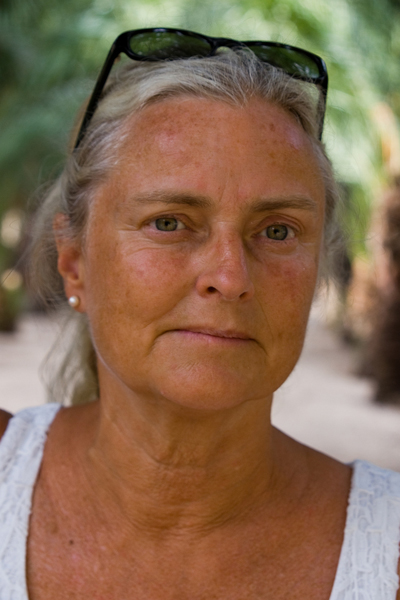
Carita Paradis is a Professor Emerita at Lund University's Centre for Languages and Literature, specializing in English Linguistics. She holds a PhD from Lund University (1997) and has held leadership roles including Chair of the Swedish Research Council's Linguistics panel (2010–2015). She coordinates the Language, Cognition and Discourse@Lund (LCD@L) research group, focusing on discourse meaning, language acquisition, and sociocultural variation. Her research spans cognitive linguistics, discourse analysis, semantics, and sensory language. She has authored/co-authored over 100 refereed publications, 5 books, and edited 10 journal volumes. Awards include membership in Academia Europaea (2016) and leadership roles in Scandinavian linguistic associations. She has supervised 14 PhD students and 8 postdocs, taught at all academic levels, and participated in numerous national/international research projects. Her editorial roles include serving on Cognitive Semantics, Languages, and Human Cognitive Processing series.
Marc Pollefeys is a Full Professor of Computer Science at ETH Zurich and Director of the Microsoft Mixed Reality and AI Zurich Lab. He has held roles such as Visiting Professor at Stanford University (2007) and Assistant/Associate Professor at UNC-Chapel Hill (2002–2009). His research focuses on 3D computer vision, robotics, machine learning, and augmented reality. Education: PhD in Computer Science from KU Leuven (1999), followed by postdoctoral research there until 2002. He transitioned to academic roles at UNC-Chapel Hill before joining ETH Zurich in 2007. Research interests include 3D reconstruction, visual localization, SLAM, and applications in archaeology, urban modeling, and robotics. Notable projects include real-time 3D scanning, city-scale reconstruction, and autonomous vision-based drones. Key awards include ACM Fellow (2022), IEEE Fellow (2012), and ERC Starting Grant (2008). He advises numerous PhD students and collaborates with institutions like Google and Microsoft. Labs and teams: Leads the Computer Vision and Geometry (CVG) lab at ETH Zurich and directs the Microsoft Mixed Reality and AI Lab. His work bridges academia and industry, focusing on perception for mixed reality and autonomous systems.
Judith Schoonenboom is a Professor at the University of Vienna and Deputy Head of the Department of Education. She teaches courses in quantitative and interpretive methodologies, research design, and PhD/master's thesis supervision, including seminars like 'Methodology and Research Design' and 'Quantitative Methodologies in Education Science'. Her academic responsibilities reflect a focus on advanced research methodologies in educational contexts. Schoonenboom's research centers on mixed methods and multimethod approaches in education science, emphasizing methodological innovation, data integration, and theoretical development. Key interests include the interplay between qualitative and quantitative research, design patterns in mixed methods, and strategies for enhancing inferential rigor in social science studies. Her work bridges epistemological frameworks with practical research applications. Her scholarly publications demonstrate a consistent focus on advancing mixed methods research, particularly through innovations in design, integration techniques, and theoretical reflection. Recent works explore causal inference in qualitative research, visualization of methodological interactions, and performative approaches, highlighting trends toward interdisciplinary synthesis and practical methodology refinement.
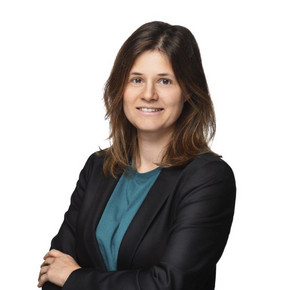
Associate Professor Vera Hemmelmayr is affiliated with the Institute of Transport Economics and Logistics at the Vienna University of Economics and Business . Her research spans Operations Research , Logistics , Supply Chain Management , and Circular Economy , with a focus on vehicle routing , city logistics , and metaheuristics . She has led major projects like CREATE_AT (circular timber supply chains) and Sustainable Urban Deliveries . Research trends in her recent work include real-time optimization algorithms for railway disruptions, sustainable urban freight solutions , and integrated railcar fleet management . Her publications often bridge transport policy with computational methods , emphasizing green supply chains and smart city logistics . 2025: Preis für innovative Lehre 2017: Best Application Paper Honorable Mentions (IIE Transactions) 2012: Dr.-Maria-Schaumayer-Habilitationsstipendium 2012: WU Visiting Fellow 2005: Prämierung ausgezeichneter Diplomarbeiten She has supervised research projects on topics including two-echelon delivery systems , railway disruption management , and digital transformation in logistics, while contributing to policy frameworks for circular economy in transportation.
Dr. Ajay V. Singh is an Associate Professor in the Department of Aerospace Engineering at the Indian Institute of Technology Kanpur, India. He leads the Combustion and Propulsion Laboratory and has established himself as a leading researcher in combustion science and propulsion technology in India. His work on detonation physics has positioned IIT Kanpur at the forefront of this field with the unveiling of "India's First Detonation Tube Research Facility". Dr. Singh's educational background includes: PhD in Mechanical Engineering from University of Maryland, College Park (2015) M.Tech in Aerospace Engineering from Indian Institute of Technology Kanpur (2008) B.Tech in Mechanical Engineering from U.P. Technical University, Lucknow (2006) His research spans fundamental and applied aspects of combustion science with particular focus on high-speed propulsion systems, detonation cycle engines, gas turbine combustion, soot formation and oxidation, flame-synthesized functional nanoparticles, and fire dynamics. His innovative work bridges theoretical understanding with practical applications in aerospace propulsion, energy systems, and fire safety engineering. The media has widely covered his research, with features in India Today, Times of India, Hindustan Times, and Republic Bharat. Dr. Singh's publication record shows a clear trend toward increasingly sophisticated detonation research and fire dynamics studies, with recent work focusing on turbulent wind-driven flames, detonation inhibition mechanisms, and alternative fuel combustion. His articles consistently address challenges in high-speed propulsion and fire safety, demonstrating both theoretical depth and practical relevance. His scientific contributions have been recognized with numerous prestigious awards including the Distinguished Paper Award from the Combustion Institute (the only faculty member in India to receive this honor), a nomination for the Silver Combustion Medal, multiple Best Paper Awards, and the Exemplary Performance in Teaching Award. As an educator and mentor, Dr. Singh has guided numerous PhD and Master's students through their research. His Combustion and Propulsion Laboratory is supported by multiple research grants from agencies including ISRO, ARDB, SERB, and ANRF. He has developed specialized courses including "Explosion and Detonation Physics," which is the first of its kind at IIT Kanpur. Dr. Singh's laboratory serves as a hub for cutting-edge research in combustion science, featuring India's first Detonation Tube Research Facility and advanced experimental setups for studying flame dynamics, soot formation, and detonation physics. His international collaborations include institutions such as Stanford University, University of Maryland, Peking University, and Beijing Institute of Technology.
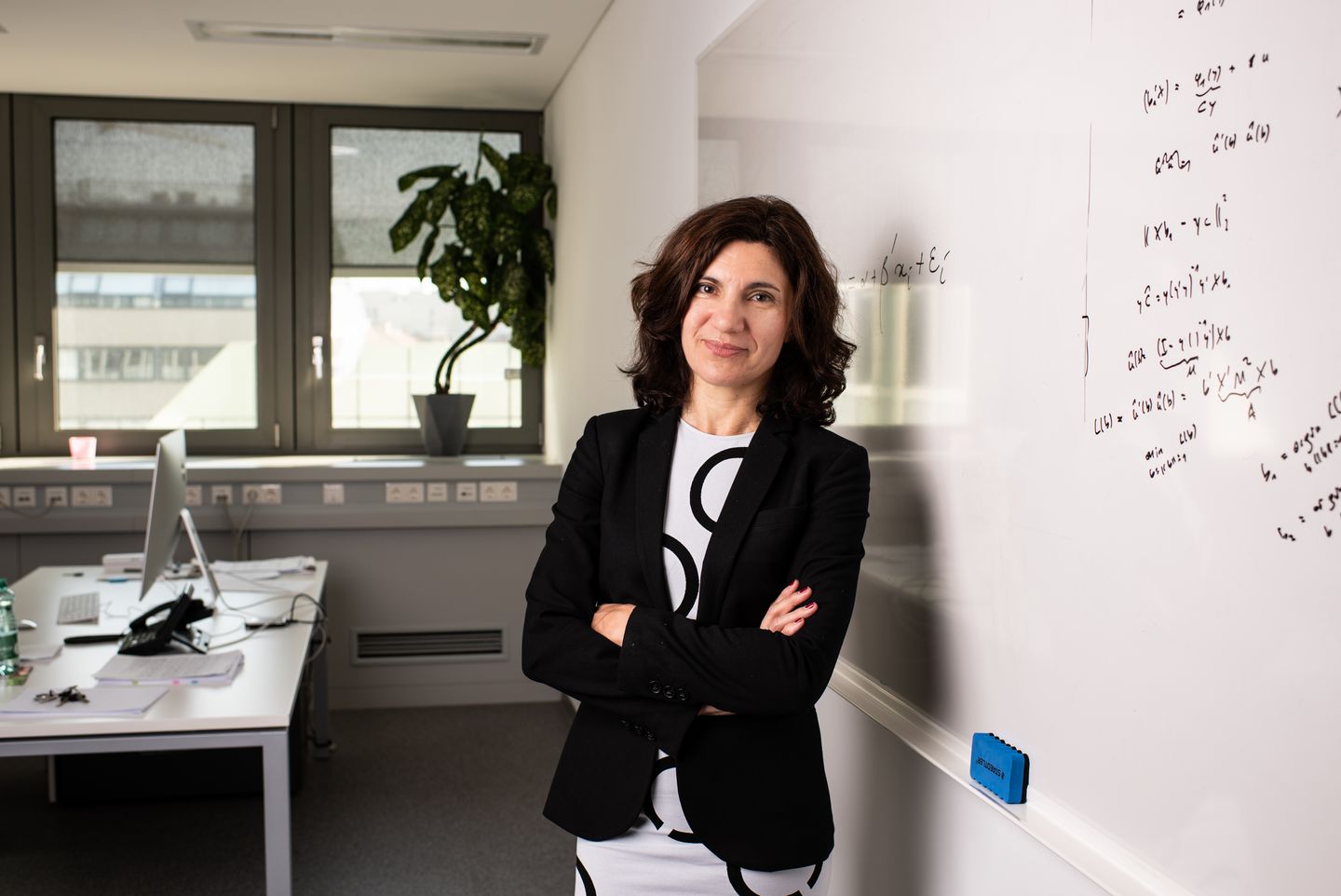
Efstathia Bura is a Professor heading the Applied Statistics Research Unit (ASTAT) within the Institute of Statistics and Mathematical Methods in Economics at TU Wien's Faculty of Mathematics and Geoinformation. Her research focuses on dimension reduction techniques in regression and classification, high-dimensional statistics, and their applications in biostatistics, econometrics, and legal statistics. She leads projects like ProbInG (WWTF-funded) and the SecInt Doctoral College on statistical verification of cyber-physical systems. Her work integrates advanced statistical methodologies with interdisciplinary applications, emphasizing practical solutions for complex data challenges. Current projects explore probabilistic program analysis, security properties in cyber-physical systems, and dynamic econometric modeling. She collaborates internationally, with notable contributions to statistical theory and applications in law, healthcare, and telecommunications. Key research themes include time-varying regression models, sufficient dimension reduction for mixed predictors, and fusion of statistical methods with machine learning. Her publications bridge theoretical advancements and real-world problem-solving, reflecting her role as a leading academic in modern applied statistics. Her team includes postdocs and assistants working on WWTF and SecInt grants, focusing on probabilistic systems and statistical verification. While no formal student advisees are listed, her collaborative projects engage junior researchers in cutting-edge statistical research.
Prof. Joachim Schöberl is a faculty member at TU Wien's Faculty of Mathematics and Geoinformation, leading the Scientific Computing and Modelling research group. His academic career includes roles as a university professor (Univ.Prof.) with engineering and technical doctorates (Dipl.-Ing., Dr.techn.). Research focuses on advanced numerical methods, including finite element methods, computational fluid dynamics, and partial differential equations. He has pioneered high-order schemes for fluid-structure interaction, shell mechanics, and electromagnetic simulations. Notable contributions include the NGSolve finite element library and innovative approaches to curvature approximation in discrete geometry. Recent work emphasizes nonlinear elasticity modeling, fractional diffusion problems, and shape optimization for biomembranes. His team collaborates on projects like metascreen upscaling, micromorphic continuum models, and eddy current simulations in laminated materials. Prof. Schöberl advises PhD students researching mixed finite element methods, fractional operators, and computational mechanics. His lab develops open-source tools for high-performance scientific computing.
Christine Bauer is a Professor of Interactive Intelligent Systems at the Department of Artificial Intelligence and Human Interfaces (AIHI), University of Salzburg, Austria. She is also Co-Lead of the interdisciplinary focus area InterMediation. Music—Effect—Analysis at the inter-university organization Wissenschaft & Kunst. Her research lies at the intersection of artificial intelligence, human-computer interaction, and human-centered computing, with a strong emphasis on fairness, context-awareness, and multi-method evaluation in recommender systems. Doctoral degree in Social and Economic Sciences (Business Informatics), 2009, University of Vienna MSc in Business Informatics, 2011, TU Wien Diploma in International Business Administration, 2002, University of Vienna Study of Jazz Saxophone, Konservatorium der Stadt Wien Her research interests center on interactive intelligent systems , particularly recommender systems in music and media, with a human-centered approach. She investigates how technology can align with societal and individual needs, focusing on fairness in algorithms , culture-aware recommendation , and multi-stakeholder evaluation . Her work often integrates interdisciplinary methods and real-world impact. The recent publications highlight a consistent trend in fairness and diversity in music and news recommendation, cross-cultural user behavior , and evaluation frameworks . Her research bridges technical rigor with ethical considerations, particularly in algorithmic bias and artist equity. She has made significant contributions to understanding gender imbalance , cultural granularity , and user conformity in digital music ecosystems. Elise Richter laureate (FWF) 6 best paper awards, 5 nominations Women in RecSys Journal Paper of the Year Award (2023, 2024) 5 awards and 6 recognitions for reviewing excellence Christine Bauer has supervised over 70 theses and taught at 17 institutions worldwide. She is deeply involved in academic service, including editorial roles (AE at TOIS, TORS, JITT), conference organization (RecSys, CHI, CIKM), and mentoring initiatives (WiMIR, LEA, Allyship at CHI). She leads impactful projects such as FairRecKit and SpART: Spotlight on Artists in Recommender Systems , aiming to create more equitable and transparent recommendation technologies. She frequently engages in public outreach through keynotes, media appearances, and policy discussions. She is affiliated with the University of Salzburg as her primary institution and was previously associated with JKU Linz and the University of Klagenfurt. Her labs and research teams focus on interactive intelligent systems , music recommenders , and fair AI , often in collaboration with interdisciplinary partners in arts and social sciences.
Gabriele Gollner is a Researcher at the Department of Soil and Cultivation Systems (ANBAU) within the Institute of Organic Agriculture and Environmental Sciences (iOELA) at BOKU University in Vienna. Her work focuses on sustainable agricultural practices, particularly in organic farming systems, with an emphasis on soil health, crop management, and agroecological innovations. Research Areas: Cover crop systems and reduced tillage practices Biological nitrogen fixation in legumes Climate-resilient cropping strategies Allelopathic interactions in agroecosystems Organic fertilizer and soil physical trait optimization Recent Research Trends: Her work emphasizes practical applications of regenerative agriculture, including roller-crimper no-till methods, allelopathic weed management, and intercropping systems to enhance system resilience. Over 15 peer-reviewed articles since 2010 highlight her contributions to organic farming systems research. Labs/Teams: Leads the ANBAU Soil & Cultivation Systems group, collaborating on projects related to soil fertility, crop ideotype development, and agroecological transition strategies. Her office is located at Mendelhaus South Wing, 3rd Floor, Room 10.1.
Karin Ingold is a Full Professor at the University of Bern’s Institute of Political Science and leads the Policy Analysis and Environmental Governance (PEGO) research group, affiliated with EAWAG’s Social Science Department. She holds concurrent roles as Vice-President of the Oeschger Centre for Climate Change Research and President of Proclim (Swiss Climate Science Forum). Her expertise spans public policy, climate resilience, and environmental governance, with a focus on policy process theories like the Advocacy Coalition Framework and social network analysis. She has held academic positions since 2011, advancing from Assistant to Full Professor, and previously worked at ETH Zurich and UC Davis. Ingold’s research emphasizes policy design, climate policy instruments, and interdisciplinary collaboration. She co-leads the FarmCoSwiss health cohort and serves on editorial boards for journals like Policy Studies Journal and Journal of Public Policy . Her honors include the 2018 Theodore Lowi Award and the 2013 Swiss Academies Award for transdisciplinary research. Ingold’s work bridges academia and policy, addressing climate change adaptation, energy transitions, and water governance. She collaborates internationally on projects like the Mountland CCES initiative and contributes to Swiss federal climate policy through Proclim.
Wilfried Gansterer is a Professor at the Faculty of Computer Science, University of Vienna, leading the Theory and Applications of Algorithms research group. His work focuses on numerical algorithms, distributed computing, and machine learning, with notable contributions to graph neural networks and fault-tolerant systems. Active in projects such as Algorithmic Data Science for Computational Drug Discovery (2020–2028) and REPEAL (Resilience vs. Performance in Numerical Linear Algebra, 2016–2020). Research Interests: Dr. Gansterer’s expertise spans graph neural networks, matrix compression, adversarial defense mechanisms, and high-performance computing. His work addresses challenges in efficient computation, resilience against node failures, and optimizing distributed systems. Projects : Algorithmic Data Science for Computational Drug Discovery (2020–2028) REPEAL: Resilience vs. Performance in Numerical Linear Algebra (2016–2020) Verteiltes Rechnen (Distributed Computing, 2007–2014) Awards : 2023 Best Paper Award for work on Crossfire: An Elastic Defense Framework for Graph Neural Networks. Labs/Teams : Directs the Theory and Applications of Algorithms group, focusing on algorithmic innovation in distributed and high-performance computing environments.