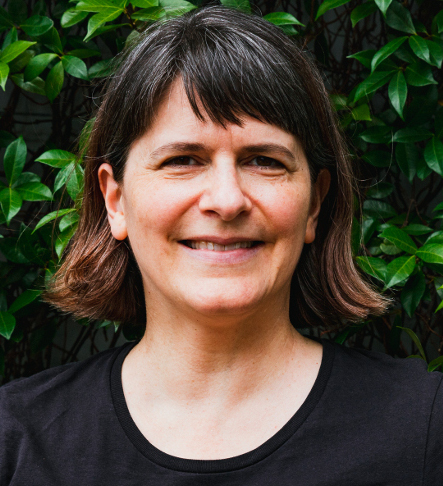
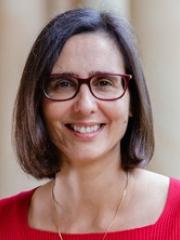
Professor Catherine Greenhill is a faculty member at the School of Mathematics and Statistics, UNSW Sydney , where she serves as Professor and head of the Combinatorics group. Her academic career spans institutions including the University of Queensland, University of Oxford, University of Leeds, University of Melbourne, and Australian National University. D.Phil., University of Oxford (1996) M.Sc. (Research) in Combinatorics (1992) B.Sc. (Hons) in Pure Mathematics (1991) Her research focuses on the intersection of discrete mathematics , theoretical computer science , and probability , particularly in asymptotic combinatorics , probabilistic methods , and analysis of algorithms . Her work includes asymptotic enumeration of combinatorial structures and design of randomized algorithms for graph sampling and counting. Her recent publications (2025–2021) center on random graphs and hypergraphs , with key contributions to switch Markov chains , degree sequence analysis , and chromatic number bounds . These works reflect her expertise in probabilistic combinatorics and algorithmic complexity . Scientific Awards: Fellow of the Australian Academy of Science (2022) Christopher Heyde Medal in Pure Mathematics (2015) June Griffith Fellowship (2013) Hall Medal (2010) Advising and Grants: She has supervised numerous PhD/Masters students and secured multiple ARC Discovery Grants (2019–2021, 2014–2016, 2012–2014). Her grants address topics like hypergraph modeling, random discrete structures, and network analysis in illicit drug trafficking.
Erniel Bayhon Barrios is a Professor at the Malaysia School of Business, Monash University. Formerly a professor at the University of the Philippines Diliman and a visiting scholar at Karlstad University (Sweden) and the Asian Development Bank Institute (Japan). He holds a PhD in Statistics (1990) from the University of the Philippines Diliman. His research focuses on computational statistics, nonparametric methods, data science, and computational econometrics, with applications in spatiotemporal modeling, time series, and financial markets. He has contributed to high-dimensional data analysis, volatility modeling, and robust statistical techniques. Key projects include the National Mental Health Survey and Well-Being (2019–2021) and building a data-driven organization for the Habib Group (2025–2026). He is an elected member of the International Statistical Institute (2012), associate editor of Communications in Statistical Applications and Methods , and served on the board of the International Association of Statistical Computing (2022–2025). He advises PhD students on topics like stochastic frontier models, data assignment in big data, and high-frequency time series analysis. His work aligns with UN Sustainable Development Goals related to education and economic growth.
Professor Scott Sisson is Director of the UNSW Data Science Hub (uDASH) and Professor of Statistics and Data Science at the University of New South Wales, School of Mathematics and Statistics. His research focuses on computational statistics, particularly solving 'intractable' statistical problems through Bayesian methods, big data techniques, simulation algorithms, and extreme value theory with environmental applications. Education includes a PhD in Statistics from Bristol University (2002), MSc in Environmental Statistics from Lancaster University (1997), and BSc in Mathematics and Statistics from Lancaster University (1996). Research interests span: Bayesian statistics and uncertainty quantification Big data analytics and scalable algorithms Machine learning integration with statistical methods Extreme value modeling for climate/environment Computational techniques for intractable problems Recent publications (2022-2025) demonstrate strong emphasis on Bayesian computation, spatiotemporal modeling, and interdisciplinary applications in materials science, oncology, quantum computing, transportation policy, and ecology. Methodological innovations include likelihood-free inference, modular Bayesian analyses, and symbolic data modeling. Awards and honors: 2020 Service Award (Statistical Society of Australia) 2017 ARC Future Fellowship 2015 G. N. Alexander Medal (Engineers Australia) 2011 Moran Medal (Australian Academy of Science) 2010 J.G. Russell Award (Australian Academy of Science) 2010 Queen Elizabeth II Research Fellowship As Director of uDASH, he leads data science initiatives across UNSW. He maintains sustained ARC funding and supervises students in computational statistics, Bayesian methods, extreme value theory, and machine learning. Professional service includes editorial roles for Statistics and Computing and past presidency of Statistical Society of Australia.
Professor Ben Goldys is a distinguished academic at The University of Sydney's School of Mathematics and Statistics, where he conducts research at the intersection of pure mathematics and applied sciences. His work spans multiple disciplines including stochastic analysis, partial differential equations, and financial mathematics, with significant contributions to both theoretical frameworks and practical applications in science and finance. Goldys' research interests center on stochastic (ordinary and partial) differential equations and their applications. His specific focus areas include stochastic partial differential equations, stochastic geometric PDEs, stochastic boundary value problems, stochastic fluid dynamics, ergodic theory of infinite-dimensional diffusions, and applications in financial mathematics such as interest rate derivatives, credit risk, and stochastic volatility. His work bridges pure mathematical theory (Functional Analysis, PDEs, Ergodic Theory) with complex real-world problems across multiple domains. His research aligns with the University of Sydney Faculty of Science Research Strengths including Understanding the Universe, Fundamental Laws of Nature, Complex Systems, and Next Generation Materials. Professor Goldys has secured multiple significant research grants from the Australian Research Council, including recent projects such as 'Mathematics for future magnetic devices' (2024), 'Mathematics for breaking limits of speed and density in magnetic memories' (2019), and 'Novel Approaches for Problems with Uncertainties' (2015). His current research projects focus on geometric stochastic partial differential equations and applications in micromagnetism, mean field games in finance, stochastic boundary value problems, and stochastic Navier-Stokes equations on the rotating sphere. He maintains extensive international collaborations with institutions in Germany (University of Tuebingen), Italy (LUISS University), Poland (Institute of Mathematics Polish Academy of Sciences), and the United Kingdom (University of York), working on projects involving optimal control, stochastic systems with memory, and geometric stochastic PDEs. Goldys is an active member of the Applied Mathematics Research Group and The University of Sydney Nano Institute, contributing to interdisciplinary research initiatives that connect mathematical theory with cutting-edge technological applications.
Associate Professor Jiwon Kim is a leading researcher in Transport Engineering at the University of Queensland's School of Civil Engineering. She serves as Director of Higher Degree by Research and was a DECRA Fellow from 2019-2022. Holding degrees from Korea University and Northwestern University, she specializes in AI/ML applications for transportation systems. PhD, Northwestern University BS & MS, Korea University Her research focuses on Artificial Intelligence and Machine Learning applications in transportation, including: Deep learning for traffic management Reinforcement learning in mixed traffic environments Multi-agent systems for urban mobility optimization Spatiotemporal trajectory analysis Recent publications demonstrate expertise in: Eco-driving strategies Traffic incident prediction Queue length estimation Crash risk modeling Scientific recognition includes: ARC DECRA Fellowship (2019-2022) She supervises doctoral students in: Transportation data analytics Autonomous vehicle systems Intelligent traffic management Current projects explore real-time traffic monitoring, synthetic mobility data generation, and connected vehicle technologies.
Scientia Professor Nasser Khalili is the Head of the School of Civil and Environmental Engineering at the University of New South Wales (UNSW). He also serves as the Director of the ARC Research Hub for Resilient and Intelligent Infrastructure Systems (RIIS), President of the Australian Association for Computational Mechanics (AACM), and a core member of the International Technical Committee on Unsaturated Soil (TC106). His research focuses on geotechnical engineering, computational mechanics, porous media behavior, and sustainable infrastructure systems. Key areas of expertise include unsaturated soils, hydraulic fracturing modeling, and advanced material characterization for asphalt mixtures. Professor Khalili's work integrates computational methods with experimental analysis to address challenges in infrastructure resilience and environmental sustainability. He has pioneered studies on pore pressure dynamics, fracture mechanics in porous media, and the application of waste materials in construction. His leadership roles in national and international committees reflect his influence in advancing geotechnical and computational engineering practices. His scientific contributions include over 150 peer-reviewed articles, with recent work emphasizing machine learning applications in civil engineering and innovative solutions for sustainable asphalt mixes. Awards include Fellowship of the Academy, recognizing his significant impact on the field.
Dr. Zara Ersozlu is a Senior Lecturer in Mathematics Education within the School of Education at the University of Newcastle, Australia. With a distinguished international career spanning multiple continents, she has held academic positions at prestigious institutions including North Carolina State University (USA), Gazi and Gaziosmanpasa Universities (Turkey), National Taiwan Normal University (Taiwan), The University of Western Australia, Murdoch University, and Deakin University. Her academic journey includes tenured positions as an Associate Professor and leadership roles as Department Head and Chair in teacher education disciplines. Currently, she teaches undergraduate and postgraduate courses in mathematics education, including Effective Pedagogies in Primary Mathematics, K-6 Mathematics, K-6 Numeracy, and Digitally Supported Learning. Dr. Ersozlu earned her Doctor of Philosophy from Firat University in Turkey and her Master of Art from Sakarya University. Her extensive academic preparation is complemented by five years of practical teaching experience in public schools prior to entering academia. This blend of theoretical knowledge and practical classroom experience informs her approach to teacher education and educational research. At the broadest level, Dr. Ersozlu's research investigates solutions to real-life problems impacting people's well-being, success, and capacity to achieve. Her scholarly work spans primary and secondary mathematics education, the psychology of mathematics (including metacognition, self-regulation, and anxiety), cross-cultural educational studies, teacher education, virtual simulated learning environments, and educational assessment. She has increasingly focused on the transformative potential of AI and machine learning in education, exploring how these technologies alter teaching, learning, and research processes. Her methodological expertise encompasses both quantitative and qualitative approaches, allowing her to effectively analyze both small and large educational datasets. Analysis of Dr. Ersozlu's recent publications reveals a strong emphasis on mathematics anxiety, teacher education, and the integration of technology in learning environments. Her work demonstrates a consistent focus on practical applications of educational research to address real-world challenges in mathematics education. The interdisciplinary nature of her research connects educational psychology, technology integration, and cross-cultural perspectives, with particular attention to how these elements intersect in teacher preparation and student learning outcomes. 2023 ATEA Research Recognition Award from the Australian Teacher Education Association 2021 Fellow of the Higher Education Academy (Advance HE, UK) 2010 Fellowship Program for Postdoctoral Researchers from the Council of Higher Education of Turkey Dr. Ersozlu is deeply committed to mentoring the next generation of scholars, currently supervising four PhD students and having successfully guided ten students to completion. Her grant portfolio includes significant funding for projects such as Best Practice Guidelines for RPL in Initial Teacher Education Programs ($60,000), Exploring the Reciprocal Relationship Between Mathematics Anxiety and Mathematical Resilience ($2,599), and multiple conference travel awards. She serves as an Associate Editor for several prominent journals including the International Electronic Journal of Mathematics Education and as Editor for Interdisciplinary STEM Education. Her editorial work reflects her standing as a respected voice in mathematics education research. Dr. Ersozlu's academic leadership extends to her role in developing innovative teaching approaches that integrate virtual simulation technology and learning analytics. Her work with TeachLivE™, a mixed-reality classroom simulation platform, demonstrates her commitment to creating authentic learning experiences for teacher education students. Through these initiatives, she bridges the gap between educational theory and classroom practice, preparing future educators to effectively implement evidence-based teaching strategies in diverse learning environments.
Janani Thillainadesan is an NHMRC Senior Research Fellow at the Sydney Medical School/Concord Clinical School and the Centre for Education and Research on Ageing, affiliated with the Faculty of Medicine and Health at the University of Sydney. She is also a member of the Charles Perkins Centre. Her research focuses on optimizing healthcare delivery for older adults, particularly in geriatric surgery, perioperative care, and dementia interventions. Key research areas include frailty assessment, deprescribing strategies, collaborative care models, and leveraging technology (e.g., mobile health) in geriatric medicine. She has contributed to multidisciplinary studies involving clinical datasets, quality indicators, and mixed-methods analyses of patient experiences and care expectations. Awards: 2023 RACP Vincent Fairfax Research Fellowship 2021 ANZSGM Career Investigator Prize 2021 UK Age Anaesthesia Association Best Oral Presentation Prize 2019 Evidence Based Perioperative Medicine Asia Congress Runner Up Prize Her work bridges clinical practice, education, and policy through grants like the 2024 electronic frailty index project. Media engagement includes a 2019 Studio 10 segment highlighting her contributions to aging-related healthcare innovations.
Jan de Gier is a Professor at the School of Mathematics and Statistics, The University of Melbourne . He is also the Founding Director of MATRIX , Australia’s residential research institute in the mathematical sciences, and a former Deputy Director and Chief Investigator in the Australian Research Council Centre of Excellence for Mathematical and Statistical Frontiers (ACEMS) . Additionally, he co-founded the Australian and New Zealand Association for Mathematical Physics (ANZAMP) in 2011 and served as its inaugural Chair. His research focuses on solvable lattice models at the intersection of mathematical physics and statistical mechanics . Key areas include the application of quantum integrability , algebraic structures like the Yang-Baxter equation, Hecke algebras, and quantum groups, as well as analytical methods such as complex analysis and elliptic curves. His work bridges pure and applied mathematics through connections between enumerative combinatorics , representation theory , and real-world phenomena like traffic flow modeling via exclusion processes . The 15 most recent articles reflect his expertise in integrable systems , non-equilibrium statistical mechanics , and algebraic combinatorics . Topics span Macdonald polynomials , stochastic duality , quantum spin chains , and traffic modeling , with methodologies involving matrix product forms , exact solutions , and critical phenomena analysis. He has contributed to editorial efforts through the AustMS Gazette and MATRIX Annals, and has been involved in public science communication via opinion pieces on mathematics funding and applications. His work emphasizes the importance of fundamental research in driving technological innovation, as highlighted in media articles discussing pi calculation , zero-knowledge proofs , and mathematics education .
Florian 'Floyd' Mueller is a Professor of Future Interfaces at Monash University in Melbourne, Australia, where he directs the award-winning Exertion Games Lab within the Department of Human-Centred Computing (ranked among the top 20 HCI departments globally). Previously, he held positions at RMIT University, Stanford, University of Melbourne, Microsoft Research, MIT Media Lab, Fuji-Xerox Palo Alto Labs, Xerox Parc, and Australia's CSIRO. Mueller is a member of the prestigious ACM SIGCHI Academy, an honorary group recognizing leaders who have made substantial contributions to Human-Computer Interaction (HCI). Professor Mueller's research focuses on the intersections between technology, the human body, and play. He originated the concept of "Exertion Interface," arguing that we should not just design "easy-to-use" interactions when "hard-to-use" interactions can also be beneficial. His work spans movement-based interactions, whole-body interfaces, uncomfortable interactions, somaesthetics, and exertion games. Mueller's research methodology often employs research through design, design ethnography, and autoethnography to explore these novel interaction paradigms, incorporating mixed-reality, augmented reality, virtual reality, electronic muscle stimulation, biosensors, wearables, and drones. His recent publications demonstrate a continued focus on bodily interactions and human-computer integration, with particular emphasis on emerging subfields like WaterHCI and SportsHCI, brain-computer interfaces, and gustosonic (taste and sound) experiences. Mueller's work has evolved from foundational exertion game concepts to more sophisticated explorations of human-computer integration where technology becomes seamlessly woven into the fabric of human experience. Professor Mueller's contributions have been widely recognized with numerous awards including: Inaugural honouree of the Australian Design Centre's Design Honours Tall Poppy award for "intellectual and scientific excellence" 10 "Best Paper Honorable Mentions" (top 5%) from premier HCI conferences 2 "Best Paper" awards (top 1%) at CHI PLAY and CHI Shortlisted for the European Innovation Games Award (alongside Nintendo's WiiFit) Nokia Mindtrek Ubimedia Award Mueller has successfully secured some of Australia's largest and most competitive research grants, achieving a remarkable 14% success rate on Australian Research Council Discovery Project applications. He has served as General co-Chair for CHI PLAY'18 and CHI'20, becoming the first Australian-based researcher to spearhead HCI's highest-ranked publication outlet, and is currently General co-Chair for CHI'24. He is Associate Editor for tier A journals including Elsevier's IJHCS (International Journal of Human-Computer Studies) and ACM's IMWUT (Interactive, Mobile, Wearable and Ubiquitous Technologies). As director of the Exertion Games Lab, Mueller leads a research team whose innovations have been experienced by over 20,000 users across 3 continents and featured on the BBC, ABC, Discovery Science Channel, and Wired magazine. The lab has produced groundbreaking work in bodily interfaces, co-founding the CHI PLAY conference series and establishing new research directions in SportsHCI and WaterHCI through recent "Grand Challenges" papers. Mueller's lab continues to push boundaries with projects exploring brain-to-brain interfaces, lucid dreaming induction, and novel gustosonic experiences.
Marita Dale is a Senior Lecturer in the Discipline of Physiotherapy at the University of Sydney and an Early Career Researcher affiliated with the Charles Perkins Centre. She specializes in cardiorespiratory physiotherapy, focusing on exercise interventions for chronic respiratory and cardiac diseases, particularly asbestos-related and dust-related conditions. Her work emphasizes improving accessibility to pulmonary rehabilitation services and leveraging mHealth technologies for patient care. Education: PhD in Physiotherapy (2016, University of Sydney). Her research interests include optimizing pulmonary rehabilitation through mobile health platforms, such as the m-PR™ app, and investigating pediatric burn injury rehabilitation, including orthosis use and scar prevention. She also explores multimorbidity management and simulation-based learning in healthcare education. Recent studies have highlighted her contributions to COPD care protocols, telehealth implementation during the pandemic, and qualitative analyses of patient experiences. Major awards: Sydney School of Health Sciences Teaching Citation (2022), Ashurst Prize for Outstanding Oral Presentation (2015), Helga Pettitt FHS Postgraduate Study Award (2010). Marita supervises Honours, Masters, and PhD students, including Mitchell Taylor on airway clearance in bronchiectasis. Her teaching spans undergraduate and postgraduate programs in cardiopulmonary and musculoskeletal physiotherapy. She collaborates on projects like the Lung Support Service, a nationwide text message program for chronic respiratory patients during the pandemic, and contributed to the commercialization of the Perx-R app for pulmonary rehab. Labs/teams: Active member of the Charles Perkins Centre, focusing on interdisciplinary chronic disease research and healthcare innovation.
Dr. Kenji Fujita is a Research Fellow at the Kolling Institute, University of Sydney, specializing in ageing, pharmacology, and pharmaceutical care quality. He holds a PhD, MScMed (ClinEpid), and BPharm from the University of Sydney. Previously a pharmacist in Japan, he leads international initiatives in the Pharmaceutical Care Network Europe (PCNE) and the International Pharmaceutical Federation (FIP). His work focuses on deprescribing strategies, polypharmacy, and developing quality indicators for healthcare services. Dr. Fujita’s research integrates big data analysis, statistical modeling, and machine learning to address challenges in geriatric pharmacotherapy. Current projects include validating frailty indices, evaluating deprescribing interventions in older adults, and developing NLP tools for clinical documentation analysis. He has also contributed to assessing organizational readiness for guideline implementation in community pharmacies. Awards include the 2023 Outstanding Poster Presentation Award at the IAGG Asia/Oceania Congress and 2022 Best Poster at the Japanese Society of Social Pharmacy. He has secured grants such as the 2024 electronic frailty index project and the 2021 systems-approach to medication review initiative. Dr. Fujita collaborates with global networks like J-HOP (Japan Home Visiting Pharmacy Association) and leads multidisciplinary teams across Australia and Europe. His lab focuses on translating data-driven insights into actionable clinical practices to improve medication safety and quality in ageing populations.
Associate Professor Gilda Carvalho is a leading researcher at the Australian Centre for Water and Environmental Biotechnology (ACWEB) and the School of Chemical Engineering at the University of Queensland. She leads the Drinking and Recycled Water research group and specializes in Environmental Bioengineering , focusing on microbial processes for water/wastewater treatment and resource recovery. Research areas: Chemicals of Emerging Concern (CEC), Biological Nutrient Removal (BNR), biofilm systems, membrane processes, and polyhydroxyalkanoate (PHA) production Key methodologies: Molecular tools linking microbial ecology to process performance Academic output: Over 90 peer-reviewed papers and >40 multinational research projects with industrial partners Educational impact: Coordinator of Postgraduate Programs in Urban Water Engineering and supervisor of >20 PhD students Her recent research explores phage-based biofilm disruption , micropollutant removal via advanced oxidation, and resource recovery from waste streams. Current funding includes projects on biofilm solutions for drinking water and sustainable wastewater reuse. She integrates multidisciplinary approaches across biotechnology, chemical engineering, and environmental science to address global water challenges.
Dr. Amir Ghanbaripour is a Discipline Lead in Planning, Property, and Project Management at Bond University's Faculty of Society & Design, with a PhD in Construction Project Management (2020). He teaches postgraduate courses and leads the Project Management program. His expertise spans project management methodologies, systems thinking, organizational maturity, and gender equality in projects. He is an active member of the Project Management Institute (PMI) as Associate Director for Academic Outreach. Education: PhD in Construction Project Management (Bond University, 2020), MSc in Civil Engineering (Iran University of Science and Technology, 2012), BSc in Civil Engineering (Amirkabir University of Technology, 2009). Research focuses on project success models, agile methodologies, and technology integration in construction education. He leads research projects on megaprojects, sustainable practices, and gender diversity in the industry. Grants include the 2023 FSD Research Project Grant (focusing on construction project strategies) and the 2023 FSD Deans Award (exploring robotics in manufacturing). He supervises PhD candidates and collaborates with national/international organizations on project management innovation.
Professor Amy Mullens (University of Southern Queensland) is a leading academic in public health, gender studies, and clinical psychology. Her work focuses on sexual and reproductive health, transgender health equity, and healthcare access for marginalized populations, particularly within correctional systems. Key Affiliations : School of Psychology and Wellbeing, Centre for Health Research, Institute for Resilient Regions. Research Themes : Intersectional health disparities, HIV/STI prevention, gender-affirming healthcare, and mental health interventions. Research Trends : Recent publications emphasize digital health tools for STI/HIV risk prediction, transgender health policy, and qualitative analyses of incarceration experiences. She frequently collaborates on systematic reviews and mixed-methods studies addressing health equity. Advising : Supervises 16+ doctoral and master’s students (2021-2025) on topics spanning trauma, health literacy, and sexual health interventions.