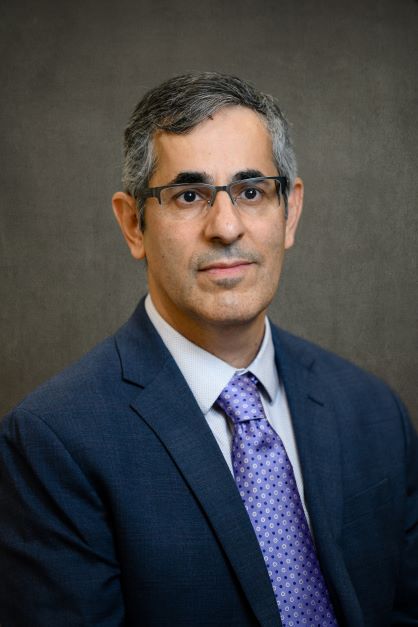
Ardalan Vahidi is a Professor of Mechanical Engineering at Clemson University, joining in 2005 after receiving his Ph.D. from the University of Michigan. His research focuses on optimal control, energy-efficient mobility, connected and automated vehicles, and human bioenergetics during exercise. Education: Ph.D. Mechanical Engineering, University of Michigan, Ann Arbor, 2005 M.Sc. Transportation Safety, George Washington University, 2001 M.Sc. Structural Engineering, Sharif University of Technology, 1998 B.Sc. Civil Engineering, Sharif University of Technology, 1996 Research Interests: His work integrates control theory with transportation systems to reduce energy use and emissions. He explores eco-driving algorithms, vehicle connectivity, and human factors in cycling performance, leveraging both modeling and extensive vehicle-in-the-loop experimentation. Publications Trend: Recent articles emphasize validated experiments on energy-efficient automated driving, cyclist fatigue modeling, and cooperative control strategies, demonstrating a shift toward cyber-physical validation and interdisciplinary sports science applications. Scientific Awards: Best Paper Award, Road User Measurement and Evaluation Committee, TRB 2024 2nd Best Paper Award, IEEE International Automated Vehicle Validation Conference 2023 ASME Automotive and Transportation Systems Best Paper Award 2020 & 2018 IFAC Young Author Award 2019 Advising & Grants: He mentors numerous graduate researchers and postdocs; prospective students are directed to an online form for open positions. His research has been supported by NSF, DOE, DOT, and industry partners, although specific grant details are not listed here. Labs & Teams: He leads the Clemson Vehicle & Energy Systems Laboratory, conducting vehicle-in-the-loop experiments and collaborating with interdisciplinary teams across mechanical engineering, transportation, and sports science.
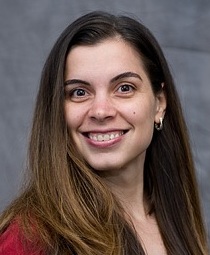
Nina Balcan is the Cadence Design Systems Professor of Computer Science at Carnegie Mellon University's School of Computer Science, with affiliations in both the Machine Learning Department (MLD) and Computer Science Department (CSD). She maintains her office in Gates Hillman Center (GHC) 8205 and is a prominent figure in theoretical machine learning and algorithmic game theory. Her research spans multiple critical areas in computer science, with a strong focus on the theoretical foundations of machine learning, algorithm design and analysis, and computational approaches to game theory and economics. Balcan has made significant contributions to developing principled algorithms for deep learning, learning with limited supervision, representation learning, and life-long learning. Her work uniquely bridges theoretical computer science with practical applications, particularly in the analysis of complex objects and processes, including algorithmic learning and multi-agent systems. Analysis of her recent publications reveals a strong trend toward data-driven algorithm design, with particular emphasis on learning to optimize combinatorial algorithms, revenue-maximizing mechanisms, and robust learning frameworks. Her work consistently demonstrates how theoretical guarantees can inform practical algorithm development across diverse domains from optimization to economics. Major Awards and Honors: ACM Fellow AAAI Fellow Simons Investigator 2019 ACM Grace Murray Hopper Award (awarded to the outstanding young computer professional of the year) Winner of Outstanding Student Paper Award at UAI 2024 Winner of Exemplary Artificial Intelligence Track Paper Award at ACM EC 2019 Runner Up Best Paper Award at COLT 2012 Professor Balcan has served as Program Committee Co-chair for major conferences including NeurIPS 2020, ICML 2016, and COLT 2014, demonstrating her leadership in the machine learning community. Her teaching portfolio at CMU includes foundational courses such as 10-701 Machine Learning, 10-315 Machine Learning, and 10-715 Advanced Introduction to Machine Learning, where she has mentored numerous students in both theoretical and applied aspects of the field. Her research group focuses on developing theoretically sound yet practically applicable machine learning algorithms, with particular attention to algorithm configuration, data-driven optimization, and learning in strategic environments. Current projects involve learning to improve combinatorial algorithms, designing revenue-maximizing mechanisms, and developing robust learning frameworks that can operate effectively in challenging environments.
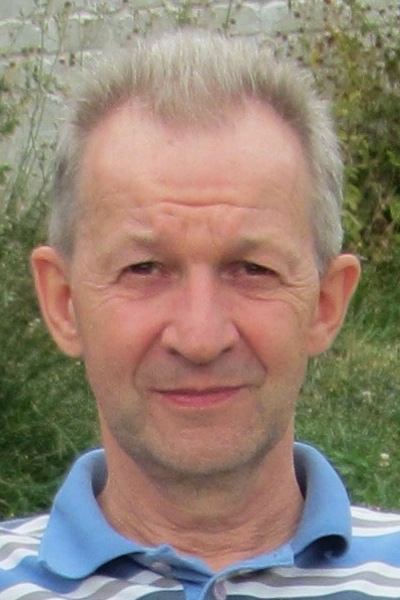
Yiming Yang is a Professor at the Language Technologies Institute and Machine Learning Department within the School of Computer Science at Carnegie Mellon University , where he has held faculty positions since 2003. His research spans foundational and applied aspects of machine learning , artificial intelligence , and scientific computing . Professor, Carnegie Mellon University (2003–Present) Associate Professor, Carnegie Mellon University (1996–2003) Yang's research focuses on LLM-based problem-solving agents , combinatorial optimization , and scalable oversight frameworks . His work explores diffusion models, Langevin dynamics, and Fourier neural operators for NP-hard problems, while advancing reinforcement learning techniques for self-play supervision and principle-driven fine-tuning of large language models. Recent publications highlight his contributions to code synthesis , PDE solving , and multi-agent reinforcement learning . Key methodologies include demonstration-guided control, retrieval-augmented reasoning, and test-time scaling laws. His team has developed frameworks like FEEDER for efficient in-context learning and μTransfer-FNO for zero-shot hyperparameter transfer in PDE solvers. Notable scientific achievements include: Best Student Paper Runner Up (2013) Best Theoretical Paper Award (1994) Best Theoretical Paper Award (1993) Yang has mentored over 20 PhD students and postdocs, including Shengyu Feng , Zhiqing Sun , and Aman Madaan , across domains like graph learning , extreme multi-label classification , and language model alignment .
Christine Di Martinelly is an Associate Professor in Operations Management at IÉSEG School of Management. She holds two PhDs in Economic and Management Sciences from Louvain School of Management and Applied Sciences from INSA Lyon. Her research focuses on operations management, healthcare systems, supply chain optimization, and resource allocation. Di Martinelly's extensive publication record addresses operational challenges in healthcare, including surgical scheduling, inventory management, and resource allocation. Her work employs mathematical modeling, optimization algorithms, and multicriteria decision analysis to improve efficiency in healthcare delivery systems. She has served as Academic Director at IÉSEG since 2014 and has professional experience as a consultant at Arthur Andersen earlier in her career.
Anh Tuan Le is an Associate Professor at the Department of Electrical Engineering, Chalmers University of Technology. He holds a PhD in Power Systems from Chalmers (2004) and a Master's in Energy Economics from the Asian Institute of Technology (1997). Specializes in power grid planning, electricity market modeling, and renewable energy integration Active in electric vehicle-grid interaction and battery storage systems Develops voltage stability solutions and decentralized control strategies His recent research focuses on: Flexibility markets for congestion management Machine learning applications in load forecasting Real-time security margin control using AI Key projects include: DigiRES (2024-2027): Digital integration of multi-energy flexibility POTENT-X (2024-2027): Port energy transition hubs FLEXIGRID (2019-2023): Distribution grid flexibility solutions
Jeff Linderoth is the Harvey D. Spangler Professor in the Department of Industrial and Systems Engineering at the University of Wisconsin-Madison. His research focuses on large-scale numerical optimization, mixed-integer nonlinear programming, and stochastic programming, with applications in energy systems, global routing, and industrial processes. Education: BS in General Engineering (highest honors) from University of Illinois at Urbana-Champaign, MS in Operations Research from Georgia Institute of Technology, PhD in Industrial Engineering from Georgia Institute of Technology. Linderoth's work addresses theoretical and applied challenges in optimization, including developing algorithms for mixed-integer programming, analyzing knapsack polytopes, and creating tools like the Minotaur optimization toolkit. His recent publications explore integer programming techniques for subspace clustering, complementarity constraints, and customized coverage instrumentation. Selected trends in his research include advancements in stochastic programming, orbital branching for symmetric integer programs, and congestion analysis in power systems. His group contributes to optimization software and data-driven libraries like MIPLIB. Scientific Award: Harvey D. Spangler Professor.
Jim Luedtke is a Professor in the Department of Industrial and Systems Engineering at the University of Wisconsin-Madison. His research focuses on operations research, integer programming, and stochastic optimization methods for solving discrete and uncertain decision problems. Educational Background: BS in Industrial Engineering from University of Wisconsin-Madison MS in Operations Research from Georgia Institute of Technology PhD in Industrial and Systems Engineering from Georgia Institute of Technology Postdoctoral Research at IBM T.J. Watson Research Center His work spans applications in power systems optimization, healthcare analytics, and network design, with particular emphasis on developing cutting-edge algorithms for chance-constrained and multistage stochastic programming problems. Recent publications demonstrate strong focus on Benders decomposition techniques, Lagrangian dual methods, and distributionally robust optimization frameworks. Scientific Awards: NSF CAREER Award (2010) for "Risk Management via Stochastic Programming: Models, Computation, and Applications"
Sebastian Pokutta is a Professor at Technische Universität Berlin, Vice President at the Zuse Institute Berlin (ZIB), and Chair of the Cluster of Excellence MATH+ and MODAL. His research lies at the intersection of Artificial Intelligence, Optimization, and Machine Learning, with applications in sustainability, quantum computing, and mathematical discovery. Research Interests: Development of novel optimization algorithms, particularly Frank-Wolfe and Conditional Gradient methods. Integration of machine learning with decision-making and combinatorial optimization. AI for Science (AI4Science), including applications in quantum mechanics and ecology. AI and creativity, human-AI co-creativity, and social science modeling using multi-agent LLMs. His recent publications (2025) demonstrate a strong focus on scalable optimization, interpretability, and algorithmic foundations. The work spans theoretical advances in convergence analysis, practical implementations in Julia (FrankWolfe.jl), and real-world deployments in biomass estimation and quantum certification. Scientific Awards: Gödel Prize (2023) STOC Test of Time Award (2022) Science Prize of the Association for Pediatric Orthopedics (2025) Google Research Awards (2021, 2020) NSF CAREER Award (2015) He advises a vibrant research group, with former students and postdocs securing faculty positions at institutions like Inria, Carlos III University, and James Madison University. His group has received funding from Google, DFG, and Math+, and he leads major collaborative efforts such as the Thematic Einstein Semester on Mathematical Optimization for Machine Learning. Labs and Teams: Interactive Optimization and Learning Lab at TU Berlin and ZIB. Leadership in MODAL and MATH+ research clusters, fostering interdisciplinary collaboration in mathematical optimization and AI.
Banu Lokman is a Professor of Operational Research (OR) at the University of Portsmouth, serving as Associate Head (Research and Innovation) in the School of Organisations, Systems and People within the Faculty of Business & Law. She leads the Centre for Innovative and Sustainable Finance and contributes to the Centre for Operational Research & Logistics. Her expertise spans multi-criteria decision-making, optimization, and their applications in healthcare and sustainability. She holds editorial roles at OMEGA and the IMA Journal of Management Mathematics and organizes the NATCOR MCDM courses. Previously, she served as Deputy Director of CORL (2011–2024), Secretary of the International MCDM Society, and Board Member of INFORMS MCDM Section. She currently chairs the INFORMS MCDM Section as President-elect/Vice-President. Education: BSc, MSc, and PhD in Industrial Engineering from Middle East Technical University (METU, Turkey), followed by postdoctoral research at Aalto University (Finland). She taught at METU (2014–2019) and held visiting roles at Aalto University. Research Interests: Focuses on developing optimization methods for multi-criteria decision problems, particularly in healthcare (e.g., optimizing prostate biopsy decisions with Portsmouth NHS Trust) and sustainability. Her work emphasizes algorithms for nondominated set representation, robust efficiency analysis, and cluster ensemble methods. Key Awards: Bernard Roy Award (2022) for outstanding contributions to Multiple Criteria Decision Aiding, and Young Researcher Award (2015). Advising & Grants: Leads a healthcare-related PhD project and contributes to projects like the Social Investment Fund collaboration with Waltham Forest Council. She actively supervises students and participates in research initiatives on supply networks and data control systems. Labs & Teams: Engaged with interdisciplinary teams in operational research and logistics, particularly in applying OR to real-world challenges such as energy market optimization and MRO supply networks.
Thorsten Koch serves as Head of the Department of Applied Algorithmic Intelligence Methods within the Division of Mathematical Algorithmic Intelligence at Zuse Institute Berlin (ZIB). His research spans mathematical optimization, energy systems modeling, quantum computing applications, and scientometrics. Koch leads significant research projects including FAN (focusing on AI in scholarly communication), UNSEEN (energy scenarios), HPO-NAVI (research software visibility), and Multi-Energy Models for European Energy System Planning. Koch's research interests center on developing advanced optimization algorithms for complex systems, particularly in energy networks and scientific data analysis. His work bridges theoretical mathematics with practical applications in gas network optimization, wind farm design, portfolio management, and quantum computing. He has pioneered methods for large-scale mixed-integer programming, scenario generation, and the integration of machine learning with traditional optimization techniques. His recent publications demonstrate growing emphasis on quantum optimization, scientometrics, and the application of AI to scientific communication infrastructure. His publication trends reveal a strategic expansion from traditional mathematical optimization into quantum computing applications and scientific data infrastructure. Recent work shows increasing collaboration across disciplines - connecting energy systems analysis with financial modeling, integrating machine learning with optimization solvers, and applying computational methods to scientometrics. The 15 most recent articles highlight three major thrusts: quantum optimization (33%), energy systems modeling (27%), and scientific data infrastructure (40%), reflecting his leadership in both theoretical algorithm development and practical implementation for societal challenges. Koch actively contributes to research infrastructure through leadership roles in projects like KOBV (Berlin-Brandenburg Cooperative Library Network), HDC (Humanities Data Centre), and CIB (future library networks). His work on the DeepGreen initiative focuses on establishing legally secure workflows for implementing open-access components in scientific publication licensing agreements, demonstrating his commitment to open science principles and research data management.
Pierre Flener is a Professor at the Department of Information Technology, Division of Computing Science at Uppsala University. He leads the Optimisation Group and is a member of the Centre for Interdisciplinary Mathematics. His work focuses on constraint programming and discrete optimization, addressing complex scheduling, routing, and resource allocation challenges. Flener is an Officer of the Order of Merit of Luxembourg and co-founder of NordConsNet, the Nordic Network for Constraint Programming researchers. Research Interests: Flener’s research spans constraint programming, combinatorial optimization, and algorithm design. He develops models and tools for automated decision-making in domains like air traffic management, sensor networks, and industrial robotics. His work emphasizes practical applications, leveraging constraint satisfaction techniques to solve real-world puzzles such as vehicle routing and personnel allocation. Key Contributions: Flener has authored over 100 publications on constraint solving, symmetry breaking, and CP-based approaches to industrial problems. Notable projects include airspace sectorization optimization, energy-efficient sensor networks, and financial portfolio design. He has led initiatives like Auto-Tabling for MiniZinc and collaborated on CP applications in bioinformatics and image processing. Labs & Teams: He heads the Optimisation Group at Uppsala, fostering research in CP and its applications. NordConsNet, co-founded by Flener, connects Nordic researchers and practitioners in constraint technology.
Francisco Camara Pereira is a Professor and Head of Section at the Department of Technology, Management and Economics at the Technical University of Denmark (DTU). His research focuses on Intelligent Transportation Systems, Machine Learning, and Data-Driven Decision-Making in transportation contexts. He actively contributes to advancing transportation science through interdisciplinary approaches combining simulation, optimization, and AI techniques. His work addresses challenges in public transport analysis, charging infrastructure planning, and multimodal demand prediction. Recent projects include developing graph-based optimization methods for electric vehicle networks and causal discovery frameworks for transportation systems. He supervises multiple PhD students in areas like federated learning for cyclist safety, causal graph neural networks, and socially aware AI models. Key contributions include publications on smart card data analysis for travel surveys, stochastic infrastructure expansion models, and transfer learning for bike-share systems. His research aligns with UN Sustainable Development Goals related to sustainable cities and innovation. Dr. Pereira collaborates internationally on transportation policy and infrastructure projects. His lab focuses on translating theoretical advancements into practical solutions for urban mobility challenges.
Dr. Victoria C. P. Chen is a Professor in the Industrial, Manufacturing, and Systems Engineering (IMSE) department at The University of Texas at Arlington (UTA), where she has served since 2002. She previously held positions at the Georgia Institute of Technology from 1993-2001. Dr. Chen has held several leadership roles at UTA, including Interim Department Chair (2012-2014), Director of the Center on Stochastic Modeling, Optimization, & Statistics (COSMOS) (2008-2012, and again from 2017-present), and Director of Doctoral Studies (2019-present). She was also the George & Elizabeth Pickett Professor from 2015-2017 and was inducted into the UT Arlington Academy of Distinguished Teachers in 2019. Dr. Chen is actively involved with INFORMS (Institute for Operations Research and the Management Science), where she currently serves as Secretary on the Executive Board. Dr. Chen earned her B.S. in Mathematical Sciences from The Johns Hopkins University, and her M.S. and Ph.D. in Operations Research and Industrial Engineering from Cornell University. Her academic journey includes visiting professorships at the University of Genoa, Italy, and Iowa State University. Dr. Chen's research utilizes statistical perspectives to create new methodologies for operations research problems appearing in engineering and science. Her expertise includes the design of experiments, statistical modeling, and data mining, particularly for computer experiments and stochastic optimization. Through her statistics-based approach, she has developed computationally-tractable decision-making methods for many high-dimensional complex systems. Her work spans multiple domains including sustainability, energy, water management, healthcare, and law enforcement. Specific application areas include inventory forecasting, airline optimization, water reservoir networks, wastewater treatment, air quality monitoring, green building design, nurse assignment systems, and pain management programs. Her recent publications demonstrate continued innovation in mixed integer programming for electric vehicle charging stations, vacuum ultraviolet spectroscopy prediction, and sustainable building education. Senior Member, Institute for Operations Research and the Management Sciences (INFORMS) (2024) Data Mining Prize (Lifetime Achievement Award), INFORMS Society on Data Mining (2023) College of Engineering Teaching Award, UT Arlington (2021) Third Place Award, C3.ai COVID-19 Grand Challenge (2020) Academy of Distinguished Teachers, University of Texas at Arlington (2019) George & Elizabeth Pickett Professorship (2015-2017) As an educator and mentor, Dr. Chen has advised over 25 doctoral students across diverse research topics in operations research and systems engineering. She has secured substantial research funding from multiple sources including the National Science Foundation (over $1.5 million in active projects), Environmental Protection Agency, National Institute of Justice, and industry partners like Luminant and Dallas-Fort Worth International Airport. Her current research projects focus on decision analytics for sustainable urban environments, optimization for Texas water management, and statistical methods for pain management programs. She has served as Principal Investigator or Co-PI on more than 20 externally funded research projects totaling over $3 million in funding. Dr. Chen co-founded the Center on Stochastic Modeling, Optimization, & Statistics (COSMOS) at UTA with Dr. H. W. Corley. This research center brings together faculty and students from multiple disciplines to address complex problems through advanced statistical and optimization methods. She also leads interdisciplinary research teams working on projects related to sustainable infrastructure, energy systems, and healthcare optimization, frequently collaborating with researchers from civil engineering, environmental science, and medical fields.
Muhammad Noor E Alam directs the Decision Analytics Lab at Northeastern University, with joint appointments in Engineering and Public Policy. His NSF CAREER Award-winning research develops optimization frameworks for healthcare, logistics, and energy systems. He bridges operations research with public policy challenges including opioid crisis interventions. Research Areas: Large-scale optimization, healthcare delivery systems, sustainable energy planning, and humanitarian logistics. Current Projects: Designing decision tools for prescription opioid management and renewable energy grid integration.
Dr. Joseph Moore is an Assistant Professor in the Department of Mechanical Engineering at Johns Hopkins University (JHU), serving as Director of the Agile and Intelligent Robotics (AIRO) Laboratory. He is affiliated with the Laboratory for Computational Sensing and Robotics (LCSR), the Institute for Assured Autonomy (IAA), and holds a Bridging Faculty appointment in the Research and Exploratory Development Department (REDD) at JHU/APL. His research focuses on computational control, machine learning, and robotics to enable agile systems operating in complex environments. Dr. Moore previously served as Robotics Group Chief Scientist at JHU/APL, leading projects on hybrid unmanned aerial-aquatic vehicles and aerobatic fixed-wing systems. He has secured funding as Principal Investigator (PI) for ONR, DARPA, and ARL programs, particularly in post-stall maneuvering control and multi-robot coordination. His work emphasizes robust control strategies for autonomous systems in constrained environments. Research interests include aerial robotics, optimization, and learning-based control. Notable contributions involve NMPC-based systems, UAV navigation, and adaptive control for uncertain environments. His recent articles highlight advancements in swarm coordination, morphing-wing UAVs, and PAC-NMPC frameworks. Dr. Moore advises students such as Mark Gonzales and Adam Polevoy. Key grants include ONR/DARPA-funded projects on post-stall flight control and Army-funded multi-robot coordination efforts. His lab (AIRO) and collaborations (LCSR, IAA) drive applied and theoretical robotics research.