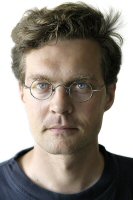
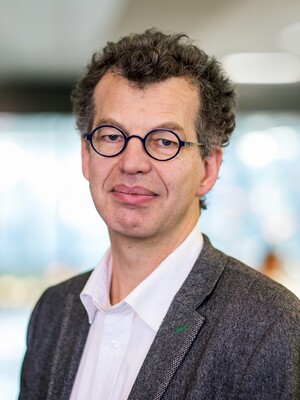
George Papafotiou is a Full Professor in the Department of Electrical Engineering at Eindhoven University of Technology (TU/e) and Head of the Power Electronics Lab. His research focuses on computational intelligence, particularly Model Predictive Control (MPC), applied to power electronics systems for applications in renewable energy, high-efficiency power conversion, and grid integration. He holds affiliations with the EIRES Research Institute and the Cyber-Physical Systems Center in Eindhoven. Academic Background: Papafotiou earned his PhD in Electrical Engineering from Aristotle University of Thessaloniki (2002) and completed a postdoc at ETH Zurich (Switzerland). He spent 15 years at ABB in roles including Scientist, Global R&D Manager for SW/Control HW, and Quality Manager, leading projects on MPC-based control systems for industrial drives and energy management. Research Interests: His work centers on advancing power electronics through MPC for microsecond-scale control, enabling reliable systems critical to a carbon-free future. Key areas include modular multilevel converters (MMCs), soft-switching techniques, grid-tied power electronics, and harmonics mitigation in high-voltage systems. Projects: Current projects include RelSST: Developing reliable solid-state transformers for smart grids. HiVECAF: Designing versatile, efficient active filters for power quality improvement. Teaching: He teaches Electric Circuits Analysis for Energy Conversion Electric Drive Systems Grants & Labs: Leads the Power Electronics Lab, focusing on applied research in sustainable energy systems and industrial automation.
Mauro R.U. Salazar Villalon is an Assistant Professor at Eindhoven University of Technology (TU/e) in the Department of Mechanical Engineering and co-affiliated with the Eindhoven AI Systems Institute (EAISI). He obtained his B.Sc. and M.Sc. from ETH Zurich, followed by a Ph.D. from ETH Zurich in collaboration with Ferrari Formula 1. After postdoctoral work at Stanford's Autonomous Systems Lab, he joined TU/e in 2020. Educational Background: B.Sc. & M.Sc. in Mechanical Engineering, ETH Zurich Ph.D. in Mechanical Engineering, ETH Zurich (with Ferrari F1) His research focuses on optimization models for cyber-socio-technical systems, addressing challenges in mobility, pandemics, and material design. He develops methods for sustainable transportation systems, including incentive schemes for user behavior alignment. Recent trends in his publications span hydrogen-based hybrid aero engines, ride-pooling network flows, battery-electric truck infrastructure, and electric vehicle powertrain optimization. His work integrates advanced mathematical modeling with real-world applications. Scientific Awards: ETH Medal (Master & PhD theses) Best Student Paper Awards (2018, 2022) Best Teacher Award (2021) Nominated for TU/e Young Researcher Award (2022) IEEE VPPC 2024 Best Paper Award He contributes to projects like Model Predictive Pandemic Control and National Growth Fund initiatives, while teaching courses on powertrain design, engineering optimization, and optimal control. Collaborations extend to Stanford University and the Ferrari Formula 1 team.
Matthias Walter is an Assistant Professor in the Department of Mathematics of Operations Research. His research focuses on optimization, mathematical programming, and algorithm design, with applications in transportation, combinatorial optimization, and logistics. He contributes to the SCIP Optimization Suite and has developed the Combinatorial Matrix Recognition Library. His work spans topics such as linear programming relaxations, pseudo-Boolean solving, and multilinear optimization. Key research interests include operations research, integer programming, and algorithmic solutions for complex optimization problems. He has collaborated on projects like optimizing parcel transportation and analyzing congestion games. His recent publications address challenges in flow shop scheduling, graph realization, and pseudo-Boolean functions. Walter actively participates in academic activities, organizing events like the Mathematical Olympiad in Saxony-Anhalt and presenting invited talks on topics such as McCormick relaxations. His contributions to computational tools and theoretical advancements highlight his role in advancing optimization methodologies.
Ruben Pieter Hoeksma is an Assistant Professor affiliated with the Digital Society Institute and the Mathematics of Operations Research department. His research focuses on algorithmic game theory, transportation optimization, agent-based modeling, and mathematical programming. He actively contributes to advancing methodologies in scheduling, stochastic algorithms, and combinatorial optimization. His work bridges theoretical computer science and practical applications, such as logistics optimization for parcel delivery systems (e.g., PostNL) and robust scheduling under uncertainty. Collaborations span international institutions, reflecting his global academic network. Hoeksma has published extensively in top journals and conferences, with recent contributions addressing congestion games, stochastic minimum spanning trees, and succinct predictions in paging algorithms. His research has been cited 225 times, achieving an h-index of 7.
Edwin Zondervan is a Full Professor in Sustainable Process Technology, specializing in process optimization, renewable energy systems, and carbon capture technologies. His work contributes to UN Sustainable Development Goals related to affordable and clean energy, climate action, and industry innovation. Research focuses on biofuel production, green hydrogen systems, and sustainable process design through superstructure optimization frameworks. He actively engages in interdisciplinary studies, integrating data-driven methods and digital twin technologies to address energy transition challenges. Recent research highlights include advancing hydrogen-to-power systems, optimizing biodiesel production with heat integration, and stochastic modeling for biorefinery design. His contributions span academic publications, conference presentations (e.g., 2022 talk on PSE in a changing world), and collaborative projects. Zondervan emphasizes agile education strategies to prepare graduates for evolving industry needs, advocating for process systems engineering as a cornerstone of sustainable development. Key themes in his work include decarbonization pathways, energy storage solutions, and circular economy applications. While no awards are explicitly listed, his high citation count (2,895) and h-index (28) reflect significant academic impact. Ongoing efforts focus on integrating renewable energy systems with industrial processes to achieve net-zero goals.
Luuk Veelenturf is an Associate Professor at the Department of Technology and Operations Management, Rotterdam School of Management, Erasmus University Rotterdam. His work bridges operations research and sustainable urban mobility, focusing on real-time decision systems in transport and logistics. His research interests include real-time transport operations , public transport planning , vehicle routing , and data-driven logistics . A significant portion of his work emphasizes sustainable transportation , aiming to reduce CO2 emissions and congestion through algorithmic improvements in scheduling and routing. The recent publications show a strong trend in solving complex logistics problems using advanced optimization techniques such as Mixed-Integer Programming and Adaptive Large Neighborhood Search . These works span domains including last-mile delivery , passenger-oriented timetabling , and robust train rescheduling , reflecting a consistent focus on resilience and efficiency in transportation systems. Scientific Awards: No scientific awards mentioned in the provided text. Advising and Grants: Luuk Veelenturf has co-supervised PhD research, including the thesis on vehicle routing with multiple service agreements. While specific grants are not listed, his collaboration with prominent researchers and publication in high-impact journals suggest active research funding. His work contributes to UN Sustainable Development Goals on sustainable cities and climate action. Labs and Teams: He is part of the research network within the Department of Technology and Operations Management at RSM, collaborating extensively on transport and logistics optimization. His work involves developing algorithms and models for real-world applications in public transport and city logistics, likely within a structured research group or lab focused on operations and analytics.
Jehum Cho is an Assistant Professor in the Department of Econometrics at the Erasmus School of Economics, Erasmus University Rotterdam. His research lies at the intersection of econometrics, operations research, and energy systems, focusing on optimization under uncertainty and algorithmic solutions to real-world problems in power markets. His primary research interests include operations research , mathematical programming , energy economics , and econometric modeling . He applies advanced optimization techniques such as mixed-integer programming and chance-constrained formulations to address challenges in multi-area reserve sizing and real-time electricity market pricing. His work bridges theoretical rigor with practical applications in power system operations. The two most recent publications highlight a strong trend in applying exact algorithms and computational optimization to critical problems in energy systems. These works demonstrate expertise in modeling uncertainty, designing efficient solution methods, and analyzing market performance metrics using tools from computer science and applied mathematics. No scientific awards or honors mentioned in the provided text. There is no information available regarding student advising, research grants, or funded projects. However, his collaborative work with A. Papavasiliou suggests active research partnerships. Given his focus on power system economics and optimization, future work likely involves expanding stochastic programming frameworks and enhancing market designs for renewable integration. There is no mention of specific laboratories, research centers, or team affiliations in the provided content.
Lisanne van Rijn is an Assistant Professor in the Department of Technology and Operations Management at Rotterdam School of Management. Her work bridges operations research and societal impact, particularly in healthcare delivery and sustainable development. Her research focuses on decentralized decision-making , optimization in healthcare logistics , and service delivery in underserved areas . Using advanced techniques like mixed-integer programming , she develops models to improve outreach team effectiveness and access to care in rural regions. The integration of operational efficiency with Sustainable Development Goals is a central theme. The two recent publications demonstrate a strong trend in applying quantitative operations management methods to real-world humanitarian and public health challenges. Her work emphasizes field implementation, team decision rules, and system-level optimization for social impact. No scientific awards listed There is no public information on student advising or research grants. However, her collaboration with H. de Vries and L.N. Van Wassenhove suggests active research partnerships, likely within humanitarian operations or technology for social good initiatives. No specific lab or research group is mentioned, but her focus implies involvement in centers related to humanitarian logistics or technology for sustainable operations at Rotterdam School of Management.
Bart M.L. Smeulders is an Assistant Professor at Eindhoven University of Technology within the Mathematics and Computer Science school, specializing in Combinatorial Optimization . His research spans: Healthcare policy modeling for organ allocation systems Algorithmic game theory in transplantation markets Robust optimization techniques for medical logistics Key research outputs include: 2025: Policy evaluation simulator for Eurotransplant 2024: Kidney exchange complexity and optimization approaches 2025: Gender disparity analysis in liver allocation His work intersects computer science, operations research, and medical decision-making, contributing to UN Sustainable Development Goal 3 (Good Health and Well-being).
Christina Papadimitriou is an Assistant Professor in the Department of Electrical Engineering at Eindhoven University of Technology (TU/e), affiliated with the Intelligent Energy Systems and Electrical Energy Systems research groups. Her work focuses on smart grid operation, integrated energy systems, and grid flexibility for decarbonization. PhD and Diploma in Electrical & Computer Engineering from University of Patras Senior Researcher at National Technical University of Athens (2012-2016) System Engineer at Hellenic Distribution Network Operator (2016-2019) Special Scientist at University of Cyprus (2019-2021) Her research explores: Smart grid resilience through active asset flexibility Demand-side optimization in integrated grids Power-to-X (PtX) technology operation models Energy hub coordination with logistics fleets Multi-energy carrier synergies in residential clusters Recent work demonstrates: Grid capacity enhancement via dynamic charging strategies (IEEE Access 2024) Multi-objective PtX optimization tools (CRC Press 2025) Smart grid maturity assessment frameworks (Electric Power Systems Research 2024) She coordinates the eNeuron project under Horizon2020 and serves as peer reviewer for multiple journals.
Nevin Mutlu is an Assistant Professor in the Operations Planning, Accounting & Control (OPAC) Group within the School of Industrial Engineering at Eindhoven University of Technology (TU/e). She is affiliated with multiple research centers including the Data Science Center Eindhoven (DSC/e), Efficient Consumer Response (ECR) Community, Retail Operations Lab, and Freight Transport & Logistics Research Group. Her industry partnerships include Nike and the ECR Community, demonstrating strong connections between her academic research and practical retail applications. Dr. Mutlu received her PhD and MSc degrees in Industrial and Systems Engineering from Virginia Tech, USA in 2016 and 2013, respectively. She also holds a BSc degree in Industrial Engineering and a BA degree in Economics from University at Buffalo, State University of New York, USA. Prior to joining TU/e in 2016, she served as a graduate teaching assistant and instructor at Virginia Tech, teaching courses in operations research and working with the Office of Emergency Management on real-world applications. Her research bridges optimization, economics, and marketing to address industry-relevant problems in retail operations and logistics. She specializes in modeling how operational decisions impact consumer behavior, with particular focus on retail pricing, experiential retail, e-commerce adoption, and transportation systems. Her interdisciplinary approach combines theoretical optimization techniques with practical business considerations, resulting in impactful research that addresses current challenges in retail and supply chain management. Analysis of her publications reveals a strong trajectory in operations research with increasing focus on consumer behavior dynamics. Her work spans theoretical optimization methods (resource allocation, production-routing problems) and applied retail contexts (experiential retail, dual-channel strategies). Recent publications show growing interest in sustainability aspects of retail operations and transportation, reflecting contemporary industry challenges. Her research consistently addresses the complex interplay between operational decisions and consumer responses, providing valuable insights for both academia and industry. EU Horizon 2020 Marie Curie Individual Fellowship (2018-2020) Dr. Mutlu actively contributes to research funding through projects like SYNERCIZE: SYnchromodal Transport NEtworks for a Construction Industry towards Zero Emissions (2025-2027), where she serves as a project member. Her teaching portfolio includes Supply Chain Management, Revenue Management and Pricing Analytics, and Project and Process Management courses. She has also served on committees such as the AI Planner of the Future program, demonstrating engagement with emerging technologies in her field. Her research is supported by multiple affiliations including the Data Science Center Eindhoven, ECR Community, and Retail Operations Lab, providing collaborative environments for interdisciplinary work. Her industry partnerships, particularly with Nike, facilitate the translation of academic research into practical retail solutions. The SYNERCIZE project demonstrates her expanding research scope into sustainable transportation networks for construction industries.
Dr. Nicky van Foreest is an Associate Professor at the Faculty of Economics and Business , University of Groningen. His research bridges probability theory and optimization , focusing on applications in manufacturing, inventory, queueing, and service processes. His 15 most recent articles explore computational methods in probability, recursion, and entropy (e.g., Solving Wordle with Entropy ), geometric properties (e.g., Sagemath Proofs for Three Circles ), and stochastic system analysis (e.g., Memoryless Excursions ). He develops educational materials and open-source software, including contributions to stochastic_or and sicm_sagemath . Contact: n.d.van.foreest@rug.nl | University Profile | Personal Homepage .
Prof. Frits C.R. Spieksma is a full professor in the Department of Mathematics and Computer Science at Eindhoven University of Technology (TU/e) , where he leads research within the Combinatorial Optimization Group. He has held academic positions at Maastricht University, KU Leuven, and the University of British Columbia, and has been at TU/e since 2018. Education: M.Sc. in Econometrics, University of Groningen (1987) Ph.D. in Operations Research, Maastricht University (1992) Research Focus: His work lies at the intersection of combinatorial optimization and real-world applications . Key themes include: Scheduling and clustering problems, especially in sports tournaments Organ allocation optimization for Eurotransplant Assignment and transportation problems Approximation algorithms and graph-theoretic optimization Scientific Service & Leadership: Founder and ex-Chair, EURO Working Group OR in Sports Member, Steering Committees of MAPSP and MathSports International President, EURO (Association of European Operational Research Societies) Former Vice-President, IFORS Former President, Belgian Society of Operations Research (ORBEL) Editorial Boards: Associate Editor, 4OR (2015–present) Associate Editor, Journal of Quantitative Analysis in Sports (2014–present) Associate Editor, Operations Research Letters (2008–2024) Former Associate Editor, INFORMS Transactions on Education , OMEGA , Computers & Operations Research , IIE Transactions , Naval Research Logistics PhD Supervision & Mentoring: He has supervised more than 25 PhD theses at KU Leuven and TU/e, many of whom now hold academic positions worldwide. Conference & Workshop Organisation: Recent leadership roles include General Chair of IPCO 2022 (Eindhoven), organiser of Benders Day 2024 , and co-organiser of the Dagstuhl Seminar on Fairness in Scheduling and Resource Allocation (March 2025).
Eduardo Anibal Lalla is an Associate Professor at the Digital Society Institute and Industrial Engineering & Business Information Systems. His research focuses on applying artificial intelligence and optimization techniques to logistics and transportation challenges, particularly in maritime and urban logistics. He has published extensively on topics such as vehicle routing, metaheuristics, and mathematical programming, contributing to advancements in intelligent transport systems and container logistics. Research Trends : Over the past decade, his work has emphasized optimization algorithms for multi-depot vehicle routing collaborative berth allocation models matheuristics for dynamic scheduling AI-driven decoupling strategies in inter-terminal transport robot stations integration in logistics networks Scientific Awards : Best algorithm in Generalized Continuous Optimization Contest (2016) EURO Excellence in Practice Finalist/Runner-up (2021) Extraordinary doctoral distinction (2017)