Tapio Westerlund is a Professor in Mathematics at Åbo Akademi University's Faculty of Science and Engineering. His research focuses on mixed-integer nonlinear programming (MINLP), convex optimization, and nonsmooth optimization techniques, with applications in chemical process engineering and environmental science. Key Research Areas: MINLP, global optimization, supporting hyperplane methods, and limestone dissolution modeling. Notable Contributions: Development of the Supporting Hyperplane Optimization Toolkit and reformulation frameworks for nonconvex MINLP problems. Collaborations: Active in interdisciplinary research networks with external collaborations across countries. His recent publications emphasize convex MINLP algorithms, hyperplane techniques, and applications to wet flue gas desulfurization. While no specific awards or students are listed in the provided data, his citations and Mendeley readership indicate significant academic impact.
Frank Pettersson is a Senior Lecturer at the Faculty of Natural Sciences and Engineering, Department of Process and Systems Engineering, Åbo Akademi University. His research aligns with UN Sustainable Development Goals (SDGs), focusing on sustainable energy systems and industrial process optimization through mathematical modeling. Expertise Areas: Mathematical Optimization, Hydrogen-Based Steelmaking, Biogas Digestate Recycling, Energy Storage Systems, Gas Distribution Networks, Blast Furnace Efficiency His recent work analyzes hydrogen transition in steel plants, water scarcity in power sectors, and nutrient recycling in biogas systems. Key methodologies include Mixed-Integer Linear Programming (MILP) and systems engineering approaches. Academic supervision spans Energy Technology diploma theses (2013–2017) and ongoing Master’s student mentorship (2025). While no specific scientific awards are listed, his publications demonstrate impact in sustainable industrial solutions and energy systems.
Jordi Domingo-Pascual is a Full Professor at the Universitat Politècnica de Catalunya - BarcelonaTech (UPC), affiliated with the Department of Computer Architecture within the Faculty of Informatics of Barcelona (FIB). He is a member of the UPC CBA - Broadband Communications Systems and the IDEAI-UPC - Intelligent Data Science and Artificial Intelligence Research Group. His research spans networking, telecommunications, and ethical aspects of technology design. Research Interests: His primary areas of expertise include 5G network architectures, software-defined networking (SDN), Locator/Identifier Separation Protocol (LISP), traffic engineering, quality of service (QoS), network monitoring, and ethics in engineering education. He investigates both technical and societal dimensions of emerging network technologies. Publication Trends: His recent scholarly output (2020–2022) emphasizes SDN controller placement optimization, open-source traffic engineering tools, and the integration of ethical considerations in engineering curricula—particularly in the context of AI and pandemic-era digital tracing applications. Earlier works focus on ATM multicasting, QoS, and broadband network characterization. Scientific Awards: Premi o reconeixement Advising and Grants: While specific advisees are not listed, his extensive research activity—including participation in European projects—suggests involvement in supervising students and securing competitive R&D funding. His work on traffic engineering, SDN, and LISP indicates leadership in national and international collaborative grants. Labs and Research Groups: He is actively involved in the UPC CBA research group focused on broadband and communication systems and the IDEAI-UPC group advancing data science and AI. These affiliations reflect a strong interdisciplinary research profile bridging networking and intelligent systems.
Andreas Lundell is an Associate Professor at the Åbo Akademi University within the Faculty of Science and Engineering, Department of Information Technology. His work focuses on mathematical optimization, particularly in convex MINLP, signomial programming, and sustainable AI. He leads projects like Data Analytics for Zero Emission Marine and contributes to the Wasa Zero Emission Data Centre initiative. Research spans global optimization algorithms and energy-efficient computing Active in EU-funded and national projects addressing climate action Recipient of the COIN-OR Cup 2018 His research drives sustainable industrial transitions through data analytics and optimization models, aligning with UN SDGs for climate action and sustainable cities.
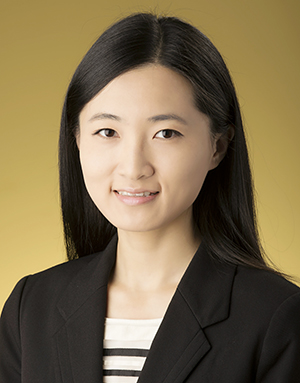
Minjiao Zhang is a Professor in the Department of Economics, Finance & Quantitative Analysis at Kennesaw State University's Coles College of Business. With a career spanning over a decade, her academic journey includes previous roles as Assistant and Associate Professor at Kennesaw State, as well as Assistant Professor at the University of Alabama. Dr. Zhang holds a Ph.D. and M.S. in Operations Research from The Ohio State University. Education : Ph.D. and M.S. in Operations Research from The Ohio State University Her research focuses on advanced optimization methodologies including mixed-integer programming , stochastic programming , and network optimization , applied to real-world challenges in: Production planning and lot-sizing problems Disaster response optimization using social media Healthcare workforce scheduling Transportation safety modeling Network design under uncertainty Cybersecurity risk frameworks Her publications demonstrate a trend of integrating mathematical rigor with practical applications in supply chains, emergency management, and healthcare. Dr. Zhang has contributed to leading journals including Operations Research, European Journal of Operational Research, and Management Science. Her work on hurricane disaster planning and physician scheduling highlights cross-disciplinary impact. Contact: mzhang16@kennesaw.edu
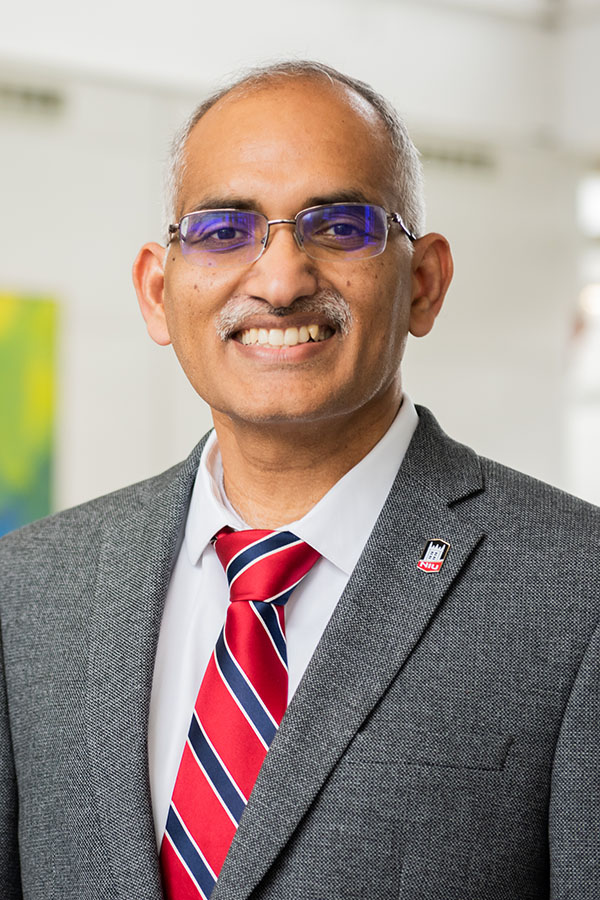
Purushothaman Damodaran is a Presidential Teaching Professor at the Department of Industrial and Systems Engineering at Northern Illinois University . With expertise in large-scale optimization , logistics , simulation , scheduling , Lean Manufacturing , and Six Sigma , he develops mixed-integer linear formulations and novel algorithms for real-world applications in electronics manufacturing, healthcare, and logistics. Ph.D. , Industrial Engineering, Texas A&M University (2002) M.S. , Industrial Engineering, Northern Illinois University (1997) B.E. , Mechanical Engineering, University of Madras (1994) His research focuses on optimization models for batch processing machines , parallel machine scheduling , and simulation-based decision support systems . He has collaborated with industries like 3M , Caterpillar , Royal Caribbean Cruise Lines , and IBM , addressing challenges in manufacturing systems , warehouse design , and service operations . Recent publications highlight heuristic approaches (e.g., GRASP , Simulated Annealing , Particle Swarm Optimization ) for flow shop scheduling , job shop optimization , and material slitting problems . His work often integrates Lean Six Sigma principles and simulation-optimization for real-time manufacturing improvements . Scientific Awards : Best Paper Award, IISE Annual Conference (2021) National Science Foundation Grant (2008-2009) for server manufacturing research As a faculty teaching mentor at NIU, he teaches undergraduate and graduate courses in Six Sigma , Warehousing , and Advanced Lean Manufacturing , emphasizing real-life projects and student engagement .
Miju Ahn is an Assistant Professor in the Department of Operations Research & Engineering Management at the Lyle School of Engineering, Southern Methodist University. She holds a Ph.D. in Industrial and Systems Engineering from the University of Southern California (2018) and a B.A. in Applied Mathematics from UC Berkeley (2008). Her research focuses on mathematical optimization methods with applications in statistical learning, power systems, finance, and healthcare. Education: Ph.D., Industrial and Systems Engineering, University of Southern California (2018) B.A., Applied Mathematics, UC Berkeley (2008) Research Interests: Designing computational algorithms for large-scale optimization problems Nonconvex programming and its applications Mathematical modeling for decision-making systems Scientific Awards: NSF CRII grant recipient for research in optimization and decision-making
Julio González-Díaz is a university professor at the Department of Statistics, Mathematical Analysis, and Optimization at the Faculty of Mathematics, University of Santiago de Compostela. His research focuses on game theory, operations research, and decision models, with applications in economics and mathematics. He leads the research group MODESTYA (Optimization, Decision, Statistical Models and Applications) and is affiliated with the Galician Mathematical Research and Technology Center (CITMAga). Education: PhD from the University of Santiago de Compostela (2005), thesis titled Essays on Competition and Cooperation in Game Theoretical Models , supervised by Dr. María Estela Sánchez Rodríguez and Dr. Ignacio García Jurado. Research Interests: Game theory (cooperative and non-cooperative), operations research, optimization, and statistical models. His work includes studies on core stability, airport cost allocation, paired comparisons analysis, and algorithmic game theory. Publications: Over 30 peer-reviewed articles and books, including influential works like An Introductory Course on Mathematical Game Theory (2010) and widely cited contributions on core-center concepts and ranking methods. Recent work involves polynomial optimization algorithms (RAPOSa solver), gas transportation networks, and bilevel portfolio design. Collaborations: Extensive co-authorship network, including researchers like Fiestras-Janeiro, Sánchez-Rodríguez, and international collaborations in optimization and game theory. Contact: julio.gonzalez@usc.es
Dan Mikulincer is the Brian and Tiffinie Pang Assistant Professor at the University of Washington in the Department of Mathematics, College of Arts and Sciences. He previously held a postdoctoral Instructor position at MIT Mathematics and earned his Ph.D. from the Weizmann Institute of Science under Ronen Eldan. He completed his B.Sc. in Mathematics and Computer Science at Ben-Gurion University, where he also studied Cognitive Neuroscience. B.Sc.: Ben-Gurion University (Mathematics, Computer Science, Cognitive Neuroscience) Ph.D.: Weizmann Institute of Science, Faculty of Mathematics Postdoc: MIT Mathematics Current: Assistant Professor, University of Washington, Department of Mathematics His research lies at the intersection of high-dimensional geometry, probability, statistics, information theory, and data science. He is particularly focused on normal approximations, Stein's method, stochastic analysis, and dimension-free phenomena. His work explores foundational aspects of learning theory, random matrices, transportation inequalities, and neural networks, often using probabilistic and analytic tools to derive sharp, robust results in high dimensions. The recent publications reflect a consistent focus on probabilistic methods in high-dimensional settings. Key themes include normal approximation via Stein's method, optimal transport, concentration and anti-concentration inequalities, random graph models, and theoretical aspects of machine learning such as learnability and neural network expressivity. The work spans both pure mathematics (e.g., GAFA, PTRF) and top-tier computer science venues (e.g., COLT, STOC, NeurIPS), highlighting interdisciplinary impact. Although no formal scientific awards are listed in the provided text, his publications in premier journals and conferences (Annals of Probability, STOC, NeurIPS, COLT) indicate significant recognition in the theoretical community. Dan Mikulincer has advised or collaborated with several researchers including Yair Shenfeld, Max Fathi, Ronen Eldan, and Sébastien Bubeck. He has served as a TA for 18.650: Statistics for Applications at MIT and taught programming courses (Java, Python, JavaScript) at the Interdisciplinary Center Herzliya. He is also a senior lecturer at WeCode, a nonprofit providing free programming education to underrepresented youth in Israel, indicating a strong commitment to education and outreach. He has been affiliated with research groups at MIT Mathematics, Weizmann Institute, and Microsoft Research AI, where he spent the summer of 2019 hosted by Sébastien Bubeck. These collaborations span theoretical machine learning, stochastic processes, and algorithmic foundations.
George Nemhauser is the A. Russell Chandler III Chaired Professor and Institute Professor at the Georgia Institute of Technology's Department of Industrial and Systems Engineering. He obtained his Ph.D. in Operations Research from Northwestern University in 1961. Prior to his current position, he served on the faculty of Johns Hopkins University (until 1969) and Cornell University (1970–1983), where he also directed the School of Operations Research and Industrial Engineering (1977–1983). He held visiting roles at institutions including the University of Leeds, CORE (Belgium), and the University of Melbourne. His professional service includes leadership roles in the Operations Research Society of America (ORSA), the Mathematical Programming Society, and the National Research Council (NRC). He is a founding editor of Operations Research Letters and co-editor of Handbooks of Operations Research and Management Science . Dr. Nemhauser's research focuses on large-scale mixed-integer programming and its applications, such as maritime inventory routing. He co-founded the Sports Scheduling Group, which manages scheduling for Major League Baseball and university athletic conferences. His contributions to optimization have earned prestigious awards, including the John von Neumann Theory Prize and the Khachiyan Prize. Education: Ph.D. in Operations Research, Northwestern University, 1961 Awards & Honors: Member of the National Academy of Engineering Kimball Medal Lanchester Prize (twice) Morse Lecturer of INFORMS Khachiyan Prize (INFORMS) John von Neumann Theory Prize (INFORMS) Professional Activities: Former Research Director at CORE, Belgium (1975–1977) Editor of Operations Research and Operations Research Letters Advisor to NSF, NIST, and NRC
Fabian Bastin is a Full Professor in the Department of Computer Science and Operational Research (IRO) at Université de Montréal. He holds a prestigious academic position within the university's research and teaching community. His work focuses on optimization, stochastic programming, simulation, and their applications in transportation, energy systems, and finance. Teaching Responsibilities: Bastin teaches advanced courses such as IFT-2505 (Linear Optimization), IFT-3515 (Nonlinear Programming), and IFT-6512 (Stochastic Programming). He also contributes to graduate-level courses on dynamic programming and simulation techniques. His courses emphasize theoretical foundations alongside practical applications, often using tools like MATLAB and the ORATIO library he helped develop. Research Interests: Bastin's research spans stochastic optimization, simulation methodologies, and decision-making under uncertainty. Key areas include air traffic management optimization, hydroelectric reservoir scheduling, and synthetic population generation using copula-based models. He has pioneered work on scenario tree generation for multistage stochastic programming and developed algorithms for efficient mixed logit model estimation. Research Contributions: His publications highlight advancements in stochastic models for transportation systems, energy planning, and financial engineering. Notable works include contributions to the progressive hedging algorithm, recursive logit models for route choice analysis, and Monte Carlo methods for option pricing. Bastin is also actively involved in software development, notably the ORATIO simulation library used in discrete-event modeling. Professional Engagements: He has co-organized conferences on optimization and simulation, and his work has been supported by grants from NSERC and other funding bodies. Despite no explicit mention of awards in the text, his extensive publication record and methodological innovations suggest significant recognition in his field.
Peter Zhang is an Assistant Professor at Carnegie Mellon University's Heinz College of Information Systems and Public Policy, with a courtesy appointment in Civil and Environmental Engineering. He holds a PhD in Engineering Systems from MIT (2019), an MASc in Mechanical and Industrial Engineering from the University of Toronto (2013), and a BASc in Engineering Science from the same university (2011). His research focuses on optimization theory, applied to supply chains, transportation systems, health, and socio-technical systems. He emphasizes robust optimization, dynamic and bilevel problems, and their applications in policy design and high-stakes decision-making. Education PhD in Engineering Systems, MIT (2019) MASc in Mechanical and Industrial Engineering, University of Toronto (2013) BASc in Engineering Science, University of Toronto (2011) Research Interests Robust optimization and its applications Transportation safety and last-mile delivery systems Supply chain resilience and policy design Machine learning integration with optimization Awards & Recognition INFORMS Koopman Prize (2020) First Place, INFORMS Junior Faculty Forum (2022) Ford Engineering Excellence Award (2015) INFORMS Daniel H. Wagner Prize (2014) Advising & Mentorship Supervised PhD students including Hao Hao and Guanting Wu, with postdoctoral mentorship for Ningji Wei and Alberto Japón Sáez. Research teams have participated in datasets like the U.S. Household Commuting Dataset and NASA’s Blue Skies Competition. Labs & Collaborations Collaborates on transportation fairness, hydrogen aviation decarbonization, and school bus optimization through interdisciplinary projects involving data science and policy analysis.
Chaithanya Bandi is an Associate Professor at the National University of Singapore (NUS) in the Analytics and Operations Department of the NUS Business School, with a joint appointment in the Department of Mathematics. His research focuses on decision-making under uncertainty, robust optimization, and their applications in operations management, healthcare, e-commerce, and energy systems. He develops robust optimization models for queueing control, risk optimization, and mechanism design. Key research areas include robust queue inference, two-stage distributionally robust optimization, and multi-item auction mechanisms. He has contributed to operational challenges in healthcare (e.g., patient re-entry scheduling), energy systems (electricity generation optimization), and e-commerce (price optimization for fashion products). His work integrates theoretical advancements with practical implementations in large-scale systems. Recent publications emphasize adversarial evaluation of large language models, dynamic scheduling algorithms, and robust policies for uncertain environments. His methodologies often involve novel optimization frameworks and scalable computational approaches. Dr. Bandi holds a PhD in Operations Research and has collaborated with industry leaders like Flipkart and healthcare providers to apply his models in real-world settings. His contributions bridge theoretical rigor and practical applicability in complex operational systems.
Prof. Moritz Diehl is a Professor at the University of Freiburg, leading the Systems Control and Optimization Laboratory within the Department of Microsystems Engineering (IMTEK) and affiliated with the Department of Mathematics. Born in Hamburg, Germany, he holds a Ph.D. from Heidelberg University (2001) and previously served as a professor at KU Leuven (2006–2013), where he directed the Optimization in Engineering Center (OPTEC). His research focuses on optimization and control, emphasizing numerical methods for engineering applications, particularly embedded systems and renewable energy. Key areas include model predictive control (MPC), nonlinear optimization, and real-time control systems. Education: He studied physics and mathematics at Heidelberg University and the University of Cambridge (1993–1999), culminating in a Ph.D. in Scientific Computing. His academic journey includes roles at KU Leuven and Freiburg, where he has developed influential tools like the AWEbox framework for airborne wind energy systems and the acados optimization library. Research Interests: His work spans numerical optimal control, MPC algorithms, and their applications in robotics, energy systems, and automotive engineering. Recent advancements include collision-free motion planning, real-time NMPC with convex-concave constraints, and stochastic control methods for mobile robots. He also explores optimization for hybrid systems, leveraging finite elements and switch detection for nonsmooth dynamics. Publications: His 2023–2025 work highlights contributions to MPC stability, energy-efficient control systems, and software tools like LCQPow for quadratic programming. His research bridges theory and practice, addressing challenges in industrial processes, renewable energy integration, and autonomous systems. Labs & Teams: He leads the Systems Control and Optimization Lab, fostering interdisciplinary projects in optimal control, robotics, and sustainable energy. His group collaborates on tools like acados, emphasizing real-time feasibility and scalability for complex systems.
William Cook is a University Professor in the Department of Combinatorics and Optimization at the University of Waterloo. His research focuses on combinatorial optimization, computational discrete optimization, and the traveling salesman problem (TSP). He is renowned for co-developing the Concorde TSP Solver , a leading software for solving TSP instances. Cook has held editorial roles in top journals such as Mathematical Programming Computation and Mathematical Programming , and served as Chair of the Mathematical Optimization Society and Vice Chair of INFORMS Computing Society. His research interests include algorithm design, operations research, graph theory, and computational methods for NP-hard problems. Notable contributions include advancing cutting-plane methods, branch-and-bound algorithms, and hybrid optimization techniques. Cook has authored influential books like In Pursuit of the Traveling Salesman and The Traveling Salesman Problem: A Computational Study . Awards include membership in the National Academy of Engineering, SIAM Fellowship, INFORMS Fellowship, and the $100,000 Amazon Last Mile Routing Research Challenge prize (2021). He has advised numerous projects in computational optimization, including studies on deep learning applications and combinatorial algorithm development. His work bridges theoretical advancements with practical software tools like QSopt and QSopt_ex .



.jpg?h=700&iar=0&w=700&hash=E918C5B36FFC75663AA5EA53612576D2)