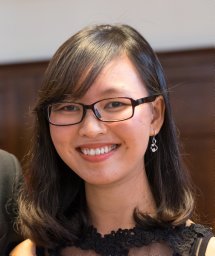
Muhammad Noor E Alam directs the Decision Analytics Lab at Northeastern University, with joint appointments in Engineering and Public Policy. His NSF CAREER Award-winning research develops optimization frameworks for healthcare, logistics, and energy systems. He bridges operations research with public policy challenges including opioid crisis interventions. Research Areas: Large-scale optimization, healthcare delivery systems, sustainable energy planning, and humanitarian logistics. Current Projects: Designing decision tools for prescription opioid management and renewable energy grid integration.
Dr. Joseph Moore is an Assistant Professor in the Department of Mechanical Engineering at Johns Hopkins University (JHU), serving as Director of the Agile and Intelligent Robotics (AIRO) Laboratory. He is affiliated with the Laboratory for Computational Sensing and Robotics (LCSR), the Institute for Assured Autonomy (IAA), and holds a Bridging Faculty appointment in the Research and Exploratory Development Department (REDD) at JHU/APL. His research focuses on computational control, machine learning, and robotics to enable agile systems operating in complex environments. Dr. Moore previously served as Robotics Group Chief Scientist at JHU/APL, leading projects on hybrid unmanned aerial-aquatic vehicles and aerobatic fixed-wing systems. He has secured funding as Principal Investigator (PI) for ONR, DARPA, and ARL programs, particularly in post-stall maneuvering control and multi-robot coordination. His work emphasizes robust control strategies for autonomous systems in constrained environments. Research interests include aerial robotics, optimization, and learning-based control. Notable contributions involve NMPC-based systems, UAV navigation, and adaptive control for uncertain environments. His recent articles highlight advancements in swarm coordination, morphing-wing UAVs, and PAC-NMPC frameworks. Dr. Moore advises students such as Mark Gonzales and Adam Polevoy. Key grants include ONR/DARPA-funded projects on post-stall flight control and Army-funded multi-robot coordination efforts. His lab (AIRO) and collaborations (LCSR, IAA) drive applied and theoretical robotics research.
Dr. Tamás Koltai is a Professor and Dean at the Faculty of Economics and Social Sciences of Budapest University of Technology and Economics (BME). He leads the doctoral school's Specialization Group in Production Management. His roles include overseeing academic programs and research in production management, operations research, and efficiency analysis. Education: Doctor of the Hungarian Academy of Sciences (2016) Dr. habil. (2000), Budapest University of Technology and Economics Candidate of Technical Sciences (1987), Hungarian Academy of Sciences M.Sc. in Mechanical Engineering (1983), BME Faculty of Mechanical Engineering Research Interests: Dr. Koltai focuses on production management optimization, including the application of Data Envelopment Analysis (DEA), sensitivity analysis in mathematical models, and the integration of robotics in assembly lines. His work bridges theoretical models (e.g., MILP/CP optimization) with practical industrial challenges, particularly in healthcare efficiency and educational management. Notable Awards: IEOM Society Teaching Excellence Award (2021) BME GTK Faculty Memorial Medal (2016) János Susánszki Award (2013) Széchenyi Professorship Scholarship (1999–) Teaching & Leadership: He has held visiting roles at the University of Seville (1990–1992) and the University of Michigan (1988/89). His teaching excellence is recognized through awards and his contributions to business simulation education. His research often collaborates with industry partners to address real-world operational challenges. Labs/Teams: Leads the Production Management Specialization Group and contributes to interdisciplinary teams focusing on manufacturing efficiency and healthcare operations within BME.
René M.B.M. de Koster is a Full Professor of Logistics and Operations Management at the Rotterdam School of Management (RSM), Erasmus University, where he has been a faculty member since 1995. He holds a PhD from Eindhoven University of Technology (1988) and is a leading expert in warehousing, material handling, and sustainable logistics. PhD, Eindhoven University of Technology, 1988 Professor, RSM, Erasmus University, 1995–present Honorary Francqui Chair, Hasselt University, 2018 His research focuses on warehousing systems , robotics in logistics , container terminals , and behavioural operations . He integrates operations research with real-world logistics challenges, emphasizing sustainability and automation. His work contributes to UN Sustainable Development Goals related to responsible consumption and industry innovation. The most recent publications highlight a strong trend toward autonomous systems and AI-driven logistics , particularly in robotic fulfillment, dynamic routing, and human-robot collaboration. These works reflect interdisciplinary engagement with computer science, industrial engineering, and behavioural science. Notable scientific awards include: IISE Annual Conference Best Student Paper Award (2024) Transportation Science Paper of the Year (2023) EJOR Best Paper Award (2023) Best European Journal of Operational Research Review Paper (2022) Best Paper Finalist at major logistics conferences Professor de Koster has supervised over 30 students and is actively involved in editorial service for top journals such as Transportation Science , Production and Operations Management , and International Journal of Production Research . He is chairman of Stichting Logistica and founder of the Material Handling Forum, contributing significantly to both academic and industry advancement in logistics. He leads research in advanced logistics labs focusing on robotic sorting, mobile fulfillment, and sustainable supply chains, often in collaboration with European institutions and industry partners.
Andreas Grothey is a Senior Lecturer in the School of Mathematics at The University of Edinburgh, a position he has held since 2011. He completed his MSc in Numerical Algebra and Mathematical Computing at the University of Dundee (1995) and his PhD in Optimization at the University of Edinburgh (2001), supervised by Ken McKinnon. His research focuses on stochastic programming, interior point methods, decomposition approaches, high-performance computing, and energy systems optimization. He has contributed to energy planning, power grid reliability, and emergency response strategies for power networks. Grothey has advised seven PhD students, including work on unit commitment, top-percentile traffic routing, and power flow optimization. His projects include the OOPS solver, CESI energy integration center, and the Structured Modelling Language (SML). Recent work addresses pandemic policy optimization and exascale computational challenges. Education: MSc in Numerical Algebra and Mathematical Computing (University of Dundee, 1995) PhD in Optimization (University of Edinburgh, 2001) Research Interests: Stochastic Programming Interior Point Methods Decomposition Methods High-Performance Computing Energy Systems Optimization Advising & Projects: PhD Supervision (7 students, 2007–2022) OOPS Parallel Solver Development CESI Energy Systems Integration SML Structured Modelling Language Labs/Teams: Member of the Edinburgh Research Group on Optimization, leading projects in power grid stability and energy planning.
Nils Wilde is an Assistant Professor in the Faculty of Computer Science at Dalhousie University, Halifax, Canada. He specializes in robotics, AI, and human-computer interaction, with a focus on cognitive robotics, multi-robot systems, and human-robot interaction. His research integrates planning, optimization, control, and machine learning to develop interactive and adaptive robotic systems. His educational background includes: BSc and MSc in Computer Science or related field from Technical University Berlin (2012, 2016) PhD in Electrical and Computer Engineering from the University of Waterloo (2016–2020), co-supervised by Dana Kulić and Stephen L. Smith Postdoctoral Fellow at TU Delft (2021–2024) in the Autonomous Multi-Robots Lab with Javier Alonso-Mora Postdoctoral Fellow at the University of Waterloo’s Autonomous Systems Lab (until August 2021) Nils Wilde's research centers on enabling robots to learn from human feedback and adapt to user preferences in dynamic environments. His work spans preference learning , multi-objective planning , motion planning , task assignment in multi-robot systems , and human-robot interaction . He develops algorithms that allow robotic systems to balance competing objectives such as efficiency, safety, and user comfort, particularly in service robotics applications like hospitals and industrial facilities. His recent publications (2020–2024) demonstrate a strong trajectory in top robotics venues (T-RO, RA-L, ICRA, IROS, CoRL, CDC, WAFR), with a focus on multi-objective optimization, dynamic vehicle routing, sensor scheduling, and learning user preferences. A key theme is improving the quality of service in robotic systems by optimizing metrics like waiting times, statistical distinctness of plans, and user satisfaction, often through novel cost functions and learning frameworks. Nils is actively building a new robotics lab at Dalhousie University, with funded PhD positions and an interdisciplinary research environment. He is involved in organizing academic workshops, such as the upcoming 2025 RSS workshop on Multi-Objective Optimization and Planning in Robotics. He mentors prospective students and encourages applications from diverse backgrounds.
Dr. Huadong Mo is a Senior Lecturer at the School of Systems and Computing, University of New South Wales (UNSW) Canberra, Australia. He holds a B.E. degree in automation from the University of Science and Technology of China (2012) and a Ph.D. in systems engineering and engineering management from the City University of Hong Kong (2016). Prior to his current position, he was a research associate at ETH Zurich's Reliability and Risk Engineering Lab (2016-2019) and a Lecturer at UNSW Canberra (2019-2021). Dr. Mo's educational background includes a strong foundation in systems engineering with international experience across China, Switzerland, and Australia. His career trajectory demonstrates a progression from academic research to faculty positions with increasing responsibilities in teaching and research leadership. His research focuses on enhancing the resilience, performance, and security of complex systems using learning-based algorithms, primarily in power and energy systems, cyber-physical systems, and manufacturing systems. He applies data analytics to understand system evolution under uncertainties, with particular emphasis on prognostics and health management, sustainable transportation, robust operation of power systems under extreme events, and reinforcement learning-based asset management. His work bridges theoretical advances with practical applications in critical infrastructure. Analysis of Dr. Mo's recent publications reveals a strong focus on energy systems, particularly in the integration of machine learning with power grid management, battery storage systems, and resilience against cyber threats. His research shows a clear trajectory toward increasingly complex system integration, with growing emphasis on multi-vector energy communities, cross-domain prediction, and uncertainty-aware energy management. The interdisciplinary nature of his work spans electrical engineering, computer science, and operations research. 2024 IEEE SMC Early Career Award 2023 Visiting Research Fellowship (Jean d'Alembert Pour Fellowship) Gold Medal in 2024 China International College Student Innovation Competition (as supervisor) Arc PGC Supervisor Award (2021) IEEE SMC Outstanding Chapter Award (2021) Alumni Achievement Award from City University of Hong Kong (2019) Dr. Mo actively supervises numerous HDR students working on cutting-edge research topics including battery health monitoring, quantum control, reinforcement learning for power systems, and explainable AI for energy management. He leads multiple significant research grants totaling over 3 million AUD, including projects funded by ARC, Energy Innovation Fund, and international collaborations with institutions like ETH Zurich, Cambridge, and Tsinghua University. His research group maintains strong international connections, facilitating student exchanges and collaborative research. As Postgraduate Course Coordinator of Systems Engineering and Chair of IEEE SMC ACT Chapter, Dr. Mo plays a significant role in academic leadership and professional community building. His research team collaborates with industry partners on practical implementations of their theoretical work, particularly in the energy sector.
Luciano Lavagno is a Full Professor at the Department of Electronics and Telecommunications, Polytechnic University of Turin, with over two decades of academic and research contributions. His work bridges hardware acceleration, low-power electronics, and intelligent system design. Research Focus: Hardware-accelerated machine learning, high-level synthesis (HLS) for FPGA/ASIC, heterogeneous CPU/GPU/FPGA platforms Key Projects: SPACE (predictable acceleration), REBECCA (secure AI acceleration), HPC-National Center (quantum computing), and oral history preservation via "Ti racconto una storia" initiative His recent publications analyze CNN inference optimization, subgraph isomorphism, and superword-level parallelism exploitation. Lavagno supervises multiple PhD students working on FPGA acceleration, neural network hardware, and embedded systems. As Principal Investigator for national and EU-funded projects (PRIN, JTI-ECSEL, PNRR), he drives advancements in sustainable computing infrastructure. His patented technologies include MIx&Latch timing methodology, capacitive sensing innovations, and 5G acceleration frameworks.
Bing Yan is an Assistant Professor in the Department of Electrical and Microelectronic Engineering at Rochester Institute of Technology (RIT), affiliated with the Kate Gleason College of Engineering. She holds a B.S. in Information Management from Renmin University of China (2010), and M.S. and Ph.D. degrees in Electrical Engineering and Statistics from the University of Connecticut (2012–2017). Prior to RIT, she was an Assistant Research Professor at the University of Connecticut. Dr. Yan’s research focuses on power system optimization , including grid integration of renewables (wind/solar), microgrid operations, distributed energy systems, and manufacturing scheduling. She has published over 30 peer-reviewed articles and secured grants from the National Science Foundation (including a CAREER Award), Department of Energy, and industry partners like Brookhaven National Laboratory and ABB. Her work emphasizes mixed-integer linear programming and machine learning applications in energy systems. Notable contributions include stochastic unit commitment models for wind farms, voltage control via deep reinforcement learning, and multi-layer weather models for PV prediction. She advises on projects involving grid resilience, smart manufacturing, and data-driven optimization. Awards: National Science Foundation Faculty Early Career Development (CAREER) Award Multiple NSF grants, DOE grants, and industry contracts Teaching: Courses include Circuits I , Electric Power Transmission & Distribution , and Advanced Power Systems . She also mentors students through co-op programs and independent studies. Labs/Teams: Leads the Intelligent Lab of Power and Manufacturing (ILPM), focusing on multidisciplinary solutions for energy and manufacturing systems. The lab emphasizes hands-on training and innovation in smart grid technologies and sustainable energy systems.
Guido Perboli is a Full Professor in the Department of Management and Production Engineering (DIGEP) at the Polytechnic University of Turin, where he also serves as Logistics Coordinator and Project Coordinator for activities supporting relationships with government bodies. He is a member of the Interdepartmental Center CARS@PoliTO (Center for Automotive Research and Sustainable Mobility) and serves as Director of the ICT for City Logistics and Enterprises (ICElab@Polito) research center, which he founded in 2016. His research interests span a broad range of topics including Operations Research, Logistics, Last-mile Delivery, Sustainable Logistics, Combinatorial Optimization, Stochastic Programming, Business Development, and Lean Business methodologies. His work particularly focuses on City Logistics, Green Logistics, and the application of emerging technologies like Blockchain and AI in supply chain management. He has developed GUEST, a Lean Business methodology for innovation processes from early idea definition to implementation. Professor Perboli's recent publications demonstrate a strong focus on urban logistics, last-mile delivery optimization, blockchain applications in supply chains, and the integration of AI techniques in transportation systems. His work shows an increasing trend toward interdisciplinary research that combines optimization methods with emerging technologies to address sustainable urban mobility challenges. Professional Recognition: CASE Best Paper award from IEEE Conference on Automation Science and Engineering (2011) Effective member of INFORMS (2019-present) Effective member of EURO (1995-present) Effective member of AIRO (1995-present) Associate Editor for Journal of Applied Research and Technology (2020-present) Associate Editor for Sustainability (2018-present) Professor Perboli actively advises PhD students and has supervised numerous research projects, including EU-funded initiatives like SINFONICA, HESTER, and 5G-LOGINNOV. He serves as Scientific Director for multiple commercial research projects focused on blockchain, IoT, and AI applications in logistics. Beyond academia, he is Chief Scientific Officer of Arisk S.p.A., a fintech company specializing in business crisis prediction using AI and machine learning. His research group, ICElab@Polito, focuses on two main areas supporting urban growth: logistics and enterprises. The center collaborates with numerous companies including Amazon, DHL, and FCA, addressing real-world challenges in urban logistics and supply chain management through innovative research approaches.
Andreas Malikopoulos is a Professor at Cornell University's School of Civil & Environmental Engineering and Director of the Information and Decision Science Lab (IDS Lab). Previously, he held roles as the Terri Connor Kelly and John Kelly Career Development Professor at the University of Delaware (UD) and founding Director of UD's Sociotechnical Systems Center. He also served as the Alvin M. Weinberg Fellow at Oak Ridge National Laboratory (ORNL), Deputy Director of ORNL's Urban Dynamics Institute, and Senior Researcher at General Motors R&D. His research focuses on cyber-physical systems (CPS), stochastic control, and learning-driven approaches for optimizing energy efficiency and sustainable mobility in smart cities and transportation systems. Education: PhD (Mechanical Engineering, University of Michigan, 2008), M.S. (Mechanical Engineering, University of Michigan, 2004), Diploma (National Technical University of Athens, 2000). Research Interests: Analysis and control of CPS, stochastic scheduling, game theory, and mechanism design applied to emerging mobility systems (e.g., autonomous vehicles, electric vehicles). He emphasizes integrating learning and control for socially optimal solutions in transportation networks. Awards: IEEE ITS Young Researcher Award (2019), UD’s Outstanding Junior Faculty Award (2020), Alvin M. Weinberg Fellowship (2010), and recognition as a NAS Kavli Frontiers of Science Scholar (2012). He is an IEEE Senior Member, ASME Fellow, and serves on editorial boards of leading journals. Teaching: Focuses on optimal decision-making, control theory, and emerging mobility systems. Courses include stochastic optimal control and game theory at Cornell. Labs: Leads the IDS Lab, which develops scalable frameworks for CPS and smart city applications. Current projects include coordinated routing for mixed-traffic systems and AI-driven recommendations for autonomous vehicles.
Nguyen Dang is a Lecturer at the School of Computer Science, University of St Andrews, actively supervising PhD students and teaching AI-related modules including Artificial Intelligence (CS3105), Artificial Intelligence Practice (CS5011), Machine Learning (CS5014), and Uncertainty in Artificial Intelligence (CS5016). He leads the Centre for Interdisciplinary Research in Computational Algebra and maintains an active research profile with numerous publications in top conferences. University of St Andrews, School of Computer Science Lecturer (equivalent to assistant professor) Supervising PhD students including Tai Nguyen Teaching multiple AI and Machine Learning courses Dr. Dang's research focuses on the intersection of machine learning and optimization, particularly automated algorithm configuration and design. His work centers on leveraging machine learning techniques to automate the development of optimization algorithms, with special emphasis on deep reinforcement learning for Dynamic Algorithm Configuration and integrating machine learning into constraint programming. His research has significant applications across various domains, especially in automated constraint modeling. The publications reflect strong activity in combinatorial optimization, algorithm selection, and benchmark instance generation. His recent publications demonstrate consistent output in top venues including Artificial Intelligence Journal, GECCO, FOGA, and CP conferences, with notable achievements including Best Paper Awards at GECCO'2025 and GECCO'2022. The research spans theoretical foundations of parameter control, practical applications in constraint programming, and innovative approaches to algorithm configuration. Best paper award at GECCO'2025 Best paper award at GECCO'2022 Nomination for best paper award at FOGA'2023 Best paper award at GECCO'2017 Dr. Dang holds a Leverhulme Early Career Fellowship (2020-2023) worth £90,000 for his project on constraint-based automated generation of synthetic benchmark instances. He has secured additional funding including EPSRC High Performance Computing grants totaling over 2.2 million CPU hours and a COST Action grant. His research group actively develops tools and frameworks for automated algorithm configuration and benchmark instance generation, with several open-source datasets available on GitHub. He is involved with multiple research groups including the Centre for Interdisciplinary Research in Computational Algebra and collaborates extensively with researchers at University of St Andrews and internationally, including at Université de Paris I Panthéon-Sorbonne where he conducted visiting research.
Samir Elhedhli is a Professor in the Department of Management Sciences at the University of Waterloo, within the Faculty of Engineering. His research focuses on Large-scale Optimization, Logistics, Supply Chain Design, Healthcare Operations, Airline Scheduling, and Data Analytics. He has held grants from NSERC, CFI, OCE, and MITACS, collaborating with industries in aircraft manufacturing, airline scheduling, and warehouse management. Education: PhD in Management Science, McGill University (2001) Master's in Industrial Engineering, Bilkent University (1996) Bachelor's in Industrial Engineering, Bilkent University (1994) Research Interests: Data Analytics & Data Science Large-scale Optimization (Interior-point methods, decomposition, column generation) Supply-chain Analytics (Logistics, warehousing, routing, scheduling) Environmental Sustainability in Supply Chains Key Awards: CORS Service Award (2013) University of Waterloo Distinguished and Outstanding Performance Awards (2005–2019) Grants & Advising: Active grants from NSERC, CFI, OCE, and MITACS Currently accepting graduate student applications Administration & Service: Chair, Department of Management Sciences (2014–2018) President, Canadian Operational Research Society (2011–2012) Co-Editor-in-Chief, INFOR Journal (2014–present) Labs & Teams: Leads the WanOpt research group focused on optimization methodologies and applications.
Prof. Dick den Hertog is a Full Professor at Tilburg University's Department of Econometrics and Operations Research, part of the Tilburg School of Economics and Management (TiSEM). His research focuses on operations research methodologies with applications in humanitarian logistics, supply chain optimization, and robust decision-making under uncertainty. He collaborates with organizations like the UN World Food Programme to enhance operational efficiency in complex environments. Key research areas include robust optimization techniques, supply chain management in developing regions, and the integration of satellite data with machine learning for infrastructure analysis. His work addresses challenges such as food aid distribution, disaster response logistics, and predictive modeling for transportation systems in data-scarce areas. Notable projects include developing analytical tools for the WFP's supply chain planning and creating algorithms for weather-informed road speed prediction. He is affiliated with the Tilburg Sustainability Center and the Operations Research research group, contributing to both academic advancements and real-world impact through optimization solutions.
Morten Hovd is a Professor at the Department of Engineering Cybernetics, Norwegian University of Science and Technology (NTNU). His work focuses on advanced control systems, particularly in model predictive control, optimization, and power electronics. He has contributed to control design for uncertain systems, bilinear models, and modular multilevel converters. Research Interests Control Theory and Model Predictive Control (MPC) Optimization Techniques in Control Systems Power Electronics and Smart Grid Applications Stability Analysis of Hybrid and Discrete-Time Systems Teaching TTK4210 - Advanced Control of Industrial Processes TK8118 - Mini-seminar in Cybernetics