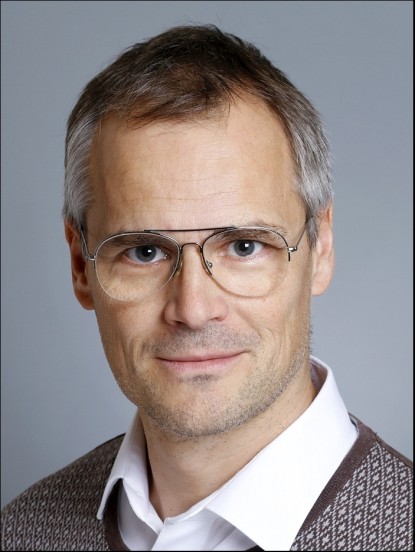
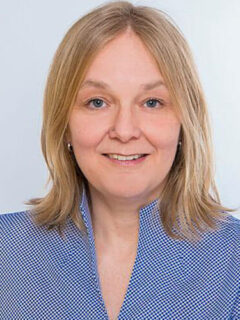
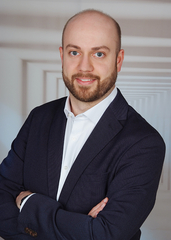
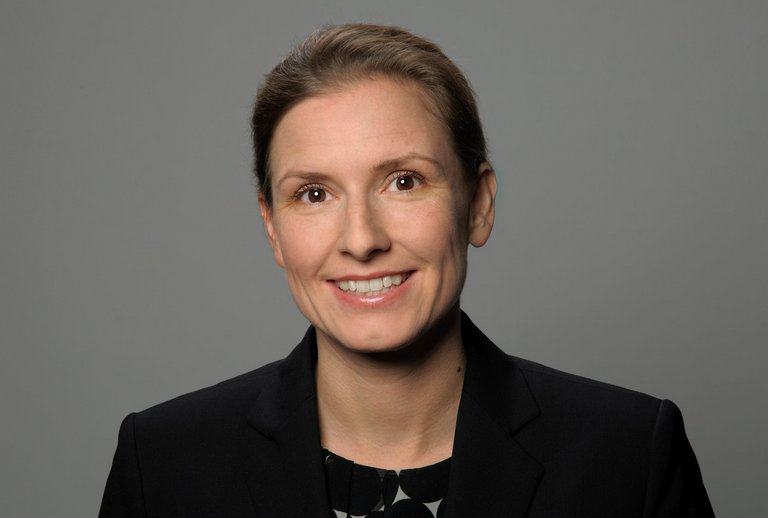
Prof. Marius Pesavento is a Full Professor at the Department of Electrical Engineering and Information Technology, Technische Universität Darmstadt, leading the Communication Systems Group. His research focuses on sensor array processing, MIMO communication systems, adaptive beamforming, and mathematical optimization in networks. He has held academic and industry roles since 2001, including positions at mimoOn GmbH and FAG Industrial Services. Education: PhD (Doktorate) in Electrical Engineering, Ruhr-Universität Bochum (2001–2005) Master of Engineering, McMaster University (1999–2000) Dipl.-Ing. in Electrical Engineering, Ruhr-Universität Bochum (1992–1999) His research interests span robust high-resolution sensor array processing, 4G/5G mobile networks, and network information theory. Notable projects include developing tensor models for ultrasonic sensor calibration and applying machine learning to anomaly detection in network flows. His work bridges theoretical optimization and practical applications in automotive radar, 6G networks, and medical imaging. Labs/Teams: Leads the Communication Systems Group at TU Darmstadt, focusing on interdisciplinary projects in signal processing and communication systems.
Rainer Kolisch is a Professor of Operations Management at the TUM School of Management, Technical University of Munich , where he has held a chair since 2002. He currently serves as Head of the Operations & Technology Department (since 2024) and previously as Dean of the QTEM Masters Network (2016–present) and Vice Dean of International Affairs (2007–2020). His career includes academic roles at Technical Universities of Dresden (Full Professor, 2002) and Darmstadt (Associate Professor, 1999–2002). Affiliations: TUM School of Management, Technical University of Munich Editorial Roles: Editor-in-Chief of OR Spectrum (2014–2020), Member of editorial boards for journals like International Journal of Production Research Research Interests focus on Airport Operations Management , Health Care Operations Management , Project Management and Scheduling , and Engineer-to-Order Manufacturing . His work addresses dynamic scheduling, resource allocation, and robust optimization in transportation and healthcare systems, with recent studies on electric vehicle charging networks and agile project management. Scientific Awards include: Best Teaching Award (2022) Excellence in Reviewing (2022) OMEGA Best Paper Award (2021) Handelsblatt Research Recognition (2005) DFG Habilitation Fellowship Advising spans numerous PhD and Master’s students , including Christopher Bersch, Robert Brachmann, and Giacomo Dall'Olio. His grants likely include DFG funding, though specifics are not detailed here.
Dr. Claudia Gotzes is a researcher in the Faculty of Mathematics at the University of Duisburg-Essen, specializing in optimization problems related to gas network infrastructure. Her work combines mathematical modeling with practical applications in energy transportation systems, focusing on stochastic optimization methods for network reliability and capacity planning. Recent publications address mixed integer programming formulations, load feasibility in pipeline networks, and probabilistic approaches to infrastructure optimization. She has contributed to collaborative research projects funded by BMWI examining technical capacities in gas networks.
Prof. Dr. Frauke Liers holds the Professorship of Optimization under Uncertainty & Data Analysis at the Department of Data Science (DDS), Friedrich-Alexander-University Erlangen-Nürnberg. Her research focuses on robust and distributionally robust optimization, mathematical programming, and applications in energy systems, healthcare logistics, and quantum computing. Email: frauke.liers@fau.de ResearchGate: Frauke Liers Research Interests span optimization under uncertainty, data-driven mathematical programming, and interdisciplinary applications. Key areas include: Distributionally robust optimization with scenario reduction and chance constraints Quantum computing optimization for gate routing and noise suppression Energy system modeling (photovoltaics, gas networks, electricity networks) Healthcare logistics (patient transport scheduling under uncertainty) Nanoparticle technology and chemical process optimization Recent Publications emphasize: Advancements in quantum circuit optimization (2025) Explainable optimization methods (2024) Robust approaches for particle precipitation control (2024) Dynamic trajectory optimization (2023) Time-expanded models for network flows (2022)
Ahmet Cürebal is an External Doctoral Researcher at the Institute of Information Systems, part of the Business School at the University of Hamburg. He holds B.S. and M.S. degrees in Industrial Engineering from Kirikkale University, Turkey, and is currently pursuing his Ph.D. His research focuses on Operations Research with specializations in Linear Programming (LP), Mixed-Integer Programming (MIP), Combinatorial Optimization, Scheduling, Assignment, and Routing problems within Supply Chain contexts. Key research interests include solving real-world optimization challenges such as staff scheduling in retail sectors, driver workload balancing in logistics firms, and pandemic-era security personnel allocation. His work often involves applying metaheuristic methods like Variable Neighborhood Search (VNS) and Fixed Set Search (FSS) to complex operational problems. Notable publications explore applications such as straddle carrier routing in container terminals, bus route optimization for high-speed rail integration, and competency-based scheduling during crises. His methodologies frequently integrate Goal Programming and Analytical Network Process (ANP) for multi-criteria decision-making scenarios. Cürebal’s research demonstrates a strong emphasis on practical implementations across diverse industries, including healthcare, logistics, and retail, with a focus on balancing efficiency and real-world constraints through advanced mathematical modeling and algorithmic approaches.
Paul Manns is an Assistant Professor of Optimization at TU Dortmund University's Department of Mathematics, appointed in 2021. His research specializes in mathematical optimization involving partial differential equations and integer constraints, with emphasis on regularization techniques and trust-region algorithms. Education includes: Ph.D. in Mathematics, TU Braunschweig (2019) Computational Engineering studies, TU Darmstadt Prior research experience includes positions at Heidelberg University, TU Braunschweig, and Argonne National Laboratory (USA), including a James H Wilkinson Fellowship. Recent publications develop novel methods for mixed-integer control problems, domain decomposition, and convergence analysis in non-convex optimization spaces.
Prof. Dr. Thomas Markwig is a Professor of Mathematics at the Department of Mathematics, Eberhard Karls University of Tübingen, serving as Dean of Mathematics. His academic affiliations include the Faculty of Mathematics and Natural Sciences, with active involvement in the Collaborative Research Center (CRC TRR 195) and the SINGULAR computer algebra system project. His research focuses on algebraic geometry, tropical geometry, singularity theory, and computer algebra. Key areas of research include tropical floor plans, enumeration of algebraic surfaces, and computational methods in algebraic geometry. He has contributed to the development of algorithms for Gröbner bases, standard bases in mixed rings, and tropical varieties. His teaching spans courses like Analysis, Linear Algebra, and specialized topics in tropical geometry across multiple academic terms. Prof. Markwig has developed software tools such as tropical.lib for SINGULAR, advancing computational tropical geometry. His work bridges theoretical contributions with practical computational frameworks, impacting both research and education in mathematics.
Professor Timm Oertel is a leading academic at the Department of Data Science (DDS) at Friedrich Alexander University Erlangen-Nuremberg, where he holds the Chair of Analytics & Mixed-Integer Optimization. His research has established him as a significant contributor to the field of mathematical optimization, with a particular focus on integer programming and its applications. Professor Oertel's research interests center on mathematical optimization , specifically mixed-integer programming , lattice theory , semigroups , and combinatorial optimization . His work explores fundamental questions about sparsity in integer solutions, properties of lattice points in polyhedra, and the theoretical foundations of optimization algorithms. His research bridges pure mathematics with practical applications in operations research and computer science. An analysis of Professor Oertel's publication record reveals a strong thematic consistency with evolving depth. His work consistently addresses sparsity phenomena in integer programming, structural properties of lattices and semigroups, and computational complexity aspects of optimization problems. The publications demonstrate increasing sophistication in handling block-structured problems and parametric optimization scenarios, with recent work extending to colorful variants of classical geometric lemmas applied to integer programming. Professor Oertel has established productive collaborations with leading researchers including Iskander Aliev, Robert Weismantel, and Joseph Paat. His research has been consistently published in top-tier venues including Mathematical Programming , SIAM Journal on Optimization , and the prestigious IPCO (Integer Programming and Combinatorial Optimization) conference series. These publications reflect rigorous theoretical contributions with potential applications across operations research, computer science, and discrete mathematics.
Stephan Rinderknecht is a Professor for Mechatronic Systems in Mechanical Engineering at Technische Universität Darmstadt since 2009. His research focuses on Vehicle Systems Energy Systems Vibration Systems Robotics Finite Element Method (FEM) Multi-body Simulation (MBS) Hybrid and Electric Drives Rotor Dynamics Active Magnetic Bearings .
Danial Hamedi Jamali is a doctoral researcher at the Max Planck Institute for Dynamics of Complex Technical Systems in Magdeburg, Germany, affiliated with the Process Systems Engineering group under Prof. Kai Sundmacher. He holds an M.Sc. from the University of Tehran and was awarded scholarships for his bachelor’s and master’s studies, along with the Dean’s Scholarship from the University of Saskatchewan. His research focuses on topology optimization of pipeline networks using mixed-integer nonlinear programming (MINLP), with recent emphasis on hydrogen infrastructure design and retrofitting of natural gas grids. His expertise spans MINLP optimization, energy-exergy analysis, and sustainable system design. He has authored over ten peer-reviewed publications (over 1,000 citations) and serves as a reviewer for Elsevier and Springer journals. Collaborations include international research teams addressing renewable energy systems and low-temperature solar technologies. Research highlights include work on hydrogen pipeline networks, biogas utilization frameworks, and solar-based multi-generation systems. Awards include scholarships for academic excellence and the prestigious Dean’s Scholarship. His contributions bridge theoretical optimization with practical applications in energy transition and infrastructure sustainability.
Matthew J. Realff is a Professor in the School of Chemical and Biomolecular Engineering at the Georgia Institute of Technology. With an extensive publication record spanning over three decades, his work focuses on the intersection of chemical engineering, process systems engineering, and advanced computational methods. His research has made significant contributions to optimization techniques, supply chain management, and sustainable engineering practices. Dr. Realff's research interests span a broad range of topics in process systems engineering, with particular emphasis on optimization under uncertainty, supply chain modeling, and sustainable engineering practices. His work combines rigorous mathematical approaches with practical engineering applications, particularly in the areas of biorefinery systems, carbon capture technologies, and renewable energy integration. He has pioneered methodologies that bridge traditional chemical engineering with modern computational techniques including machine learning and Bayesian statistics. Analysis of his recent publications reveals a consistent focus on addressing complex engineering challenges through advanced computational methods. His work demonstrates a strong trajectory toward integrating data-driven approaches with traditional process engineering, particularly evident in his recent papers on Bayesian experimental design, uncertainty quantification, and machine learning applications in chemical processes. The interdisciplinary nature of his research connects chemical engineering with operations research, environmental science, and computer science. Throughout his career, Dr. Realff has maintained a productive research program with consistent publication output in top-tier chemical engineering and operations research journals. His collaborations span multiple institutions and disciplines, reflecting the interdisciplinary nature of modern engineering research. He has supervised numerous graduate students and contributed significantly to the education and training of future engineers through his academic appointments and research mentorship.
Wotao Yin is a Professor of Mathematics at the University of California, Los Angeles, with a distinguished research career spanning over two decades in optimization theory and its applications. His work bridges theoretical mathematics with practical applications in machine learning, image processing, and signal analysis. As a leading researcher in optimization algorithms, he has made significant contributions to the development of methods like ADMM (Alternating Direction Method of Multipliers), proximal algorithms, and decentralized optimization techniques. Department: Department of Mathematics School: College of Letters and Science University: University of California, Los Angeles Yin's research focuses on developing efficient algorithms for large-scale optimization problems, with particular expertise in convex and nonconvex optimization, distributed and decentralized optimization, and mathematical foundations of machine learning. His work has profound implications for image reconstruction, signal processing, and modern machine learning systems. He has pioneered methods for handling sparse data, non-smooth objectives, and constrained optimization problems that arise in real-world applications. An analysis of his recent publications reveals a strong trend toward addressing optimization challenges in machine learning, particularly in federated learning, attention mechanisms, and nonconvex problem structures. His work demonstrates a consistent pattern of bridging theoretical optimization with practical machine learning applications, developing algorithms that balance computational efficiency with theoretical guarantees. Recent papers show increasing focus on heterogeneous data settings, large language model optimization, and fundamental limitations of optimization methods in complex learning scenarios. Throughout his career, Professor Yin has mentored numerous PhD students and postdoctoral researchers who have gone on to successful careers in academia and industry. His collaborative network spans multiple institutions worldwide, with particularly strong connections to researchers in China and across the United States. His work has been supported by various funding agencies recognizing the fundamental importance of optimization theory for advancing computational science. Professor Yin leads a vibrant research group focused on mathematical optimization and its applications, where students and collaborators work on cutting-edge problems at the intersection of mathematics, computer science, and engineering. The group maintains strong connections with both theoretical and applied research communities, participating in major conferences across optimization, machine learning, and computational mathematics.
Dr. Martin Bromberger is a Senior Researcher at the Max Planck Institute for Informatics, specializing in Automated Reasoning , Linear Arithmetic , and Theorem Proving . He is affiliated with the Automation of Logic research group (RG1), focusing on combinations of theories and arithmetic reasoning. His recent work includes publications at top venues like TACAS, FroCoS, and VMCAI. He has developed critical SMT solvers such as SPASS-IQ and SPASS-SATT , advancing constraint-solving techniques in linear arithmetic. His research spans Arithmetic Decision Procedures Datalog Applications Bernays-Schoenfinkel Fragment Cube-Based Arithmetic Optimization He received awards at SMT-COMP 2018, SMT-COMP 2019, and the Best Student Paper Award at CADE-27 for his contributions to SMT solving.
Gabriele Eichfelder is a full Professor at the Institute of Mathematics , Technische Universität Ilmenau, Germany, leading the Group for Mathematical Methods in Operations Research . She was recently elected as a EUROPT Fellow 2024 for her contributions to multiobjective optimization, joining an elite group of international laureates. Her research focuses on: Theoretical and numerical methods for multiobjective optimization Set optimization and set-valued analysis Non-linear and mixed-integer optimization algorithms Applications in medical engineering, energy systems, and mechanical engineering The EUROPT Fellowship follows her recent recognition as a Successful Woman in Mathematics by the JCW (AMS/SIAM), highlighting her leadership in applied mathematics. Scientific Awards : EUROPT Fellow 2024 Successful Woman in Mathematics (JCW/AMS/SIAM)
Michael Schuster is a Research Fellow at the Chair for Dynamics, Control, Machine Learning and Numerics (DCN-AvH) at Friedrich-Alexander University Erlangen-Nuremberg (FAU), operating under the Alexander von Humboldt Professorship. He actively contributes to the CRC TRR154 project focused on gas network optimization. His academic foundation includes: Industrial Mathematics studies at FAU PhD in Mathematics from FAU (2021) with dissertation on nodal control and probabilistic constrained optimization for gas networks His research specializes in PDE constrained optimization, optimization under uncertainty, and probabilistic robustness, with direct applications to gas network systems. He has pioneered work on the turnpike phenomenon in optimal control under uncertain conditions, establishing critical theoretical frameworks for long-horizon control problems. Analysis of his publication record reveals a consistent focus on mathematical optimization of energy infrastructure, particularly addressing compressor station placement, boundary control of wave equations, and probabilistic constraints in flow networks. His interdisciplinary approach bridges pure mathematics with engineering applications in gas transport systems. Supported by the German Research Foundation (DFG) through the CRC TRR154 grant, his work integrates advanced numerical methods with real-world energy market modeling. He collaborates extensively within the FAU MoD (Mathematics and Data Science) initiative and maintains active international research partnerships.