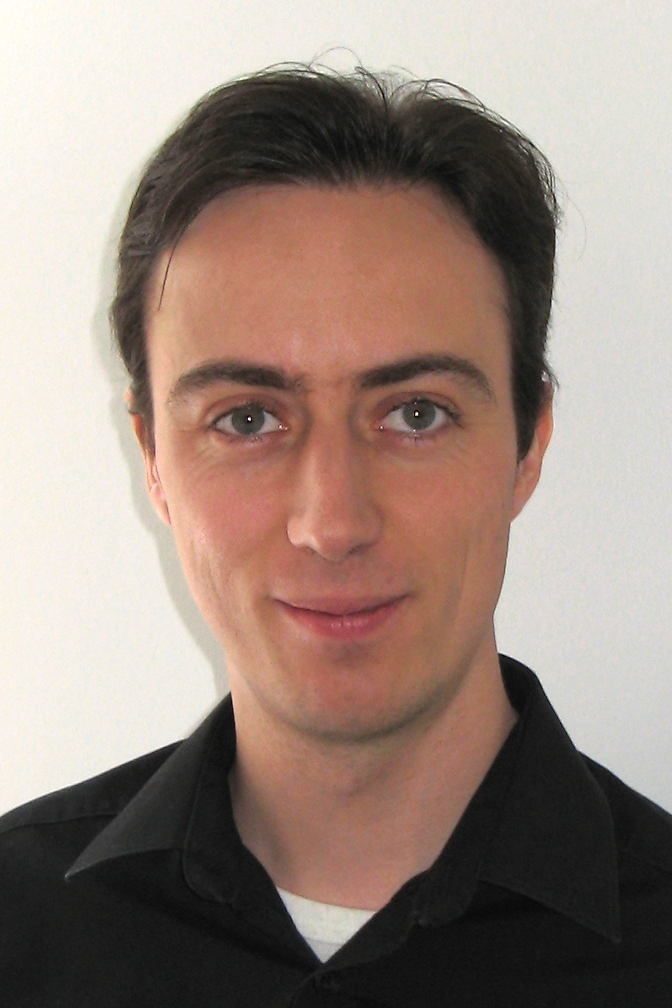
Luigi Glielmo is a Professor of Automatic Control at the University of Sannio in Benevento, Italy. He holds a Master's and PhD in Electronic Engineering and Automatic Control from the University of Naples Federico II. Previously, he taught at the University of Palermo before returning to Naples. His academic leadership roles include Head of the Department of Engineering at University of Sannio (2001–2007), Rector’s Delegate for Technology Transfer (2009–2019), and Coordinator of PhD programs in Information Engineering and Information Technologies for Engineering. Research interests focus on automatic control engineering, including model predictive control, renewable energy systems, smart grids, robotics, biomedical applications (e.g., deep brain stimulation modeling), satellite autonomy, and Boolean control networks. He founded the GRACE research group and has authored over 190 papers, two books, and holds two patents. He is a Senior Member of IEEE, serves on the editorial board of IEEE Control Systems Letters, and chairs the IEEE Control Systems Society Technical Committee on Automotive Controls. Leadership roles include General Co-Chair of the 2019 European Control Conference and ordinary member of IFAC’s Conference Board. His work bridges theoretical advancements with practical applications in energy systems, robotics, and industrial automation.
Ruth Misener is a Professor in the Department of Computing at Imperial College London, where she leads the Computational Optimization Group and holds the BASF/RAEng Research Chair in Data-Driven Optimization (2022–2027). She is affiliated with the Faculty of Engineering and contributes to interdisciplinary research institutes including the Data Science Institute, the Institute for Molecular Science and Engineering, and the Sargent Centre for Process Systems Engineering. Her research lies at the intersection of numerical optimization, operations research, and machine learning, with applications in chemical engineering, bioprocess optimization, energy systems, and industrial scheduling. She develops global optimization algorithms for mixed-integer nonlinear programs (MINLP), focusing on real-world challenges such as heat recovery network design, petrochemical process optimization, and robust bioreactor operation. A key innovation is her work on optimizing over machine learning surrogates, including tree ensembles and neural networks, enabling data-driven decision-making under uncertainty. Her recent publications demonstrate a strong trend toward integrating Bayesian optimization with active learning, explainable AI, and industrial applications, particularly in collaboration with BASF, Royal Mail, and Eli Lilly. She develops and maintains open-source optimization tools such as ROmodel, OMLT, and ENTMOOT, which are publicly available on GitHub. STEM for Britain acceptance Runner-Up Presentation Award at PSE@ResearchDayUK Best Quality Poster to Simon Olofsson 1st Poster Prize at UK/Ireland Annual Meeting of the Society for Industrial & Applied Mathematics (2018) 2nd Poster Prize at Centre for Process Systems Engineering Industrial Consortium Meeting (2017) 1st Poster Prize at 2nd PSE@ResearchDayUK (2017) 2nd Presentation Prize at Department of Computing Research Associate Symposium (2017) Runner-Up for May Hicks Award (via student Natasha Page) Ruth supervises a dynamic research team and has examined and mentored numerous PhD students, including Jean Kossaifi, Robert Walecki, Alexander Thebelt, and Toby Boyne. She leads major research grants, including the BASF/RAEng Research Chair and the IConIC Prosperity Partnership, and collaborates with industry partners to advance continuous manufacturing and data-driven process optimization. Her team actively disseminates work through open-access publications, video presentations, and social media.
Dr. Evrim Dalkiran is an Associate Professor in the Department of Industrial and Systems Engineering at Wayne State University's College of Engineering. She holds a Ph.D. in Industrial and Systems Engineering from Virginia Tech (2011), and B.S./M.S. from Bogazici University (2003, 2006). Her work focuses on global optimization and decision analysis with applications in healthcare operations and supply chain management. B.S., Industrial Engineering, Bogazici University, Turkey M.S., Industrial Engineering, Bogazici University, Turkey Ph.D., Industrial and Systems Engineering, Virginia Tech Her research spans Global Optimization , Reformulation-Linearization Technique , Mixed-Integer Programming , and Multi-Objective Optimization , with application domains in Healthcare Operations , Emergency Patient Flow , Supply Chain Management , and Diabetes Risk Modeling . Current research includes real-time coordination tools for emergency departments and inverse optimization models. Her publications demonstrate expertise in polynomial programming , RLT implementations , and healthcare logistics , with recent work on automotive sustainability and smart grid allocation . Articles span journals like European Journal of Operational Research and Operations Research . Best Paper Award, Journal of Global Optimization, 2012 Outstanding Faculty Award, WSU, 2016 Pritsker Dissertation Award Finalist, 2012 IIE Student Paper Competition Advisor, multiple awards As faculty advisor, she mentors students in projects related to emergency department optimization and supply chain modeling . Her grant history includes multiple Veterans Administration projects on patient flow and Goodyear-funded supply chain optimization. She teaches advanced optimization courses and maintains professional affiliations with INFORMS and Mathematical Optimization Society.
Akshay Gupte is a Professor in the School of Mathematics at the University of Edinburgh, specializing in Optimization and Operational Research. His research focuses on mathematical and algorithmic aspects of discrete and non-convex optimization, with applications in engineering, finance, and decision-making systems. He holds a PhD in Operational Research from Georgia Tech and teaches advanced courses such as Optimization Methods in Finance for MSc students. Education: BEng in Industrial Engineering from the University of Bombay MSc in Operational Research from the University of Arizona PhD in Operational Research from Georgia Tech Research Interests: Optimization problems involving discrete choices and non-convexity, with a focus on algorithm design and computational strategies. His work bridges applied mathematics, computer science, and engineering, addressing challenges in logistics, finance, and large-scale decision systems. Articles Trends: Recent publications emphasize algorithmic advancements in non-convex optimization (e.g., spatial branch-and-bound, semidefinite programming), multi-objective decision-making (e.g., biobjective programming), and stochastic frameworks for real-world problems like facility location and home service scheduling. Awards & Grants: No specific awards listed, but his research has been supported by collaborative grants in mixed-integer programming and optimization algorithms. He advises students through his teaching and research collaborations within the Optimization Group at the University of Edinburgh.
Ricardo G. Sanfelice is Professor and Chair of the Department of Electrical and Computer Engineering at the University of California, Santa Cruz (UCSC), within the Baskin School of Engineering. He is also Director of the Cyber-Physical Systems Research Center and the CITRIS Aviation Initiative. Education: Ph.D., Electrical and Computer Engineering, University of California, Santa Barbara, 2007 M.S., Electrical and Computer Engineering, University of California, Santa Barbara, 2004 B.S., Electronic Engineering, Universidad Nacional de Mar del Plata, Argentina, 2001 His research focuses on modeling, stability, robust control, and observer design for nonlinear and hybrid systems, with applications in robotics, aerospace, power systems, and biological systems. He leads the Hybrid Systems Lab at UCSC and has contributed significantly to the theoretical foundations and practical implementations of hybrid feedback control and cyber-physical systems. The most recent publications highlight a strong trend toward computation-aware control, hybrid model predictive control, and set-valued methods for safety-critical systems. His work bridges theoretical rigor with real-world applications, particularly in autonomous vehicles and networked control systems. Scientific Awards and Honors: Fellow of IEEE ACM Test-of-Time Award (HSCC Conference) SIAM Control and Systems Theory Prize NSF CAREER Award Air Force Young Investigator Award (YIP) IEEE Control Systems Magazine Outstanding Paper Award Educator of the Year for Higher Education Multiple plenary and semiplenary speaking invitations Blavatnik National Award Campus Nominee ASEE Air Force Summer Faculty Fellow Senior Member of IEEE Prof. Sanfelice has advised several graduate students, including Jun Chai and Dawn Hustigs-Schultz, and has been involved in significant research grants and initiatives such as the AFOSR Center of Excellence and CITRIS Aviation Prize. He is Associate Editor for Automatica and has led the IEEE Technical Committee on Hybrid Systems. He leads the Hybrid Systems Lab at UCSC, which focuses on theoretical and applied aspects of hybrid dynamical systems, including simulation tools like SHARC (Simulator for Hardware Architecture and Real-time Control).
Ivana Ljubic is a Full Professor in Operations Research at ESSEC Business School, specializing in combinatorial optimization, bilevel optimization, and network design with applications in telecommunications, logistics, and bioinformatics. She holds a PhD in Computer Science from TU Wien (2004) and a Habilitation from the University of Vienna (2013). Editorial roles: Associate Editor for Operations Research , Transportation Science , and Networks Professional leadership: Chair of INFORMS Telecommunication & Network Analytics Section Her research focuses on mixed-integer programming, metaheuristics, and exact algorithms for problems like Steiner trees, regenerator location, and capacitated vertex separators. Recent work includes applications in community energy storage, social media influence maximization, and sustainable last-mile delivery. She has received multiple awards, including the Glover-Klingman Prize (2021) and Marguerite Frank Award (2022). Her publications span leading journals like Management Science , Operations Research , and Mathematical Programming , with over 70 articles to date.
Tapio Westerlund is a Professor in Mathematics at Åbo Akademi University's Faculty of Science and Engineering. His research focuses on mixed-integer nonlinear programming (MINLP), convex optimization, and nonsmooth optimization techniques, with applications in chemical process engineering and environmental science. Key Research Areas: MINLP, global optimization, supporting hyperplane methods, and limestone dissolution modeling. Notable Contributions: Development of the Supporting Hyperplane Optimization Toolkit and reformulation frameworks for nonconvex MINLP problems. Collaborations: Active in interdisciplinary research networks with external collaborations across countries. His recent publications emphasize convex MINLP algorithms, hyperplane techniques, and applications to wet flue gas desulfurization. While no specific awards or students are listed in the provided data, his citations and Mendeley readership indicate significant academic impact.
Frank Pettersson is a Senior Lecturer at the Faculty of Natural Sciences and Engineering, Department of Process and Systems Engineering, Åbo Akademi University. His research aligns with UN Sustainable Development Goals (SDGs), focusing on sustainable energy systems and industrial process optimization through mathematical modeling. Expertise Areas: Mathematical Optimization, Hydrogen-Based Steelmaking, Biogas Digestate Recycling, Energy Storage Systems, Gas Distribution Networks, Blast Furnace Efficiency His recent work analyzes hydrogen transition in steel plants, water scarcity in power sectors, and nutrient recycling in biogas systems. Key methodologies include Mixed-Integer Linear Programming (MILP) and systems engineering approaches. Academic supervision spans Energy Technology diploma theses (2013–2017) and ongoing Master’s student mentorship (2025). While no specific scientific awards are listed, his publications demonstrate impact in sustainable industrial solutions and energy systems.
Andreas Lundell is an Associate Professor at the Åbo Akademi University within the Faculty of Science and Engineering, Department of Information Technology. His work focuses on mathematical optimization, particularly in convex MINLP, signomial programming, and sustainable AI. He leads projects like Data Analytics for Zero Emission Marine and contributes to the Wasa Zero Emission Data Centre initiative. Research spans global optimization algorithms and energy-efficient computing Active in EU-funded and national projects addressing climate action Recipient of the COIN-OR Cup 2018 His research drives sustainable industrial transitions through data analytics and optimization models, aligning with UN SDGs for climate action and sustainable cities.
Miju Ahn is an Assistant Professor in the Department of Operations Research & Engineering Management at the Lyle School of Engineering, Southern Methodist University. She holds a Ph.D. in Industrial and Systems Engineering from the University of Southern California (2018) and a B.A. in Applied Mathematics from UC Berkeley (2008). Her research focuses on mathematical optimization methods with applications in statistical learning, power systems, finance, and healthcare. Education: Ph.D., Industrial and Systems Engineering, University of Southern California (2018) B.A., Applied Mathematics, UC Berkeley (2008) Research Interests: Designing computational algorithms for large-scale optimization problems Nonconvex programming and its applications Mathematical modeling for decision-making systems Scientific Awards: NSF CRII grant recipient for research in optimization and decision-making
Julio González-Díaz is a university professor at the Department of Statistics, Mathematical Analysis, and Optimization at the Faculty of Mathematics, University of Santiago de Compostela. His research focuses on game theory, operations research, and decision models, with applications in economics and mathematics. He leads the research group MODESTYA (Optimization, Decision, Statistical Models and Applications) and is affiliated with the Galician Mathematical Research and Technology Center (CITMAga). Education: PhD from the University of Santiago de Compostela (2005), thesis titled Essays on Competition and Cooperation in Game Theoretical Models , supervised by Dr. María Estela Sánchez Rodríguez and Dr. Ignacio García Jurado. Research Interests: Game theory (cooperative and non-cooperative), operations research, optimization, and statistical models. His work includes studies on core stability, airport cost allocation, paired comparisons analysis, and algorithmic game theory. Publications: Over 30 peer-reviewed articles and books, including influential works like An Introductory Course on Mathematical Game Theory (2010) and widely cited contributions on core-center concepts and ranking methods. Recent work involves polynomial optimization algorithms (RAPOSa solver), gas transportation networks, and bilevel portfolio design. Collaborations: Extensive co-authorship network, including researchers like Fiestras-Janeiro, Sánchez-Rodríguez, and international collaborations in optimization and game theory. Contact: julio.gonzalez@usc.es
Fabian Bastin is a Full Professor in the Department of Computer Science and Operational Research (IRO) at Université de Montréal. He holds a prestigious academic position within the university's research and teaching community. His work focuses on optimization, stochastic programming, simulation, and their applications in transportation, energy systems, and finance. Teaching Responsibilities: Bastin teaches advanced courses such as IFT-2505 (Linear Optimization), IFT-3515 (Nonlinear Programming), and IFT-6512 (Stochastic Programming). He also contributes to graduate-level courses on dynamic programming and simulation techniques. His courses emphasize theoretical foundations alongside practical applications, often using tools like MATLAB and the ORATIO library he helped develop. Research Interests: Bastin's research spans stochastic optimization, simulation methodologies, and decision-making under uncertainty. Key areas include air traffic management optimization, hydroelectric reservoir scheduling, and synthetic population generation using copula-based models. He has pioneered work on scenario tree generation for multistage stochastic programming and developed algorithms for efficient mixed logit model estimation. Research Contributions: His publications highlight advancements in stochastic models for transportation systems, energy planning, and financial engineering. Notable works include contributions to the progressive hedging algorithm, recursive logit models for route choice analysis, and Monte Carlo methods for option pricing. Bastin is also actively involved in software development, notably the ORATIO simulation library used in discrete-event modeling. Professional Engagements: He has co-organized conferences on optimization and simulation, and his work has been supported by grants from NSERC and other funding bodies. Despite no explicit mention of awards in the text, his extensive publication record and methodological innovations suggest significant recognition in his field.
Prof. Moritz Diehl is a Professor at the University of Freiburg, leading the Systems Control and Optimization Laboratory within the Department of Microsystems Engineering (IMTEK) and affiliated with the Department of Mathematics. Born in Hamburg, Germany, he holds a Ph.D. from Heidelberg University (2001) and previously served as a professor at KU Leuven (2006–2013), where he directed the Optimization in Engineering Center (OPTEC). His research focuses on optimization and control, emphasizing numerical methods for engineering applications, particularly embedded systems and renewable energy. Key areas include model predictive control (MPC), nonlinear optimization, and real-time control systems. Education: He studied physics and mathematics at Heidelberg University and the University of Cambridge (1993–1999), culminating in a Ph.D. in Scientific Computing. His academic journey includes roles at KU Leuven and Freiburg, where he has developed influential tools like the AWEbox framework for airborne wind energy systems and the acados optimization library. Research Interests: His work spans numerical optimal control, MPC algorithms, and their applications in robotics, energy systems, and automotive engineering. Recent advancements include collision-free motion planning, real-time NMPC with convex-concave constraints, and stochastic control methods for mobile robots. He also explores optimization for hybrid systems, leveraging finite elements and switch detection for nonsmooth dynamics. Publications: His 2023–2025 work highlights contributions to MPC stability, energy-efficient control systems, and software tools like LCQPow for quadratic programming. His research bridges theory and practice, addressing challenges in industrial processes, renewable energy integration, and autonomous systems. Labs & Teams: He leads the Systems Control and Optimization Lab, fostering interdisciplinary projects in optimal control, robotics, and sustainable energy. His group collaborates on tools like acados, emphasizing real-time feasibility and scalability for complex systems.
Nevin Mutlu is an Assistant Professor in the Operations Planning, Accounting & Control (OPAC) Group within the School of Industrial Engineering at Eindhoven University of Technology (TU/e). She is affiliated with multiple research centers including the Data Science Center Eindhoven (DSC/e), Efficient Consumer Response (ECR) Community, Retail Operations Lab, and Freight Transport & Logistics Research Group. Her industry partnerships include Nike and the ECR Community, demonstrating strong connections between her academic research and practical retail applications. Dr. Mutlu received her PhD and MSc degrees in Industrial and Systems Engineering from Virginia Tech, USA in 2016 and 2013, respectively. She also holds a BSc degree in Industrial Engineering and a BA degree in Economics from University at Buffalo, State University of New York, USA. Prior to joining TU/e in 2016, she served as a graduate teaching assistant and instructor at Virginia Tech, teaching courses in operations research and working with the Office of Emergency Management on real-world applications. Her research bridges optimization, economics, and marketing to address industry-relevant problems in retail operations and logistics. She specializes in modeling how operational decisions impact consumer behavior, with particular focus on retail pricing, experiential retail, e-commerce adoption, and transportation systems. Her interdisciplinary approach combines theoretical optimization techniques with practical business considerations, resulting in impactful research that addresses current challenges in retail and supply chain management. Analysis of her publications reveals a strong trajectory in operations research with increasing focus on consumer behavior dynamics. Her work spans theoretical optimization methods (resource allocation, production-routing problems) and applied retail contexts (experiential retail, dual-channel strategies). Recent publications show growing interest in sustainability aspects of retail operations and transportation, reflecting contemporary industry challenges. Her research consistently addresses the complex interplay between operational decisions and consumer responses, providing valuable insights for both academia and industry. EU Horizon 2020 Marie Curie Individual Fellowship (2018-2020) Dr. Mutlu actively contributes to research funding through projects like SYNERCIZE: SYnchromodal Transport NEtworks for a Construction Industry towards Zero Emissions (2025-2027), where she serves as a project member. Her teaching portfolio includes Supply Chain Management, Revenue Management and Pricing Analytics, and Project and Process Management courses. She has also served on committees such as the AI Planner of the Future program, demonstrating engagement with emerging technologies in her field. Her research is supported by multiple affiliations including the Data Science Center Eindhoven, ECR Community, and Retail Operations Lab, providing collaborative environments for interdisciplinary work. Her industry partnerships, particularly with Nike, facilitate the translation of academic research into practical retail solutions. The SYNERCIZE project demonstrates her expanding research scope into sustainable transportation networks for construction industries.
Cédric Elloumi is a Professor at the CEDRIC Laboratory within Conservatoire National des Arts et Métiers (CNAM), specializing in combinatorial optimization and mathematical programming. With a continuous publication record since 1992, he has established himself as a leading researcher in quadratic programming, binary optimization, and facility location problems. His research interests focus on developing exact and approximate methods for discrete optimization problems, particularly through convex reformulation techniques. Elloumi has made significant contributions to the p-center and p-median problems, quadratic assignment problems, and more recently, quantum-inspired optimization methods. His work bridges theoretical advancements with practical applications in network design, energy systems, and telecommunications. Analysis of his recent publications (2022-2025) reveals a continued focus on facility location problems, with increasing attention to robust optimization under uncertainty and emerging applications in quantum computing. His research demonstrates consistent methodological innovation, particularly in reformulation techniques that transform difficult non-convex problems into tractable forms. Throughout his career, Elloumi has maintained extensive collaborations with researchers including Billionnet, Lambert, Alès, and Plateau, resulting in numerous publications in top-tier optimization journals such as Journal of Global Optimization, Computers and Operations Research, and Mathematical Programming.


.jpg?h=700&iar=0&w=700&hash=E918C5B36FFC75663AA5EA53612576D2)