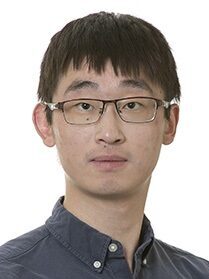
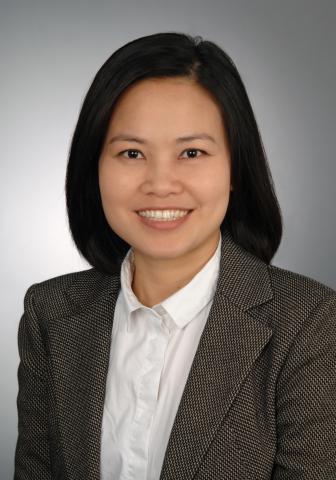
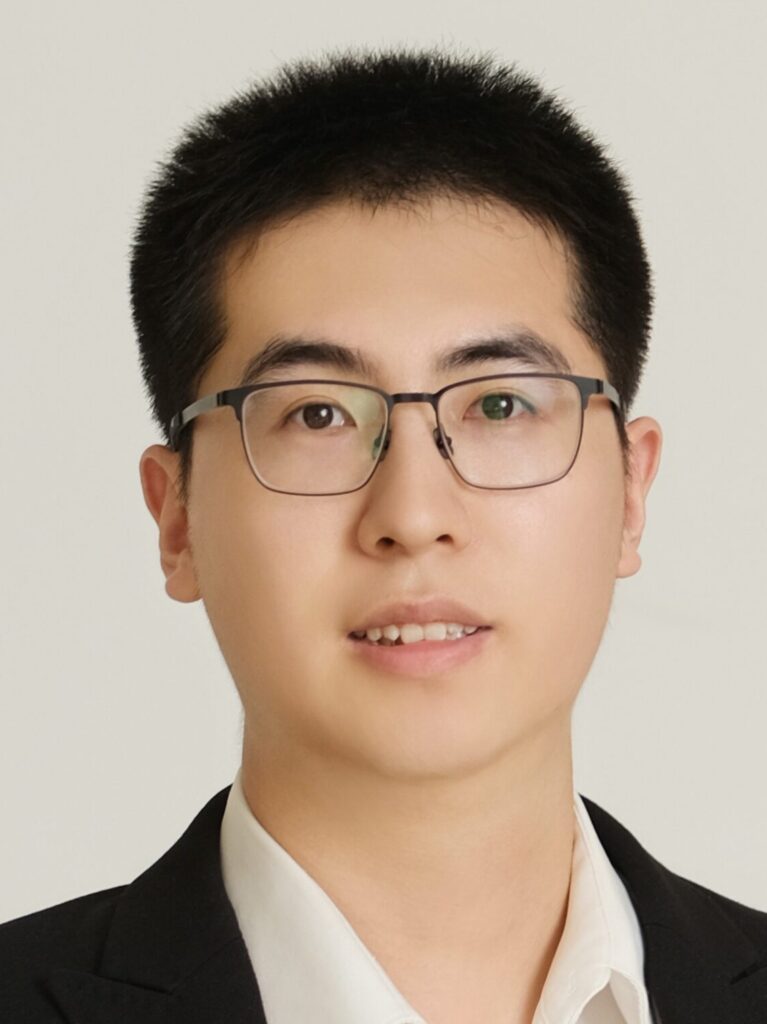
Milena Petkovic is a Researcher at the Applied Algorithmic Intelligence Methods department of the Zuse Institute Berlin (ZIB) . Her work focuses on energy network optimization, mathematical programming, and spatio-temporal forecasting in complex systems. Education: Not explicitly mentioned Current affiliation: ZIB, Germany Her research interests include: Mathematical modeling of energy networks Hybrid forecasting approaches combining machine learning and optimization Real-world applications in natural gas transmission systems Analyzing regime changes in gas nomination time series Recent publications highlight trends in: High-dimensional time series prediction for energy systems Constraint-based optimization under supply-demand balance Deep learning applications for gas flow dynamics Hybrid methods integrating FAR, LSTM, and mathematical programming
Wang Guanyi is an Assistant Professor in the Department of Industrial Systems Engineering and Management at the National University of Singapore (NUS). He is affiliated with the Institute of Operations Research and Analytics (IORA), part of NUS’s Smart Nation Research Cluster. His research focuses on Mixed Integer Programming, Nonlinear Optimization, and Statistical Learning with applications in Machine Learning. Guanyi holds a Ph.D. from Georgia Institute of Technology (2016–2022), advised by Prof. Santanu S. Dey, an M.S. from Johns Hopkins University (2014–2016), advised by Prof. Amitabh Basu, and a B.S. from University of Science and Technology, Beijing (2010–2014). His work bridges optimization theory and machine learning, with notable contributions to sparse principal component analysis (PCA), algorithm design for high-dimensional problems, and approximation algorithms for mixed-integer nonlinear optimization. Recent research trends include adversarial robustness in PCA, fair decision-making frameworks, and efficient stochastic optimization methods. Guanyi’s publications appear in top-tier journals like Mathematical Programming, Operations Research, and IEEE Transactions on Signal Processing. He has developed novel algorithms for sparse regression, group sparsity regularization, and neural network pruning. His research emphasizes both theoretical guarantees and practical computational efficiency.
Dr. Thi Thai Le serves as Head of the Predictive Methods Research Group within the Applied Algorithmic Intelligence Methods Department at Zuse Institute Berlin (ZIB), a leading research institute affiliated with Freie Universität Berlin. Her work bridges mathematical theory with practical applications in energy systems and fluid dynamics. Dr. Le's research focuses on stability analysis of fluid interfaces, particularly examining Kelvin-Helmholtz instability in various contexts including shallow water flows, compressible media, and porous media. Her work investigates how factors like depth discontinuity, viscosity, porosity, and inertia forces affect interface stability, with direct applications to energy transition challenges. She has developed mathematical models that consider real-world constraints such as solid walls along flow directions and thermophysical properties of CO 2 for carbon transport networks. Analysis of her publication trends reveals a clear evolution from fundamental fluid dynamics research toward increasingly applied work supporting sustainable energy transition. Her recent publications demonstrate a strategic shift toward solving practical engineering challenges in carbon capture and storage systems, particularly focusing on CO 2 transport networks. The interdisciplinary nature of her work connects pure fluid mechanics with energy engineering, computational mathematics, and environmental science. Dr. Le maintains a strong collaborative network, particularly with Thorsten Koch at ZIB, as well as international researchers including Yasuhide Fukumoto in Japan. Her work on CO 2 transport networks represents a significant contribution to decarbonization efforts, providing optimization frameworks for pipeline infrastructure that could accelerate the transition to carbon-neutral industrial processes. Her research group develops mathematical algorithms that address the complex nonlinear behavior of CO 2 under varying temperature and pressure conditions, which is critical for designing safe and efficient carbon transport systems.
Shaoning Han is a Presidential Young Professor (Assistant Professor) in the Department of Mathematics and the Institute of Operations Research and Analytics (IORA) at the National University of Singapore (NUS). He previously held a postdoctoral position at the University of Southern California (USC), working under Prof. Jong-Shi Pang. His research focuses on mathematical optimization, including mixed-integer nonlinear programming, nonsmooth optimization, and their applications in operations research and data science. Han earned his Ph.D. in Industrial Engineering from USC under Prof. Andrés Gómez and a B.S. in Mathematics from the University of Science and Technology of China (USTC). His work emphasizes advancing optimization methodologies, particularly for problems involving complementarity constraints, indicator variables, and sparsity. Recent contributions include progressive MIP methods for indefinite QPs, real-time solutions for banded matrix problems, and convexification techniques for nonconvex optimization. Han is actively recruiting PhD students interested in mathematical optimization. Research Highlights: His articles span theoretical advances (e.g., epi-stationarity analysis, parametric variational inequalities) and applied frameworks (e.g., robust SVMs, binarized neural networks). Key themes include polynomial-time solvability of MRFs, convex relaxations for low-rank functions, and sparse signal estimation. Awards: Third Place, INFORMS JFIG Paper Competition (2023) Journal of Global Optimization Best Paper Honorable Mention (2023) Teaching: Courses include MA5243 (Advanced Mathematical Programming) and MA3252 (Linear and Network Optimization). Labs/Teams: Active member of IORA, NUS’s Smart Nation Research Cluster.