Amritanshu Pandey is an Assistant Professor in Electrical Engineering at the University of Vermont, with a part-time adjunct appointment in Electrical and Computer Engineering at Carnegie Mellon University. His research focuses on enhancing the efficiency, reliability, and security of electric grids through methods in circuit theory, optimization, and machine learning. He pioneered the SUGAR simulation engine for power systems and collaborates globally on grid challenges. Research Interests: Pandey's work spans renewable integration, grid cybersecurity, digital twins, and decarbonization. Key projects include developing algorithms for large-scale grid optimization, anomaly detection, electric vehicle infrastructure modeling, and cyber-resilient energy systems. His research addresses real-world challenges in rapidly evolving grids across Asia and Africa. Awards: Best Paper Award, IEEE PES General Meeting (2017, 2021) Best-of-the-Best Paper Award, IEEE PES General Meeting (2021) Best Student Paper Runner-up, ECML-PKDD (2018) Students & Labs: He advises 7 PhD students and has graduated 11 advisees (PhD/MS/BS). His lab focuses on power systems innovation, including the SUGAR simulation framework and projects on grid cybersecurity and sustainable electrification.
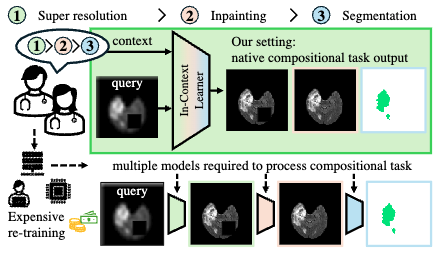
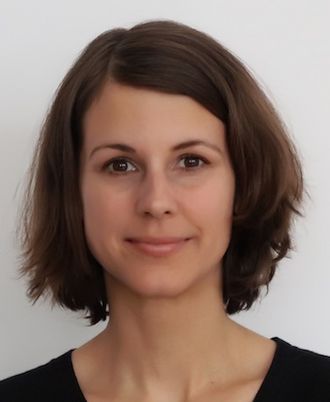
Prof. Dr. Erik Rodner is a faculty member at the University of Applied Sciences Berlin (HTW Berlin), where he serves as a Professor for Machine Learning and Data Science. He also contributes to the School of Engineering Sciences - Technology and Life. His research spans computer vision, machine learning, and biomedical applications, with a focus on learning with limited data, robust visual recognition models, and medical image analysis. He has developed innovative methods for medical diagnostics, industrial classification, and anomaly detection. Recent publications (2025-2016) highlight his expertise in visual in-context learning, semi-weakly segmentation, and active learning frameworks. He has collaborated with institutions such as ZEISS Group, Friedrich Schiller University Jena, and UC Berkeley. Scientific Awards: Award for Excellent Teaching (2023)
Ran Dai is a Professor in the Department of Aeronautics and Astronautics at Purdue University's College of Engineering. His research focuses on optimal control theory, trajectory optimization, and robotics applications, with an emphasis on aerospace systems and energy-efficient solutions. He leads the Autonomous Optimization Lab (AOL) and has contributed extensively to advancements in learning-based control, mixed-integer programming, and deployable space systems. His work spans applications such as spacecraft guidance, unmanned vehicle path planning, and energy management for solar-powered systems. Notable contributions include algorithms for fuel-optimal powered descent, real-time trajectory optimization, and origami-inspired deployable mechanisms. He holds a Ph.D. in Aerospace Engineering and has published over 100 peer-reviewed articles. Research interests include: Optimal control and trajectory optimization Reinforcement learning for decision-making Autonomous systems and robotics Energy-efficient aerospace engineering Recent work emphasizes meta-reinforcement learning frameworks and adaptive optimization engines for complex systems.
Hande Benson is a Professor in the Department of Decision Sciences and MIS at LeBow College of Business, Drexel University. She serves as the academic director of the Business and Engineering program and teaches in undergraduate and graduate programs in Business Analytics and Operations and Supply Chain Management. Research Interests: Dr. Benson specializes in optimization, particularly addressing modeling and computational challenges in large-scale nonlinear and mixed-integer optimization. Her work includes interior-point methods, regularization techniques, and the development of optimization software such as LOQO and MILANO. Recent Research Trends: Her recent publications span decision aggregation, multi-vehicle motion planning under communication constraints, and advanced interior-point algorithms. These works reflect a strong focus on algorithmic innovation, real-world applications in robotics and supply chains, and theoretical advancements in nonconvex optimization. Scientific Awards: Outstanding STAR Mentor, Drexel University (2017-2018) Distinguished Fellow, Center for Research Excellence, LeBow College of Business (2009-2012) Excellence in Research Award, LeBow College of Business (2005) Advising and Grants: While direct student advising is not explicitly listed, Dr. Benson has led significant research projects, including Multivehicle Path Coordination under Communication Constraints (Drexel Interdisciplinary Research Grant, $15,000) and Efficient Interior-Point Methods for Mixed-Integer Nonlinear and Conic Programming (NSF, $59,960). She has also contributed to executive education and consulting in financial, industrial, and governmental sectors. Editorial and Professional Service: Dr. Benson is actively involved in the academic community as Associate Editor for several leading journals, including Computational Optimization and Applications , Journal of Optimization Theory and Applications , Mathematical Programming Computation , and Optimization and Engineering .
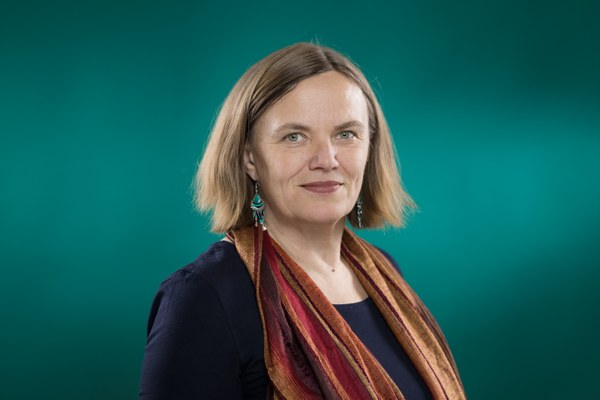
Sophie N. Parragh is Professor and Head of the Institute of Production and Logistics Management at Johannes Kepler University Linz, where she also serves as program director of the master's degree program in Economic and Business Analytics. She received her PhD from the University of Vienna in 2009 and completed her habilitation in 2016, following postdoctoral research at the IBM Center for Advanced Studies in Porto and a visiting professorship at the Vienna University of Economics and Business. Her research focuses on developing exact and heuristic optimization algorithms for complex logistics and transportation problems. Key areas include vehicle routing, green logistics, disaster relief distribution planning, scheduling, and multi-objective optimization. She has particular expertise in branch-and-bound, branch-and-price, column generation, and metaheuristics approaches to solve challenging combinatorial optimization problems. Dr. Parragh's publication record shows a consistent trend toward increasingly complex multi-objective problems, with recent work focusing on electric vehicle routing, multi-echelon production planning under uncertainty, and bi-objective facility location problems with applications in disaster relief. Her research bridges theoretical optimization methods with practical applications in logistics and transportation. Scientific Awards: ÖGOR (Austrian Society for Operations Research) dissertation prize doc.award from the University of Vienna Hertha Firnberg Postdoc fellowship from the Austrian Science Fund (FWF) Dr. Parragh has served as department editor for OR Spectrum and as associate editor for Transportation Science, Transportation Research Part B: Methodological, INFORMS Journal on Computing, and Networks. She has led and participated in numerous third-party funded research projects in operations research, including work in healthcare logistics, field staff routing, production planning, and electric vehicle routing. In 2021-2022, she co-organized the monthly VeRoLog webinar series, demonstrating her active engagement with the international operations research community. She maintains strong research collaborations across Europe, evidenced by her co-authored publications with researchers from institutions in Austria, France, Portugal, Denmark, and beyond. Her work consistently addresses both theoretical challenges in optimization and practical applications in industry and public service contexts.
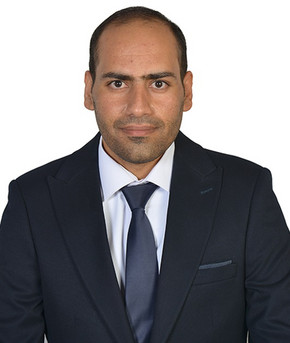
Dr. Adel Aazami is an Assistant Professor at the Institute of Transport Economics and Logistics at Vienna University of Economics and Business (WU Vienna) since 2023. His academic journey began with a B.Sc. in Industrial Engineering from University of Tehran (2010-2014), followed by an M.Sc. (2014-2016) and Ph.D. (2016-2021) from Iran University of Science and Technology (IUST), Tehran. Prior to his current position, he worked as a Postdoctoral Researcher at Sharif University of Technology (2021-2022) and was a Visiting Researcher at the University of Toronto (2020). His educational background includes: Ph.D. in Industrial Engineering (2016-2021) - Iran University of Science and Technology (IUST), Tehran, Iran M.Sc. in Industrial Engineering (2014-2016) - Iran University of Science and Technology (IUST), Tehran, Iran B.Sc. in Industrial Engineering (2010-2014) - University of Tehran, Tehran, Iran Dr. Aazami's research spans multiple interconnected domains within operations research and supply chain management. His primary focus areas include Operations Research and Optimization, Supply Chain and Logistics, Production and Distribution/Transportation Planning, Competition and Game Theory, Stochastic Programming, and Decomposition Algorithms. His work demonstrates a strong emphasis on developing mathematical models and optimization algorithms for complex supply chain problems, particularly those involving perishable goods, competitive environments, and sustainability considerations. He has made significant contributions to integrating environmental factors into traditional logistics problems and developing robust optimization approaches for supply chain networks. Analysis of Dr. Aazami's publication record reveals a consistent trajectory of increasingly sophisticated research in supply chain optimization. His work shows a clear progression from foundational mathematical optimization techniques to increasingly complex integrated problems involving multiple stakeholders, uncertainty, and environmental considerations. A notable trend is his focus on perishable products within supply chains, developing models that account for limited product lifetimes while optimizing across multiple echelons of the supply chain. More recently, his research has expanded to incorporate green logistics considerations, developing algorithms that balance economic and environmental objectives in transportation and distribution problems. His notable scientific achievements include: Winner of the 'Best Student' award among nationwide students evaluated by the Iranian Ministry of Science (2020) Winner of the Iranian Nobel Prize (known as the Alborz National Foundation Prize) (2019) Winner of the Best Student Award at IUST (2018) Winner of the Top Researcher Award at IUST (2018) Annual Awards of the National Elites Foundation Iran (2015-2020) Dr. Aazami has extensive teaching experience across multiple Iranian universities including Tehran University, Amirkabir Technical University, Isfahan University, Yazd University, Zanjan University, Damghan University, Abrar University and Iran Technical University. His peer review activities include reviewing for prestigious journals such as Soft Computing, Expert Systems with Applications, and Annals of Operations Research. While specific grant information isn't detailed in the provided text, his research output suggests active engagement with complex optimization problems relevant to transportation and logistics industries. At WU Vienna, Dr. Aazami is part of the research team at the Institute of Transport Economics and Logistics, working alongside other faculty members including Prof. Kummer and Prof. Wakolbinger. His research integrates theoretical optimization methods with practical applications in transportation and logistics, contributing to the institute's focus on sustainable and efficient supply chain solutions.
Martin Schmidt is a Full Professor (W3) for Nonlinear Optimization at the Department of Mathematics, Trier University, since 2019. He has held leadership roles in research training groups and international committees, focusing on mathematical modeling and optimization of energy systems, gas networks, and market equilibria. His work bridges mixed-integer nonlinear optimization , bilevel optimization , and robust methods with applications to real-world energy challenges. Education: PhD in Mathematics (2013), Diplom in Mathematics (2008), both from Leibniz University Hannover. Editorial Roles: Editorial Board member of Journal of Optimization Theory and Applications and Optimization Letters , Associate Editor for OR Spectrum and EURO Journal on Computational Optimization . His research integrates complex physical systems (e.g., gas transmission networks) with game-theoretic models to analyze energy markets. Recent publications emphasize robust optimization , decomposition techniques , and machine learning integration in bilevel frameworks. Awards highlight his contributions to gas market feasibility , linear bilevel optimization , and practical applications in energy systems. Collaborations span institutions like Universidad Zaragoza, Sapienza University, and Forschungszentrum Jülich.
Boshi Yang is an **Associate Professor** in the Department of Mathematical and Statistical Sciences at Clemson University. His research focuses on convexification, quadratic programming, mixed-integer programming, and conic programming applications. He holds a PhD from the University of Iowa (2015) and a BS from Zhejiang University (2010). Education: PhD, Applied Mathematical and Computational Sciences, University of Iowa, 2015 BS, Mathematics and Applied Mathematics, Zhejiang University, 2010 His research interests emphasize convexification techniques , quadratically constrained quadratic programming , and conic programming applications . Recent work explores data-driven optimization for energy systems and algorithmic improvements for combinatorial problems. His publications span journals like Mathematical Programming, Operations Research Letters, and IEEE Transactions on Power Systems. Key Awards: 2020 Faculty Teaching Award (Clemson School of Mathematical and Statistical Sciences) 2019 Outstanding Service to Graduate Students (Clemson School of Mathematical and Statistical Sciences) Teaching: Teaches courses including Linear Programming (MATH 4400/6400), Nonlinear Programming (MATH 8110), and Special Topics in Conic Programming (MATH 9880).
Andrea Walther is a Professor of Mathematical Optimization at the Humboldt University of Berlin, holding a position within the Faculty of Mathematics and Natural Sciences. She leads the Mathematical Optimization research group at the Institute of Mathematics, focusing on algorithmic differentiation, nonlinear optimization, and applied mathematics. Her academic journey includes a Diploma in Business Mathematics (1996, University of Bayreuth), a PhD (1999, TU Dresden), and habilitation (2008, TU Dresden). She has held roles such as Junior Professor at TU Dresden (2007–2008) and Professor at the University of Paderborn (2009–2019) before joining Humboldt in 2019 as a MATH+ Professor. Education : 1991–1996: Studies in Business Mathematics, University of Bayreuth 1996: Diploma in Business Mathematics, University of Bayreuth 1999: PhD in Mathematics, TU Dresden 2008: Habilitation, TU Dresden Her research interests center on optimization methods, particularly algorithmic differentiation (e.g., ADOL-C software), nonsmooth optimization, and applications in engineering and machine learning. She leads initiatives like the Cluster of Excellence MATH+ and contributes to projects such as the Transregio 154. Key Projects: Co-PI of DFG Project 'Mixed-integer non-smooth optimization for gas market problems' (2020–2022) Principal Investigator in MATH+ Projects (EF3-7, AA2-7) Co-developer of ADOL-C, a widely used tool for algorithmic differentiation Notable awards include being a SIAM Fellow. Her work bridges theoretical advancements and practical applications, with contributions to energy sector optimization, inverse problems, and computational frameworks for solving complex systems.
Timm Oertel is a Professor in the Department of Data Science at Friedrich Alexander University Erlangen-Nuremberg (FAU), holding the Chair of Analytics & Mixed-Integer Optimization. His office is located in Room 03.344 at Cauerstraße 11, Erlangen, and he can be contacted via email at timm.oertel@fau.de or phone at +49 9131 85-67313. His research focuses on mixed-integer optimization, combinatorial optimization, and discrete mathematics, with significant contributions to sparse solutions in lattices and semigroups, integer Carathéodory rank, knapsack polyhedra, and parametric integer optimization. His work bridges theoretical computer science, operations research, and discrete geometry, emphasizing structural properties of integer solutions and algorithmic efficiency. Professor Oertel's publication record (2013-2025) reveals consistent trends in theoretical integer programming, with recent work (2020-2025) concentrating on sparsity patterns, approximation in algebraic structures, and complexity bounds. He frequently collaborates with leading researchers including Iskander Aliev, Robert Weismantel, and Joseph Paat, publishing in top venues like Mathematical Programming and SIAM Journal on Optimization. His research demonstrates deep connections between combinatorial geometry and optimization theory.
Jannik Matuschke is an Associate Professor of Operations Management at the Department of Decision Sciences and Information Management, KU Leuven (Belgium). He holds affiliations with the KU Leuven Institute for Artificial Intelligence (Leuven.AI) and the KU Leuven Institute for Mobility (LIM). His research focuses on combinatorial optimization, algorithm design, game theory, robustness under uncertainty, and applications in logistics and production systems. Education: PhD in Mathematics (2013) from TU Berlin, advised by Martin Skutella and Britta Peis Postdoctoral positions at Universidad de Chile (2014) and TU München (2016–2018) DAAD P.R.I.M.E. fellowship at University of Rome 'Tor Vergata' (2015) Research Themes: Design of resilient infrastructures using multi-stage optimization Stochastic and robust project scheduling Applications in logistics network analytics and congestion modeling Recent Contributions: Recipient of the 2024 Meritorious Service Reward from Operations Research Journal Co-chair of WAOA 2025 and editorial roles at Omega, Operations Research Letters, and OR Spectrum Active in international workshops like FRICO 2025 and the Santiago Summer Workshop on Combinatorial Optimization Academic Leadership: Supervises 5 current PhD/postdoc researchers across logistics and optimization Coordinates the Master's Thesis program in Production and Logistics at KU Leuven Manages research projects on robust infrastructure design (2022–present) and stochastic scheduling (2020–present)
Carlos A. Ocampo Martínez is an Associate Professor in the Department of Automatic Control (ESAII) at the Universitat Politècnica de Catalunya (UPC), BarcelonaTech, Spain. He is affiliated with the Institut de Robòtica i Informàtica Industrial, CSIC-UPC, a joint research center between UPC and the Spanish National Research Council. He has been with UPC since 2011 and served as Deputy Director of IRI from 2014 to 2018. Education: PhD in Control Engineering, Universitat Politècnica de Catalunya, 2007 MSc in Industrial Automation, National University of Colombia, 2003 BSc in Electronics Engineering, National University of Colombia, 2001 His research is centered on model predictive control (MPC) , particularly constrained and distributed MPC, with applications in energy, water, and smart manufacturing. He investigates large-scale systems management, partitioning strategies, and non-centralized control architectures. His work integrates IoT frameworks for smart industrial systems. Key domains include renewable hydrogen production, fuel cell vehicles, microalgae bioreactors, and solar thermal plants. The recent publications reflect a strong trend in applying control theory to sustainable energy systems and environmental management. There is a clear focus on integrating game theory, population dynamics, and optimization into MPC frameworks for distributed and coalitional control. Applications span hydrogen infrastructure, solar energy, water irrigation, and transportation electrification, demonstrating interdisciplinary impact. Scientific Awards: Juan de la Cierva Research Fellow Dr. Ocampo-Martínez actively supervises PhD students and leads research projects such as MASHED , which focuses on digitalized energy systems with hybrid storage. He has advised students on topics including alkaline electrolyzers, hydrogen production control, and alcohol steam reformers. His grant involvement emphasizes renewable integration, smart grids, and sustainable transport. He collaborates with researchers across Europe and contributes to high-impact journals and IFAC conferences. He is a key member of the Automatic Control research group at ESAII and contributes to the strategic direction of the Institut de Robòtica i Informàtica Industrial. His team integrates control theory, optimization, and real-world industrial applications, particularly in energy and water systems.
Ted Ralphs is a Professor of Industrial and Systems Engineering at Lehigh University’s Rossin College of Engineering. He serves as co-founder and director of the Computational Optimization Research at Lehigh (COR@L) Laboratory, and chairs the INFORMS Computing Society. His research focuses on large-scale computation and optimization, bridging theoretical and practical applications through high-performance computing and mathematical techniques. Ralphs holds a Ph.D. in Operations Research from Cornell University and advanced degrees in Mathematics and Applied Mathematics from Carnegie Mellon University. His expertise spans Supply Chain Management, Grid Computing, Mathematical Optimization, Financial Engineering, and Algorithm Development. He teaches courses in computational methods, discrete optimization, financial optimization, and algorithms in systems engineering. Ralphs has received notable honors including the 2021 Rossin College Outstanding Doctoral Student Advising Award and election as an INFORMS Fellow in 2023. His research contributions include advances in bilevel optimization, decomposition methods, and open-source optimization software (e.g., COIN-OR’s Cbc solver). He has led collaborative projects such as a Naval grant-funded initiative with the University of Pittsburgh on bilevel optimization. Ralphs’ work emphasizes scalable algorithms and their real-world applicability in energy markets, logistics, and combinatorial problems.
Christopher Hojny is an Assistant Professor at the Department of Mathematics and Computer Science at Eindhoven University of Technology , specializing in combinatorial optimization. He contributes to the EAISI Foundational group and co-develops the academic solver SCIP . His research focuses on symmetry handling in mixed-integer programming , theoretical properties of integer programs, and algorithm development for combinatorial optimization. Recent work explores applications in graph neural network verification , clustering problems, and network coding through mixed-integer programming frameworks. Key publication trends show expertise in Symmetry detection and mitigation techniques Relaxation complexity theory Applications to machine learning robustness Decision diagram-based scheduling Scientific contributions include Proof systems for symmetry certification Topological bounds tightening in GNNs Stable set problem symmetry handling SCIP solver extensions He supervises PhD students Cédric Roy (NWO project on Local Symmetries) and Sten Wessel (co-supervised with Frits Spieksma), while Jasper van Doornmalen (2019-2023) investigated symmetry propagation algorithms.
Dr.-Ing. Christian Kunde is a PostDoc researcher at the Max Planck Institute for Dynamics of Complex Technical Systems in the Process Synthesis and Process Dynamics group since 2021. Previously, he served as a PostDoc at the Chair for Automation/Modeling at Otto-von-Guericke University (OVGU) from 2017-2021, and as a Research Assistant and PhD Student at the same institution from 2009-2017. His educational background includes a Diploma in Systems Engineering and Engineering Cybernetics from OVGU (2004-2009) and a PhD dissertation titled "Global optimization in conceptual process design" completed in 2017. His formal engineering doctorate (Dr.-Ing.) reflects his specialized expertise in process systems engineering. Kunde's research focuses on physics- and data-based hybrid modeling for process optimization and state estimation, with particular emphasis on global optimization techniques and surrogate modeling. His work bridges theoretical computational methods with practical chemical engineering applications, addressing challenges in distillation, crystallization, and fuel cell systems. He has developed innovative approaches combining first-principles models with machine learning for improved process design and control. His publication record demonstrates consistent contributions to chemical process optimization, with recent work expanding into machine learning applications for Power-to-X processes and fuel cell modeling. The research shows a clear trajectory from fundamental optimization methods toward increasingly complex hybrid modeling approaches that integrate physics-based and data-driven techniques. Kunde actively contributes to academic knowledge dissemination through teaching, having instructed courses including Distributed Parameter Systems, State Estimation, and Systems and Control. His teaching portfolio reflects his research expertise in process dynamics and control systems, providing students with both theoretical foundations and practical applications in modern process engineering.