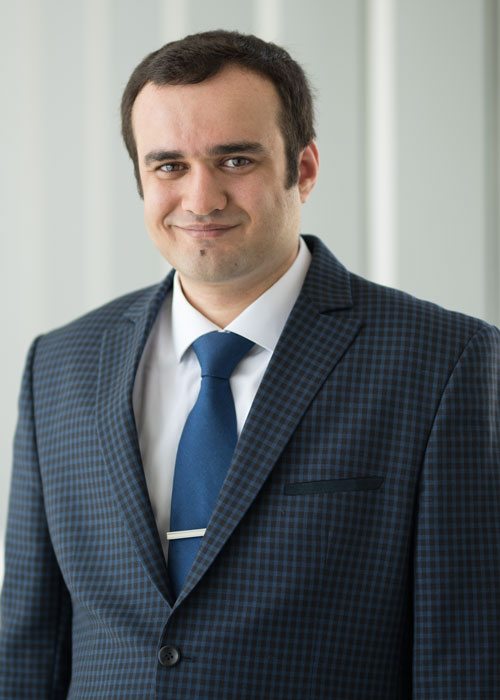
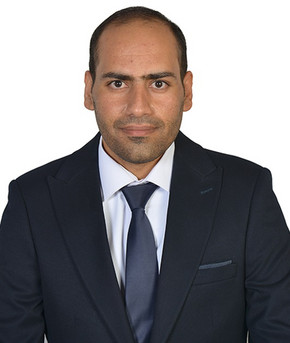
Morten Hovd is a Professor at the Department of Engineering Cybernetics, Norwegian University of Science and Technology (NTNU). His work focuses on advanced control systems, particularly in model predictive control, optimization, and power electronics. He has contributed to control design for uncertain systems, bilinear models, and modular multilevel converters. Research Interests Control Theory and Model Predictive Control (MPC) Optimization Techniques in Control Systems Power Electronics and Smart Grid Applications Stability Analysis of Hybrid and Discrete-Time Systems Teaching TTK4210 - Advanced Control of Industrial Processes TK8118 - Mini-seminar in Cybernetics
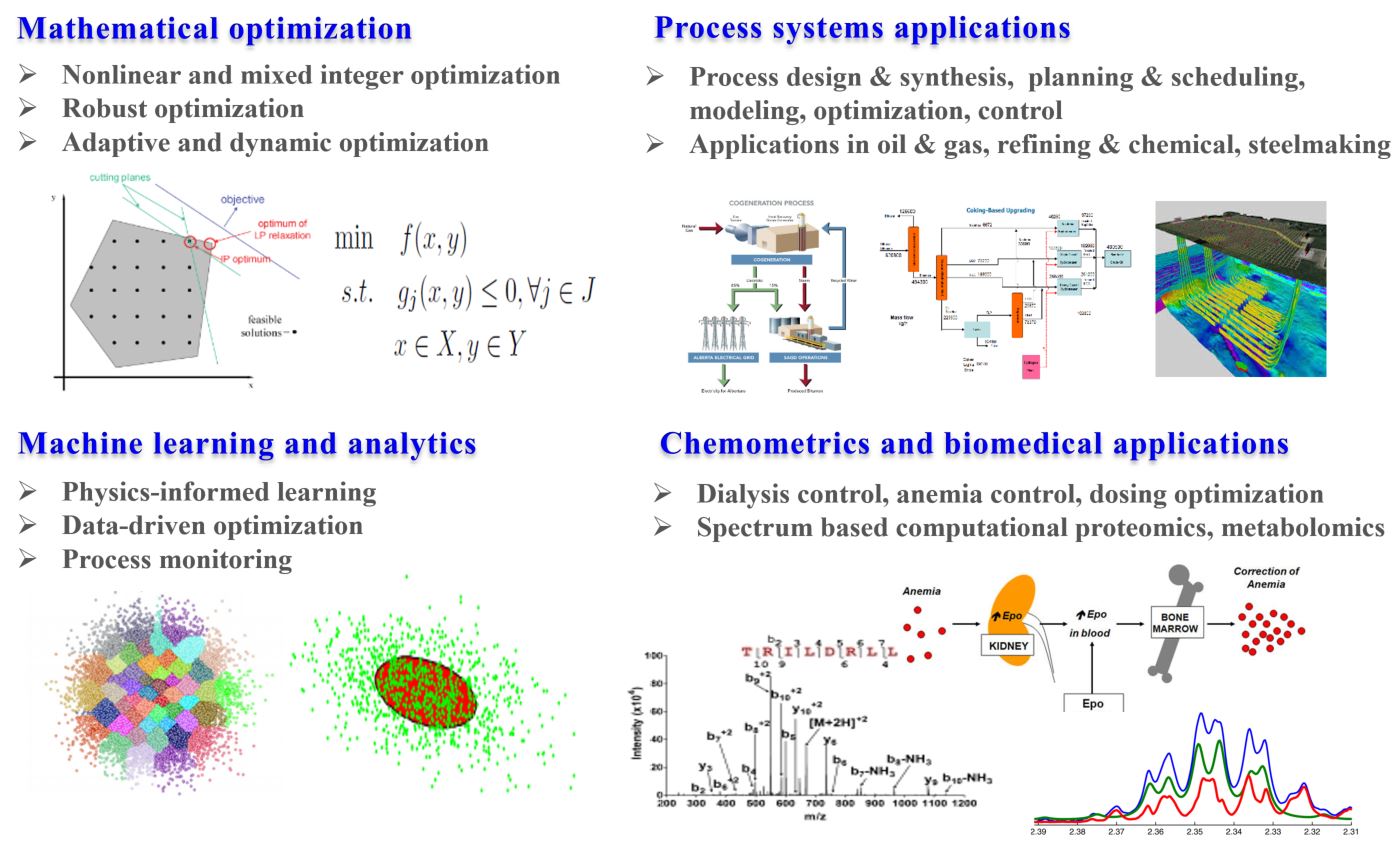
Zukui Li is a Professor in the Department of Chemical and Materials Engineering at the University of Alberta's Faculty of Engineering, where he leads a research group focused on mathematical optimization, machine learning, and process systems engineering. His work spans oil sands extraction, steel production, biomedical applications, and advanced optimization methods. Education: Ph.D. in Chemical Engineering, Rutgers University (2010) M.Sc. in Control Theory and Control Engineering, University of Science and Technology of China (2005) B.Sc. in Automatic Control, University of Science and Technology of China (2002) Postdoctoral Training: Princeton University (2010-2012) Research Focus: Dr. Li's research integrates mathematical optimization and machine learning for complex process systems. His primary areas include: Advanced optimization techniques (robust, stochastic, and distributionally robust optimization) Machine learning applications in process monitoring and biomedical systems Industrial applications in energy, manufacturing, and resource extraction Specific innovations include physics-informed ML for anemia treatment, adaptive optimization for steel production, and distributionally robust methods for uncertainty management. Publication Trends (2019-2023): Recent articles demonstrate a strong focus on uncertainty-aware optimization methods, with increasing integration of machine learning techniques. Dominant themes include distributionally robust optimization, adaptive decision-making under uncertainty, neural network approximations for complex constraints, and applications in industrial process control and biomedical systems. Theoretical advancements are consistently coupled with practical implementations in energy and manufacturing sectors. Research Group: Leads an active team developing optimization frameworks and machine learning solutions for process engineering challenges. Group website: Dr. Zukui Li's Research Group
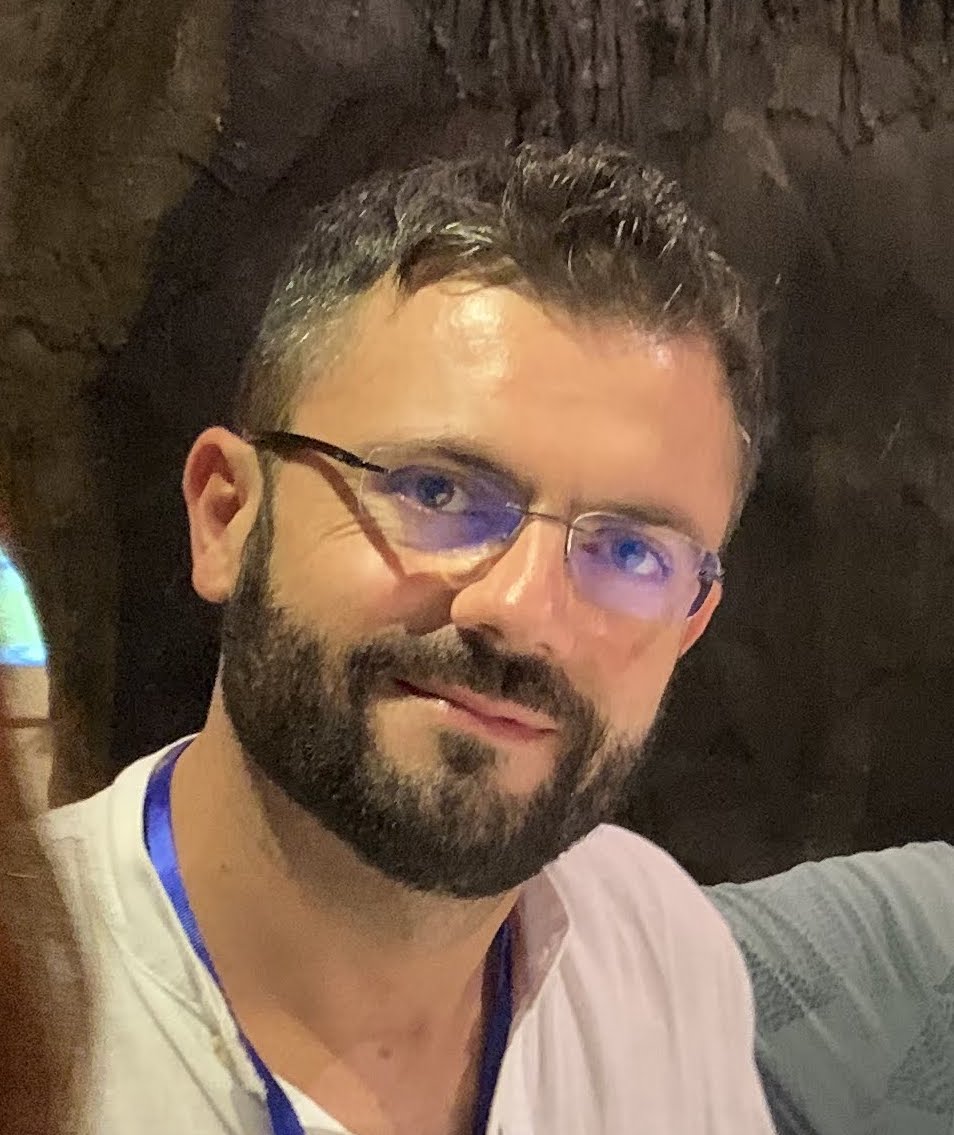
Nadjib Brahimi is an Associate Professor at Rennes School of Business, specializing in Supply Chain Management and Operations Research. He holds a PhD in Production and Logistics Systems from Université de Nantes and has extensive academic experience, including roles as Academic Head of the Supply Chain Management & Information Systems department (2019–2020) and Programme Manager of the MSc in Data and Business Analytics. His expertise spans Production Planning, Supply Chain Optimization, and Reconfigurable Manufacturing Systems. Education: PhD in Production and Logistics Systems, Université de Nantes, 2004 M.Sc. in Automatic Control and Applied Computing, Ecole Centrale de Nantes, 2001 Engineering Degree in Electronics and Electrical Engineering, National Institute of Electronics and Electrical Engineering, Boumerdes, Algeria, 1999 Research Focus: His work emphasizes optimization of production systems, reconfigurable manufacturing, and sustainable supply chains. Key areas include task reassignment in assembly lines, biomass supply chain design, and disruption resilience strategies. Key Contributions: Over 40 peer-reviewed articles in journals like International Journal of Production Economics and European Journal of Operational Research . Developed robust optimization models for supplier selection and production routing. Advocated for circular economy principles in hybrid manufacturing systems. Labs/Teams: He collaborates with research groups on reconfigurable manufacturing systems and bioenergy supply chain design, contributing to projects in France, UAE, and Algeria.
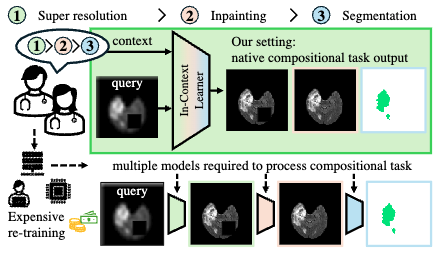
Prof. Dr. Erik Rodner is a faculty member at the University of Applied Sciences Berlin (HTW Berlin), where he serves as a Professor for Machine Learning and Data Science. He also contributes to the School of Engineering Sciences - Technology and Life. His research spans computer vision, machine learning, and biomedical applications, with a focus on learning with limited data, robust visual recognition models, and medical image analysis. He has developed innovative methods for medical diagnostics, industrial classification, and anomaly detection. Recent publications (2025-2016) highlight his expertise in visual in-context learning, semi-weakly segmentation, and active learning frameworks. He has collaborated with institutions such as ZEISS Group, Friedrich Schiller University Jena, and UC Berkeley. Scientific Awards: Award for Excellent Teaching (2023)
Wiebke Meesenburg is an Assistant Professor in the Department of Civil and Mechanical Engineering at the Technical University of Denmark (DTU), specializing in Thermal Energy. She is actively involved in research on large-scale heat pump systems, district heating integration, and digital twin applications for energy optimization. Her research focuses on sustainable thermal energy systems, particularly the design, monitoring, and optimization of heat pumps in district heating networks. Key areas include dynamic modeling, real-time adaptation, fouling mitigation, and the integration of renewable energy sources. She contributes to advancing energy efficiency and sustainability in urban infrastructure. The recent publications highlight a strong trend toward digitalization and optimization of thermal systems, with an emphasis on model-based monitoring, digital twins, and operation scheduling using advanced algorithms. Her work bridges mechanical engineering, energy systems, and computational modeling to improve system performance and reliability. She has supervised PhD research and contributed to major projects such as the implementation of digital twins for heat pump systems and EnergyLab Nordhavn. Collaborations involve key figures in energy research at DTU, including Professor Brian Elmegaard. While no formal awards are listed, her active participation in conferences and project leadership demonstrates recognition in her field. Wiebke Meesenburg has been involved in organizing and presenting at international events, including the 35th International Conference on Efficiency, Cost, Optimization, Simulation and Environmental Impact of Energy Systems and workshops on Modelica and flexible heat supply. Her work is embedded in interdisciplinary teams focused on future energy infrastructures and smart urban energy systems.
Amir Ardestani-Jaafari is an Associate Professor at the Faculty of Management , University of British Columbia Okanagan, with affiliations to the Institute for the Sustainability (IGS) . His office is located at EME 4111, and he can be reached at amir.ardestani@ubc.ca or 250.807.8108. Postdoctoral Fellow in Operations Management, McGill University Ph.D. in Management Science, HEC Montreal M.Sc. and B.Sc. in Industrial Engineering, Tehran Polytechnic Dr. Ardestani-Jaafari’s research focuses on Healthcare Operations , Supply Chain Management , and Business Analytics , with particular emphasis on robust optimization techniques for facility location, demand uncertainty, and network design. His work integrates mathematical modeling with real-world healthcare and logistics challenges. Recent publications demonstrate expertise in Two-stage Robust Optimization for equity-driven facility location, Text Mining in telemedicine appointment systems, and Decision-dependent Uncertainty in network interdiction. He has explored applications in Home Healthcare , Cancer Screening Networks , and Global Sourcing Compliance using advanced optimization frameworks. Dr. Ardestani-Jaafari is affiliated with key research centers including the UBC Optimization Center (COCANA) , Materials and Manufacturing Research Institute (MMRI) , and GERAD Research Center . While student advising information isn't explicitly stated, his technical contributions span algorithm development for inventory problems, network design methodologies, and computational solutions for complex operations management challenges.
Christopher Thomas Ryan is an Associate Professor in the Operations and Logistics Division at the UBC Sauder School of Business. He holds a PhD and BA from UBC in Management Science and Mathematics, respectively. His research spans optimization theory, game theory, theoretical economics, video game design, and pedagogy for business education. He has held positions at the University of Chicago Booth School of Business and is affiliated with the Colibri Learning Foundation. Education: BA (Mathematics) and PhD (Management Science) from UBC; BA (Sociology and Economics) from University of Guelph. He has authored numerous textbooks and case studies, including works on research careers, operations management, and teaching methodologies. His work integrates human-centric approaches to operations and education systems. Research Interests include small business operations, education operations, theoretical economics, and the design of video games. He has published in top journals like Management Science, Econometrica, and Mathematical Programming. His grants include SSHRC and NSERC awards. Ryan advises students across multiple institutions and has mentored prominent faculty in marketing, operations, and MIS fields. Teaching focuses on core operations management for MBA programs and pedagogical innovation. He has developed cases on AI in education, early childhood development, and small business sustainability. Ryan’s work bridges academic research with practical applications in business and education sectors.
Mahdi Fazeli is an Associate Professor at the School of Information Technology, Halmstad University, Sweden, specializing in hardware security and trust, energy-efficient computing, and embedded and cyber-physical systems. His academic journey began with a Ph.D. in Computer Engineering from Sharif University of Technology, Iran, in 2011. His career progression includes positions as Associate Professor at Bogazici University (2019-2021) and Iran University of Science and Technology (2016-2019), and Assistant Professor at the same institution (2011-2016). His research interests focus on hardware security and trust, reliable VLSI circuits and systems, energy-efficient computing, and dependable embedded systems. His work bridges the gap between theoretical security concepts and practical implementations in real-world systems, particularly in IoT and embedded environments. He has established himself as a leading researcher in Physical Unclonable Functions (PUFs), hardware trojans detection, and energy-efficient security solutions for resource-constrained devices. His publication record shows a clear progression and deepening expertise in hardware security, with recent work focusing on cutting-edge applications in edge computing, vehicular networks, and IoT security. His 2023-2025 publications demonstrate significant contributions to magnetic memory-based security primitives, anomaly detection systems, and energy-efficient security mechanisms. Throughout his career, Fazeli has led multiple research initiatives including the Dependable Systems and Architecture Lab (DSA) and the Networked and Embedded Systems Lab at Iran University of Science and Technology. His leadership extends to heading the Hardware Group and serving as Vice Chair for Educational Affairs, demonstrating his commitment to both research excellence and academic administration.
Hande Benson is a Professor in the Department of Decision Sciences and MIS at LeBow College of Business, Drexel University. She serves as the academic director of the Business and Engineering program and teaches in undergraduate and graduate programs in Business Analytics and Operations and Supply Chain Management. Research Interests: Dr. Benson specializes in optimization, particularly addressing modeling and computational challenges in large-scale nonlinear and mixed-integer optimization. Her work includes interior-point methods, regularization techniques, and the development of optimization software such as LOQO and MILANO. Recent Research Trends: Her recent publications span decision aggregation, multi-vehicle motion planning under communication constraints, and advanced interior-point algorithms. These works reflect a strong focus on algorithmic innovation, real-world applications in robotics and supply chains, and theoretical advancements in nonconvex optimization. Scientific Awards: Outstanding STAR Mentor, Drexel University (2017-2018) Distinguished Fellow, Center for Research Excellence, LeBow College of Business (2009-2012) Excellence in Research Award, LeBow College of Business (2005) Advising and Grants: While direct student advising is not explicitly listed, Dr. Benson has led significant research projects, including Multivehicle Path Coordination under Communication Constraints (Drexel Interdisciplinary Research Grant, $15,000) and Efficient Interior-Point Methods for Mixed-Integer Nonlinear and Conic Programming (NSF, $59,960). She has also contributed to executive education and consulting in financial, industrial, and governmental sectors. Editorial and Professional Service: Dr. Benson is actively involved in the academic community as Associate Editor for several leading journals, including Computational Optimization and Applications , Journal of Optimization Theory and Applications , Mathematical Programming Computation , and Optimization and Engineering .
Ciriaco D'Ambrosio is a Research Fellow at the Department of Mathematics, University of Salerno, specializing in combinatorial optimization and its applications to wireless sensor networks. He teaches courses in operations research and maintains regular reception hours for students on Tuesdays (3:00-5:00 PM) and Wednesdays (4:00-5:00 PM), conducted both in-person and via Microsoft Teams. Education: PhD in Computer Science, University of Salerno (2015) - Thesis: models and algorithms for coverage in Wireless Sensor Network Laurea cum laude in Computer Science, University of Salerno (2011) Research Focus: D'Ambrosio specializes in combinatorial optimization, developing heuristics, metaheuristics, and math-heuristics for mixed integer linear programming problems. His work addresses challenging optimization problems in wireless sensor networks, particularly network lifetime maximization under coverage, connectivity, and interference constraints. His research bridges theoretical computer science with practical applications in sensor network design, seismic monitoring systems, and resource allocation problems. His methodology often combines exact approaches with sophisticated heuristic techniques to solve computationally difficult problems. Publication Trends: Analysis of D'Ambrosio's publications (2017-2025) reveals a progression from foundational work on sensor network lifetime problems toward increasingly sophisticated algorithmic approaches for combinatorial optimization. His recent work shows expansion into seismic monitoring applications while maintaining strong focus on knapsack problem variants and network optimization. His publications appear in high-quality journals including Soft Computing, Computers & Operations Research, and Networks, demonstrating both theoretical rigor and practical relevance of his research. Professional Activities: Member of the Italian Operations Research Society (AIRO) Associate Editor for Soft Computing, A Fusion of Foundations, Methodologies and Applications Active collaborator with researchers including Andrea Raiconi, Raffaele Cerulli, and Francesco Carrabs Research Infrastructure: D'Ambrosio works within the Department of Mathematics at University of Salerno's Fisciano Campus (Building F2, Room 040). His research contributes to the university's growing expertise in computational optimization and has practical applications in environmental monitoring systems like SEISMONOISY.
Daniel Fernández-Muñoz is an Associate Professor at the Universidad Politécnica de Madrid (UPM) , affiliated with the Department of Physical Electronics, Electrical Engineering and Applied Physics. He earned his PhD in 2021 with a thesis on "Generation scheduling in isolated power systems with high variable renewable generation and pump-storage," receiving both the Extraordinary Doctoral Award and Carlos González Cruz Award. He has held academic roles since 2006, including Assistant Professor positions from 2016-2021 and a current permanent Associate Professor appointment. Education : PhD in Electrical Engineering (UPM), DEA in Electrical Engineering (2010), Civil Engineering degree (2006) Research Focus : Renewable energy integration, power system optimization, battery degradation modeling, and frequency control in isolated grids Collaborations : Instituto de Sistemas Eléctricos de Potencia (Austria), EERA Joint Programme on Energy Storage, H2020 project eNeuron His work emphasizes hybrid wind-battery systems , pumped-storage hydropower , and virtual power plants , with notable publications in JCR Q1 journals. He has contributed to the Energy2Win project on sustainability education and served as a peer reviewer for multiple scientific journals. Scientific Awards Premio Extraordinario de Doctorado (UPM) Premio Carlos González Cruz Teaching activities include Physics for Biomedical Engineering and Energy Systems for Telecommunications. He has participated in international conferences as an invited speaker and contributed to projects funded by the Spanish government and private entities.
Stefano Bracco is an Associate Professor in the Department of Naval, Electrical, Electronic, and Telecommunications Engineering (DITEN) at the University of Genoa, Italy, serving on both the Department Board and the School Council of the Polytechnic School. He teaches advanced courses including Energy Transition and Power Systems Management for Master's programs in Energy Engineering, Management for Energy and Environmental Transition (MEET), and Engineering for Natural Risk Management, covering critical topics in sustainable power systems and infrastructure modeling. His research focuses on power systems engineering with emphasis on microgrid optimization, renewable energy integration, and electric vehicle infrastructure. Key contributions include energy management systems (EMS) for active/reactive power control in microgrids, vehicle-to-grid/home technologies, and sustainable energy community design. His work addresses grid stability challenges, economic optimization of distributed energy resources, and resilience enhancement in critical facilities through advanced mathematical modeling and real-world case studies. Analysis of his 15 most recent publications (2024-2025) reveals consistent application of mixed-integer linear programming (MILP) for microgrid optimization across diverse contexts including university campuses, industrial sites, and Italian municipalities. Dominant trends include integration of electric vehicle charging infrastructure with renewables, uncertainty handling in renewable communities, and multi-scale control frameworks for automated transportation. His research bridges theoretical optimization with practical implementation, frequently using the Savona University Campus as a living laboratory for sustainable energy solutions. No scientific awards were mentioned in the provided information. The available text did not specify any advised students or research grants, though his extensive publication record suggests active research supervision and project leadership. While no dedicated laboratories are explicitly attributed to him, his work frequently involves the Savona University Campus infrastructure, including the CN MOST Laboratory and microgrid test facilities, indicating collaboration with existing university energy research platforms.
Dr. Adel Aazami is an Assistant Professor at the Institute of Transport Economics and Logistics at Vienna University of Economics and Business (WU Vienna) since 2023. His academic journey began with a B.Sc. in Industrial Engineering from University of Tehran (2010-2014), followed by an M.Sc. (2014-2016) and Ph.D. (2016-2021) from Iran University of Science and Technology (IUST), Tehran. Prior to his current position, he worked as a Postdoctoral Researcher at Sharif University of Technology (2021-2022) and was a Visiting Researcher at the University of Toronto (2020). His educational background includes: Ph.D. in Industrial Engineering (2016-2021) - Iran University of Science and Technology (IUST), Tehran, Iran M.Sc. in Industrial Engineering (2014-2016) - Iran University of Science and Technology (IUST), Tehran, Iran B.Sc. in Industrial Engineering (2010-2014) - University of Tehran, Tehran, Iran Dr. Aazami's research spans multiple interconnected domains within operations research and supply chain management. His primary focus areas include Operations Research and Optimization, Supply Chain and Logistics, Production and Distribution/Transportation Planning, Competition and Game Theory, Stochastic Programming, and Decomposition Algorithms. His work demonstrates a strong emphasis on developing mathematical models and optimization algorithms for complex supply chain problems, particularly those involving perishable goods, competitive environments, and sustainability considerations. He has made significant contributions to integrating environmental factors into traditional logistics problems and developing robust optimization approaches for supply chain networks. Analysis of Dr. Aazami's publication record reveals a consistent trajectory of increasingly sophisticated research in supply chain optimization. His work shows a clear progression from foundational mathematical optimization techniques to increasingly complex integrated problems involving multiple stakeholders, uncertainty, and environmental considerations. A notable trend is his focus on perishable products within supply chains, developing models that account for limited product lifetimes while optimizing across multiple echelons of the supply chain. More recently, his research has expanded to incorporate green logistics considerations, developing algorithms that balance economic and environmental objectives in transportation and distribution problems. His notable scientific achievements include: Winner of the 'Best Student' award among nationwide students evaluated by the Iranian Ministry of Science (2020) Winner of the Iranian Nobel Prize (known as the Alborz National Foundation Prize) (2019) Winner of the Best Student Award at IUST (2018) Winner of the Top Researcher Award at IUST (2018) Annual Awards of the National Elites Foundation Iran (2015-2020) Dr. Aazami has extensive teaching experience across multiple Iranian universities including Tehran University, Amirkabir Technical University, Isfahan University, Yazd University, Zanjan University, Damghan University, Abrar University and Iran Technical University. His peer review activities include reviewing for prestigious journals such as Soft Computing, Expert Systems with Applications, and Annals of Operations Research. While specific grant information isn't detailed in the provided text, his research output suggests active engagement with complex optimization problems relevant to transportation and logistics industries. At WU Vienna, Dr. Aazami is part of the research team at the Institute of Transport Economics and Logistics, working alongside other faculty members including Prof. Kummer and Prof. Wakolbinger. His research integrates theoretical optimization methods with practical applications in transportation and logistics, contributing to the institute's focus on sustainable and efficient supply chain solutions.
Martin Schmidt is a Full Professor (W3) for Nonlinear Optimization at the Department of Mathematics, Trier University, since 2019. He has held leadership roles in research training groups and international committees, focusing on mathematical modeling and optimization of energy systems, gas networks, and market equilibria. His work bridges mixed-integer nonlinear optimization , bilevel optimization , and robust methods with applications to real-world energy challenges. Education: PhD in Mathematics (2013), Diplom in Mathematics (2008), both from Leibniz University Hannover. Editorial Roles: Editorial Board member of Journal of Optimization Theory and Applications and Optimization Letters , Associate Editor for OR Spectrum and EURO Journal on Computational Optimization . His research integrates complex physical systems (e.g., gas transmission networks) with game-theoretic models to analyze energy markets. Recent publications emphasize robust optimization , decomposition techniques , and machine learning integration in bilevel frameworks. Awards highlight his contributions to gas market feasibility , linear bilevel optimization , and practical applications in energy systems. Collaborations span institutions like Universidad Zaragoza, Sapienza University, and Forschungszentrum Jülich.
Vijay Gupta is the Elmore Professor of Electrical and Computer Engineering and Associate Head of Graduate and Professional Programs at Purdue University's College of Engineering. His research focuses on distributed decision-making systems, combining data-driven and model-driven approaches for infrastructure networks like power grids, transportation systems, and water distribution networks. Key areas include compositional control, cyber-physical security, and incentive design in distributed estimation and control. Education: B.Tech from Indian Institute of Technology Delhi, M.S. and Ph.D. from California Institute of Technology, all in Electrical Engineering. Prior roles include faculty positions at Notre Dame and research roles at United Technologies Research Center. Research emphasizes resilient control strategies for large-scale systems, with recent work addressing secure estimation under adversarial attacks, model reduction techniques, and reinforcement learning frameworks for decentralized control. His publications span control theory, cyber-physical systems, and optimization algorithms. Grants and collaborations are not explicitly detailed here, but his work reflects significant engagement with foundational and applied research challenges in networked systems. No specific awards are listed in the provided texts.