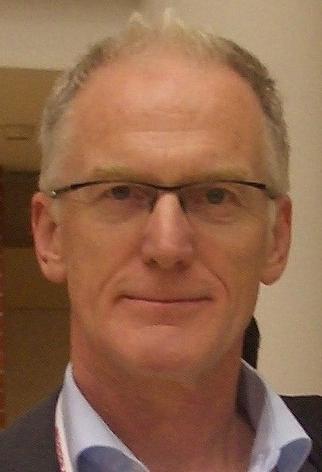
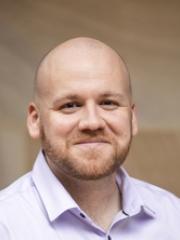
Atte Korhola is a Professor at the University of Helsinki, affiliated with the Faculty of Biological and Environmental Sciences and leading the Environmental Change Research Unit (ECRU) and Arctic Avenue . He serves as Vice-Dean of Societal Interaction and is a member of the Helsinki Institute of Sustainability Science (HELSUS). Research Focus: Climate change impacts, carbon cycling, black carbon deposition, peatland dynamics, and Arctic environmental systems Key Contributions: Analysis of long-term environmental changes, climate-peatland interactions, and Arctic hydroclimate variability His recent publications emphasize carbon accumulation patterns , lake thermal dynamics , and climate feedback mechanisms in boreal and Arctic ecosystems. He supervises doctoral research on aquatic mine pollution impacts and participates in international climate science initiatives.
Qinglong Han is the Pro-Vice Chancellor (Research Quality) and a Distinguished Professor at Swinburne University of Technology in Melbourne, Australia. He previously held academic and leadership roles at Griffith University and Central Queensland University. His research focuses on networked control systems, multi-agent systems, time-delay systems, smart grids, and unmanned vehicles. He is a Fellow of IEEE, IFAC, and multiple other institutions, and has received prestigious awards including the IEEE Dr.-Ing. Eugene Mittelmann Achievement Award (2024) and Norbert Wiener Award (2021). His research interests span control engineering, applied mathematics, and artificial intelligence. Notable contributions include secure platooning control for autonomous vehicles, resilient control under cyber-physical threats, and optimization of industrial systems. He leads editorial roles in journals like IEEE Transactions on Industrial Informatics and IEEE/CAA Journal of Automatica Sinica. His work emphasizes interdisciplinary applications in smart grids, robotics, and industrial automation. Dr. Han has supervised numerous PhD students in areas like networked control and vehicle dynamics. He has secured grants from ARC and NSFC for projects on networked control systems and renewable energy integration. His achievements include multiple best paper awards and recognition as a Clarivate Highly Cited Researcher in Engineering and Computer Science.
Dr. Yasir Ali is a Senior Lecturer specializing in Cooperative Intelligent Transport Systems, focusing on traffic flow modelling, traffic safety, and advanced data analysis techniques in transport engineering. His research integrates machine learning and econometrics to address challenges in connected/automated vehicles, mixed traffic dynamics, and vulnerable road user safety. He explores innovations like AI-based video analytics for next-gen traffic signals and real-time risk assessment systems. Education: Bachelor of Engineering (BE) Master of Science (MSc) Doctor of Philosophy (PhD) Research Interests: Traffic flow and safety in mixed vehicle environments Data-driven decision-making using machine learning Impact of connected/automated vehicles on traffic dynamics Innovative solutions for pedestrian and cyclist safety Key Projects: Real-time risk assessment systems for vulnerable road users AI-based traffic signal optimization for green intersections Modelling autonomous vehicle interactions in mixed traffic Notable Contributions: Advances in extreme value theory for crash risk estimation Development of safety-field theories for pedestrian risk assessment Analysis of distracted driving behavior in connected environments
Bryan Koronkiewicz serves as Associate Professor of Spanish Linguistics within the Department of Modern Languages & Classics at the University of Alabama. His academic profile bridges theoretical linguistics and practical language education with specialized expertise in bilingual speech phenomena. His educational trajectory includes: PhD in Hispanic Studies (Linguistics), University of Illinois at Chicago (2014) MA in Hispanic Studies (Linguistics), University of Illinois at Chicago (2010) BA in Spanish / Communication Arts, University of Wisconsin-Madison Dr. Koronkiewicz's research centers on Spanish-English code-switching through experimental and quantitative lenses, examining syntactic constraints in heritage speakers' language production. His work interrogates phenomena like preposition stranding, adverb placement, and inalienable possession while addressing methodological challenges in bilingualism research. This interdisciplinary approach connects theoretical syntax with second language acquisition and heritage language pedagogy, emphasizing empirical validation of linguistic constraints. Analysis of his 13 publications (2013-2023) reveals consistent focus on experimental code-switching research using acceptability judgments and corpus methods. Key trends include systematic investigation of syntactic boundaries in bilingual speech, methodological innovations in data collection, and expansion into language pedagogy through studies of social media integration and writing assessment. His work demonstrates strong alignment with contemporary debates in bilingual syntax while maintaining practical relevance for heritage language education. No scientific awards or fellowships were documented in the source material. Dr. Koronkiewicz teaches across the curriculum from first-year language courses to graduate seminars in bilingualism, syntax, and second language teaching methods. While departmental highlights reference French PhD students (Awodirepo, Lambon, Dafong), no specific advisees in Spanish linguistics are identified. The text contains no mention of grant funding or research team leadership. No dedicated laboratories or research collectives are associated with his profile in the available documentation.
Dana Mukamel is a Professor of Medicine at the University of California, Irvine, with an affiliation in the Department of Population Health & Disease Prevention within the School of Public Health. Her research focuses on healthcare policy, geriatrics, mental health, and chronic disease management, particularly advanced chronic kidney disease (CKD) and cancer care. She explores topics such as Medicare Part D cost disparities, nursing home staffing and quality, digital mental health interventions, and rural-urban healthcare gaps. Dana's recent publications highlight trends in digital health adoption during the pandemic, staffing instability in nursing homes, and CKD treatment outcomes. Her work often intersects with health equity, examining disparities in rural and minority populations, and innovates through technology-driven care coordination models for seniors. She contributes to policy evaluations, including the Medicare Prescription Payment Plan, Certificate of Need regulations, and Medicaid waiver programs. Her projects frequently involve multi-site collaborations and stakeholder engagement, especially with peer perspectives in mental health interventions and county-level healthcare systems.
Gunther Uhlmann holds the Robert R. Phelps and Elaine F. Phelps Endowed Professorship and is an Adjunct Professor of Applied Mathematics at the University of Washington. His research focuses on inverse problems, partial differential equations, and their applications in imaging technologies like medical imaging and geophysical exploration. He is affiliated with the Department of Mathematics and has been recognized with prestigious awards such as the National Academy of Sciences membership (2023), the AMS-SIAM Birkhoff Prize (2021), and the Doctor Honoris Causa from the University of Helsinki (2022). His work bridges pure mathematics and applied sciences, with contributions to inverse scattering theory, microlocal analysis, and geometric inverse problems. Uhlmann has advised over 60 PhD students and collaborated with numerous postdocs, significantly advancing the field of inverse problems. His recent research explores nonlinear phenomena in inverse problems, including applications to black hole physics and elasticity theory. Key projects include developing inversion methods for anisotropic media, studying fractional Schrödinger operators, and recovering material parameters from boundary data. He has published influential works on topics ranging from cloaking technologies to seismic imaging, and his book Geometric Inverse Problems (2023) consolidates advancements in two-dimensional inverse problem theory. Awardees include grants from the National Science Foundation and the Simons Foundation, supporting his exploration of interdisciplinary challenges in mathematical physics. Current research priorities include gravitational wave analysis and machine learning applications in inverse problems.
Professor Dan Rogers is an Associate Professor in the Department of Engineering Science at the University of Oxford, serving as Associate Head of Department (Infrastructure). He holds an MEng (2007) and PhD (2011) from Imperial College London's Electrical and Electronic Engineering and Control & Power Groups. Before joining Oxford in 2016, he was a Lecturer and Senior Lecturer at Cardiff University's CIREGS group. His research focuses on electrical power conversion, power systems, power electronics, energy storage, microgrids, and smart grids. He has contributed to projects like the Willenhall energy storage system, one of Europe's largest lithium titanate battery research initiatives. Rogers' work emphasizes practical applications, including grid-scale energy storage balancing, thermal modeling of power modules, and high-efficiency power electronics design. His recent research explores broadband powerline communication for microgrids, MILP-based carbon emission optimization, and compact cooling solutions for high-power systems. He has led collaborative projects such as the IMAD2025 event with the ZERO Institute ECR network and contributed to rural electrification projects in Zambia. His publications span topics from inverter topology optimization to magnetic neurostimulation systems, reflecting interdisciplinary engagement. While no specific awards are listed, his work demonstrates significant contributions to advancing grid resilience and sustainable energy technologies.
Lloyd W. Massengill is a Professor of Electrical and Computer Engineering at Vanderbilt University's School of Engineering. His research focuses on radiation-hardened circuit design, simulation of radiation effects on microelectronics, soft error analysis, and analog circuit design. He holds a Ph.D., M.S., and B.S. in Electrical Engineering from North Carolina State University. Dr. Massengill's work addresses critical challenges in semiconductor reliability under ionizing radiation, including total ionizing dose (TID) effects, single-event upsets (SEUs), and transient analysis in advanced FinFET technologies. His contributions span radiation-hardened analog-to-digital converters, mitigation techniques for soft errors, and advanced node radiation testing methodologies. His scientific achievements include receiving the Outstanding Conference Paper Award at the 2024 IEEE Nuclear and Space Radiation Effects Conference and the 2014 counterpart. His research has been published in over 50 peer-reviewed articles, emphasizing radiation effects in nanoscale circuits and space electronics. Notable projects include CubeSat-based real-time soft error measurements in low Earth orbits and the RadFxSat flight campaign for characterizing commercial electronics in space. His work bridges semiconductor physics with practical applications in aerospace and high-reliability systems. His educational background includes degrees from North Carolina State University, demonstrating a deep technical foundation in electrical engineering. While no specific grants or advising details are listed here, his prolific publication record underscores his leadership in radiation effects research.
Dr. Tong Tong Wu is a Professor of Biostatistics and Computational Biology at the University of Rochester, serving as Director of Master's Programs in her department. She holds a Ph.D. from UCLA (2006). Her research focuses on high-dimensional data analysis, machine learning, survival analysis, and computational biology, with applications in cancer, HIV, epidemiology, dental health, and medical engineering. Education: Ph.D. in Biostatistics, University of California, Los Angeles (2006) Affiliations: UR Medicine, Department of Biostatistics and Computational Biology Roles: Director of Master's Programs, Faculty Member, and Researcher Her research interests emphasize statistical methodologies for complex biomedical data, including variable selection, clustering, and longitudinal trajectory analysis. Recent work explores oral microbiome dynamics in child-mother dyads, antifungal susceptibility, and machine learning for caries prediction. Dr. Wu collaborates across disciplines, contributing to studies on neurological disorders (e.g., Charcot-Marie-Tooth disease) and clinical outcomes in hemodialysis patients. Publications highlight innovations in penalized empirical likelihood, high-dimensional inference, and statistical modeling for biomedical applications. She advises students on topics ranging from longitudinal hemodynamic responses to physical activity clustering in young females. Her work bridges theoretical statistics and applied health research, addressing critical questions in public health and precision medicine.
Michael Sørensen is a Professor at the Department of Mathematical Sciences, University of Copenhagen. His primary research focuses on statistical inference for stochastic processes, particularly stochastic differential equations and jump processes, with applications in finance, physics (e.g., wind-blown sand dynamics), and biology. He has authored/co-authored influential books such as Exponential Families of Stochastic Processes and edited volumes on empirical process techniques and statistical methods for stochastic differential equations. His work bridges theoretical statistics with applied problems in natural sciences and finance. Research interests include modeling turbulence, sand transport dynamics, and protein structure evolution. Collaborations with earth scientists like Keld Rømer Rasmussen have advanced understanding of aeolian processes. His methodologies emphasize likelihood-based inference and estimating functions, with contributions to high-frequency data analysis and diffusion bridge simulations. A comprehensive CV and full publication list are available on his profile. Key contributions span stochastic modeling in physics (e.g., sand dune dynamics), financial econometrics, and computational statistics. He has pioneered techniques for analyzing multi-modal diffusions and developed frameworks for mixed-effects stochastic differential equations. His work is widely cited in both theoretical and applied statistical literature.
Professor Menelaos Karanasos is a Professor of Financial Economics at Brunel University, where he has been serving since September 2005. He previously held academic positions at Newcastle University (Professor of Financial Economics from 2004), University of York (Lecturer in Financial Economics from 1997-2004), and Keele University (Lecturer in Financial Economics from 1996). He serves as Director of the MSc Programmes and Director of the Brunel Macroeconomics Research Centre (BMRC). Professor Karanasos earned his academic qualifications from prestigious institutions: PhD in Financial Economics from University of London MSc in Economics from University of London BSc in Economics from Athens University of Economics and Business As a quantitative macro/financial economist, Professor Karanasos has wide-ranging research interests that focus on stock volatility and its volume, commodity prices, finance and growth, macroeconomic uncertainty, models with time-varying coefficients, mutual funds, and transmission of memory. His work bridges theoretical econometric models with practical financial applications, particularly in understanding volatility dynamics and financial market behavior. He has made significant contributions to time series analysis, particularly in developing models that capture long-memory processes and asymmetric effects in financial data. His recent publications (2021-2025) demonstrate a strong focus on cross-asset correlations, financial volatility modeling, and the relationship between financial development and economic growth. The research spans multiple geographic contexts including European markets, emerging economies, and the US-UK financial nexus. A notable trend in his recent work is the examination of how macroeconomic uncertainty, particularly during crisis periods like the pandemic, affects financial markets across different asset classes and time horizons. Professor Karanasos actively supervises PhD students and has directed numerous research projects examining the relationship between financial development, political instability, and economic growth, with particular focus on Latin American economies like Brazil and Argentina. His current research projects investigate the short- and long-run effects of financial development, commodity price dynamics, time-varying coefficient models, and mutual fund flows. He serves as Editor of QASS (Quantitative and Qualitative Analysis in Social Sciences) and is a member of the SSS REF Panel. Professor Karanasos directs the Brunel Macroeconomics Research Centre (BMRC), which appears to be a key research hub for macroeconomic and financial research at Brunel University, facilitating collaborations with researchers like Prof. Guglielmo Maria Caporale, Dr. John Hunter, and Dr. Yiannis Karavias.
Dr. Vyacheslav Zakosarenko is a part-time researcher at the Leibniz Institute of Photonic Technology (IPHT) in Jena, Germany, specializing in superconducting quantum interference devices (SQUIDs) and cryogenic sensor systems. His work bridges quantum electronics with geophysical applications and particle beam diagnostics. As a key member of the Quantum Circuits group within the Quantum Systems department, he collaborates on advanced SQUID technologies for mineral exploration, magnetic field measurements, and accelerator physics. His research focuses on superconductivity , quantum sensor design , and noise optimization in cryogenic environments. Specific interests include Josephson junction fabrication, magnetic shielding geometry, and flux transformer configurations. He has contributed to innovations in long-baseline SQUID gradiometers , coreless cryogenic current comparators , and microwave SQUID multiplexers . Zakosarenko’s publications highlight trends in millikelvin superconducting electronics , airborne magnetic gradiometry , and high-inductance CCC systems . His work demonstrates the integration of quantum sensors into real-world applications, from mineral exploration to advanced particle accelerator diagnostics. Current projects include optimizing shield geometries and noise performance in Nb-based SQUID arrays. He has developed technologies for commercial SQUID-based airborne magnetic gradiometers and next-generation cryogenic current comparators for charged particle beamlines. His collaborations span institutions like CERN and GSI, and he employs finite element simulations, low-temperature LsR measurements, and flux noise analysis to advance sensor performance.
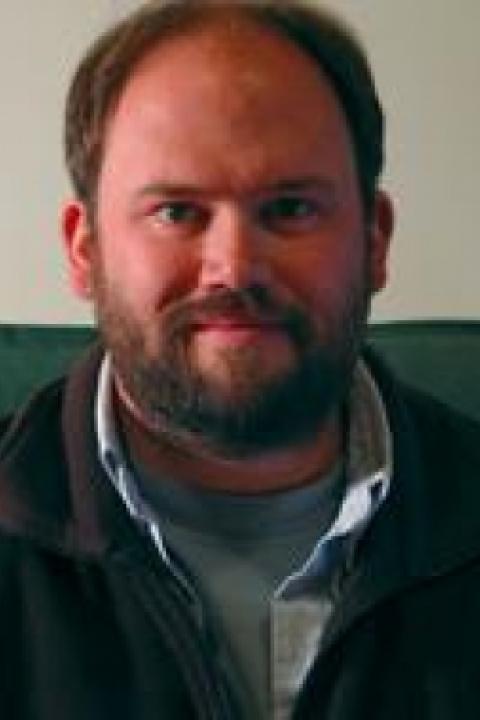
James Pringle is an Associate Professor in the Department of Earth Sciences at the University of New Hampshire. His research bridges physical oceanography, population genetics, and marine ecology, focusing on dispersal mechanisms, biogeographic patterns, and climate change impacts on coastal systems. Education: Ph.D. in Oceanography (Chemical & Physical) from MIT-WHOI Joint Program, B.S. in Physics from Dartmouth College. His work spans theoretical and applied studies, including asymmetric dispersal dynamics , genetic diversity in marine species , and coastal fluid mechanics . Recent articles highlight global dispersal climatologies, coral range expansion under climate change, and larval transport sensitivity in advective environments. Grants from the National Science Foundation (NSF) and other institutions fund his research on larval dispersal quantification ( 2020–2025 ), basin-scale ocean forcing ( 2015–2021 ), and biogeographic modeling ( 2010–2015 ).
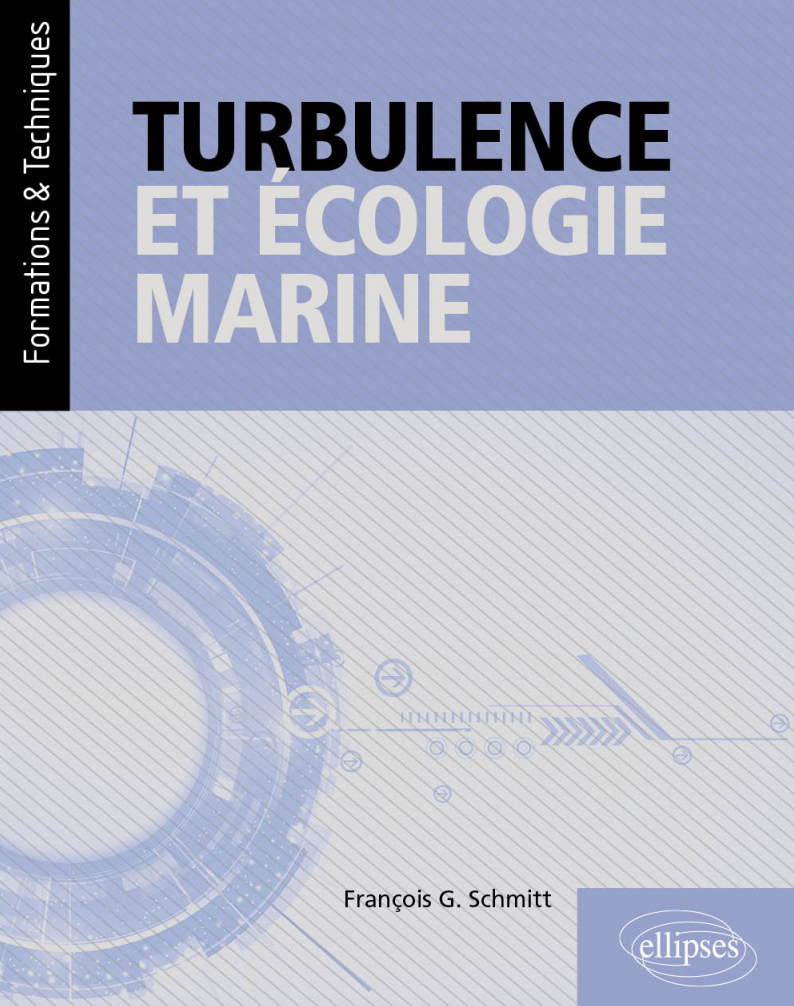
François G Schmitt is a Researcher at CNRS , focusing on turbulence and its applications in oceanography, astrophysics, and interdisciplinary science. His work spans: Turbulence modeling and multifractal analysis Physics-biology couplings in marine ecosystems Scaling processes in environmental systems Renewable energy applications Key research highlights include: 2024 study revealing Van Gogh's Starry Night contains scientifically accurate turbulence patterns 2022 papers on reactive scalars in turbulence and copepod behavior 2020 textbook Turbulence et Ecologie Marine His recent publications (2021-2024) demonstrate expertise in fluid dynamics, ecological modeling, and astrophysical turbulence. He advised PhD candidate Wenwei Wu (2021) and co-organized special issues on air-sea interactions. No scientific awards or part-time positions are documented.
Mitch Dunn serves as an Advance Queensland Industry Research Fellow within the School of Mechanical and Mining Engineering at The University of Queensland, affiliated with the Centre for Advanced Materials Processing and Manufacturing (AMPAM). His research integrates materials science with electromagnetic applications, focusing on functional composites for aerospace and defence systems. Educational background: PhD in Mechanical Engineering (2018), The University of Queensland Bachelor of Engineering (Honours) (2011), The University of Queensland Research interests center on three interconnected domains. First, functional composite antenna structures for aerospace applications including load-bearing antennas and hypersonic vehicle systems. Second, nondestructive testing methodologies using nonlinear ultrasonics for damage detection in composites. Third, hybrid composite material development with emphasis on thermoset-thermoplastic systems and cost-effective manufacturing. His work bridges theoretical modeling with industry-driven applications, particularly in defence technology. Publication trends reveal consistent focus on composite material characterization (85% of works), with growing emphasis on RF-composite integration (40% of recent works). Key methodological approaches include nonlinear ultrasonics (65% of publications), finite element analysis (50%), and experimental validation of multifunctional structures. Key recognition: Advance Queensland Industry Research Fellowship Dunn actively supervises research projects including functional composite antennas for UAVs and hypersonic vehicle antenna systems. Current funding includes National Intelligence Discovery Grants for compact multi-mode antennas (2025-2027) and Advance Queensland grants for hypersonic vehicle antennas (2025-2028). Past projects include Defence Materials Technology Centre initiatives on functional antenna structures and high-temperature sub-assemblies. As part of the UQ Composites group within AMPAM, Dunn collaborates on industry technology development projects focused on functional composite materials and conformal antenna structures, with strong links to defence and aerospace sectors.