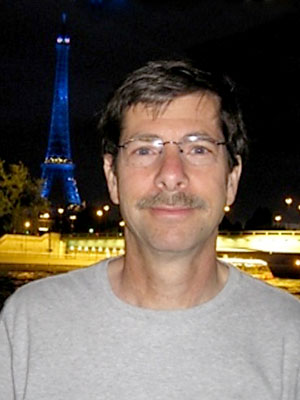
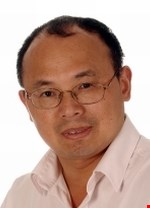
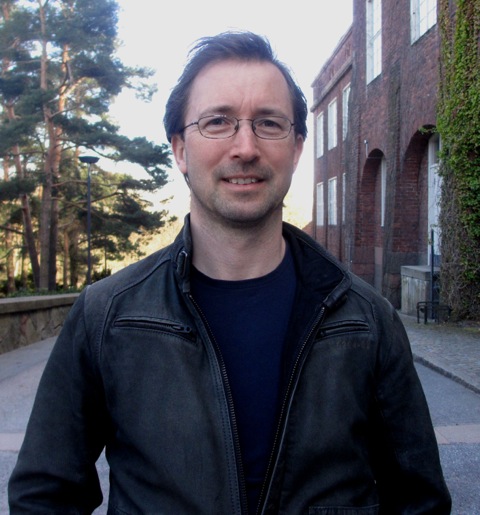
Peter Bühlmann is a Professor at ETH Zürich within the Seminar für Statistik , focusing on high-dimensional statistics, causal inference, and machine learning. His work bridges theoretical advancements with practical software implementations in R packages like pcalg , mboost , and glmmlasso , impacting fields such as genomics, proteomics, and intensive care analytics. Key Contributions : Causal structure learning, stability selection, anchor regression, and deconfounding. Software : Developed widely used R packages for statistical modeling and causal inference. Teaching : Courses on high-dimensional statistics at ETH Zürich and international institutions. Research Trends : Recent articles emphasize causal robustness, domain adaptation, and applications in medicine. His work addresses challenges in heterogeneous data, missing values, and covariate shifts using methods like spectral deconfounding and residual prediction tests. Scientific Recognition : Co-author of a paper designated as a New Hot Paper (Meinshausen and Bühlmann, 2006) by Essential Science Indicators, indicating significant impact in high-dimensional multiple testing.
Anastasia Semykina is a Professor of Economics and Deputy Dean (Research and Innovation) at RMIT University's School of Economics, Finance & Marketing. She holds a PhD from Michigan State University (2006) and previously served as Charles and Joan Haworth Professor of Economics at Florida State University. Her expertise spans theoretical and applied econometrics, with a focus on panel data models, missing data estimation, and their application in labor economics, education economics, transition economies, and economic psychology. She teaches advanced econometrics and microeconomics courses at both undergraduate and graduate levels. Research Interests: Theoretical and Applied Econometrics Labor Economics Economics of Education Transition Economies Economics and Psychology Health Economics Her recent publications address topics such as panel data methodologies, healthcare cost-effectiveness analysis, and educational policy evaluation. She is actively involved in supervising PhD and Master's research students in econometrics and applied economics.
Sanjay Purushotham is an Assistant Professor in the Department of Information Systems at the University of Maryland Baltimore County (UMBC), with a PhD in Electrical Engineering from the University of Southern California (USC) and a postdoctoral background in Computer Science at USC's Integrated Media Systems Center (IMSC). His research focuses on machine learning, data mining, and their applications in biomedical informatics, social network analysis, and multimedia data mining. Key contributions include survival analysis models using pseudo values and federated learning frameworks for healthcare data. He has received awards including the Best Paper Award at SIGSPATIAL 2014 and a Best Poster Runnerup at SCMLS 2016. Education: PhD in Electrical Engineering (USC), Postdoc in Computer Science (USC) His work spans interdisciplinary areas such as domain adaptation for remote sensing, thermal face translation, and interpretable neural networks for medical applications. Recent projects include federated survival analysis models and climate-informatics frameworks for cloud property retrieval. He teaches courses in artificial intelligence, healthcare informatics, and statistical learning at UMBC. Research highlights include developing MedFuseNet for multimodal medical question answering and VDAM for multi-sensor cloud data analysis. His work on fair survival analysis models addresses algorithmic bias in healthcare predictions. Current grants include a NSF CAREER award for trustworthy federated learning in computational healthcare.
Kathryn Roeder is the UPMC University Professor of Statistics and Life Sciences at Carnegie Mellon University (CMU), affiliated with the Dietrich College of Humanities and Social Sciences and the Departments of Statistics & Data Science and Computational Biology. Her research focuses on developing statistical methods for genetic and genomic data, particularly in identifying autism risk genes and analyzing single-cell multi-omic data. She earned her Ph.D. in Statistics from Penn State University and has been at CMU since 1994, previously serving as Vice Provost for Faculty (2015–2019). Education: Ph.D. in Statistics, Penn State University (1988) B.S. in Wildlife Resources, University of Idaho (1982) Research Interests: Her work integrates modern statistical techniques (high-dimensional statistics, machine learning, networks) to study complex diseases like autism and schizophrenia. Recent efforts include tools for analyzing single-cell RNA-seq and proteomic data, such as UNICORN, DAWN, and SCEPTRE. Key Awards: COPSS Distinguished Achievement Award (2020) National Academy of Sciences Member (2019) COPSS Presidents’ Award (1997) AAAS Fellow (2020) Advising & Grants: She has advised over 20 Ph.D. students, many contributing to landmark studies in autism genetics. Her grants include NIH funding for projects like the Autism Sequencing Consortium. Current research teams focus on computational biology and statistical genetics. Labs & Collaborations: Her lab develops software tools (e.g., TADA, MIND) and collaborates with the Autism Sequencing Consortium and iPSYCH-BROAD Consortium on large-scale genomic studies.
Soumya Dutta is an Assistant Professor in the Department of Computer Science and Engineering at the Indian Institute of Technology Kanpur (IITK), where he leads the INSIGHT: Intelligent Scientific and Visual Computing of Big Data Research Group. He joined IIT Kanpur in October 2022 after working as a Scientist II at Los Alamos National Laboratory (LANL) from July 2019 to August 2022, and previously as a Postdoctoral Research Associate at LANL from June 2018 to July 2019. His educational background includes a Ph.D. and M.S. in Computer Science and Engineering from The Ohio State University (2011-2018), where he was part of the GRAVITY research group, and a B.Tech. in Electronics and Communication Engineering from West Bengal University of Technology, India (2005-2009). Research Interests: Dr. Dutta's research focuses on the intersection of machine learning, visual computing, big data, and high-performance computing. His primary research areas include Machine Learning for Visual Computing and Image Analysis, Big Data Visualization and Analytics, Data Science and HPC, Machine Learning for Scientific Computing, and Explainability and Interpretability of AI Models. His work addresses various big data characteristics including the 5 Vs: Volume, Velocity, Variety, Veracity, and Value. He develops techniques that make complex machine learning models more interpretable and explainable, enabling their effective adoption in real-life applications across scientific domains, social media, IoT, healthcare, and industry applications. Dr. Dutta's research group has secured multiple funded projects including: DAVi: An Intelligent Data Analytics and Visualization Framework (funded by ISRO), Intelligent Visual Computing of Extreme-scale Data for Accelerating Scientific Discovery (IIT Kanpur Initiation Grant), Enabling Interactive Big Data Analytics and Visualization at Exascale (SERB), Development of AI-Enabled National Portal for Efficient Search of Missing People (C3iHub), and Proactive and Generalized Deepfake Defense Mechanisms (C3iHub). Best Reviewer, Honorary Mention Award for IEEE Transactions on Visualization & Computer Graphics (TVCG), 2021 Best Paper Award at ISAV 2021, co-located with Supercomputing (SC) LAAP Award at Los Alamos National Laboratory, 2021 Best Paper Award at TopoInVis 2019 Best Paper Award at ISAV 2018, co-located with Supercomputing (SC) Best Poster Award in 12th Annual CSE Student Poster Exhibition, The Ohio State University, 2018 Best Poster Award in 11th Annual CSE Student Poster Exhibition, The Ohio State University, 2017 Best Paper Honorable Mention Award at IEEE Visualization Conference (IEEE VIS) 2016 Dr. Dutta actively mentors a large group of students including Ph.D., M.Tech., and B.Tech. students. His current Ph.D. students include Shanu Saklani, Sankhadeep Bhowmick, Ananya Chaturvedi, Arpita Santra, Anubhav Dixit (co-supervised), and Robin Shah. He has supervised numerous M.Tech. students with thesis topics ranging from uncertainty-aware neural networks to deepfake detection. Dr. Dutta currently teaches courses including CS360 - Introduction to Computer Graphics and CS661 - Big Data Visual Analytics. The INSIGHT research group collaborates internationally with researchers from Meta, Oak Ridge National Laboratory, and National Taiwan Normal University. The group's work focuses on building machine learning and data science-based solutions to analyze large-scale multifaceted data in a scalable way, enabling interactive and interpretable analytics of complex data from scientific simulations, social media, IoT, healthcare, and other application domains.
Martin Willis Monroe is an Assistant Professor in the Department of Classics and Ancient History at the University of New Brunswick. His research focuses on the ancient Middle East, particularly cuneiform cultures, with an emphasis on the history of scholarly knowledge in Babylonian and Assyrian societies. He specializes in Mesopotamian astronomy and astrology, as well as quantitative approaches to historical data. Dr. Monroe holds a PhD in Assyriology from Brown University (2016), an MPhil and BA in Ancient Near Eastern Studies from the School of Oriental and African Studies (2008, 2007). Previously, he served as a postdoctoral fellow and research associate at the University of British Columbia (2016–2023). His current projects include the publication of his Hellenistic astrology research under contract with Brill, titled Celestial Schemata: A Series of Astrological Tables from Seleucid Babylonia , and his role as associate director of the Database of Religious History , a global initiative to quantitatively analyze religious and cultural data. He has contributed to excavations at the Neo-Assyrian site of Tušhan in southeastern Turkey and advocates for responsible qualitative-to-quantitative data conversion in historical scholarship. Dr. Monroe’s research bridges traditional philological approaches with digital humanities, focusing on topics such as cuneiform astral diagrams, the intersection of ‘scientific’ and ‘religious’ texts in antiquity, and the application of computational methods to undeciphered scripts. He teaches courses on ancient civilizations, Near Eastern history, and archaeology.
Yasushi Sakurai is a Professor in the Department of Translational Datability at Osaka University's Institute of Scientific and Industrial Research, co-leading the Sakurai and Matsubara Laboratory within the Center for Industrial Science and AI. His research mission focuses on transforming society through real-time prediction of natural and social phenomena using large-scale data analytics, with emphasis on practical technological implementation. His research spans time-series big data analysis, dynamic learning systems, and real-time information provision. Key areas include tensor stream mining, EEG-based healthcare applications, cybersecurity anomaly detection, and multi-omics cancer subtyping. The lab specializes in developing deployable technologies that optimize social activities through predictive modeling of evolving data streams. Recent publications (2023-2025) reveal concentrated innovation in time-series data stream processing, with dominant themes in tensor analytics, frequency-domain forecasting, and causal modeling. His team produces high-impact work accepted at premier AI venues (ICLR, AAAI, KDD, WWW), consistently featuring oral presentations that highlight technical novelty and societal relevance. Scientific Awards: FY2024 Minister of Education, Culture, Sports, Science and Technology Award for Science and Technology (Research Category) for dynamic learning and real-time data stream analysis Professor Sakurai mentors graduate students including Naoki Chihara (DEIM2024 Outstanding Paper Award winner), Yuka Tamura (DEIM2024 Student Presentation Award winner), and Ren Fujiwara. His lab maintains active industry-academia partnerships focused on practical technology deployment, with research directly addressing real-world challenges in healthcare monitoring and cybersecurity. The Sakurai and Matsubara Laboratory operates as a dynamic research unit within Osaka University's Center for Industrial Science and AI, structured around specialized teams for tensor stream analysis, medical data mining, and network dynamics. Current projects emphasize real-time prediction systems with immediate societal applications, supported by strong industry collaboration frameworks.
Flavio P. Calmon is the Thomas D. Cabot Associate Professor of Electrical Engineering at Harvard University's John A. Paulson School of Engineering and Applied Sciences (SEAS). He holds a Ph.D. in Electrical Engineering and Computer Science from MIT, an M.Sc. from the Universidade Estadual de Campinas (Brazil), and a B.Sc. from the Universidade de Brasília (Brazil). His research focuses on the intersection of information theory, machine learning, and statistics, with applications to privacy, fairness, and trustworthy AI systems. He has received prestigious awards, including the NSF CAREER Award (2018) and the James L. Massey Award (2024). Research interests include developing theoretical foundations for fair and private machine learning, understanding algorithmic bias, and designing systems with provable guarantees. His work spans information-theoretic tools for responsible AI, distributed privacy mechanisms, and understanding the limits of fairness interventions. He has advised numerous students, including Hao Wang, Hsiang Hsu, and Lucas Monteiro Paes, many of whom now hold prominent roles in academia and industry. Calmon's research is supported by grants from NSF, Amazon, Google, and IBM. He has organized workshops on AI in Brazil and leads initiatives to broaden participation in STEM from underrepresented groups. His lab collaborates with institutions globally and emphasizes both foundational theory and practical applications of machine learning.
Professor Ruchi Choudhary is a Professor in Architectural Engineering at the University of Cambridge, Department of Engineering, within the School of Technology. She leads the Energy Efficient Cities initiative (EECi), a cross-disciplinary research project focused on strengthening the UK's capacity to address energy demand reduction and environmental impact in cities through research in building and transport technologies, district power systems, and urban planning. Her research interests span urban energy systems, building energy modeling, sustainable cities, geothermal energy systems, and data-driven energy modeling . She has pioneered work in digital twins for energy systems, urban subsurface thermal modeling, and building-integrated agriculture. Her research group develops numerical tools to improve energy efficiency of cities, with particular focus on modeling energy consumption of large building sets at multiple time and spatial resolutions. Analysis of her recent publications reveals a strong trend toward integrating machine learning with physics-based modeling for energy systems, with increasing emphasis on uncertainty quantification, digital twins, and value of information analysis for decision-making. Her work bridges the gap between theoretical modeling and practical urban implementation, with significant focus on city-scale geothermal potential, underground climate change impacts, and energy equity considerations. Professor Choudhary has supervised numerous PhD students who have gone on to prominent positions at institutions including UCL, University of Cambridge, BEIS, Arup, and various international universities. Her research group includes faculty members, research associates, graduate students, and international collaborators from institutions worldwide. Her current research focuses on two parallel investigations: one on using multi-scale multidisciplinary models to address energy use questions in the built environment, and second, on quantifying uncertainties in model outcomes. Current projects include integration of food production in urban environments, analysis of underground transport systems as energy sources, large-scale integration of ground source heat pumps, and distributed energy networks.
Armando Rungi is a Professor of Economics at IMT School for Advanced Studies in Lucca, Italy. He teaches econometrics, international economics, and macroeconomics to PhD students. In addition to his academic role, he serves as a research fellow at the Observatory on Foreign Firms in Italy and has consulted for the European Commission, OECD, and UNCTAD on international trade and investment issues. His research focuses on international economics, industrial organization, applied econometrics, and statistical learning. Recent work emphasizes the organization of multinational enterprises, global value chains, labor markets, cyber-resilience of supply chains, and the integration of econometric and machine learning tools for policy evaluation and predictive analysis. His recent publications explore topics such as the impact of trade agreements, multinational enterprises' strategies, and the application of machine learning in predicting firm behaviors and evaluating economic policies. A common theme is the analysis of supply chain resilience, corporate ownership structures, and the effects of globalization on firms' competitiveness and productivity. No scientific awards are mentioned in the provided information. No advisees or grant details are listed in the text. His professional activities include consulting roles and research collaborations. He is affiliated with the Observatory on Foreign Firms in Italy, which evaluates the impact of multinational companies and strategies to attract foreign investment in Italy.
Dan Kowal is an Associate Professor in the Department of Statistics and Data Science at Cornell University, joining in 2024. His research focuses on Bayesian models for large/dependent data, mixed data modeling, and interpretable uncertainty quantification. Key areas include public health, environmental justice, epidemiology, and economics. He holds a PhD from Cornell University (2017) and previously served as an Assistant Professor at Rice University. Awards include the Blackwell-Rosenbluth Award (2021), Army Research Office Young Investigator Award (2020), and Lindley Prize Honorable Mention (2024). Notable grants include NSF funding for adaptive dependent data models (2022–2025) and Army Research Office support for Bayesian prediction methods (2020–2022). His work addresses racial inequities in statistical modeling and has been published in top journals like JASA and Bayesian Analysis. He advises multiple PhD students and develops R packages (e.g., SeBR, countSTAR) for Bayesian regression and data synthesis. Teaching roles include Bayesian Statistics at both undergraduate and graduate levels.
Richard A. Davis is the Howard Levene Professor of Statistics at Columbia University's Faculty of Arts and Sciences. He is affiliated with the Data Science Institute (DSI) and the Financial and Business Analytics Center. His research focuses on applied probability, time series analysis, stochastic processes, and extreme value theory, with applications to financial data and spatial modeling. He co-founded the Space-Time Aquatic Resources Modeling and Analysis Program (STARMAP), supported by an EPA-STAR grant. Education details are not explicitly provided in the text, but his academic roles indicate advanced qualification in statistics. His work combines theoretical advancements with practical applications, such as analyzing financial time series models (e.g., GARCH) and spatial environmental data. Recent research emphasizes high-dimensional extremes, sparsity, and privacy-preserving methods. His articles explore cutting-edge topics like kernel PCA for multivariate extremes, quantile treatment effects, and goodness-of-fit testing for time series. He has also contributed to applications in healthcare imaging and disaster economics. His collaborative projects aim to bridge statistical theory with environmental and societal challenges. Key contributions include the STARMAP initiative and grants focused on extreme value analysis. His work often integrates advanced statistical techniques with real-world data challenges, reflecting a commitment to both methodological innovation and interdisciplinary impact.
Keming Yu is a Professor and Chair in Statistics at the Department of Mathematics, Brunel University London, within the College of Engineering, Design and Physical Sciences. He is also the Impact Champion for REF in Mathematical Sciences. He joined Brunel in 2005 after holding positions at the University of Plymouth, Lancaster University, and The Open University. He earned his PhD from The Open University and earlier degrees in Mathematics and Statistics from Chinese institutions. PhD in Statistics – The Open University, UK MSc in Statistics – China BSc in Mathematics – China His research centers on quantile regression, Bayesian modeling, survival analysis, and statistical methods for big data . His work spans applications in health, finance, environment, and social sciences. He has made significant contributions to robust and flexible regression methods, including expectile, mode, and censored quantile regression. His recent publications (2023–2025) show a strong focus on streaming data, spatiotemporal modeling, high-dimensional data, and Bayesian methods . He frequently publishes in top-tier journals such as the Journal of the Royal Statistical Society Series A, B, and C , Statistica Sinica , and Computational Statistics and Data Analysis . His work often involves collaboration with international researchers, especially in China and Europe. He has contributed to methodological discussions in leading statistical journals, demonstrating active engagement with the academic community. His work on financial risk, environmental statistics, and health data analysis reflects interdisciplinary impact. Reviewed and contributed to discussions on safe testing, confidence sequences, and betting-based inference. Active in developing methods for nonignorable missing data, censored models, and functional covariates. He supervises PhD students and is involved in teaching and curriculum development, including as Course Director for the MSc Statistics with Data Analytics. His research is supported by extensive publication output and academic service. He leads or contributes to research on Bayesian models, robust regression, and scalable methods for big data , often involving collaborations in interdisciplinary teams. His lab or research group focuses on statistical methodology development with real-world applications.
Per Enqvist is an Associate Professor in the Division of Numerical Analysis, Optimization and Systems Theory within the Department of Mathematics at KTH Royal Institute of Technology, Stockholm, Sweden. He has held this position since 2009 after progressing from Assistant Professor (2006-2009) and post-doctoral roles at INRIA France and CNR Italy. His academic background includes: Ph.D. in Optimization and Systems Theory from KTH (2001), supervised by Professor Anders Lindquist M.Sc. in Engineering Physics (Civilingenjör) from KTH (1994) with Applied Mathematics focus Post-doctoral studies at INRIA Sophia-Antipolis (2003-2004) and CNR Padova (2001-2003) Enqvist's research centers on mathematical modeling of stochastic processes, scheduling, and queueing theory with applications across operations research, systems engineering, and signal processing. His principal interests span Optimization, Operations Research, Systems Engineering, Signal Processing, Mathematical Systems Theory, and Modeling and Simulation. He has made significant contributions to spectral estimation, covariance interpolation, and resource allocation frameworks. Publication analysis reveals an evolution from foundational systems theory work (2000s) on spectral estimation and minimal realization toward applied optimization in healthcare operations (2010s-2020s). Recent articles address radiation therapy scheduling and contact center modeling using queueing theory with risk-sensitive measures like CVaR, while earlier work established theoretical frameworks for covariance interpolation and passive system synthesis. No scientific awards are documented in the provided information. He has received funding from Vetenskapsrådet (Swedish Research Council) and led the ACCESS seed project on "Robust Spectral Estimation". Enqvist is course responsible for multiple master's program tracks including Aerospace systems and Industrial Engineering, and oversees the Optimization and Systems Theory seminar series. No student advisement details are provided. He maintains affiliations with the ACCESS Linnaeus centre, Center for Industrial and Applied Mathematics (CIAM), and serves on the Swedish Operations Research Society (SOAF) board.
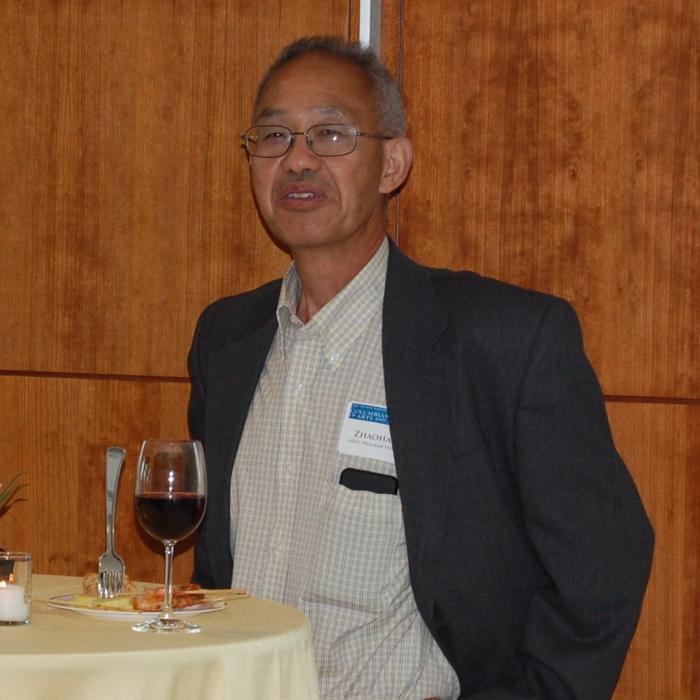
Dr. Zhaohai Li Professor of Statistics at George Washington University, specializing in statistical methodologies for genetic epidemiology and clinical biostatistics. His research focuses on meta-analysis techniques, empirical Bayes methods, and population-based study designs. He has contributed extensively to improving statistical approaches in clinical trials and addressing challenges in genetic association studies. Education: Ph.D. in Statistics, Columbia University, 1989 Research Interests: His work addresses critical issues in modern biostatistics including: Population stratification in genetic studies Hardy-Weinberg equilibrium testing Optimal experimental design for case-control studies Handling missing data in genetic linkage analysis Development of robust statistical tests for complex survey data Publications Overview: Dr. Li's recent work emphasizes methodological advancements in: Bayesian approaches to population genetics Meta-analytic frameworks for combining study results Statistical solutions for multi-stage clinical trials Algorithmic improvements for genome-wide association analyses Professional Contributions: His articles consistently address practical challenges in biomedical research, bridging theoretical statistics with real-world genetic and clinical applications.