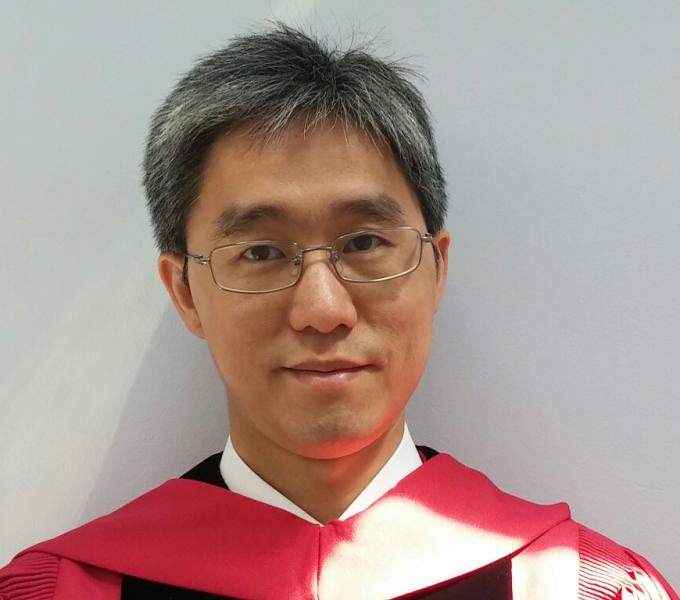
Sara Wade is a Lecturer in Statistics and Machine Learning at the University of Edinburgh , within the School of Mathematics . Her research focuses on Bayesian statistics, machine learning, and their applications in health sciences, particularly in dementia diagnosis and predictive modeling. She holds a PhD from the University of Milan and has held academic positions at the University of Cambridge and University of Warwick before joining Edinburgh. She teaches a popular Machine Learning and Python course for Master’s and final-year undergraduate students, attracting nearly 200 enrollments annually. Her work integrates Bayesian methods with modern machine learning, emphasizing interdisciplinary applications such as scalar-on-image regression and biomarker analysis. Notable contributions include developing hierarchical Dirichlet processes for clustering and uncertainty quantification in RNA velocity studies. She secured a Royal Society of Edinburgh grant for her dementia research project, which aims to improve early diagnosis through statistical modeling. Education: PhD in Statistics, University of Milan Bachelor’s in Mathematics, University of Maryland Wade advocates for diversity in STEM, actively participating in the Women in Machine Learning community. Her research bridges statistical rigor and computational tools, fostering collaborations across academia and healthcare sectors.
Kyle Chapman serves as Associate Professor and Department Chair of Humanities and Social Sciences at Oregon Institute of Technology, where he has strengthened the Population Health Management program since joining in 2016. His work bridges sociological theory with practical healthcare applications through teaching and community-engaged research. His educational background includes a Doctor of Philosophy in Sociology with specializations in Medical Sociology and Gerontology from the University of Kansas (2016), a Master of Arts in Sociology from Texas Tech University (2011), and dual Bachelor of Arts degrees in Sociology and Mass Communication from Texas Tech University (2008). Dr. Chapman's research investigates social determinants of health with emphasis on aging, chronic disease, and health disparities. His work examines how socioeconomic factors shape physical and mental health outcomes across community and population levels, particularly focusing on rural healthcare challenges in Oregon. Recent projects analyze wildfire smoke impacts on hospital capacity, mental health among first responders, and barriers to healthcare access for vulnerable populations. His publication record reveals a consistent trajectory from foundational sociological studies toward applied public health research, with increasing focus on environmental health crises since 2020. The 2023-2025 articles demonstrate sophisticated integration of case-crossover methodologies with state health data to address Oregon's unique wildfire-related health challenges, while maintaining core interests in health behaviors and chronic disease management. As an educator, Dr. Chapman teaches medical sociology, research methods, and social inequality courses. His curriculum development work, including the 'Integrated Sociology Programs' framework, reflects commitment to preparing students for health sector careers through the Population Health Management program. Outside academic duties, he explores Pacific Northwest natural attractions with his family.
Joris M. Mooij is a Professor of Mathematical Statistics at the Korteweg-De Vries Institute of the University of Amsterdam, Netherlands. His research focuses on causality, spanning causal modeling, discovery, and inference with applications in biology, medicine, fairness, and business analytics. He combines mathematical modeling with statistical and algorithmic approaches in his work. Dr. Mooij received his PhD with honors from Radboud University Nijmegen in 2007, focusing on approximate inference in graphical models. After postdoctoral work at the Max Planck Institute for Biological Cybernetics in Tübingen, Germany, he obtained an NWO VENI grant in 2011 for further postdoctoral research at Radboud University. He became Assistant Professor at the University of Amsterdam's Informatics Institute in 2013, was promoted to Associate Professor in 2017, and became a full Professor of Mathematical Statistics in 2020. Dr. Mooij's research centers on causal inference, with particular expertise in structural causal models, cyclic causal systems, and causal discovery algorithms. His work addresses fundamental questions about when causal relationships can be identified from observational data and how to develop robust causal discovery methods that work in complex real-world settings with latent variables, cycles, and selection bias. He has made significant contributions to understanding the limitations of existing causal discovery approaches and developing new methods that overcome these limitations. His research group organizes the Amsterdam Causality Meeting series and develops theoretical frameworks for causal modeling that encompass both acyclic and cyclic systems. Dr. Mooij has collaborated extensively on applications of causal methods in biological systems, including protein signaling networks and gene expression data. The group's recent work explores performative predictions, causal domain adaptation, and robust causal discovery methods that account for selection bias and missing data. Dr. Mooij has received numerous awards for his research, including: Best paper award at UAI for "Establishing Markov equivalence in cyclic directed graphs" IEEE Geoscience and Remote Sensing Society 2011 Letters Prize Paper Award ICML Test of Time Honorable Mention Best student paper award at UAI 2010 He has secured competitive research funding through an NWO VENI grant, NWO VIDI grant, and an ERC Starting Grant, which supported the establishment of his research group consisting of 3 PhD students and 3 postdocs focused entirely on causality. Dr. Mooij has supervised several PhD students, including Tineke Blom, whose work on "Causality and Independence in Perfectly Adapted Dynamical Systems" significantly influenced his thinking about causality in complex systems. He has co-taught the MasterMath course on Causality and published lecture notes titled "A Mathematical Introduction to Causality." His research continues to push the boundaries of causal inference methodology and its applications across diverse scientific domains.
Ardo van den Hout is a Professor of Statistics at the Department of Statistical Science, University College London. He holds a PhD in Social Statistics from Utrecht University (2004) and has previously worked at the MRC Biostatistics Unit in Cambridge. His research focuses on advanced statistical methodologies including longitudinal data analysis, survival analysis, multi-state models, and applications in aging research and public health. He has authored influential works such as Multi-state Survival Models for Interval-censored Data (2017). Research Interests Development and application of multi-state models for complex health data Survival analysis techniques for interval-censored and longitudinal datasets Methodological advancements in cognitive decline and disease progression modeling Integration of socio-economic factors in health expectancy analysis Key Contributions Pioneered penalized likelihood approaches for multi-state models Developed frameworks for estimating life expectancies in health and disease Advanced methods for handling missing/misclassified data in longitudinal studies Awards Recipient of the Gopal Kanji Prize 2012 for outstanding contributions to statistics Professional Activities Maintains an active research program with collaborations across biostatistics, epidemiology, and health economics. Supervises doctoral students focusing on statistical methodologies with real-world health applications. His work frequently addresses critical questions in aging populations, cancer research, and public health policy.
Lili Liu is the Dean of the Faculty of Health and a Professor at the University of Waterloo. Her research focuses on leveraging technologies to support older adults and family caregivers, particularly those living with dementia. She leads projects funded by Age-Well NCE, including apps for dementia risk management, usability scales for locating missing persons, and national data strategies. Collaborating with Ryerson University, she develops drone algorithms for locating cognitively impaired individuals. Education: PhD, MSc, and BSc in Rehabilitation Science and Occupational Therapy from McGill University. Research interests emphasize assistive technologies, caregiver support, smart home systems, and mixed-methods approaches. She explores ethical challenges in tech adoption, such as privacy concerns in alert systems and guardianship implications. Recent work includes digital storytelling interventions and frameworks for autonomy and independence in aging populations. Publications span dementia-related wandering, technology acceptance, and fall detection, with a focus on translational research. She advocates for policy changes through initiatives like Alberta’s Bill 210 (Silver Alert system). Current lab activities include the Aging and Innovation Research Program (AIRP), focusing on tech solutions for aging challenges.
Dr. George C Tseng serves as Professor and Vice Chair for Research in the Department of Biostatistics at the University of Pittsburgh School of Public Health, with secondary appointments in Human Genetics and Computational and Systems Biology. His educational background includes a BS (1997) and MS (1999) in Mathematics from National Taiwan University and an ScD (2003) in Biostatistics from Harvard School of Public Health. Dr. Tseng's research focuses on developing statistical methodologies for genomic and bioinformatic applications to advance precision medicine. His work spans multiple high-impact areas including multi-omics data integration, machine learning for high-dimensional data, cluster analysis for disease subtyping, and statistical methods for experimental design in omics studies. His approach emphasizes close collaboration with biological and clinical researchers to ensure methodological relevance to real-world problems. His publication record demonstrates consistent contributions to top statistical and bioinformatics journals, with recent work focusing on congruence analysis between animal models and humans, outcome-guided clustering methods, and high-dimensional causal mediation analysis. Elected Fellow, American Statistical Association (2017) Statistician of the Year, ASA Pittsburgh Chapter (2017) Provost's Award for Excellence in PhD Mentoring, University of Pittsburgh (2019) Clinical Research Scholar (K12) Award, NIH (2007-2009) Elected Member, International Statistical Institute (2012) Dr. Tseng has successfully mentored over 25 PhD students who have secured positions in academia, industry, and government agencies. His laboratory has maintained continuous NIH funding as principal investigator since 2012, including current grants R01CA285337 (2025-2030) and R01LM014142 (2023-2026). The Tseng Lab operates as a collaborative research environment focused on translating statistical innovations into practical solutions for biological and medical challenges, with strong connections to multiple research centers and clinical departments at the University of Pittsburgh.
Prof. Dr. Matthias Weidlich is a faculty member at Humboldt University of Berlin within the Institute of Computer Science under the Faculty of Mathematics and Natural Sciences . His research focuses on Process Mining , Complex Event Processing , and Data Privacy with applications in Business Process Management and Scientific Workflows . Research Interests: Business Process Management and Process Mining Complex Event Processing and Stream Data Analysis Data Privacy and Security in Process Systems Scientific Workflow Systems and User Behavior Heterogeneous Network Embeddings Algorithm Design and Optimization Recent Publications (2023-2025) demonstrate expertise in: Efficient stream processing techniques Privacy-preserving process mining frameworks Scientific workflow analysis tools Graph neural network applications Multi-modal data integration Adaptive querying systems Contact: Office: Unter den Linden 6, 10099 Berlin Phone: 030 2093-41277 Email: matthias.weidlich@hu-berlin.de Web: hu.berlin/data
James Urquhart Allingham is a Research Scientist at Google DeepMind , working on the Gemini project. He completed his PhD in the Machine Learning Group at the University of Cambridge under the supervision of José Miguel Hernández-Lobato, with funding from EPSRC, the Michael E. Fisher Studentship in Machine Learning, and the Qualcomm Innovation Fellowship. He was also part of the ELLIS PhD program, advised by Eric Nalisnick at AMLab UvA. Current affiliation: Google DeepMind (Research Scientist) PhD: University of Cambridge (Machine Learning Group) Academic networks: ELLIS PhD program, Darwin College His research focuses on the intersection of Bayesian deep learning and probabilistic methods in deep learning. Key areas include deep generative models , zero-shot classification , prompt engineering , Monte Carlo gradient estimation , and applications to sustainability and climate change . His work has explored energy-based models , neural architecture search , and equivariance in convolutional networks . Selected scientific awards and grants include the Michael E. Fisher Studentship , Qualcomm Innovation Fellowship , and MPhil in Advanced Computer Science with Distinction . He has collaborated with institutions such as the Amsterdam Machine Learning Group (AMLAB) and University of the Witwatersrand .
Andrew Zammit Mangion is an Associate Professor at the University of Wollongong , affiliated with the School of Mathematics and Applied Statistics . His research focuses on spatio-temporal statistics, computational methods, and environmental informatics, with applications in climate science and geospatial data analysis. Education : PhD in Statistics (University of Sheffield, 2012), B.Eng. (University of Malta, 2007) Research Themes : Spatio-temporal modeling, Bayesian inversion frameworks (e.g., WOMBAT v2.S), deep learning integration, and statistical software development (e.g., FRK package) Grants & Projects : ARC DECRA Fellow (2018), Chief Investigator on ARC Discovery Project (greenhouse gases), ARC Special Research Initiative (Securing Antarctica's Environmental Future), and ARC Industrial Transformation Hub (TIDE). Collaborations : University of Bristol, University of Edinburgh, ESA CCI, NASA OCO-2 data projects Scientific Awards include the prestigious Australian Research Council Discovery Early Career Researcher Award (DECRA). His work spans Antarctic ice sheet analysis, CO2 flux inversion, and scalable spatial statistical models for environmental monitoring.
Garvesh Raskutti is an Associate Professor in the Department of Statistics at the University of Wisconsin–Madison, affiliated with the School of Computer, Data & Information Sciences. He holds joint affiliations with the Departments of Computer Science, Electrical and Computer Engineering, and the Wisconsin Institute of Discovery Optimization Group. His research focuses on statistical machine learning, optimization, graphical/network modeling, and information theory, with applications to systems biology and neuroscience. Education: MEng from the University of Melbourne (2008), PhD from UC Berkeley (2012, advised by Martin Wainwright and Bin Yu), and postdoctoral work at SAMSI. Teaching awards include Honored Instructor (2014, 2017) and Madison Teaching and Learning Excellence Fellow (2015). He advises multiple PhD and undergraduate students, including Yuan Li, Hyebin Song, and Lili Zheng. His grants include NGA HM0476-17-1-2003 (Co-PI), ARO W911NF-17-1-0357 (Co-PI), and NSF-DMS 1407028 (Sole PI). Research interests span large-scale statistical inference, computational-statistical trade-offs, and applications in systems biology and neuroscience. His work bridges optimization (e.g., gradient descent, convex regularization), high-dimensional regression, and network analysis. Recent trends in publications emphasize methods for non-convex optimization, sparse models, and network structure learning. Awards include teaching recognition and grants in statistical methodology. Advising spans theoretical and applied projects, with former students like Gunwoong Park (now at University of Korea). Collaborations include interdisciplinary teams in machine learning and signal processing.
Miaoyan Wang is an Associate Professor in the Department of Statistics at the University of Wisconsin-Madison, part of the School of Computer, Data & Information Sciences. She holds early tenure and is a faculty affiliate in the Mathematical Foundations of Machine Learning, Institute for Foundations of Data Science (IFDS), and Center for Demography of Health and Aging (CDHA). She is currently on sabbatical as a visiting associate professor at Stanford University and Lawrence Livermore National Laboratory. Education: PhD in Statistics from the University of Chicago (2015), BS in Mathematics from Fudan University (2010). Postdoctoral training included positions at UC Berkeley (Computer Science) and the University of Pennsylvania (Math+X). Research focuses on statistical machine learning, with emphasis on matrix/tensor data analysis, high-dimensional statistics, nonparametric learning, and applications in genetics. Her work bridges theory and practice, addressing challenges in computational efficiency and statistical optimality for complex data structures. Awards include the prestigious NSF CAREER Award (2022), multiple best paper awards (ASA, IMS, NEURIPS), and recognition from ASHJ and IGES. Her group has secured grants totaling $3.4 million, including NSF funding for foundational machine learning research and collaborative projects in population genomics. Advising includes PhD students Chanwoo Lee and Jiaxin Hu, with former students Yuchen Zeng and Zhuoyan Xu. She teaches advanced statistical methods and computational courses, emphasizing rigorous theoretical foundations and practical applications. Key collaborations include work on tensor decomposition algorithms, statistical genetics, and interdisciplinary projects with biology and computer science departments. Her lab contributes open-source software tools for data analysis, including packages for tensor block models and multiway clustering.
Dr. Kathryn Kaiser is an Assistant Professor in the Department of Health Behavior at the University of Alabama at Birmingham (UAB) School of Public Health. She holds concurrent appointments in multiple research centers including the Center for Clinical and Translational Science and the Nutrition Obesity Research Center (NORC). Her research focuses on meta-research methodologies, race/sex disparities in obesity, systematic reviews of nutrition interventions, and advancing FAIR data principles for scientific communication. Education: B.S. Microbiology (Texas A&M), B.S. Medical Technology (University of Texas Health Science Center), Ph.D. in Health Psychology (University of North Texas Health Science Center). Postdoctoral training in Vascular Biology/Hypertension at UAB. Extensive background in medical diagnostics instrumentation and laboratory science prior to academia. Research Interests: Systematic review methodologies, FAIR data standards, obesity disparities with a focus on neuroendocrine mechanisms, and translational research in bariatric surgery outcomes. Specializes in methodological rigor for clinical trials and evidence synthesis. Grants: NIH-funded projects on FAIR principles implementation, dairy intake research, obesity energetics, and lifespan studies. Recent grants include $2.1M for metadata education programs and $1.8M for knowledge mapping initiatives. Awards: Recognized as 2015 Top Reviewer for American Journal of Preventive Medicine. Serves as Associate Editor for Frontiers in Nutrition. Active member of Cochrane Collaboration and multiple professional societies. Teaching: Graduate courses in Health Program Evaluation, Psychophysiology, and Systematic Review Design. Supervises doctoral students in health behavior research through 30+ dissertation committees since 2011. Labs/Teams: Key contributor to UAB's Nutrition Obesity Research Center (NORC) and Center for Outcomes and Effectiveness Research (COERE). Collaborates with international metadata initiatives like Metadata 2020 and science dialogue mapping projects.
Naim U. Rashid, PhD, is an Associate Professor with tenure in the Department of Biostatistics at the UNC Gillings School of Global Public Health and holds a joint appointment as Research Associate Professor at the Lineberger Comprehensive Cancer Center. He serves as Associate Director of the Lineberger Biostatistics Shared Resource and co-directs the Biostatistics Cores of the UNC Pancreatic and Breast Cancer SPOREs. His work bridges statistical methodology development with collaborative cancer research, focusing on translating genomic discoveries into clinical applications. Dr. Rashid's research spans precision medicine, genomics, statistical computing, and machine learning with specific applications to pancreatic and breast cancers. His lab develops novel statistical methods for high-throughput genomic data analysis, cancer subtyping, missing data problems in deep learning, and clinical trial design. Recent work includes developing an AI tool that recommends optimal clinical trials to pancreatic cancer patients, funded by a $311,000 Department of Defense grant in 2024. His methodological contributions focus on improving replicability in gene signature selection and clinical prediction, with emphasis on addressing racial disparities in cancer outcomes. His publication record shows consistent output in top statistical and medical journals, with recent work focusing on high-dimensional statistics, missing data methods, and cancer genomics. His research demonstrates a clear trajectory from methodological innovation to clinical implementation, particularly in pancreatic cancer where his PurIST classifier has gained recognition. The work increasingly incorporates machine learning approaches while maintaining strong statistical foundations. Delta Omega Faculty Award (2021, UNC Chapel Hill) IBM and R.J. Reynolds Junior Faculty Development Award (2017, UNC Chapel Hill) Barry H. Margolin Dissertation Award (2013, UNC Chapel Hill) Training Grant recipient (2006-2011, Genomics and Cancer) Dr. Rashid actively mentors graduate students and serves as trial statistician on multiple cancer clinical trials. He teaches BIOS 735, a doctoral-level course on statistical computing, and is involved with the Translational Breast Cancer Research Consortium Statistical Working Group. His lab collaborates extensively with clinicians at UNC Lineberger and beyond, with recent work including the PROCLAIM Study examining mHealth apps to improve diverse recruitment in pancreatic cancer trials. The Rashid Lab focuses on developing computational tools that directly impact clinical decision-making while addressing methodological challenges in genomic data analysis.
Jennifer G. Cromley is a Professor in the Department of Educational Psychology at the University of Illinois at Urbana-Champaign. Her research focuses on comprehension of illustrated scientific text and the achievement and retention of undergraduate students in STEM majors. She employs both basic (eye tracking, think-aloud protocols) and applied research methods (randomized control trials, quasi-experiments) across educational settings from middle school to undergraduate programs. PhD in Human Development from University of Maryland, College Park Her work spans experimental and technology-delivered instruction, funded by the US Department of Education, National Science Foundation, and university grant programs. She has been recognized twice as one of the world's most productive Educational Psychologists. Research areas: STEM Education Learning Theories Instructional Design Student Motivation Educational Research Methodology Key Collaborations: ASEE (American Society for Engineering Education) University of Illinois Urbana-Champaign Scientific Awards & Funding National Science Foundation Grants US Department of Education Awards University Grant Programs World's Most Productive Educational Psychologist Recognition (x2) She mentors graduate students through an apprenticeship model, integrating them into active research projects for authorship opportunities in peer-reviewed publications.
Laura Balzer, PhD, MPhil is an Associate Professor of Biostatistics at the University of California, Berkeley . Her research focuses on methodological and applied work in causal inference , machine learning , and messy real-world data , particularly in the context of HIV prevention and global health in East Africa. PhD – Biostatistics, University of California, Berkeley (2015) MPhil – Computational Biology, University of Cambridge (2009) BS – Applied Mathematics, University of Vermont (2008) Dr. Balzer specializes in the design and analysis of cluster randomized and pragmatic trials , addressing challenges like differential measurement , complex dependence , and missing data . Her work integrates epidemiologic methods with machine learning to enhance rigor in real-world studies. Recent publications emphasize community-based HIV interventions , dynamic choice models , and causal inference frameworks for global health applications in Kenya and Uganda. Her methodological contributions include Two-Stage TMLE for handling sub-sampling and non-independent units , while applied studies examine HIV-tuberculosis interactions , hypertension care models , and social network effects on health outcomes. Dr. Balzer’s role as a Primary Statistician for East African studies underscores her commitment to translating academic advances into public health impact .