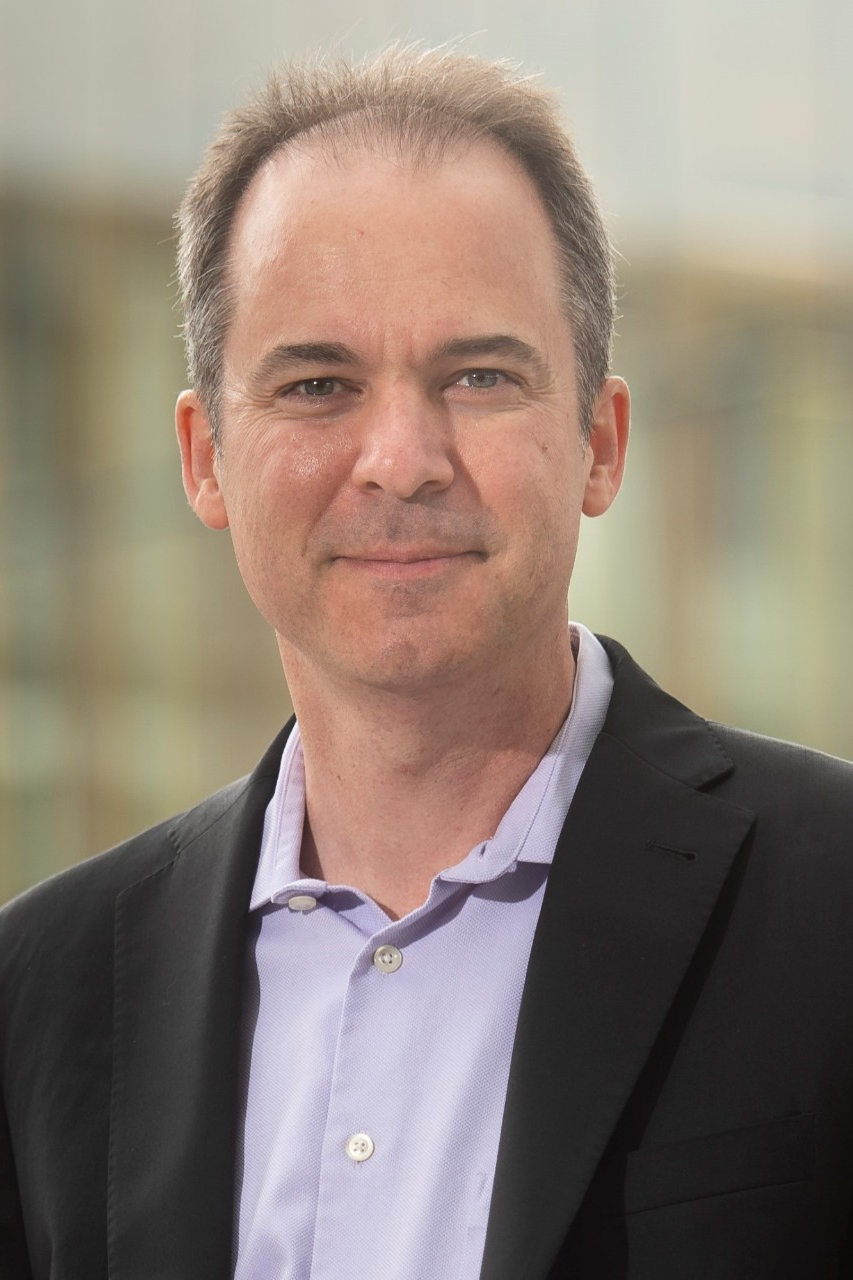
Dugan O'Neil is a Professor and Vice-President, Research and International at Simon Fraser University (SFU), Department of Physics. He leads research in high energy physics, focusing on fundamental particles, proton-antiproton collisions at Fermilab Tevatron, and CERN's ATLAS experiment. His work also encompasses high performance computing and data management. Education: B.Sc. (New Brunswick), M.Sc. (Alberta), Ph.D. (Victoria) Research Group: Includes Ph.D. candidates Jakub Stacho, Dilraj Ghuman, Hamza Hanif, and M.Sc. candidate Paras Pokharel Key Facilities: ATLAS detector, HEP Group collaborations Research interests span collider physics, Higgs boson studies, and dark matter exploration. His team utilizes advanced computational methods for data analysis in particle physics experiments.
Nicole Yang is a Visiting Assistant Professor at Emory University. She holds a PhD from 2021, though the institution is not explicitly stated in the provided text. Her research focuses on interdisciplinary areas including machine learning, financial mathematics, stochastic processes, computer vision, and optimal transport. She explores topics such as fairness in AI, dynamical systems, volatility modeling, and generative modeling with applications in finance and data science. Her work bridges theoretical foundations (e.g., Schrödinger bridges, PDEs) with practical challenges like time series imputation and facial recognition bias mitigation. Recent publications emphasize statistical accuracy in dynamical systems and relative arbitrage strategies in complex markets. She maintains an active research agenda in high-dimensional problems, such as image generation via score-based diffusion models and constrained generative modeling. No scientific awards or grants are explicitly listed in the text. Her advising record is not provided, and no specific lab affiliations are mentioned. Her email is listed as yang@pstat.ucsb.edu, suggesting possible academic ties to the University of California, Santa Barbara, though her current faculty role is at Emory University.
Eloi Moliner is a Doctoral Researcher in the School of Electrical Engineering and the Department of Information and Communications Engineering. His research focuses on audio signal processing , leveraging diffusion models and deep learning to address challenges in audio restoration, dereverberation, and generative techniques. He explores unsupervised learning , nonlinear distortion estimation , and audio inverse problems . Key research interests include room acoustics modeling , timbre transfer , and historical audio restoration . Recent work emphasizes diffusion-based methods for tasks like bandwidth extension and noise synthesis. His contributions span unpaired domain transfer , blind signal processing , and generative equalization . 3 scientific awards highlight his work, though specifics are not detailed. No advising roles or grants are listed in the provided texts.
Dr. Catherine Leigh is an Associate Professor in the School of Science at RMIT University, Australia. Her research focuses on environmental science, hydrology, and ecological systems, with particular expertise in intermittent river ecosystems, water quality monitoring, and biodiversity conservation. She leads interdisciplinary projects combining fieldwork, sensor technology, and computational methods to address environmental challenges. Dr. Leigh is actively involved in supervising Masters and PhD students in environmental research. Her work emphasizes innovative data analysis techniques, including machine learning for anomaly detection in environmental sensor data, and has contributed to global understanding of dry river ecosystems' biodiversity and climate impacts. She collaborates internationally on projects addressing carbon cycling in drylands and sustainable water management in agricultural systems like the Mekong Delta. Dr. Leigh's publications span over 50 peer-reviewed articles, with recent work highlighting advancements in high-frequency water quality monitoring frameworks and the ecological consequences of anthropogenic salinization. She advocates for holistic approaches integrating ecological, hydrological, and statistical methodologies to inform environmental policy and conservation strategies.
Ruby Byrne is a Visiting Associate Professor in the Division of Physics, Mathematics and Astronomy at California Institute of Technology (Caltech), specializing in observational and computational radio astronomy. She holds an NSF Postdoctoral Scholar Fellowship focused on probing the Cosmic Dawn using the Owens Valley Long Wavelength Array (OVRO-LWA). Her research emphasizes 21 cm cosmology, Epoch of Reionization studies, and radio interferometry systematics. Key technical contributions include developing calibration algorithms to mitigate mutual coupling errors in arrays like HERA and MWA, optimizing data pipelines for 21 cm power spectrum analysis, and advancing techniques to suppress ultrafaint radio frequency interference. She is deeply involved with major instruments including the Murchison Widefield Array (MWA), HERA, and OVRO-LWA Stage III. Her work bridges observational astronomy with advanced data science, addressing critical challenges in precision cosmology. Recent efforts focus on enabling next-generation radio arrays to detect faint signals from the early universe while minimizing instrumental and environmental noise sources. Primary Research Areas: Radio Astronomy Instrumentation, 21 cm Cosmology, Epoch of Reionization, Radio Frequency Interference Mitigation Instrument Leadership: OVRO-LWA Stage III, HERA Phase II, MWA Phase II Methodologies: Widefield interferometry, optimal mapping algorithms, statistical calibration Publications span both methodological innovations and observational results, with a focus on improving the sensitivity and accuracy of low-frequency radio observations to uncover cosmic dawn processes.
Robert Sherman is a Professor of Economics and Statistics at the California Institute of Technology (Caltech), affiliated with the Division of Humanities and Social Sciences. He holds a Ph.D. in Statistics from Yale University (1991) and joined Caltech in 1996 as an Assistant Professor, advancing to his current rank in 2005. His research focuses on asymptotic methods, semiparametric estimation, and addressing data deficiencies such as misreporting or nonresponse. Sherman has contributed to econometric theory, panel data analysis, and environmental pollutant modeling. Education: B.A. in Philosophy and Latin (Marquette University, 1978), M.A. in Mathematics (University of Louisville, 1985), M.Phil. in Statistics (Yale, 1987), and Ph.D. in Statistics (Yale, 1991). Prior to Caltech, he was at Bellcore's Statistics and Economics Research Group (1990–1996). Research Interests: Asymptotic theory, causal effects estimation in regression models, correlated random coefficient models, and applications to environmental and educational data. His work emphasizes large-sample behavior of estimators and robustness to data contamination. Publications span econometric theory journals (e.g., Econometrica, Journal of Econometrics) and interdisciplinary topics like network traffic analysis (e.g., IEEE/ACM Transactions on Networking). Notable contributions include methodologies for bounding treatment effects and analyzing biased survey data. Advising and Grants: While formal advisee names are unspecified, his research collaborations include co-authors such as Jeff Dominitz, Roger Klein, and Martin S. Taqqu. His work has been supported by grants related to econometric modeling and data analysis.
Stine Hangaard is an Associate Professor at Aalborg University, affiliated with the Department of Health Science and Technology within The Faculty of Medicine. Her work focuses on diabetes management, telemedicine, and biomedical engineering applications in healthcare. She contributes to UN Sustainable Development Goals related to health and well-being. University: Aalborg University Faculty: The Faculty of Medicine Department: Health Science and Technology Research Interests: Diabetes Management (Type 1/2), Telemedicine solutions for chronic diseases, Remote Patient Monitoring , and Medical Informatics with a focus on data-driven healthcare strategies. Her work integrates machine learning and sensor technologies for improving treatment adherence and clinical outcomes. Recent publications (2022-2025) emphasize telemonitoring efficacy, basal insulin adherence analysis, and contactless sleep monitoring for COPD. She leads the ADAPT-T2D project (2019-2025), exploring cloud-based personalized diabetes treatment. Over 97 publications and 10 datasets highlight her contributions to systematic reviews, meta-analyses, and clinical trial protocols. Media Highlights : Her work has been featured in 5 media outlets, including coverage of telemonitoring's impact on glycemic control and breakthroughs in type 2 diabetes treatment. She advises 5 PhD students and oversees datasets on insulin dose guidance and telemedicine efficacy.
Dr. Gary KL Tam is a Senior Lecturer in the Department of Computer Science at Swansea University's School of Mathematics and Computer Science. He has been with Swansea University since 2012, initially as a Lecturer (2012-2018) and promoted to Senior Lecturer in 2018. He is based at The Computational Foundry on Bay Campus and is actively involved in research through the Visual Computing Group and RIVIC. Dr. Tam's research spans several key areas in computer science, with a strong focus on visual analytics, machine learning, and digital geometry processing. His work demonstrates expertise in analyzing multidimensional data, information retrieval, and pattern recognition. He has developed substantial research in 3D reconstruction techniques, point cloud processing, and their applications in medical imaging and urban modeling. His publication record shows a clear evolution from foundational work in 3D shape matching and non-rigid registration to current applications in medical diagnostics (particularly Chronic Kidney Disease classification), Welsh language processing (CymruFluency project), and industrial applications. Recent publications demonstrate strong interdisciplinary work bridging computer vision, machine learning, and healthcare applications. Best VAST Paper Award at VIS 2016 Conference for 'Analysis of Machine- and Human-Analytics in Classification' Excellence in Learning and Teaching Award (ELTA) from Swansea University (2018) Dr. Tam actively supervises numerous PhD students across diverse research topics including explainable AI for economic growth, 3D city reconstruction, medical diagnostics, and human-in-the-loop systems. He has secured multiple research grants totaling over £50,000 from sources including CHERISH-DE, EPSRC, and Swansea University funds, supporting projects in medical AI, Welsh language processing, and computational infrastructure. His research group maintains strong collaborations with Cardiff University, National University of Singapore, and various medical research institutions, focusing on applying advanced computational techniques to real-world problems in healthcare, language processing, and industrial applications.
Tetiana Gorbach is an Associate Professor (on leave) at the Umeå School of Business, Economics and Statistics (USBE), Department of Statistics, Umeå University. Her research focuses on developing statistical methods for analyzing missing data, particularly in cognitive ageing and dementia research, alongside causal inference methodologies. Research Projects: Principal Investigator of "Selection bias in ageing studies: novel statistical methods for analyses of incomplete datasets" (Fortes Postdoc Grant, 2022-2023, SEK 2,300,000) Co-applicant on the "Machine learning to study causality with big datasets" project (Marianne and Marcus Wallenberg Foundation, 2022-2027, SEK 6,000,000) Research Interests: Her work bridges statistical theory and neuroscientific applications, emphasizing causal inference, longitudinal data analysis, and neuroimaging. Key areas include: Missing data mechanisms in aging studies Machine learning for causal effect estimation Neuroimaging analysis of brain connectivity Genetic influences on cognitive decline Labs/Groups: Member of the Stat4Reg research group. Collaborates on the DYNAMIC project studying dopamine and brain connectomes in cognitive aging.
Inci Batmaz is a Professor of Statistics at the Middle East Technical University (METU) in Ankara, Turkey. She holds a dual Ph.D. in Computer Engineering (Ege University, Turkey) and a Dissertation from Carnegie-Mellon University (USA) as a Fulbright Scholar. Her academic career includes roles such as Chair of the Department of Statistics (2012–2015), Graduate Program Coordinator, and membership in various institutional boards. She has been affiliated with the Financial Mathematics Program at METU's Institute of Applied Mathematics since 2003. Her research focuses on Data Science & Analytics, Data Mining, Computational Statistics, Machine Learning, and Environmental Statistics. She has published extensively in top journals and edited volumes, including Recent Advances in Statistics (2007) and contributed to climate change studies, financial modeling, and simulation metamodeling. Dr. Batmaz has been recognized with multiple awards, including METU Publication Awards (2007–2016), TÜBİTAK Fellowships, and the Netherlands National Research Foundation Grant (2002). Her work bridges statistical methodology with real-world applications in climate science, finance, and industrial quality improvement.
Karen M. Glueckert, Ph.D., is a Researcher at the Evaluation Services Center (ESC) within the College of Education, Criminal Justice, and Human Services (CECH) at the University of Cincinnati. With over 20 years of evaluation experience in K-12 education, she has led high-impact projects such as the statewide Learning Recovery evaluation involving Ohio’s 51 educational service centers. Her career includes teaching (K-12 and college) and school leadership roles as a middle/high school principal. Education: B.S. in Middle School Education (Math & Music), University of North Dakota, 1988 M.Ed. in Educational Leadership, Covenant College, 2006 Ph.D. in Quantitative, Qualitative, and Psychometric Methods (expected 2024), University of Nebraska-Lincoln Research Focus: Dr. Glueckert specializes in mixed-methods research, program evaluation, and meta-analysis. She emphasizes combining quantitative and qualitative approaches to assess program effectiveness and educational outcomes. Her work bridges practical evaluation practices with rigorous statistical methodologies. Labs/Teams: She is affiliated with the Evaluation Services Center (ESC), which supports data-driven decision-making in education. Her role involves collaborating with institutions to design and implement evaluation frameworks. Grants/Advising: No specific grants or advisees are listed in the provided text.
Dr. Becky Canning is the Deputy Director (Space) at the University of Portsmouth's Faculty of Technology, affiliated with the Institute of Cosmology & Gravitation and the Centre of Excellence in Defence, Risk & Resilience. Her research focuses on cosmology, astrophysics, and galaxy clusters, with a strong emphasis on large-scale structure, dark matter, and baryon acoustic oscillations. She contributes to the Dark Energy Spectroscopic Instrument (DESI) collaboration, leading publications on clustering statistics, quasar surveys, and cosmological constraints. Her work spans observational and theoretical studies of galaxy clusters, protoclusters, and active galactic nuclei, often utilizing X-ray and multi-wavelength data. Dr. Canning has published over 36 articles in high-impact journals like Nature, Monthly Notices of the Royal Astronomical Society, and The Astrophysical Journal. She is actively involved in instrument development and survey validation for major cosmological projects.
Linying Ji is an Assistant Professor at Montana State University, specializing in interdisciplinary research that combines machine learning with physiological and behavioral health studies. Her work primarily focuses on sleep health, cognitive performance, and inflammatory biomarkers in aging populations. Research Interests: Ji develops advanced methodologies for analyzing longitudinal and intensive longitudinal data, particularly in sleep research. She employs machine learning techniques to model affective experiences, studies sleep variability, and investigates how social factors moderate health outcomes in older adults. Key Publications Trends: Her recent work emphasizes actigraphy data analysis, missing data handling in multilevel studies, and the intersection of sleep patterns with neurodegenerative biomarkers. She frequently contributes to methodological innovations in dynamic modeling and statistical frameworks.
Erkki Pesonen is a Senior Lecturer and Deputy Head of Department at the School of Computing, University of Eastern Finland. His roles include teaching foundational computer science courses and spearheading modern pedagogical approaches such as flipped classrooms and student analytics. He actively contributes to institutional governance as a member of the University of Eastern Finland Board. His research focuses on computer science education, including student expectations, pedagogical collaboration, and the integration of technology in learning environments. Previously, he conducted pioneering work in medical informatics, particularly using neural networks for diagnostic support systems in acute appendicitis and abdominal pain. Education: Erkki holds a Doctor of Philosophy (PhD) in Computer Science, demonstrated by his 1998 dissertation on neural network-based decision systems. Research Interests: Computer Science Education Educational Technology Machine Learning Applications Medical Informatics Notable Contributions: Developed pedagogical strategies for first-year computing students Authored influential studies on work planning in academia Pioneered neural network applications for medical diagnosis Awards: None explicitly listed in provided materials. Grants and Funding: No specific grants mentioned.
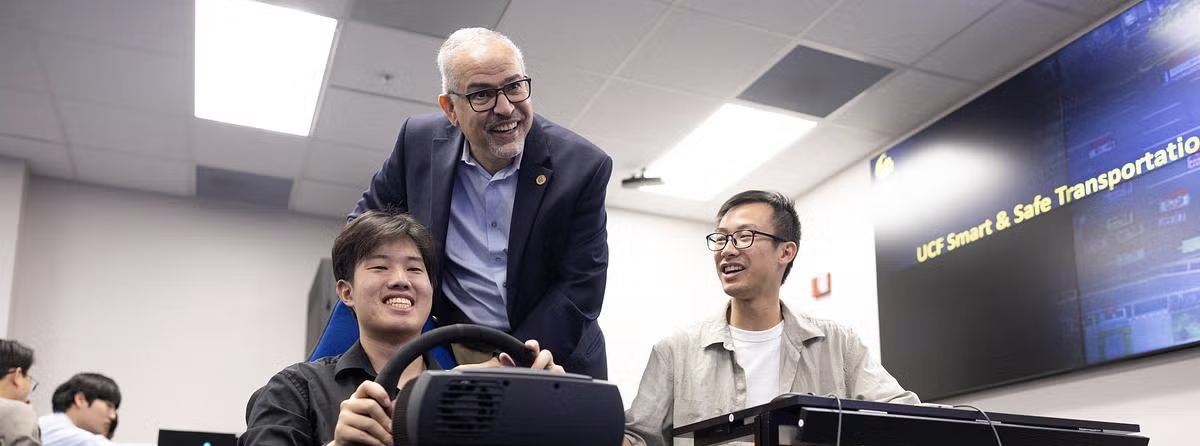
Mohamed Abdel-Aty is a Pegasus Professor and former Chair of the Department of Civil, Environmental and Construction Engineering at the University of Central Florida (UCF), College of Engineering and Computer Science. He holds the prestigious Trustee Chair and is globally recognized for his transformative work in transportation safety and intelligent transportation systems. Education: Ph.D. in Civil Engineering, University of California, Davis, 1995 His research focuses on traffic safety, big data analytics, connected and automated vehicles, real-time crash prediction, and active traffic management. He has pioneered methods that shift road safety from reactive to proactive, using real-time data to predict crashes 5–10 minutes in advance. His work integrates machine learning, simulation, and computer vision to enhance transportation safety and efficiency. His recent publications reflect a strong trend in applying advanced statistical and AI models—such as random parameters, bivariate probit, and mixture-of-experts architectures—to analyze crash severity, vehicle conflicts, driver behavior, and trajectory prediction. These studies leverage real-world data from connected vehicles, drones, and traffic sensors, emphasizing practical implementation and policy impact. Scientific Awards and Honors: Pegasus Professor, UCF (2015) Trustee Chair, UCF (2017) Roy W. Crum Distinguished Service Award, TRB (2020) Prince Michael International Road Safety Award (2019) Francis C. Turner Award, ASCE (2019) Clarivate Highly Cited Researcher (2020–2023) UCF Medal of Societal Impact (2025) Lifetime Achievement Safety Award, ARTBA (2019) Abdel-Aty has secured over $32 million in research funding and has graduated 44 Ph.D. and 63 master’s students. He currently mentors 15 Ph.D. students. He served as graduate program coordinator and led the development of UCF’s master’s program in smart cities. He is Editor-in-Chief of Accident Analysis & Prevention and serves on multiple editorial boards, significantly shaping the field’s scholarly discourse. He leads the UCF Smart and Safe Transportation (SST) Lab, which developed CitySim—a drone-collected trajectory database used by over 480 researchers globally. His team created software for detecting traffic conflicts and near-misses, and their real-time crash risk prediction system is implemented by the Florida Department of Transportation and emulated internationally.