Jong-Hwan Kim is a Professor at KAIST's College of Engineering, specialized in robotics and artificial intelligence. His research focuses on neural networks, autonomous systems, computer vision, and human-robot interaction. He has published extensively in top-tier conferences like CVPR, ICRA, and IEEE Transactions. Key contributions include work on developmental learning networks, episodic memory models, and AI applications in robotics and healthcare. He co-chaired the RiTA conference series and has collaborated with institutions globally. His research bridges theoretical advancements with practical applications in robotics, medical diagnostics, and multimodal AI. Affiliations: KAIST (main), Seoul National University (PhD 1987) Research Highlights: Visual odometry, gesture recognition, emotion modeling, and robotics task intelligence Recent projects include text recognition via finger movement, Alzheimer's disease classification using EEG-FNIRS fusion, and multimodal emotion recognition systems. His work emphasizes interdisciplinary approaches, integrating robotics, computer vision, and cognitive science.
Dr. Heiner Beckmeyer is an Assistant Professor at the Chair of Derivatives and Financial Engineering at the University of Münster. He holds a PhD (2022) and the CFA charter (2024). His research focuses on asset pricing, machine learning applications in finance, and derivatives markets. He has published in top journals like the Review of Financial Studies and received awards such as the Jack Treynor Prize and multiple best paper recognitions. He teaches courses in Asset Pricing and Derivatives at the Master's level, and his work frequently addresses topics like option return predictability, market efficiency, and retail trading behavior. Education: Master of Science in Business Administration (2016-2018), Bachelor of Science in Business Administration (2013-2016). Research Interests: Machine learning in finance, derivatives pricing, market microstructure, and behavioral finance. Awards: Jack Treynor Prize (2023) Best Paper Award at INQUIRE Europe/UK (2024) Finalist for Crowell Prize (2025) Recent Work: Explores intraday option reversals, unusual financial communication via AI, and retail trader behavior in 0DTE options. Active in presenting at conferences like EFA, FMA, and SFS Cavalcade.
José Manuel Aburto is a Guest Researcher at CPop (Center for Biodemography) at the University of Southern Denmark . His work focuses on demography, lifespan variation, life expectancy trends, and mortality trajectories, with a particular emphasis on how violence and pandemics (e.g., COVID-19) affect population health. He has contributed to global databases like COVerAGE-DB and participated in projects such as the AXA Chair in Longevity Research and Unequal Lifespans (ERC Advanced Grant) . Education: Ph.D. in Demography. His research spans lifespan inequality , maternal health , violent mortality , and pandemic impacts , often using register-based and cross-national data. Recent work includes analyzing the interplay between life years lost and lifespan variation , as well as maternal near-miss indicators . He has also explored geofaceting and decomposition techniques to visualize and quantify demographic patterns. Scientific awards include the Royal Danish Academy of Sciences and Letters Silver Medal (2022) , the 2021 European Demographer Award , and multiple Editor's Choice recognitions. He has published extensively in journals like Science Advances , International Journal of Epidemiology , and Nature Human Behaviour . Aburto actively collaborates with researchers on global health and mortality modeling , with recent projects involving Denmark, Mexico, Italy, and Russia. He contributes to teaching through courses like Decomposition Techniques in Health Research and has supervised work on lifespan variation.
Professor Ralf Brüggemann is a full-time faculty member at the University of Konstanz , holding the Chair of Statistics and Econometrics since October 2007. He completed his Habilitation in Time Series Econometrics at Humboldt-Universität zu Berlin in 2007 and received his Ph.D. in Economics in 2003 for work on VAR model reduction techniques. Education : Habilitation: "Topics in Time Series Econometrics", Humboldt University Berlin (2007) Ph.D.: Economics, Humboldt University Berlin (2003) Diplom: Economics, Humboldt University Berlin (1999) His research spans Time Series Econometrics with focus on Cointegrated VAR Models , Structural VAR/VECM , Forecasting Methods , and Empirical Macroeconomics . Key contributions include methodological work on structural identification, variable selection in high-dimensional VAR, and monetary policy analysis using microeconomic data. Recent publications address External instruments in SVAR identification (2022) Directed graphs for VAR variable selection (2022) Stochastic aggregation weights in forecasting (2023) Asymmetric impulse responses in European financial markets (2014) with methodological innovations in heteroskedasticity-robust inference and stochastic aggregation weights. Scientific Awards : Jean Monnet Fellow, European University Institute (2003-2004) He leads research on monetary policy transmission mechanisms and macroeconomic risk through collaborative projects with institutions like the German Research Foundation Collaborative Research Center 649 (2005-present) and serves as editor for the Journal of Economics and Statistics special issue on Economic Forecasts (2011).
Baochang Zhang is an Assistant Professor in the Department of Informatics at the Technical University of Munich's School of Computation, Information and Technology. He is affiliated with the Chair of Computer Applications in Medicine (Prof. Navab) at the Garching campus, specializing in medical image analysis and AI-driven healthcare solutions. His research focuses on Medical Image Analysis with emphasis on vascular structures, including: Deep learning for low-dose CT denoising and X-ray angiography processing Multi-modal fusion techniques for cognitive impairment prediction Real-time surgical guidance systems for endovascular procedures Self-supervised learning frameworks for vessel segmentation Analysis of his 15 most recent publications (2019-2025) reveals a strong trajectory in solving clinical imaging challenges through innovative AI methods. His work consistently bridges computer vision and clinical applications , with increasing focus on zero-shot learning, domain adaptation, and surgical robotics integration since 2022. Key trends include replacing traditional segmentation with diffusion models and addressing missing data in multi-modal clinical datasets. No scientific awards were documented in the provided materials. While no formal advisees are listed in the scraped data, his lab appears to focus on translational medical AI projects with strong industry and clinical partnerships. The publications suggest active grant funding in EU medical technology initiatives, particularly for intraoperative imaging systems and neurodegenerative disease prediction tools. Zhang leads research within TUM's medical imaging group under Prof. Navab, likely contributing to the CAMP (Computer Aided Medical Procedures) Lab ecosystem. His team develops clinical decision support systems with emphasis on real-time vascular analysis during interventions.
Dr. Katrina M. Waters is a Distinguished Chief Scientist & Laboratory Fellow at the Pacific Northwest National Laboratory (PNNL) with joint faculty appointments at Oregon State University and the University of Washington. With over 25 years of experience, she leads groundbreaking research at the intersection of environmental exposures, infectious diseases, and human health through systems biology, bioinformatics, and computational toxicology approaches. Her work has established her as a national and international leader with more than 150 publications and significant contributions to major research programs including the DOE's National Virtual Biotechnology Laboratory program on COVID-19 transmission, the NIEHS Superfund Research Program, and the NIAID Centers for Predictive Modeling of Infectious Diseases. PhD in Biochemistry, University of Wisconsin (1996) AB in Chemistry, Ripon College (1992) National Research Service Award Postdoctoral Fellowship with Thomas C. Spelsberg, Mayo Graduate School of Medicine (1997-1999) Postdoctoral Fellowship with Kevin Gaido, Chemical Industry Institute of Toxicology Centers for Health Research (1999-2001) Dr. Waters' research focuses on pathway-based biomarker discovery for environmental exposure to toxicants, high-throughput screening approaches for hazard assessment, predictive modeling of viral infections including influenza, SARS, Ebola, and West Nile virus, and the development of computational tools for integration of genomics, proteomics, and metabolomics data. Her work in machine learning, biomarker discovery, and public health has had broad translational impact by influencing toxicological risk assessments and advancing public health protection. She has pioneered approaches for multi-omics data integration and modeling to elucidate complex disease processes and identify therapeutic strategies and interventions. Analysis of Dr. Waters' recent publications reveals a strong focus on environmental health and infectious disease research, with particular emphasis on polycyclic aromatic hydrocarbons (PAHs), PFAS toxicity, viral pathogenesis, and multi-omics data integration. Her work combines community-based exposure assessment with advanced computational approaches, demonstrating a consistent trajectory of innovation in linking environmental exposures to biological outcomes. The research spans from fundamental molecular mechanisms to population-level health impacts, with increasing emphasis on data science approaches for integrating complex biological datasets. Pacific Northwest Association of Toxicologists (PANWAT) Achievement Award (2024) Election as Fellow of AAAS (2023) Election to the Washington State Academy of Sciences (2021) Secretary of Energy Appreciation Award for NVBL COVID-19 response (2021) Laboratory Fellow, PNNL (2018) Secretary of Energy Appreciation Award for Ebola Task Force (2017) As a recognized global leader, Dr. Waters has served on multiple National Academy of Sciences committees and advisory boards, including the U.S. EPA's Board of Scientific Counselors. She is a Fellow of the American Association for the Advancement of Science and has held editorial positions for prominent journals including Scientific Data and Toxicology and Applied Pharmacology. Her leadership extends to major research initiatives including the DOE's National Virtual Biotechnology Laboratory program on airborne transmission of COVID-19 and the NIEHS Superfund Research Program. She has mentored numerous researchers and students through her joint faculty appointments at Oregon State University and the University of Washington. Dr. Waters leads research teams focused on systems biology, computational toxicology, and environmental health sciences at PNNL. Her work involves multidisciplinary collaborations across national laboratories, universities, and government agencies to address complex environmental health challenges. She directs efforts in multi-omics data integration, predictive modeling of disease processes, and development of computational tools for environmental exposure assessment and risk characterization.
Thomas Augustin is a Professor at the Department of Statistics, Faculty of Mathematics, Computer Science and Statistics, Ludwig-Maximilians-Universität München. He serves as Dean of Studies and Program Coordinator, with contact details at Ludwigstr. 33, Munich. Research Interests Augustin specializes in methodological foundations of statistics and their applications, particularly focusing on imprecise probability theory, Bayesian inference under epistemic uncertainty, and machine learning under complex uncertainty scenarios. His work addresses statistical modeling, robust regression analysis, and decision-making with non-randomly coarsened observations. Publications & Research Trends Recent publications highlight advancements in imprecise Bayesian optimization, human-AI collaboration frameworks, and statistical methods for handling undecided voter data. Key themes include robust machine learning, survival analysis with frailty models, and multi-criteria benchmarking techniques. Contact & Affiliation Email: thomas.augustin@stat.uni-muenchen.de | Office: Room L250 | Phone: +49 89 2180 3520
Reinhard Heckel is a Professor of Machine Learning at the Department of Computer Engineering, Technical University of Munich (TUM). His career includes positions as a Tenure-Track Assistant Professor at Rice University (2017–2019) and postdoctoral fellow at UC Berkeley's Berkeley Artificial Intelligence Research Lab. He holds a PhD from ETH Zurich (2014) and conducted doctoral research at Stanford University’s Statistics Department. Recognitions include being named one of Germany's 'Top 40 under 40' (2022) and the Werner von Siemens Ring Foundation Award (2022). Education & Professional Background: PhD in Computer Science, ETH Zurich (2014) Visiting Doctoral Fellow, Stanford University (Statistics Department) Postdoctoral Fellowship, UC Berkeley (EECS Department) Research Focus: His work bridges theoretical foundations and practical applications in machine learning, including: Algorithm development for deep learning and medical image processing Mathematical foundations of machine learning DNA data storage technology (error correction, synthesis methods) Computational imaging and inverse problem solutions Awards & Highlights: 2022: Capital 40 under 40, Werner von Siemens Ring Foundation Award 2015: ETH Zurich Medal for Doctoral Thesis, IBM Invention Achievement Award Grants & Collaboration: His research has been supported by grants focusing on DNA storage scalability and MRI reconstruction. He collaborates with institutions like IBM Research and the Berkeley AI Lab. Key projects include developing DNA synthesis methods and AI-driven medical imaging tools. Labs & Teams: Leads TUM's machine learning initiatives in computational imaging and biological data storage systems. Active in interdisciplinary teams bridging computer science, bioengineering, and statistics.
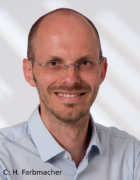
Prof. Dr. Helmut Farbmacher is a Professor of Applied Econometrics at the Technical University of Munich (TUM) since 2021, affiliated with the TUM School of Management. His research focuses on econometric methods applied to health economics, labor markets, experimental economics, and big data analysis. He holds a PhD in Economics from Ludwig Maximilian University of Munich (2012) and has held positions at the Max Planck Society (as Head of Health Econometrics), University of Mannheim, and LMU Munich. Research interests include causal inference, machine learning, statistical learning, and data science applications in economics. Notable work includes developing methodologies for handling complex data structures and improving instrument validity in econometric analyses. He received the Otto Hahn Medal (2013) for his outstanding scientific contributions. His research team includes researchers such as Rebecca Groh, Michael Mühlegger, Gabriel Vollert, and Yasemin Karamik. He has contributed to Stata modules like SIVREG and NWIND, advancing econometric software tools. Current activities emphasize bridging econometric theory with practical applications in health and policy evaluation.
Yu Wang is affiliated with Nanjing University (China). The person actively contributes to programming language and software engineering research through publications and committee roles. Published papers on compiler optimization, concurrency analysis, and AI-driven program analysis Served on program committees for SPLASH, ICSME, and PLDI Research focuses on compiler verification , static analysis , and deep learning applications in software engineering . Key trends in their publications include: Algorithmic optimization for floating-point constraints Concurrency modeling in Go programming Adversarial robustness in code analysis models Yu Wang's committee memberships demonstrate leadership in academic peer review processes across multiple conferences.
Kerstin Rubarth, Ph.D. is a Researcher at the Institute of Biometry and Clinical Epidemiology at Charité - University Medicine Berlin, specializing in methodological research, study planning, and statistical analysis for clinical applications. Education: Doctoral studies in Health Data Science (2019–2023), Charité - Universitätsmedizin Berlin Master's degree in Mathematical Biometrics (2016–2019), University of Ulm Bachelor's degree in Mathematical Biometrics (2012–2016), University of Ulm Research Interests: Kerstin focuses on statistical methodologies including nonparametric methods, resampling techniques, imputation of missing values, and multiple testing. Her clinical focus spans preclinical and translational research in neurology, cardiology, and radiology. Professional Engagement: Active member of the German Society for Medical Informatics, Biometry and Epidemiology (GMDS) and the International Biometric Society, German Region (IBS-DR). Proficient in R and SAS programming languages.
Yue Zhang is a Professor at Westlake University's School of Engineering with an exceptionally active research program spanning multiple disciplines. With dozens of publications in high-impact venues during 2025-2026 alone, Dr. Zhang demonstrates leadership in interdisciplinary research connecting computer science with practical applications in healthcare, environmental science, and education. Affiliation: Westlake University, School of Engineering Research Areas: Machine Learning, Biomedical Engineering, Computer Vision, Environmental Monitoring Publication Output: 90+ papers indexed in dblp (1996-2026), with remarkable productivity in recent years Dr. Zhang's research interests center on applying advanced machine learning techniques to solve real-world problems across multiple domains. The work demonstrates particular strength in biomedical signal processing (EEG, ECG, HRV analysis), environmental monitoring (mangrove forests, crop yield estimation, nitrogen content), and educational technology (AI integration in classrooms). The research approach typically combines deep learning architectures with domain-specific knowledge to create interpretable and effective solutions. The publication record reveals a strong trend toward multimodal and interdisciplinary approaches, with increasing focus on practical applications of AI in healthcare diagnostics, environmental conservation, and educational transformation. Recent work shows particular innovation in attention mechanisms, tensor-based optimization, and knowledge distillation techniques adapted for specialized domains. Dr. Zhang's collaborative network spans multiple institutions and disciplines, with frequent co-authorship patterns suggesting established research groups in both computer science and application domains. The work appears well-funded given the range of sophisticated applications and high publication output across top venues.
Zachary R. McCaw is a researcher active in biostatistics , machine learning , and computational biology . His recent work focuses on statistical frameworks for genetic analysis ( Nature Computational Science 2025 ), digital pathology artifact detection ( ISBI 2024 ), and fairness in healthcare ML ( CoRR 2024 ). Key themes include: Methodological innovation in genomic data analysis and multi-trait rare variant studies Algorithm development for digital pathology and tissue microarray optimization Advancing fairness and statistical rigor in healthcare ML applications His publications in BMC Bioinformatics demonstrate expertise in Gaussian mixture models and incomplete data handling . Collaborations across institutions suggest multidisciplinary engagement with biomedical informatics , health data science , and computational epidemiology .
Manuel Bassek is a PhD student and researcher at the Institute of Exercise Training and Sport Informatics, German Sport University Cologne, specializing in sports informatics and sports games research. His work focuses on data-driven analysis of team sports, particularly soccer and handball. His research interests span Sports Informatics , Machine Learning Applications in Sports , and Team Behavior Analysis . Bassek investigates spatiotemporal patterns in elite soccer, develops machine learning approaches for sports forecasting, and analyzes space control in football. His work combines computer science techniques with sports science to extract meaningful insights from complex sports data. Bassek's publication portfolio shows a strong focus on data analytics in sports , with recent work appearing in high-impact venues including Nature, Scientific Data . His research demonstrates expertise in handling complex sports datasets, developing analytical frameworks for team sports, and applying computational methods to understand player and team performance. He is actively involved in two major research projects: ITSR (Integrative Team Sport Research) (ongoing since 2020) and floodlight – Rahmenbedingungen für datenbasierte Sportspielanalyse (2021-2024). These projects focus on data analytics in team sports, with particular emphasis on training methodologies, group behavior analysis, and performance metrics. Bassek collaborates extensively with researchers across the university, most notably with Dominik Raabe (8 shared publications, 2 shared projects), Albert Deuker (2 shared publications, 1 shared project), and Ashwin Phatak (1 shared publication, 1 shared project). His research network spans multiple institutes including the Institute of Professional Sport Education and Sport Qualifications and the Institute of Sport Economics and Sport Management.
Cesare Alippi is a Professor at Politecnico di Milano in the Department of Electronics, Information and Bioengineering within the School of Industrial and Information Engineering. With an extensive publication record spanning over three decades from 1991 to 2025, he has established himself as a leading researcher in machine learning, particularly in graph neural networks, time series analysis, and anomaly detection. His research interests focus on developing advanced machine learning methodologies for time series analysis, graph-based learning, and anomaly detection systems. Professor Alippi's work bridges theoretical foundations with practical applications across various domains including smart systems, healthcare, and cybersecurity. His recent publications demonstrate a strong emphasis on graph-based approaches to time series forecasting, structural anomaly detection, and spatiotemporal modeling. His publication trends from 2023-2025 reveal a concentration on graph neural networks for time series applications, with significant contributions to forecasting, anomaly detection, and representation learning. These works often address challenges in spatiotemporal data, missing values, and structural pattern recognition, demonstrating both theoretical depth and practical utility. Professor Alippi has mentored numerous researchers who have become prominent collaborators, including Andrea Cini, Daniele Zambon, and Lorenzo Livi, among others. His collaborative network extends across multiple institutions and research domains.