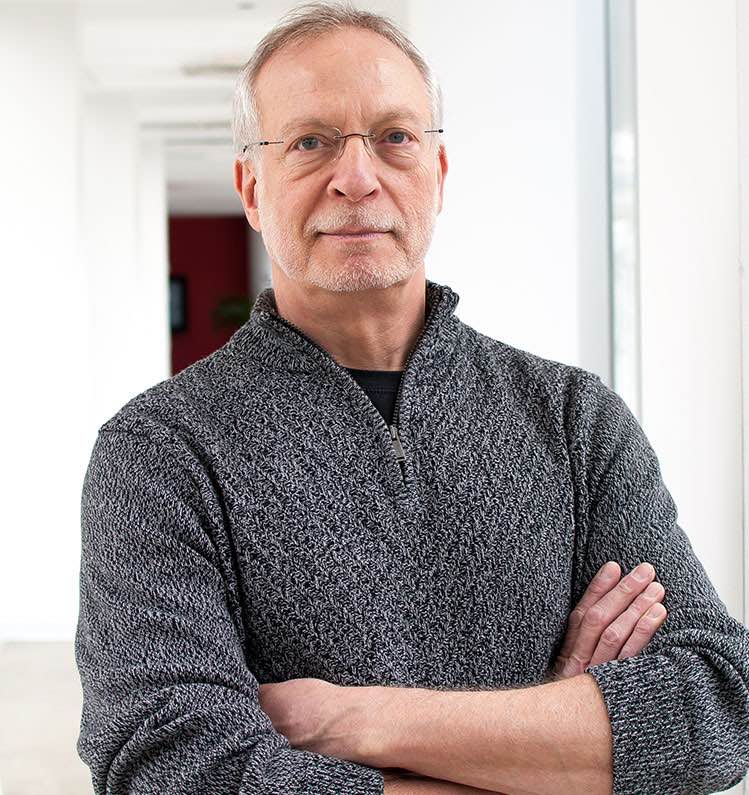
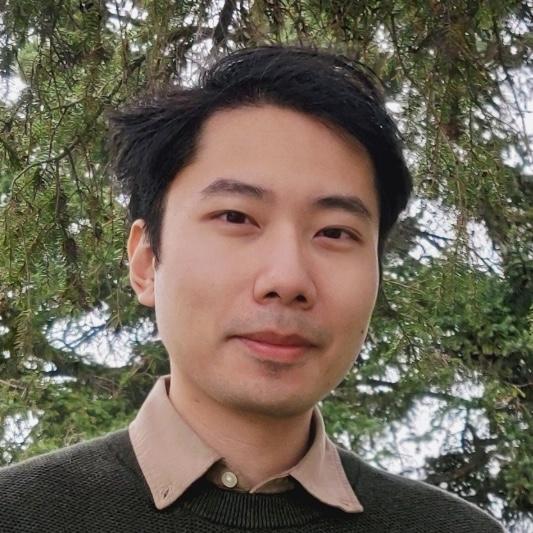
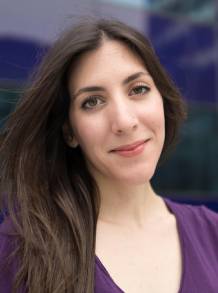
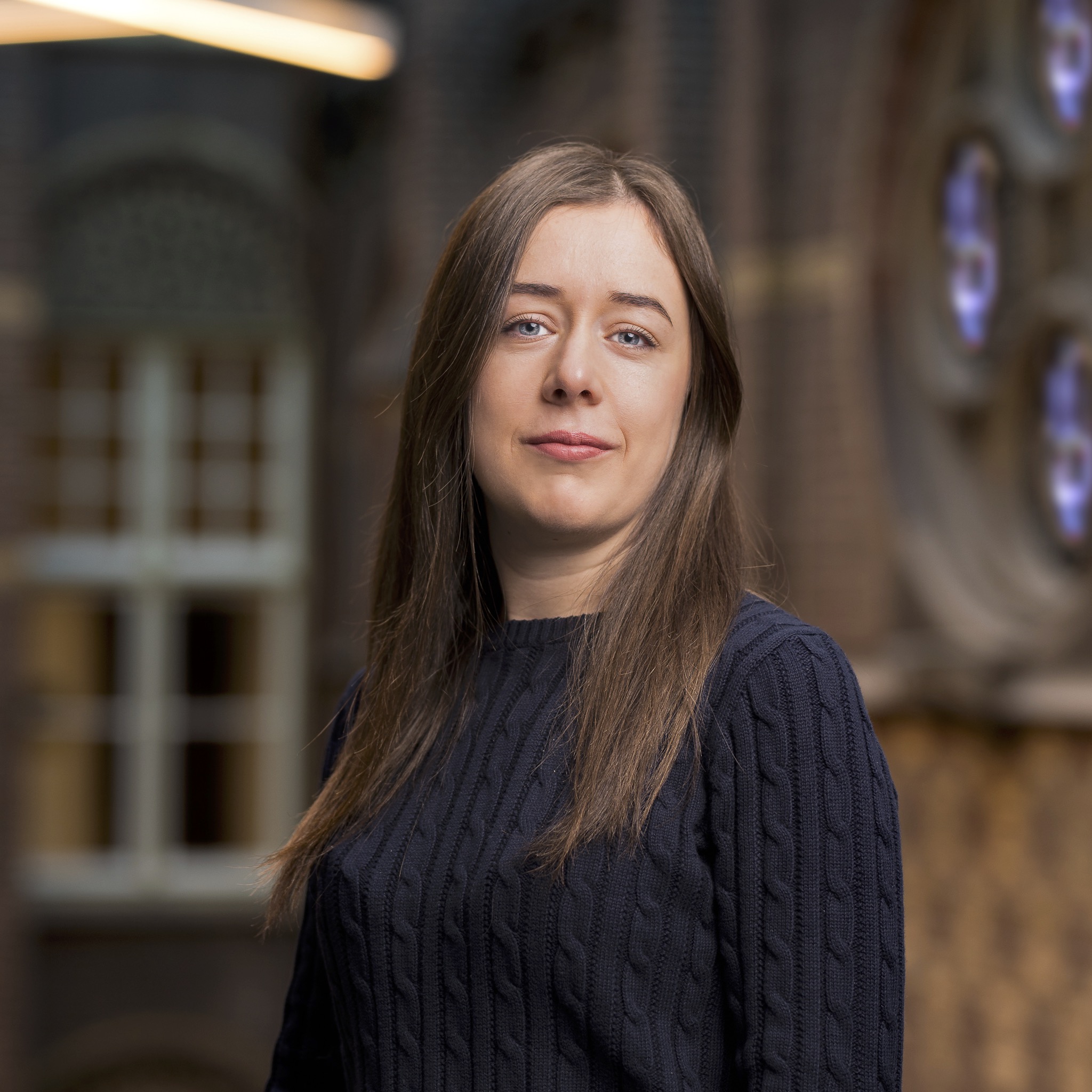
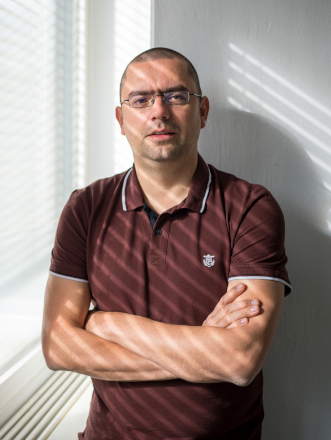
Paul Rosen is an Associate Professor at the University of Utah, affiliated with the Scientific Computing and Imaging Institute and the Kahlert School of Computing. He holds a Ph.D. in Computer Science from Purdue University (2010). Prior to his current role, he was an Assistant/Associate Professor at the University of South Florida (2015–2022) and a Research Assistant Professor at the University of Utah's SCI Institute (2010–2015). Research Focus: Rosen specializes in topology-based visualization techniques, with emphasis on network visualization, uncertainty quantification, and perceptual studies. His work bridges computational methods with human perception, aiming to enhance data understanding through effective visual design. Awards & Recognition: National Science Foundation CAREER Award (2019) Best Paper Awards at PacificVis 2016, IVAPP 2016, and multiple other conferences Honorable Mentions for IEEE VIS and VAST Challenge submissions Leadership: As General Chair of IEEE VIS 2024, Rosen led the planning for this flagship visualization conference, emphasizing community-driven design and in-person collaboration. Education Contributions: His research includes pedagogical innovations, such as predictive modeling for student feedback and peer review analysis in visual literacy courses.
Dr. Benjamin Evans is an Assistant Professor in Computer Science & AI (Informatics) at the University of Sussex , affiliated with the School of Engineering and Informatics . His research integrates computational neuroscience and artificial intelligence, focusing on biologically inspired neural networks. Current Position: Assistant Professor, Department of Informatics, University of Sussex Previous Roles: Research Associate at University of Bristol, University of Exeter, Imperial College London, and University of Oxford Education: DPhil in Computational Neuroscience (University of Oxford), MSc in Intelligent Systems (UCL), BA in Experimental Psychology (Oxford) His research centers on how neural systems self-organize to produce intelligent behavior, studied through both biological and computational modeling. He investigates spiking neural networks , convolutional neural networks , and the role of biological constraints in enhancing AI robustness and human-like perception. He is particularly interested in how spike-based information processing contributes to adaptive cognition in noisy environments. His recent publications reveal a strong trend in evaluating deep neural networks as models of human vision, questioning their biological plausibility while proposing bio-inspired improvements. He also works on optogenetics simulation (e.g., PyRhO platform), developmental biology modeling , and reproducible data science through containerization tools like Docker. His scientific contributions have been recognized through publications in high-impact journals such as Nature Communications , PLoS Computational Biology , and Behavioral and Brain Sciences . EPSRC Grant: "Exploring the multiple loci of learning and computation in simple artificial neural networks" (2023–2024) EPSRC Grant: "Using ant biology and natural environments to enhance models of vision and robot navigation" (2022–2026) Dr. Evans actively contributes to open science through GitHub repositories (e.g., PyRhO, DPE, BioNet) and promotes reproducible research. He has no listed advisees in the provided data, but leads funded research projects involving junior researchers. He is a core member of the Informatics research group at Sussex, contributing to both AI and neuroscience domains.
James D. Herbsleb is a Professor at the Software and Societal Systems Department within the School of Computer Science at Carnegie Mellon University. His research focuses on the intersection of software engineering and organizational behavior, particularly in distributed and open source contexts. Research Interests: Coordination theory in software development Open source ecosystems and transparency practices Global software team dynamics Socio-technical systems design Architectural knowledge management Scientific Awards: SIGSOFT Outstanding Research Award (2016) Alan Newell Award for Research Excellence (2014) Distinguished Paper Award at ICSE 2011 Most Influential Paper Award at ICSE 2010 Best Paper Award at Academy of Management 2010 Advising and Grants: Herbsleb has advised numerous PhD students and postdocs who now hold positions at institutions like Google, University of Texas at Austin, and Oregon State University. His research has been funded by National Science Foundation (NSF) , Sloan Foundation , Accenture , Bosch , Google , Siemens , and IBM . Key projects include Personalized Information Access for Online Deliberation (2013) and Designing Transparent Work Environments (2013).
Alberto Godio is a Full Professor at the Politecnico di Torino, affiliated with the Department of Environmental, Land and Infrastructure Engineering (DIATI). He coordinates Latin America relations under the University Strategic Plan and is a member of the Interdepartmental Center Photonext for Applied Photonics. His research focuses on Applied Geophysics, Geophysical Data Integration, and Glaciology. He graduated in Mining Engineering (1988) and earned a PhD in Underground Resources Engineering (1993). He has been an Associate Professor (2005-2024) and Full Professor (2024-present) at PoliTO, leading projects funded by EU (FP7, LIFE, Horizon), MIUR (PRIN, FIRB), and regional bodies. His recent publications explore geophysical methods for subsurface modeling, glacial systems, and environmental remediation, with keywords spanning Geophysics, Hydrology, and Climate Science. His work emphasizes ground-penetrating radar, seismic noise analysis, and hybrid modeling techniques. Scientific awards include the Best Paper Award at the Near Surface Geoscience Conference (2008). He has supervised PhD students on fiber optic sensors and GPR optimization, advised projects on digital twins, and led EU-funded research on biogas enhancement in landfills.
Yevgen Biletskiy is a Professor in the Department of Electrical and Computer Engineering at the University of New Brunswick (UNB), Fredericton. His academic roles include serving as Co-Director of the RuleML Initiative and Program Co-Chair of RuleML-2007. He holds a Ph.D. and is a licensed Professional Engineer (P.Eng.) in New Brunswick. His teaching spans graduate and undergraduate courses in software engineering, digital systems, and power electronics, including EE 6263 (Knowledge Representation for Software Engineering) and EE 6213 (Advanced Digital Systems). Research Interests: His work focuses on Knowledge-Based Systems , Artificial Intelligence , Semantic Web , Information Extraction , FPGA-based Design , and Renewable Energy . He has supervised over 40 graduate and undergraduate students, including 3 active PhD candidates, 1 completed PhD, 9 Masters, and 30+ research-based Bachelors. Publications: Over 100 peer-reviewed articles, including recent contributions on smart grid optimization, fault diagnosis in power electronics, and ontology-driven systems. Notable works include frameworks for semantic interoperability, rule-based learning systems, and FPGA applications. Professional Activities: Served as a reviewer for NSERC grants, IEEE journals (e.g., TKDE, TE), and conferences (CDC, WTAS). He has chaired tracks at international conferences and contributed to industry partnerships through consulting roles with firms like Netsphare Solutions and Vox Interactif. Labs/Teams: Active in UNB’s research initiatives involving power systems, semantic web technologies, and e-learning systems. His lab collaborates on projects like SEMESIS (semantic search systems) and advanced manufacturing post-processing techniques.
Tse-Hsun (Peter) Chen is an Associate Professor in the Department of Computer Science and Software Engineering at Concordia University, Montreal. He leads the Software PErformance, Analysis, and Reliability (SPEAR) lab, focusing on improving software quality through log analysis, AIOps, and mining software repositories. His research collaborates with companies like Microsoft, BlackBerry, and Ericsson. Education: PhD, MSc, and BSc in Computer Science from Queen's University and the University of British Columbia. Awards include the Gina Cody Research Award (2021) and recognition as one of the world's most active software engineering researchers (JSS study). Research interests include software testing, DevOps, and leveraging LLMs for SE tasks. Recent work emphasizes log parsing with LLMs (e.g., LibreLog) and fault localization. Graduates from his lab hold academic positions at institutions like York University and DePaul University. Teaching includes courses on software verification, testing, and process management. Active in program committees for ICSE, FSE, and MSR. Over 50 publications in top venues like TSE, ICSE, and FSE.
Dr Mahir Arzoky is a Lecturer in the Department of Computer Science at Brunel University London's College of Engineering, Design and Physical Sciences. He holds a PhD from Brunel University London (2015) and has extensive research experience in artificial intelligence and software engineering. His research focuses on: Artificial Intelligence and Intelligent Data Analysis Search Based Software Engineering (SBSE) Clustering algorithms and heuristic search methods Software refactoring and quality assessment Data mining applications in healthcare and education Analysis of his 15 most recent publications (2018-2022) reveals strong interdisciplinary work bridging computer science with healthcare (diabetes patient modeling, medical imaging) and education (chatbot design, algorithm visualization). His technical focus centers on clustering optimization, refactoring impact analysis, and explainable AI, with frequent use of empirical validation methods. Key collaborations include researchers like Stephen Swift, Steve Counsell, and Giuseppe Destefanis. Dr Arzoky has secured significant research funding through EPSRC grants including: AQUATIC project (EP/M024083/1): Assessing Test Suite Quality in Industrial Code FIAR-NET (EP/N011627/1): Fault Analyses in Industry and Academic Research Network His professional network includes active collaborations across computer science, healthcare informatics, and educational technology domains, with recent work extending into transformer models for healthcare SQL conversion and graph partitioning for software modularization.
Marco Aurélio Gerosa is a Professor at Northern Arizona University and was previously an Associate Professor at the University of São Paulo (USP), Brazil . He is affiliated with the School of Informatics, Computing, and Cyber Systems (SICCS) at NAU and the Department of Computer Science at USP. His research focuses on the Human Aspects of Software Engineering , including Software Engineering Education , Computer Supported Cooperative Work (CSCW) , and AI-Assisted Software Engineering . He has published extensively on topics such as Open Source Software development, Bots and Chatbots in software engineering, and Mining Software Repositories techniques. His recent work explores Using Large Language Models (LLMs) for educational purposes in programming, data science, and software engineering Developing chatbots to facilitate newcomer onboarding to OSS projects Investigating the evolution of Integrated Development Environments (IDEs) Assessing the impact of software bots on projects Understanding how to design effective chatbot languages Dr. Gerosa has received numerous scientific awards, including ACM SIGSOFT Distinguished Paper Award Best paper awards at ICSE and International Symposium on Open Collaboration IEEE Computer Society TCSE Distinguished Paper and Service Awards Productivity grants from CNPq (Brazilian Council for Scientific and Technological Development) He has graduated numerous PhD students who are now researchers in top institutions worldwide and has been a mentor to many more at various levels. His research projects have secured over USD 1 million in funding. Dr. Gerosa is also involved in the development of tools and environments for software engineering, including MetricMiner for repository analysis and various gamification platforms to enhance developer engagement. He brings over 25 years of teaching experience across multiple universities, teaching courses ranging from Introduction to Programming to Advanced Topics on Web Development and Collaborative Systems Development.
Alexia Toumpa is a Research Associate in the Department of Computer Science at the University of York, actively contributing to the Automated Software Engineering research group under Professor Dimitris Kolovos' leadership. Her academic background includes: PhD in Computer Science from the University of Leeds (awarded 2023) MEng from the University of Patras (awarded 2016) Her research centers on Automated Software Engineering methodologies, with emphasis on model-driven approaches and software repository analysis. She investigates techniques for automating software development lifecycles through advanced tooling and empirical studies of software evolution patterns. Within the research group, she collaborates on projects exploring model-based solutions for complex software systems and contributes to developing frameworks that enhance software engineering practices through data-driven insights from repository mining.
Gemma Catolino is an Assistant Professor at the Department of Computer Science, University of Salerno, and affiliated with the Software Engineering (SeSa) Lab. She has also served as an Assistant Professor at Tilburg University and Eindhoven University of Technology through the Jheronimus Academy of Data Science from September 2022 to December 2023, and previously as a Postdoctoral Researcher at Delft University of Technology and Tilburg/Eindhoven institutions. PhD in Computer Science, University of Salerno (2020), supervised by Prof. Filomena Ferrucci MSc in Management and Information Technology, University of Salerno (2016, magna cum laude) BSc in Computer Science, University of Molise (2014) Her research centers on empirical software engineering, focusing on both technical and social aspects affecting software development. Key areas include code smells, defect prediction, testability, changeability, and the emerging concept of “Community Smells”—social dysfunctions in developer teams. She investigates how human factors, team diversity (especially gender), and developer experience influence software quality and maintenance effort, often using mining software repositories and machine learning techniques. Her recent publications span high-impact journals and conferences such as IEEE TSE, EMSE, JSS, ICSE, and ICSME, with a strong trend toward integrating social and technical metrics for just-in-time defect prediction in mobile applications, analyzing community dynamics, and applying software quality metrics to cybersecurity contexts like dark web analysis. She has also contributed to MLOps and serverless computing. She has received several honors including a DEI research grant (2020), Best Technical Paper at BENEVOL 2019, first and second place in ACM Student Research Competitions (2018, 2017), and the Best Master Thesis award from the Italian Software Metrics Association (2017). Gemma Catolino has been actively engaged in academic service as a referee for top journals like IEEE TSE, EMSE, JSS, and IST, guest editor for special issues, and program/organizing committee member for major conferences including ICSE, MSR, SANER, and MobileSoft, where she served as Program Co-Chair in 2022. She has also contributed as a teaching assistant, lecturer, and course coordinator in machine learning and software engineering courses. She leads and contributes to research projects involving international collaborations, particularly with researchers such as Prof. Filomena Ferrucci, Prof. Andy Zaidman, Prof. Willem-Jam van den Heuvel, and Prof. Alexander Serebrenik. Her work bridges empirical software engineering with practical tool development and socio-technical analysis, positioning her at the forefront of modern software engineering research.
Claire Le Goues is a Professor of Computer Science at Carnegie Mellon University, primarily affiliated with the Software and Societal Systems Department (S3D) within the School of Computer Science (SCS). She serves as the Associate Department Head for Faculty within S3D and leads the squaresLab research group. Le Goues also co-directs the REUSE@CMU summer program and teaches software engineering and program analysis at undergraduate, master's, and PhD levels. Her research spans software engineering and programming languages, with a particular focus on how to construct, maintain, evolve, improve/debug, and assure high-quality software systems. Le Goues has made significant contributions to automated program repair, program analysis, and defect detection. Her work often bridges theoretical foundations with practical applications, addressing real-world challenges in software development and maintenance. Le Goues' recent publications demonstrate a clear trend toward integrating large language models and generative AI with traditional software engineering techniques. Her research examines how these technologies can enhance program repair (BatFix, AdverIntent-Agent), vulnerability detection (Interpretable Vulnerability Detection Reports), and testing (LWDIFF for WebAssembly). This represents an evolution from her earlier foundational work in program repair (GenProg) toward leveraging contemporary AI advancements. She has mentored numerous students through her squaresLab research group and has been instrumental in developing educational programs that prepare the next generation of software engineers. Le Goues is also known for her advocacy for double-blind review processes in academic conferences, having implemented this approach when co-chairing the Symposium for Search-Based Software Engineering in 2014.
Jinqiu Yang is an Associate Professor in the Department of Computer Science and Software Engineering at Concordia University in Montreal, Canada. Her research focuses on improving software reliability and quality assurance, particularly in the context of machine learning systems and autonomous vehicles. She leads active research projects in software testing, automated program repair, and mining software repositories, with strong connections to both academic and industrial applications. Her research interests span software reliability, quality assurance of machine learning systems including autonomous vehicles, software testing, automated program repair, text analytics of software artifacts, and mining software repositories. She has developed novel approaches for testing deep learning libraries, evaluating robustness in autonomous driving systems, and tracking the evolution of static code warnings. Her work bridges traditional software engineering with emerging challenges in AI systems, addressing critical issues of reliability and safety in complex software environments. Yang's recent publications (2021-2025) demonstrate a clear trajectory toward AI/ML system reliability, with increasing focus on autonomous vehicles, concept drift detection, and security aspects of large language models. Her work spans both theoretical foundations and practical applications, often involving empirical studies of real-world systems and development of practical tools to address identified challenges. ACM SIGSOFT Distinguished Paper Award Dr. Yang actively mentors graduate students and is currently recruiting Master's and PhD candidates. She has secured significant research funding including NSERC Discovery Grants (2019-2025), Gina Cody Research and Innovation Fellowship (2024-2026), and participation in the NSERC CREATE Program SE4AI (2021-2026). Her research is supported by multiple grants including NOVA – FRQNT-NSERC PROGRAM (2024-2027) and Volt-Age Seed Grant (2024-2026). She leads research in the O-RISA Lab at Concordia University, focusing on reliability and security aspects of intelligent software systems. Her team collaborates with industry partners including IBM, where she previously worked at IBM Watson Research Lab and IBM CAS, bringing practical experience to her academic research.
Patrick Lam is an Associate Professor in the Department of Electrical and Computer Engineering at the University of Waterloo, with a cross-appointment to the Cheriton School of Computer Science. His research focuses on applications of programming languages and static analysis to software engineering challenges, emphasizing verifiable software specifications and program understanding. Dr. Lam has held significant grants from NSERC and is recognized for his impactful work, including the First Decade High Impact Paper award for his Soot framework. Education: Doctorate in Computer Science, Massachusetts Institute of Technology, 2007 Master's in Computer Science, McGill University, 2000 Bachelor's in Joint Honours Mathematics and Computer Science, McGill University, 1999 Research Interests: His primary areas include static program analysis, verifiable software specifications, and compiler design, with a focus on linking high-level software designs to low-level implementations. He explores techniques like lightweight specifications and domain-specific languages to enhance software reliability and efficiency. Recent work also addresses empirical studies of programming practices and security through modularization. Publications: Dr. Lam's recent publications span advancements in static analysis tools (e.g., WasmWalker for WebAssembly), formal verification of code generated by AI tools like GitHub Copilot, and empirical studies on C++ immutability usage. His work bridges theoretical programming language research with practical software engineering applications, emphasizing tools for developer productivity and code reliability. Awards and Recognition: First Decade High Impact Paper recognition for "Soot – A Java Optimization Framework" (2010) Teaching and Grants: He has taught courses such as CS 447, ECE 453, and ECE 459 on software testing and performance programming. Active in grant-funded research, he secured NSERC Engage Grant (2013) and an ongoing NSERC Discovery Grant (2013–2018). Lam has also advised graduate students and contributed to the Software Engineering Program at Waterloo as its Director (2016–2019). Labs and Teams: His research group explores topics in program analysis and software engineering, with collaborations on projects like abstract debugging tools (GobPie) and static analysis frameworks (Soot). He maintains an open-source repository on GitHub, contributing to educational materials and research tools.
Ayushi Rastogi is an Assistant Professor at the University of Groningen, affiliated with the Software Engineering group in the Bernoulli Institute under the Faculty of Science and Engineering. She holds a PhD from IIIT-Delhi and has conducted postdoctoral research at TU Delft and the University of California, Irvine, with additional experience as a visiting researcher at Microsoft Research. Her research focuses on data analytics and AI-driven solutions for software engineering challenges, particularly in open-source ecosystems and developer communities. Key interests include psychological safety in OSS, pull request dynamics, and fairness in software practices. She actively contributes to EDI initiatives through Informatics Europe and the Netherlands' IPN EDI committee. Her work combines empirical software engineering and repository mining to address real-world software challenges. Notable contributions include analyzing fork sustainability in developer communities and exploring code review velocity. She has received the MSR Rich Holt Early Career Achievement Award 2025 and serves as an Associate Editor for IEEE Software. Her GitHub repository 'fsoc' investigates fork impact on developer community sustainability, and she leads projects like OpenDataology for AI dataset compliance. Awards include the 2022 Best Disruptive Paper Award (ISSRE) and supervision of the MSR 2024 Distinguished Doctoral Award-winning thesis by Dr. Gunnar Kudrjavets. She chairs MSR 2025 and frequently presents on topics like gender equality in tech and burnout prevention. Her research spans compiler analysis, memory management, and EDI policy design in ICT sectors.
Sven Apel is Professor of Computer Science at Saarland University, where he holds the Chair of Software Engineering and directs the Saarbrücken Graduate School of Computer Science within the Saarland Informatics Campus. His research aims to advance software engineering into an era of intensive automation by developing methods, tools, and theories for building efficient, reliable, and maintainable software systems, with a strong emphasis on the human factor and interdisciplinary inquiry. His primary research interests include software variability and configuration, AI-based program generation and optimization, socio-technical software analysis, and the application of empirical and neurophysiological methods to study program comprehension. He actively collaborates with industry partners such as Siemens AG, Bosch Engineering, and Airbus Helicopters to apply his research in real-world contexts. His recent publications demonstrate a strong trend towards integrating artificial intelligence and neurocognitive methods into software engineering, focusing on configurable systems, performance modeling, debugging processes, and the scientific validity of empirical studies. His work spans top venues like ICSE, FSE, ASE, and IEEE TSE. ERC Advanced Grant “Brains On Code” ASE Fellow ACM Distinguished Member Hugo Junkers Award for Research and Innovation Heisenberg Professorship (DFG) Emmy-Noether Fellowship (DFG) Best Doctoral Dissertation Awards (University of Magdeburg, Ernst-Denert Foundation, 2007) Most Influential Paper Awards (SPLC'19, ICPC'22, GPCE'23) ACM SIGSOFT Distinguished Paper Awards (ICSE'15, ICSE'21) Best Paper Awards (SPLC'11, Modularity'15, Academy of Management'18) Distinguished Reviewer Awards (ASE'18, ICSE'24, FSE'24) Sven Apel has secured significant research funding, including an ERC Advanced Grant (€2.5M) and multiple DFG grants as Principal Investigator and Project Leader. He has advised numerous PhD and Master’s students and is actively involved in the academic community through program committees for major conferences like ICSE, FSE, and ASE. His work is conducted within a collaborative environment that includes close partnerships with researchers at the Max Planck Institute for Informatics and other institutions within the Saarland Informatics Campus.