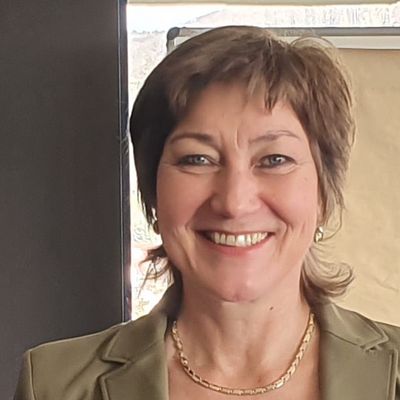
Prof. Uta Mathis is a Professor at the University of Applied Sciences Esslingen, Faculty of Management. She has held academic leadership roles including Dean of the Faculty of Management (2014–2021), Head of the Institute of Sustainable Energy Management and Mobility (2016–2018), and currently serves on the Academic Board of SAP UCC DACH. She obtained her Diplom-Wirtschaftsingenieurin (Industrial Engineering) from TU Kaiserslautern in 1990 and a Dr. rer. pol. in 1998. Her research focuses on Business Process Management (BPM), Process Mining, ERP systems (especially SAP), and process performance optimization. She actively integrates SAP solutions into teaching and research curricula and has contributed to transregional process design and business model innovation in mobility sectors. Recent publications address BPM education (2021) and industry applications of BPM frameworks (2022). Her work emphasizes bridging academic theory with practical enterprise systems implementation. She manages international affairs for the Faculty of Management and is a core member of SAP University Alliance programs. Advising and grants: No listed advisees, but oversees academic programs and SAP-related research initiatives. She coordinates the Institute of Sustainable Energy Management and collaborates with industry partners on digitalization and process efficiency projects.
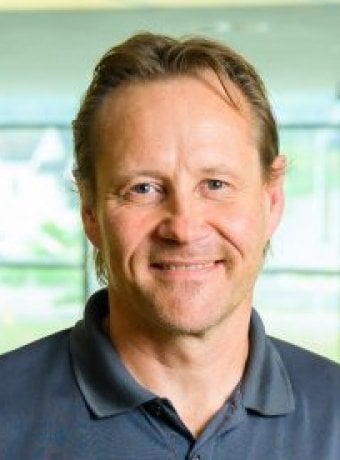
Pasi Lautala is a Professor in the Department of Civil, Environmental, and Geospatial Engineering at Michigan Technological University (Michigan Tech) and currently serves as the Associate Dean for Research. He holds a BS from Tampere University of Technology (Finland) and MS/PhD from Michigan Tech. His research focuses on rail and highway transportation engineering, with emphasis on grade crossing safety, multimodal logistics, sustainability, railway capacity analysis, and engineering education development. Since 2007, Lautala has directed the Rail Transportation Program (RTP) within the Michigan Tech Transportation Institute (MTTI), expanding rail research collaborations across disciplines. He leads over $10M in external research funding, including projects on trespasser safety, freight logistics, and lifecycle analysis. Lautala is a key figure in rail education revitalization, serving as Rail Group Chair at the Transportation Research Board (TRB) and advising the Michigan Commission for Supply Chain Logistics. His teaching spans courses like Transportation Engineering, Railroad Design, and Logistics Management. Lautala has advised numerous undergraduate and graduate projects, emphasizing industry partnerships. Recent contributions include developing in-vehicle auditory alerts for rail crossings and AI-driven safety systems like RAIILS. Key collaborations include the Federal Railroad Administration (FRA) on grade crossing safety ($641K+ projects), U.S. DOT on rail modal analysis, and Battelle on connected vehicle systems. He mentors the Tracks to the Future youth program and co-leads international rail education initiatives.
David M. Labyak is an Assistant Professor at Michigan Technological University's College of Engineering, affiliated with both the Manufacturing and Mechanical Engineering Technology and Mechanical and Aerospace Engineering departments. He teaches courses in computer-aided engineering, finite element methods, dynamic systems control, machine design, robotics dynamics, and Industry 4.0 concepts. PhD in Mechanical Engineering-Engineering Mechanics (2003) and MS in Mechanical Engineering (2000) from Michigan Tech Over 24 years of industrial experience in automotive, aerospace, mining, and consulting sectors His research interests span solid mechanics, finite element analysis, vibration analysis, machinability of metals, biomechanics, and helmet design optimization. Collaborative work includes dynamic testing, acoustic modeling, and workforce development initiatives. Recent publications highlight interdisciplinary work in vibration testing, metalcasting, and educational frameworks. Key areas include defect detection in additive manufacturing, dynamic fixture design, and experiential learning for mechatronics.
Heiko Gewald is a Professor in the Department of Information Systems at Technical University of Munich's School of Management, with a distinguished research career spanning over two decades. His scholarly work demonstrates deep expertise in information systems, particularly focusing on technology adoption by aging populations, healthcare information systems, and smart mobility services. Dr. Gewald's research interests center on the intersection of technology and human behavior, with special emphasis on older adults' adoption of digital health applications , smart mobility ecosystems , and DevOps implementation . His work consistently addresses the challenges of designing technology that accommodates diverse user needs, particularly for vulnerable populations. Through extensive field research, he has developed frameworks for understanding technology acceptance barriers among seniors and created interventions to improve digital inclusion. Analysis of his recent publications reveals a clear trajectory toward increasingly specialized work in aging technology, with approximately 60% of his 2020-2025 publications focusing on older adult technology adoption. His research employs diverse methodologies including qualitative case studies, cross-cultural surveys, and experimental designs, often with international collaborations spanning Germany, Australia, and Thailand. Principal investigator for multiple German research projects on digital health for elderly populations Co-organizer of the annual HICSS minitrack on 'Seniors' Use of Digital Resources' since 2018 Active contributor to the Association for Information Systems (AIS) special interest groups Dr. Gewald has mentored numerous doctoral students who have become active researchers in information systems, with several now holding faculty positions. His research has been supported by German research funding agencies and industry partnerships with healthcare technology companies. He maintains strong collaborative relationships with researchers across Europe and Australia, particularly in the healthcare IT domain.
Niels Henrik Mortensen is a Professor and Head of Section in the Department of Civil and Mechanical Engineering at the Technical University of Denmark (DTU). His research focuses on engineering design and manufacturing systems, with emphasis on product architecture, modularization, maintenance performance, and AI-driven design solutions. He leads initiatives in engineer-to-order systems, lifecycle costing, and digital transformation in manufacturing. Key research interests include optimizing product architectures for modular systems, enhancing maintenance strategies through data analytics, and applying AI to improve CAD design reuse. His work aligns with UN Sustainable Development Goals related to innovation and infrastructure, and sustainable energy systems. Supervisor for 5 active PhD projects focused on modular architectures, logistics services, and configuration systems Published 175+ peer-reviewed articles, including work on AI-based maintenance frameworks and configurator development Recipient of industry collaboration projects with offshore energy and manufacturing sectors Notable contributions include frameworks for maintenance performance diagnostics and adaptable configuration models. His team operates through MEK and CONSTRUCT research groups at DTU.
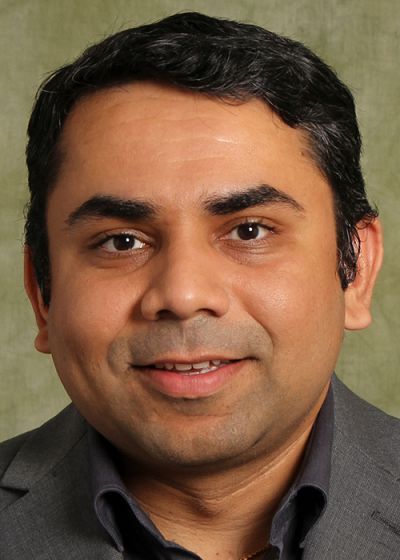
Sreenath Chalil Madathil is an Assistant Professor in the Department of Systems Science and Industrial Engineering at Binghamton University. His academic journey includes previous roles as Assistant Professor at the University of Texas at El Paso (2019–2021) and Research Scientist at the Watson Institute of Systems Excellence (WISE) at Binghamton University's Research Foundation (2017–2019). He holds a PhD and MS in Industrial Engineering from Clemson University, an MS in Data Science from the University of Texas at Austin, and a Bachelor of Technology in Electrical and Electronics Engineering from Mahatma Gandhi University, India. Dr. Madathil's research focuses on applying operations research, simulation modeling, and data science to address healthcare challenges such as patient-centered care and healthcare disparities. His work bridges theoretical methodologies with practical applications, including maternal healthcare equity, healthcare facility design, and supply chain resilience. He has secured funding from the National Science Foundation and the U.S. Department of Commerce. Prior to academia, he gained industry experience as a software consultant and client-side analyst at Cognizant Technology Solutions (2006–2011), alongside collaborations with Los Alamos National Lab and BMW Manufacturing. His research has been published in high-impact journals like Healthcare Management Science and Computers and Industrial Engineering . His professional expertise spans interdisciplinary projects, including optimizing healthcare workflows, analyzing social media data for public health interventions, and developing resilient microgrid systems. Current research trends include leveraging AI/ML techniques for healthcare analytics and improving operational efficiency in healthcare systems.
Professor Daniel Cha holds a faculty position in the Department of Civil and Environmental Engineering at the University of Delaware. He earned his Ph.D. from the University of California, Berkeley, followed by a Master's from the University of British Columbia and a Bachelor's from McGill University. His academic and industrial career spans over three decades with expertise in environmental biological processes, microbial community dynamics, and sustainable waste management solutions. Dr. Cha has worked as a consulting engineer and held roles at the Sacramento Regional Wastewater Treatment Plant. His research focuses on microbial-driven systems, including energy/fertilizer recovery from food waste, biocomposite material synthesis from wastewater microorganisms, and genomic analysis of mixed culture microbial communities. Key areas also include zerovalent iron-based water treatment technologies, sulfate reduction for acid mine drainage mitigation, and innovative fecal sludge management systems in urban contexts. Notable projects include field demonstrations of breathable membrane toilets in India and pilot-scale bioretention systems integrating biochar. His work bridges environmental chemistry with engineering solutions, addressing contaminants like perchlorate, energetic compounds, and heavy metals in industrial wastewater. Publications span advanced oxidation processes, microbial ecology, and novel membrane technologies. While no formal awards are listed, his extensive patent portfolio includes systems for treating energetic compound wastewaters and biodegradation enhancement methods. His lab collaborates on projects involving both academic and industrial partners, emphasizing scalable environmental engineering solutions.
Abdussalam Alawini is a Teaching Associate Professor in the Department of Computer Science at the University of Illinois at Urbana-Champaign . He holds a Ph.D. in Computer Science from Portland State University (2016) and has held academic positions including a postdoctoral fellowship at the University of Pennsylvania (2016–2018) and roles as a Teaching Assistant Professor (2018–2023) and Adjunct Faculty (2016). Education : Bachelor's in Computer Science (2002), University of Tripoli MSc. Computer Science and MSc. Engineering & Technology Management (2011), Portland State University Ph.D. Computer Science (2016), Portland State University Research Interests focus on databases, applied machine learning, and education. Key areas include: Improving classroom experiences via machine learning Next-generation data management systems (data provenance, citation) Developing tools like TriQL for database learning Awards include the 2024 Campus Award for Excellence in Undergraduate Teaching and the 2022 A3E Education Innovation Fellowship. His work has been recognized for contributions to database education and student success. Service & Leadership : Chair of Instructional Faculty Recruiting Committee (2023–2024) Co-Chair of SIGMOD 2020 and DataEd 2025 Member of committees on Broadening Participation in Computing and Online Education Teaching includes courses like Database Systems and Data Management in the Cloud, emphasizing practical learning through tools like MongoDB Atlas.
R. Manmatha is an Adjunct Professor in the College of Information and Computer Sciences at the University of Massachusetts Amherst and a Principal Scientist at Amazon A9 since 2013. His academic journey includes a Ph.D. in Computer Science from University of Massachusetts Amherst (1997), an M.S. in Electrical Engineering from University of Hawaii (1986), and a B.Tech in Electrical Engineering from Indian Institute of Technology Kanpur (1983). Research Interests Manmatha's work spans Computer Vision , Information Retrieval , and Document Analysis . Key projects include: Developing Vision-Language Models for GUI grounding and OCR-free document understanding Creating Word Spotting techniques for historical manuscripts like George Washington's papers Advancing Image Retrieval through statistical and relevance models Building Meta Search systems using score distribution analysis Optimizing Diffusion Transformers for text-to-image generation Scientific Contributions His research has led to numerous publications in conferences like SIGIR , CVPR , and ICDAR , focusing on: Automatic Image Annotation using cross-media relevance models Scale Space Techniques for handwritten manuscript segmentation Alignment Methods for document-groundtruth generation Indian Language Document Search via locality-sensitive hashing Transformer-based architectures for multimodal and document tasks Advising & Collaborations Manmatha has mentored students including Jiwoon Jeon , Shaolei Feng , Toni Rath , Jamie Rothfeder , and Nitin Srimal . He co-founded Snaptell (acquired by Amazon) and contributed to Amazon's mobile search technology. Labs & Teams He leads the Multi-media Indexing and Retrieval (MIR) group at the Center for Intelligent Information Retrieval (CIIR) , focusing on non-textual information indexing through ASCII conversion and direct content analysis.
Professor Herbert Ho Ching Iu is a distinguished academic at The University of Western Australia, serving in the School of Engineering within the Department of Electrical, Electronic and Computer Engineering. With an impressive research portfolio of over 500 publications and an h-index of 61, Prof. Iu has established himself as a leading authority in power electronics and nonlinear systems research. Prof. Iu received his BEng(Hons) in Electrical and Electronic Engineering from The University of Hong Kong in 1997, followed by a PhD in Electronic and Information Engineering from The Hong Kong Polytechnic University in 2000. After a brief research fellowship at HKPU, he joined The University of Western Australia in 2002 as a Lecturer and has since risen to the rank of full Professor. His primary research focuses on power electronics , renewable energy systems , nonlinear dynamics and chaos , current sensing techniques , and memristive systems . Prof. Iu's work uniquely bridges theoretical exploration with practical implementations, particularly in energy conversion, secure communications, and neuromorphic computing. His research has significant implications for DC microgrids, advanced encryption techniques, and next-generation computing paradigms. Analysis of Prof. Iu's recent publications reveals a strong interdisciplinary trajectory combining memristive systems with chaotic dynamics for applications in image encryption and secure communications . There's a notable emphasis on machine learning techniques applied to power electronics and energy systems , particularly for DC microgrids and battery management. His work demonstrates consistent progression from fundamental research in nonlinear systems to practical engineering solutions with real-world impact. Prof. Iu's significant contributions have been recognized with several prestigious awards: Vice-Chancellor's Award for HDR Supervision (2024) School of Engineering Award for Research Mentorship (2023) Vice Chancellor's Award in Research Mentorship (2023) With 18 supervised research students and leadership on 16 research grants, Prof. Iu has built a robust research program at the forefront of power systems innovation. His grant portfolio includes major projects like 'Mine Electrification' and 'Microgrid Battery Deployment' through the CRC for Future Battery Industry, as well as collaborations with Western Power on 'Project Symphony.' These initiatives demonstrate his ability to secure substantial funding and translate theoretical concepts into practical engineering solutions for industry. Prof. Iu leads a dynamic research team that specializes in hardware implementation of advanced theoretical concepts, particularly in memristive systems and chaotic circuits. The laboratory maintains strong industry connections, especially with energy and mining sectors, ensuring research has tangible real-world applications. Current work emphasizes DC microgrid technologies, advanced battery systems for electrified transportation, and novel applications of chaotic systems in security contexts, positioning the team at the cutting edge of power electronics research.
George Exarchakos is an Assistant Professor in the Department of Electrical Engineering at Eindhoven University of Technology (TU/e), affiliated with the EAISI High Tech Systems and the Center for Wireless Technology. His research focuses on P2P computing, data mining, machine learning, network optimization, and swarm intelligence. He holds an MSc in Advanced Computing from Imperial College London and a PhD in P2P Computing from the University of Surrey (2008). Prior to his current role, he conducted postdoctoral research on autonomous networks at TU/e before becoming an Assistant Professor in 2011. Key projects include HiCONNECTS: Heterogeneous Integration for Connectivity and Sustainability (2023–2025) and RHIADA: Reliable Hybrid Intra Aircraft Datanetwork Architectures (2021–2025). His work contributes to UN Sustainable Development Goals related to innovation and infrastructure (Goal 9). Research interests span predictive networks, gossip protocols, overlay networks, and network complexity. Notable publications include studies on beyond-5G networks, avionics communication protocols, and edge computing resource management.
Thorsten Joachims is a Professor at Cornell University with a focus on machine learning, recommendation systems, and algorithmic fairness. His work spans conferences like ICML, NeurIPS, KDD, and SIGIR, emphasizing counterfactual learning, contextual bandits, and ethical AI. Key Research Themes: Fairness in rankings, reinforcement learning, position bias estimation, and NLP applications to recommendation systems. Recent Publications: 2025 work on policy decomposition for contextual bandits, 2024 studies on fairness under uncertainty, and 2023 papers on LLM steerability and bias mitigation. Awards: Recipient of the ACM SIGKDD 2020 Innovation Award . Collaborators: Regularly works with Adith Swaminathan, Tobias Schnabel, Yuta Saito, Ashudeep Singh, and Yi Su.
Andrew Sowinski serves as Associate Professor and Vice-dean of Programs at the School of Engineering Design and Teaching Innovation within the Faculty of Engineering at the University of Ottawa. Holding a Ph.D. from the University of Ottawa, his office is located in STE 1024Q with contact details including phone 613-562-5800 ext. 6288 and email sowinski@uOttawa.ca. Education: Ph.D. from University of Ottawa His research spans two primary domains: electrostatic phenomena in gas-solid systems and engineering education innovation. In electrostatics, he investigates contact electrification mechanisms in polyethylene fluidized beds, particle charging dynamics, reactor wall fouling, and pneumatic conveying systems, employing both experimental and computational (CFD) approaches. His education research focuses on developing non-traditional multidisciplinary design programs within conventional engineering faculties, addressing curriculum design, student recruitment, and assessment methodologies. Analysis of his 2021-2025 publications reveals consistent dual-focus work: electrostatics research emphasizes charge generation/mitigation in industrial polymerization processes, while education studies explore structural and implementation challenges of cross-disciplinary programs. His electrostatics work frequently combines particle-level charging experiments with system-level CFD modeling, while education publications document practical frameworks for program development amid traditional faculty structures. Scientific Awards: No scientific awards were documented in provided materials Advising and Grants: Specific details regarding graduate students, research grants, or funding sources were not disclosed in the source documentation, though his program leadership role as Vice-dean of Programs suggests significant administrative responsibilities in curriculum development and resource allocation.
Christian Ludwig is an Adjunct Professor at EPFL and head of the joint EPFL-PSI Professorship, leading the Chemical Processes and Materials (CPM) research group at the Paul Scherrer Institute. His work bridges sustainable resource management, waste treatment technologies, and nanomaterials development with applications in energy and environmental systems. Education: PhD in Inorganic, Analytical, and Physical Chemistry from University of Berne (1993) Master's degree from University of Berne (1990) Research interests focus on developing sustainable technologies for resource management. His group investigates thermal and aqueous waste treatment systems, bioenergy technologies, nanoparticle-based materials for clean technology applications, analytical methods for real-time environmental monitoring, and recycling strategies for minerals and rare earth elements. Recent work examines nucleation processes, trace element fate in bioenergy systems, and algal biomass applications. Publication trends show strong focus on sustainable materials processing, environmental nanotechnology, and waste valorization. Recent articles demonstrate innovative approaches to nanoparticle characterization, supercritical fluid applications, and resource recovery from complex waste streams. Scientific awards: No major awards documented in provided materials. Advising and lab leadership: Supervised 23 PhD students and leads the Ludwig Group (EPFL) and CPM group (PSI), focusing on sustainable energy carriers and processes. Research integrates synchrotron methods, nanoparticle synthesis, and environmental technology development.
Chris Cheeseman is a Professor of Materials Resources Engineering at the Department of Civil and Environmental Engineering, Imperial College London. He leads the Materials Section and directs the UKCRIC Centre for Infrastructure Materials, funded by EPSRC. His expertise lies in materials science applied to sustainability, including waste management, circular economy, and low-carbon materials. He holds affiliations with multiple interdisciplinary centers, including the Grantham Institute and the Marine and Coastal Environments Network. Chris earned his PhD in ceramics science from the University of Oxford, followed by industry experience as a Technical Manager. At Imperial since 1990, he has supervised over 120 graduate students and published 220+ papers. His research emphasizes innovation, spawning spin-off companies like Novacem (low-carbon cements) and Aeropowder (waste feather applications). Key research themes include carbon sequestration via olivine, magnesium-based cements, and recycling of industrial byproducts. His work bridges material science with environmental engineering, addressing global challenges like climate change and resource efficiency. Recent articles focus on novel cements, waste valorization (e.g., sewage sludge ash), and sustainable construction materials. Collaborative projects include EPSRC-funded infrastructure initiatives and collaborations with industry on permeable pavements and superhydrophobic surfaces. Chris has pioneered curricula in advanced materials for sustainable infrastructure and environmental engineering. His labs focus on material lifecycle analysis, industrial symbiosis, and scalable low-carbon solutions.